Best Strings for Telecaster: Gauge, Feel and Coating
Choose the best strings for Telecaster by gauge, feel and coating. Compare 8 electric sets, understand hybrid gauges, and check the bridge after restringing.
Find Your Perfect Electric Strings
Approximate prices in USD. Check the retailer for current prices.
Results (12)
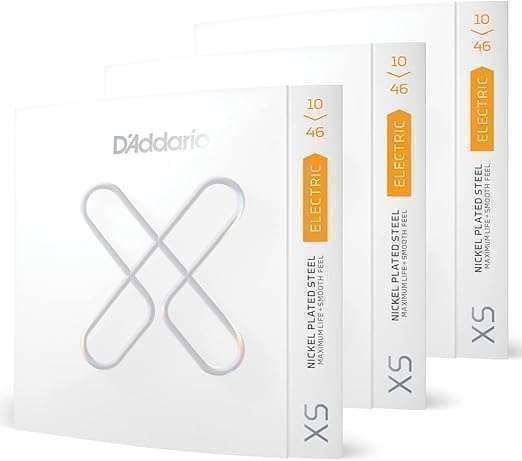
D'Addario
XS Electric
Tone: Balanced
Material: Nickel Coated
Longevity: Long (Coated)
Long-lasting coated strings with maximum life and smooth feel.
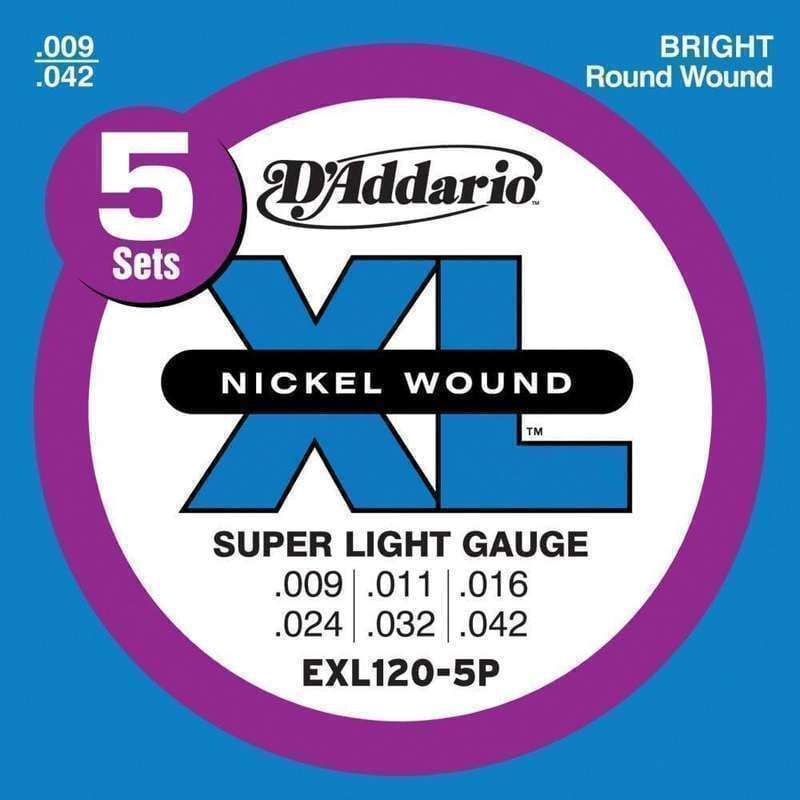
D'Addario
XL Nickel (EXL120)
Tone: Bright & Flexible
Material: Nickel Wound
Longevity: Standard
Super light gauge for maximum flexibility and biting tone.
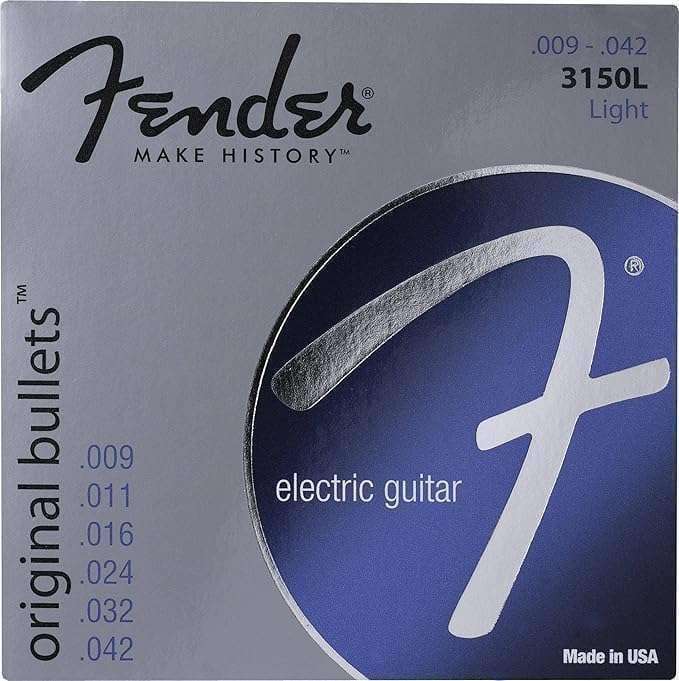
Fender
Original Bullets
Tone: Vintage Fender
Material: Pure Nickel / Nickel-Plated
Longevity: Standard
Designed specifically for Stratocasters. Bullet ends for enhanced stability.
The best strings for Telecaster are the ones that suit your tuning and picking touch without making bends uncomfortable. Start with gauge, then compare material and coating. Strings can change feel and response, but a premium packet will not repair a rough saddle or guarantee perfect tuning.
Quick answer: Try Regular Slinky or EXL110 in 10–46 for a familiar standard-tuning starting point. Choose Super Slinky 9–42 for lighter bends, or Hybrid Slinky 9–46 for a lighter treble side with a firmer bass side. Compare coated XS, XT or Nanoweb when corrosion shortens string life. Keep the gauge consistent when comparing brands.
Updated September 12, 2026. This guide compares manufacturer specifications and practical selection criteria. It does not claim a controlled eight-set listening or durability test.
| What you want | A useful starting choice | What to check |
|---|---|---|
| A regular uncoated set | Regular Slinky or EXL110, 10–46 | Your current gauge and comfort |
| Easier bends | Super Slinky, 9–42 | Whether a lighter bass side suits your picking |
| Light treble strings with firmer bass strings | Hybrid Slinky, 9–46 | All six gauges, rather than just the first string |
| A different premium uncoated construction | NYXL, 10–46 | Compare against fresh 10–46 strings at the same settings |
| Corrosion resistance | XS, XT or Nanoweb, 10–46 | Coating feel, pack quantity and cost per usable set |
| Lower tuning | A set selected for that tuning | Bass-string tension, nut fit and intonation |
Jump to: eight sets · gauge choice · restringing checks · FAQs.
Some linked products contain several sets. Divide the retailer's pack price by its set count before comparing value, and verify the selected gauge and quantity at checkout. Catalog prices are not a guarantee of today's retailer price or stock.
Disclosure: some links are affiliate links. We may earn a commission from qualifying purchases, at no extra cost to you. See our affiliate disclosure.
Once you've selected your strings, dial in your tone with our Ultimate Telecaster Setup Guide to achieve perfect intonation and action.
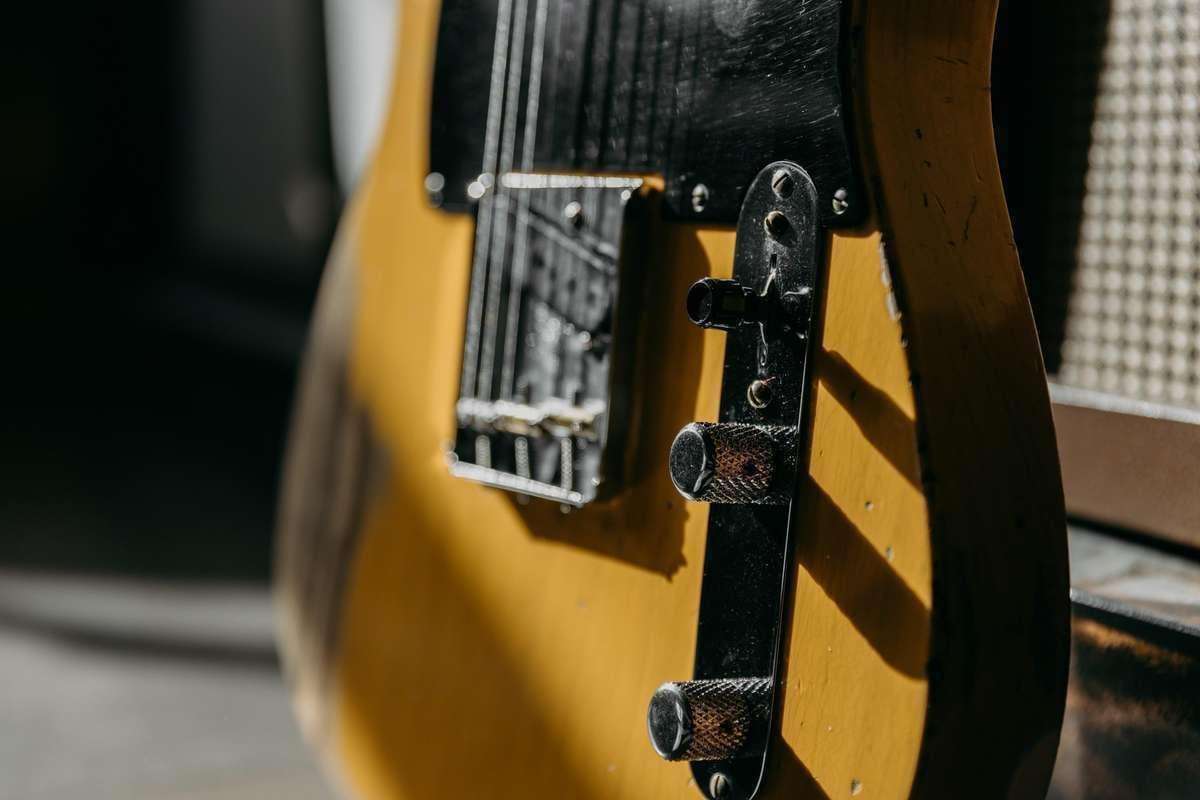 Photo by Eric Parks on Unsplash
 Buy on Amazon

What matters on your particular Telecaster
Identify the bridge and tuning machines before changing strings. A three-saddle bridge shares each saddle between two strings, while a six-saddle bridge gives each string its own length adjustment. That distinction matters when checking intonation; it does not prescribe a particular string brand.
Also check whether strings load through body ferrules or through the rear of the bridge. Follow the route your hardware supports. Neither the body shape nor a bridge's appearance proves that both loading methods are available. Do not force an unfamiliar end fitting through a ferrule because a different Fender bridge accepts it.
For a standard 25.5-inch-scale Tele, choosing 9–42 rather than 10–46 is a useful feel comparison in the same tuning. Scale, pitch and string construction all affect tension. Model names alone cannot establish equivalent feel, especially when comparing a standard Tele with a short-scale or baritone instrument.
Eight Telecaster string sets: compare the exact variant
These options cover different gauges and constructions. The order is a way to organize the choices, not a measured ranking. Start with a reasonably priced set at your preferred gauge before paying more for a feature you may not need.
Compare regular and hybrid gauges

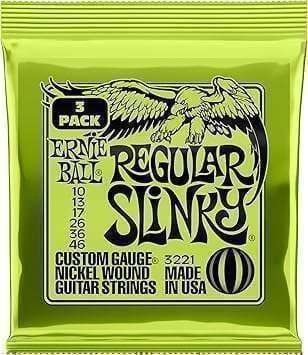
1. Ernie Ball Regular Slinky 10–46
Ernie Ball's Slinky specifications identify Regular Slinky as 10–46, Super Slinky as 9–42 and Hybrid Slinky as 9–46. Those are separate sets, not interchangeable names. Regular Slinky is a practical uncoated starting choice if you already like 10s.
Keep the gauge steady when comparing another brand. If you are changing from 9s, check the setup after the increased tension settles instead of judging the packet by the guitar's previous setup. View the Regular Slinky 10–46 single set.
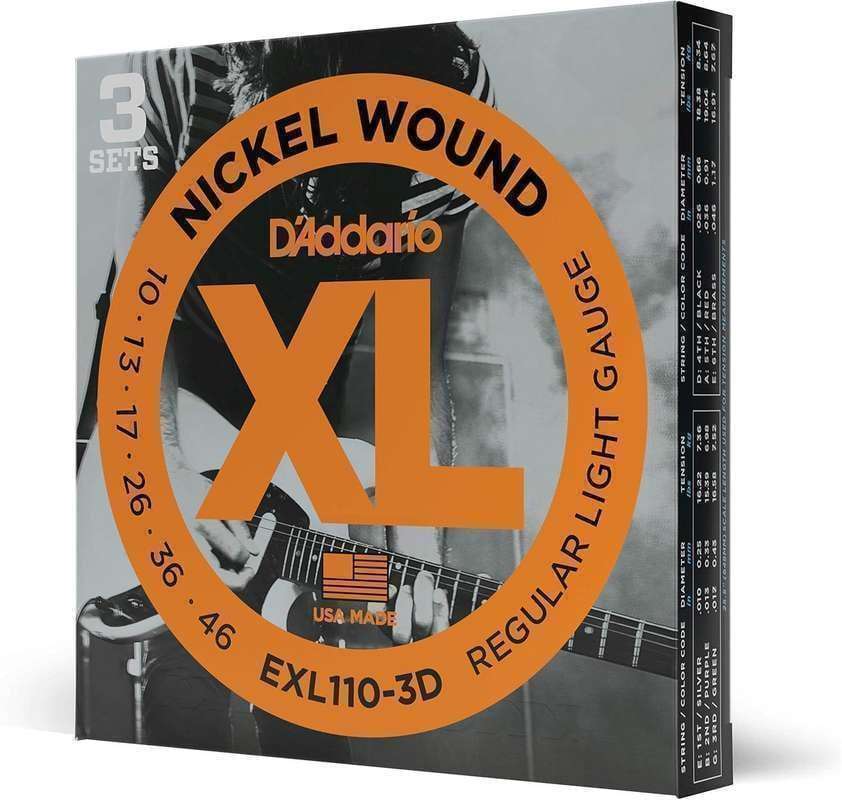
2. D'Addario EXL110 10–46
EXL110 is the regular-light 10–46 XL Nickel option. EXL120 is the 9–42 alternative. Read the suffix carefully when buying a familiar-looking packet.
The linked EXL110-3D catalog entry contains three sets. Compare the per-set cost with a single packet rather than treating the full pack price as the price of one restring. View EXL110 10–46.
3. Ernie Ball Super Slinky 9–42
Super Slinky is the lighter option here. Try it if bends on 10s require more effort than you want, while keeping the tuning and playing setup comparable. A heavy fretting hand may need to ease its pressure on a more yielding set.
This is a gauge choice rather than a country-only recommendation. It also avoids the assumption that a Telecaster needs bullet-end strings: check your actual bridge's requirements and use a suitable end fitting. View Super Slinky 9–42.
4. D'Addario NYXL 10–46
D'Addario describes NYXL1046 as its premium uncoated 10–46 electric set, with a different core and wrap specification from XL Nickel. Its strength and stability claims are manufacturer comparisons, not a guarantee that your Tele will stop drifting out of tune.
Try NYXL against a fresh regular 10–46 set if you want to evaluate that construction. Check installation and contact points separately when strings keep slipping or breaking. The linked variant is a three-pack. View NYXL 10–46.
5. Elixir Nanoweb electric 10–46
Elixir's nickel-plated steel Nanoweb electric range uses a protective coating. The linked catalog entry is the electric 10–46 three-pack. Nanoweb also appears on other string products, so confirm electric-guitar construction as well as gauge.
Consider it when corrosion or roughness ends a set's useful life early. There is no fixed three- or five-times lifespan for every player, and coating does not eliminate all finger noise. Track usable playing time and whether you enjoy the sliding feel. View Nanoweb electric 10–46.
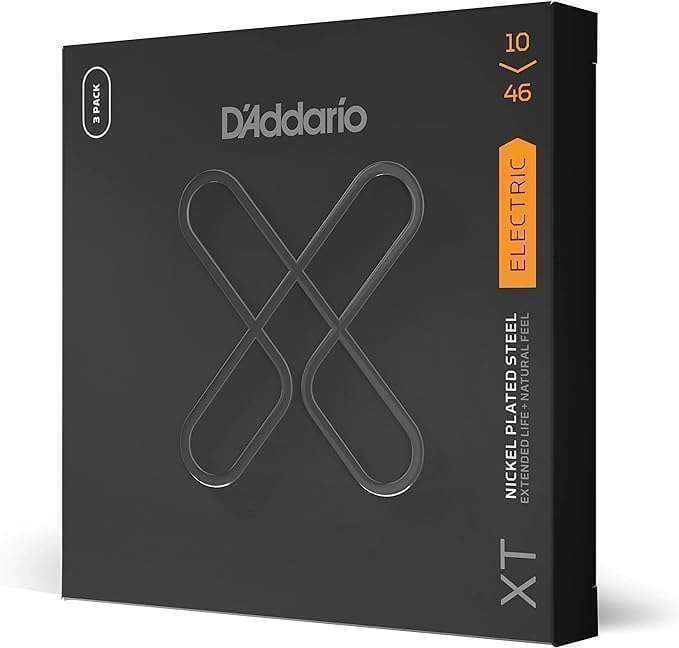
6. D'Addario XT electric 10–46
D'Addario's XTE1046 specification describes a corrosion-resistance treatment on a nickel-plated steel electric set. XT is a separate family from XS, so compare them as alternatives rather than assuming the names describe the same coating.
The linked XTE1046-3P is a three-pack of 10–46 sets. It is a useful comparison when you already like that gauge and want to try a protected string. View XT electric 10–46.
7. Ernie Ball Hybrid Slinky 9–46
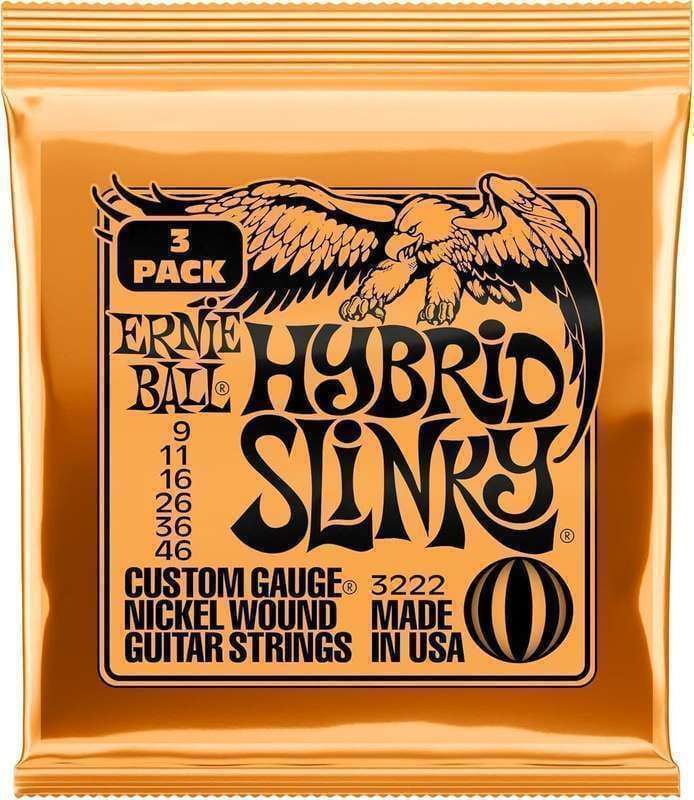
Hybrid Slinky combines .009, .011 and .016 treble strings with .026, .036 and .046 wound strings. It gives a specific alternative to changing the whole set from 9–42 to 10–46. That can suit a player who likes light bends but wants a firmer bass-string feel.
It is not automatically suitable for every drop tuning. Check the intended pitch and your picking touch before deciding whether the low string provides enough resistance. The linked catalog entry contains three sets. View Hybrid Slinky 9–46.
8. D'Addario XS electric 10–46
D'Addario's XS electric range provides another coated option. The linked XSE1046-3P contains three 10–46 sets. Compare it with an uncoated set of the same gauge to avoid confusing coating preference with a change in string resistance.
There is no useful universal percentage for how closely coated strings sound like uncoated strings. Your own response to the attack, sliding feel and ageing matters more than an unsupported “almost identical” claim. View XS electric 10–46.
Choose gauge before chasing a particular sound
Keep your current gauge if the guitar already feels comfortable. A standard-tuning comparison between 9–42 and 10–46 is a sensible next step when you have a specific complaint about resistance. Moving to a heavier set simply because another player uses it is less informative than identifying what you want to change.
 Photo by Eric Parks on Unsplash
| Gauge family | Why you might try it | Important tradeoff |
|---|---|---|
| 8–38 | Very light bending resistance | A light fretting touch helps avoid pulling notes sharp |
| 9–42 | Light feel in standard tuning | Bass strings may feel too yielding under a firm pick attack |
| 9–46 hybrid | Light treble strings with a regular bass side | The overall tension change differs from a full 10–46 set |
| 10–46 | More resistance than 9–42 | Bends require more effort; check setup when changing |
| 11s or another heavier set | A deliberate tuning or feel requirement | Check every gauge, nut fit and adjustment range |
For lower tunings, choose all six gauges for the job. “11s” only identifies the high E string and leaves important information unstated. A wound G string also changes the comparison from a set using a plain G; confirm what is in the packet before fitting it.
Material and coating are separate decisions
Nickel-plated steel roundwounds provide the main comparison in this guide. Pure-nickel-wound or flatwound sets offer other constructions to explore, but neither is necessary for a Telecaster to sound like a Telecaster. Pickup selection, tone control and amplifier settings are worthwhile checks before buying strings to solve excessive brightness.
A coating is primarily a durability and feel consideration. Compare the construction named on the full product label, not only a coating family that might also be sold for acoustic guitars. There is no universal lifespan multiplier, identical sound percentage or guaranteed absence of squeak.
A fair comparison uses fresh strings on both sides. Keep tuning, pickup height and amp settings consistent, and write down the feature you want to evaluate. If you change gauge, material, coating and brand together, a preference may be real while its cause remains unclear.
Restringing checks for Telecaster hardware
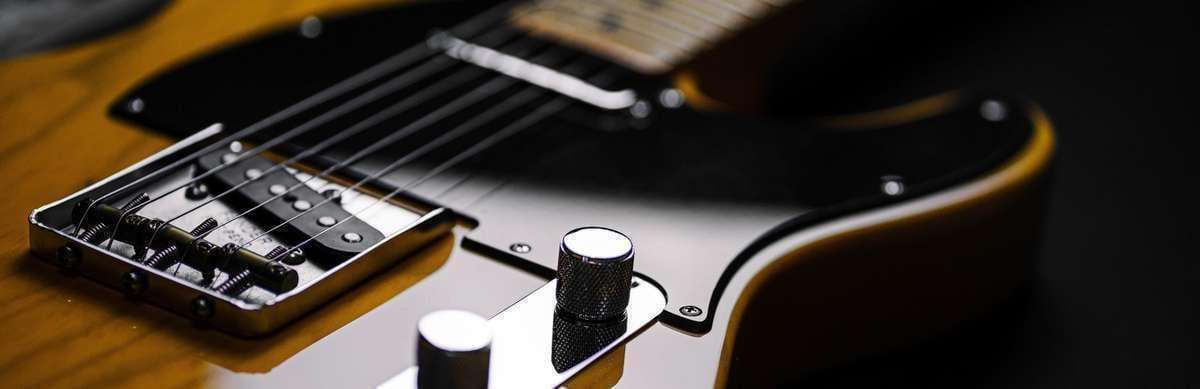 Photo by Chris Hardy on Unsplash
Have the correct set, a tuner, string cutters and a clean cloth ready. Record the old gauge and tuning first. A string winder is optional; correct routing and seating matter more than how quickly you can turn a tuner.
- Release tension before removal. Loosen the old strings, protect the finish and remove them using the route appropriate to your bridge. Do not cut a string while it is at playing tension.
- Identify the loading route. Use the body ferrules on a string-through instrument or the intended rear bridge holes on a top-loader. Check that each new string's end seats correctly.
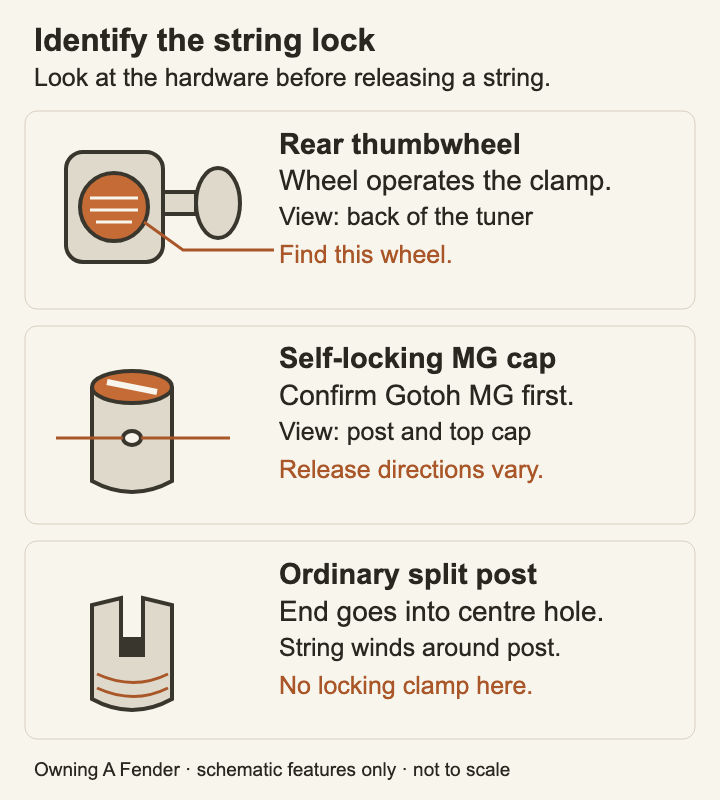
- Follow your tuner instructions. Split-shaft, ordinary through-hole and locking tuners need different handling. Do not apply a universal cut length or winding direction to all of them.
- Tune and settle the strings. Keep wraps orderly where required, seat the strings gently and retune. Excessive pulling is unnecessary. Confirm that the string follows the correct nut slot and saddle path.
- Check the setup. After a gauge or tuning change, measure relief and action, then check intonation. A shared three-saddle bridge may need a balanced compromise for each pair rather than independent adjustment.
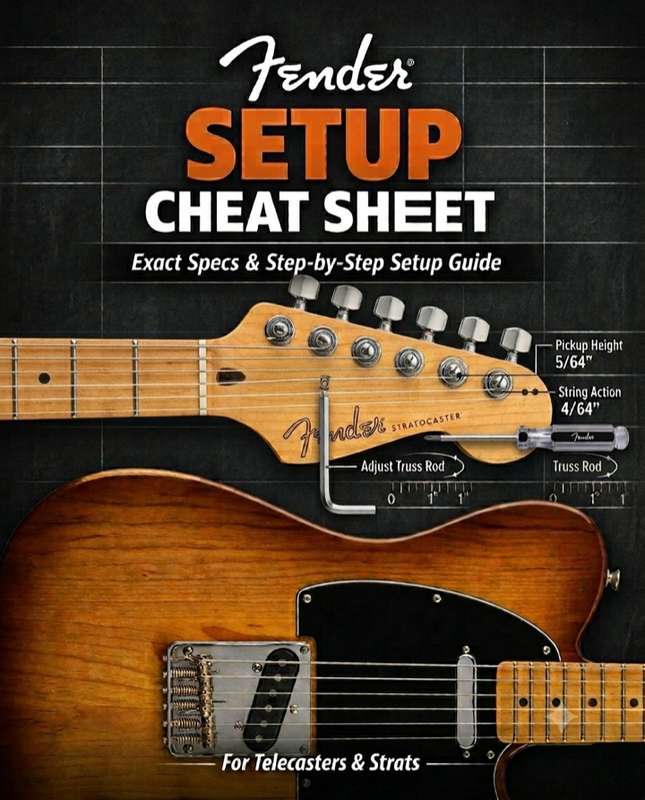
The Telecaster setup guide covers the wider sequence. Measure before turning a truss rod, and do not widen nut slots merely because you installed a different gauge. A string that binds or repeatedly breaks at one contact point needs a specific diagnosis.
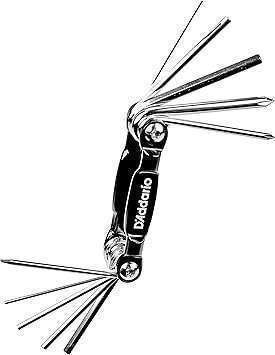
View the D'Addario Multi-Tool if you need a compact tool for the separate setup checks. Confirm that any driver fits your hardware before using it.
Use your playing style as a starting point
Country bends and hybrid picking can work with 9s, 10s or a mixed set. Choose enough resistance for your picking hand without making the bends you actually play uncomfortable. Rock rhythm does not require premium strings, and a jazz part does not require one particular brand.
Our Telecaster string gauges by genre guide explores that choice in more detail. Use the article for gauge context rather than treating any famous player's packet as a requirement. For quiet recording, compare sliding noise with your own technique and signal chain; a coated label alone cannot promise silence.
Judge value by usable sets
A cheap set that stays comfortable for your normal change interval may offer excellent value. A coated set may cost less per playing hour if it remains useful substantially longer for you. The result depends on hands, playing time, storage and what you consider worn out.
Wipe strings with a clean cloth after use and follow the manufacturer's care advice before applying cleaners. Replace damaged, corroded or persistently dull strings. There is no single calendar schedule for occasional home use and regular live playing, so keep a spare set and inspect the guitar before an important session.
Record the date, gauge and approximate playing hours for two or three changes. Include the actual per-set price, accounting for multi-packs. You can then decide whether the extra cost bought useful life, preferred feel or neither, without claiming a controlled laboratory test.
Compare With Other Guitar String Guides
Picking strings for a different guitar? These sibling guides break down the best sets for each model:
- best strings for Stratocaster
- best strings for Ibanez
- best acoustic guitar strings
- best strings for Epiphone
Frequently asked questions
Are 9s or 10s better for a Telecaster?
Choose 9–42 for lighter bends or 10–46 for more resistance in standard tuning. Neither is universally better. Keep a comfortable existing gauge unless you want a specific change, and check the setup after changing tension.
Does a Telecaster need bullet-end strings?
No general Telecaster requirement calls for bullet ends. Use an end fitting compatible with the actual bridge and ferrules. Do not assume that a fitting intended for a different Fender bridge will seat correctly in modified hardware.
What is a hybrid string set?
A hybrid set combines lighter treble strings with heavier bass strings than a conventional light set. Hybrid Slinky 9–46 is one example. Read all six gauges so you know what changes relative to your current packet.
Will heavier strings fix tuning instability?
Not necessarily. Tuning faults can involve installation, nut friction, damaged strings or hardware. Diagnose the cause before changing gauge. More resistance under your fingers does not guarantee that the instrument returns to pitch correctly.
How long do coated strings last?
Useful life varies with playing time, hands, care and the point at which you dislike their feel or sound. Compare cost per usable set or playing hour. A fixed three- or five-times claim is not reliable for every player.
Are top-loading and string-through bridges interchangeable?
Only some bridges support both loading routes. Follow the design of your particular hardware and check that the string ends seat properly. Loading method alone does not establish a guaranteed sustain or tension advantage.
Should I adjust the truss rod after changing strings?
Measure neck relief after the new tuning and tension settle. Adjust only if the measurement and playing symptoms justify it, following the correct procedure. A different brand at the same gauge does not automatically require a truss-rod turn.
What should I do if a string repeatedly breaks?
Record the break location. Repeated failures at one saddle, nut slot or tuner may point to a rough contact or installation problem. Have that point inspected before filing hardware or buying a stronger set as a substitute for repair.
Can I use flatwounds with Telecaster pickups?
Suitable electric flatwounds are an option, but their construction and feel differ from the roundwound sets compared here. Check gauge and whether the G string is wound, then recheck intonation. They are a preference, not a mandatory jazz setup.
Do humbucker Telecasters need different strings?
Humbuckers do not create a universal string-gauge requirement. Choose a suitable electric set for the instrument's scale, tuning and desired feel. Compare pickup and amplifier settings before assuming that a new string material is necessary.
Make one useful comparison
Start with the gauge you want, then compare one construction change at a time. Regular Slinky and EXL110 provide the regular-gauge uncoated options here; Super Slinky and Hybrid Slinky address different feel preferences. XS, XT and Nanoweb provide coated alternatives to evaluate over your own change interval.
Check the exact pack before buying and keep the old gauge noted with your setup measurements. A clear reason for choosing the next packet is more useful than a universal winner.
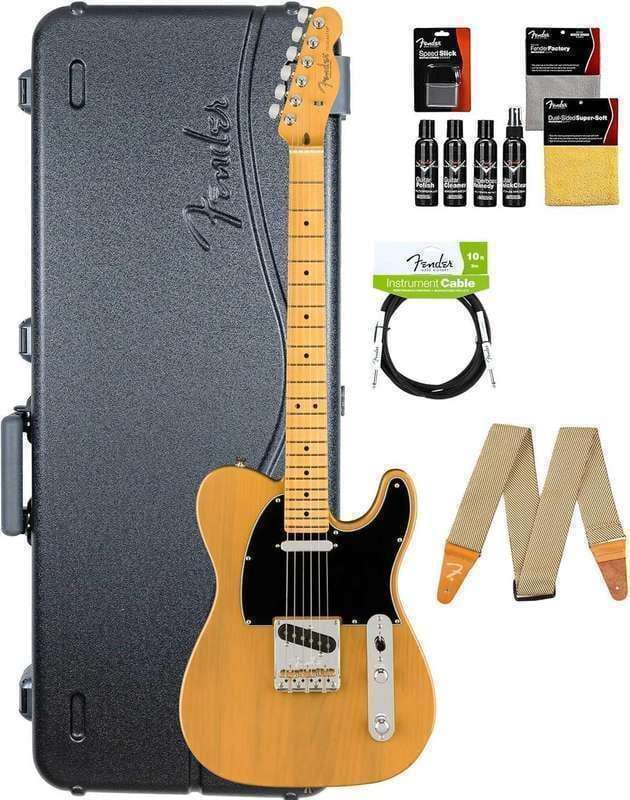
For complete Telecaster setup and maintenance guides, visit our Telecaster Hub where you'll find comprehensive guides on setup, pickup adjustment, and getting the most out of your Fender Telecaster.
Ready to find your perfect Telecaster strings? Check out our recommended string sets above and start experimenting with different gauges and materials to discover your ideal tone.