Hi, I’m Nick — a London-based Tech Lead and lifelong guitarist.
I started playing at 13 and have spent 15+ years setting up, modding, and maintaining guitars.
I run Owning A Fender to share clear, tested, no-nonsense setup advice — applying the same rigor I use in software engineering to guitar maintenance.
When I’m not working on guitars, I’m usually lifting heavy things or writing code. Learn more about my journey on the About page.
Master your Fender guitar with Owning A Fender. Explore professional setup guides and maintenance tutorials for Stratocaster, Telecaster, and more.
Explore our comprehensive guitar guides organized by model for easy navigation. Our guitar hubs provide specialized setup guides, maintenance tips, and expert advice tailored to each instrument's unique characteristics. Each hub contains detailed step-by-step guides, troubleshooting tips, and model-specific recommendations from professional guitar technicians. Whether you're a beginner or experienced player, our organized approach makes it easy to find exactly what you need for your specific Fender model.
Fender guitars are renowned for their exceptional build quality and remarkable longevity when properly maintained. Our comprehensive maintenance and care guides help you keep your Fender guitar in pristine condition for decades. Learn about professional setup procedures, eco-friendly cleaning techniques, and advanced preservation methods tailored specifically for Fender models. Our guides cover everything from basic string changes and fretboard conditioning to complex truss rod adjustments and electronic maintenance. We provide seasonal maintenance schedules, storage recommendations, and troubleshooting solutions for common issues like fret wear, finish checking, and hardware corrosion.
Dive into the fascinating and rich history of Fender guitars, understanding how Leo Fender's groundbreaking innovations completely revolutionized the music world. We feature comprehensive articles on the evolution of Fender designs, the captivating stories behind classic models, and their profound impact on music genres across multiple decades. Explore the development of the Telecaster from the 1950s Broadcaster, the revolutionary introduction of the Stratocaster with its tremolo system, and the innovative offset designs of the Jaguar and Jazzmaster. Learn about the CBS era, the transition to modern manufacturing, and the establishment of the Custom Shop that continues Leo Fender's legacy of innovation.
Join our community of Fender enthusiasts. Share your experiences, learn from others, and stay updated on Fender events and releases. Our forum is a space for discussions, advice, and showcasing your Fender guitars.
Welcome to Owning A Fender - the internet's most comprehensive, model-specific library for the setup, maintenance, and mastery of Fender instruments. We exist for one reason: to help you achieve professional-level playability at home. Whether you're wrestling with a buzzing Jazzmaster bridge, trying to float a Strat tremolo, or setting the intonation on a vintage Telecaster saddle, our goal is to demystify the process with safe steps, clear specifications, and practical troubleshooting.
Owning a Fender is more than just having a guitar; it's participating in a legacy that created rock, country, blues, and alternative music. To honor that legacy, your instrument deserves to play its best.
Generic advice often fails because a Jaguar tremolo behaves nothing like a Stratocaster bridge. Our guides are segregated by model, acknowledging the unique quirks, string tensions, and hardware realities of each design.
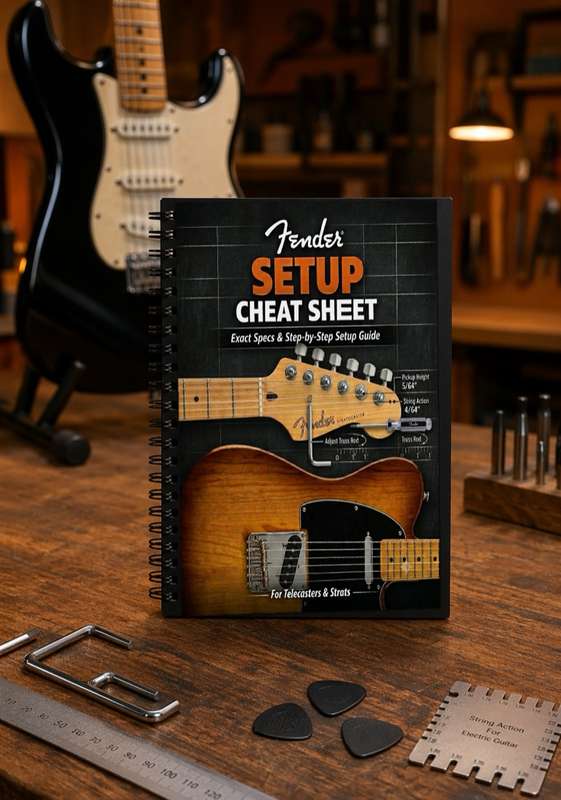
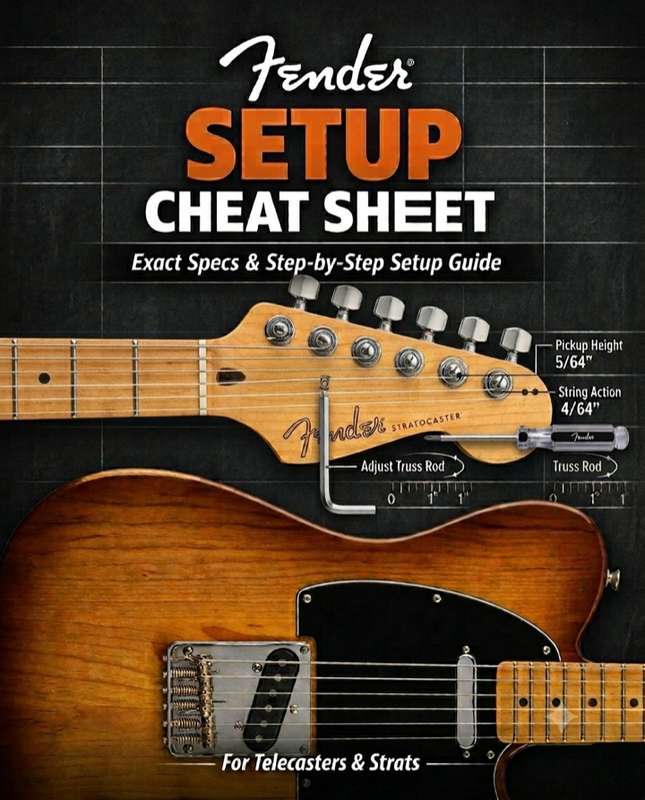
Stop paying $150+ for professional setups. Our Fender Setup Cheat Sheet gives you exact specs for Stratocaster, Telecaster, and offset guitars—the same measurements professional techs use. Print it, hang it on your wall, and never search for specs again.
Every Fender model has a voice and a purpose. Understanding the strengths of each will help you choose your next axe or get the most out of your current one.
The guitar that started it all. Simple, rugged, and endlessly versatile. The Telecaster is defined by its bridge pickup's biting "twang" and the neck pickup's warm, mellow jazz tones. With a fixed bridge and string-through-body design, it offers incredible tuning stability and sustain.
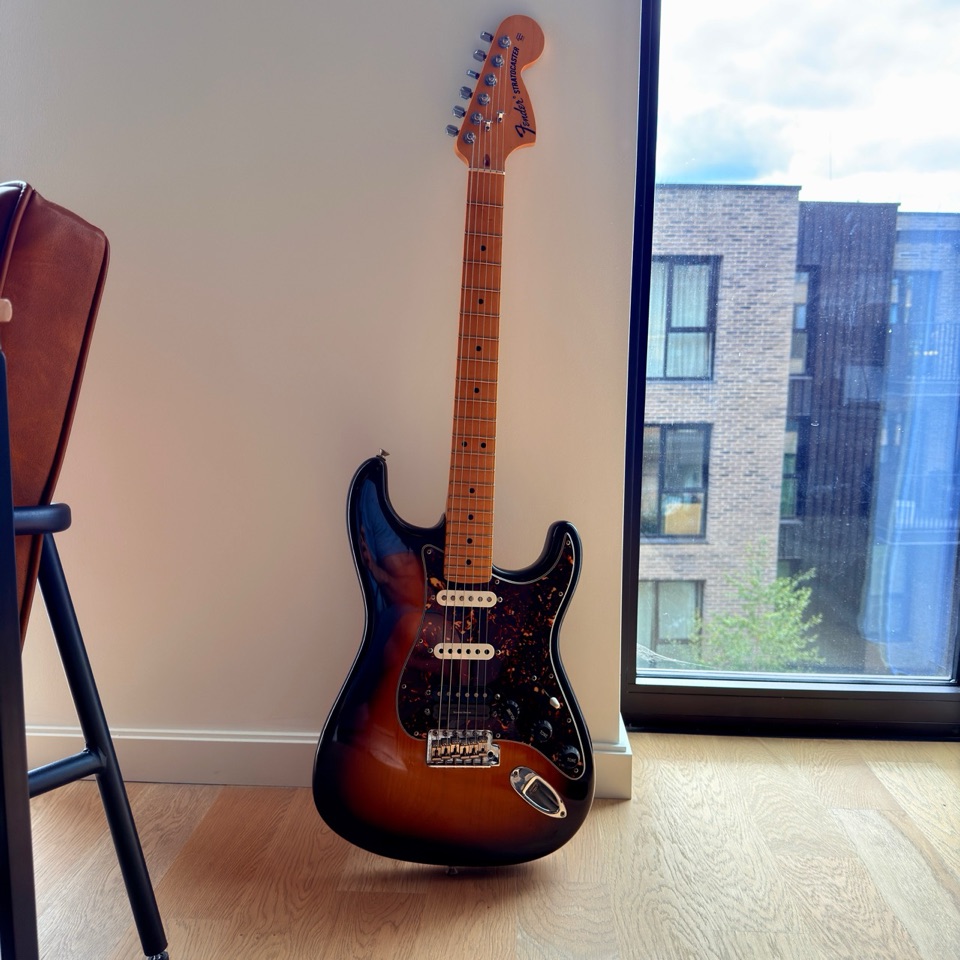
The most recognizable guitar in history. With three single-coil pickups, a synchronised tremolo system, and a contoured body, the Stratocaster is designed for comfort and sonic flexibility. Its 5-way switch unlocks "in-between" positions (2 and 4) that produce the famous "quack" used in funk and blues.
Short-scale (24"), loaded with chrome plates, and armed with a unique "strangle switch" (high-pass filter), the Jaguar is the alternative rocker's weapon of choice. Its shorter scale looser string tension makes for easy bending, while the shielded pickups provide a distinct, plunky bite that cuts through heavy reverb.
Originally designed for jazz cats but adopted by noise rockers, the Jazzmaster features wide, flat single-coil pickups that produce a warmer, thicker sound than any other Fender single-coil. Its famous "Rhythm Circuit" allows you to preset a dark, rhythm tone and switch to a bright lead tone instantly.
Originally a student model, the Mustang found a second life in the hands of grunge icons. Like the Jaguar, it's a 24" short-scale guitar, but features phase-switching slider switches that allow for thin, funky "out-of-phase" tones. Light, compact, and incredibly fun to play.
The first commercially successful electric bass. The Precision Bass (P-Bass) does one thing, and it does it perfectly: it sits in the mix. Its split-coil pickup provides a thump and punch that defines the sound of recorded bass.
The 12 string guitar produces a rich, chorus-like tone that sounds like multiple guitars playing together. With six pairs of strings (four octave pairs and two unison pairs), it creates the signature shimmer heard in countless classic rock and folk songs.
Best For: Folk, Acoustic Rock, Singer-Songwriter, Recording.
Key Feature: Natural chorus effect without any pedals—arpeggios sparkle and chords ring with depth.
Serial Number Lookup - Date/Identify your Fender
One of the most common questions we receive is: "What's the real difference between American, Mexican, and Japanese Fenders?" Understanding these distinctions helps you find the best value for your budget.
The flagship line (American Professional II, Ultra, Original). These instruments are built in Corona, California.
Built in Ensenada, Baja California—just a few hours south of the US factory. The "Player" and "Vintera" series are made here.
Renowned for flawless craftsmanship. Often features vintage-correct specs that even American factories don't offer regularly.
Caring for your Fender ensures it lasts a lifetime. Here are the pillars of maintenance we cover in our guides:
While the "tonewood debate" rages on, the materials of your Fender absolutely affect the feel, weight, and resonance of the instrument.
Yes, but with nuance. We provide "Factory Specs" as a baseline. However, vintage guitars (7.25" radius) often require higher action than modern ones (9.5" or 12" radius) to prevent notes from "choking out" during bends. Our guides explain how to adjust these starting points by feel and ear.
You don't need a full luthier's shop. A proper setup can be achieved with:
If you've maxed out the saddle screw and it's still sharp/flat, check these culprits:
This is common on offsets (Jaguar/Jazzmaster). If your bridge saddles are bottomed out but the action is still too high, OR if the bridge is so low there's no downward pressure (causing buzz), you likely need a shim. A shim in the neck pocket changes the neck angle, allowing you to raise the bridge for better physics.
We believe every player should learn to setup their own instrument—it bonds you to the guitar. However, if your guitar requires fret leveling, nut slot filing, or electrical repair, we recommend a professional luthier. For action, relief, and intonation? You can absolutely do it yourself with our guides.
Traditional single-coil pickups hum—it's 60-cycle physics. Noiseless pickups are essentially stacked humbuckers designed to fit in a single-coil slot and look authentic. They cancel the hum but some purists argue they lose a tiny bit of the "sparkle" and "air" of true single coils. They are excellent for high-gain stages or recording environments with bad power.
A "Relic" or "Road Worn" finish is cosmetic aging applied at the factory. While controversial, it does offer a functional benefit: feel. The backs of relic necks are often sanded down to raw wood or sealed lightly, removing the sticky "gloss" feel of a new guitar. If you play in humid environments, a worn-in neck feels much faster and smoother than a sticky high-gloss one.
Start your journey now by selecting your instrument locally or via the menu.