A guitar setup is a handful of small adjustments that decide how a guitar plays: how far the strings sit above the frets, whether notes buzz, and whether chords stay in tune as you move up the neck. Each adjustment changes the next one, so the order matters as much as the numbers. This page puts the free setup guides on this site in that order. Start with the step you are on, or jump to the…
Keep Reading →
Quick answer: The Fender Telecaster has a 25.5" (648 mm) scale on every model below, the same as a Stratocaster. The nut is 1.650" (42 mm) on the Squier, Player II, Vintera III and American Vintage II, 1.685" (42.8 mm) on the American Professional, American Professional Classic and American Ultra II, and 1.6875" (42.86 mm) on the Standard. Most have a 9.5" (241 mm) fingerboard radius; the vintage…
Keep Reading →
Quick answer: The Fender Stratocaster has a 25.5" (648 mm) scale on every model below, from the Squier Classic Vibe to the American Vintage II. The nut is 1.650" (42 mm) on the Squier, Player II, Vintera III and American Vintage II, 1.685" (42.8 mm) on the American Professional, American Professional Classic and American Ultra II, and 1.6875" (42.86 mm) on the Standard. Most have a 9.5" (241 mm…
Keep Reading →
Quick answer: The Fender Jazzmaster has a 25.5" (648 mm) scale on every model below, the same as a Stratocaster or Telecaster and longer than the Jaguar's 24" (610 mm). The nut is 1.650" (42 mm) on the Squier, Player II, Vintera III and American Vintage II and 1.685" (42.8 mm) on the American Professional models. The fingerboard radius is 9.5" (241 mm) except on the vintage-style Vintera III and…
Keep Reading →
Quick answer: The Fender Jaguar has a 24" (610 mm) scale on every model below, from the Squier Classic Vibe to the American Professional, against 25.5" (648 mm) on a Stratocaster or Jazzmaster. Every one has 22 frets. The nut is 1.650" (42 mm) on the Squier, Player II and Vintera III and 1.685" (42.8 mm) on the American Professional models. The fingerboard radius is 9.5" (241 mm), except the…
Keep Reading →
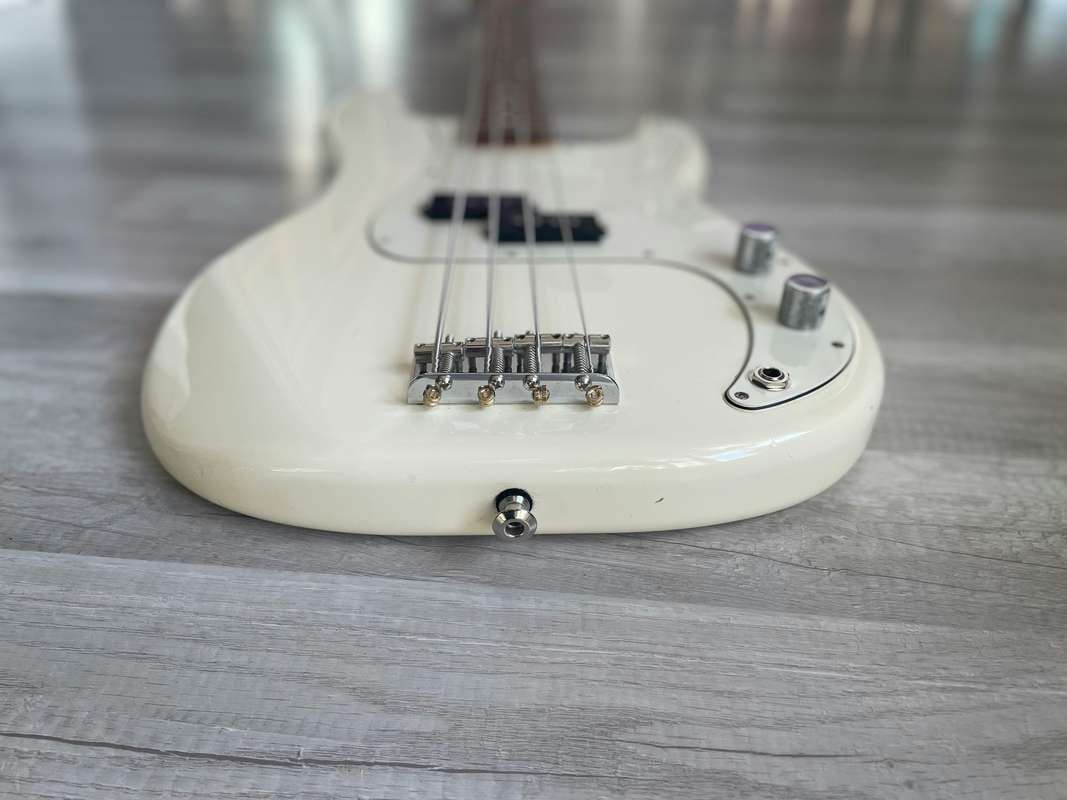
Quick answer: The Fender Precision Bass has a 34" (864 mm) scale on every model below, from the Squier Classic Vibe to the American Vintage II. The nut is 1.625" (41.3 mm) on most current models; the Squier Classic Vibe '60s is wider at 1.685" (42.8 mm) and the American Vintage II 1960 at 1.70" (43.2 mm). Every model has 20 frets except the American Ultra II, which has 21. The fingerboard radius…
Keep Reading →
Quick answer: Fender's setup spec for a Telecaster with a 9.5"–12" radius neck is 4/64" (1.6 mm) string height on both outer strings, measured at the 17th fret, with .010" (0.25 mm) neck relief at the 8th fret. A vintage 7.25" radius gets 5/64" (2 mm) bass / 4/64" (1.6 mm) treble and .012" (0.3 mm) relief. Pickup height depends on the pickup type — 5/64" bass / 4/64" treble for standard single…
Keep Reading →
Quick answer: Fender's setup spec for a Stratocaster with a 9.5"–12" radius neck is 4/64" (1.6 mm) string height on both outer strings, measured at the 17th fret, with .010" (0.25 mm) neck relief at the 8th fret. A vintage 7.25" radius gets 5/64" (2 mm) bass / 4/64" (1.6 mm) treble and .012" (0.3 mm) relief. Pickup height depends on the pickup type — 5/64" bass / 4/64" treble for standard single…
Keep Reading →
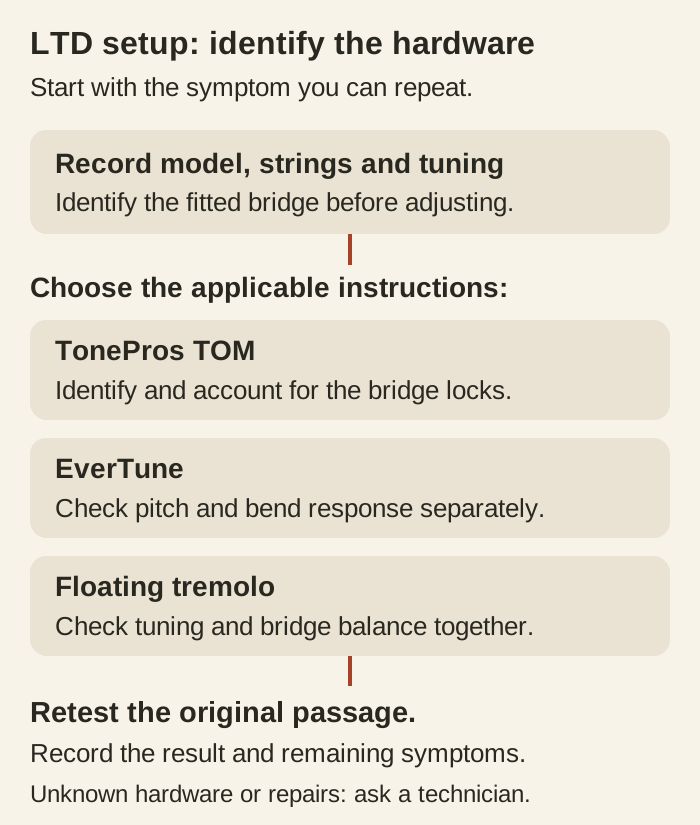
A useful LTD guitar setup solves a specific playing problem on the guitar you own. Perhaps your EC-1000 feels different after a string change, an EverTune string will not bend as expected, or the first few chords sound sharp. Start with that symptom and the fitted bridge before reaching for an adjustment tool. Quick answer: Write down what changed, identify the exact LTD model and bridge, and…
Keep Reading →
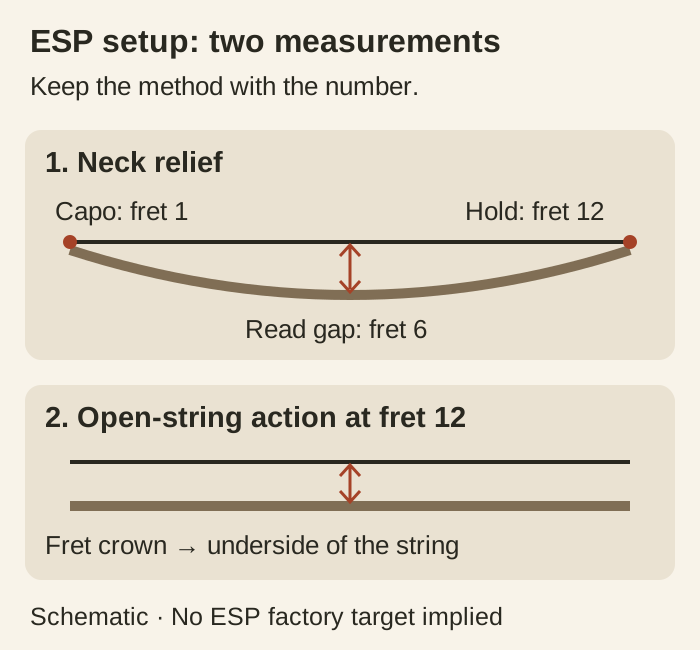
An ESP guitar setup starts with identifying the bridge and recording how the instrument plays today. A serial number can help with dating, but it cannot tell you whether a previous owner changed the bridge, strings or pickups. This guide helps you build a useful setup record before choosing an adjustment. Quick answer: Identify your exact ESP model and installed bridge, choose your intended…
Keep Reading →
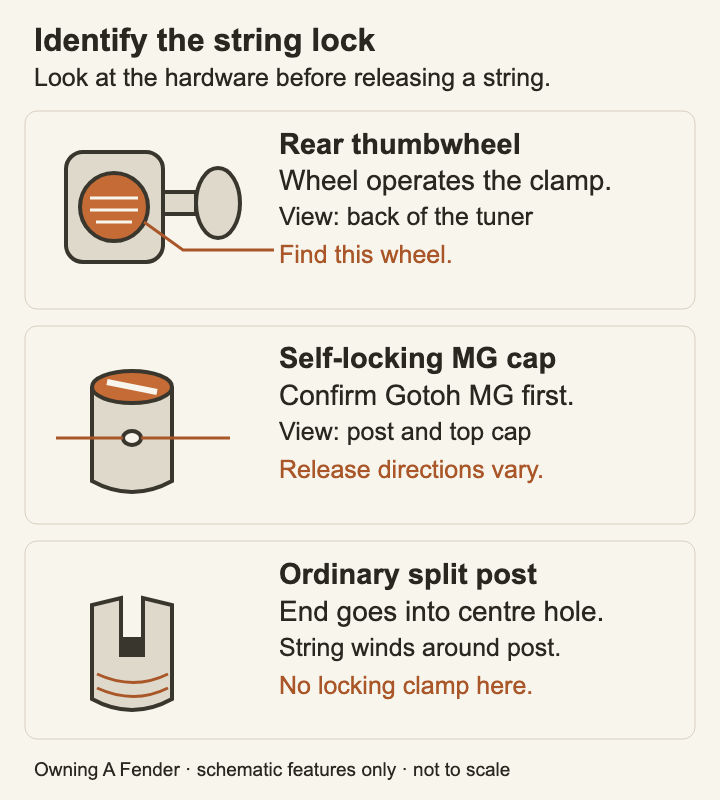
To restring Fender locking tuners, first find the part that actually locks the string. A rear thumbwheel and a self-locking post can look like small variations on the same idea, yet their release procedures differ. Identifying yours before removing the old strings makes the rest of the job much easier. Quick answer: On Fender rear-thumbwheel tuners, detune the string, release the rear wheel…
Keep Reading →
Bass guitar intonation is the adjustment that helps fretted notes stay in tune after you have tuned the open strings. If your open E looks right on the tuner but the same string sounds sharp higher up the neck, check the relationship between those notes before turning another tuning peg. You need a repeatable reading first and a bridge adjustment only if the result supports it. This guide covers…
Keep Reading →
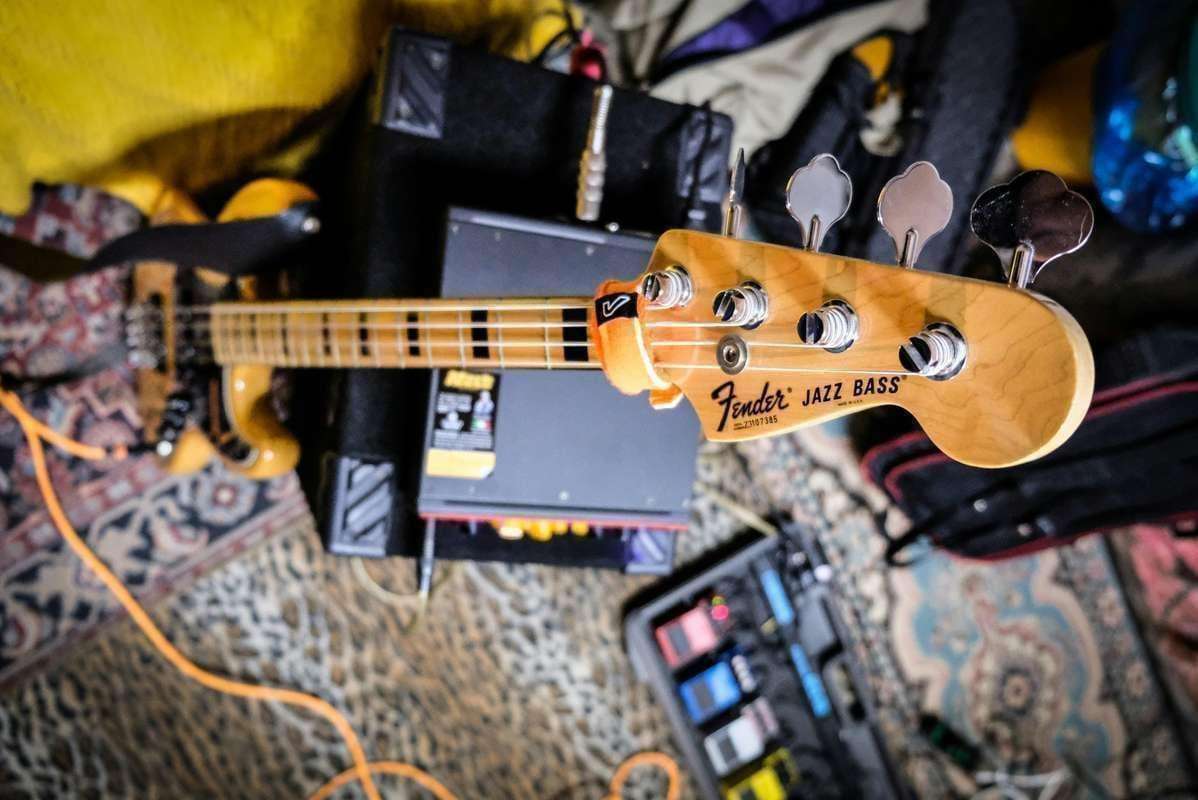
Bass guitar fret buzz is a symptom, not an instruction to turn the truss rod. Before adjusting anything, find out which string makes the noise, which notes trigger it, and whether the sound matters through your normal clean amp setting. That short investigation can save you from raising every saddle to fix one troublesome fret. This guide is for fretted electric basses, including Precision, Jazz…
Keep Reading →
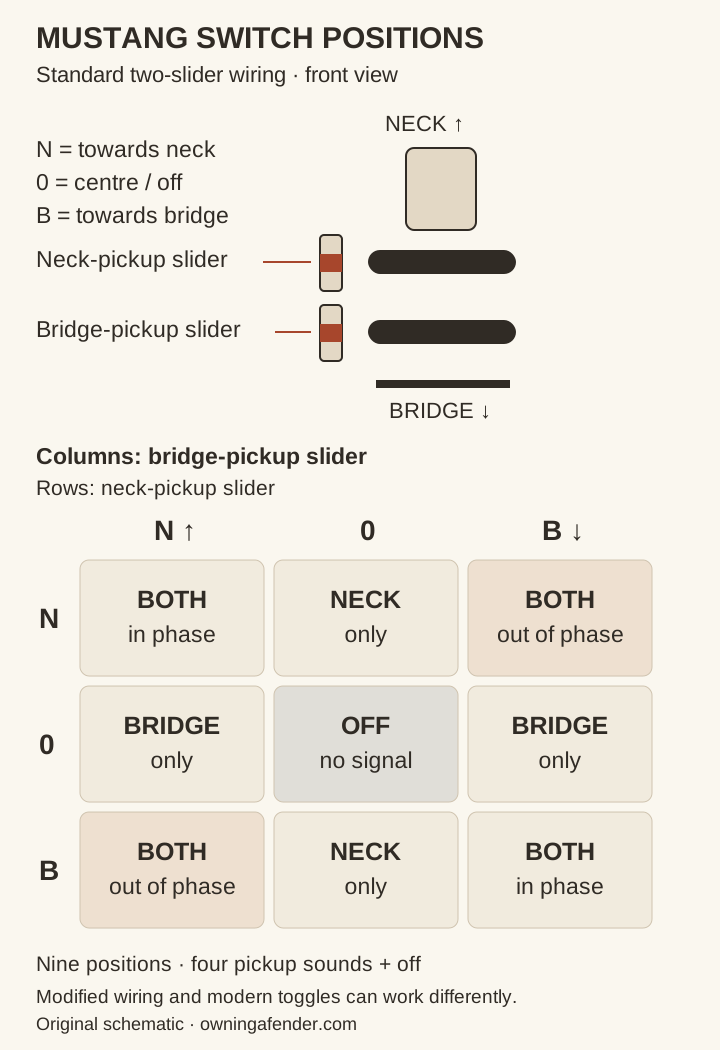
Fender Mustang controls make more sense once you separate pickup selection from the sound of two pickups working together. On a traditional two-slider Mustang, each pickup has its own switch. A modern Mustang with one three-way selector needs a different set of instructions, so identify the layout before following a chart. Quick answer: On standard vintage-style Mustang wiring, each slider's…
Keep Reading →
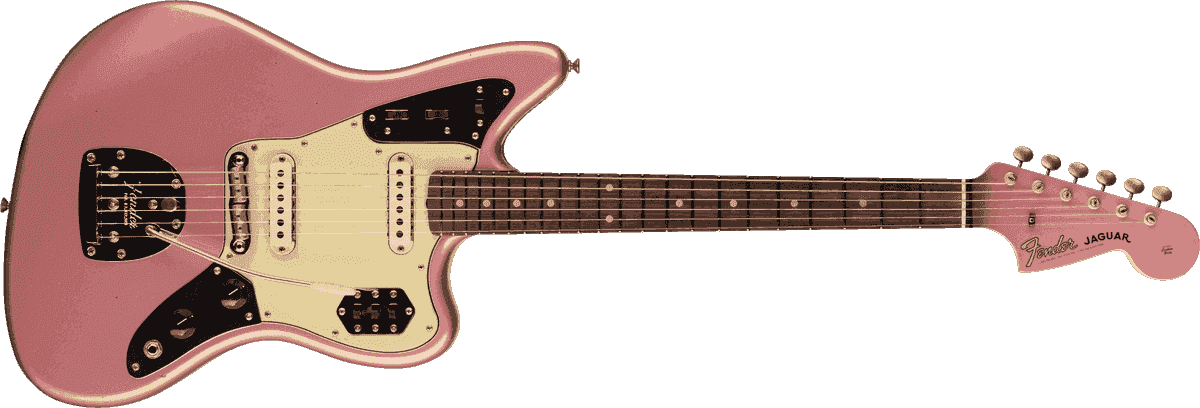
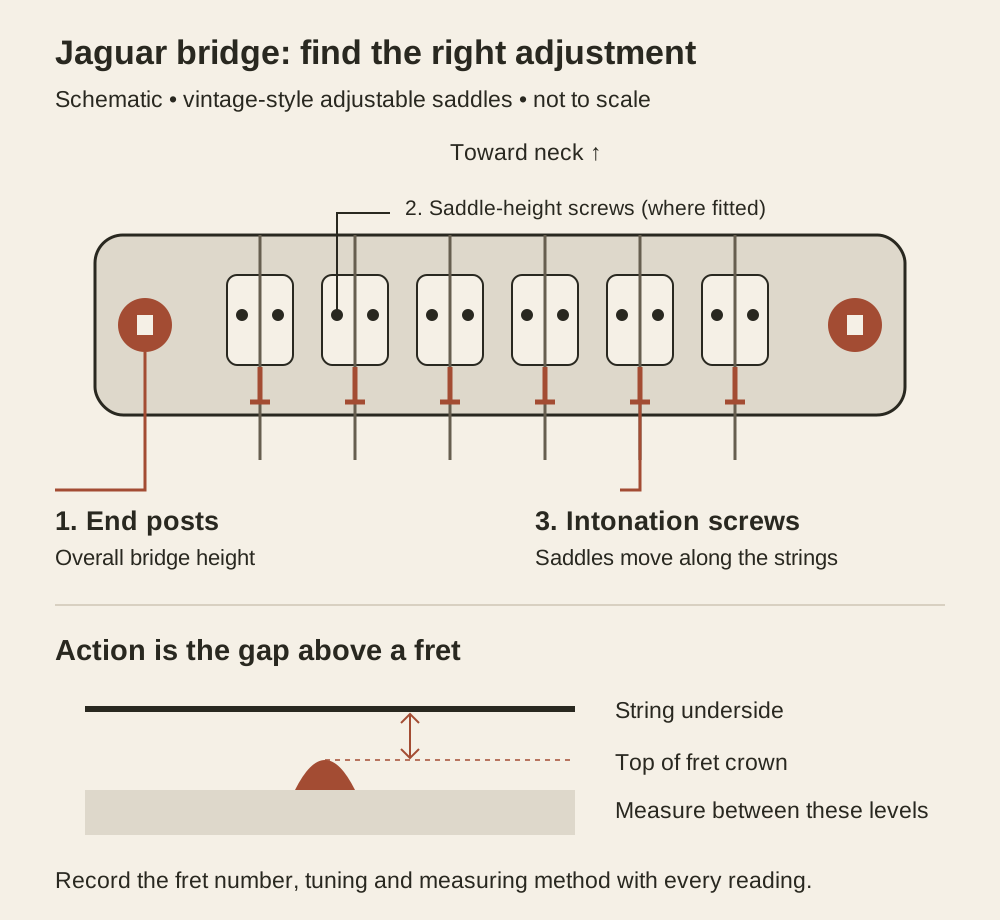
Fender Jaguar bridge height — and with it the action, or string height — becomes much easier to adjust once you separate three jobs: raising the whole bridge, setting the curve across its saddles, and moving saddles for intonation. They use different screws. Turning everything until the strings look low can leave you with rattles, uneven action and no record of where you started. Quick answer…
Keep Reading →
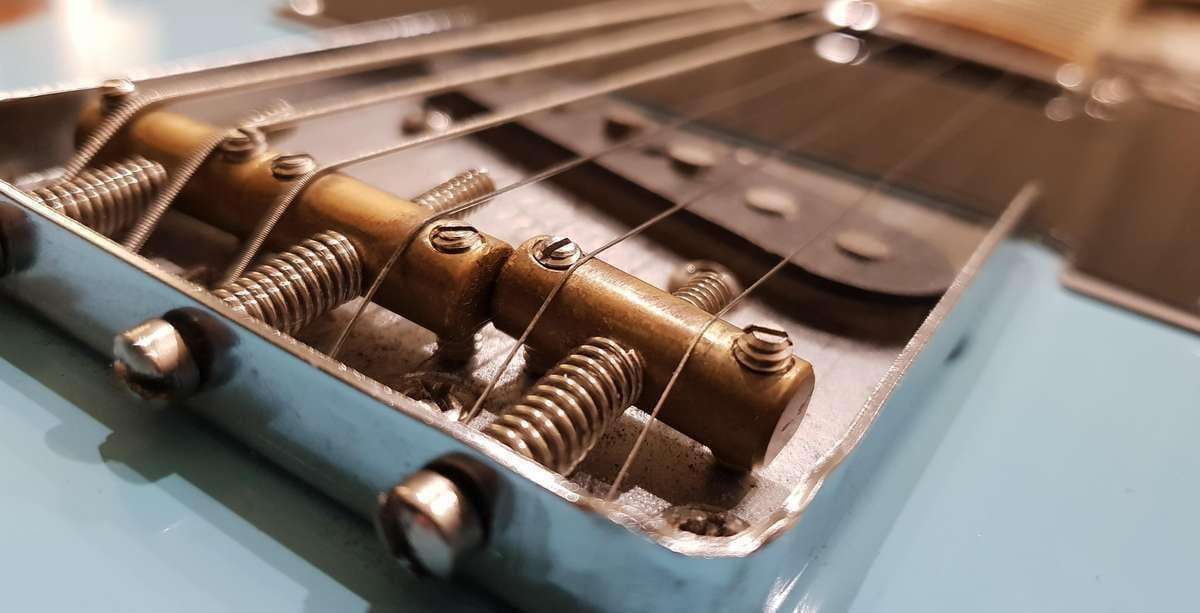
Telecaster intonation is the adjustment that helps fretted notes stay in tune as you move up the neck. The procedure depends on the bridge: six saddles give each string its own length adjustment, while three barrels make you work with pairs. Identify that difference first and the rest of the job becomes much easier to understand. Quick answer: Tune the string, then compare its 12th-fret harmonic…
Keep Reading →
Ibanez Edge tremolo setup begins by identifying the bridge, choosing your final strings and tuning, and separating spring balance from string height. An RG, S, or JEM name alone does not tell you which hardware is fitted. With the right manual beside the guitar, you can make each adjustment for a clear reason instead of chasing the tuning around. Quick answer: Identify the exact bridge and unlock…
Keep Reading →
Jazz Bass pickup height affects both the balance between strings and the blend of the two pickups. A useful adjustment begins with a repeatable measurement, then checks each pickup separately before listening to them together. You do not need a new set of pickups to find out whether the existing ones can sound more even. Quick answer: Measure from the pickup pole to the underside of the string…
Keep Reading →
Epiphone pickup height is worth checking before replacing a muddy neck pickup or a quiet bridge pickup. The useful setting depends on the installed pickup, its mounting system, and what you hear through your amp. A Les Paul humbucker and a Casino dogear P-90 do not move in the same way, even though both need sensible string clearance. Quick answer: Hold the outer strings at the highest fret and…
Keep Reading →