Jackson Serial Number Lookup: Free Instant Decoder & Checker
Enter your Jackson serial number to get its year, country and factory. Covers USA Custom Shop, Japan, Korea, Indonesia and China guitars from 1983 to now.
What's Next?
Now that you've decoded your Jackson guitar, here are the best places to continue:
- Setup Specs Lookup — Find factory specs by year and model
- Guitar Action Height Guide — Dial in perfect string height for shred setups
- Truss Rod Adjustment Guide — Safe neck relief adjustment
- My Gear Garage — Track your collection and maintenance schedule
- Garage Pro — Maintenance log with unlimited guitars, full history & smart reminders
Jackson Serial Number Lookup & Checker: Decode Your Guitar Instantly
A Jackson serial number lookup is the fastest way to identify when and where your guitar was made. Whether you need a Jackson guitar serial number lookup for a Randy Rhoads, Soloist, Dinky, or Kelly, our free tool decodes it in seconds. Jackson Guitars was founded in 1980 by Grover Jackson, who had previously built Charvel guitars in San Dimas, California. Jackson quickly became synonymous with metal and shred—the Randy Rhoads V, the Dinky, and the Soloist defined the sound of 1980s and 1990s heavy music. Today, Jackson is owned by Fender Musical Instruments (acquired in 2002) and produces guitars in the USA, Japan, Indonesia, Korea, China, and India.
Jackson has used at least six different serial number formats over four decades, making manual decoding tricky. Use the free Jackson serial number lookup tool above to decode your guitar instantly—whether it's a USA Custom Shop Randy Rhoads from 1985, a Japanese Dinky from 1995, or a modern Indonesian JS Series from 2020. No sign-up required. Enter your serial number Jackson and get production year, country, factory, and era in seconds. Dating Jackson guitars has never been easier.
At OwningAFender.com, we're the guitar serial number experts. Our Jackson serial number checker covers every major production era from the original Ontario, California Custom Shop (1983-2001) through today's global production network. Looking up Jackson serial numbers? You're in the right place.
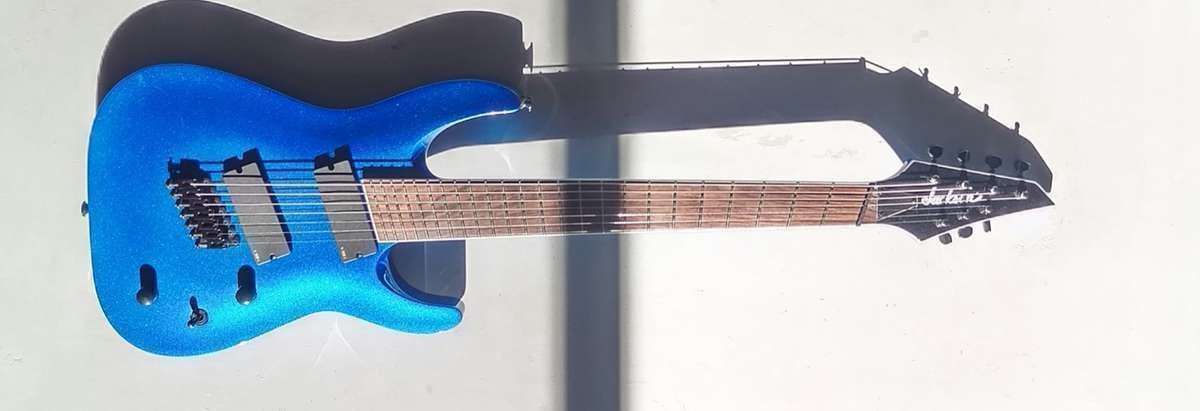
Jackson Serial Number Checker
The tool at the top of this page is a free Jackson serial number checker. Enter your serial number and it instantly returns your guitar's production year, manufacturing location, factory name, and era. No sign-up required—use it as often as you need to verify a single guitar or compare multiple instruments.
Our Jackson serial number decoder handles all six formats automatically: modern import (3-letter prefix + year + sequential), USA American Series (JAS prefix), USA neck-through (RR, J, JA, UO prefixes), USA bolt-on (4-6 digit neck plate), Japan (6-digit), and older import (8-10 digit). Just enter the number exactly as it appears on your guitar and click Decode. The Jackson serial number lookup tool does the rest.
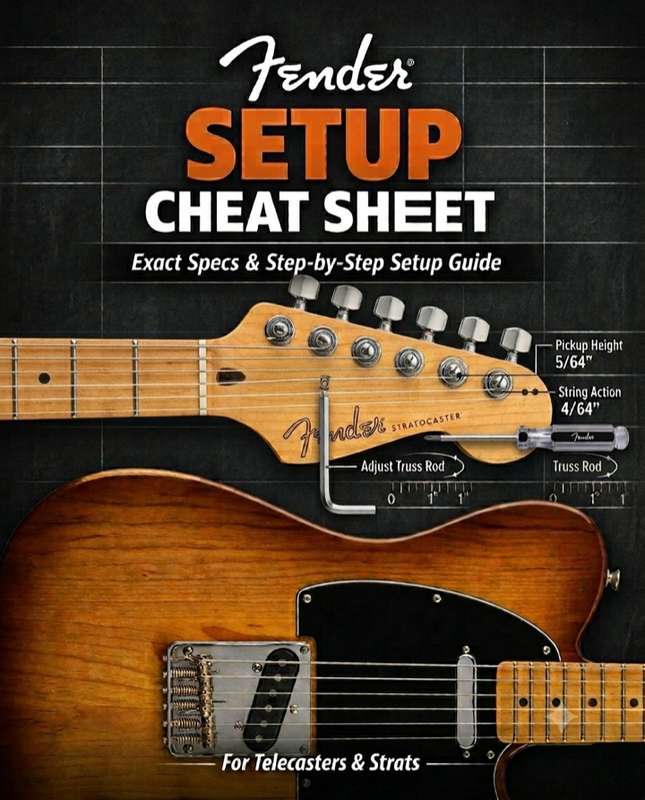
🎸 What's Next? Now that you know your guitar's year, the next step is setting it up to play its best. Factory specs—action height, neck relief, pickup height—vary by model and era. Want the exact specs for your Jackson? Check out our Factory Specs Lookup and Acoustic Guitar Setup Guide for acoustic models.
Where to Find Your Jackson Serial Number
Jackson serial numbers appear in different locations depending on the model and era:
- Back of headstock (most models): The majority of Jackson guitars have the serial stamped or printed on the back of the headstock, near the top. This applies to most USA, Japanese, and import models from the 1980s onward.
- Neck plate (USA bolt-on models, 1986-2001): USA Custom Shop bolt-on guitars from this era have a 4-6 digit serial number stamped on the metal neck plate where the neck bolts to the body.
- Inside neck pocket: Some USA bolt-on models may have additional markings inside the neck pocket. Remove the neck (carefully) only if necessary for authentication.
- Acoustic models: Jackson acoustics typically have the serial on a label inside the soundhole or stamped on the neck block.
Pro tip: USA neck-through models (Randy Rhoads, Soloist, Kelly) have the serial on the back of the headstock. Import models from 2013 onward use a 3-letter factory prefix—look for letters like ICJ, CYJ, or KWJ at the start.
How to Read Your Jackson Serial Number
Once you've found your Jackson serial number, identifying its format is the key to decoding it. Jackson has used six distinct systems over the years. Follow these steps:
Step 1: Count the characters and look for letters. Modern imports (2013+) start with 3 letters (e.g., ICJ, CYJ). USA models use prefixes like JAS, RR, J, JA, or UO. Pure numeric serials are either USA bolt-on (4-6 digits), Japan (6 digits), or older import (8-10 digits).
Step 2: For 3-letter prefix (e.g., ICJ1500001): The first 3 letters = factory code. Next 2 digits = year (15 = 2015). Remaining digits = sequential production number. Example: ICJ1500001 = Indonesia Cort, 2015, first guitar.
Step 3: For JAS prefix: USA American Series, built in Corona, CA. Contact Jackson support for exact date.
Step 4: For RR, J, JA, or UO prefix: USA neck-through from Ontario, CA (1983-2001). The number after the prefix is sequential; match to the approximate year ranges in the tables below.
Step 5: For 4-6 digit numeric (1001-8177): USA bolt-on Custom Shop. Match the number to the range table in the USA Bolt-On section.
Step 6: For 6-digit numeric (e.g., 012345): Japan (1990-1997). First digit = last digit of year (0 = 1990, 5 = 1995).
Step 7: For 8-10 digit numeric (e.g., 98123456): Older import. First two digits = year (98 = 1998).
Own another guitar? We also have free serial number decoders for Fender, Gibson, Squier, ESP, LTD, Schecter, Charvel, Epiphone, Gretsch, Ibanez, Martin, PRS, Taylor, Takamine, Yamaha, Chapman, Eastman, Guild, Harley Benton, Rickenbacker, Cort, and Seagull.
Jackson Serial Number Formats: Complete Reference
Jackson has used six distinct serial number systems. The format depends entirely on when and where your guitar was built.
Modern Import Serial Numbers (2013-Present)
Since 2013, Jackson import guitars use a consistent format: 3-letter factory prefix + 2-digit year + sequential production number. The prefix identifies the country and factory.
| Prefix | Country | Factory |
|---|---|---|
| IWJ | Indonesia | P.T. Wildwood |
| ISJ | Indonesia | Samick |
| ICJ | Indonesia | Cort |
| CYJ | China | Yako |
| CWJ | China | Unknown |
| KWJ | Korea | World Musical Instruments |
| NHJ | India | Harmony |
| JDJ | Japan | Chushin Gakki (Dinky) |
| JFJ | Japan | Chushin Gakki (Fusion) |
Format: PREFIX + YY + sequential number
Example: ICJ1500001 = Indonesia Cort factory, 2015, production number 1. Built in Indonesia by Cort in 2015.
Example: CYJ2201234 = China Yako factory, 2022, production number 1234. Built in China by Yako in 2022.
USA American Series (JAS Prefix)
Jackson USA American Series guitars built at the Fender facility in Corona, California use the JAS prefix followed by a sequential number. These are premium USA-made instruments produced after the 2002 Fender acquisition.
- Prefix: JAS
- Location: Corona, CA (Fender facility)
- Era: Modern (2000s-present)
- Exact dating: Contact Jackson/Fender support with your full serial for the exact production date. The JAS format does not encode the year in the serial.
USA Neck-Through Models (1983-2001)
USA neck-through Jackson guitars (Randy Rhoads, Soloist, Kelly, etc.) were built at the original Jackson/Charvel shop in Ontario, California. They use letter prefixes followed by sequential numbers.
| Prefix | Model Type | Era |
|---|---|---|
| RR | Randy Rhoads | 1983-2001 |
| J | Jackson USA (general) | 1983-2001 |
| JA | Jackson USA (alternate) | 1986-2001 |
| UO | USA Ontario | 1983-2001 |
Randy Rhoads (RR) approximate ranges:
- RR 1-500: 1983-1986
- RR 501-1500: 1986-1990
- RR 1501-3000: 1990-1995
- RR 3001+: 1995-2001
Example: RR0294 = Randy Rhoads model, approximately 1986-1990 production based on sequential number.
USA Bolt-On Models (1986-2001)
USA Custom Shop bolt-on guitars have a 4-6 digit serial number on the neck plate. The range 1001-8177 is documented.
| Serial Range | Approximate Year |
|---|---|
| 1001-1095 | 1986-1987 |
| 1096-2000 | 1987-1989 |
| 2001-3500 | 1989-1993 |
| 3501-5000 | 1993-1997 |
| 5001-6000 | 1997-2000 |
| 6001-8177 | 2000-2001 |
Example: Serial 2939 = USA bolt-on Custom Shop, approximately 1989-1993 production.
Japan Serial Numbers (1990-1997)
Japanese Jackson guitars from the 1990s use a 6-digit format. The first digit equals the last digit of the year.
| First Digit | Year |
|---|---|
| 0 | 1990 |
| 1 | 1991 |
| 2 | 1992 |
| 3 | 1993 |
| 4 | 1994 |
| 5 | 1995 |
| 6 | 1996 |
| 7 | 1997 |
Format: Y + 5-digit sequential (e.g., 512345 = 1995)
Example: 512345 = Japan, 1995, production number 12345.
Note: The first digit can be ambiguous—0 could mean 1990 or 2000 in some interpretations. Japanese Jackson production was primarily 1990-1997, so 0-7 typically indicates 1990-1997.
Older Import Serial Numbers (1990s-2000s)
Before the 3-letter prefix system (2013), Jackson import guitars from India, Taiwan, and Korea used 8-10 digit numeric serials. The first two digits typically indicate the year.
| First Two Digits | Year |
|---|---|
| 90-99 | 1990-1999 |
| 00-15 | 2000-2015 |
Example: 98123456 = Import, 1998, built in India, Taiwan, or Korea.
Example: 051234567 = Import, 2005, built in India, Taiwan, or Korea.
Decade-by-Decade Changes: What Your Jackson Serial Number Reveals
Your Jackson's production era tells you more than just its age—it reveals the factory, construction methods, and market position of that period. Here's what changed in each decade:
1980s: Founding and USA Custom Shop
Serial formats: RR, J, JA, UO prefixes (neck-through); 4-6 digit neck plate (bolt-on from 1986)
Jackson was founded in 1980 when Grover Jackson left Charvel. The Randy Rhoads model (RR prefix) launched in 1983 and became iconic. All production was in Ontario, California—neck-through Soloists, Kellys, and Rhoads models, plus bolt-on Dinkys from 1986. These are the most collectible Jackson guitars. Serial numbers were sequential with letter prefixes or 4-digit neck plate numbers.
1990s: Japan Production and Import Expansion
Serial formats: 6-digit Japan; 8-10 digit import (India/Taiwan/Korea)
Jackson expanded production to Japan in 1990. Japanese Dinkys and other models used the 6-digit format (first digit = year). Import production in India, Taiwan, and Korea began, using 8-10 digit serials with the first two digits indicating year. USA Custom Shop continued in Ontario. The 1990s saw the peak of Jackson's reputation in metal and shred.
2000s: Fender Acquisition
Serial formats: JAS (USA American Series); older import formats continued
Fender acquired Jackson (and Charvel) in 2002. USA production moved from Ontario to Corona, California (Fender facility). The JAS prefix was introduced for USA American Series. Import production continued with the older 8-10 digit format. The Ontario Custom Shop closed; the era of hand-built USA Jacksons from the original shop ended.
2010s: Modern Import System
Serial formats: 3-letter prefix + YY + sequential (from 2013)
Jackson introduced the standardized 3-letter factory prefix system in 2013. Factories in Indonesia (Cort, Samick, Wildwood), China (Yako), Korea (World), India (Harmony), and Japan (Chushin Gakki) each received unique prefixes. This format makes decoding straightforward—the prefix identifies factory, and the next two digits give the year. USA American Series (JAS) continued in Corona.
2020s: Current Production
Serial formats: Same as 2010s—3-letter prefix for imports, JAS for USA
Current Jackson production follows the same serial systems. Indonesian, Chinese, and Indian factories produce the bulk of import models. USA American Series guitars remain built in Corona. The serial number lookup tool above handles all current formats.
Key takeaway: Your Jackson serial number's era determines not just age, but where it was built and by whom. A 1985 USA Randy Rhoads (Ontario) is a different beast from a 2020 Indonesian JS32 (Cort factory)—both are genuine Jacksons, but the serial tells the full story.
Serial Number Mysteries Solved: Real Case Studies
Case 1: The Indonesian Cort Dinky
The Mystery: A player had serial ICJ1800123 and wasn't sure what it meant.
The Solution: ICJ = Indonesia Cort factory. 18 = 2018. 00123 = production number. This is a Jackson guitar built in Indonesia by Cort in 2018. The decoder returns: "Jackson guitar made in Indonesia by Cort in 2018."
Case 2: The Vintage Randy Rhoads
The Mystery: A collector found a Randy Rhoads with serial RR0123. Was it from 1983?
The Solution: RR = Randy Rhoads model, USA Ontario. Sequential number 123 falls in the 1-500 range, suggesting 1983-1986 production. This is an early Randy Rhoads from the first few years of production—highly collectible. The decoder returns an approximate year range.
Case 3: The USA Bolt-On Neck Plate
The Mystery: A Dinky with serial 4523 on the neck plate. USA or import?
The Solution: 4-digit number in the 3501-5000 range = USA Custom Shop bolt-on, approximately 1993-1997. This is a USA-built Dinky from the Ontario era. The neck plate serial is the key identifier for USA bolt-on models.
Case 4: The Japanese 6-Digit
The Mystery: Serial 612345 on the back of the headstock. Japan or USA?
The Solution: 6 digits, first digit = 6. Japanese format (1990-1997). First digit 6 = 1996. This is a Japanese Jackson from 1996—likely a Dinky or similar model built by a Japanese OEM.
Case 5: The JAS American Series
The Mystery: Serial JAS12345. The owner wanted the exact build date.
The Solution: JAS = USA American Series, Corona, CA. The JAS format does not encode the year in the serial. Contact Jackson/Fender support with the full serial for the exact production date. These are premium USA instruments built after the Fender acquisition.
Case 6: The Older Import 98
The Mystery: Serial 9812345678 on an import Jackson. What year and country?
The Solution: 8-10 digits, first two = 98. Older import format. 98 = 1998. Built in India, Taiwan, or Korea. The exact factory isn't encoded in this format—check the "Made in" label on the headstock or body for country of origin.
Case 7: The China Yako
The Mystery: Serial CYJ2005678. Where was it made?
The Solution: CYJ = China Yako factory. 20 = 2020. 05678 = production number. Built in China by Yako in 2020. Modern import format—straightforward decoding.
Case 8: The UO Prefix
The Mystery: Serial UO1234. What does UO mean?
The Solution: UO = USA Ontario. This is a USA neck-through Jackson from the original Ontario, California Custom Shop (1983-2001). The number 1234 is sequential. These are handcrafted neck-through instruments from the pre-Fender era.
Authentication Tips for Jackson Guitars
Jackson guitars—especially USA Custom Shop and vintage Japanese models—can command high prices, making them targets for counterfeiting. Here's how to verify authenticity:
Headstock Shape and Logo
Genuine Jackson headstocks have a distinctive asymmetric shape. The logo should be cleanly applied (inlaid on higher models, silk-screened on imports). Font and positioning are consistent. Fake Jacksons often have slightly wrong headstock proportions or blurry logos.
Serial Number Font and Quality
USA Custom Shop serials are typically stamped cleanly. Japanese serials are stamped or printed with consistent character spacing. Modern import serials (3-letter prefix) are usually printed. Blurry, hand-written, or inconsistent serials are red flags. The format must match the claimed era—a "1990 USA" guitar with an 8-digit import serial is suspicious.
Hardware Quality
USA and Japanese Jacksons use quality hardware: Floyd Rose or Jackson-branded trems, Grover or Jackson tuners, proper bridge mounting. Counterfeits often have cheap hardware, wrong screw patterns, or incorrect bridge types for the model.
Neck-Through Construction
USA neck-through models (Randy Rhoads, Soloist, Kelly) have a one-piece neck-through-body design. The neck wood extends through the body. Bolt-on models have a distinct neck joint. A guitar claiming to be a USA Soloist with a bolt-on neck is not authentic.
"Made in" Labels
Check the "Made in USA," "Made in Japan," or "Made in Indonesia" (etc.) label. It must match the serial format. A JAS serial = USA. ICJ/CYJ/KWJ = import. Mismatched labels and serials indicate a fake or parts guitar.
Red Flags
- Serial format doesn't match the claimed year or country
- Headstock shape looks off
- Cheap hardware on a "USA Custom Shop" guitar
- Bolt-on neck on a model that should be neck-through
- Suspiciously low price for a USA or Japanese model
- Seller refuses to provide clear photos of the serial number
Still unsure it's the real thing? The free fake Jackson quick-check runs the classic counterfeit tells — price, seller behaviour, serial number, decals, workmanship — and returns an instant risk band in two minutes. It can't see the guitar, but it tells you how hard to look before you pay.
Troubleshooting Guide
Issue 1: Serial Number Is Worn or Faded
Older Jackson serials—especially stamped neck plate numbers—can wear over time. Try different lighting angles to create shadows in the stamped characters. A magnifying glass helps. Take a photo and enhance contrast digitally. If the serial is partially legible, try entering what you can—the decoder may still recognize the format.
Issue 2: Serial Doesn't Match Any Format
Verify you're reading the correct number. Jackson guitars sometimes have model numbers, order codes, or other markings near the serial. The serial is typically the primary identifier. If it contains unexpected characters, double-check the location—back of headstock, neck plate, or inside neck pocket.
Issue 3: 6-Digit Japan—1990 or 2000?
Japanese 6-digit serials with first digit 0 could theoretically mean 1990 or 2000. Jackson's Japanese production was primarily 1990-1997. A first digit of 0 most likely indicates 1990. Check the guitar's features—hardware, finish, and model availability—to confirm the decade.
Issue 4: USA Bolt-On Number Outside 1001-8177
Documented USA bolt-on range is 1001-8177. Numbers outside this range may indicate a different series, a reissue, or a non-standard plate. Contact Jackson support for verification. Serial numbers above 8177 could be from later production or special runs.
Issue 5: Multiple Possible Formats
Some serials could match more than one format (e.g., a 6-digit number might look like a USA bolt-on or Japan). The decoder uses a priority order: modern import first, then USA formats, then Japan, then older import. If the result seems wrong, check the guitar's "Made in" label and physical features to confirm.
Found Your Year? Get Your Jackson's Setup Specs
Now that you know when your Jackson was made, the next step is finding the correct setup specifications for your specific model:
| Your Jackson | Setup Guide | Factory Specs |
|---|---|---|
| Electric | Action Height Guide | Factory Specs Lookup |
| Truss Rod | Truss Rod Adjustment Guide | Varies by model |
| Acoustic | Acoustic Guitar Setup Guide | Factory Specs Lookup |
| Strings | String Gauge Guide | 9-42 or 10-46 typical |
Jackson Factory Setup Specs (General):
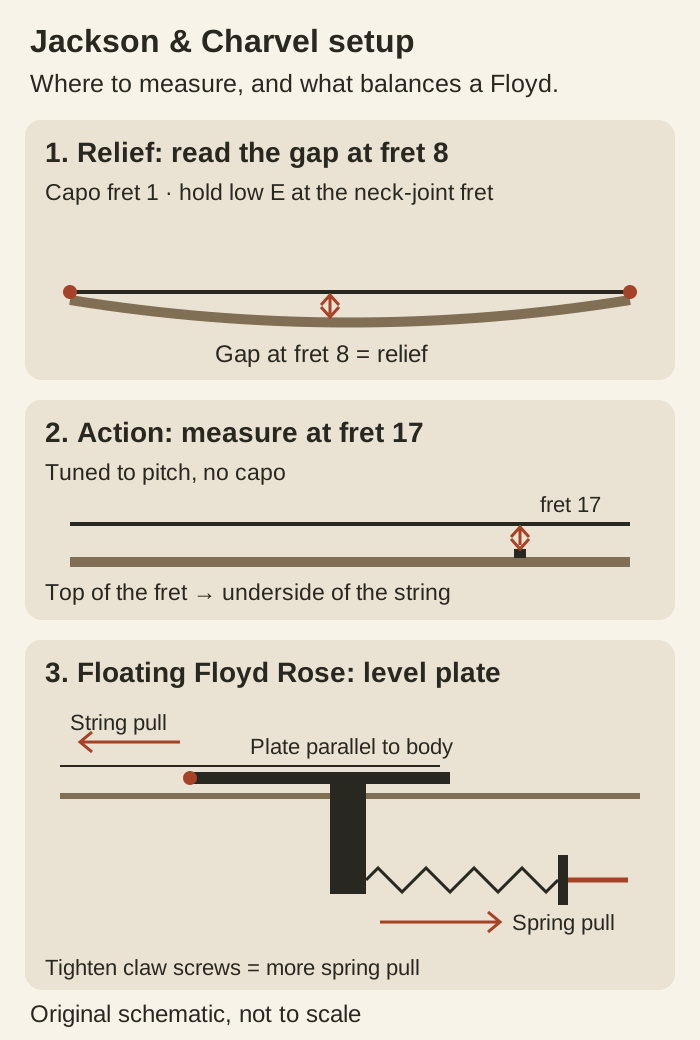
- Action at 12th fret: 1.5-2.0mm treble, 2.0-2.5mm bass (low action for shred)
- Neck relief: .008"-.010" at 7th fret with capo at 1st and finger at last fret
- Floyd Rose: Level with body, or slight forward tilt for pull-up
Use the Factory Specs Lookup for your specific model's nut width, fretboard radius, and recommended string gauge.
Just Got a Used Jackson?
If you're looking up a Jackson serial number, you probably just bought a used guitar—congratulations! The next step is getting it set up properly. Used guitars almost always need a fresh setup after changing hands.
Why a setup matters: Jackson guitars are built for low action and fast playing. A used Jackson may have drifted out of spec—neck relief, action height, and (on Floyd Rose models) bridge level. A proper setup restores the guitar to optimal playing condition.
Your next steps:
- Decode the serial using the tool above to confirm the year, country, and factory
- Look up factory specs using our Factory Specs Lookup
- Check action and relief — our Action Height Guide and Truss Rod Adjustment Guide walk you through the basics
- Save your guitar in My Gear Tracker to track serial number, specs, and setup history
- Verify authenticity — use the authentication tips above if the deal seemed too good to be true
Pro tip: USA and Japanese Jacksons typically have better fretwork and hardware than imports. But a well-set-up import can play great—don't dismiss a JS32 or X Series without trying it.
What's Your Jackson Worth?
Understanding your Jackson's era, origin, and model helps estimate its market value. Serial numbers reveal the first two factors—condition is up to you.
| Era | Origin | Typical Value Range |
|---|---|---|
| USA Custom Shop (1983-2001) | Ontario, CA | $2,000-$10,000+ |
| USA American Series | Corona, CA | $1,500-$3,000 |
| Japan (1990-1997) | Japanese OEM | $500-$1,500 |
| Modern Import (2013+) | Indonesia, China, Korea, India | $200-$600 |
| Older Import (1990s-2000s) | India, Taiwan, Korea | $150-$500 |
Factors that affect value:
- Model: Randy Rhoads, Soloist, and Kelly USA models command the highest prices. Dinky and X Series are more affordable.
- Condition: Mint with original case commands a premium. Refinishes and mods typically reduce value.
- Neck-through vs. bolt-on: USA neck-through models (RR, Soloist, Kelly) are more valuable than bolt-on Dinkys from the same era.
- Hardware: Original Floyd Rose, Jackson-branded trems, and quality tuners add value. Replacements and upgrades affect value depending on buyer preference.
- Country of origin: USA > Japan > Korea > Indonesia > China/India for resale value, generally.
Frequently Asked Questions (FAQ)
How do I read my Jackson serial number?
On most Jackson guitars the serial is on the back of the headstock—USA bolt-on models (1986-2001) have it stamped on the neck plate. Modern imports use a 3-letter factory prefix (ICJ = Indonesia Cort, CYJ = China Yako, KWJ = Korea) followed by two digits for the year, Japanese Jacksons (1990-1997) use a 6-digit serial whose first digit is the last digit of the year, and USA neck-throughs carry RR, J, JA, or UO prefixes. Or enter it in the free tool at the top of this page for an instant answer.
Can I look up my Jackson guitar by serial number?
Yes—the free tool at the top of this page instantly returns production year, country/factory, and model line, with no sign-up required.
How do I use the Jackson serial number lookup?
Use the free tool at the top of this page. Enter your serial number exactly as it appears on your guitar (back of headstock or neck plate). Click Decode to get production year, country, factory, and era. No sign-up required. The Jackson serial number lookup tool handles all six formats automatically.
Where is the Jackson serial number located?
On most Jackson guitars, the serial is on the back of the headstock. USA bolt-on models (1986-2001) have it on the neck plate. Some models may have additional markings inside the neck pocket. Acoustics typically have it on a label inside the soundhole.
What is a Jackson serial number decoder?
A Jackson serial number decoder is a tool that interprets the characters in your serial number to determine production year, country of origin, factory, and era. Our decoder covers all six Jackson serial formats: modern import (3-letter prefix), USA American Series (JAS), USA neck-through (RR/J/JA/UO), USA bolt-on (4-6 digit), Japan (6-digit), and older import (8-10 digit).
What do the 3-letter prefixes mean on modern Jackson serials?
Prefixes like ICJ, CYJ, and KWJ identify the factory. ICJ = Indonesia Cort, CYJ = China Yako, KWJ = Korea World Musical Instruments, etc. The next two digits are the year (e.g., 15 = 2015). See the Modern Import table above for the full list of Jackson serial numbers and their factory codes.
How do I date a Jackson guitar?
For modern imports (2013+), the two digits after the 3-letter prefix give the year. For Japanese Jacksons (1990-1997), the first digit of the 6-digit serial equals the last digit of the year. For USA bolt-on, match the 4-6 digit number to the range table. For JAS (USA American Series), contact Jackson/Fender support. Use our free Jackson serial number lookup tool above for instant results.
How do I date a USA Jackson with JAS serial?
The JAS prefix indicates USA American Series built in Corona, CA. The format does not encode the year. Contact Jackson/Fender support with your full serial number for the exact production date. These are premium USA-made instruments produced after the 2002 Fender acquisition.
Is there a free Jackson serial number checker?
Yes. The tool at the top of this page is a free Jackson serial number checker. Enter your serial for instant results—production year, country, factory, and era. No sign-up or payment required. It covers all six Jackson serial formats from 1983 to present.
What year is my Jackson?
Use our Jackson serial number lookup tool above, or match your serial format to the reference tables in this guide. For modern imports, the two digits after the prefix give the year. For Japanese 6-digit serials, the first digit equals the last digit of the year. For USA bolt-on, use the range table. The decoder handles all formats automatically.
What year is my Jackson guitar?
Enter your serial number in the free lookup tool at the top of this page. It instantly identifies the production year for all Jackson serial formats—modern import, USA, Japan, and older import. If you have a JAS (USA American Series) serial, contact Jackson/Fender support for the exact date, as the JAS format does not encode the year.
Are Japanese Jackson guitars good?
Yes. Japanese Jackson guitars from the 1990s (6-digit serial, first digit = year) are highly regarded. They were built by skilled OEMs to Jackson specifications and often rival USA quality at a lower price. Japanese Dinkys and similar models from 1990-1997 are sought after on the used market.
What does RR mean in a Jackson serial number?
RR stands for Randy Rhoads, the iconic V-shaped Jackson model. RR prefix serials indicate USA neck-through Randy Rhoads guitars built in Ontario, California from 1983 to 2001. The Jackson Randy Rhoads serial number range starts at RR 1 (1983) and extends through RR 3000+ (late 1990s-2001). These are among the most collectible Jackson guitars.
What is the Jackson USA bolt-on serial range?
USA Custom Shop bolt-on guitars (1986-2001) use 4-6 digit serials on the neck plate, range 1001-8177. Match the number to the range table: 1001-1095 = 1986-1987, 1096-2000 = 1987-1989, 2001-3500 = 1989-1993, 3501-5000 = 1993-1997, 5001-6000 = 1997-2000, 6001-8177 = 2000-2001.
How do I read a 6-digit Japanese Jackson serial?
Japanese Jackson serials (1990-1997) are 6 digits. The first digit equals the last digit of the year: 0=1990, 1=1991, 2=1992, 3=1993, 4=1994, 5=1995, 6=1996, 7=1997. Example: 512345 = Japan, 1995, production number 12345.
What does ICJ mean on a Jackson serial?
ICJ is the factory prefix for Indonesia Cort. Jackson guitars with ICJ at the start of the serial were built in Indonesia by Cort. The next two digits are the year (e.g., ICJ15 = 2015). This is part of the modern 3-letter prefix system introduced in 2013.
Where is the Jackson Soloist serial number?
The Jackson Soloist serial number is located on the back of the headstock. USA Soloist models (1983-2001) are neck-through instruments built in Ontario, California, with J, JA, or UO prefix serials. Modern import Soloists use the 3-letter factory prefix system (e.g., ICJ, CYJ). The serial format tells you whether your Soloist is USA-made or import.
Where is the Jackson Dinky serial number?
The Jackson Dinky serial number is on the back of the headstock for most models. USA bolt-on Dinkys (1986-2001) may have the serial on the neck plate (4-6 digit range 1001-8177). Japanese Dinkys (1990-1997) use the 6-digit format. Modern import Dinkys use the 3-letter prefix system (e.g., ICJ, CYJ, KWJ).
Where is the Jackson Kelly serial number?
The Jackson Kelly serial number is on the back of the headstock. USA Kelly models are neck-through instruments from the Ontario Custom Shop (1983-2001), using J, JA, or UO prefix serials. Modern import Kellys use the 3-letter factory prefix. The serial format identifies whether your Kelly is a USA Custom Shop or import model.
How much is my Jackson worth?
Value depends on era, origin, model, and condition. USA Custom Shop (1983-2001): $2,000-$10,000+. USA American Series: $1,500-$3,000. Japan (1990-1997): $500-$1,500. Modern import (2013+): $200-$600. Older import: $150-$500. Randy Rhoads, Soloist, and Kelly USA models command the highest prices. Condition is the most important factor. For a complete breakdown of the factors that affect guitar prices, see our complete guide to guitar valuation.
When did Fender acquire Jackson?
Fender acquired Jackson (and Charvel) in 2002. USA production moved from Ontario, California to Corona, California (Fender facility). The JAS prefix was introduced for USA American Series guitars. Import production continued and expanded under Fender ownership.
What is the difference between Jackson USA and import?
USA Jacksons (JAS, RR, J, JA, UO prefixes, or 4-6 digit neck plate) were built in California—either Ontario (1983-2001) or Corona (2002+). Import Jacksons use 3-letter prefixes (ICJ, CYJ, KWJ, etc.) or 8-10 digit formats, built in Japan, Indonesia, Korea, China, or India. USA models use higher-quality materials and hardware.
How do I spot a fake Jackson guitar?
Check the headstock shape and logo quality, verify the serial format matches the claimed era, inspect hardware quality (Floyd Rose, tuners, bridge), and confirm neck-through vs bolt-on construction matches the model. The serial format must match the "Made in" label. Mismatches indicate a fake or parts guitar.
What does UO mean in a Jackson serial?
UO stands for USA Ontario. Jackson guitars with UO prefix were built at the original Jackson/Charvel shop in Ontario, California (1983-2001). These are USA neck-through instruments—handcrafted guitars from the pre-Fender era that are highly collectible.
How do I decode an 8-digit Jackson import serial?
Older import Jackson serials (8-10 digits) use the first two digits for the year. 98xxxxxx = 1998, 05xxxxxxx = 2005. These were built in India, Taiwan, or Korea. Check the "Made in" label on the headstock or body for the specific country of origin.
Does Jackson have an official serial number lookup?
Jackson/Fender support can verify serial numbers, but there is no public online database. Our free Jackson serial number decoder provides instant results for all formats—including factory identification, year, country, and era—with no sign-up required. For JAS serials, contact Jackson support directly for exact production dates.
What is a Jackson serial number chart?
A Jackson serial number chart is a reference table that maps serial number ranges to production years. This page includes complete charts for all six Jackson formats: USA bolt-on ranges (1001-8177), Japanese year-digit tables (0-7 = 1990-1997), modern import prefix lists, and USA neck-through approximate ranges. Use the tables above or the free lookup tool for instant decoding.
Other Brand Serial Number Decoders
We're the guitar serial number experts—and we cover more than Jackson. If you own multiple brands, these tools will help:
- Fender Serial Number Lookup -- Decode USA, Mexico, Japan, and Indonesia Fender guitars from 1950 to present
- Squier Serial Number Lookup -- Decode Squier guitars from Indonesia, China, Korea, and Japan
- Gibson Serial Number Lookup -- Decode Gibson guitars from Nashville, Kalamazoo, and Bozeman
- Epiphone Serial Number Lookup -- Decode Epiphone guitars from China, Korea, Indonesia, and Japan
- Ibanez Serial Number Lookup -- Decode Ibanez guitars from Japan, Korea, Indonesia, and China
- PRS Serial Number Lookup -- Decode PRS guitars from USA, Korea, Indonesia, and China
- Yamaha Serial Number Lookup -- Decode Yamaha guitars from Japan, Taiwan, and Indonesia
- Taylor Serial Number Lookup -- Decode Taylor guitars from El Cajon and Tecate factories
- Martin Serial Number Lookup -- Decode Martin guitars from 1898 to present with complete serial chart
- Charvel Serial Number Lookup -- Decode Charvel guitars from San Dimas USA, Japan, and modern production
- Gretsch Serial Number Lookup -- Decode Gretsch guitars from USA Custom Shop, Japan, Korea, and China
- Schecter Serial Number Lookup — Decode Schecter guitars from Korea, Indonesia, China, and USA
- ESP Serial Number Lookup — Decode ESP/LTD guitars from Japan, USA, Korea, Indonesia, and China
- Factory Specs Lookup -- Find factory setup specifications for any guitar
 Buy on Amazon