Welcome to your ultimate Jaguar resource hub. The Fender Jaguar's unique offset design and complex hardware require specialized knowledge - you'll find everything you need right here.
Quick Navigation
Setup & Maintenance
- My Gear Garage - Track your collection and maintenance schedule
- Jaguar Serial Numbers - Decode your Jaguar serial number by year, country, and era
- Serial Number Lookup - Decode your serial number to find production year
- Fender Fake Checker - Free red-flag checklist to verify a Jaguar isn't a counterfeit before you buy
- Factory Specs Lookup Tool - Find official factory setup specs for your guitar
- Ultimate Setup Guide - Complete step-by-step setup
- Guitar Action Height Guide - Perfect your string height for optimal playability
- Jaguar Bridge Height and Action - Identify the end posts and saddle screws before adjusting action
- Tremolo Setup Guide - Floating tremolo configuration
- Truss Rod Adjustment - Safe neck adjustment
- Jaguar Controls Explained - Deep dive into switches and knobs
- Jaguar Wiring Guide - Volume, tone pot mods, and circuit upgrades
Strings & Upgrades
- String Gauge Recommendation Tool - Get a personalized gauge and top string set picks for your guitar, style, and tuning
- Best Strings for Jaguar - Complete string recommendations and comparison guide
- String Gauge Selection Guide - Master action height and string gauge selection
- Guitar String Gauges: Complete Guide - Universal gauge and tension overview
Buying & Comparisons
- Jazzmaster vs Jaguar Comparison - Complete offset guitar comparison
- Complete Jazzmaster Guitar Guide - Hub for Jazzmaster setup, serial numbers, and specs
- Jazzmaster Serial Numbers - Decode your Jazzmaster serial number by year, country, and era
- Mustang vs Jaguar Comparison - Complete offset guitar comparison
- Fender Neck Profiles Guide - Visual guide to C, V, D shapes and comfort
- Coming Soon: Complete Jaguar buying guide
Quick Reference Specs
- Jaguar string height (12th fret): High E ≈ 1.5–1.6 mm, Low E ≈ 1.9–2.0 mm
- Jaguar pickup height (last fret pressed): Neck 2.2 mm bass / 1.8 mm treble; Bridge 2.0 mm bass / 1.6 mm treble
- Jaguar neck relief: 0.010–0.012 in (0.25–0.30 mm) at the 8th fret
Essential Tools for Jaguar Setup
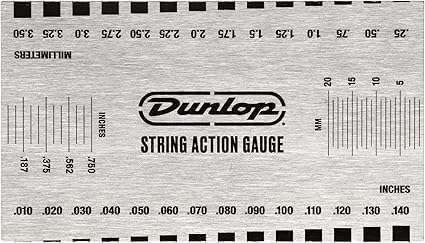
- String height gauge for precise action
- Feeler gauges for neck relief
- Correct Allen keys and screwdrivers for bridge and tremolo
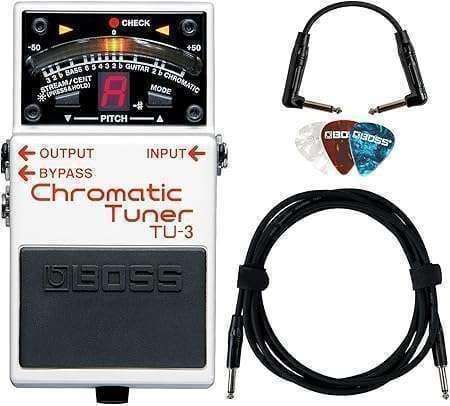
- High-accuracy tuner for intonation
- Nut lubricant for smoother tremolo return-to-pitch
 Buy on Amazon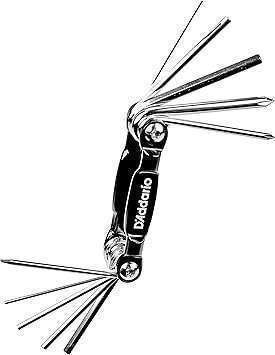
The Jaguar Mystique: More Than Just "Short Scale"
Introduced in 1962 as Fender's new top-of-the-line model, the Jaguar was Leo Fender's attempt to entice Gibson players with a feature-rich, shorter-scale instrument. It failed at that specific goal but succeeded in creating something entirely unique. The 24-inch scale length is the defining characteristic—it lowers string tension significantly compared to a Stratocaster (25.5"), making bends practically effortless and chords feel compact.
However, this low tension is a double-edged sword. It requires a specific setup approach (heavier strings, proper break angle) to prevent buzzing and strings jumping out of saddles. When set up correctly, it offers a percussive, plunky attack that no other guitar can replicate.
Under the Hood: Mastering the Controls
The Jaguar is famous (or infamous) for its chrome plates and confusing switches. Here operates on two distinct circuits:
📘 Deep Dive: For a full breakdown of every switch, read our Jaguar Controls Explained guide.
1. The Lead Circuit (Lower Controls)
This is your standard operation mode.
- Three Slider Switches (Hexagon Plate):
- Neck Pickup On/Off
- Bridge Pickup On/Off
- "Strangle" Switch: A high-pass filter capacitor (usually 0.003µF) that cuts low frequencies. It instantly thins out the sound, perfect for cutting through a dense mix or heavy fuzz.
- Master Volume & Tone: Located on the lower chrome control plate.
2. The Rhythm Circuit (Upper Controls)
Located on the upper horn, this circuit only engages the neck pickup, completely bypassing the pickup selector switches and master controls.
- Slide Switch: Activates the Rhythm Circuit.
- Roller Wheels: Independent Volume and Tone for this circuit only.
- Tone Profile: The Rhythm Circuit uses 50k or 1meg pots with a different capacitor value, making it significantly darker and warmer—ideal for jazz Comping or warm fuzz textures.
Setup Peculiarities: The "Offset" Challenge
The Jaguar requires a different mindset than a Telecaster. Here are the keys to a stable instrument:
- The Shim Factor: Because the tremolo is so far from the bridge, the string break angle over the saddles is shallow. This causes buzz. A neck shim (0.5 to 1 degree) tips the neck back, forcing you to raise the bridge. This increases downward pressure, killing buzz and adding sustain.
- String Gauge Matters: Without the tension of a long scale, light strings (9s) will feel like rubber bands and won't drive the bridge. We strongly recommend 11-49 or heavier for authentic tone and stability.
- The Rocking Bridge: The bridge is designed to rock back and forth with the tremolo action. Do not wrap the posts in tape unless you absolutely must. The rocking motion is what allows the Jaguar to stay in tune during vibrato use.
Popular Jaguar Topics
Short Scale Setup
The Jaguar's 24" scale length requires specific setup considerations, especially regarding string tension, intonation, and tremolo balance.
Complex Switching System
Understanding the Jaguar's lead/rhythm switching, pickup selectors, and tone circuits is essential for getting the most from this versatile instrument.
Tremolo System
The Jaguar's floating tremolo system is more complex than a Stratocaster's, featuring a lock mechanism and requiring careful setup for optimal performance.
Jaguar FAQ
What is the ideal Jaguar pickup height? Start near Neck 2.2 mm (bass) / 1.8 mm (treble) and Bridge 2.0 mm (bass) / 1.6 mm (treble) with the last fret pressed, then fine‑tune by ear for balance and clarity.
How low should Jaguar string height be? Begin around 1.5–1.6 mm on the high E and 1.9–2.0 mm on the low E at the 12th fret; adjust for technique and fretwork.
How do I stabilize the Jaguar tremolo? Balance spring tension to string pull, ensure sufficient neck angle (shim if needed), and lubricate nut and bridge contact points to improve return‑to‑pitch.
Should I shim the neck on a Jaguar? Often, yes. A thin shim increases the break angle over the bridge, helping sustain and tuning stability—especially with the floating tremolo.
What string gauge works best on Jaguars? 10–46 or 11–49 are common baselines. Heavier sets improve stability, reduce string jump, and feel more solid on the short 24" scale.
Must I upgrade the bridge? Not necessarily. A well‑set vintage bridge can work. If strings jump or rattle persistently, consider a Mustang‑style or dedicated aftermarket bridge.
What does the trem‑lock do? It parks the tremolo at a neutral point. Useful for string changes, emergencies (string break), and as a consistent return‑to‑pitch stop when set correctly.
How do I set pickup height by ear? Match output between positions first, then balance bass/treble clarity. Avoid magnetic pull causing warble on low strings.
How can I reduce bridge rattle on a Jaguar? Verify the bridge posts fit snugly in the thimbles, add a touch of threadlocker to loose height screws, and ensure adequate neck angle so strings seat firmly in the saddles. For step‑by‑step setup, see the Ultimate Jaguar Setup Guide.
Should I float the tremolo or set it tighter? Float for expressive vibrato and correct lock function; set slightly tighter if you need more stability. Balance so the lock engages at pitch with light resistance—see Jaguar Tremolo Setup.
What are common setup mistakes on Jaguars? Too little neck angle, pickup height too close (causing warble), and unbalanced spring tension. Follow relief → action → pickup height → intonation, then fine‑tune tremolo balance. Reference: Jaguar Truss Rod Relief.
Recent Updates
Compare a 24-inch scale with your other guitar using the same-string tension comparison. Keep the string and pitch constant to isolate the scale-length difference.
- New: Guitar String Gauges: Complete Guide - Understand sizes, tension, and how to choose
- New: Tremolo Setup Guide - Complete tremolo configuration
- New: Truss Rod Adjustment Guide - Safe neck adjustment
- Updated: Ultimate Setup Guide - Enhanced with new measurements
- New: Jaguar Controls Explained - Deep dive into switches and knobs
- New: Jaguar Wiring Guide - Volume, tone pot mods, and circuit upgrades
- Coming Soon: Jaguar pickup and electronics guide
The Jaguar Through History
1962: The Surf Rock King
Designed as Fender's top-of-the-line model, the Jaguar featured more chrome, more switches, and a shorter scale than anything else. It became the weapon of choice for surf bands like The Beach Boys due to its percussive "plonk" and mute kit.
1990s: The Grunge Resurrection
After falling out of fashion, cheap pawn-shop Jaguars were picked up by Kurt Cobain and other alternative rockers. They loved the "broken" sound, the feedback potential, and the anti-shredder aesthetic. This era cemented the Jaguar as the icon of indie cool.
Modern Era: Refined Offsets
Today, the Jaguar is more popular than ever. Modern versions often seek to "fix" the original quirks—improving the bridge stability and simplifying the switching—while keeping the ergonomic offset body shape that makes it so comfortable to play.
Other Fender Guitar Hubs
🎸 Explore Other Fender Guitars
- Telecaster Hub - Complete Telecaster resource with setup guides, wiring diagrams, and string recommendations
- Stratocaster Hub - Complete Stratocaster resource with setup guides, tremolo tips, and string recommendations
- Jazzmaster Hub - Jazzmaster-specific setup techniques and bridge solutions
- Epiphone Hub - Complete Epiphone resource with serial lookup and setup guides
- Ibanez Hub - Complete Ibanez resource with RG, S, JEM guides and serial lookup
- Squier Hub - Complete Squier Telecaster resource with setup guides and modifications
- Precision Bass Hub - Complete Precision Bass setup and maintenance guides
Featured Offset Guitar
Similar setup to Jaguar:
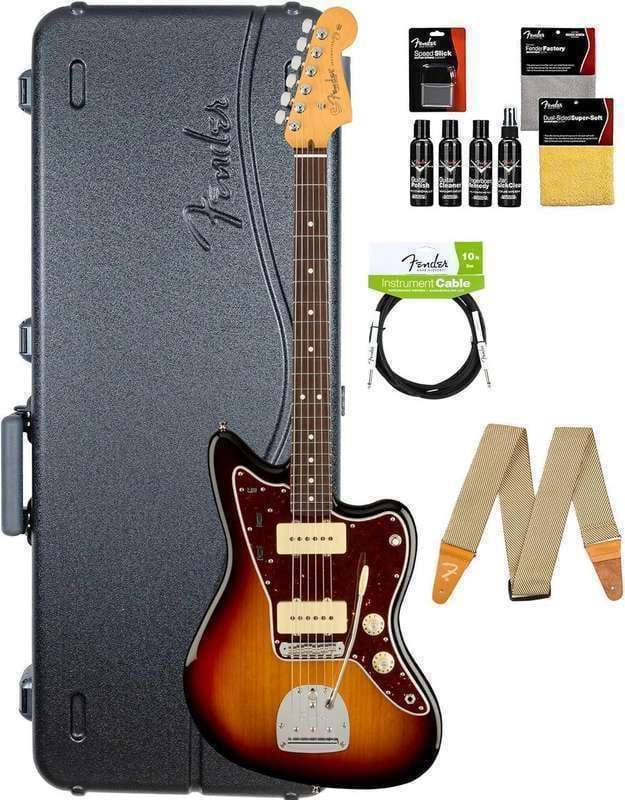
Explore our comprehensive Jaguar guides and master this unique offset guitar.