Taylor Serial Number Lookup: Year, Factory & Series Decoder
Decode a Taylor serial number: count the digits, read the build date and factory (El Cajon or Tecate), and check worked examples for every format since 1975.
Taylor Serial Numbers at a Glance
Taylor has used four serial number systems since 1975. Count the digits first — that tells you which one you are reading:
| Digits | Years | What it encodes |
|---|---|---|
| 10 | Nov 2009 – present | Factory, full build date, daily sequence |
| 11 | 2000 – Oct 2009 | Build date, series code, daily sequence |
| 9 | 1993 – 1999 | Build date, series code, daily sequence |
| 2–5 | 1975 – 1992 | Sequential number, matched to a yearly range |
Enter the number exactly as printed on the label. The decoder returns the build year, the factory (El Cajon or Tecate) and, for 1993–2009 serials, the series code. It cannot confirm the model, tonewoods or whether a guitar is genuine — see what a Taylor serial number can't tell you.
Where to Find Your Taylor Serial Number
Taylor serial numbers are located in different places depending on the model:
- Acoustic guitars (1999-present): On the label inside the soundhole, visible through the sound opening
- Acoustic guitars (1998 and older): On the heel block, visible by looking deep into the soundhole
- T5, T5z models: Inside the bass-side f-hole
- SolidBody electric guitars: On the bridge adjustment access panel on the back
Pro tip: Use a flashlight and angle it inside the soundhole. The label is typically on the back brace or the inside of the back panel. On older guitars, the serial may be stamped (not printed) on the neck block.
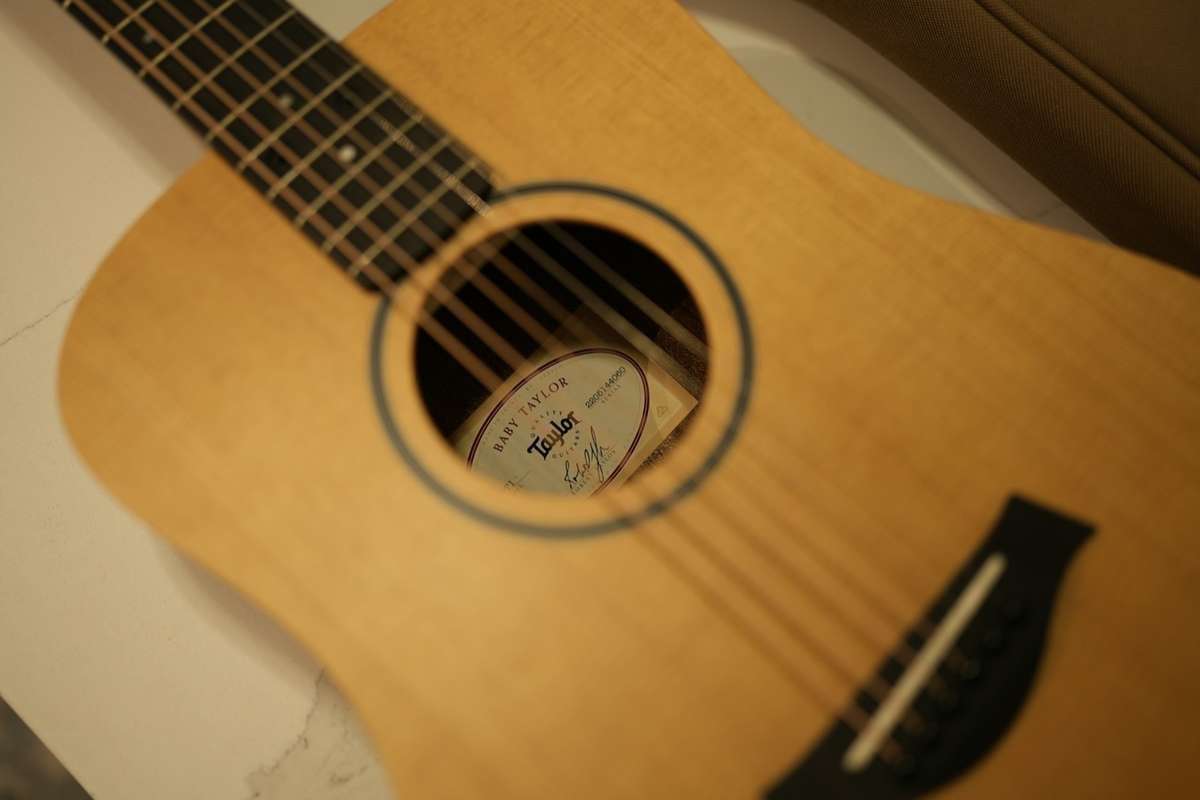
Photo by Tarik Caramanico on Unsplash
How to Read Your Taylor Serial Number
Once you've found your Taylor serial number, understanding its format is the key to decoding it. Taylor has used four different systems over the years, and the number of digits tells you which format you have.
10-Digit Format (2009-Present):
- Format:
FYMMDDSYNNwhere F=factory, Y+Y=year (split), MM=month, DD=day, NNN=sequence - Example:
1107064001= El Cajon, July 6, 2014, first guitar that day - The year digits are split between positions 2 and 7—this is the most common source of confusion
11-Digit Format (2000-2009):
- Format:
YYYYMMDDXNNwhere YYYY=year, MM=month, DD=day, X=series, NN=sequence - Example:
20070615102= June 15, 2007, 500+ Series, second guitar that day - The first four digits directly give you the year
9-Digit Format (1993-1999):
- Format:
YYMMDDXNNwhere YY=year, MM=month, DD=day, X=series, NN=sequence - Example:
980715102= July 15, 1998, 500+ Series, second guitar that day - The first two digits are the year (93-99)
Sequential Format (1975-1992):
- Format: Simple sequential numbers (109 through ~17,947)
- No date encoding—match the number to the year range table below
- Early guitars (1975-1977) may have a "10" or "20" prefix
Worked Examples: Decoder Output for Each Format
These rows are generated from the same decoder that runs at the top of this page. The serials are made-up numbers that follow each Taylor format, so you can see how your own number should read before you enter it.
| Example serial | Format | Year | Made in | What the decoder reports |
|---|---|---|---|---|
1104219123 | 10 digits, El Cajon (late 2009 on) | 2019 | El Cajon, California | Taylor guitar made at the El Cajon, California factory on 4/21/2019. Sequence #123. |
2208123045 | 10 digits, Tecate (late 2009 on) | 2023 | Tecate, Mexico | Taylor guitar made at the Tecate, Mexico factory on 8/12/2023. Sequence #045. |
20050315102 | 11 digits (2000–2009) | 2005 | El Cajon, California · 500+ Series | Taylor 500+ Series guitar made in El Cajon, California on 3/15/2005. Sequence #02. Series code "1" = 500+ Series. |
970612012 | 9 digits (1993–1999) | 1997 | El Cajon, California · 300/400 Series | Taylor 300/400 Series guitar made in El Cajon, California on 6/12/1997. Sequence #12. |
12000 | Sequential (1975–1992) | 1990 | El Cajon, California | Taylor guitar made in El Cajon, California in 1990. Sequential serial number #12000. |
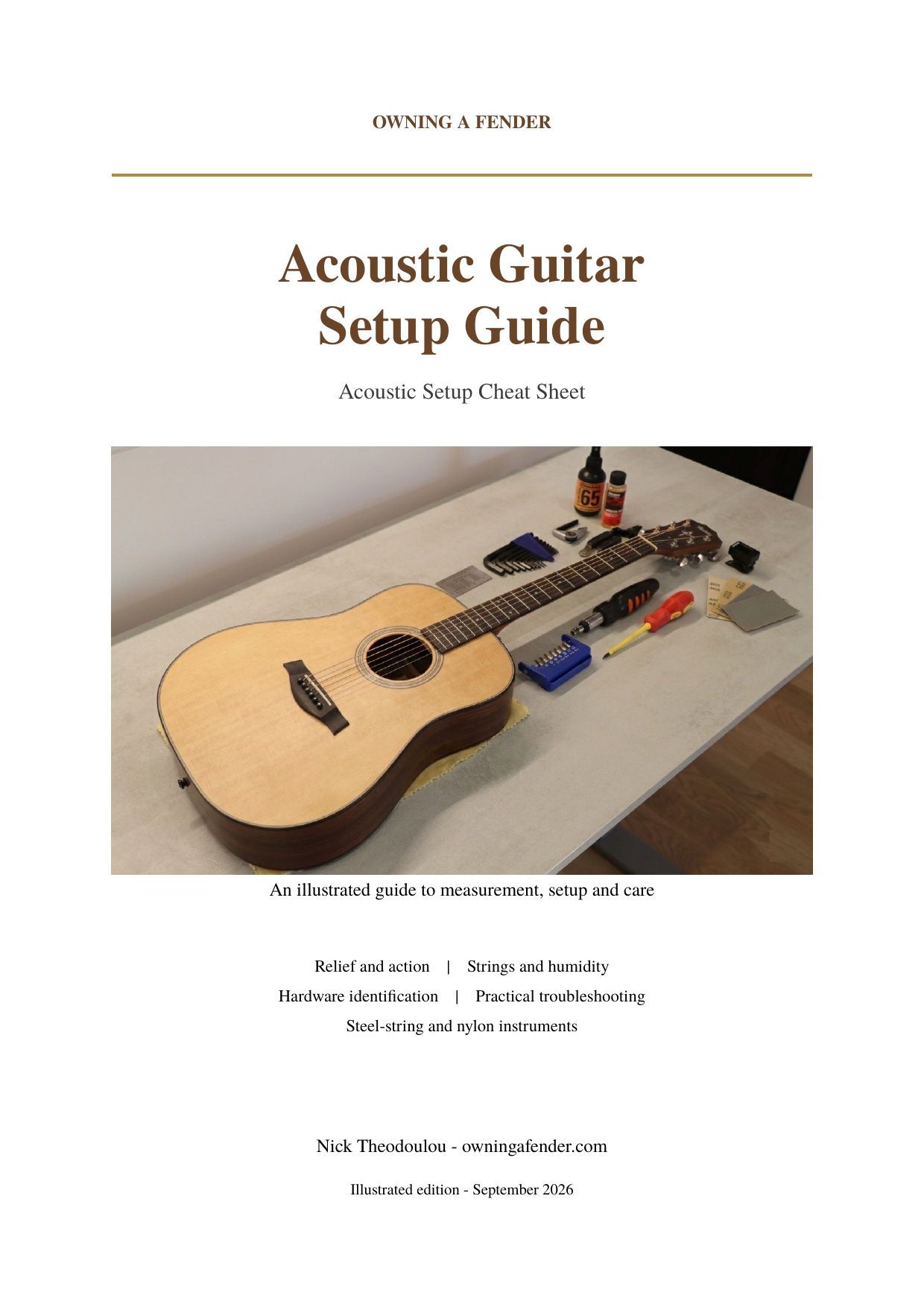
Own another guitar? We also have free serial number decoders for Fender, Gibson, Squier, ESP, LTD, Schecter, Charvel, Epiphone, Gretsch, Ibanez, Jackson, Martin, PRS, Takamine, Yamaha, Chapman, Eastman, Guild, Harley Benton, Rickenbacker, Cort, and Seagull.
Taylor Serial Number Formats: Complete Reference
Taylor has used four distinct serial number systems. The format depends entirely on when your guitar was built.
Format 1: 10-Digit (November 2009 – Present)
This is the current format used on all Taylor guitars.
| Position | Meaning | Values |
|---|---|---|
| Digit 1 | Factory | 1 = El Cajon, CA (USA) / 2 = Tecate, Mexico |
| Digit 2 | Year (first digit) | Combined with Digit 7 for full year |
| Digits 3-4 | Month | 01-12 |
| Digits 5-6 | Day | 01-31 |
| Digit 7 | Year (second digit) | Combined with Digit 2 for full year |
| Digits 8-10 | Daily sequence | 001-999 |
Example: Serial 1107064001
- Digit 1 = 1 → El Cajon, California
- Digits 2 + 7 = 1 and 4 → 2014
- Digits 3-4 = 07 → July
- Digits 5-6 = 06 → 6th
- Digits 8-10 = 001 → First guitar built that day
Result: First guitar built in El Cajon on July 6, 2014.
Example: Serial 2209151002
- Digit 1 = 2 → Tecate, Mexico
- Digits 2 + 7 = 2 and 1 → 2021
- Digits 3-4 = 09 → September
- Digits 5-6 = 15 → 15th
- Digits 8-10 = 002 → Second guitar built that day
Result: Second guitar built in Tecate on September 15, 2021.
Format 2: 11-Digit (January 2000 – October 2009)
| Position | Meaning | Values |
|---|---|---|
| Digits 1-4 | Year | 2000-2009 |
| Digits 5-6 | Month | 01-12 |
| Digits 7-8 | Day | 01-31 |
| Digit 9 | Series code | See series table below |
| Digits 10-11 | Daily sequence | 01-99 |
Example: Serial 20070615102
- Digits 1-4 = 2007 → Year 2007
- Digits 5-6 = 06 → June
- Digits 7-8 = 15 → 15th
- Digit 9 = 1 → 500+ Series
- Digits 10-11 = 02 → Second guitar of that series built that day
Format 3: 9-Digit (1993 – 1999)
| Position | Meaning | Values |
|---|---|---|
| Digits 1-2 | Year | 93-99 |
| Digits 3-4 | Month | 01-12 |
| Digits 5-6 | Day | 01-31 |
| Digit 7 | Series code | See series table below |
| Digits 8-9 | Daily sequence | 01-99 |
Example: Serial 980715102
- Digits 1-2 = 98 → 1998
- Digits 3-4 = 07 → July
- Digits 5-6 = 15 → 15th
- Digit 7 = 1 → 500+ Series
- Digits 8-9 = 02 → Second guitar of that series built that day
Format 4: Sequential Numbers (1975 – 1992)
Before 1993, Taylor used simple sequential numbering. Match your serial to the range table:
| Year | Serial Range | Approx. Production |
|---|---|---|
| 1975 | 109 – 146 | ~37 |
| 1976 | 147 – 315 | ~168 |
| 1977 | 316 – 450 | ~134 |
| 1978 | 451 – 900 | ~449 |
| 1979 | 901 – 1,300 | ~399 |
| 1980 | 1,301 – 1,400 | ~99 |
| 1981 | 1,401 – 1,670 | ~269 |
| 1982 | 1,671 – 1,951 | ~280 |
| 1983 | 1,952 – 2,445 | ~493 |
| 1984 | 2,446 – 3,206 | ~760 |
| 1985 | 3,207 – 3,888 | ~681 |
| 1986 | 3,889 – 4,778 | ~889 |
| 1987 | 4,779 – 5,981 | ~1,202 |
| 1988 | 5,982 – 7,831 | ~1,849 |
| 1989 | 7,832 – 10,070 | ~2,238 |
| 1990 | 10,071 – 12,497 | ~2,426 |
| 1991 | 12,498 – 15,249 | ~2,751 |
| 1992 | 15,250 – 17,947 | ~2,697 |
Note: Early Taylor guitars (1975-1977) used 5-digit serials with a "10" or "20" prefix (e.g., 10109, 20147). The 410 model used a special "4-XXXX" format in 1991-1992.

 Buy on Amazon
Taylor Series Codes Reference
For 9-digit and 11-digit serial numbers, the series code digit identifies the model line:
| Code | Series | Typical Models |
|---|---|---|
| 0 | 300/400 Series | 314ce, 414ce, 324e |
| 1 | 500+ Series | 514ce, 614ce, 714ce, 814ce, 914ce |
| 2 | 200 Series | 210ce, 214ce, 224ce-K |
| 3 | Baby Taylor / Big Baby | Baby Taylor BT1, Big Baby BBT |
| 5 | T5 / T5z | T5, T5z Classic, T5z Standard |
| 6 | T3 | T3 (semi-hollow electric) |
| 7 | Nylon Series | 312ce-N, 512ce-N, Academy 12-N |
| 8 | 100 Series | 110e, 114ce, 150e 12-string |
| 9 | SolidBody Electric | SolidBody Standard, Classic |
Note: The 10-digit format (2009+) does not include a series code digit. The series must be identified from the model name on the label.
Taylor Factory Locations
El Cajon, California (USA) — Factory Code "1"
Taylor's original and primary factory, located in El Cajon, California (east of San Diego). This is where Bob Taylor and Kurt Listug founded the company in 1974. The El Cajon facility produces all premium models (500+ Series, 800 Series, 900 Series, Presentation Series, and Builder's Edition). It's also home to Taylor's R&D, the wood mill, and the company's famous factory tours.
Tecate, Mexico — Factory Code "2"
Opened in 2000, the Tecate facility produces Taylor's more affordable lines: 100 Series, 200 Series, Baby Taylor, GS Mini, and Academy models. Despite the lower price point, Tecate guitars are built to Taylor's exacting standards using the same CNC machinery and quality control processes as El Cajon. Many players consider the GS Mini (built in Tecate) to be one of the best travel guitars ever made.
Lemon Grove, California (Historical)
Taylor's very first workshop was in Lemon Grove, California (1974-1980). Guitars with sequential serials below ~1,400 were built here. The company moved to El Cajon in 1981 for more space.
Decade-by-Decade Changes: What Your Taylor Serial Number Reveals
Your Taylor's production era tells you more than just its age—it reveals the bracing, electronics, body shapes, and tonewoods used during that period. Here's what changed in each era:
1974-1983: The Founding Era
Serial Range: 109-2,445 (sequential)
- Body Shapes: Dreadnought and Grand Concert only
- Bracing: Traditional X-bracing, hand-shaped
- Tonewoods: Sitka spruce tops, Indian rosewood or mahogany backs/sides
- Electronics: None (purely acoustic)
- Value: $2,000-$8,000+ (very rare, low production of ~37-493 guitars/year)
- Notable: Bob Taylor and Kurt Listug founded the company in a Lemon Grove workshop. Every guitar was hand-built. These are the rarest Taylors in existence.
1984-1992: The Growth Era
Serial Range: 2,446-17,947 (sequential)
- Body Shapes: Grand Auditorium introduced (1994 prototype in late 1992)
- Bracing: Refined X-bracing patterns
- Tonewoods: Sitka spruce, Indian rosewood, koa (800 Series), maple (600 Series)
- Electronics: Optional Fishman pickups on some models
- Value: $800-$3,000 (growing production, 760-2,700 guitars/year)
- Notable: Taylor established its reputation for playability. The bolt-on neck design was refined. Production moved to El Cajon in 1981.
1993-1999: The Expansion Era
Serial Range: 9-digit date-coded serials
- Body Shapes: Grand Auditorium (GA) became Taylor's signature shape
- Bracing: Standardized X-bracing across all models
- Tonewoods: Expanded tonewood options including ovangkol, sapele, and blackwood
- Electronics: Expression System (ES1) introduced in 1999—a game-changer for amplified acoustic tone
- Value: $600-$2,500 (rapid growth, production exceeded 10,000 guitars/year)
- Notable: The 314ce and 814ce became best-sellers. Taylor became the #1 acoustic guitar brand in the US by the late 1990s.
2000-2009: The Innovation Era
Serial Range: 11-digit date-coded serials
- Body Shapes: Grand Symphony (GS) introduced (2006), Baby Taylor and Big Baby expanded
- Bracing: Forward-shifted X-bracing on some models
- Tonewoods: Hawaiian koa, cocobolo, and sustainable alternatives explored
- Electronics: ES1 standard on most models, NT (New Technology) neck joint standard since 2001
- Value: $500-$2,000 (Tecate factory opened in 2000, production doubled)
- Notable: The NT neck joint revolutionized acoustic guitar manufacturing. Taylor opened the Tecate facility for affordable models. The GS Mini concept was developed.
2010-2017: The Modern Era
Serial Range: 10-digit date-coded serials
- Body Shapes: GS Mini (2010), Grand Orchestra (GO, 2013), Grand Pacific (GP, 2019 prototype)
- Bracing: X-bracing refined, forward-shifted options
- Tonewoods: Urban wood program launched (reclaimed city trees), neo-tropical mahogany
- Electronics: ES2 (Expression System 2) introduced in 2014—behind-the-saddle sensors
- Value: $500-$3,500 (GS Mini became a phenomenon)
- Notable: The GS Mini became one of the best-selling acoustic guitars ever. Andy Powers joined as master builder in 2011.
2018-Present: The V-Class Era
Serial Range: 10-digit date-coded serials
- Body Shapes: Grand Pacific (2019) added, full range of 6 body shapes
- Bracing: V-Class bracing introduced in 2018—Taylor's biggest innovation since the NT neck
- Tonewoods: Urban ash, urban ironbark, sustainable sourcing emphasis
- Electronics: ES2 standard, some models with ES-B (bass-optimized)
- Value: $400-$4,000+ (V-Class models command premium)
- Notable: V-Class bracing replaces X-bracing with a V-shaped pattern that increases volume, sustain, and intonation accuracy. Andy Powers' design is now standard on most Taylor models. Builder's Edition models represent the pinnacle.
Key Takeaway: Your Taylor serial number's era determines not just age, but the entire spec profile. A 1998 814ce (ES1, X-bracing) plays and sounds quite different from a 2020 814ce (ES2, V-Class bracing), even though they share the same model number.

Taylor Model Number Reference
Taylor uses a logical 3-digit model numbering system. Understanding it helps you identify any Taylor guitar at a glance:
First Digit — Series (Quality Level):
| Digit | Series | Price Range (New) | Key Features |
|---|---|---|---|
| 1 | 100 Series | $700-$900 | Layered back/sides, solid spruce top, Tecate-built |
| 2 | 200 Series | $900-$1,300 | Layered back/sides (premium), solid top, Tecate-built |
| 3 | 300 Series | $1,500-$2,000 | All-solid wood, sapele back/sides, El Cajon-built |
| 4 | 400 Series | $2,000-$2,500 | All-solid, ovangkol or rosewood, El Cajon-built |
| 5 | 500 Series | $2,500-$3,000 | All-solid, mahogany, El Cajon-built |
| 6 | 600 Series | $2,800-$3,500 | All-solid, maple back/sides, El Cajon-built |
| 7 | 700 Series | $3,000-$3,800 | All-solid, Indian rosewood, El Cajon-built |
| 8 | 800 Series | $3,500-$4,500 | All-solid, Indian rosewood, premium appointments |
| 9 | 900 Series | $4,500-$6,000+ | All-solid, Indian rosewood, highest appointments |
Second Digit — Body Shape:
| Digit | Shape | Description |
|---|---|---|
| 1 | Dreadnought | Traditional large body, powerful bass |
| 2 | Grand Concert (GC) | Smaller body, focused midrange |
| 4 | Grand Auditorium (GA) | Taylor's signature shape, versatile |
| 5 | Grand Symphony (GS) | Larger than GA, more volume |
| 6 | Grand Orchestra (GO) | Jumbo-style, maximum projection |
| 7 | Grand Pacific (GP) | Rounded Dreadnought, warm tone |
Third Digit — Tonewood Variation:
- 2 = Mahogany top variant
- 4 = Standard (spruce top)
- 6 = Maple top variant
- 8 = Special tonewood (koa, etc.)
Example: A Taylor 814ce = 800 Series (premium) + Dreadnought body + standard spruce top + cutaway (c) + electronics (e).
Common Taylor Serial Reading Mistakes
- Reading the first digits of a 10-digit serial as the year. The year is split across digits 2 and 7. In
1108234012, digits 2 and 7 are 1 and 4, so the guitar was built in El Cajon on 23 August 2014, not in 2011. - Assuming a 2009 Taylor must have one format. Taylor switched from 11 to 10 digits in November 2009.
20090915102(September 2009) and a 10-digit serial from December 2009 are both correct. - Expecting a GS Mini to be USA-made. A first digit of 2 means Tecate, Mexico.
2205121003decodes to Tecate, 12 May 2021 — the factory that builds every GS Mini. - Taking a seller's "V-Class" claim on trust. V-Class bracing was announced in January 2018. A serial that decodes to 2017 or earlier points to X-bracing, whatever the listing says.
Authentication Tips for Taylor Guitars
How to Verify a Genuine Taylor
-
Check the label: Genuine Taylor labels are professionally printed with the model name, serial number, and "Taylor Guitars, El Cajon, CA" (or Tecate). Counterfeit labels often have font inconsistencies or spelling errors.
-
Verify the serial format: The serial must match the era. A guitar claiming to be from 2015 should have a 10-digit serial starting with 1 or 2. An 11-digit serial on a "2015" guitar is a red flag.
-
Inspect the neck joint: Taylor's patented NT (New Technology) neck joint has been standard since 2001. It uses a precision-machined bolt system with shims. If a guitar claims to be post-2001 but has a traditional dovetail joint, investigate further.
-
Look for the Taylor logo: The headstock logo should be cleanly inlaid (higher models) or silk-screened (entry models). The font and positioning are consistent across production years.
-
Contact Taylor directly: Taylor's customer service (1-800-943-6782) can verify any serial number. They maintain complete production records.
Red Flags
- Serial number format doesn't match the claimed year
- Label looks hand-written or poorly printed
- No NT neck joint on a guitar claimed to be post-2001
- Suspiciously low price for a premium model (800/900 Series)
- Seller refuses to provide the serial number
Still unsure it's the real thing? The free fake Taylor quick-check runs the classic counterfeit tells — price, seller behaviour, serial number, decals, workmanship — and returns an instant risk band in two minutes. It can't see the guitar, but it tells you how hard to look before you pay.
What a Taylor Serial Number Can't Tell You
- The model or tonewoods. Read the model number on the label (for example 314ce or K24ce). Two guitars built on the same day can be different models.
- Whether the guitar is genuine. A serial that decodes correctly only shows the number is consistent with Taylor's formats; a copied label decodes too. Check construction details and the seller as well.
- Its value. The year narrows the era. Model, condition, electronics and originality decide the price.
- The exact date of pre-1993 guitars. Sequential serials resolve to a year, not a day.
Troubleshooting Guide
Step 1: Check All Common Locations
Look inside the soundhole for a label on the back brace or back panel. On pre-1999 guitars, check the heel block (where the neck meets the body). For T5/T5z models, look inside the bass-side f-hole. For SolidBody electrics, check the back access panel.
Step 2: Serial Number Is Unreadable
On older Taylor guitars (especially pre-1993), the stamped serial can wear over time. Try using a flashlight at an angle to create shadows in the stamped characters. A magnifying glass helps. If the label is damaged, Taylor can often identify the guitar from photos of the headstock, label remnants, and internal bracing.
Step 3: Serial Number Doesn't Match Any Format
Verify you're reading the correct number. Taylor labels sometimes include model numbers, order numbers, or other codes alongside the serial. The serial is typically the longest number on the label. If it contains letters, it may be a model designation rather than the serial.
Step 4: Serial Number Format Is Ambiguous
Some 9-digit numbers could theoretically be either a 9-digit date-coded serial (1993-1999) or a phone number / other code. The key test: do digits 1-2 fall between 93-99? Do digits 3-4 represent a valid month (01-12)? Do digits 5-6 represent a valid day (01-31)? If all three pass, it's a valid 9-digit Taylor serial.
Step 5: Still Can't Identify It?
Contact Taylor Guitars directly at 1-800-943-6782 or email support@taylorguitars.com. They maintain complete production records and can identify any genuine Taylor guitar from its serial number, photos, or physical description.
Found Your Year? Get Your Taylor's Setup Specs
Now that you know when your Taylor was made, the next step is finding the correct setup specifications for your specific model and body shape:
| Your Taylor | Setup Guide | Factory Specs |
|---|---|---|
| Taylor | Taylor Guitar Setup Guide | Factory Specs Lookup |
| Any Acoustic | Acoustic Guitar Setup Guide | Factory Specs Lookup |
| Action Height | How to Measure & Adjust Action | Varies by body shape |
| Neck Relief | Truss Rod Adjustment Guide | .006"-.008" typical |
| Strings | String Gauge Comparison | Elixir Phosphor Bronze 12-53 (factory) |
Taylor Factory Setup Specs (General):
- Action at 12th fret: 6/64" treble, 7/64" bass (2.4mm / 2.8mm)
- Neck relief: .006"-.008" at 7th fret with capo at 1st and finger at 14th
- Nut slot depth: .010"-.015" above first fret
- Saddle height: Varies by model—check the Factory Specs Lookup for your specific guitar
Keep the serial, year and your setup measurements together in My Gear Garage, or Garage Pro for unlimited guitars, full history and reminders. For strings, see best acoustic strings.
Just Got a Used Taylor?
If you're looking up a Taylor serial number, you probably just bought a used guitar—congratulations! The next step is getting it set up properly. Used guitars almost always need a fresh setup after changing hands.
Why a setup matters: Acoustic guitars are sensitive to humidity and temperature changes. A Taylor that was stored in a dry climate may have a low, buzzy action. One from a humid environment may have a high, stiff action. A proper setup restores the guitar to its optimal playing condition.
Your next steps:
- Decode the serial using the tool above to confirm the year and factory
- Look up factory specs using our Factory Specs Lookup to find the correct measurements
- Follow the setup guide — our Acoustic Guitar Setup Guide walks you through action, neck relief, and intonation
- Save your guitar in My Gear Tracker to track serial number, specs, and setup history
- Check the value — see the value guide below to understand what your Taylor is worth
Pro tip: Taylor guitars with the NT neck joint (2001+) are among the easiest acoustics to set up. The bolt-on design allows precise neck angle adjustment without a luthier.
What's Your Taylor Worth?
Understanding your Taylor's era, model, and condition helps estimate its market value. Serial numbers reveal the first two factors—condition is up to you.
| Era | Years | Key Features | Typical Value Range |
|---|---|---|---|
| Early Production | 1975-1983 | Hand-built, Lemon Grove/early El Cajon, very low production | $2,000-$8,000+ |
| Growth Era | 1984-1992 | El Cajon factory, sequential serials, pre-ES electronics | $800-$3,000 |
| 1990s Expansion | 1993-1999 | 9-digit serials, Expression System introduced (1999) | $600-$2,500 |
| 2000s Innovation | 2000-2009 | 11-digit serials, ES electronics standard, NT neck | $500-$2,000 |
| V-Class Era | 2010-2019 | 10-digit serials, V-Class bracing (2018+) | $500-$3,500 |
| Modern | 2020+ | 10-digit serials, V-Class standard, urban wood models | $400-$4,000+ |
Factors That Affect Taylor Guitar Value
Beyond the serial number, these factors significantly impact what your Taylor is worth:
- Model series: 800/900 Series hold value best (60-70% of retail). 100/200 Series depreciate more (40-50% of retail).
- Condition: Mint condition with original case commands a 15-25% premium over "good" condition.
- Electronics: Working ES2 electronics add value. Dead or crackling pickups reduce it.
- V-Class bracing: Post-2018 V-Class models are increasingly preferred by buyers, commanding a slight premium over same-model X-braced versions.
- Special editions: Koa, cocobolo, and limited-run tonewoods hold value well. Builder's Edition models are particularly sought after.
- Original case and documentation: Original Taylor hardshell case, warranty card, and hang tags add $50-$150 to resale value.
Comparison: El Cajon vs Tecate Production
Understanding where your Taylor was built helps you evaluate its specs and value:
| Feature | El Cajon, CA (USA) | Tecate, Mexico |
|---|---|---|
| Factory Code | 1 (first digit of 10-digit serial) | 2 (first digit of 10-digit serial) |
| Models Built | 300-900 Series, Builder's Edition, Custom | 100 Series, 200 Series, Baby, GS Mini, Academy |
| Construction | All-solid wood (300+) | Layered back/sides, solid tops |
| Price Range | $1,500-$6,000+ | $400-$1,300 |
| CNC Machinery | Taylor-designed CNC | Same Taylor-designed CNC |
| Quality Control | Taylor QC standards | Same Taylor QC standards |
| Bracing | V-Class (2018+) or X-bracing | X-bracing (most models) |
| Electronics | ES2 standard | ES2 or ES-B standard |
| Neck Joint | NT (New Technology) | NT (New Technology) |
| Factory Tours | Available (public tours) | Not available |
Key Takeaway: Taylor's Tecate facility uses the same CNC machinery, quality control processes, and NT neck joint technology as El Cajon. The difference is in materials (solid vs. layered wood) and appointments, not build quality. Many professional players use GS Minis and 200 Series guitars from Tecate as travel and recording instruments.
Frequently Asked Questions (FAQ)
How do I read my Taylor serial number?
The serial is printed on the label inside the soundhole (pre-1999 guitars have it stamped on the heel block). Modern 10-digit serials start with the factory code—1 for El Cajon, California and 2 for Tecate, Mexico—with the remaining digits encoding the production date and daily sequence. Or enter it in the free tool at the top of this page for an instant answer.
Can I look up my Taylor guitar by serial number?
Yes. The free tool at the top of this page instantly returns your guitar's production year, factory location, and series—no sign-up required.
1. How do I read a Taylor 10-digit serial number?
The 10-digit format (2009-present) encodes factory, date, and sequence. Digit 1 = factory (1=El Cajon, 2=Tecate). Digits 2 and 7 combine for the year (e.g., digits "1" and "4" = 2014). Digits 3-4 = month. Digits 5-6 = day. Digits 8-10 = daily production sequence. The worked examples above show each format decoded.
2. What Taylor models are made in Mexico?
Taylor's Tecate, Mexico factory (factory code "2" in 10-digit serials) builds the 100 Series, 200 Series, Baby Taylor, Big Baby, GS Mini, and Academy models. All 300 Series and above are built in El Cajon, California. Tecate uses the same CNC machinery and quality control as El Cajon.
3. How do I tell if my Taylor has V-Class bracing?
V-Class bracing was introduced in 2018. If your Taylor serial number decodes to mid-2018 or later, it likely has V-Class bracing (check the label inside the soundhole—it will say "V-Class"). Pre-2018 Taylors have traditional X-bracing. V-Class increases volume, sustain, and intonation accuracy.
4. What is the difference between Taylor 200 and 300 Series?
The 200 Series (Tecate-built) uses layered rosewood or koa back and sides with a solid spruce top. The 300 Series (El Cajon-built) uses all-solid sapele back and sides with a solid spruce or mahogany top. The 300 Series has richer, more complex tone due to solid wood construction and typically costs $500-$700 more.
5. How much is my Taylor worth?
Value depends on model, year, condition, and whether it was built in El Cajon or Tecate. USA 800+ Series: $1,500-$3,500+ used. 300-600 Series: $800-$2,000 used. 100-200 Series: $300-$700 used. Vintage pre-2000 Taylors vary widely. For a complete breakdown of the factors that affect guitar prices across all brands, see our complete guide to guitar valuation.
6. How do I date a Taylor guitar without a serial number?
If the serial is missing or unreadable: (1) Check for a date stamp inside the body visible through the soundhole. (2) Look at the headstock logo style—it changed over the decades. (3) Check for NT neck joint (post-2001). (4) Check for ES2 electronics (post-2014). (5) Contact Taylor at 1-800-943-6782 with photos—they can identify any genuine Taylor from construction details.
Other Brand Serial Number Decoders
Decoders for other brands:
- Fender Serial Number Lookup — Decode USA, Mexico, Japan, and Squier from 1950 to present
- Gibson Serial Number Lookup — Decode Gibson guitars from Nashville, Kalamazoo, Bozeman, and Custom Shop
- Martin Serial Number Lookup — Decode Martin guitars from 1898 to present with complete serial chart
- Squier Serial Number Lookup — Identify Squier production year and factory
- Epiphone Serial Number Lookup — Decode Epiphone guitars from Qingdao, Korea, Japan, and Indonesia
- Ibanez Serial Number Lookup — Decode Ibanez guitars from FujiGen Japan, Cort Korea, Indonesia, and more
- PRS Serial Number Lookup — Decode PRS USA Core, S2, CE, and SE models
- Yamaha Serial Number Lookup — Decode Yamaha guitars from Japan, Taiwan, and Indonesia
- Jackson Serial Number Lookup — Decode Jackson guitars from USA, Japan, Indonesia, and Korea
- Charvel Serial Number Lookup — Decode Charvel guitars from San Dimas USA, Japan, and modern production
- Gretsch Serial Number Lookup — Decode Gretsch guitars from USA Custom Shop, Japan, Korea, and China
- Schecter Serial Number Lookup — Decode Schecter guitars from Korea, Indonesia, China, and USA
- ESP Serial Number Lookup — Decode ESP/LTD guitars from Japan, USA, Korea, Indonesia, and China
Setup & Maintenance Guides
- Action Height Guide — Learn how to measure and adjust string action
- Truss Rod Adjustment — Safely adjust neck relief for optimal playability
- String Gauge Guide — Choose the right strings for your playing style
- Acoustic Guitar Setup Guide — Complete acoustic setup from neck relief to intonation
More Tools
- My Gear Tracker — Save your guitar's serial number, specs, and setup history
- How to Use Serial Number Lookup — Detailed guide for all brands