Welcome to your ultimate Jazzmaster resource hub. The Fender Jazzmaster's sophisticated design, unique "soapbar" pickups, and floating tremolo system require specialized knowledge. Whether you are a shoegaze architect or an indie rocker, you'll find everything you need right here.
Quick Navigation
Setup & Maintenance
- My Gear Garage - Track your collection and maintenance schedule
- Jazzmaster Serial Numbers - Decode your Jazzmaster serial number by year, country, and era
- Serial Number Lookup - Decode your serial number to find production year
- Fender Fake Checker - Free red-flag checklist to verify a Jazzmaster isn't a counterfeit before you buy
- Factory Specs Lookup Tool - Find official factory setup specs for your guitar
- Jazzmaster Bridge Setup Guide - Fix buzz, set height, and stabilise your offset bridge (new)
- Ultimate Jazzmaster Setup Guide - The complete step-by-step masterclass
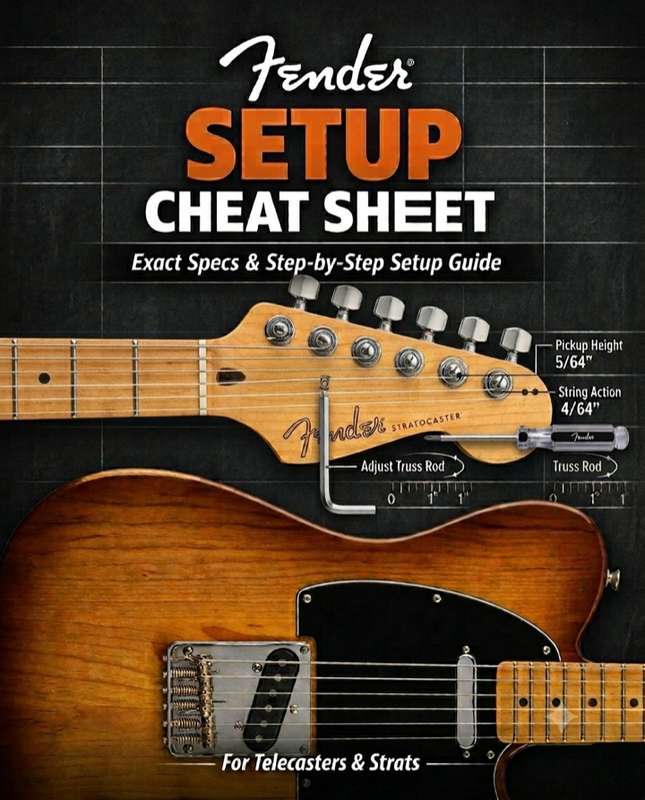
- Jazzmaster Pickup Height Guide - Exact specs and step-by-step adjustment for every playing style
- Guitar Action Height Guide - Perfect your string height for offset playability
- Truss Rod Adjustment Guide - How to safely adjust neck relief
Strings & Upgrades
- String Gauge Recommendation Tool - Get a personalized gauge and top string set picks for your guitar, style, and tuning
- Best Strings for Jazzmaster - Complete string guide with recommendations by genre
- Guitar String Gauges: Complete Guide - Universal gauge and tension overview
Buying & Comparisons
- Jazzmaster vs Jaguar Comparison - The battle of the offsets
- Complete Jaguar Guitar Guide - Hub for Jaguar setup, serial numbers, and specs
- Jaguar Serial Numbers - Decode your Jaguar serial number by year, country, and era
- Jazzmaster vs Strat Neck Comparison - Detailed neck profile and playability guide
- Fender Neck Profiles Guide - Visual guide to C, V, D shapes and comfort
- Coming Soon: Complete Jazzmaster buying guide
Quick Reference Specs
- Jazzmaster String Height (12th fret): High E ≈ 1.6 mm (4/64"), Low E ≈ 2.0 mm (5/64")
- Jazzmaster Pickup Height (Last Fret Pressed):
- Neck and bridge: 3.2 mm (8/64") bass / 2.4 mm (6/64") treble as a starting point
- Note: Fender publishes no Jazzmaster-specific pickup-height spec — these are community starting points. Jazzmaster pickups are powerful; start lower than a Strat.
- Neck Relief: 0.010 in (0.25 mm) at the 8th fret for the common 9.5-inch radius, per Fender's radius-based relief chart
Essential Tools for Jazzmaster Setup
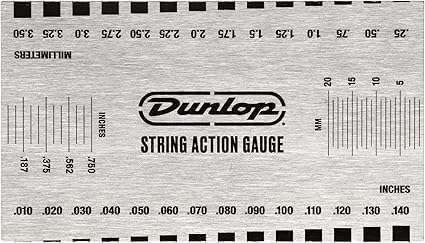
- String Height Gauge: For setting action on rocking bridges.
- Feeler Gauges: For measuring neck relief.
- Blue Loctite: Essential for keeping bridge screws from vibrating loose.
- Neck Shims: Often needed to increase break angle.
- Nut Lubricant: Critical for tuning stability with the floating tremolo.
 Buy on Amazon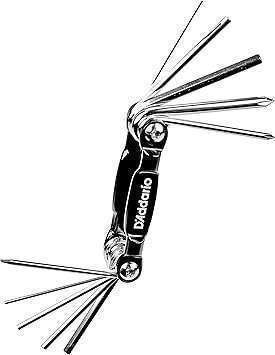
The Jazzmaster Experience: The "Anti-Strat"
Introduced in 1958 as a high-end jazz guitar, the Jazzmaster failed to win over Joe Pass but accidentally won the hearts of surf rockers, new wave pioneers, and noise artists. It is defined by its large, ergonomic offset waist (designed for playing while seated) and a tone that is thicker than a Stratocaster but brighter than a Gibson Les Paul.
1. The Pickups: Soapbar ≠ P90
A common misconception is that Jazzmaster pickups are P90s. They are not.
- Jazzmaster Pickups: Flat, wide coils with magnetic pole pieces (like a Strat, but wider). The sound is airy, sparkly, and articulate with a broad frequency range.
- P90 Pickups: Use bar magnets underneath the coil with steel screws. They are hotter, grittier, and more mid-focused.
- Tip: If you want more grit, many modern Jazzmasters (like the J Mascis Squier) do use P90-style construction disguised as Jazzmaster pickups.
2. The Rhythm Circuit: The "Dark Mode"
The upper horn controls (the Rhythm Circuit) are widely misunderstood.
- Switch Up (Rhythm Mode): Only the neck pickup is active. The standard volume/tone knobs are bypassed. You use the two roller wheels next to the switch for volume and tone. This circuit uses a 50k pot and capacitor that rolls off significantly more treble, giving you an instant "clean jazz" or "wooly fuzz" preset.
- Switch Down (Lead Mode): Standard operation. Pickup selector works. 1meg pots produce a very bright, cutting tone.
3. The Floating Tremolo
The Jazzmaster shares its vibrato system with the Jaguar. It is surface-mounted and works in conjunction with a rocking bridge. It offers a subtle, pitch-bending "shimmer" rather than big dives. When balanced correctly with heavier strings (10s or 11s), it is incredibly stable.
Setup Peculiarities: Mastering the Offset
The Jazzmaster is a mechanical system that relies on balance.
The Shim Requirement
The tremolo tailpiece is located far from the bridge, creating a shallow string break angle. This results in:
- Less sustain
- Strings popping out of saddles
- Rattling bridges
The Fix: A Neck Shim. By placing a thin wedge (0.5 to 1 degree) in the neck pocket, you tilt the neck back. This forces you to raise the bridge height to get playable action. Higher bridge = steeper break angle = more down-pressure = problem solved.
The Rocking Bridge
The bridge posts sits loosely in the metal thimbles. It is designed to rock back and forth as you use the tremolo arm.
- Do not tape the posts unless you specifically want a fixed bridge feel.
- Use heavy strings (11 gauge recommended) to give the bridge enough mass to move and return to center accurately.
Jazzmaster FAQ
What is the ideal Jazzmaster pickup height? Jazzmaster pickups are wide and can pick up a lot of string noise. Start lower than you would on a Strat. Try 3.2mm on the bass side and 2.4mm on the treble side (neck), then adjust for balance. If they are too close, the magnetic pull will kill your sustain. See our full Jazzmaster Pickup Height Guide for style-specific settings.
Why does my bridge buzz? Buzzing usually comes from loose saddle screws or insufficient downward pressure. First, try increasing string gauge (to 11s). Second, shim the neck to raise the bridge. Finally, use Blue Loctite on the saddle height screws to stop them from vibrating loose.
Can I play metal on a Jazzmaster? Absolutely (ask Jim Root of Slipknot). However, the stock single-coils are noisy with high gain. You may want to swap for humbucker-sized Jazzmaster pickups or use a noise gate. The Rhythm Circuit is excellent for instant "sludge" tones.
What is the "Mastery" bridge everyone talks about? The Mastery Bridge is a premium aftermarket replacement that eliminates the "rocking" design. It uses fixed posts and unique saddles to provide massive stability and sustain. It is the gold standard for touring pros who play aggressively.
How do I use the Rhythm Circuit? Think of it as a preset. Set your main controls for a bright, cutting lead tone. Set your Rhythm Circuit (switch up) for a darker, cleaner chord tone. Now you can switch between rhythm and lead with one flick, without dancing on pedals.
Should I use a buzz stop? A "Buzz Stop" is a roller bar that bolts onto the tremolo plate to increase break angle. While it solves buzzing, it also kills behind-the-bridge harmonics and changes the feel of the tremolo stiffness. Try a neck shim first—it's the superior solution.
Recent Updates
- New: Jazzmaster Pickup Height Guide - Exact specs, step-by-step adjustment, and style-specific settings
- New: Best Strings for Jazzmaster - Complete string recommendations by genre
- Updated: Ultimate Setup Guide - Enhanced with shim calculations
- New: Guitar String Gauges: Complete Guide - Understand sizes, tension, and how to choose
Jazzmaster in Modern Music
The Jazzmaster was intended for jazz players but found its true home in the hands of sonic explorers.
Shoegaze and Noise Rock
Kevin Shields (My Bloody Valentine) utilized the Jazzmaster's floating tremolo to create the "glide guitar" technique—strumming while holding the tremolo arm for a constant, woozy pitch shift. The wide single-coil pickups take fuzz pedals exceptionally well, maintaining clarity within a wall of distortion.
Indie and Alternative
From Elvis Costello to J Mascis, the Jazzmaster's unique look and sound have made it a staple of alternative rock. It offers a thicker sound than a Strat but with more bite than a humbucker guitar, sitting perfectly in a dense mix.
The Rhythm Circuit Secret
Many modern players tape over the rhythm circuit, but it's a secret weapon for loops and ambient textures. Flipping the switch instantly engages a darker, cleaner tone preset, allowing you to go from a bright lead to a moody backing track without touching your pedals.
Other Fender Guitar Hubs
🎸 Explore Other Fender Guitars
- Telecaster Hub - Complete Telecaster resource with setup guides, wiring diagrams, and string recommendations
- Stratocaster Hub - Complete Stratocaster resource with setup guides, tremolo tips, and string recommendations
- Jaguar Hub - Offset guitar setup guides, tremolo configuration, and string gauge selection
- Epiphone Hub - Complete Epiphone resource with serial lookup and setup guides
- Ibanez Hub - Complete Ibanez resource with RG, S, JEM guides and serial lookup
- Squier Hub - Complete Squier Telecaster resource with setup guides and modifications
- Precision Bass Hub - Complete Precision Bass setup and maintenance guides
Explore our comprehensive Jazzmaster guides and unlock this sophisticated instrument's full potential.