Jazzmaster vs Strat Neck: Key Differences Explained
Detailed comparison of Jazzmaster and Stratocaster neck profiles, fretboard radius, and playability. Learn which neck is right for your hand size and playing style.
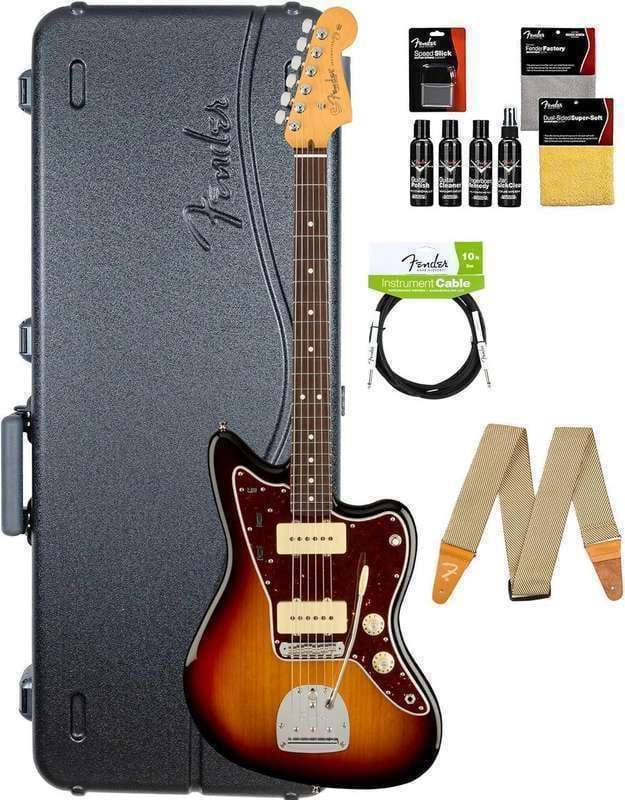
When choosing between a Jazzmaster and Stratocaster, many players focus on pickups and body shape—but the neck is where you'll spend every moment of playing time. Understanding the differences between a Jazzmaster neck profile and Strat neck profile can make or break your playing experience, especially if you have specific hand size requirements or playing style preferences.
The good news? Both guitars share the same 25.5" scale length, so they feel similar in terms of string tension and fret spacing. The differences come down to neck profile shape (C, D, or V), fretboard radius (7.25", 9.5", or compound), and nut width—subtle variations that create dramatically different playing experiences.
This comprehensive guide breaks down every aspect of Jazzmaster vs Strat neck differences to help you choose the perfect guitar for your hands and playing style.
 Buy on Amazon
Quick Comparison: Jazzmaster vs Strat Neck
| Feature | Stratocaster | Jazzmaster |
|---|---|---|
| Scale Length | 25.5" (standard) | 25.5" (standard) |
| Common Profiles | Modern C, Deep C, Vintage V | Modern C, D Profile |
| Typical Radius | 7.25", 9.5", compound | 7.25", 9.5" |
| Nut Width | 1.650" (42mm) | 1.650" (42mm) |
| Neck Thickness | Varies by model | Generally thicker |
| Fret Size | Narrow vintage or medium jumbo | Medium jumbo (modern) |
| Best For | Versatile playing, all hand sizes | Players who prefer substantial feel |
| Common Feel | Slim to medium, fast | Medium to chunky, substantial |
The Bottom Line: Both necks use the same scale length and nut width, but Jazzmasters typically feature thicker, more substantial profiles (especially D-shaped) while Stratocasters offer more variety from slim vintage to chunky modern profiles.
What is a Neck Profile and Why Does It Matter?
The neck profile refers to the cross-sectional shape of the guitar neck—essentially how it feels when you wrap your hand around it. This seemingly small detail has a massive impact on playability, comfort, and even your technique. For a complete breakdown of all Fender neck shapes, check out our Fender Neck Profiles Guide.
The Three Main Profile Shapes
C Profile (Oval/Rounded)
- Most common modern profile
- Comfortable oval shape fits most hands
- Balanced feel for rhythm and lead
- Easy transitions between positions
- Found on: Most modern Strats and Jazzmasters
D Profile (Thicker/Rounder)
- Thicker, more substantial feel
- Fills the palm more completely
- Preferred by players with larger hands
- Excellent for thumb-over-neck techniques
- Found on: Many Jazzmasters, some vintage Strats
V Profile (Triangular)
- Vintage-style triangular shape
- Pronounced ridge down the back
- Polarizing—players love it or hate it
- Excellent for thumb-over-neck blues playing
- Found on: Vintage-style Strats, rare on Jazzmasters
Why Neck Profile Affects Your Playing
The profile you choose impacts:
- Comfort during long sessions - Wrong profile = hand fatigue
- Chord voicing ease - Thicker necks can make barre chords harder for small hands
- Bending technique - Slimmer necks often feel faster for bends
- Thumb position - Thicker necks encourage thumb-over techniques
- Speed and agility - Slimmer profiles often feel faster
Stratocaster Neck Profiles: Complete Guide
Stratocasters have been in production since 1954, and Fender has experimented with numerous neck profiles over the decades. Here's what you need to know about the most common Strat neck profiles.
Modern C Profile (Most Common)
Measurements: Typically 0.820" at 1st fret, 0.920" at 12th fret
Characteristics:
- Comfortable oval shape
- Medium thickness—not too slim, not too chunky
- Versatile for all playing styles
- Easy to find on most modern Strats
Found on:
- Fender Player Series Stratocaster
- Most Mexican-made Strats
- Many American Standard models
Best for: Players who want a safe, comfortable middle-ground option that works for rhythm and lead playing.
Deep C Profile (Thicker Modern)
Measurements: Typically 0.850" at 1st fret, 0.950" at 12th fret
Characteristics:
- Noticeably thicker than Modern C
- More substantial palm fill
- Slightly slower feel for some players
- Excellent sustain and resonance
Found on:
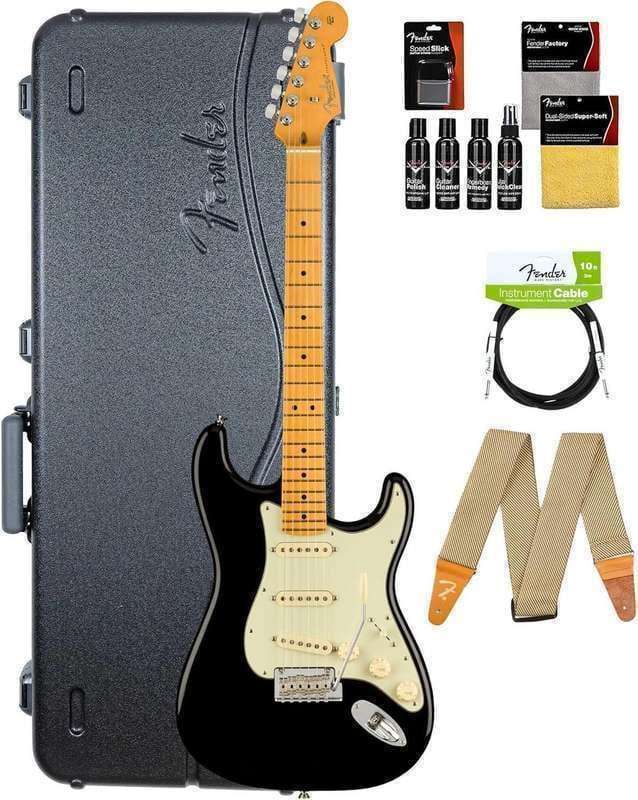
- Fender American Professional II Stratocaster
- Some American Ultra models
Best for: Players with medium to large hands who want more neck to grip, especially for blues and rock playing with thumb-over techniques.
Vintage V Profile (Classic Feel)
Measurements: Varies, typically 0.870" at 1st fret, 0.980" at 12th fret
Characteristics:
- Triangular ridge down the back
- Very distinctive vintage feel
- Polarizing—love it or hate it
- Authentic 50s/60s Strat experience
Found on:
- Fender Vintera Series
- Custom Shop vintage reissues
- Squier Classic Vibe '50s Stratocaster
Best for: Players who want authentic vintage feel, blues players who use thumb-over-neck techniques, or those who grew up playing vintage Strats.
Slim C Profile (Fastest Feel)
Measurements: Typically 0.800" at 1st fret, 0.880" at 12th fret
Characteristics:
- Thinnest Fender profile
- Very fast feel
- Less palm fill
- Preferred by shredders and lead players
Found on:
- Some American Ultra models
- Certain Custom Shop builds
Best for: Lead players, shredders, players with smaller hands, or anyone who prioritizes speed over substantial feel.
Jazzmaster Neck Profiles: What to Expect
Jazzmasters have a reputation for thicker, more substantial necks compared to Stratocasters, though this varies by model and era. Here's what you need to know.
Modern C Profile (Standard Jazzmaster)
Measurements: Typically 0.820" at 1st fret, 0.920" at 12th fret
Characteristics:
- Similar to Strat Modern C
- Comfortable oval shape
- Slightly thicker feel than equivalent Strat
- Versatile and approachable
Found on:
- Fender Player Series Jazzmaster
- Most modern Mexican Jazzmasters
- Squier Classic Vibe Jazzmaster
Best for: Players transitioning from Strat who want familiar feel with slightly more substance.
D Profile (Thick and Substantial)
Measurements: Typically 0.870" at 1st fret, 0.980" at 12th fret
Characteristics:
- Noticeably thicker than Modern C
- More rounded, fills the palm
- Substantial, confidence-inspiring feel
- Slower for some players, perfect for others
Found on:
- Fender American Professional II Jazzmaster
- Many vintage Jazzmasters
- Higher-end models
Best for: Players with larger hands, rhythm players, those who prefer substantial neck feel, or players who use thumb-over-neck techniques frequently.
Why Jazzmasters Feel Different
Even when Jazzmasters and Strats share the same profile designation (like "Modern C"), the Jazzmaster often feels slightly thicker and more substantial. This is due to:
- Neck wood selection - Jazzmasters often use slightly thicker neck blanks
- Finish thickness - Vintage-style finishes add perceived thickness
- Fret size - Larger frets on modern Jazzmasters add to the substantial feel
- Player perception - The offset body and different balance point affect how the neck feels
Important: Always try before you buy, as "Modern C" on a Jazzmaster may feel different than "Modern C" on a Strat, even with identical measurements.
Fretboard Radius: 7.25" vs 9.5" vs Compound
The fretboard radius is the curvature of the fretboard from low E to high E string. This measurement dramatically affects how the neck feels under your fingers and how well it suits different playing styles.
7.25" Radius (Vintage Fender Standard)
Characteristics:
- Very curved, vintage feel
- Excellent for chording and rhythm
- Can cause string buzz on bends above 12th fret
- Authentic vintage experience
Found on:
- Vintage Strats and Jazzmasters
- Fender Vintera Series
- Squier Classic Vibe models
Best for: Rhythm players, vintage enthusiasts, players who don't bend heavily above the 12th fret.
Pros:
- ✅ Very comfortable for barre chords
- ✅ Authentic vintage feel
- ✅ Easier to fret notes cleanly
Cons:
- ❌ Can choke out on big bends
- ❌ Requires lower action for lead playing
- ❌ Not ideal for shredding
9.5" Radius (Modern Fender Standard)
Characteristics:
- Flatter than vintage 7.25"
- Balanced for rhythm and lead
- Better for string bending
- Most versatile option
Found on:
- Fender Player Series (Strat and Jazzmaster)
- American Professional Series
- Most modern Fenders
Best for: Players who do both rhythm and lead, versatile playing styles, modern rock and indie.
Pros:
- ✅ Excellent balance for all styles
- ✅ Better for bending than 7.25"
- ✅ Still comfortable for chords
- ✅ Most popular modern choice
Cons:
- ❌ Not as vintage-feeling as 7.25"
- ❌ Not as flat as compound radius for shredding
Compound Radius (10"-14" or 9.5"-14")
Characteristics:
- Curved at lower frets, flatter at upper frets
- Best of both worlds
- Excellent for lead playing
- Premium feature
Found on:
- Fender American Ultra Series
- Some Custom Shop models
- High-end Strats (rare on Jazzmasters)
Best for: Lead players, shredders, players who want maximum versatility.
Pros:
- ✅ Comfortable chording at lower frets
- ✅ Excellent bending at upper frets
- ✅ No string choking issues
- ✅ Most versatile radius
Cons:
- ❌ More expensive
- ❌ Rare on Jazzmasters
- ❌ Requires precise setup
Radius Comparison Table
| Radius | Curvature | Best For | Common On |
|---|---|---|---|
| 7.25" | Very curved | Rhythm, vintage feel | Vintage models, Classic Vibe |
| 9.5" | Moderate curve | Balanced rhythm/lead | Player Series, Am Pro II |
| Compound | Curved to flat | Lead, versatility | American Ultra, Custom Shop |
Scale Length: Both Use 25.5" - What Does This Mean?
One of the most important similarities between Jazzmaster and Stratocaster necks is that both use the exact same 25.5" scale length. This is Fender's standard scale, also found on Telecasters.
What is Scale Length?
Scale length is the vibrating length of the string—measured from the nut to the bridge saddle (technically, twice the distance from nut to 12th fret).
25.5" scale means:
- Standard Fender string tension
- Familiar fret spacing for Fender players
- Balanced tone and playability
- Same as Strat and Tele
Why This Matters for Jazzmaster vs Strat
Since both guitars share 25.5" scale length:
✅ String tension is identical (with same gauge strings) ✅ Fret spacing is identical (same distance between frets) ✅ Bending resistance is identical (same effort required) ✅ Intonation behavior is identical (same setup principles)
The key takeaway: The scale length is NOT a differentiating factor between these guitars. If you're comfortable with Strat scale length, you'll be comfortable with Jazzmaster scale length.
Scale Length vs Neck Profile
Don't confuse scale length with neck profile:
- Scale length = string length (25.5" on both)
- Neck profile = neck thickness/shape (varies between models)
A Jazzmaster with a thick D profile still has the same 25.5" scale as a Strat with a slim C profile. The difference is in how the neck feels in your hand, not the string length.
String Tension Comparison
With the same scale length and string gauge, both guitars have identical string tension:
| String Gauge | Tension (lbs) | Feel |
|---|---|---|
| .009-.042 | ~120 lbs total | Light, easy bending |
| .010-.046 | ~140 lbs total | Standard, balanced |
| .011-.049 | ~160 lbs total | Heavier, more resistance |
Recommendation: Use the same string gauge you prefer on Strat for Jazzmaster, or vice versa.
What Players Say: Real Experiences with Each Neck
Understanding specs is important, but nothing beats real-world experience. Here's what players with different hand sizes and playing styles report about Jazzmaster vs Strat necks.
Small Hands (6.5"-7.5" palm width)
Stratocaster Experience:
"The Modern C profile on my Player Strat is perfect. I can wrap my thumb over for muted bass notes without strain, and barre chords are comfortable even after 2-hour sessions." - Sarah, indie rock rhythm player
"I tried a vintage V-neck Strat and hated it—way too chunky. The slim C profile on the American Ultra is my sweet spot." - Mike, lead guitarist
Jazzmaster Experience:
"The D profile on my American Professional II Jazzmaster was too thick at first, but after a month I loved it. It actually reduced hand fatigue because I wasn't gripping as hard." - Jessica, shoegaze guitarist
"I sold my Jazzmaster because the neck felt like a baseball bat. Switched to a Player Series with Modern C and it's much better." - Tom, punk player
Verdict for small hands: Stick with Modern C or Slim C profiles. Vintage V and D profiles can cause fatigue.
Medium Hands (7.5"-8.5" palm width)
Stratocaster Experience:
"I can play any Strat profile comfortably. The Deep C on my Am Pro II feels substantial without being chunky." - David, blues player
"The 9.5" radius on modern Strats is perfect for my playing—I do both rhythm and lead, and it handles everything." - Rachel, alternative rock
Jazzmaster Experience:
"The Jazzmaster D profile is my favorite neck ever. It fills my hand perfectly and I can play for hours without fatigue." - Chris, indie rock
"I prefer the Modern C on my Player Jazzmaster over the D profile. The D felt too thick for fast position changes." - Alex, surf rock
Verdict for medium hands: You can comfortably play any profile. Choose based on playing style preference.
Large Hands (8.5"+ palm width)
Stratocaster Experience:
"Slim C profiles feel like toothpicks. I need Deep C or vintage V to have something to grip." - Marcus, rock guitarist
"The vintage V-neck on my '62 reissue is perfect. Modern slim necks cramp my hand." - James, blues player
Jazzmaster Experience:
"The D profile Jazzmaster is the most comfortable guitar I've ever played. Finally a neck that fits my hands." - Robert, jazz player
"Even the Modern C on a Jazzmaster feels better than a Strat Modern C—slightly thicker and more substantial." - Kevin, alternative rock
Verdict for large hands: D profile Jazzmasters or Deep C/Vintage V Strats are ideal. Avoid slim profiles.
Playing Style Preferences
Lead Players:
"I prefer slimmer profiles (Modern C or Slim C) for speed. Thicker necks slow me down." - Multiple lead guitarists
Rhythm Players:
"Thicker profiles (D or Deep C) give me more confidence on barre chords and feel more substantial for aggressive strumming." - Multiple rhythm players
Hybrid Players:
"9.5" radius with Modern C profile is the sweet spot—comfortable for everything." - Versatile players
Choosing Your Perfect Neck: Decision Guide
With all this information, how do you actually choose? Here's a practical decision framework based on your specific needs.
Best for Small Hands
Recommended:
- ✅ Stratocaster with Modern C or Slim C profile
- ✅ Jazzmaster with Modern C profile (Player Series)
- ✅ 9.5" radius for versatility
- ✅ Medium jumbo frets for easier fretting
Avoid:
- ❌ Vintage V profiles
- ❌ D profile Jazzmasters
- ❌ Deep C profiles
- ❌ 7.25" radius if you bend a lot
Top Pick: Fender Player Stratocaster (Modern C, 9.5" radius)
Best for Large Hands
Recommended:
- ✅ Jazzmaster with D profile (American Professional II)
- ✅ Stratocaster with Deep C or Vintage V
- ✅ 7.25" or 9.5" radius (personal preference)
- ✅ Thicker neck profiles for palm fill
Avoid:
- ❌ Slim C profiles
- ❌ Ultra-thin modern necks
- ❌ Narrow nut widths
Top Pick: Fender American Professional II Jazzmaster (D profile, 9.5" radius)
Best for Lead Players
Recommended:
- ✅ Modern C or Slim C profile
- ✅ 9.5" or compound radius
- ✅ Medium jumbo or jumbo frets
- ✅ Satin neck finish for speed
Avoid:
- ❌ 7.25" radius (bending issues)
- ❌ Very thick profiles
- ❌ Glossy neck finishes
Top Pick: Fender American Ultra Stratocaster (Slim C, compound radius)
Best for Rhythm Players
Recommended:
- ✅ D profile or Deep C
- ✅ 7.25" or 9.5" radius
- ✅ Thicker profiles for confidence
- ✅ Vintage-style frets acceptable
Avoid:
- ❌ Slim profiles (less substantial)
- ❌ Compound radius (unnecessary)
Top Pick: Fender American Professional II Jazzmaster (D profile, 9.5" radius)
Best for Blues/Classic Rock
Recommended:
- ✅ Vintage V or Deep C profile
- ✅ 7.25" radius for authentic feel
- ✅ Vintage-style frets
- ✅ Nitrocellulose finish
Avoid:
- ❌ Ultra-modern slim profiles
- ❌ Compound radius
Top Pick: Fender Vintera '60s Stratocaster (Vintage V, 7.25" radius)
Best for Indie/Alternative Rock
Recommended:
- ✅ Jazzmaster with Modern C or D profile
- ✅ 9.5" radius
- ✅ Medium jumbo frets
- ✅ Offset body aesthetic
Avoid:
- ❌ Ultra-vintage specs
- ❌ 7.25" radius if you play lead
Top Pick: Fender Player Jazzmaster (Modern C, 9.5" radius)
Decision Flowchart
Start here:
-
What's your hand size?
- Small → Modern C or Slim C
- Medium → Any profile works
- Large → D or Deep C
-
What's your playing style?
- Lead-focused → Slimmer profile, 9.5" or compound radius
- Rhythm-focused → Thicker profile, 7.25" or 9.5" radius
- Balanced → Modern C, 9.5" radius
-
Do you want vintage or modern feel?
- Vintage → 7.25" radius, Vintage V or Deep C
- Modern → 9.5" or compound, Modern C or Slim C
-
Jazzmaster or Strat?
- Want substantial feel → Jazzmaster D profile
- Want more options → Stratocaster (more profile variety)
- Want offset aesthetic → Jazzmaster
- Want classic Fender → Stratocaster
Frequently Asked Questions
Is the Jazzmaster neck thicker than a Strat neck?
Answer: It depends on the specific models, but generally yes—Jazzmasters tend to have thicker neck profiles, especially the D profile found on American Professional II models. However, both guitars offer Modern C profiles that are very similar in thickness. The key is comparing specific models rather than making blanket statements about all Jazzmasters vs all Strats.
What neck profile is best for small hands?
Answer: Modern C or Slim C profiles are best for small hands. These profiles (typically 0.800"-0.820" at the 1st fret) provide comfortable grip without excessive thickness. Avoid Vintage V and D profiles, which can cause hand fatigue for smaller hands. The Fender Player Series Stratocaster with Modern C profile is an excellent choice.
Do Jazzmasters have the same scale length as Strats?
Answer: Yes, both guitars use the exact same 25.5" scale length. This means identical string tension (with the same gauge strings), identical fret spacing, and identical bending resistance. The scale length is not a differentiating factor between these guitars—the differences are in neck profile shape, thickness, and fretboard radius.
Which neck is better for bending?
Answer: For bending, a 9.5" or compound radius fretboard is better than vintage 7.25" radius, regardless of whether it's on a Jazzmaster or Strat. The neck profile (C, D, V) has less impact on bending than the radius. Slimmer profiles (Modern C, Slim C) can feel faster for bends, but the radius is the critical factor. Choose 9.5" or compound radius if you bend frequently above the 12th fret.
Can I get a Strat with a Jazzmaster-style neck?
Answer: Not exactly, but you can get close. The Fender American Professional II Stratocaster features a Deep C profile that's similar in thickness to the Jazzmaster D profile. Alternatively, you could have a custom neck made or order a Custom Shop Strat with Jazzmaster-style specs, though this is expensive. The easiest solution is to try both and see which stock option feels best.
What's the difference between C and D neck profiles?
Answer: C profiles are oval/rounded with moderate thickness, while D profiles are thicker and rounder, filling the palm more completely. C profiles (0.820" at 1st fret) feel faster and more versatile, while D profiles (0.870" at 1st fret) feel more substantial and confidence-inspiring. C is more common and suits most players, while D is preferred by those with larger hands or who want a chunkier feel.
Which fretboard radius is most comfortable?
Answer: The 9.5" radius is most comfortable for the widest range of players and playing styles. It's curved enough for comfortable chording but flat enough for good bending without string choking. The vintage 7.25" radius is excellent for rhythm players but can cause bending issues. Compound radius (9.5"-14") is ideal for lead players but more expensive and rare on Jazzmasters.
Are vintage neck profiles harder to play?
Answer: Not necessarily harder, just different. Vintage V profiles have a pronounced ridge that some players love for thumb-over-neck techniques, while others find uncomfortable. Vintage 7.25" radius can make big bends above the 12th fret more difficult due to string choking. "Harder" is subjective—vintage profiles are perfect for some players and uncomfortable for others. Always try before buying vintage-spec necks.
Do I need different string gauges for Jazzmaster vs Strat?
Answer: No, since both guitars have the same 25.5" scale length, you can use identical string gauges. Standard .010-.046 gauge works great on both. Some players prefer slightly heavier gauges (.011-.049) for more tension and tone, but this is personal preference, not a requirement based on the guitar model. Use the same gauge you're comfortable with on either guitar.
Which neck stays in tune better?
Answer: Tuning stability depends on setup quality (nut, tuners, witness points) rather than neck profile or model choice. Both Jazzmasters and Strats can have excellent tuning stability when properly set up. The neck profile, radius, and thickness have no direct impact on tuning stability. Focus on quality tuners, proper nut slots, and correct setup rather than choosing based on perceived tuning advantages.
Conclusion
The choice between a Jazzmaster neck and Strat neck ultimately comes down to three key factors: your hand size, playing style, and profile preference.
Key Takeaways:
- Both guitars share 25.5" scale length - String tension and fret spacing are identical
- Jazzmasters typically have thicker profiles - Especially D profile models
- Stratocasters offer more variety - From Slim C to Vintage V
- Radius matters more than profile for bending - Choose 9.5" or compound for lead playing
- Try before you buy - Specs don't tell the whole story
Our Recommendations:
- Small hands: Fender Player Stratocaster (Modern C, 9.5" radius)
- Large hands: Fender American Professional II Jazzmaster (D profile, 9.5" radius)
- Lead players: Fender American Ultra Stratocaster (Slim C, compound radius)
- Rhythm players: Fender American Professional II Jazzmaster (D profile)
- Versatile players: Either guitar with Modern C profile and 9.5" radius
Remember: The "best" neck is the one that feels best in your hands. Visit a guitar store, spend 30 minutes with each, and let your hands make the decision.
For setup help with your chosen guitar, check out our comprehensive guides:
- Jazzmaster Setup Guide
- Jazzmaster Pickup Height Guide
- Stratocaster Setup Guide
- Stratocaster Pickup Height Guide
- Jazzmaster Hub
- Stratocaster Hub
Still undecided? The safest bet is a Modern C profile with 9.5" radius—it's the most versatile option that suits 90% of players.