Fender Serial Number Lookup & Checker: The Ultimate Decoding Guide (2026)
Use our free Fender serial number checker and lookup tool to instantly decode your guitar. Covers USA, Mexico, Japan, and Squier from 1950 to present. Find production year and origin today.
🔎 Find Your Production Year
Decode Your Fender: The Complete Serial Number Guide
Identifying the production year of a Fender guitar is the first step in determining its value, specs, and history. Whether you have a vintage Telecaster or a modern Player Series Strat, the serial number holds the key.
Use the lookup tool above to instantly check your number, or use our comprehensive reference tables below to manually date your instrument.
Fender Serial Number Checker
The tool at the top of this page is a free Fender serial number checker. Enter your serial number and it instantly returns your guitar's production year, manufacturing location (USA, Mexico, Japan, etc.), and era. No sign-up required—use it as often as you need to verify a single guitar or compare multiple instruments.
🎸 What's Next? Now that you know your guitar's year, the next step is setting it up to play its best. Factory specs—action height, pickup height, neck relief—changed significantly across Fender eras. A 1962 Strat needs different measurements than a 2020 Player Series. Want the exact specs for your era? Check out our Complete Fender Setup Guide
Part 1: Where Is My Fender Serial Number?
Before you can lookup your specific year, you need to find the number. Fender has moved the location several times over the last 70 years.
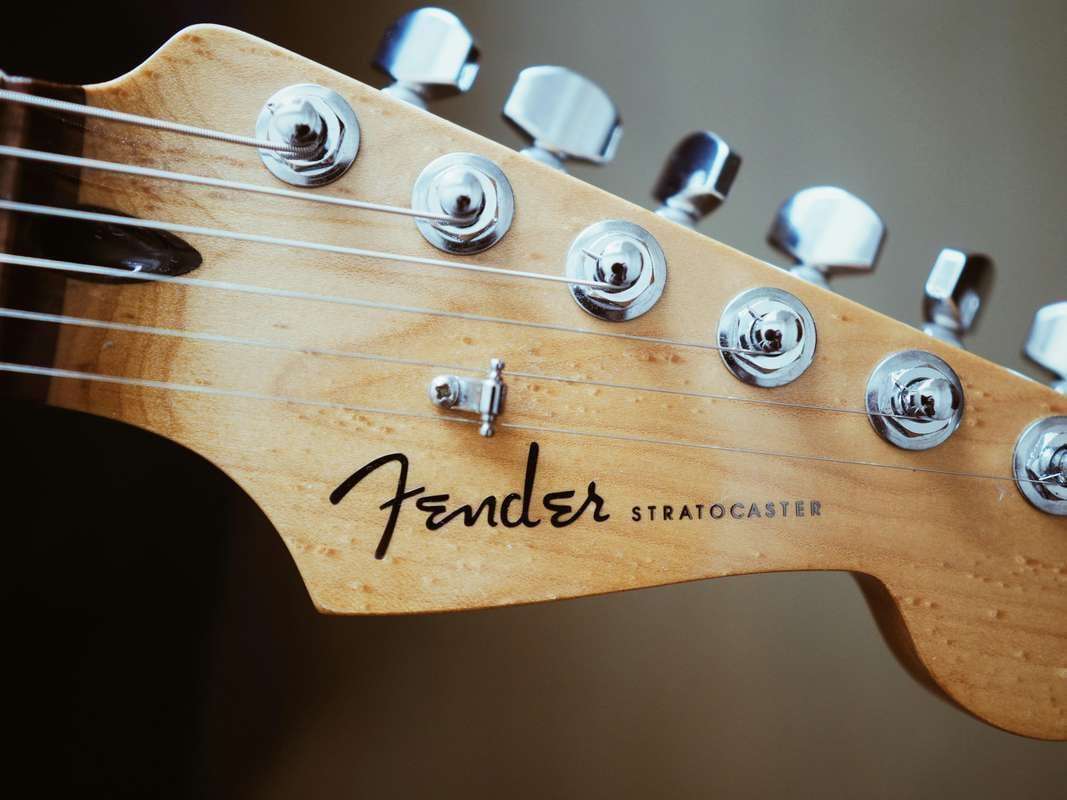
- Headstock (Back): Most common on modern Fender (USA/Mexico) and Squier guitars.
- Headstock (Front): Common on 70s era "CBS" models and some modern reissues.
- Neck Plate: A roughly 2x2 inch metal plate where the neck bolts to the body. Standard for vintage guitars (1954-1976) and vintage reissues (AVRI).
- Bridge Plate: Stamped directly onto the metal bridge. Found only on very early vintage Telecasters (1950-1954).
- Heel of Neck: Hidden inside the neck pocket. Requires removing the neck (common on early Japanese models or Reissues).
How to Read Your Serial Number
Once you've found your serial number, understanding its format is crucial. Fender serial numbers follow specific patterns that reveal the guitar's origin and era.
Modern USA Format (2010-Present):
- Format:
US+ 2-digit year + 4-6 digits - Example:
US17123456= Made in 2017 - The first two digits after "US" directly indicate the year
Letter Prefix Era (1976-2009):
- Format: Letter + digit + 4-5 digits
- Letters indicate decade: S (70s), E (80s), N (90s), Z (2000s)
- Example:
E9123456= Made in 1989 - The digit after the letter indicates the specific year within that decade
Vintage Format (1950-1976):
- Format: Numbers only (no letters)
- Early models: 4-6 digits on bridge plate or neck plate
- L-Series:
L+ 5 digits (1963-1965) - F-Plate: 6-digit numbers (1965-1976)
Mexico Format:
- Format:
MN/MZ/MX+ year digits + serial MN= 1990s,MZ= 2000s,MX= 2010-present- Example:
MX18123456= Made in 2018
Japan Format:
- Format varies by era:
JV(1982-1984),SQ(1983-1984),E(1984-1987),JD(2012+) - Example:
JD18123456= Made in 2018 (Dyna Gakki factory)
Serial Number vs. Date Code: What's the Difference?
Many guitar owners confuse serial numbers with date codes. Understanding the difference is essential for accurate dating.
Serial Number:
- Unique identifier assigned during production
- Used for tracking and inventory
- May not directly indicate the exact production date
- Can span multiple years (especially in vintage era)
- Located on headstock, neck plate, or bridge
Date Code:
- Stamped on the neck heel (requires removing neck)
- Format:
DAY MONTH YEAR LETTER(e.g., "5 MAR 64 B") - The letter indicates neck width (A, B, C, D), not quality
- More precise than serial numbers for vintage guitars
- Used internally by Fender for production tracking
When to Use Each:
- Use Serial Number: For quick dating, modern guitars (post-1976), and general identification
- Use Date Code: For precise vintage dating, when serial is missing, or when serial range is ambiguous
Pro Tip: For vintage guitars, always check both. The date code on the neck heel is often more accurate than the serial number, especially for guitars from the 1950s-1960s.
Part 2: USA Serial Numbers (The Definitive List)
American-made Fender guitars follow distinct eras.
Modern Era (2010 - Present)
Fender simplified the system in 2010.
- US + 2 Digits = Year
- US10 = 2010
- US17 = 2017
- LE = Limited Edition
The "Letter" Era (1976 - 2009)
Fender used a letter to denote the decade.
- S = Seventies (1970s)
- E = Eighties (1980s)
- N = Nineties (1990s)
- Z = Zeros (2000s)
| Prefix | Year Range | Example | Notes |
|---|---|---|---|
| S7, S8, S9 | 1977 - 1981 | S912345 | Note: S9 was used for several years. |
| E3, E4 | 1983 - 1985 | E312345 | Smith Era / Dan Smith Strats |
| E9 | 1989 | E912345 | |
| N9 | 1990 / 1999 | N912345 | Ambiguous: N9 appears in both 90 and 99. |
| Z0 | 2000 - 2001 | Z012345 | |
| DZ | 2000s | DZ5... | Deluxe Series (American Deluxe) |
Vintage Era (1950 - 1976)
Before 1976, numbers were purely sequential (mostly).
| Range | Year | Location |
|---|---|---|
| 0001 - 5300 | 1950-1954 | Bridge Plate |
| 0001 - 8000 | 1954 | Neck Plate |
| L00001 - L99999 | 1963-1965 | Neck Plate |
| 100000 - 200000 | 1965-1967 | Big "F" Plate |
| 300000+ | 1969-1970 | Big "F" Plate |
Part 3: Mexico Serial Numbers (MIM)
Made in Mexico (MIM) Fenders are incredibly popular. Their codes are straightforward.
- MN = Mexico Nineties (1990s)
- MZ = Mexico Zeros (2000s)
- MX = Mexico (2010 - Present)
| Prefix | Year | Example |
|---|---|---|
| MN4 | 1994 - 1995 | MN412345 |
| MZ5 | 2005 - 2006 | MZ512345 |
| MX11 | 2011 | MX1123456 |
| MX18 | 2018 | MX18..... |
Note: The Player Series (introduced 2018) uses standard MX serials.
Fender Factory Locations Explained
Understanding where your Fender was made provides crucial context about its quality, value, and specifications. Fender operates factories in three countries, each with distinct characteristics.
Corona, California (USA) - 1985-Present
- Fender's flagship factory since moving from Fullerton
- Produces American Standard, American Professional, American Ultra, and Custom Shop models
- Known for: Premium quality control, hand-rolled fingerboard edges, Plek machine neck profiling
- Serial prefixes: Modern
USformat (2010+), letter prefixes (1976-2009) - Typical price range: $1,200-$3,500+ for production models
Ensenada, Mexico - 1987-Present
- Produces Player Series, Classic Series, and some Squier models
- Quality has improved dramatically since the 1990s
- Known for: Excellent value, consistent quality, modern manufacturing
- Serial prefixes:
MN(1990s),MZ(2000s),MX(2010+) - Typical price range: $500-$1,200 for production models
Japan - Multiple Factories (1982-Present)
- Fujigen Gakki (1982-1997, 2007-Present): Premium MIJ models
- Dyna Gakki (1997-Present): Current production
- Known for: Exceptional craftsmanship, attention to detail, collectible status
- Serial prefixes:
JV(1982-1984),SQ(1983-1984),E(1984-1987),JD(2012+) - Typical price range: $800-$2,500+ depending on era and model
Historical Factories:
- Fullerton, California (1946-1985): Original Fender factory. Pre-CBS (1946-1965) and CBS era (1965-1985) guitars are highly collectible.
- CBS Era (1965-1985): Quality varied, but many excellent guitars were made. Serial numbers from this era can be ambiguous.
Why Factory Location Matters:
- Resale Value: USA models typically hold value better than MIM
- Specifications: Different factories used different hardware, pickups, and neck profiles
- Collectibility: Japanese models from the 1980s (JV series) are highly sought after
- Quality Perception: While modern MIM guitars are excellent, USA models command premium prices
Part 4: Japan Serial Numbers (MIJ / CIJ)
Japanese Fenders are legendary for their craftsmanship.
- MIJ (Made in Japan): Used roughly 1982-1997 and 2007-Present.
- CIJ (Crafted in Japan): Used roughly 1997-2007.
| Prefix | Year | Notes |
|---|---|---|
| JV + 5 Digits | 1982-1984 | The "Holy Grail" of Japanese Fenders |
| SQ + 5 Digits | 1983-1984 | Squier Japan (Very high quality) |
| E + 6 Digits | 1984-1987 | Standard MIJ |
| JD + 2 Digits | 2012+ | Current Dyna Gakki factory code (JD12 = 2012) |
Part 5: Squier Serial Numbers
Squier serials can be messy, as they were made in Japan, Korea, China, and Indonesia.
- CY = China (Yako factory) - Common on Affinity/Standard.
- COB / CGS = China - Classic Vibe Series (Early).
- ICS / ISS = Indonesia (Cort / Samick) - Current Classic Vibe & Standard.
- First 2 digits usually equal year.
- ICS19xxxx = 2019
- ISS21xxxx = 2021
Decade-by-Decade Changes: What Your Serial Number Reveals
Your Fender's production decade tells you more than just its age—it reveals the specs, quality standards, and historical context of your guitar. Here's what changed in each era:
1950s: The Birth of the Electric Guitar
Serial Range: 0001-60,000+ (approximate)
- Neck Profile: Thick "U" shape, 7.25" radius
- Frets: Small vintage frets
- Pickups: Single-coil, hand-wound
- Hardware: Kluson tuners, 6-saddle bridges
- Value: $3,000-$50,000+ depending on model and condition
- Notable: Pre-CBS era, highest collectibility
1960s: The Golden Age
Serial Range: 60,000-300,000+ (approximate)
- Neck Profile: Transitioned from "U" to "C" shape
- Frets: Medium jumbo introduced mid-decade
- Pickups: Transitioned to machine-wound, then back to hand-wound
- Hardware: Transitioned to Fender-branded tuners
- Value: $2,500-$30,000+ depending on year and model
- Notable: CBS acquisition in 1965, quality remained high through 1969
1970s: The CBS Era
Serial Range: S-prefix (S7, S8, S9)
- Neck Profile: Thinner "C" shape, wider nut widths
- Frets: Large jumbo frets
- Pickups: Lower output, different magnet types
- Hardware: 3-bolt neck introduced (1971), heavier bodies
- Value: $800-$5,000+ (less collectible than 60s)
- Notable: Quality control issues, but many excellent guitars made
1980s: The Rebirth
Serial Range: E-prefix (E3, E4, E9)
- Neck Profile: Return to vintage "C" shape
- Frets: Medium jumbo, better quality
- Pickups: Improved winding, better magnets
- Hardware: Return to 4-bolt neck, improved tremolo systems
- Value: $1,000-$4,000+ (Dan Smith era highly collectible)
- Notable: Quality improvements, Japanese Fenders (JV series) highly sought after
1990s: Modern Standardization
Serial Range: N-prefix (N9, N0)
- Neck Profile: Modern "C" shape standardized
- Frets: Medium jumbo standard
- Pickups: American Standard pickups introduced
- Hardware: 2-point tremolo on Strats, improved bridges
- Value: $800-$2,500+ (good value for money)
- Notable: Consistent quality, Mexican production expanded
2000s: The Digital Age
Serial Range: Z-prefix (Z0-Z9)
- Neck Profile: S-1 switching introduced, compound radius available
- Frets: Medium jumbo, narrow-tall option
- Pickups: SCN (Samarium Cobalt Noiseless) pickups
- Hardware: Locking tuners standard on some models
- Value: $700-$2,000+ (modern features)
- Notable: American Deluxe series, improved electronics
2010s-Present: The Modern Era
Serial Range: US-prefix (US10-US26+)
- Neck Profile: Multiple options (Modern C, Deep C, U-shape)
- Frets: Narrow-tall standard, compound radius available
- Pickups: V-Mod, Custom Shop pickups on higher-end models
- Hardware: 2-point tremolo standard, locking tuners on Pro series
- Value: $1,200-$3,500+ (retail), holds value well
- Notable: American Professional series, Player Series (MIM) excellent value
Key Takeaway: Your serial number's decade determines not just age, but the entire spec profile of your guitar. A 1965 Strat has completely different specs than a 2015 Strat, even though they're both "American" models.
Found Your Year? Get Your Model's Setup Specs
Now that you know when your guitar was made, the next step is finding the correct setup specifications for your specific model:
| Your Guitar | Setup Guide | Factory Specs |
|---|---|---|
| Stratocaster | Complete Strat Setup Guide | Factory Specs Lookup |
| Telecaster | Complete Tele Setup Guide | Factory Specs Lookup |
| Jaguar | Jaguar Setup Guide | Factory Specs Lookup |
| Jazzmaster | Jazzmaster Setup Guide | Factory Specs Lookup |
| Mustang | Mustang Setup Guide | Factory Specs Lookup |
| Precision Bass | P-Bass Setup Guide | Factory Specs Lookup |
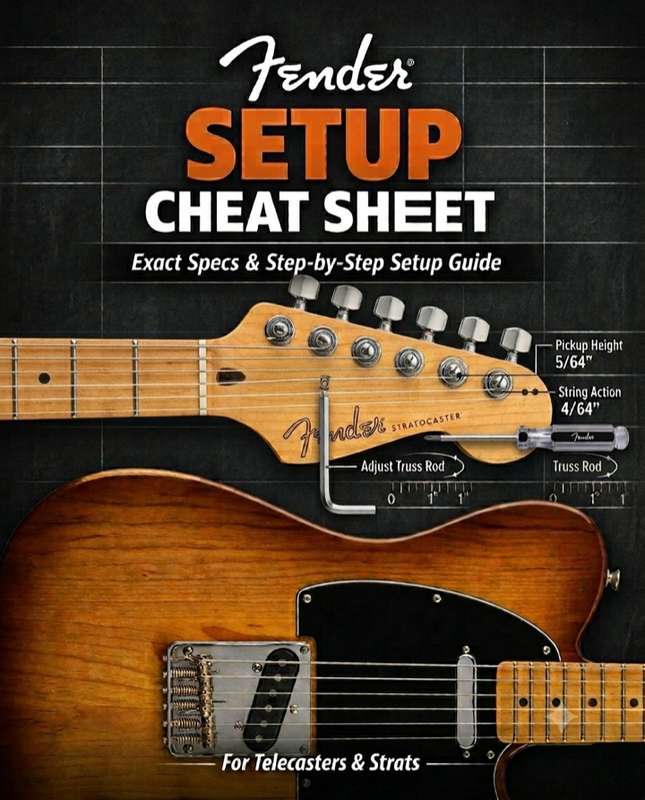
Want all specs in one printable reference? The Fender Setup Cheat Sheet covers every model with exact measurements you can keep at your workbench.
Just Got a Used Fender?
If you're looking up a serial number, you probably just bought a used guitar—congratulations! The next step is getting it set up properly. Used guitars almost always need a fresh setup after changing hands.
Why used guitars need setup:
- Previous owner's string gauge and action preferences may not match yours
- Shipping and climate changes affect neck relief
- Strings are probably due for a change
Your next steps:
- Check Factory Specs for your specific model year
- Get the Setup Guide with printable specs for your workbench
- Add to My Garage to track your guitar's setup history
What's Your Fender Worth?
Serial numbers help determine a guitar's age, but condition and playability are what really drive value. A well-setup guitar with proper action and intonation can sell for 10-20% more than one that plays poorly.
Key factors that affect Fender value:
- Originality - All-original parts command premium prices
- Playability - Proper setup shows the guitar was cared for
- Condition - Fret wear, finish cracks, and hardware corrosion matter
- Documentation - Original case, tags, and receipts add value
If you're selling or just want your guitar playing its best, a proper setup is the highest-ROI improvement you can make. Our Fender Setup Guide shows you exactly how to dial in factory specs.
Tools for Evaluating a Fender
Whether you're buying, selling, or just checking your guitar's condition, these tools help verify setup and authenticity:
Serial Number Mysteries Solved: Real Case Studies
These real-world examples demonstrate how serial number analysis, combined with physical inspection, solves authentication puzzles:
Case Study 1: The Ambiguous S9 Stratocaster
The Mystery: A 1979 Stratocaster with serial number S9123456. Owner wanted to know exact year.
The Investigation:
- Serial format: S9 prefix (1979-1981 range)
- Physical inspection: Logo style matched late 1970s
- Potentiometer codes: Dated to March 1980
- Neck heel date: "15 MAR 80 B"
The Solution: While the serial suggested 1979-1981, the pot codes and neck date confirmed it was made in March 1980. This demonstrates why checking multiple dating methods is crucial for S9 guitars.
Takeaway: S9 serials are ambiguous—always check pot codes and neck dates for precision.
Case Study 2: The "Fake" Japanese Fender
The Mystery: A Stratocaster with serial JV12345. Owner thought it might be fake because it wasn't in Fender's database.
The Investigation:
- Serial format: JV + 5 digits (1982-1984 format)
- Physical inspection: Fujigen factory characteristics present
- Hardware: Period-correct Gotoh tuners and bridge
- Neck heel: Stamped "Fujigen" and date code
The Solution: JV-series guitars are highly collectible and often not in general databases. This was a legitimate 1983 JV Stratocaster worth $3,000-$4,000.
Takeaway: Limited production runs (especially Japanese models) may not appear in databases. Physical inspection is key.
Case Study 3: The Partscaster Confusion
The Mystery: A guitar with serial E9123456 (1989) but modern 2-point tremolo and narrow-tall frets.
The Investigation:
- Serial format: Correct for 1989
- Physical inspection: Body routes matched 1989 era
- Neck: Modern profile, narrow-tall frets (not period-correct)
- Hardware: Modern 2-point tremolo (introduced 1986, but this was upgraded)
The Solution: This was a legitimate 1989 body with a replacement modern neck. The serial on the body was authentic, but the neck was from a 2010s guitar.
Takeaway: Partscasters can have authentic serial numbers but mixed-era components. Check all parts for era consistency.
Case Study 4: The Missing Serial Telecaster
The Mystery: A vintage-looking Telecaster with no visible serial number.
The Investigation:
- Headstock: No serial (front or back)
- Neck plate: No serial number
- Bridge: No serial stamp
- Neck heel: Date code "12 JUN 62 C"
The Solution: The neck date code revealed it was a 1962 Telecaster. The serial was likely on a neck plate that was replaced, or the guitar was refinished and the serial was lost. Based on the date code and physical features, it was authentic.
Takeaway: When serials are missing, date codes on the neck heel are your best friend for vintage authentication.
Case Study 5: The FSR Mystery
The Mystery: A Player Series Stratocaster with MX18123456 serial, but unique color not in standard catalog.
The Investigation:
- Serial format: Correct MX18 (2018 Mexico)
- Physical inspection: Player Series features present
- Color: Exclusive "Sonic Blue" not in standard 2018 catalog
- Documentation: Guitar Center receipt showed "FSR" designation
The Solution: This was a legitimate Fender Special Run (FSR) ordered by Guitar Center. FSR models have standard serial formats but unique configurations.
Takeaway: FSR models are authentic but may have non-standard features. Check retailer documentation.
Case Study 6: The Counterfeit Red Flags
The Mystery: A "1965 Stratocaster" with serial 150000 at suspiciously low price.
The Investigation:
- Serial format: Correct range for 1965
- Physical inspection: Modern 2-point tremolo (didn't exist in 1965)
- Logo: Modern Fender logo style (not 1965 style)
- Body routes: Swimming pool route (modern, not 1965)
- Hardware: All modern components
The Solution: This was a counterfeit. The serial number format was correct, but every physical feature was wrong for 1965. The serial was likely copied from a real guitar.
Takeaway: Serial numbers can be faked. Always verify physical features match the serial's era.
Case Study 7: The N9 Ambiguity
The Mystery: A Stratocaster with serial N9123456. Owner wanted to know if it was 1990 or 1999.
The Investigation:
- Serial format: N9 (ambiguous—could be 1990 or 1999)
- Physical inspection: Logo style matched 1990s
- Potentiometer codes: Dated to 1990
- Pickups: American Standard pickups (introduced 1990)
- Hardware: 2-point tremolo (standard by 1990)
The Solution: Based on pot codes and pickup type, this was a 1990 American Standard Stratocaster. The N9 ambiguity was resolved through physical inspection.
Takeaway: N9 serials require physical inspection to determine exact year. Check pot codes and hardware features.
Case Study 8: The Custom Shop Serial
The Mystery: A Stratocaster with serial starting with "CS" that wasn't in standard lookup tools.
The Investigation:
- Serial format: CS prefix (Custom Shop designation)
- Physical inspection: Custom Shop features present
- Documentation: Certificate of authenticity included
- Master builder: Initials matched certificate
The Solution: This was a legitimate Custom Shop guitar. Custom Shop serials use different formats and aren't in general lookup databases.
Takeaway: Custom Shop and special edition guitars have unique serial formats. Always check documentation.
Key Lesson: Serial numbers are powerful tools, but they're just one piece of the authentication puzzle. Always combine serial analysis with physical inspection, date codes, and documentation for complete verification.
Common Pitfalls & Authentication Tips
1. The "S9" Confusion
Fender printed way too many "S9" (1979) decals. They kept using them into 1980 and 1981. If you have an S9 guitar, check the pot codes to be sure.
2. Squier vs Fender
Squier "Classic Vibe" guitars often have serials on the back of the headstock. Some older Korean Squiers have "Fender" logos with a small "Squier Series" script. Be confident: A "Golden Era" Fender will never have a serial number starting with "C" (China) or "I" (Indonesia).
3. Fake Serials
Counterfeiters often print random serials.
- Check the font: Fender uses very specific typefaces.
- Check the specs: If a guitar dates to 1962 but has a modern 2-point tremolo, it's either a fake or a heavily modified partscaster.
Complete Authentication Guide: Spotting Fake Fenders
Serial numbers are your first line of defense against counterfeit guitars. Here's how to authenticate a Fender using serial number analysis combined with physical inspection.
Red Flags in Serial Numbers
1. Format Mismatches
- Serial format doesn't match the era (e.g., "US" prefix on a guitar with 1970s specs)
- Letters in wrong positions (e.g., "SU" instead of "US")
- Too many or too few digits for the format
- Non-standard prefixes not documented in Fender's system
2. Font and Stamping Issues
- Serial appears printed (should be stamped/engraved on most models)
- Font doesn't match Fender's standard typeface for that era
- Serial looks "too new" on a vintage guitar
- Inconsistent depth or clarity of stamping
3. Location Problems
- Serial in wrong location for that model/year
- Multiple serial numbers (should only have one)
- Serial appears to be removed and reapplied
- Serial doesn't match the guitar's apparent age
Physical Authentication Checklist
Neck Plate (Vintage Models)
- Should have correct number of bolts (4-bolt pre-1971, 3-bolt 1971-1981, 4-bolt 1982+)
- Plate should match the era (Fender logo style, font)
- Serial should be stamped, not printed
- Check for signs of tampering or replacement
Headstock
- Logo style must match the era
- Serial location (front vs. back) must match the decade
- Decal quality and placement should be period-correct
- No signs of logo removal and replacement
Body and Hardware
- Pickup routes match the era (e.g., no swimming pool route on 1960s Strats)
- Bridge type matches the year (e.g., 6-saddle on vintage, 2-point on modern)
- Control cavity should show period-correct wiring and components
- Pot codes (if visible) should align with serial number era
Neck Heel Date Code
- Remove neck and check date stamp
- Date code should align with serial number range
- Letter code (A, B, C, D) indicates neck width, not quality
- Stamping should look authentic (not hand-engraved)
Common Counterfeit Patterns
1. "Too Good to Be True" Vintage
- 1950s-1960s serials on guitars with modern features
- Perfect condition "vintage" guitars at suspiciously low prices
- Serial numbers from highly collectible years (1954, 1959, 1965)
2. Modern Fakes
- Chinese-made guitars with USA serial numbers
- Player Series quality with American Standard serials
- Serial format correct but guitar specs don't match
3. Partscaster Confusion
- Legitimate Fender parts assembled into a guitar
- May have real serial number from donor guitar
- Check if all components match the serial's era
When to Get Professional Authentication
If you're spending significant money ($1,000+) on a vintage or collectible Fender:
- Get it authenticated by a reputable dealer or expert
- Check pot codes (potentiometer date codes) for additional verification
- Request documentation of the guitar's history
- Use escrow services for high-value transactions
Remember: A correct serial number doesn't guarantee authenticity—it's just one piece of the puzzle. Always verify physical specs, hardware, and documentation match the serial number's era.
Value by Serial Number: What's Your Fender Worth?
While serial numbers reveal age and origin, several factors determine actual market value. Here's how serial numbers impact pricing:
Vintage Era (1950-1976): Premium Pricing
Pre-CBS (1950-1964):
- 1950-1954 Telecasters: $8,000-$50,000+ (bridge plate serials)
- 1954-1964 Stratocasters: $15,000-$100,000+ (depending on year and condition)
- Serial Range Impact: Lower numbers (earlier production) command premium
- Key Years: 1954 (first Strat), 1959 (Les Paul year), 1962-1964 (pre-CBS peak)
CBS Era (1965-1976):
- 1965-1969: $3,000-$15,000+ (transition period, still collectible)
- 1970-1976: $1,500-$6,000+ (quality varied, less collectible)
- Serial Impact: L-series (1963-1965) and early F-plate (1965-1967) most valuable
Modern USA (1976-Present): Depreciation Then Stability
1976-1989 (Letter Prefix Era):
- S-prefix (1970s): $800-$3,000+ (CBS era, variable quality)
- E-prefix (1980s): $1,000-$4,000+ (Dan Smith era collectible)
- Value Factor: E3/E4 (1983-1985) Dan Smith Strats highly sought after
1990-2009:
- N-prefix (1990s): $800-$2,500+ (good value, consistent quality)
- Z-prefix (2000s): $700-$2,000+ (modern features, holds value)
- Value Factor: American Standard series (1990s-2000s) excellent value
2010-Present (US-prefix):
- US10-US26: $1,200-$3,500+ (retail), typically holds 60-80% of value
- Value Factor: American Professional series (2016+) holds value best
- Depreciation: Most modern Fenders lose 20-40% in first 2 years, then stabilize
Mexico (MIM): Value Leader
1990s (MN-prefix):
- MN4-MN9: $400-$1,200+ (excellent value, quality improved over time)
- Value Factor: Early 1990s MIM less valuable, late 1990s better quality
2000s (MZ-prefix):
- MZ0-MZ9: $500-$1,200+ (consistent quality, great value)
- Value Factor: Classic Series models hold value better than Standard
2010-Present (MX-prefix):
- MX10-MX26: $500-$1,200+ (Player Series excellent value)
- Value Factor: Player Series (2018+) best value in Fender lineup
- Depreciation: Minimal—MIM guitars hold value well due to low initial cost
Japan (MIJ/CIJ): Collectible Status
1982-1984 (JV-prefix):
- JV Series: $2,000-$6,000+ (highly collectible "Holy Grail" status)
- Value Factor: First Japanese Fenders, exceptional quality
1984-1997 (E-prefix, MIJ):
- E-series: $1,200-$3,500+ (excellent quality, collectible)
- Value Factor: Fujigen factory models highly regarded
1997-2007 (CIJ):
- CIJ models: $1,000-$2,500+ (good quality, less collectible than MIJ)
- Value Factor: Transition period, quality still excellent
2012-Present (JD-prefix):
- JD Series: $1,200-$3,000+ (modern Japanese production)
- Value Factor: Dyna Gakki factory, premium quality
Factors That Affect Value Beyond Serial Number
1. Condition (Most Important)
- Mint: 100% of value
- Excellent: 85-95% of value
- Very Good: 70-85% of value
- Good: 50-70% of value
- Fair/Poor: 30-50% of value
2. Originality
- All-original parts: Premium pricing
- Replaced pickups: -10-20% value
- Refinished body: -30-50% value
- Non-original neck: -40-60% value
3. Documentation
- Original case: +10-15% value
- Tags and paperwork: +5-10% value
- Receipts and provenance: +10-20% value
4. Setup and Playability
- Well-setup guitar: +10-20% value
- Poor setup/buzz: -10-20% value
- Professional setup history: +5-10% value
Pro Tip: A serial number tells you the guitar's age and origin, but condition and originality determine 70% of the value. A well-maintained, all-original 1990s American Standard often sells for more than a beat-up 1970s CBS-era guitar.
Special Edition Serial Prefixes: FSR, Artist Models, and Limited Runs
Fender produces many special edition guitars that may have unique serial number formats or additional identifiers. Here's how to identify them:
FSR (Fender Special Run)
What It Means: Guitars ordered by specific retailers (Guitar Center, Sweetwater, etc.) with unique colors or specs.
Serial Format:
- Usually follows standard format for country/era
- May have additional sticker or documentation
- Sometimes omitted from general lookup databases
- Check retailer documentation for confirmation
Common FSR Models:
- Exclusive color options
- Unique pickup configurations
- Special hardware combinations
- Limited production runs
Value Impact: FSR models can be more valuable if the configuration is desirable, or less valuable if the special features aren't popular.
Artist Series and Signature Models
Serial Format:
- Follows standard country/era format
- May have additional model designation
- Check headstock for artist signature/logo
- Documentation usually confirms artist model status
Examples:
- Eric Clapton Stratocaster
- Stevie Ray Vaughan Stratocaster
- Jimi Hendrix Stratocaster
- John Mayer Stratocaster
Value Impact: Artist models typically hold value well, especially if the artist is iconic. Limited edition artist models can appreciate significantly.
Limited Edition and Anniversary Models
Serial Format:
- May have special prefix or suffix
- Often includes certificate of authenticity
- Production numbers may be limited (e.g., "1 of 500")
- Check Fender's official records for verification
Examples:
- 50th Anniversary Stratocaster (2004)
- 60th Anniversary Stratocaster (2014)
- Custom Shop limited runs
- Dealer exclusives
Value Impact: Limited editions can appreciate significantly, especially if production numbers are low and the model is desirable.
Custom Shop Serial Numbers
Format:
- Often includes "CS" prefix or designation
- May have master builder initials
- Serial format differs from production models
- Certificate of authenticity included
Value Impact: Custom Shop models command premium prices ($3,000-$10,000+) and typically hold value well.
How to Verify Special Editions
- Check Documentation: Original tags, certificates, and receipts
- Contact Fender: Customer service can verify special editions
- Compare Specs: Special editions often have unique hardware/pickups
- Research Model: Look up the specific model number and year
- Check Retailer: If FSR, the original retailer may have records
Pro Tip: Special edition serials may not appear in standard lookup tools. Always verify with Fender or check the guitar's physical features and documentation.
Shopping for a Fender? Start Here
If you're researching serial numbers before buying, these guides help you find the best value:
- Best Stratocasters Under $500 – Top picks with detailed comparisons
- Telecaster vs Stratocaster – Specs and features
- Tele vs Strat: A Player's Guide – Player perspectives, touring and recording
- Best Strings for Stratocaster – String recommendations by playing style
- Best Strings for Telecaster – Tele-specific string guide
Related Tools & Guides
- Factory vs Custom Setup: What Actually Matters? – When is custom setup worth $75-100?
- Factory Specs Lookup – Find the exact nut width, fretboard radius, and pickup height for your model.
- Stratocaster Hub – Complete setup and buying guides.
- Telecaster Hub – History and maintenance for Telecasters.
- Jaguar Hub – Dating offset guitars.
Comparison Tables: USA vs. Mexico vs. Japan
Understanding the differences between Fender's three production locations helps you make informed buying decisions and understand your guitar's value.
| Feature | USA (Corona, CA) | Mexico (Ensenada) | Japan (Fujigen/Dyna Gakki) |
|---|---|---|---|
| Price Range | $1,200-$3,500+ | $500-$1,200 | $1,200-$3,000+ |
| Quality Control | Premium | Excellent (modern) | Exceptional |
| Neck Profile | Multiple options | Modern C standard | Period-correct vintage |
| Pickups | Custom Shop/V-Mod | Standard Fender | Period-accurate |
| Hardware | Premium (locking tuners on Pro) | Standard quality | High-quality period pieces |
| Finishing | Hand-rolled edges, Plek | Machine-finished | Hand-finished details |
| Resale Value | Holds 60-80% | Holds 70-90% (better % due to lower initial) | Holds 70-85% |
| Collectibility | High (vintage USA) | Moderate | Very High (1980s MIJ) |
| Best For | Professional players, collectors | Value seekers, beginners | Vintage enthusiasts, collectors |
| Serial Prefixes | US (2010+), S/E/N/Z (1976-2009) | MX (2010+), MZ (2000s), MN (1990s) | JD (2012+), JV/E (1980s) |
Key Takeaway: All three factories produce excellent guitars. USA models offer premium features, Mexico offers best value, and Japan offers exceptional craftsmanship with collectible status (especially 1980s models).
Decade Comparison: Spec Changes Over Time
How Fender specifications evolved decade by decade:
| Decade | Neck Profile | Fret Size | Pickups | Bridge | Typical Value Range |
|---|---|---|---|---|---|
| 1950s | Thick U-shape, 7.25" radius | Small vintage | Hand-wound single-coil | 6-saddle | $3,000-$50,000+ |
| 1960s | U to C transition, 7.25" radius | Medium jumbo | Machine then hand-wound | 6-saddle, tremolo | $2,500-$30,000+ |
| 1970s | Thin C-shape, wider nut | Large jumbo | Lower output | 3-bolt neck (1971+) | $800-$5,000+ |
| 1980s | Vintage C-shape return | Medium jumbo | Improved winding | 4-bolt return | $1,000-$4,000+ |
| 1990s | Modern C standardized | Medium jumbo | American Standard | 2-point tremolo | $800-$2,500+ |
| 2000s | S-1 switching, compound radius | Medium jumbo, narrow-tall | SCN Noiseless | Locking tuners available | $700-$2,000+ |
| 2010s+ | Multiple profiles available | Narrow-tall standard | V-Mod, Custom Shop | 2-point standard, locking on Pro | $1,200-$3,500+ |
Evolution Pattern: Fender moved from thick, vintage-style necks to thinner, more playable profiles, then back toward vintage-inspired designs. Pickup technology improved, and hardware became more reliable. Modern Fenders offer the best of both worlds: vintage-inspired tone with modern playability.
Serial Prefix Quick Reference
Complete reference table for all Fender serial number prefixes:
| Prefix | Year Range | Country | Era | Notes |
|---|---|---|---|---|
| 0001-5300 | 1950-1954 | USA | Pre-CBS | Bridge plate (Telecasters) |
| 0001-8000 | 1954 | USA | Pre-CBS | Neck plate (first Strats) |
| L00001-L99999 | 1963-1965 | USA | Pre-CBS | L-Series neck plate |
| 100000-200000 | 1965-1967 | USA | CBS | Big "F" plate |
| 300000+ | 1969-1970 | USA | CBS | Big "F" plate |
| S7, S8, S9 | 1977-1981 | USA | CBS | S9 used into 1981 |
| E3, E4 | 1983-1985 | USA | Modern | Dan Smith era |
| E9 | 1989 | USA | Modern | |
| N9 | 1990/1999 | USA | Modern | Ambiguous—check specs |
| Z0-Z9 | 2000-2009 | USA | Modern | Z = Zero (2000s) |
| US10-US26+ | 2010-Present | USA | Modern | Direct year indicator |
| MN4-MN9 | 1994-1999 | Mexico | Modern | MN = Mexico Nineties |
| MZ0-MZ9 | 2000-2009 | Mexico | Modern | MZ = Mexico Zeros |
| MX10-MX26+ | 2010-Present | Mexico | Modern | MX = Mexico |
| JV + 5 digits | 1982-1984 | Japan | Vintage Reissue | "Holy Grail" JV Series |
| SQ + 5 digits | 1983-1984 | Japan | Squier | High-quality Squier Japan |
| E + 6 digits | 1984-1987 | Japan | Modern | Standard MIJ |
| JD + 8 digits | 2012-Present | Japan | Modern | Dyna Gakki factory |
| CY | Various | China | Squier | Yako factory |
| ICS/ISS | 2010+ | Indonesia | Squier | Cort/Samick factories |
Pro Tip: Bookmark this table for quick reference. When you see an unfamiliar prefix, check this table first before assuming it's fake or non-standard.
Troubleshooting Guide: Can't Find Your Serial Number?
If you're having trouble locating or identifying your Fender's serial number, follow this step-by-step guide:
Step 1: Check All Common Locations
Headstock (Front and Back):
- Look carefully—serials can be small and faint
- Use good lighting and a magnifying glass if needed
- Check both front and back of headstock
Neck Plate:
- Remove the strings or look between them
- Serial may be stamped on the metal plate
- Check for any additional numbers or codes
Bridge Plate (Telecasters Only):
- Early Telecasters (1950-1954) have serials on bridge
- May be worn or difficult to read
- Check both top and bottom of bridge
Neck Heel (Hidden):
- Requires removing the neck (4 bolts)
- Use caution—only do this if you're comfortable
- Date code format: "DAY MONTH YEAR LETTER"
Step 2: Serial Number is Unreadable
If Worn or Faded:
- Try different lighting angles
- Use a magnifying glass
- Take a photo and enhance it digitally
- Use pencil rubbing technique (place paper over serial, rub with pencil)
If Partially Visible:
- Even partial serials can help narrow down the era
- Compare visible characters to format tables above
- Check pot codes as alternative dating method
If Completely Missing:
- Check if neck has been replaced (different serial on neck heel)
- Look for date codes on neck heel
- Check potentiometer codes in control cavity
- Examine physical features (logo style, hardware) to estimate era
Step 3: Serial Number Doesn't Match Any Format
Possible Reasons:
- Custom Shop or Special Edition - May have unique format
- Partscaster - Assembled from parts, may have mixed serials
- Replacement Neck - Neck serial doesn't match body era
- Non-Standard Production - Limited run or prototype
- Counterfeit - Fake serial number (see authentication guide above)
What to Do:
- Check physical features (hardware, logo, body routes) to estimate era
- Remove neck and check date code
- Check pot codes in control cavity
- Contact Fender customer service with photos
- Consult with a Fender expert or reputable dealer
Step 4: Serial Number Format is Ambiguous
Common Ambiguities:
S9 Prefix (1979-1981):
- Check potentiometer codes for exact year
- Examine hardware and logo style
- Consult detailed S9 dating guides
N9 Prefix (1990 or 1999):
- Check physical features (logo, hardware, pickups)
- N9 from 1990 will have different specs than 1999
- Pot codes can help narrow down
L-Series (1963-1965):
- Use the specific number range to narrow down
- L00001-L20000 = 1963
- L20000-L55000 = 1964
- L55000-L99999 = 1965
Numerical Only (Vintage):
- Use approximate ranges from tables above
- Check neck heel date code for precision
- Compare to known examples from that era
Step 5: Still Can't Identify It?
Final Steps:
- Take Clear Photos: Serial number, headstock (front and back), neck plate, body, hardware
- Check Pot Codes: Open control cavity, note potentiometer codes
- Document Physical Features: Logo style, bridge type, pickup routes, hardware
- Contact Fender: Customer service can help with unusual serials
- Consult Experts: Post on Fender forums or contact reputable dealers
Remember: Not every serial number will be in a database. Vintage guitars, special editions, and partscasters may require manual identification using physical features and date codes.
Frequently Asked Questions (FAQ)
1. Does Fender have a database of every serial number?
Answer: Not publicly, and not completely. Records from the pre-CBS era (1950-1964) and early CBS era are paper-based and sometimes incomplete. The online search tool covers most guitars from 1993 onwards reasonably well. For older guitars, you'll need to use manual dating methods like checking neck heel date codes and potentiometer codes.
2. My serial number doesn't come up in the search. Is it fake?
Answer: Not necessarily. Limited runs, FSR (Fender Special Run), and older vintage guitars often don't appear in digital databases. You will need to date them manually using the tables above or by checking neck heel dates and potentiometer codes. Counterfeit guitars are relatively rare—most "unknown" serials are simply from limited production runs or older eras with incomplete records.
3. What does "FSR" mean?
Answer: "FENDER SPECIAL RUN." These are guitars ordered by specific retailers (like Guitar Center or Sweetwater) with unique colors or specs. Their serials usually follow standard conventions but are sometimes omitted from general lookup tools. FSR models can be more or less valuable depending on the desirability of the special features.
4. How do I date a Fender neck?
Answer: If the serial is missing, unbolt the neck. Fender often stamped the manufacture date (e.g., "5 MAR 64 B") on the butt of the neck heel. The letter (A, B, C, D) refers to neck width, not quality! The date code is often more accurate than the serial number for vintage guitars.
5. What does the letter in my Fender serial number mean?
Answer: Letters in serial numbers indicate the decade of production. S = 1970s (Seventies), E = 1980s (Eighties), N = 1990s (Nineties), Z = 2000s (Zeros). The digit after the letter indicates the specific year within that decade. For example, E9 = 1989, N3 = 1993, Z5 = 2005.
6. How do I tell if my Fender is American or Mexican?
Answer: Check the serial number prefix. USA models use "US" (2010+), "S/E/N/Z" (1976-2009), or numerical only (pre-1976). Mexican models use "MX" (2010+), "MZ" (2000s), or "MN" (1990s). Also check the headstock—USA models say "Made in U.S.A." while Mexican models say "Made in Mexico" or "Crafted in Mexico."
7. Where is the serial number on a Telecaster?
Answer: Location depends on the era. Early Telecasters (1950-1954) have serials stamped on the bridge plate. From 1954-1976, serials are on the neck plate. Modern Telecasters (1976+) have serials on the back of the headstock. Some reissues may have serials on the neck plate to match vintage style.
8. What year is my Fender with serial number starting with [format]?
Answer: Use the lookup tool above or consult the reference tables in this guide. For "US" prefix (2010+), the two digits after "US" indicate the year (US17 = 2017). For letter prefixes, the letter indicates decade and the following digit indicates the year (E9 = 1989). For numerical-only serials, consult the vintage era tables above.
9. Are Mexican Fenders as good as American?
Answer: Modern Mexican Fenders (especially Player Series from 2018+) offer excellent value and quality. While American Fenders typically have premium features (better pickups, hardware, finishing), Mexican Fenders are well-made and represent the best value in the Fender lineup. The gap in quality has narrowed significantly since the 1990s.
10. How much is my vintage Fender worth?
Answer: Value depends on condition, originality, model, and year. Pre-CBS era (1950-1964) guitars range from $3,000-$100,000+. CBS era (1965-1976) ranges from $1,500-$15,000+. Key factors: all-original parts, excellent condition, and documentation significantly increase value. A professional appraisal is recommended for high-value guitars.
11. What does "MIM" mean on Fender guitars?
Answer: "MIM" stands for "Made in Mexico." It's a common abbreviation used by players and collectors to identify Mexican-made Fenders. MIM Fenders are produced at Fender's Ensenada, Mexico factory and offer excellent value. The Player Series (introduced 2018) is the current MIM lineup.
12. Can I date my Fender by the neck stamp?
Answer: Yes! The neck heel date stamp is often more accurate than the serial number for vintage guitars. Remove the neck (4 bolts) and look at the heel. You'll see a date like "5 MAR 64 B" where the number is the day, letters are the month, numbers are the year, and the letter indicates neck width (A, B, C, D).
13. What's the difference between MIJ and CIJ?
Answer: MIJ (Made in Japan) and CIJ (Crafted in Japan) both indicate Japanese production, but from different eras. MIJ was used roughly 1982-1997 and 2007-present (Fujigen and Dyna Gakki factories). CIJ was used 1997-2007 during a transition period. Both indicate high-quality Japanese craftsmanship, with early MIJ (JV series) being highly collectible.
14. How do I authenticate a vintage Fender?
Answer: Authentication requires multiple checks: serial number format and location, physical features (logo style, hardware, body routes), neck heel date code, potentiometer codes, and overall condition. Red flags include format mismatches, wrong hardware for the era, and signs of tampering. For high-value guitars ($1,000+), professional authentication is recommended.
15. What does FSR mean on Fender serial numbers?
Answer: FSR stands for "Fender Special Run"—guitars ordered by specific retailers with unique colors or specifications. FSR serials usually follow standard format but may not appear in general lookup databases. Check retailer documentation or contact Fender to verify FSR status. Value impact varies based on desirability of the special features.
16. Is there a free Fender serial number checker?
Answer: Yes. The tool at the top of this page is a free Fender serial number checker. Enter your serial number and get instant results: production year, manufacturing country, and era classification. No sign-up or payment required. It covers USA, Mexico, Japan, and Squier models from 1950 to present.
17. How do I check my Fender serial number?
Answer: Use our free checker above: type your serial number (from headstock, neck plate, or bridge) and click Lookup. For manual checking, find your serial's prefix in the reference tables in this guide—US, MX, E, N, Z, etc.—to determine the decade and year. For vintage guitars, the neck heel date stamp is often more accurate than the serial.
Now That You Know Your Guitar's Year...
The next step is setting it up to play its best. Factory specs—action height, pickup height, neck relief—changed significantly across Fender eras. A 1962 Strat needs different measurements than a 2020 Player Series, and getting these right is the secret to unlocking your guitar's true voice.
Buy on Amazon