Ultimate Fender Telecaster Setup Guide: Exact Specs
Fender Telecaster setup specs and steps: 1.6mm string height at the 12th fret, 0.25mm neck relief, pickup heights, bridge saddles, and intonation.
The Ultimate Fender Telecaster Setup Guide: String Height, Pickup Height & Intonation
Last updated: September 2, 2026. Specs, tools, and troubleshooting steps verified for current Fender Telecaster models.
Quick Answer: A well-set-up Telecaster has 1.6 mm string height at the high E and 2.0 mm at the low E (12th fret), a neck relief of about 0.25 mm at the 8th fret, and pickups set to 2.4 mm (bass side) / 2.0 mm (treble side) measured with the string pressed at the last fret. Most Tele buzz is fixed by small relief and saddle tweaks rather than major hardware changes.
The Fender Telecaster, with its iconic sound and versatile nature, is a favorite among guitarists of all genres. Achieving the perfect setup is crucial for optimizing its playability and tonal quality. This comprehensive guide will walk you through the process of setting up your Telecaster, focusing on crucial aspects like string height, pickup height, and overall guitar setup, ensuring your instrument performs at its best.
Can't decide between a Telecaster and Stratocaster? Check out our complete Telecaster vs Stratocaster comparison guide and Tele vs Strat: A Player's Guide (player perspectives, touring and recording) to understand which guitar best suits your playing style.
🎸 Looking for a Tele? See our Best Telecasters Under $500 buying guide with detailed reviews. Already own one? Use Factory Specs Lookup for factory measurements, decode your serial with the Fender serial number lookup, or track in My Garage.
📊 Quick Tools: Factory Specs • Action Calculator • Serial Number Lookup • My Garage
🛠️ Building a DIY kit? See our DIY guitar kit setup guide for kit-specific pitfalls and the correct order of operations.
🎸 Editor's Take: The Telecaster "Snap"
"The Telecaster is deceptively simple. Unlike the Strat, you don't have a tremolo system to worry about, but that fixed bridge is unforgiving.
In my experience, the biggest mistake people make with Teles is setting the pickups too close to the strings. Those magnets are strong! I actually keep my Tele pickups lower than factory specs to get that 'air' and 'snap' without the harsh ice-pick treble.
Also, if you're struggling with intonation on a 3-saddle bridge: don't stress perfect tuning. The Telecaster's charm is partly in its imperfections. Aim for 'close enough' and focus on playing."
— Nick, Editor & Tech Lead
Part 1: Understanding Telecaster String Height (Action)
Quick Answer: Telecaster string height (action) is the distance between strings and frets. Standard measurements are 1.6mm for high E and 2.0mm for low E at the 12th fret. These can be adjusted based on your playing style.
String height, or action, affects both playability and tone. On a Telecaster, ideal string height varies by playing style. Standard measurements at the 12th fret are:
| String | Standard Height |
|---|---|
| High E | 1.6mm (0.062 inches) |
| Low E | 2.0mm (0.078 inches) |
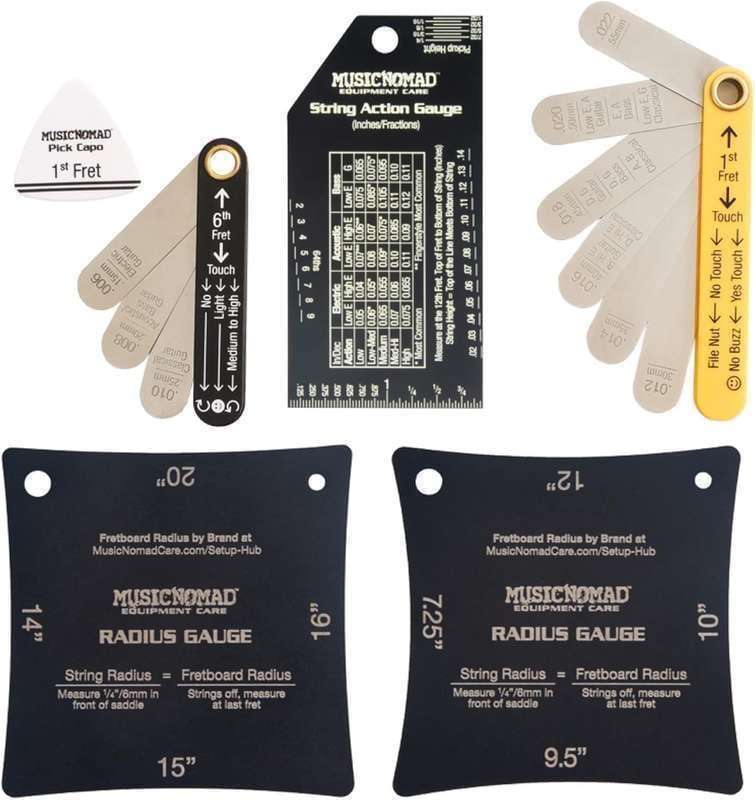
These values can be adjusted to match your needs. To measure and set action accurately, use a precision gauge like the MusicNomad Setup Gauge Set.
Essential Telecaster Setup Tools
 Buy on Amazon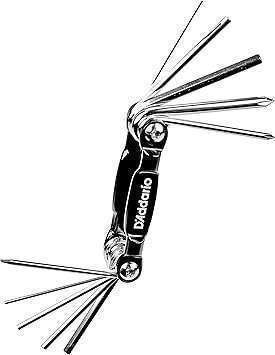
Part 2: Adjusting String Height on a Telecaster
Quick Answer: Adjust Telecaster string height by turning the bridge saddle screws with an Allen wrench. Lower saddles for lower action, raise for higher action. Always retune after adjustments.
Telecasters with a 6-saddle bridge allow precise individual string height adjustments. Follow these steps:
- Detune strings slightly - Reduces tension on saddles for easier adjustment
- Use an Allen wrench - A D'Addario Multi-Tool works well
- Turn saddle screws - Clockwise raises, counterclockwise lowers
- Retune and measure - Check action at the 12th fret after each adjustment
- Balance comfort and clarity - Prevent fret buzz while maintaining playability
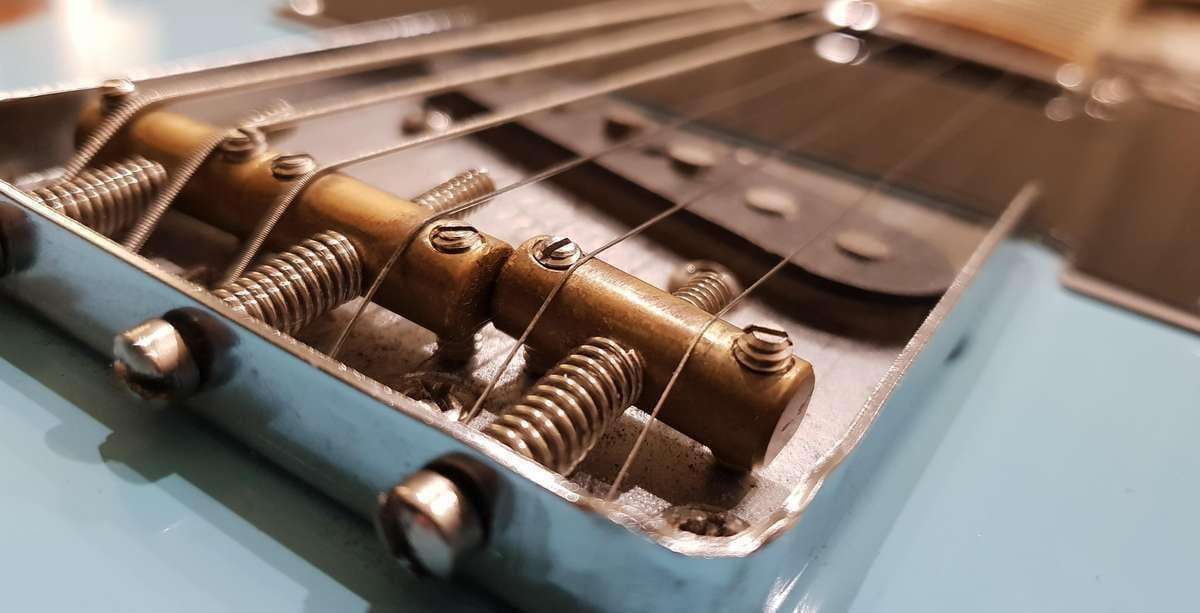 Photo by Charles G on Unsplash
Part 3: The Impact of Telecaster Pickup Height
🎯 Want the full deep-dive? See our dedicated Telecaster Pickup Height Guide for exact Fender factory specs, style-specific settings (country, blues, rock, jazz), and a complete troubleshooting section.
Quick Answer: Telecaster pickup height affects tone and volume. Standard measurements are 2.4mm (bass side) and 2.0mm (treble side) from strings to pickup when fretted at the last fret.
Pickup height adjustment is crucial for tone and volume balance. The distance between pickups and strings affects output and tonal characteristics.
Telecaster Pickup Height Specifications
| Pickup | Bass Side | Treble Side |
|---|---|---|
| Neck Pickup | 2.4mm (3/32") | 2.0mm (5/64") |
| Bridge Pickup | 2.4mm (3/32") | 2.0mm (5/64") |
Note: Measurements are taken from the bottom of the string to the top of the pickup pole piece, with the string pressed at the last fret.
Having these exact measurements at your fingertips while you work saves time and reduces the back-and-forth of checking specs online.
These settings can be adjusted for personal preference, considering pickup output and playing dynamics.
| Pickup type | Bass side | Treble side |
|---|---|---|
| Vintage style | 2.4mm (6/64") | 2.0mm (5/64") |
| Standard single-coils | 2.0mm (5/64") | 1.6mm (4/64") |
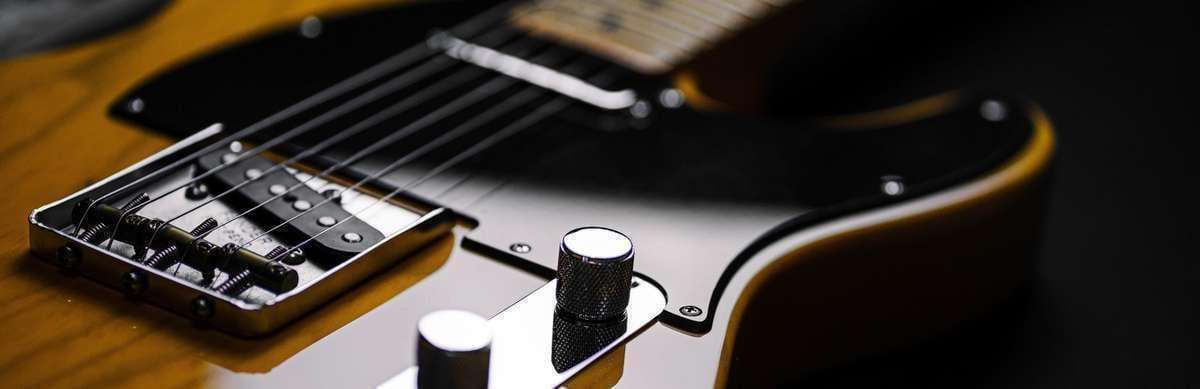 Photo by Chris Hardy on Unsplash
Part 4: Comprehensive Telecaster Setup
Quick Answer: A complete Telecaster setup includes truss rod adjustment, intonation, and nut height. These adjustments work together to optimize playability and tone.
A full Telecaster setup includes more than string and pickup height. It requires:
- Truss rod adjustment - Ensures proper neck relief
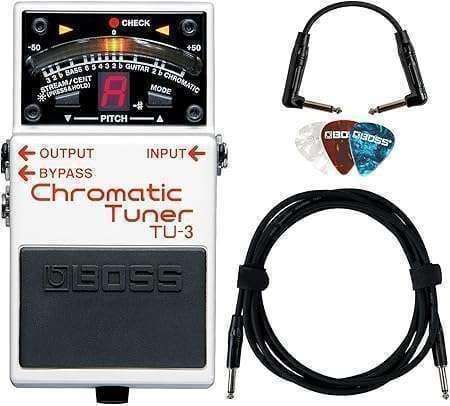
- Intonation setting - Uses a precise tuner like the Boss TU-3 Chromatic Tuner for accurate pitch
- Nut height adjustment - Affects playability in lower frets
A well-executed setup enhances overall performance and ensures smooth playability.
For a detailed neck relief walkthrough with exact specs and safe steps, see our dedicated guide: Telecaster Truss Rod Adjustment and Relief Specs.
For tremolo balancing concepts that carry over to many Fender bridges, see: Stratocaster Tremolo Setup — Float vs Decked.
Part 5: Tailoring Your Telecaster's Setup
Quick Answer: Fine-tune your Telecaster by adjusting bridge pickup height (affects brightness), neck pickup height (affects warmth), saddle positions (controls action), and nut height (affects lower fret playability).
Key Setup Adjustments
- Bridge Pickup Height - Affects brightness and attack. Use a Jim Dunlop String Height Gauge for precision.
- Neck Pickup Height - Impacts warmth and bass response. Fine-tunes tonal balance.
- 6 Saddle Bridge Setup - Individual string height adjustment offers greater control over action.
- Nut Height - Critical for comfortable playability in lower fret positions and affects open string tone.
Part 6: Advanced Setup Considerations
Quick Answer: Advanced players can customize action for specific genres (like slide guitar) and experiment with different string types and gauges to refine their playing experience.
For experienced players, advanced customization options include:
- Genre-specific action - Adjust action for slide guitar or aggressive strumming
- String experimentation - Try different types and gauges
- Tone refinement - Fine-tune for your playing style
Consider trying Ernie Ball Regular Slinky Nickel Wound Electric Guitar Strings for a balance of tone and durability.
Part 7: Telecaster Intonation and Tuning
For shared-saddle compromises and persistent sharp notes, follow the Telecaster intonation guide for three- and six-saddle bridges.
Quick Answer: Compare the fretted 12th-fret note with its harmonic. If the fretted note is sharp, move the saddle away from the nut; if flat, move it toward the nut. Retune and recheck after each adjustment.
Use the free guitar intonation checker to record all six strings and print a checklist. Select your actual bridge: a vintage three-saddle Tele needs both strings on each saddle checked together.
Proper intonation is crucial for accurate pitch across the entire fretboard. The Telecaster's bridge design makes intonation adjustment straightforward.
How to Set Intonation on a Telecaster
- Use a high-quality tuner - Start with a precise tuner like the Boss TU-3 Chromatic Tuner
- Tune open strings - Ensure all strings are perfectly in tune at the open position
- Test 12th fret - Play the 12th fret harmonic and compare it to the 12th fret note
- Adjust saddle position - Move the saddle away from the nut if the fretted note is sharp relative to the harmonic, or toward the nut if flat. On a shared saddle, recheck both strings.
- Recheck frequently - Small changes can affect other strings
Common Intonation Issues on Telecasters:
- Bridge saddle height affecting intonation
- String gauge changes requiring intonation adjustment
- Temperature and humidity affecting string tension
Common Mistakes and How to Avoid Them
- Skipping relief measurement before setting action. Always set neck relief first so saddle height tweaks are meaningful.
- Setting pickup height before intonation. Finish intonation with pickups lowered slightly, then raise by ear to taste.
- Ignoring witness points. Firmly set string break points at the nut and saddles after tuning to improve accuracy.
- Over‑tightening saddles. Small, even adjustments are best; re‑tune and re‑check after every move.
Part 8: Telecaster Maintenance and Care
Quick Answer: Regular maintenance includes cleaning, string changes, and periodic setup checks. Control humidity and temperature to preserve your Telecaster's quality and longevity.
Regular maintenance preserves your Telecaster's quality. Key practices include:
- Regular cleaning - Remove sweat and oils after playing
- String changes - Fresh strings enhance tone and playability
- Periodic setup checks - Maintain optimal playability
- Environmental control - Use a D'Addario Humidipak to control humidity levels
- Safe Shipping - Use our Fender Shipping Setup Guide if you need to transport or ship your guitar
Understanding environmental factors like humidity and temperature helps maintain your guitar's condition over time.
 Photo by Jeremy Yap on Unsplash
Quick Reference: Telecaster Setup Specifications
| Component | Standard Measurement |
|---|---|
| String Height (Action) | High E: 1.6mm, Low E: 2.0mm at 12th fret |
| Neck Pickup Height | Bass: 2.4mm, Treble: 2.0mm |
| Bridge Pickup Height | Bass: 2.4mm, Treble: 2.0mm |
| Setup Frequency | Every 6-12 months |
Get All Telecaster Specs in One Printable Reference
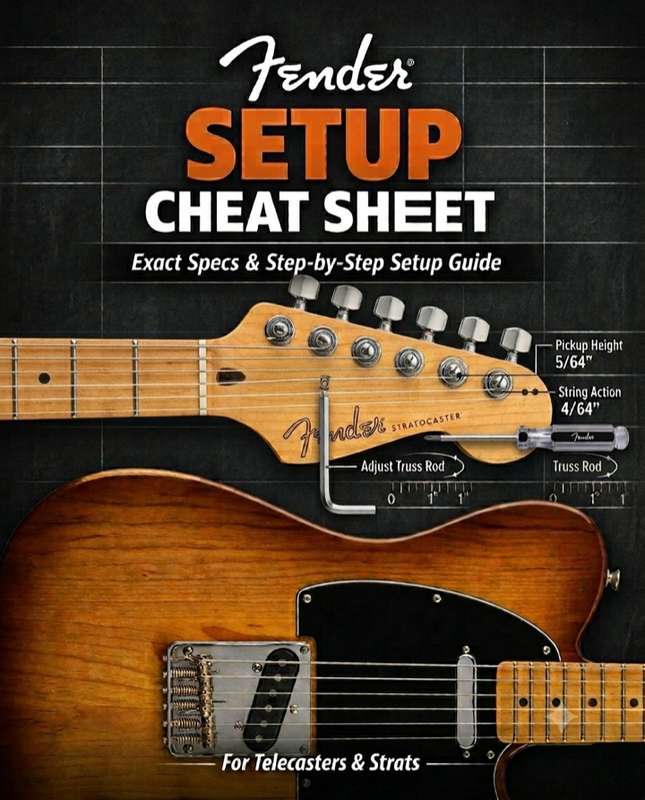
Stop switching between browser tabs mid-setup. The Fender Setup Cheat Sheet gives you every Telecaster measurement—action, pickup height, relief, intonation—in one printable PDF for your workbench.
What's inside:
- Exact Tele specs with real measurements
- Step-by-step setup workflow (relief → action → pickups → intonation)
- Troubleshooting guide for common Telecaster issues
- Genre-specific setup recommendations
Get the Complete Setup Guide →
Conclusion
Properly setting up your Telecaster unlocks its full potential. The process requires patience and attention to detail. The result is an instrument that provides an exceptional playing experience and embodies the legendary Fender tone.
Whether you're a seasoned professional or a hobbyist, finding the perfect setup deepens your connection with the instrument. Equip yourself with the right tools and accessories, like the D'Addario Multi-Tool or MusicNomad String Guitar String Cleaner to ensure your guitar stays in perfect playing condition.
Wondering what your Telecaster is worth? Try our Guitar Price Estimate.
Frequently Asked Questions (FAQ)
1. How often should I set up my Telecaster?
Answer: Every 6 to 12 months. Frequency depends on how often you play and environmental changes. Telecasters are stable, but regular setups maintain optimal playability.
2. What tools do I need for a Telecaster setup?
Answer: Essential tools include Allen wrenches, screwdrivers, string height gauge, feeler gauges, a reliable tuner like the Boss TU-3 Chromatic Tuner, wire cutters, and a string winder.
3. Can I set up my Telecaster myself, or should I take it to a professional?
Answer: Yes, many guitarists do basic setups themselves. The Telecaster's simple bridge design is user-friendly. However, if you're inexperienced with truss rod adjustments, consult a professional.
4. What's the ideal pickup height for a Telecaster?
Answer: Standard starting point: 2.4mm (bass side) and 2.0mm (treble side). Ideal height depends on your playing style and pickups. Experiment with small adjustments to find your preferred tone.
5. Why is my Telecaster buzzing after a setup?
Answer: Fret buzz usually comes from action too low, insufficient neck relief, uneven frets, or poorly cut nut slots. Raise string height slightly, adjust truss rod for forward bow, or consult a professional for fret leveling.
6. How does string gauge affect my Telecaster's setup?
Answer: String gauge changes neck tension. Heavier strings increase tension (may need truss rod adjustment). Lighter strings decrease tension (may lower action). Always recheck and adjust setup when changing gauges.
7. Should I adjust the truss rod myself?
Answer: Yes, minor adjustments are safe. Measure neck relief at the 8th fret with a feeler gauge. Make small adjustments (no more than 1/8 turn at a time). Allow neck to settle and recheck. If unsure, seek professional help.
8. What is intonation, and why is it important?
Answer: Intonation ensures your guitar plays in tune across the entire fretboard. If off, notes sound sharp or flat higher up the neck. Use a precise tuner like the Boss TU-3 Chromatic Tuner for accurate adjustments.
9. How can I improve my Telecaster's tuning stability?
Answer: Stretch new strings after installing, lubricate nut slots with graphite, consider locking tuners, and ensure bridge saddles are properly tightened.
10. What tuner should I use for setting up my Telecaster?
Answer: Use a high-accuracy chromatic tuner. The Boss TU-3 Chromatic Tuner is excellent for intonation and regular tuning. It provides precise readings trusted by professionals.
11. Where can I get a Fender Telecaster setup PDF?
Answer: The Fender Setup Cheat Sheet is a printable PDF with every Telecaster measurement on one card: string height, neck relief, pickup height, bridge saddle adjustment, and intonation. It covers the current American Professional II, Player, and Vintera models with per-model spec tables, so you can keep it on your workbench while you work.
Related Posts
Telecaster-Specific Guides
- Telecaster Pickup Height Guide - Exact pickup height specs and step-by-step adjustment for every playing style
- Telecaster Truss Rod Adjustment - Detailed neck relief adjustment techniques
- Telecaster Wiring Diagram Guide - Electronics and pickup wiring
- Best Strings for Telecaster - Complete string recommendations
- Telecaster String Gauge Selection Guide - Action height and string gauge selection
Universal Guitar Setup Guides
- Guitar Action Height Guide - Perfect your string height for optimal playability
- Guitar Truss Rod Adjustment Guide - Neck relief adjustment for all guitars
Other Fender Guitar Setup Guides
- Stratocaster Setup Guide - Complete Stratocaster setup process
- Stratocaster Tremolo Setup - Tremolo system configuration
- Jaguar Setup Guide - Offset guitar setup techniques
- Jazzmaster Setup Guide - Jazzmaster-specific setup procedures
- Mustang Setup Guide - Short-scale offset setup techniques
🛠️ Done with this setup? Log the spec — action, relief, strings — in My Gear Garage so you remember exactly what you did in six months. Free, no password — magic-link sign-in.