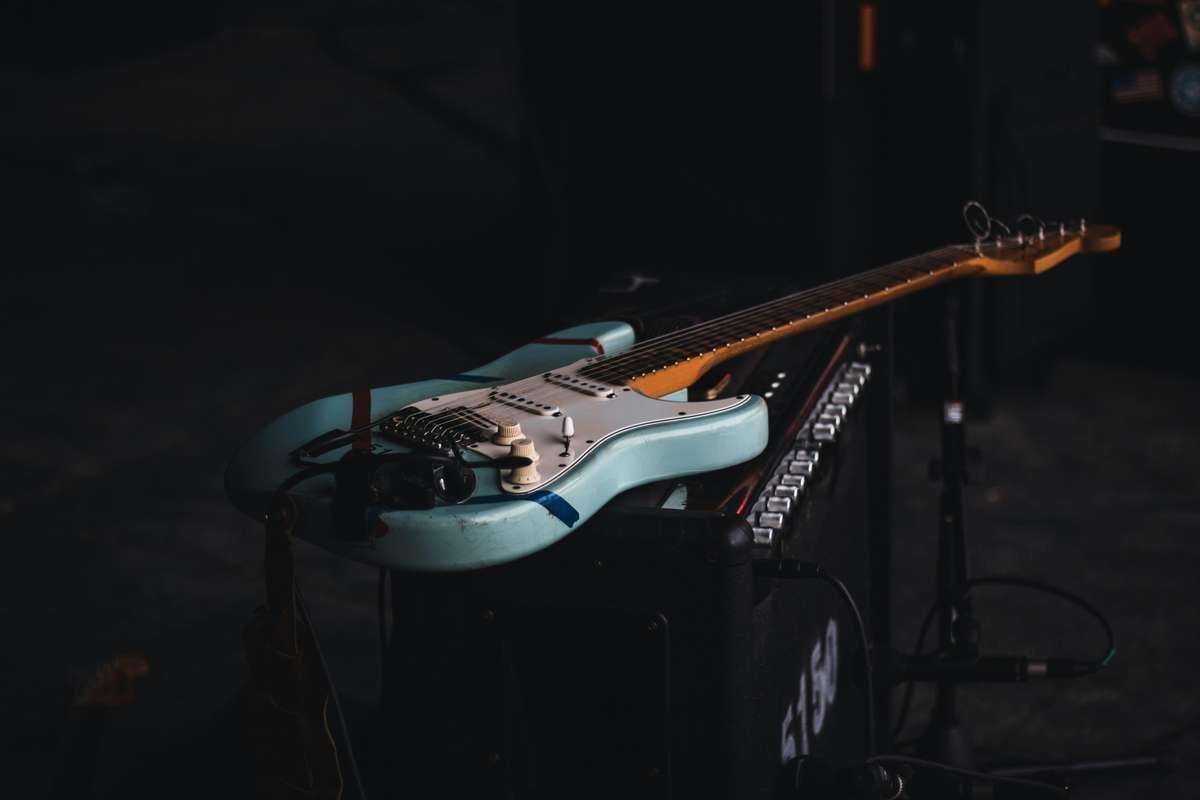
Stratocaster Tremolo Setup Guide: Float vs Decked
How to set up your Strat tremolo for floating or decked operation. Exact spring tension specs, bridge angle targets, and tuning stability tips. Fix your tremolo once and keep it in tune.
The Stratocaster tremolo is one of the most versatile and expressive tools in guitar history—but only when it's balanced properly. Many players fear the "floating" bridge because of tuning nightmares, opting to "deck" or block it instead. But a well-setup Strat tremolo can be surprisingly stable, even for heavy use.
This guide clarifies the difference between floating and decked setups, teaches you how to balance spring tension against string tension, and shares the secrets to keeping your Strat in tune (hint: it's all about friction).
For a full Strat setup walkthrough (action, pickups, intonation), see our Stratocaster Setup Guide. After setting your tremolo, optimize your tone with our Pickup Height Adjustment Guide.
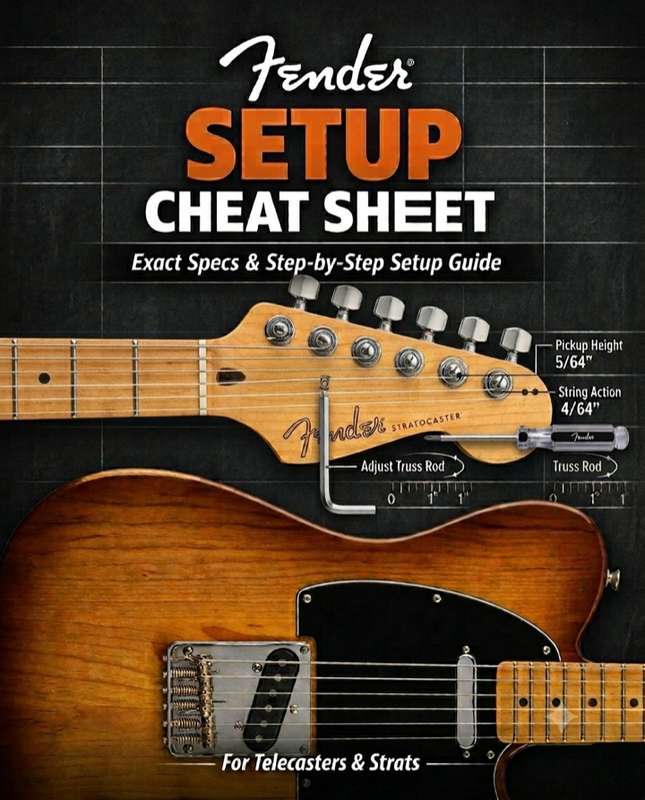
Want all Strat specs in one printable reference? The Fender Setup Cheat Sheet includes tremolo specs, spring configurations, and troubleshooting steps you can keep at your workbench.
 Buy on Amazon

Understanding Stratocaster Tremolo Types (6‑Screw vs 2‑Point)
Strats typically use either a vintage 6‑screw tremolo or a modern 2‑point system.
- Vintage 6-Screw: Pivots on six screws. Offers a classic, woody feel but requires careful setup to prevent binding. The outer two screws often bear the load while the inner four are set slightly higher.
- Modern 2-Point: Pivots on two knife-edge posts. Generally smoother and offers better tuning stability with less friction. Easier to adjust height while under tension.
Float vs Decked: Which Is Right for You?
Quick Answer: Floating allows up and down pitch movement (more expressive, less stable). Decked sits flush against body (better tuning stability, down-only range). Choose based on your needs.
| Setup Type | Bridge Position | Best For | Tuning Stability |
|---|---|---|---|
| Floating | Tilts off body (~2.5-3.0mm gap) | Expressive vibrato, pitch bending (Jeff Beck style) | Lower (unless perfectly setup) |
| Decked | Flush against body | Maximum stability, double-stop bends, sustain | Higher |
Starting Specs
Quick Answer: Floating bridge: 2.5–3.0 mm gap at rear. Use 3 springs in V pattern for moderate tension. Balance claw screws evenly on both sides.
| Component | Specification |
|---|---|
| Bridge Angle (Floating) | 2.5–3.0 mm (0.10–0.12") gap at rear |
| Springs (Moderate) | 3 springs in V pattern |
| Springs (Light Gauge) | 2 springs for very light gauges (9s) |
| Springs (Decked/Heavy) | 4–5 springs for decked or heavy touch |
| Claw Screws | Balanced turns on both sides |
Keywords you may see in setup specs include: “Stratocaster bridge height,” “Stratocaster bridge setup,” “float angle in mm/inches,” and “deck the tremolo Strat.” We’ll cover practical ranges and how to choose.
Tip: String gauge changes spring requirements. A balanced set like Ernie Ball Regular Slinky Nickel Wound Electric Guitar Strings pairs well with 3 springs; heavier sets often need a 4th or 5th spring.
Floating Setup (Step-by-Step)
The Goal: To have equal tension between strings and springs so the bridge "floats" at a specific angle.
- Tune to pitch - Use a precise tuner like the Boss TU-3 Chromatic Tuner.
- Check the Gap - Look at the back of the bridge plate. Ideally, it should be lifted about 1/8" (3.2mm) off the body.
- Too High? Titanium claw screws need to be tightened (clockwise).
- Too Low (or Decked)? Claw screws need to be loosened (counter-clockwise).
- Adjust claw screws - Turn the two big screws in the back cavity. Make small adjustments (1/4 turn).
- Retune - Every time you adjust the claw, your tuning will change. You must retune to pitch to see the true effect.
- Tip: This is a balancing act. Tightening springs raises pitch; tuning strings down lowers bridge using string tension. It takes a few cycles.
- Final Check - Once tuned to pitch, confirm the bridge gap is correct (~3mm).
Decked (or Blocked) Setup
The Goal: To have enough spring tension that the bridge stays flat against the body even during bends, but can still dive if you push the bar.
- Loosen Strings - Detune slightly to relieve tension.
- Tighten Claw Screws - drive the claw screws in until the springs are visibly stretched more than before.
- Tune to Pitch - As you tune up, watch the bridge. It should stay flat.
- Test Bends - Perform a big bend (e.g., 2 steps) on the G string. Watch the bridge.
- Does it lift? If yes, tighten the claw screws more.
- Stays flat? You are successfully decked.
- Optional: Add Springs - Many players add a 4th or 5th spring to make the bridge "stiff" and immovable during bends.
Decking vs Blocking: Decking keeps down‑only range by pulling bridge flush. Blocking immobilizes bridge entirely (using a piece of wood). Both improve tuning stability; blocking is strongest for studio or hard strumming.
Tuning Stability Tips
- Nut Lubrication is Key: 90% of tuning issues are the nut, not the tuners. Use MusicNomad TUNE‑IT or graphite in the slots.
- Stretch New Strings: Pull them aggressively until they stop going flat.
- Clear Witness Points: Press the string firmly over the saddle and nut to create a sharp break angle.
- The "Tap" Trick: If you bend a string and it goes flat, dip the tremolo bar quickly. This often resets the string at the nut.
Advanced Tremolo Mechanics: The "Angled Claw" Debate
You may have heard of the "angled claw" method (often associated with Carl Verheyen), where the spring claw screws are adjusted unevenly—tight on the bass side, loose on the treble side. The theory is that this balances the specific tensions of individual strings.
The Reality: From a physics standpoint, the tremolo block is a solid unit. The springs pull on the entire block, not individual strings. Angling the claw primarily changes the feel of the arm and how the bridge attempts to return to equilibrium.
- Straight Claw: Provides equal tension distribution. This is the factory standard and offers the most predictable return-to-pitch behavior.
- Angled Claw: Can subtly alter the resistance curve. Some players swear it helps keep the G-string in tune during bends, while others find it causes the bridge to "lean" or wear unevenly on the pivot points.
Our Recommendation: Start straight. Only angle the claw if you are chasing a very specific feel.
The "Flutter" Setup
Want that Gargoyles-style warble? "Flutter" occurs when you flick the bar and the bridge vibrates freely like a diving board.
To enable flutter:
- Reduce friction: This setup works best on a 2-point tremolo or extremely well-adjusted vintage 6-screw.
- Float the bridge: You need room for the bridge to swing back and forth. A 3.0mm+ gap is ideal.
- Spring arrangement: Use 3 springs (straight, not V-shape) or even 2 springs. The V-shape adds lateral tension that dampens flutter. Straight springs allow the freest movement.
Keeping it in Tune Without a Locking Nut
You don't need a Floyd Rose for reliable performance. Jeff Beck, arguably the master of the Strat tremolo, used a standard Fender system. His secrets?
- Perfectly cut nut slots: The slots must be wide enough that the string doesn't bind.
- Stretching strings: New strings stretch. Stretch them aggressively.
- The "Dive to Return" habit: Often, if a string goes sharp after a bend, a quick tap on the tremolo arm dips the tension and resets the string at the nut/saddle contact points.
FAQ
How many springs should I use?
Answer: Three is a great starting point. Add springs for heavier gauges, decked setups, or more stability.
What bridge gap should I target for floating?
Answer: 2.5–3.0 mm at the back edge is common for moderate float.
Can I get stable tuning with a floating bridge?
Answer: Yes—with proper nut lubrication, even claw balance, and reasonable float. For gig‑proof stability, deck or block it.
What spring pattern should I use?
Start with 3 springs in a V. Add a 4th or 5th for decked setups or heavy gauges; keep claw screw turns even on both sides.
Should I block the trem for recording?
If you don’t need vibrato, blocking or decking improves consistency on punch‑ins and doubles.
Related Guides
- Main: Stratocaster Setup Guide
- Also see: The Ultimate Fender Jaguar Setup Guide and The Ultimate Guide to Setting Up Your Telecaster
- Bass: Fender Precision Bass (P‑Bass) Setup Guide
Frequently Asked Questions (FAQ)
Should I float or deck my Strat tremolo?
Float for expressive vibrato and subtle pitch ups/downs; deck for stability, sustain, and quick re‑tuning. If decking, adding extra springs like Fender Tremolo Springs can help.
What causes the bridge not to return to pitch?
Nut friction, uneven claw tension, old strings, or excessive float. Lubricate contact points with MusicNomad TUNE‑IT, balance the claw evenly (a D'Addario Multi-Tool helps), and set clear witness points.
How high should saddles be relative to the radius?
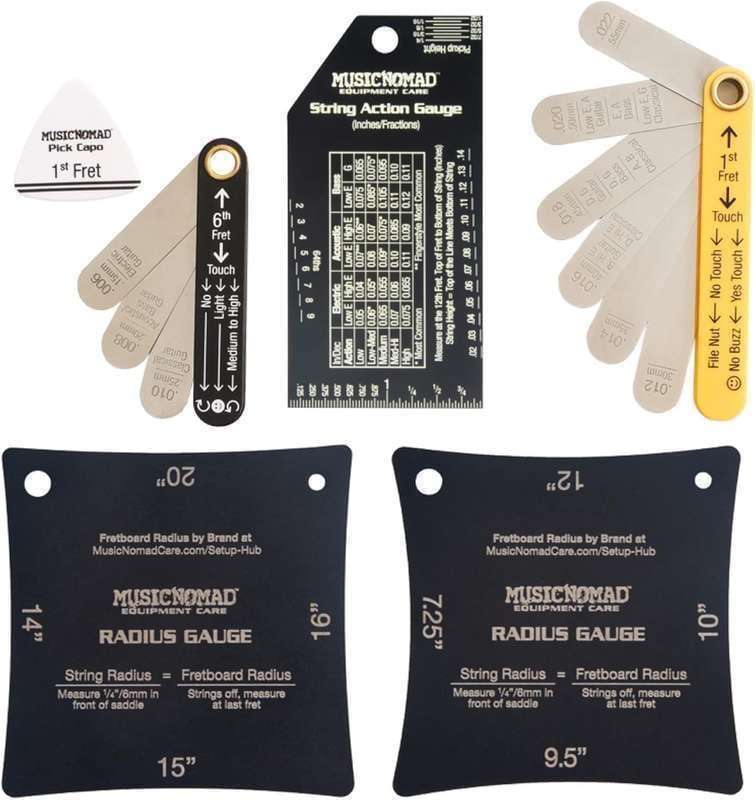
Match the fingerboard radius. Use a Jim Dunlop String Height Gauge to confirm an even arc across the saddles.
Do locking tuners fix everything?
They help with string slippage, but nut friction and setup balance still matter.
Is blocking better than decking?
Blocking fully immobilizes the bridge; decking still allows down‑only. Choose based on playing needs.
What’s the ideal Stratocaster bridge height?
Focus on the rear gap for float (~2.5–3.0 mm) and match saddle arc to your fingerboard radius. For decked setups, ensure the plate sits flush and action is set by saddle height (measure precisely with a Jim Dunlop String Height Gauge).
Which tremolo is more stable: 6‑screw or 2‑point?
Both can be stable when set up correctly. The 2‑point system makes fine angle adjustments easier; 6‑screw requires careful screw tension and plate alignment.
What string gauge is best for trem use?
9–42 to 10–46 are common for moderate float. A set like Ernie Ball Regular Slinky Nickel Wound Electric Guitar Strings is a solid baseline. Heavier gauges may require an extra spring or greater claw tension (see Fender Tremolo Springs).
How do I reduce fret buzz without raising action?
Add a touch of relief, verify fret level, ensure clean witness points, and check that saddles follow the fingerboard radius (measure with a Jim Dunlop String Height Gauge).
Comprehensive Tremolo Setup Checklist
- Tune to pitch and stretch strings
- Set neck relief (target ~0.25–0.35 mm)
- Set saddle heights to match radius and desired action
- Choose float vs decked and set rear gap or plate flush
- Balance spring count and claw screw turns evenly
- Lubricate nut, trees, and saddle contact points
- Verify return‑to‑pitch with subtle vibrato
- Re‑intonate and re‑tune after changes; then check your intonation before calling the tremolo setup finished
Maintenance and Care
- Change strings regularly; recheck float angle after any gauge change
- Monitor seasonal shifts that alter relief and trem balance
- Keep contact points clean and lightly lubricated
- For humidity control, consider a D'Addario Humidipak
 Photo by
 Related Posts
Stratocaster-Specific Guides
- Ultimate Stratocaster Setup Guide - Complete setup process and specifications
- Best Strings for Stratocaster - Complete string recommendations
Other Fender Guitar Setup Guides
- Telecaster Setup Guide - Complete Telecaster setup process
- Jaguar Setup Guide - Offset guitar setup techniques
- Jaguar Tremolo Setup Guide - Jaguar tremolo configuration
- Jazzmaster Setup Guide - Jazzmaster-specific setup procedures