Martin Serial Number Lookup: Free Instant Decoder & Checker
Enter your Martin serial number to get the year it was built. Covers every standard Martin from 1898 to 2026, plus where to find the number.
Quick answer: Martin serial numbers are simple sequential numbers with no letter codes — find yours stamped on the neck block (look through the soundhole where the neck meets the body). Numbering started at #8,348 in 1898 and runs in one unbroken series to #2,935,987+ today. Enter your number in the free checker above for an instant year, or match it against the complete chart below.
What's Next?
Now that you've decoded your Martin guitar, here are the best places to continue:
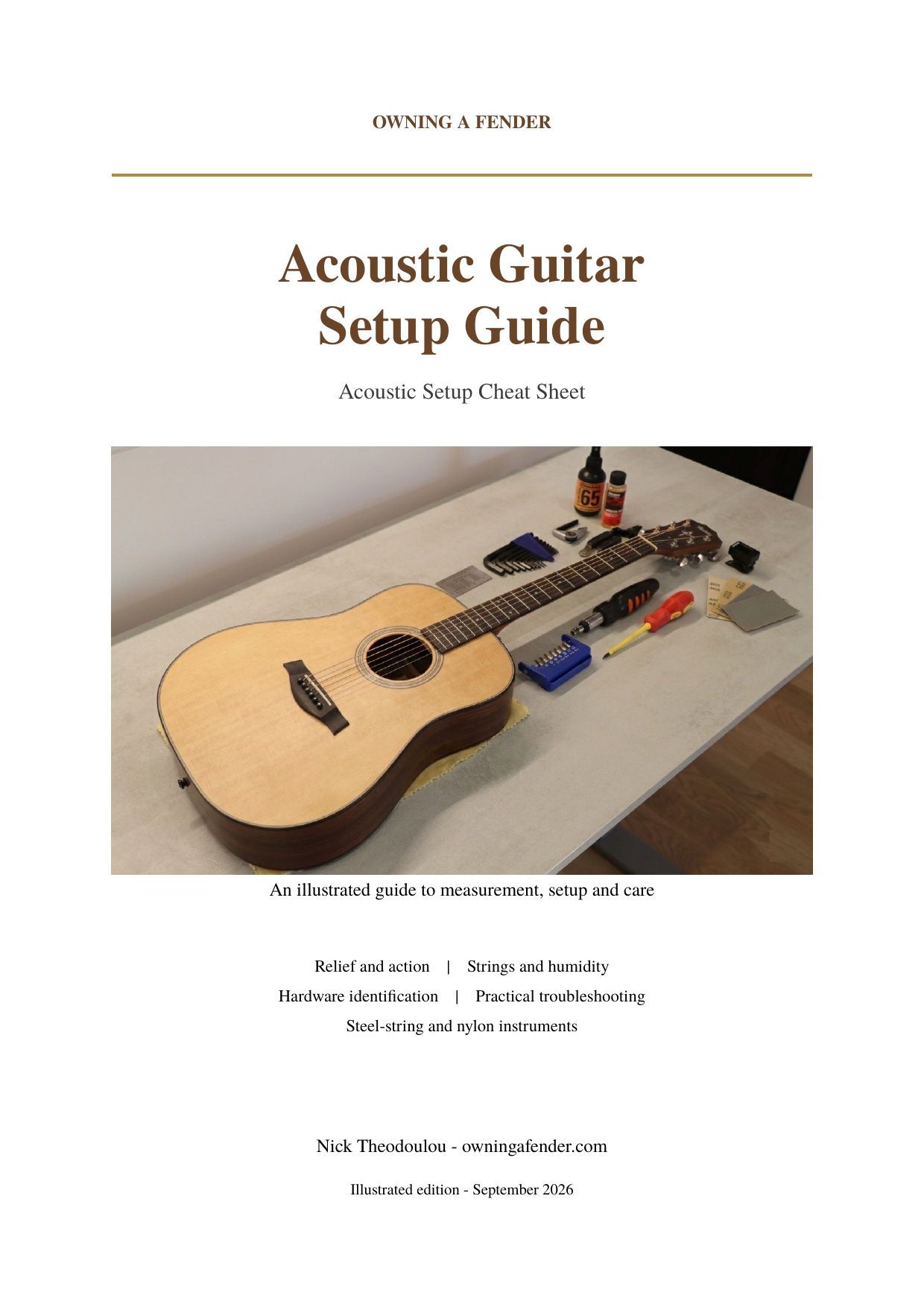
- Acoustic Guitar Setup Guide — Step-by-step acoustic setup
- Acoustic Best Strings — Top string recommendations for acoustic
- Setup Specs Lookup — Find factory specs by year and model
- My Gear Garage — Track your collection and maintenance schedule
- Garage Pro — Maintenance log with unlimited guitars, full history & smart reminders
On this page:
- Martin Serial Number Checker
- Complete Serial Number Chart (1898–Present)
- Martin Historical Eras
- Decade-by-Decade Changes
- Model Number Reference
- Special Editions & Limited Runs
- Serial Number Case Studies
- Authentication Tips
- Troubleshooting Guide
- Nazareth vs Navojoa Production
- FAQ
- Other Brand Decoders
Martin Serial Number Lookup & Checker: Decode Your Guitar Instantly
A Martin serial number lookup is the fastest way to identify when your guitar was made. C.F. Martin & Company has been building acoustic guitars in Nazareth, Pennsylvania since 1833—making it the oldest surviving guitar manufacturer in the world. Martin began assigning serial numbers in 1898, and every standard guitar since then has received a sequential number in one continuous series.
Unlike other brands that use coded formats with letters and date positions, Martin's system is beautifully simple: every guitar gets the next number in sequence. Serial #8348 was the first (1898), and by 2024, Martin had reached serial #2,935,987. Use our free Martin serial number checker tool above to decode yours instantly—no sign-up required.
Martin Serial Number Checker
The tool at the top of this page is a free Martin serial number checker. Enter your Martin guitar serial number (numbers only—Martin serials contain no letters) and it instantly returns your guitar's production year, historical era, and approximate production volume for that year. No sign-up required—use it as often as you need to verify a single guitar or compare multiple instruments.
Our Martin serial number decoder covers every standard Martin guitar from 1898 to present—over 125 years of continuous production. The Martin serial number lookup tool cross-references your number against the complete serial chart to pinpoint the exact year. Just enter the number as it appears on the neck block and click Decode.
🎸 What's Next? Now that you know your guitar's year, the next step is setting it up to play its best. Acoustic setup specs—action height, neck relief, saddle height—vary by era and body shape. Want the exact specs for your Martin? Check out our Acoustic Guitar Setup Guide and Factory Specs Lookup.
Where to Find Your Martin Serial Number
Martin serial numbers are located on the neck block, visible through the soundhole. Look at the point where the neck meets the body inside the guitar—the serial is stamped into the wood.
- Modern guitars (1990s+): The serial may also appear on a label inside the body or on the headstock
- Vintage guitars: The stamp is on the neck block only, sometimes faint from decades of use
- Ukuleles and mandolins: Use separate serial number systems (not covered by this decoder)
Pro tip: Use a flashlight angled inside the soundhole. The stamp is typically at the top of the neck block where it meets the body. On very old guitars, the numbers may be hand-stamped and slightly irregular.
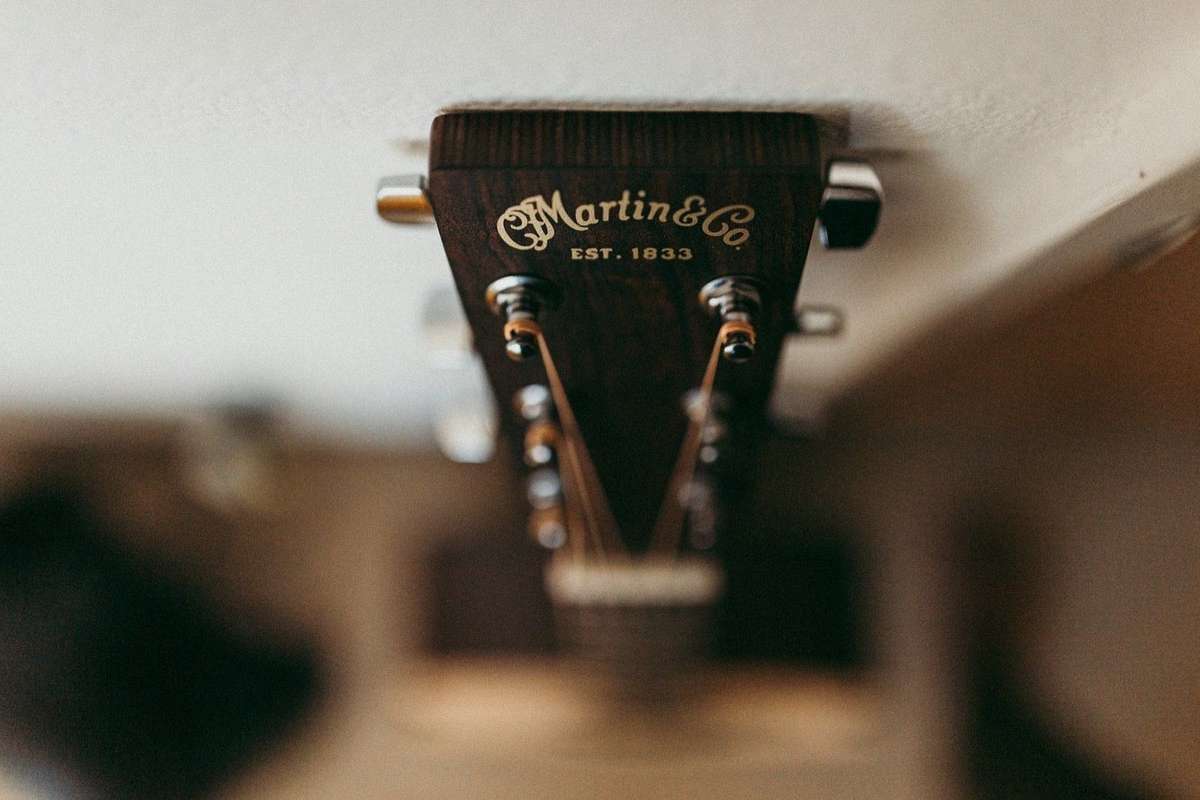
Photo by Tarik Caramanico on Unsplash
How to Read Your Martin Serial Number
Martin's serial number system is the simplest of any major guitar brand. Unlike Fender, Gibson, or Taylor, there are no letter codes, date positions, or factory identifiers to decode. Every Martin guitar serial number is a plain sequential number.
How it works:
- Martin started at serial #8,348 in 1898
- Each guitar built gets the next number in sequence
- By 2024, Martin reached serial #2,935,987
- To find your year, match your serial to the chart below
Example: Your Martin has serial #165,576
- Looking at the chart: 159,061 (1957) → 165,576 (1958)
- Your serial falls in the 1958 range → your guitar was made in 1958
- This is a Post-War era Martin with Brazilian rosewood (pre-1970)
Example: Your Martin has serial #1,500,000
- Looking at the chart: 1,473,461 (2010) → 1,555,767 (2011)
- Your serial falls in the 2011 range → your guitar was made in 2011
Important exceptions:
- Serials 900,001-902,908 were assigned to Sigma-Martin imports (Japan, 1981-1982)
- Little Martin (LX), Backpacker, and mandolin models use separate serial systems
- Pre-1898 Martin guitars have no serial numbers—dating relies on construction details
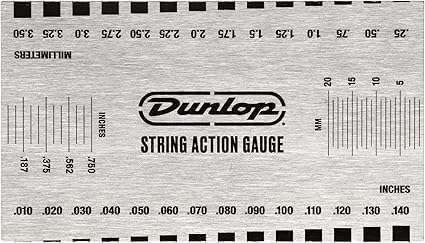
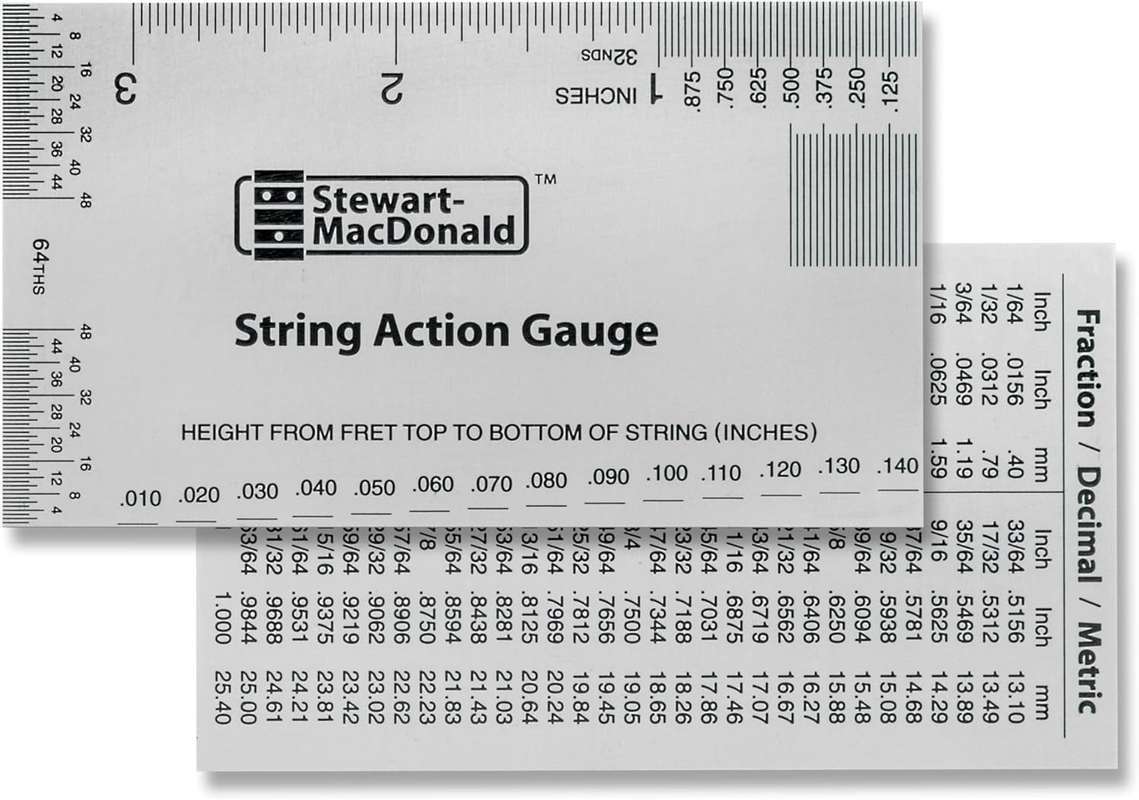
 Buy on Amazon
Own another guitar? We also have free serial number decoders for Fender, Gibson, Squier, ESP, LTD, Schecter, Charvel, Epiphone, Gretsch, Ibanez, Jackson, PRS, Taylor, Takamine, Yamaha, Chapman, Eastman, Guild, Harley Benton, Rickenbacker, Cort, and Seagull.
Complete Martin Serial Number Chart (1898 – Present)
Martin uses sequential numbering. Find your serial number in the chart below to determine the year. Your guitar was made in the year where your serial falls within or below the "Last Serial" number.
1898 – 1929: Early Production
| Year | Last Serial | Approx. Production |
|---|---|---|
| 1898 | 8,348 | — |
| 1899 | 8,716 | ~368 |
| 1900 | 9,128 | ~412 |
| 1901 | 9,310 | ~182 |
| 1902 | 9,528 | ~218 |
| 1903 | 9,810 | ~282 |
| 1904 | 9,988 | ~178 |
| 1905 | 10,120 | ~132 |
| 1906 | 10,329 | ~209 |
| 1907 | 10,727 | ~398 |
| 1908 | 10,883 | ~156 |
| 1909 | 11,018 | ~135 |
| 1910 | 11,203 | ~185 |
| 1911 | 11,413 | ~210 |
| 1912 | 11,565 | ~152 |
| 1913 | 11,821 | ~256 |
| 1914 | 12,047 | ~226 |
| 1915 | 12,209 | ~162 |
| 1916 | 12,390 | ~181 |
| 1917 | 12,988 | ~598 |
| 1918 | 13,450 | ~462 |
| 1919 | 14,512 | ~1,062 |
| 1920 | 15,848 | ~1,336 |
| 1921 | 16,758 | ~910 |
| 1922 | 17,839 | ~1,081 |
| 1923 | 19,891 | ~2,052 |
| 1924 | 22,008 | ~2,117 |
| 1925 | 24,116 | ~2,108 |
| 1926 | 28,689 | ~4,573 |
| 1927 | 34,435 | ~5,746 |
| 1928 | 37,568 | ~3,133 |
| 1929 | 40,843 | ~3,275 |
1930 – 1945: Pre-War / Golden Era
| Year | Last Serial | Approx. Production |
|---|---|---|
| 1930 | 45,317 | ~4,474 |
| 1931 | 49,589 | ~4,272 |
| 1932 | 52,590 | ~3,001 |
| 1933 | 55,084 | ~2,494 |
| 1934 | 58,679 | ~3,595 |
| 1935 | 61,947 | ~3,268 |
| 1936 | 65,176 | ~3,229 |
| 1937 | 68,865 | ~3,689 |
| 1938 | 71,866 | ~3,001 |
| 1939 | 74,061 | ~2,195 |
| 1940 | 76,734 | ~2,673 |
| 1941 | 80,013 | ~3,279 |
| 1942 | 83,107 | ~3,094 |
| 1943 | 86,724 | ~3,617 |
| 1944 | 90,149 | ~3,425 |
| 1945 | 93,623 | ~3,474 |
1946 – 1969: Post-War Era
| Year | Last Serial | Approx. Production |
|---|---|---|
| 1946 | 98,158 | ~4,535 |
| 1947 | 103,468 | ~5,310 |
| 1948 | 108,269 | ~4,801 |
| 1949 | 112,961 | ~4,692 |
| 1950 | 117,961 | ~5,000 |
| 1951 | 122,799 | ~4,838 |
| 1952 | 128,436 | ~5,637 |
| 1953 | 134,501 | ~6,065 |
| 1954 | 141,345 | ~6,844 |
| 1955 | 147,328 | ~5,983 |
| 1956 | 153,225 | ~5,897 |
| 1957 | 159,061 | ~5,836 |
| 1958 | 165,576 | ~6,515 |
| 1959 | 171,047 | ~5,471 |
| 1960 | 175,689 | ~4,642 |
| 1961 | 181,297 | ~5,608 |
| 1962 | 187,384 | ~6,087 |
| 1963 | 193,327 | ~5,943 |
| 1964 | 199,626 | ~6,299 |
| 1965 | 207,030 | ~7,404 |
| 1966 | 217,215 | ~10,185 |
| 1967 | 230,095 | ~12,880 |
| 1968 | 241,925 | ~11,830 |
| 1969 | 256,003 | ~14,078 |
1970 – 1989: Modern Era
| Year | Last Serial | Approx. Production |
|---|---|---|
| 1970 | 271,633 | ~15,630 |
| 1971 | 294,270 | ~22,637 |
| 1972 | 313,302 | ~19,032 |
| 1973 | 333,873 | ~20,571 |
| 1974 | 353,387 | ~19,514 |
| 1975 | 371,828 | ~18,441 |
| 1976 | 388,800 | ~16,972 |
| 1977 | 399,625 | ~10,825 |
| 1978 | 407,800 | ~8,175 |
| 1979 | 419,900 | ~12,100 |
| 1980 | 430,300 | ~10,400 |
| 1981 | 436,474 | ~6,174 |
| 1982 | 439,627 | ~3,153 |
| 1983 | 446,101 | ~6,474 |
| 1984 | 453,300 | ~7,199 |
| 1985 | 460,575 | ~7,275 |
| 1986 | 468,175 | ~7,600 |
| 1987 | 476,216 | ~8,041 |
| 1988 | 483,952 | ~7,736 |
| 1989 | 493,279 | ~9,327 |
1990 – 2009
| Year | Last Serial | Approx. Production |
|---|---|---|
| 1990 | 503,309 | ~10,030 |
| 1991 | 512,487 | ~9,178 |
| 1992 | 522,655 | ~10,168 |
| 1993 | 535,223 | ~12,568 |
| 1994 | 551,696 | ~16,473 |
| 1995 | 570,434 | ~18,738 |
| 1996 | 592,930 | ~22,496 |
| 1997 | 624,799 | ~31,869 |
| 1998 | 668,796 | ~43,997 |
| 1999 | 724,077 | ~55,281 |
| 2000 | 780,500 | ~56,423 |
| 2001 | 845,644 | ~65,144 |
| 2002 | 916,759 | ~71,115 |
| 2003 | 978,706 | ~61,947 |
| 2004 | 1,042,558 | ~63,852 |
| 2005 | 1,115,862 | ~73,304 |
| 2006 | 1,197,799 | ~81,937 |
| 2007 | 1,268,091 | ~70,292 |
| 2008 | 1,337,042 | ~68,951 |
| 2009 | 1,406,715 | ~69,673 |
2010 – Present
| Year | Last Serial | Approx. Production |
|---|---|---|
| 2010 | 1,473,461 | ~66,746 |
| 2011 | 1,555,767 | ~82,306 |
| 2012 | 1,656,742 | ~100,975 |
| 2013 | 1,755,536 | ~98,794 |
| 2014 | 1,857,399 | ~101,863 |
| 2015 | 1,972,129 | ~114,730 |
| 2016 | 2,076,795 | ~104,666 |
| 2017 | 2,161,732 | ~84,937 |
| 2018 | 2,258,889 | ~97,157 |
| 2019 | 2,366,880 | ~107,991 |
| 2020 | 2,454,224 | ~87,344 |
| 2021 | 2,576,415 | ~122,191 |
| 2022 | 2,711,440 | ~135,025 |
| 2023 | 2,829,083 | ~117,643 |
| 2024 | 2,935,987 | ~106,904 |
| 2025 | Ongoing | — |
Note: Serials 900,001–902,908 were used for Sigma-Martin imports (Japan, 1981-1982) and are excluded from standard production counts.


Martin Historical Eras
Pre-Serial Number Era (1833–1897)
C.F. Martin Sr. emigrated from Germany to New York City in 1833 and began building guitars. The company moved to Nazareth, Pennsylvania in 1839, where it remains today. Guitars from this era are museum pieces—extremely rare and valuable. No serial numbers were assigned; dating relies on construction details, bracing patterns, and stamp markings.
Early Production (1898–1929)
Martin began serial numbering in 1898 at #8,348. Production was modest—a few hundred guitars per year. These early Martins established the templates that would define the American acoustic guitar: the 0, 00, 000, and eventually the Dreadnought body shapes. Guitars from this era are highly collectible, with prices ranging from $5,000 to $50,000+ depending on model and condition.
Pre-War / Golden Era (1930–1945)
Widely considered the pinnacle of Martin guitar building. The D-28 (introduced 1931) and D-45 (1933) became the gold standard for acoustic guitars. Pre-War Martins used Adirondack spruce tops and Brazilian rosewood backs and sides—a combination that produces legendary tone. A Pre-War D-45 in good condition can sell for $200,000+. Even common models like the D-18 from this era command $10,000-$30,000.
Key features of Pre-War Martins:
- Scalloped X-bracing (lighter, more resonant)
- Adirondack (red) spruce tops
- Brazilian rosewood (D-28, D-45, 000-28, etc.)
- Smaller neck profiles
- Ebony fingerboards and bridges
Post-War Era (1946–1969)
Martin continued producing excellent guitars but made several changes. Non-scalloped bracing became standard in 1944. Brazilian rosewood remained in use until 1969, making all guitars from this era collectible. The D-28 became the best-selling acoustic guitar in the world. Production ramped from ~4,500/year in 1946 to over 14,000/year by 1969.
The 1969 cutoff: Martin switched from Brazilian rosewood to Indian rosewood in 1970 due to CITES restrictions. Pre-1970 rosewood Martins are significantly more valuable than post-1970 models.
Modern Era (1970–Present)
Indian rosewood replaced Brazilian rosewood. Production increased dramatically through the 1970s (peaking at ~22,000/year in 1971) before declining in the early 1980s recession. Martin introduced affordable models (D-1, DM, DX) in the 1990s and opened a factory in Navojoa, Mexico for the X Series in 2013. Today, Martin produces over 100,000 guitars per year across both facilities.
Decade-by-Decade Changes: What Your Martin Serial Number Reveals
Your Martin's production decade tells you more than just its age—it reveals the bracing, tonewoods, construction methods, and market value of your guitar. Here's what changed in each era:
1898-1929: The Foundation
Serial Range: 8,348-40,843
- Body Shapes: 0, 00, 000 (parlor and concert sizes), Dreadnought introduced (1916 for Ditson, 1931 under Martin name)
- Bracing: Fan bracing transitioning to X-bracing
- Tonewoods: Adirondack spruce tops, Brazilian rosewood, mahogany
- Construction: Hand-built, small workshop production (100-5,700 guitars/year)
- Value: $5,000-$50,000+ (extremely rare, museum-quality instruments)
- Notable: Martin established the templates for the modern acoustic guitar. The 000-28 and 00-18 became standards.
1930-1945: The Golden Era
Serial Range: 45,317-93,623
- Bracing: Scalloped X-bracing (the defining feature of Pre-War Martins)
- Tonewoods: Adirondack spruce tops, Brazilian rosewood (D-28, D-45), mahogany (D-18)
- Construction: Herringbone trim on D-28 (until 1946), snowflake inlays on D-45
- Value: $10,000-$200,000+ (the most valuable production acoustic guitars ever made)
- Notable: The D-28 and D-45 became the gold standard. Scalloped bracing was discontinued in 1944 due to wartime material changes. Pre-War D-45s are among the rarest and most valuable guitars in existence.
1946-1969: The Post-War Boom
Serial Range: 98,158-256,003
- Bracing: Non-scalloped X-bracing (post-1944)
- Tonewoods: Brazilian rosewood until 1969, Adirondack spruce replaced by Sitka spruce (mid-1940s)
- Construction: Production ramped from ~4,500/year to 14,000/year
- Value: $2,500-$15,000 (Brazilian rosewood models are significantly more valuable)
- Notable: The 1969/1970 Brazilian rosewood cutoff is the single most important date in Martin valuation. Serial #271,633 (1970) marks the transition to Indian rosewood.
1970-1979: The Expansion Era
Serial Range: 271,633-419,900
- Bracing: Non-scalloped X-bracing, heavier construction
- Tonewoods: Indian rosewood replaced Brazilian, Sitka spruce standard
- Construction: Peak production (~22,600/year in 1971), some quality concerns
- Value: $1,500-$3,500 (less collectible than pre-1970, but excellent players)
- Notable: Martin expanded production significantly. Some collectors consider early 1970s Martins to have quality issues due to rapid scaling, though many excellent guitars were produced.
1980-1989: The Recovery
Serial Range: 430,300-493,279
- Bracing: Non-scalloped X-bracing, refinements in bracing weight
- Tonewoods: Indian rosewood, Sitka spruce, mahogany
- Construction: Production dropped to ~6,000-9,000/year, quality improved
- Value: $1,200-$3,000 (undervalued era—excellent guitars at reasonable prices)
- Notable: Martin refocused on quality over quantity. The HD-28 (herringbone reissue) was introduced. Vintage reissue models began appearing.
1990-2009: The Modern Renaissance
Serial Range: 503,309-1,406,715
- Bracing: Scalloped bracing reintroduced on select models (HD-28, D-18 Authentic)
- Tonewoods: Expanded options including cherry, walnut, HPL (high-pressure laminate for X Series)
- Construction: Production grew from ~10,000/year to 75,000/year
- Value: $600-$2,500 (wide range due to expanded model lineup)
- Notable: Martin introduced affordable models (D-1, DM, DX, X Series). The Authentic Series brought Pre-War specs to modern production. The millionth Martin was produced in 2004.
2010-Present: The Global Era
Serial Range: 1,473,461-2,935,987+
- Bracing: Scalloped X-bracing on premium models, non-scalloped on standard
- Tonewoods: Sustainable alternatives (richlite fingerboards, HPL bodies on X Series)
- Construction: Navojoa, Mexico factory opened (2013) for X Series; Nazareth for premium
- Value: $400-$2,500 (new models), used varies widely
- Notable: Martin now produces 100,000+ guitars/year across two facilities. The Modern Deluxe series combines vintage specs with modern appointments. Reimagined models (D-18 Modern Deluxe, D-28 Modern Deluxe) are popular.
Key Takeaway: Your Martin serial number's decade determines not just age, but the entire spec profile. A 1942 D-28 (scalloped bracing, Adirondack spruce, Brazilian rosewood) is a fundamentally different instrument from a 2022 D-28 (non-scalloped bracing, Sitka spruce, Indian rosewood)—and worth 10-20x more.
Martin Value by Serial Number: Era Reference
Serial-number dating is the first step to valuing a Martin — the era dictates the spec profile (bracing, tonewoods, construction), which drives the market:
| Era | Typical Value Range | Notes |
|---|---|---|
| 1898–1929 | $5,000–$50,000+ | Extremely rare, museum-quality instruments |
| 1930–1945 | $10,000–$200,000+ | The most valuable production acoustic guitars ever made |
| 1946–1969 | $2,500–$15,000 | Brazilian rosewood models are significantly more valuable |
| 1970–1989 | $1,200–$3,500 | Less collectible than pre-1970, but excellent players |
| 1990–2009 | $600–$2,500 | Wide range due to expanded model lineup |
| 2010–present | $400–$2,500 | New models; used values vary widely by model |
The big variables: A 1941 D-28 in the $25,000-$40,000 range is the exception, not the rule — most Martins trade in the $600-$3,000 band. The premium eras (Pre-War, Brazilian-rosewood 1946–1969) reward originality and provenance more than any other factor. For a current market range on your specific year, model, and condition, use our Guitar Price Estimator.
Martin Model Number Reference
Martin uses a logical model naming system that tells you the body shape and tonewood at a glance. Understanding it helps you identify any Martin guitar instantly:
Body Shape Prefixes:
| Prefix | Body Shape | Description |
|---|---|---|
| D | Dreadnought | Martin's most popular shape, powerful bass and volume |
| 000 | Auditorium | Smaller than D, balanced tone, fingerpicking favorite |
| 00 | Grand Concert | Compact body, focused midrange |
| 0 | Concert | Smallest standard body, parlor-style |
| OM | Orchestra Model | 000 body with longer scale (25.4"), more projection |
| HD | Herringbone Dreadnought | D-body with herringbone trim (premium) |
| J | Jumbo | Largest body, maximum volume |
| M | Grand Auditorium (0000) | Between OM and D in size |
| LX | Little Martin | 3/4 size travel guitar |
| DJr | D Junior | 15/16 size Dreadnought |
Tonewood Suffixes:
| Suffix | Tonewood | Price Tier |
|---|---|---|
| -15 | All mahogany | Entry-mid |
| -16 | Rosewood/spruce (16 Series) | Mid |
| -17 | Whiskey Sunset (special finish) | Mid |
| -18 | Mahogany back/sides, spruce top | Mid-premium |
| -21 | Rosewood, style 21 appointments | Mid-premium |
| -28 | Indian rosewood, standard appointments | Premium (most popular) |
| -35 | 3-piece Indian rosewood back | Premium |
| -41 | Indian rosewood, style 41 appointments | High premium |
| -42 | Indian rosewood, style 42 (abalone) | High premium |
| -45 | Indian rosewood, maximum appointments | Top of line |
Example: A Martin HD-28 = Herringbone Dreadnought + Indian rosewood back/sides with style 28 appointments (the most iconic Martin model).
Example: A Martin 000-15M = Auditorium body + all-mahogany construction.
Special Editions and Limited Runs
Martin produces many special edition guitars that may have unique features or configurations. Here's how to identify them:
Authentic Series
Martin's Authentic Series recreates Pre-War specifications using period-correct materials and construction methods. Models like the D-18 Authentic 1939 and D-28 Authentic 1937 feature scalloped bracing, Adirondack spruce, and hide glue construction. These use standard sequential serial numbers.
Modern Deluxe Series
Introduced in 2019, the Modern Deluxe combines vintage specs (scalloped bracing, bone nut/saddle) with modern appointments (Fishman Aura VT Enhance electronics, titanium truss rod). Models include D-18 Modern Deluxe and D-28 Modern Deluxe. Standard serial numbers.
Custom Shop and GE (Golden Era) Models
Martin's Custom Shop produces limited-run and one-off guitars. GE (Golden Era) models replicate specific vintage years. These guitars use the standard sequential serial system but may have additional documentation. Custom Shop models are identified by their model designation, not the serial format.
Signature and Artist Models
Martin produces signature models for artists like Eric Clapton (000-28EC), John Mayer (OM-28JM), and others. These use standard serial numbers but may have unique specs. Check the label inside the soundhole for the full model designation.
How to Verify Special Editions
- Check the label: Special editions have detailed labels with model name and specifications
- Verify the serial: The serial should match the claimed production year
- Contact Martin: Customer service can verify any serial and confirm special edition status
- Check documentation: Original certificates, hang tags, and cases add authenticity
- Compare specs: Special editions have specific features (bracing type, tonewoods, inlays) that should match the model description
Serial Number Mysteries Solved: Real Case Studies
Case 1: The "Is It Really Pre-War?" Question
A seller listed a D-28 as "1940s" with serial #78,000. Using the chart: 76,734 (1940) to 80,013 (1941). Serial 78,000 falls in 1941—confirmed Pre-War. But here's the catch: always verify the serial matches the guitar. Pre-War D-28 forgeries exist. Check the bracing (should be scalloped), the rosewood (should be Brazilian), and the neck profile (should be a V-shape). A genuine 1941 D-28 is worth $25,000-$40,000.
Case 2: The Brazilian Rosewood Cutoff
A player found a D-28 with serial #260,000. Using the chart: 256,003 (1969) to 271,633 (1970). Serial 260,000 falls in 1970—just after the Brazilian rosewood cutoff. This is a critical distinction: a 1969 D-28 (Brazilian rosewood) might be worth $8,000-$12,000, while a 1970 D-28 (Indian rosewood) is worth $2,500-$4,000. Four thousand serial numbers make a $6,000+ difference.
Case 3: The Sigma-Martin Confusion
A player entered serial #901,500 and got "Sigma-Martin Import (1981-1982)." They were confused because their guitar said "Martin" on the headstock. Sigma guitars were Martin-designed instruments built in Japan from 1970-2007. Serials 900,001-902,908 were specifically assigned to Sigma imports. These are good guitars but not "real" Martins—worth $200-$600 vs. $1,000+ for a genuine Martin from the same era.
Case 4: The Million-Serial Milestone
A player had serial #1,000,000 and wondered if it was special. Martin's millionth guitar was produced in 2004. While Martin didn't make a special commemorative instrument for #1,000,000 specifically, guitars near this milestone are sometimes noted by collectors. The actual serial falls in 2004 (978,706 to 1,042,558).
Case 5: The 1969 vs 1970 Rosewood Cutoff
A seller listed a D-28 as "1969, Brazilian rosewood" with serial #265,000. Using the chart: 256,003 (1969) to 271,633 (1970). Serial 265,000 falls in 1970—not 1969. This is the most critical distinction in Martin valuation. The seller was off by one year, but that one year means the difference between Brazilian rosewood ($8,000-$12,000) and Indian rosewood ($2,500-$4,000). Always verify the serial against the chart yourself.
Case 6: The Herringbone D-28 Authentication
A buyer found a "1940s D-28" with herringbone binding at a good price. The serial decoded to 1943 (Pre-War). But here's the authentication check: Martin removed herringbone trim from the D-28 in 1946 due to wartime material shortages. A D-28 with herringbone trim and a pre-1947 serial is consistent. However, the buyer also needed to verify scalloped bracing (pre-1944), Adirondack spruce top, and Brazilian rosewood. All four features must be present for a genuine Pre-War herringbone D-28.
Case 7: The X Series Mexico Question
A player entered serial #2,100,000 and got "2017." They were confused because their guitar was an X Series (D-X2E) that they assumed was made in Mexico. Here's the key: Martin's X Series guitars built in Navojoa, Mexico use the same sequential serial numbering system as Nazareth-built guitars. The serial doesn't tell you which factory—the model designation does. X Series = Navojoa. Standard models (D-28, D-18, etc.) = Nazareth.
Case 8: The Vintage Reissue Confusion
A collector found a "D-28 Authentic 1937" with serial #2,400,000. They were confused because the serial decoded to 2020, not 1937. The "1937" in the model name refers to the specifications being replicated, not the production year. This is a modern guitar built to Pre-War specs (scalloped bracing, Adirondack spruce, hide glue). It's worth $3,500-$5,000—excellent for a new guitar, but not the same as a genuine 1937 D-28 ($30,000-$50,000).
Authentication Tips for Martin Guitars
How to Verify a Genuine Martin
-
Check the serial stamp: Genuine Martin serials are cleanly stamped into the neck block. The font is consistent and the numbers are evenly spaced. Hand-stamped numbers on very old guitars may be slightly irregular but should still be clear.
-
Verify the serial against the year: The serial must match the claimed era. A guitar with serial #500,000 should be from ~1990, not the 1960s. Use the chart above to verify.
-
Inspect the headstock: Martin's headstock shape and logo have evolved over time. The "C.F. Martin & Co." decal, gold foil logo, or inlaid logo should match the era. Modern forgeries often get the logo wrong.
-
Check the bracing: Look inside the soundhole with a mirror and flashlight. Pre-1944 Martins have scalloped X-bracing. Post-1944 have non-scalloped (except for special models). The bracing pattern should match the claimed era.
-
Examine the rosewood: Pre-1970 Martins used Brazilian rosewood (darker, more varied grain with "spider webbing"). Post-1970 use Indian rosewood (more uniform, purple-brown). This is the single most important authentication detail for vintage Martins.
-
Contact Martin: Martin's customer service can verify serial numbers. They maintain complete production records dating back to 1898.
Red Flags for Forgeries
- Serial number doesn't match the claimed year
- Brazilian rosewood on a guitar with a post-1970 serial (or vice versa)
- Scalloped bracing on a guitar with a post-1944 serial
- Headstock logo style doesn't match the era
- Neck block stamp looks re-stamped or altered
- Price seems too good for a Pre-War or vintage model
Still unsure it's the real thing? The free fake Martin quick-check runs the classic counterfeit tells — price, seller behaviour, serial number, decals, workmanship — and returns an instant risk band in two minutes. It can't see the guitar, but it tells you how hard to look before you pay.
Troubleshooting Guide
Step 1: Check All Common Locations
The serial is stamped on the neck block inside the body, visible through the soundhole. Use a flashlight. On modern guitars, it may also appear on a label or the headstock. On very old guitars, the stamp may be faint.
Step 2: Serial Number Is Unreadable
On vintage Martins, decades of humidity changes can make the stamp hard to read. Try different lighting angles. A dental mirror helps you see the neck block directly. If the stamp is too worn, Martin's customer service may be able to identify the guitar from photos of the construction details.
Step 3: Serial Number Doesn't Match the Chart
Verify you're reading the correct number. Martin neck blocks sometimes have other stamps (model numbers, factory codes) near the serial. The serial is typically the largest stamped number. Also check: Little Martin (LX), Backpacker, and mandolin models use separate serial systems not covered by this chart.
Step 4: Serial Number Contains Letters
Standard Martin guitar serials are numeric only. If your serial contains letters, it may be: (a) a model number rather than a serial, (b) a Sigma-Martin import with a different format, (c) a Martin ukulele or mandolin (different system), or (d) not a genuine Martin.
Step 5: Still Can't Identify It?
Contact C.F. Martin & Company directly at (610) 759-2837 or through their website at martinguitar.com. They maintain complete production records from 1898 to present and can identify any genuine Martin guitar.
Found Your Year? Get Your Martin's Setup Specs
Now that you know when your Martin was made, the next step is finding the correct setup specifications for your specific model and body shape:
| Your Martin | Setup Guide | Factory Specs |
|---|---|---|
| Any Acoustic | Acoustic Guitar Setup Guide | Factory Specs Lookup |
| Action Height | How to Measure & Adjust Action | Varies by body shape |
| Neck Relief | Truss Rod Adjustment Guide | .008"-.012" typical |
| Strings | String Gauge Comparison | Martin SP Phosphor Bronze 12-54 (factory) |
Martin Setup Starting Points (General):
- Action at 12th fret: Not published by Martin — Martin's FAQ defers action specifications to authorized service centers (checked September 2026). Techs commonly start around 5/64"–7/64" treble and 7/64"–9/64" bass on a dreadnought
- Neck relief: .008"-.012" at 7th fret with capo at 1st and finger at 14th (a common starting range, not a Martin-published spec)
- Nut slot depth: .020"-.025" above first fret (starting range)
- Saddle height: Varies by model—check the Factory Specs Lookup for your specific guitar
Just Got a Used Martin?
If you're looking up a Martin serial number, you probably just bought a used guitar—congratulations! The next step is getting it set up properly. Used acoustic guitars almost always need a fresh setup after changing hands.
Why a setup matters: Martin guitars are built with solid wood (on most models), which means they respond to humidity and temperature changes. A Martin stored in a dry climate may have a cracked top or low action. One from a humid environment may have a swollen belly and high action. A proper setup—and proper humidification—restores the guitar to its optimal condition.
Your next steps:
- Decode the serial using the tool above to confirm the year and era
- Check the rosewood: If your serial is pre-1970 (#271,633), your Martin may have Brazilian rosewood—this significantly affects value
- Look up factory specs using our Factory Specs Lookup to find the correct measurements
- Follow the setup guide — our Acoustic Guitar Setup Guide walks you through action, neck relief, and intonation
- Save your guitar in My Gear Tracker to track serial number, specs, and setup history
- Humidify properly — Martin recommends 45-55% relative humidity. A soundhole humidifier is essential in dry climates.
Pro tip: Vintage Martins (especially Pre-War models) should be inspected by a qualified luthier before any setup work. Neck resets on vintage Martins require specialized knowledge.
What's Your Martin Worth?
Understanding your Martin's era, model, and condition helps estimate its market value. The serial number reveals the first two factors—condition and originality are up to you.
| Era | Years | Key Features | Typical Value Range (D-28) |
|---|---|---|---|
| Pre-War / Golden Era | 1930-1945 | Scalloped bracing, Adirondack spruce, Brazilian rosewood | $25,000-$200,000+ |
| Post-War (Brazilian) | 1946-1969 | Non-scalloped bracing, Brazilian rosewood | $4,000-$15,000 |
| Early Modern | 1970-1979 | Indian rosewood, high production | $1,500-$3,500 |
| 1980s | 1980-1989 | Lower production, quality improvements | $1,200-$3,000 |
| 1990s | 1990-1999 | Expanded lineup, affordable models added | $800-$2,500 |
| 2000s-Present | 2000+ | Modern production, Mexico facility (X Series) | $600-$2,500 |
Factors That Affect Martin Guitar Value
Beyond the serial number, these factors significantly impact what your Martin is worth:
- Brazilian rosewood: The single biggest value factor. Pre-1970 Brazilian rosewood Martins are worth 2-5x more than identical Indian rosewood models.
- Scalloped bracing: Pre-1944 scalloped bracing adds significant value. Modern Authentic Series models with scalloped bracing also command premiums.
- Condition: Mint/excellent condition with original finish commands a 20-40% premium over "good" condition. Cracks, refinishes, and replaced parts reduce value significantly.
- Originality: All-original guitars (tuners, bridge, nut, saddle, pickguard) are worth more. Replaced tuners or a re-glued bridge reduce value by 10-20%.
- Provenance: Documentation of ownership history, especially for vintage models, adds value. A Pre-War D-28 with a known history sells for more than one without.
- Model: D-28 and D-18 are the most liquid (easiest to sell). D-45, OM-28, and 000-28 are highly collectible. X Series models depreciate the most.
- Original case: A vintage Martin in its original case is worth $200-$500 more than one without.
Comparison: Nazareth vs Navojoa Production
Understanding where your Martin was built helps you evaluate its specs and value:
| Feature | Nazareth, PA (USA) | Navojoa, Mexico |
|---|---|---|
| Established | 1839 (moved from NYC) | 2013 |
| Models Built | D-28, HD-28, D-18, D-35, D-45, OM-28, 000-28, Authentic, Custom Shop | X Series (D-X2E, etc.), Junior models |
| Construction | Solid wood (all models) | HPL (high-pressure laminate) back/sides, solid or HPL tops |
| Price Range | $1,500-$10,000+ | $400-$800 |
| Bracing | Scalloped (select models) or non-scalloped X-bracing | Non-scalloped X-bracing |
| Tonewoods | Indian rosewood, mahogany, Adirondack spruce, Sitka spruce | HPL with wood-grain pattern, Sitka spruce tops (some models) |
| Neck | Select hardwood, dovetail joint | Birch laminate, mortise-and-tenon |
| Fingerboard | Ebony (premium) or richlite | Richlite |
| Serial System | Same sequential numbering | Same sequential numbering |
| Quality Control | Martin QC standards | Martin QC standards |
Key Takeaway: Martin's Navojoa facility produces the X Series—affordable guitars designed for players who want the Martin name and playability at a lower price point. The difference is primarily in materials (HPL vs. solid wood), not build quality. X Series guitars are excellent for beginners, travel, and campfire playing. For recording and performance, most players prefer the Nazareth-built solid wood models.



Frequently Asked Questions (FAQ)
How do I read my Martin serial number?
Martin serials are stamped on the neck block, visible through the soundhole with a flashlight. They're simple sequential numbers with no letter codes or date positions—match yours to the serial chart on this page to find the year. Or enter it in the free tool at the top of this page for an instant answer.
Can I look up my Martin guitar by serial number?
Yes. The free tool at the top of this page instantly returns your guitar's production year and era—no sign-up required.
1. How do I read a Martin serial number?
Martin serial numbers are simple sequential numbers with no letter codes or date positions. Find your serial on the neck block inside the soundhole, then match it to the serial chart on this page. Find the year where your number falls below the "Last Serial" column. For example, serial #500,000 falls between 493,279 (1989) and 503,309 (1990), so it's a 1990 guitar.
2. When did Martin start making guitars in Mexico?
Martin opened its Navojoa, Mexico factory in 2013 for X Series production (D-X2E, D-X1E, LX1, etc.). All premium models (D-28, HD-28, D-18, D-35, D-45, OM-28, 000-28, and all Authentic/Custom Shop models) are still made in Nazareth, Pennsylvania. Mexican-made Martins use the same sequential serial numbering system.
3. What is the most valuable Martin guitar?
Pre-War D-45s (1933-1942) are the most valuable production Martin guitars, with prices ranging from $100,000 to $200,000+ depending on condition. Only 91 D-45s were made before WWII. Pre-War D-28s with herringbone trim are also extremely valuable ($25,000-$60,000). Any Pre-War Martin with Brazilian rosewood and scalloped bracing commands premium prices. For a complete breakdown of the factors that affect guitar prices, see our complete guide to guitar valuation.
4. How do I tell if my Martin has Brazilian rosewood?
Brazilian rosewood was used on Martin guitars until 1969 (serial #271,633). If your serial is below this number and your guitar has rosewood back and sides, it's likely Brazilian. Brazilian rosewood has a distinctive appearance: darker color with more varied grain patterns, often showing "spider webbing" or "landscape" figures. Indian rosewood (post-1970) is more uniform and purple-brown. A qualified luthier can confirm with certainty.
5. What is scalloped bracing on a Martin?
Scalloped bracing refers to the X-bracing inside the guitar top being shaved thinner (scalloped) at specific points. This makes the top more flexible and resonant, producing louder, more complex tone. Martin used scalloped bracing from the 1800s until 1944, then switched to non-scalloped (stiffer) bracing. Modern Authentic Series and some HD models have reintroduced scalloped bracing.
6. What year is my Martin by serial number?
Find the serial number stamped on the neck block inside the soundhole, then match it to the serial number chart on this page. Your guitar was made in the year of the first "Last Serial" number that is higher than yours. For example, serial #540,000 falls between 535,223 (1993) and 551,696 (1994), making it a 1994 guitar. The lookup tool at the top of this page does this automatically.
7. Do Backpacker and Little Martin serial numbers appear in the chart?
No. Backpacker and Little Martin (LX1, LX1E) models are built in Navojoa, Mexico and use their own serial sequences that do not appear in the standard Martin chart. The serial is printed on a label inside the body rather than stamped on the neck block. For these models, Martin's customer service can date the guitar from the serial and label codes.
8. Is there an official Martin serial number lookup?
Martin provides an official serial number dating reference on its website, and its customer service team can date a guitar directly from the serial. Our free decoder above uses the same chart data and adds era, model, and value context that the raw chart does not include.
9. How much is my Martin worth by serial number?
The serial number tells you the year, and the year drives much of the value. Pre-war Martins (serial below #93,623, made before 1946) with Brazilian rosewood and scalloped bracing command the highest prices. See the "What's Your Martin Worth?" section above for value ranges by era, and our complete guide to guitar valuation for the full pricing framework.
Other Brand Serial Number Decoders
We're the guitar serial number experts—and we cover more than Martin. If you own multiple brands, these tools will help:
- Fender Serial Number Lookup — Decode USA, Mexico, Japan, and Squier from 1950 to present
- Gibson Serial Number Lookup — Decode Gibson guitars from Nashville, Kalamazoo, Bozeman, and Custom Shop
- Taylor Serial Number Lookup — Decode Taylor guitars from El Cajon and Tecate (all eras)
- Squier Serial Number Lookup — Identify Squier production year and factory
- Epiphone Serial Number Lookup — Decode Epiphone guitars from Qingdao, Korea, Japan, and Indonesia
- Ibanez Serial Number Lookup — Decode Ibanez guitars from FujiGen Japan, Cort Korea, Indonesia, and more
- PRS Serial Number Lookup — Decode PRS USA Core, S2, CE, and SE models
- Yamaha Serial Number Lookup — Decode Yamaha guitars from Japan, Taiwan, and Indonesia
- Jackson Serial Number Lookup — Decode Jackson guitars from USA, Japan, Indonesia, and Korea
- Charvel Serial Number Lookup — Decode Charvel guitars from San Dimas USA, Japan, and modern production
- Gretsch Serial Number Lookup — Decode Gretsch guitars from USA Custom Shop, Japan, Korea, and China
- Schecter Serial Number Lookup — Decode Schecter guitars from Korea, Indonesia, China, and USA
- ESP Serial Number Lookup — Decode ESP/LTD guitars from Japan, USA, Korea, Indonesia, and China
Setup & Maintenance Guides
- Martin Acoustic Setup Guide: Exact D-28, D-18, D-35, 000, and OM specs and measurements
- Best Strings for Martin: Gauge and material picks by body size, including vintage Martins
- Action Height Guide — Learn how to measure and adjust string action
- Truss Rod Adjustment — Safely adjust neck relief for optimal playability
- String Gauge Guide — Choose the right strings for your playing style
- Acoustic Guitar Setup Guide — Complete acoustic setup from neck relief to intonation
More Tools
- My Gear Tracker — Save your guitar's serial number, specs, and setup history
- How to Use Serial Number Lookup — Detailed guide for all brands
Whether you're dating a Martin, a Taylor, or a Gibson, we've got you covered.