Best Strings for Ibanez: Top Picks for RG, S, JEM & AZ
Best strings for Ibanez guitars compared: top 6 sets for RG, S, JEM & AZ series. Gauge guide for Edge tremolos, Wizard necks, and drop tunings.
Find Your Perfect Electric Strings
Approximate prices in USD. Check the retailer for current prices.
Results (12)
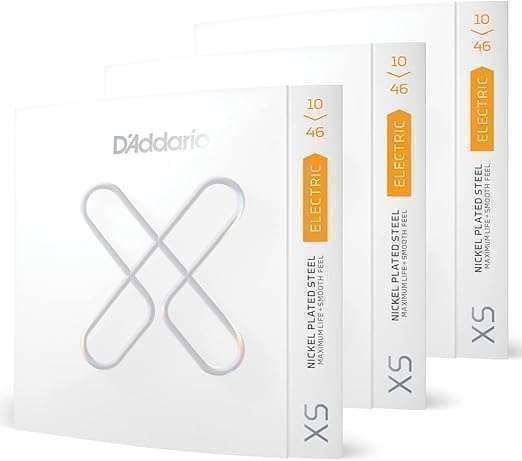
D'Addario
XS Electric
Tone: Balanced
Material: Nickel Coated
Longevity: Long (Coated)
Long-lasting coated strings with maximum life and smooth feel.
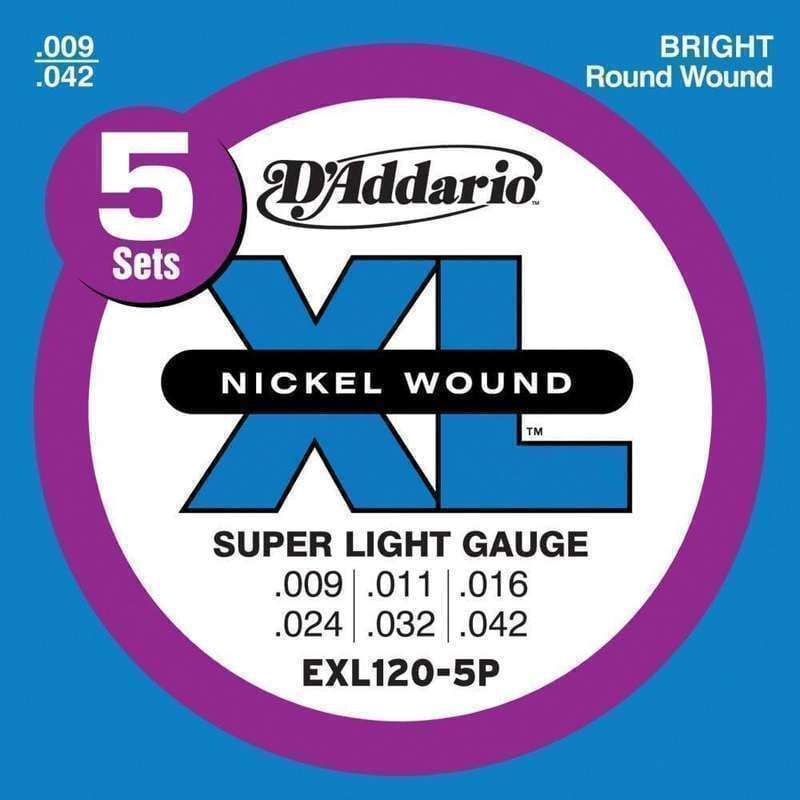
D'Addario
XL Nickel (EXL120)
Tone: Bright & Flexible
Material: Nickel Wound
Longevity: Standard
Super light gauge for maximum flexibility and biting tone.
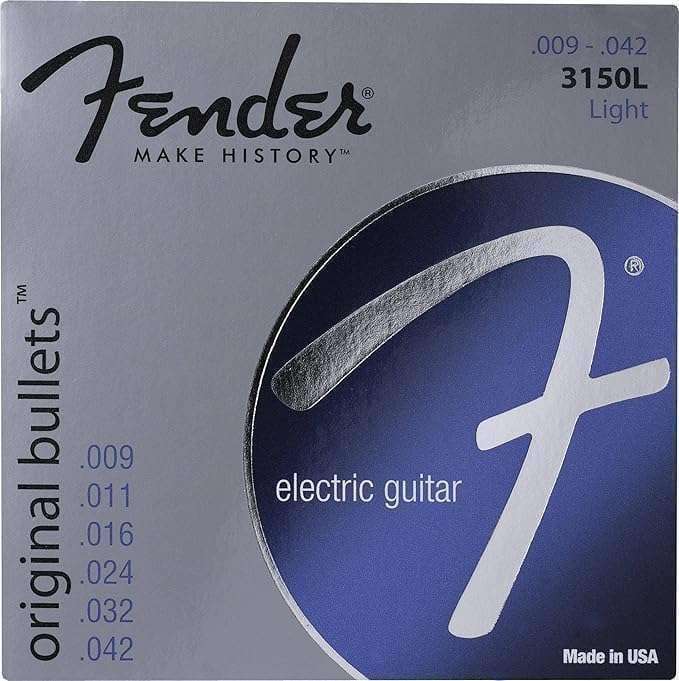
Fender
Original Bullets
Tone: Vintage Fender
Material: Pure Nickel / Nickel-Plated
Longevity: Standard
Designed specifically for Stratocasters. Bullet ends for enhanced stability.
Quick Answer: The best strings for most Ibanez players are Ernie Ball Super Slinky (.009-.042) — the same gauge Ibanez ships from the factory on Edge-equipped models. For fixed-bridge guitars like the AZ, Ernie Ball Regular Slinky (.010-.046) gives you more body and sustain.
🎸 Editor's Choice
"On any guitar with a floating trem I keep coming back to 9-42. The Edge bridge was designed around that tension, and lighter strings make the knife edges track better.
On my AZ I bump up to 10-46 — the T1502 bridge handles the extra tension easily, and you get a meatier tone through those Seymour Duncan humbuckers."
— Nick, Editor & Tech Lead
This guide breaks down the best Ibanez guitar strings by series, playing style, and budget. Whether you're shredding on an RG, sweeping on a JEM, or gigging on an AZ, you'll find the right set here.
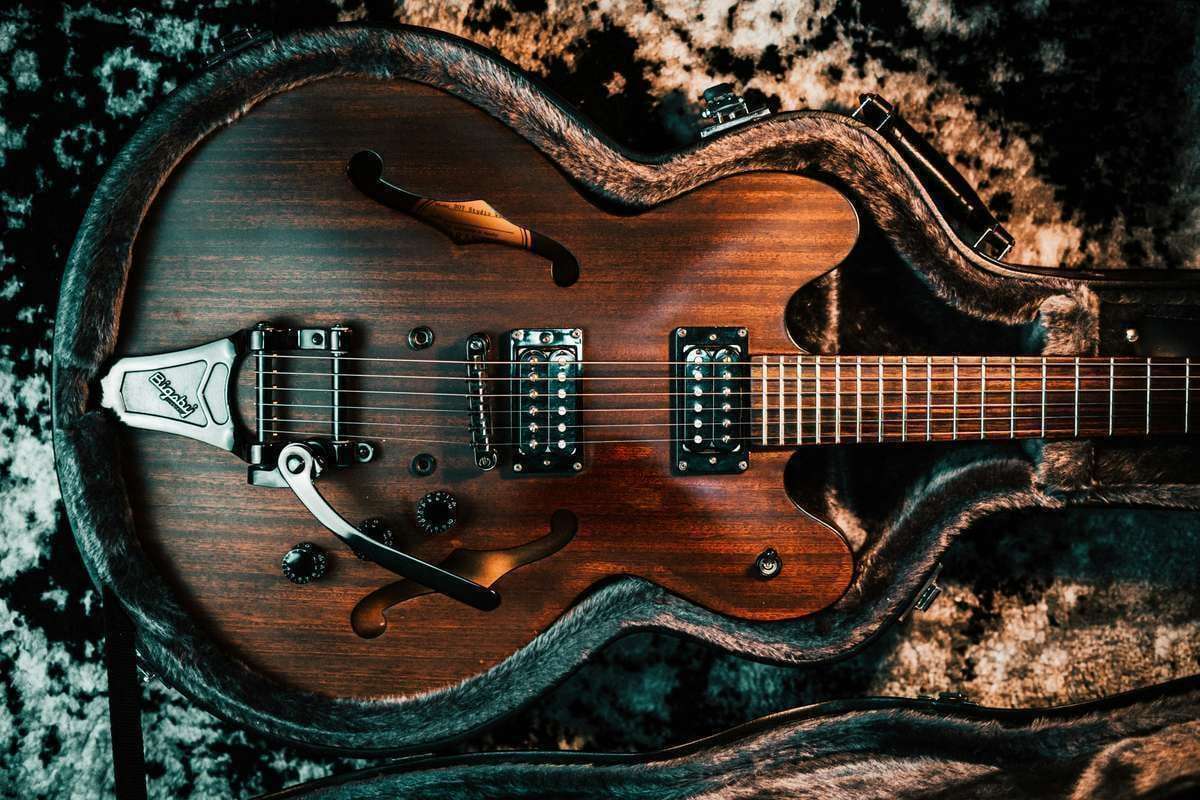
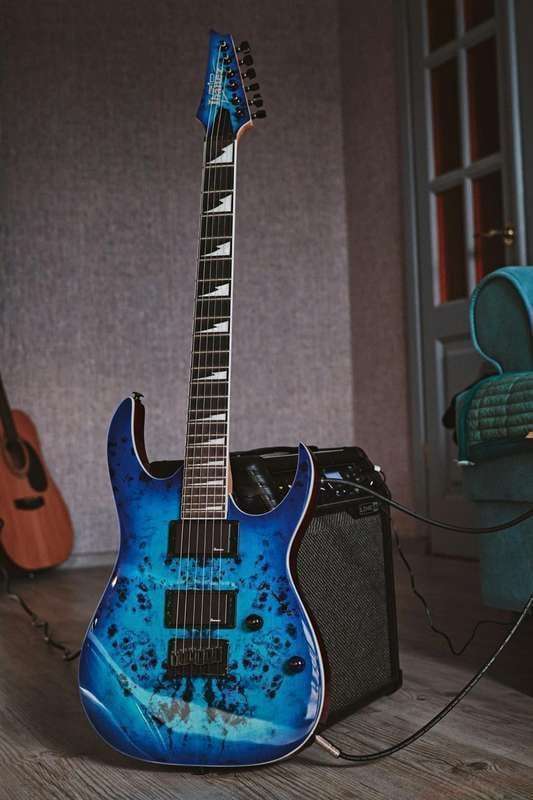 Photo by Slava L on Unsplash
 Buy on Amazon
Why String Choice Matters for Ibanez Guitars
Ibanez guitars have a unique combination of features that make them particularly sensitive to string selection. Understanding these characteristics will help you pick the perfect set.
Key factors that affect Ibanez tone and playability:
- Edge / Floyd Rose tremolo — floating bridges require balanced string tension to stay level and in tune. The wrong gauge throws off spring balance and knife-edge tracking.
- Thin Wizard neck profile — the ultra-thin neck transfers vibration efficiently, so string material and construction quality are more audible than on thicker necks.
- 25.5″ scale length — the standard Fender scale means 9-42 strings feel balanced and natural. Going heavier adds tension quickly.
- HSH / HSS humbucker configurations — humbuckers are less sensitive to string material than single-coils, but nickel-wound strings still deliver the best balance of warmth and clarity for high-gain tones.
- Flat fretboard radius (15.75″–17″) — the flat radius supports low action and aggressive bending, so lighter gauges shine for lead playing.
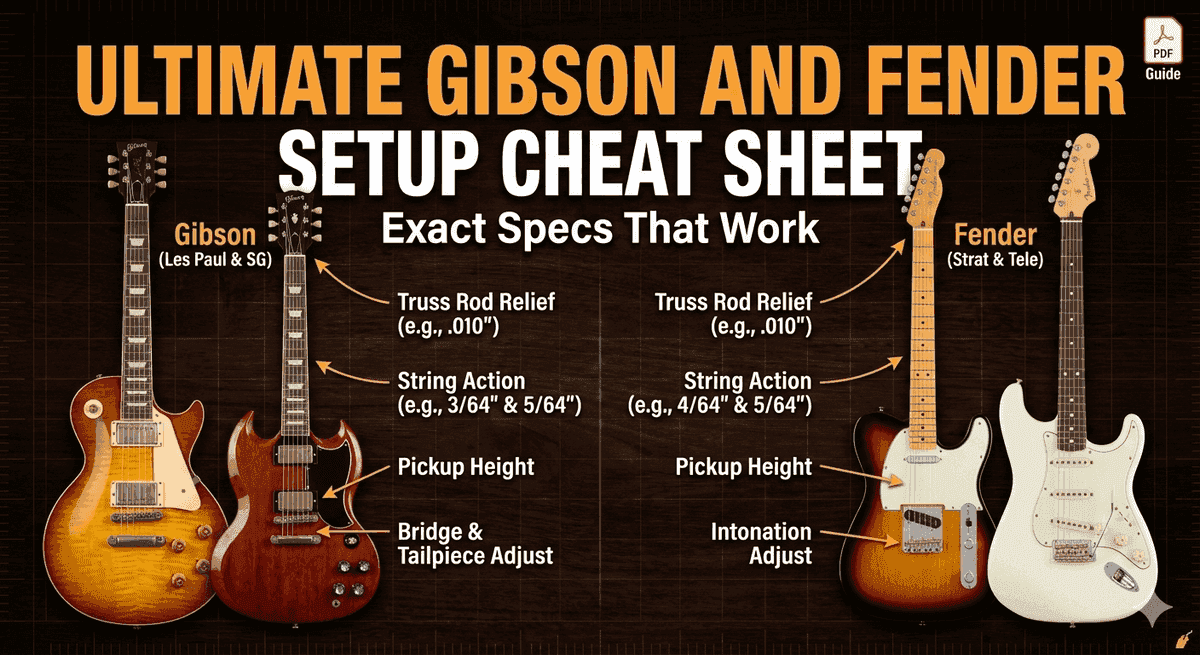
If you're setting up your Ibanez from scratch, our Complete Ibanez Setup Guide covers the full order with factory specs, and the Guitar Action Height Guide and Truss Rod Adjustment Guide cover the fundamentals.
Top 6 Best Strings for Ibanez Guitars
Top 3 Ibanez String Sets

1. Ernie Ball Super Slinky (.009-.042) — Best Overall
The factory-standard gauge for most Ibanez guitars with Edge or Floyd Rose tremolos. There's a reason Ibanez ships with 9s — they're the sweet spot for the 25.5″ scale and floating bridge balance.
Why it's perfect for Ibanez:
- Factory-standard tension that keeps the Edge tremolo level without spring adjustments
- Easy bending and tapping on the flat Wizard fretboard
- Bright, articulate tone that cuts through high-gain distortion
- Excellent value — especially in multi-packs
Best for: RG, S, and JEM series with floating tremolos Ideal genres: Shred, metal, rock, fusion
Get Ernie Ball Super Slinky Strings — Classic Ibanez choice
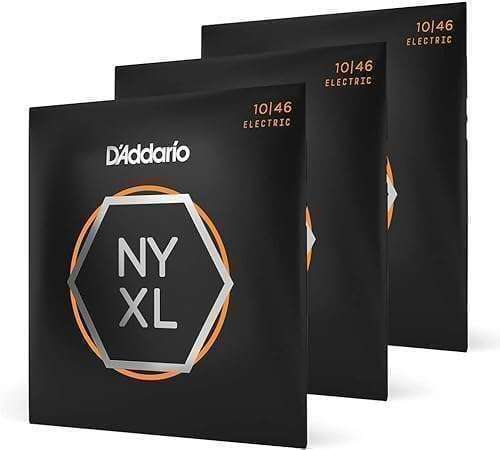
2. D'Addario NYXL (.010-.046) — Best for Tuning Stability
If tuning stability is your priority — especially on a floating bridge — NYXL strings are in a class of their own. The high-carbon steel core resists breakage and holds pitch better than any standard nickel string.
Why Ibanez players love it:
- Unrivaled tuning stability that keeps a floating bridge in check
- Break-resistant construction — critical for aggressive tremolo use
- Mid-forward punch that works brilliantly with humbuckers
- Longer string life than standard nickel-wound sets
Best for: AZ series, fixed-bridge RG models, and players who push their tremolo hard Ideal genres: Progressive rock, fusion, modern metal
Get D'Addario NYXL Strings — Premium stability
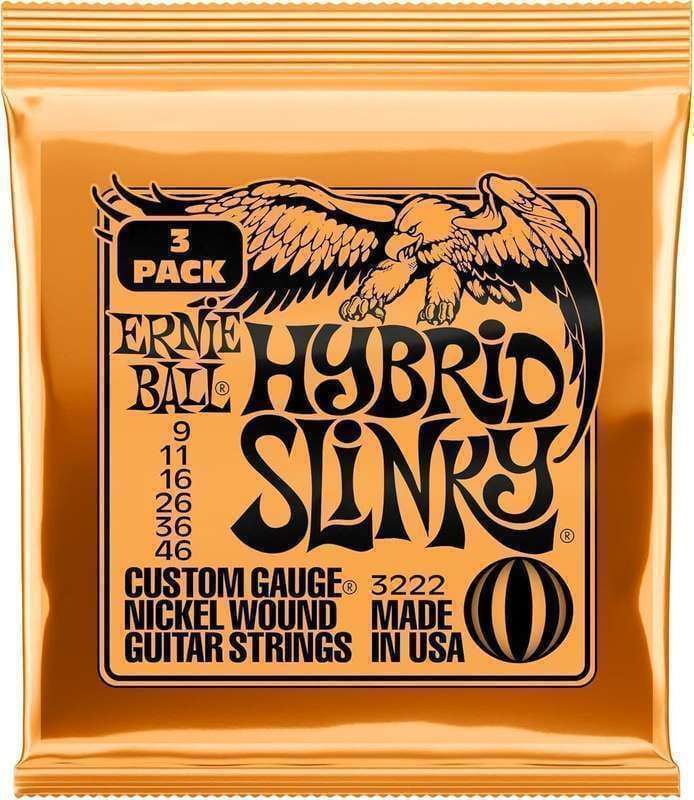
3. Ernie Ball Hybrid Slinky (.009-.046) — Best for Versatility
Hybrid Slinkys give you the best of both worlds: light treble strings for effortless bending and leads, with heavier wound strings for tight, chunky rhythms. This is the go-to set for Ibanez players who alternate between lead and rhythm.
Why it's ideal for Ibanez:
- Light tops for shred — 9s on the plain strings feel fast on Wizard necks
- Heavy bottoms for rhythm — 46 on the low E keeps drop-D palm mutes tight
- Great balance on floating bridges — similar total tension to a 9-42 set
- Versatile across genres from clean jazz chords to high-gain riffs
Best for: All series — especially players who mix lead and rhythm Ideal genres: Metal, progressive, rock, fusion
Get Ernie Ball Hybrid Slinky Strings — Light tops, heavy bottoms
4. Elixir Nanoweb (.010-.046) — Best for Longevity
If you play aggressively (and Ibanez players tend to), Elixir's Nanoweb coating extends string life by 3–5× compared to uncoated sets. You get consistent tone for weeks or even months of heavy playing.
Why it's worth the investment:
- 3–5× longer life — perfect for players who shred daily
- Smooth, slick feel that reduces finger noise during fast runs
- Consistent tone — no gradual dulling over time
- Reduced corrosion from sweat during long practice sessions
Best for: Touring and gigging players on any Ibanez series Ideal genres: All genres — tone stays consistent across the string's life
Get Elixir Nanoweb Strings — Long-lasting coated strings
5. D'Addario EXL120 (.009-.042) — Best Budget Option
The EXL120 is the most reliable budget 9-42 set available. Precision-wound nickels deliver consistent quality string to string, pack to pack. An excellent everyday choice for Ibanez players who change strings frequently.
Why Ibanez players rely on it:
- Consistent quality across every pack — no dead strings
- Bright, versatile tone that works with humbuckers and single-coils
- Excellent tremolo stability when properly stretched
- Outstanding value — especially in 5-packs
Best for: Any Ibanez with a floating tremolo; great for students and frequent string changers Ideal genres: Rock, metal, blues, general-purpose
Get D'Addario EXL120 Strings — Budget-friendly 5-pack
6. Ernie Ball Regular Slinky (.010-.046) — Best for Fixed Bridges
When you're not fighting a floating tremolo, stepping up to 10-46 gives your Ibanez more body, sustain, and midrange punch. The AZ series, hardtail RG models, and Artcore semi-hollows all benefit from the extra tension.
Why it's perfect for non-tremolo Ibanez guitars:
- Fuller, warmer tone with more sustain than 9s
- Better intonation stability on fixed bridges
- More resistance under the pick — great for aggressive rhythm playing
- Classic gauge used by countless rock and metal legends
Best for: AZ series, fixed-bridge RG, Artcore semi-hollows Ideal genres: Rock, blues, jazz, hard rock
Get Ernie Ball Regular Slinky Strings — The 10-46 standard
Ibanez String Gauge Guide by Series
Choosing the right gauge for your specific Ibanez model is crucial. Different series have different bridges, neck profiles, and tonal goals.
RG Series (Edge / Floyd Rose Tremolo)
| Gauge | Feel | Tremolo Setup | Best For |
|---|---|---|---|
| 9-42 | Light, fast | 3 springs, standard tension | Shred, tapping, general use |
| 9-46 | Hybrid | 3 springs, slightly higher tension | Lead + rhythm mix |
| 10-46 | Medium | 3–4 springs, rebalance needed | Players who want more body |
| 10-52 | Heavy | 4 springs, significant rebalance | Drop-D tuning |
Pro Tip: When switching gauges on a floating Ibanez bridge, recheck spring balance at your intended tuning. Use the exact bridge manual to identify its neutral angle and adjustment mechanism. Follow the Ibanez Edge tremolo setup guide for bridge identification and the correct spring-balance procedure.
S Series (Edge / ZR Tremolo)
The S series' thin mahogany body is naturally warmer than basswood RGs. Lighter strings (9-42) keep the tone bright and balanced — going too heavy can make the S sound muddy.
Recommended: 9-42 (Super Slinky) or 9-46 (Hybrid Slinky)
JEM Series (Edge Tremolo)
Steve Vai famously uses 9-42 strings on his JEMs. The DiMarzio Evolution pickups are voiced to sound best with lighter gauges — higher output compensates for the thinner strings.
Recommended: 9-42 (Super Slinky) — the set Steve Vai trusts
AZ Series (T1502 Tremolo / Fixed)
The AZ has a thicker Oval C neck and Seymour Duncan pickups designed for a more traditional sound. It can handle heavier strings comfortably, and the T1502 bridge isn't a true floating system — it's more forgiving with gauge changes.
Recommended: 10-46 (Regular Slinky) or NYXL 10-46
Drop Tuning Recommendations
| Tuning | Recommended Gauge | Why |
|---|---|---|
| Standard (E) | 9-42 or 10-46 | Factory standard |
| Drop D | 10-46 or 10-52 | Keeps low D tight |
| Drop C | 11-54 or 12-56 | Prevents floppiness |
| Drop B | 12-56+ | May need nut filing |
Important: Drop tuning on a floating bridge requires rebalancing springs every time you change tuning. For frequent alternate tuning, consider a fixed-bridge RG or AZ model.
String Material Comparison for Ibanez Guitars
Nickel Wound (Most Popular)
Best for: The majority of Ibanez players
- Balanced warmth and brightness — the standard choice for humbuckers
- Smooth feel for fast playing on Wizard necks
- Good magnetic response with high-output pickups
- Most affordable option with excellent tone
Top picks: Ernie Ball Super Slinky, D'Addario EXL120
Nickel-Plated Steel
Best for: Players who want more bite and aggression
- Brighter, more aggressive tone than pure nickel wound
- Enhanced pick attack — great for palm muting and chugging
- Slightly rougher feel but excellent for speed picking
- Better high-frequency response through humbuckers
Top pick: D'Addario NYXL
Coated Strings
Best for: Touring players and heavy sweaters
- 3–5× longer string life than uncoated sets
- Consistent tone from fresh install to eventual replacement
- Reduced finger squeak — useful for recording
- Higher cost per set but lower cost per hour of playing
Top pick: Elixir Nanoweb
How to Restring an Ibanez with a Locking Tremolo
Restringing an Edge or Floyd Rose tremolo is more involved than a standard bridge. Here's the quick process:
Step-by-Step Restringing
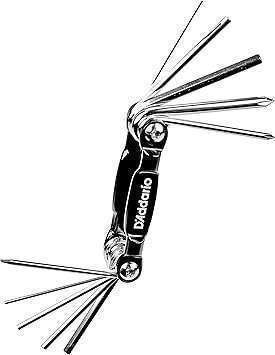
- Unlock the locking nut — use the 3mm Allen wrench (included with most Ibanez guitars) to loosen all three nut clamps
- Remove old strings one at a time — this keeps tension on the bridge and prevents it from diving into the cavity
- Cut the ball end off each new string (the ball end won't fit through the saddle lock)
- Insert the cut end into the saddle block and tighten the saddle lock screw
- Wind at the tuning peg — 2-3 wraps for wound strings, 3-4 for plain strings
- Stretch strings thoroughly — pull each string gently away from the fretboard at multiple points, retune, and repeat 3-4 times
- Tune to pitch and check bridge level — adjust spring claw if the bridge isn't parallel to the body
- Lock the nut — tighten nut clamps firmly but don't overtighten (you'll strip the bolts)
- Fine-tune using the fine tuners on the bridge
Pro Tip: Always stretch your strings more than you think is necessary. On a floating bridge, unstretched strings cause the bridge to slowly drift sharp, which throws every other string out of tune.

Genre-Specific String Recommendations for Ibanez
Shred & Metal
Best strings: Ernie Ball Super Slinky (.009-.042) Why: Light gauge enables fast legato runs, tapping, and sweep picking. Low tension pairs perfectly with the Wizard neck and flat fretboard radius. Alternative: D'Addario EXL120 for a slightly brighter attack
Progressive Rock & Fusion
Best strings: D'Addario NYXL (.010-.046) Why: Tuning stability through complex chord voicings and tremolo use. Mid-forward punch cuts through a dense mix. Alternative: Ernie Ball Hybrid Slinky for players who also shred
Hard Rock & Classic Metal
Best strings: Ernie Ball Regular Slinky (.010-.046) Why: More mass and sustain for power chords and heavy riffs. Works best on fixed-bridge Ibanez models. Alternative: Elixir Nanoweb for players who gig frequently
Jazz & Clean Tones
Best strings: Elixir Nanoweb (.010-.046) Why: Smooth feel reduces finger noise in clean passages. Consistent tone is essential when there's no distortion to hide behind. Alternative: D'Addario NYXL for warmer midrange
Drop Tuning / Djent
Best strings: Ernie Ball Hybrid Slinky (.009-.046) or heavier Why: Heavy bottom strings maintain clarity in low tunings. Light tops still allow melodic lead lines. Alternative: Move to 10-52 or 11-54 for tunings below Drop D
Compare With Other Guitar String Guides
Picking strings for a different guitar? These sibling guides break down the best sets for each model:
- best strings for Stratocaster
- best strings for Telecaster
- best acoustic guitar strings
- best strings for Epiphone
Frequently Asked Questions (FAQ)
What string gauge do Ibanez guitars come with from the factory?
Most Ibanez guitars ship with 9-42 gauge strings (equivalent to Ernie Ball Super Slinky or D'Addario EXL120). This is the standard gauge for models with Edge, Edge Zero, and Floyd Rose tremolos. Some AZ models may ship with 10-46.
Can I use 10-46 strings on an Ibanez with an Edge tremolo?
Yes, but you'll need to adjust the tremolo spring tension. Add spring claw tension (turn the screws clockwise) until the bridge sits parallel to the body again. You may also need a slight truss rod adjustment since 10s put more tension on the neck. See our Truss Rod Adjustment Guide for details.
How often should I change strings on my Ibanez?
For regular players: every 2–4 weeks with uncoated strings. If you play daily or gig frequently, you'll notice tone degradation faster. Coated strings (like Elixir Nanoweb) can last 2–4 months. Signs it's time to change: dull tone, visible corrosion, difficulty staying in tune, or a rough feel under your fingers.
Do I need to cut the ball ends off strings for an Edge tremolo?
Yes. Unlike standard bridges, the Edge tremolo locks the string at the saddle using a small clamp. The ball end won't fit through the saddle lock mechanism, so you need to clip it off before inserting the string. Use regular wire cutters.
What strings does Steve Vai use on his JEM?
Steve Vai uses Ernie Ball Super Slinky (.009-.042) — the same gauge Ibanez installs at the factory. He has used this gauge for decades, relying on the DiMarzio Evolution pickups' high output to compensate for the lighter string tension.
Are coated strings worth it for Ibanez guitars?
Yes, especially if you play aggressively or sweat a lot. Coated strings like Elixir Nanoweb last 3–5× longer and maintain consistent tone. The trade-off is a slightly different feel (smoother, less textured) and a higher per-set cost. Over time, coated strings are often cheaper per hour of playing.
What strings are best for drop tuning on an Ibanez?
For Drop D, use at least 10-46 (heavier on the low string helps maintain tension). For Drop C, move to 11-54 or a hybrid set. For Drop B and below, you may need 12-56+ and possibly a nut modification to accommodate the thicker strings. Remember: every gauge change on a floating tremolo requires rebalancing the springs.
Should I use different strings on my Ibanez AZ vs my RG?
Generally, yes. The AZ's Oval C neck and Seymour Duncan pickups are voiced for a fuller, more traditional sound — 10-46 strings complement this design. RGs with Wizard necks and floating trems are optimized for 9-42. Use the gauge that matches each guitar's design intent and your playing style.
Why do my strings keep breaking on my Ibanez?
Common causes on Ibanez guitars: sharp edges on the locking nut pads (file with 600-grit sandpaper), worn knife edges on the Edge bridge (inspect for flat spots), overtightened saddle lock screws (just snug, not gorilla-tight), or simply old strings that have weakened from corrosion. If strings break at the same spot repeatedly, that contact point needs attention.
What's the difference between Ernie Ball Super Slinky and D'Addario EXL120 for Ibanez?
Both are 9-42 nickel-wound sets and both work excellently on Ibanez guitars. Ernie Ball Super Slinkys have a slightly warmer, rounder tone. D'Addario EXL120s tend to be a touch brighter with more defined highs. The difference is subtle — try both and see which you prefer. For value, D'Addario's 5-packs are hard to beat.
Conclusion
The best strings for Ibanez guitars depend on your specific model, bridge type, and playing style. For floating-tremolo models like the RG, S, and JEM series, 9-42 strings (Ernie Ball Super Slinky or D'Addario EXL120) are the safest choice — they match the factory setup and keep your Edge bridge balanced. For fixed-bridge and AZ models, stepping up to 10-46 (NYXL or Regular Slinky) gives you more sustain and body.
No matter which set you choose, remember that switching string gauges on a floating tremolo always requires a spring rebalance. Take the time to set it up properly, stretch your strings thoroughly, and your Ibanez will reward you with the fast, articulate tone it was built for.
For more Ibanez setup tips, tremolo maintenance guides, and serial number lookup, visit our Ibanez Hub. You can also use our String Gauge Recommendation Tool for personalized picks based on your playing style.
Ready to upgrade your Ibanez strings? Start with our #1 pick above and fine-tune from there. Your Edge tremolo will thank you.