Best Strings for Epiphone: 6 Sets Compared
Compare six string sets for Epiphone Les Paul, SG and Casino guitars. Check model-specific gauges, materials, pack sizes and setup needs before changing strings.
Find Your Perfect Electric Strings
Approximate prices in USD. Check the retailer for current prices.
Results (12)
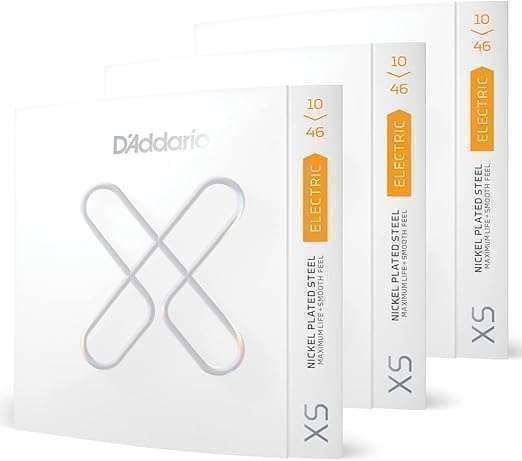
D'Addario
XS Electric
Tone: Balanced
Material: Nickel Coated
Longevity: Long (Coated)
Long-lasting coated strings with maximum life and smooth feel.
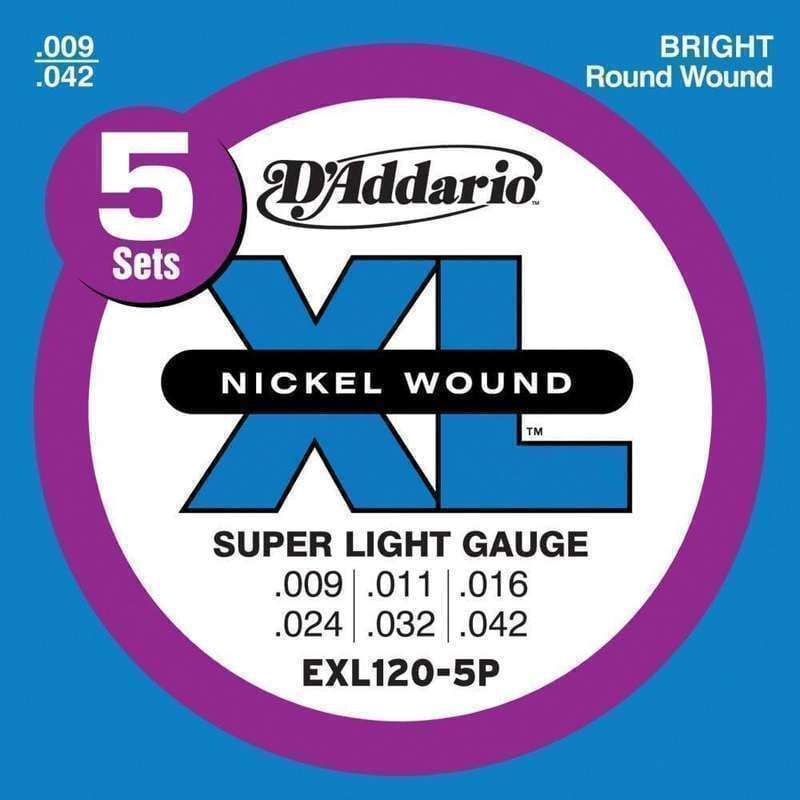
D'Addario
XL Nickel (EXL120)
Tone: Bright & Flexible
Material: Nickel Wound
Longevity: Standard
Super light gauge for maximum flexibility and biting tone.
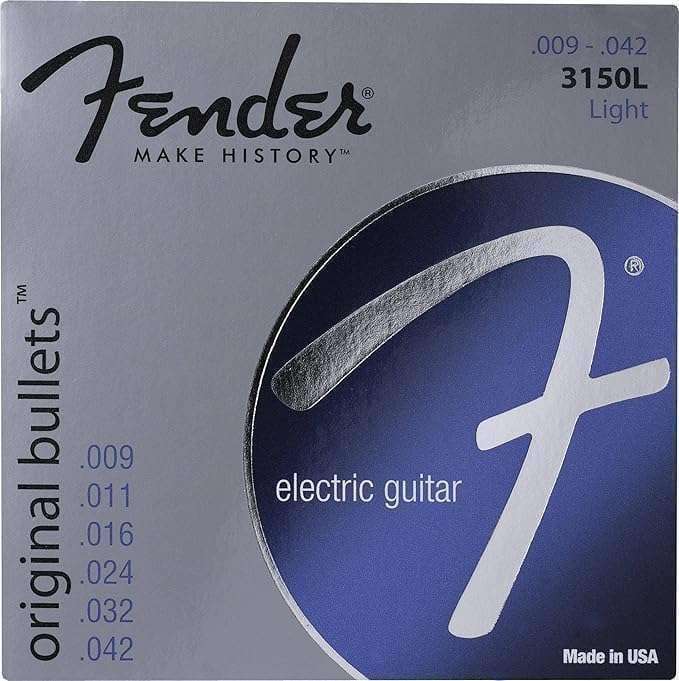
Fender
Original Bullets
Tone: Vintage Fender
Material: Pure Nickel / Nickel-Plated
Longevity: Standard
Designed specifically for Stratocasters. Bullet ends for enhanced stability.
Quick Answer: For an Epiphone six-string electric in standard tuning, Ernie Ball Regular Slinky (.010–.046) or D’Addario EXL110 (.010–.046) is a useful starting point. Check your exact model and current setup first. A Casino can use nickel-plated steel or pure nickel; its P-90s do not require one material, and its hollow body does not impose a universal 10–46 gauge limit.
🎸 Editor's Choice
Start with the gauge you already like. If your guitar plays comfortably with 10-46, compare materials without changing gauge at the same time. Choose lighter strings for less resistance, or consider a heavier bass string if a lower tuning feels too loose. Measure the setup after a change before deciding what needs adjustment.
These are recommendations based on manufacturer specifications and practical selection criteria. We have not conducted a controlled six-set comparison on these instruments; tonal preferences and usable string life depend on your guitar, playing and care.
This guide covers the best Epiphone guitar strings for common six-string electric models — from the Les Paul and SG to the Casino and Sheraton. Whether you're a beginner on a budget or a gigging pro, you'll find the right set here.
For an Epiphone acoustic, use our acoustic strings guide.
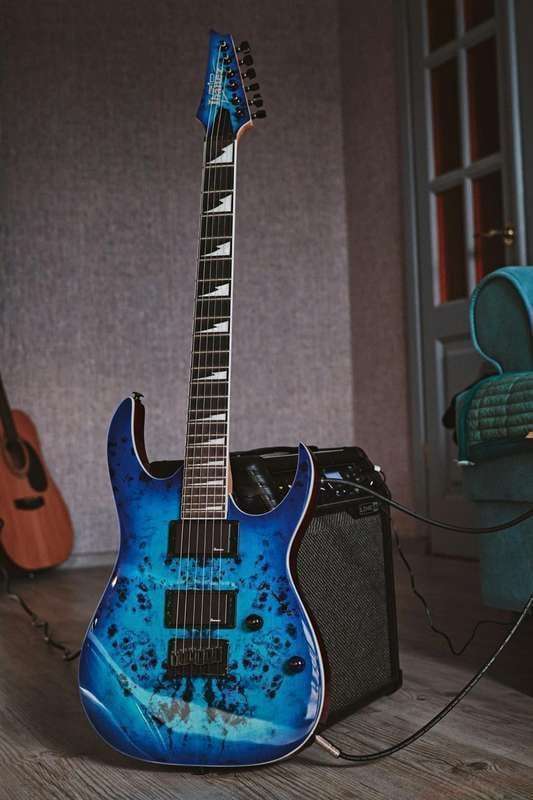
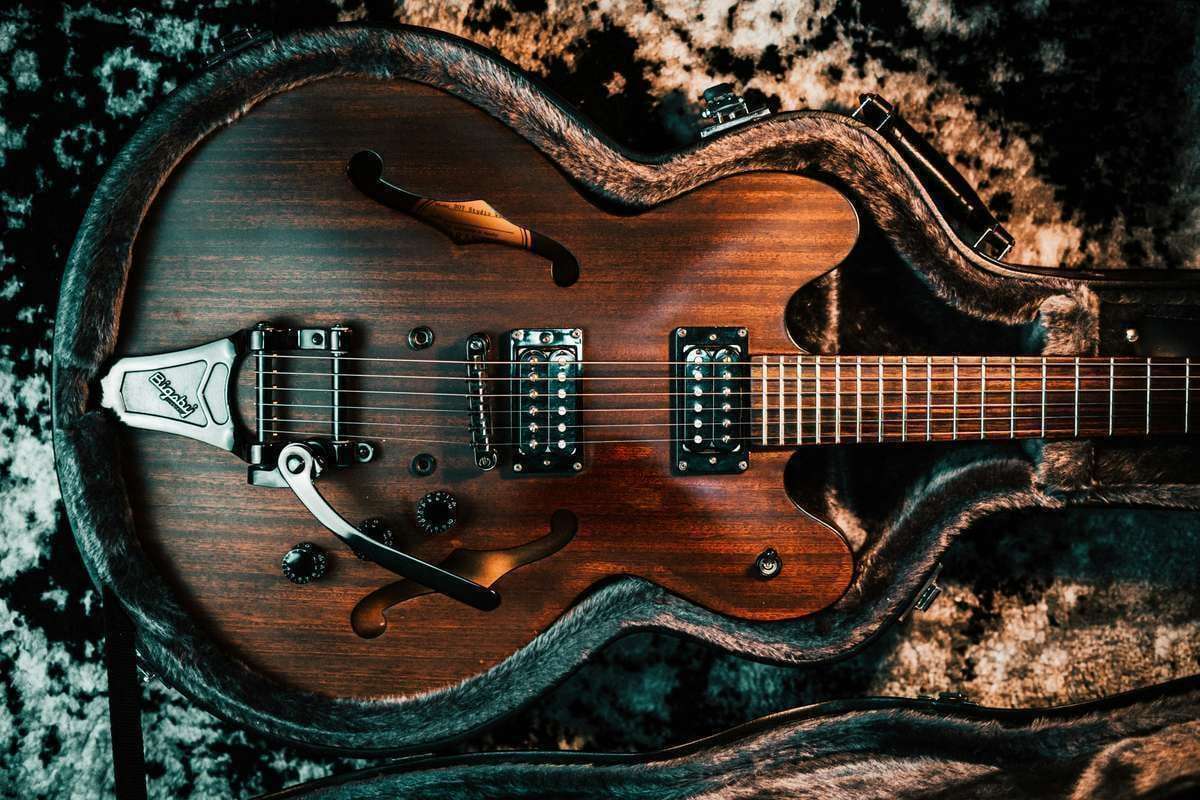 Photo by Chris Hardy on Unsplash
 Buy on Amazon
Why String Choice Matters for Epiphone Guitars
The badge alone does not determine string gauge. Scale length, tuning, string construction and the installed bridge matter more than a blanket “Epiphone versus Gibson” rule.
Check these details before ordering:
- Scale length and tuning: many familiar models use a nominal 24.75-inch scale. The same string at the same pitch has lower tension on a shorter speaking length, but that does not make 11s equivalent to 10s on a Fender.
- Tailpiece: a stopbar, trapeze or vibrato needs its own stringing procedure. A Tune-o-Matic bridge does not prove that there is a stopbar behind it.
- Pickups: humbuckers and P-90s both work with suitable steel electric strings. Material is a tone preference, not a compatibility rule dictated by the pickup name.
- Current setup: a used guitar may already have a different nut, bridge, tuning or gauge from its original specification. Record what works now before replacing it.
The official Epiphone Les Paul Standard 60s Ebony specification lists a 24.75-inch scale, stopbar and .010/.013/.017/.026/.036/.046 strings. That archived model is a useful example, not proof of every Epiphone’s factory fitment. The Casino’s different tailpiece is covered below.
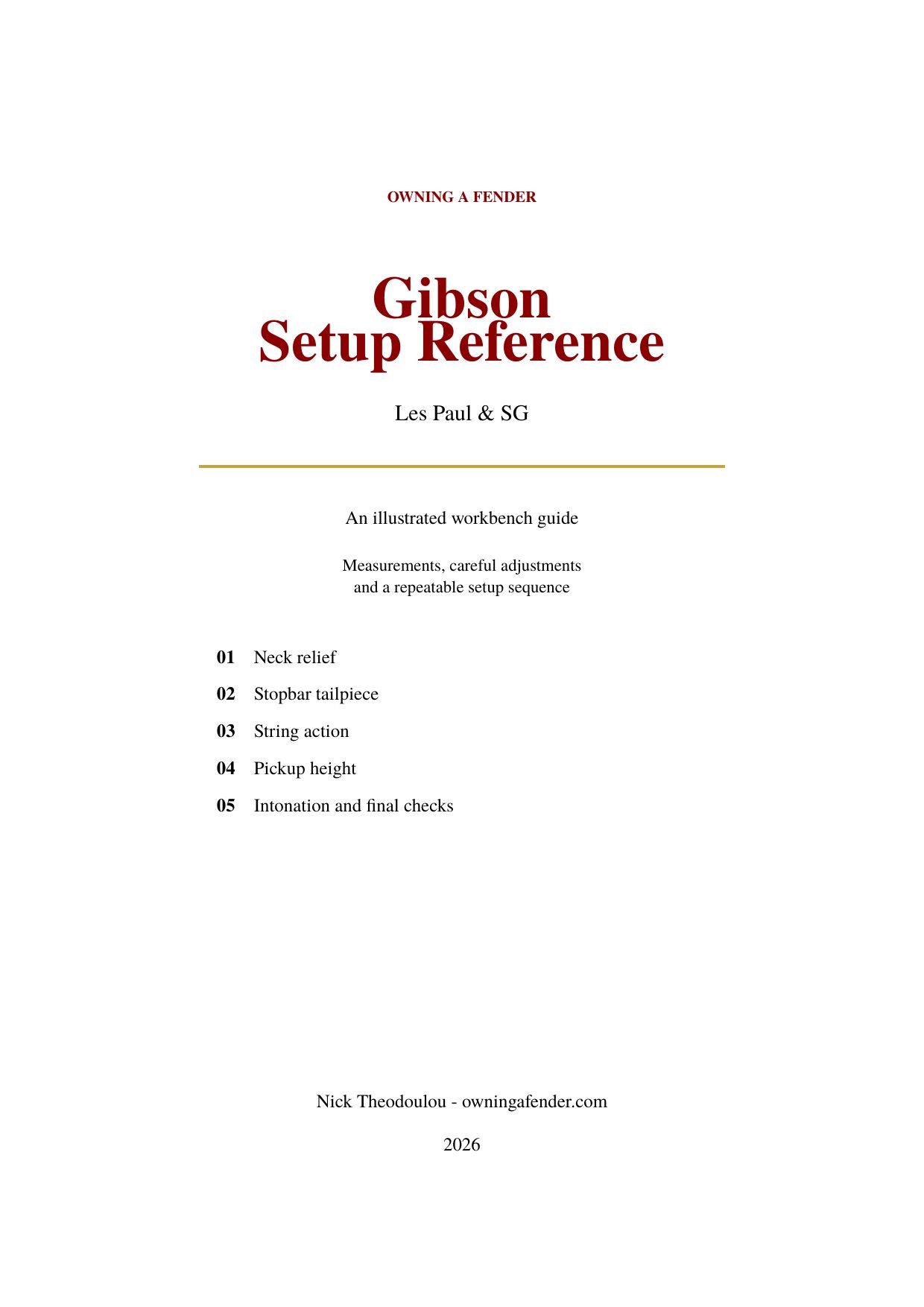
If you're setting up your Epiphone, our Guitar Action Height Guide and Truss Rod Adjustment Guide have the basics. For Gibson/Epiphone-style setup specs on a printable card, grab the Gibson Setup Cheat Sheet.
Top 6 Best Strings for Epiphone Guitars
| String set | Gauge discussed | Wound-string material | Reason to compare it |
|---|---|---|---|
| Ernie Ball Regular Slinky | .010–.046 | Nickel-plated steel | Straightforward uncoated starting point |
| D’Addario EXL110 | .010–.046 | Nickel-plated steel | Alternative in the same gauge |
| D’Addario NYXL1046 | .010–.046 | Nickel-plated steel | Premium uncoated construction |
| Ernie Ball Power Slinky | .011–.048 | Nickel-plated steel | More resistance than Regular Slinky |
| Elixir NANOWEB Light | .010–.046 | Coated nickel-plated steel | Try a protective coating |
| Fender Pure Nickel 150R | .010–.046 | Pure nickel | Explore a different wound-string material |
Compare the cost per complete set. The retailer links include multipacks and bundles; a pack price is not a single-set price. Check the selected gauge, number of sets and delivery cost before ordering. The Fender affiliate bundle below is 150L 9–42, distinct from the 150R 10–46 option in this table.
Top 3 Epiphone String Sets
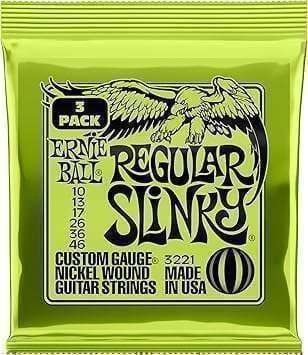

1. Ernie Ball Regular Slinky (.010-.046) — An All-Round Starting Point
Regular Slinky is an uncoated electric set with nickel-plated steel wound strings. It is a practical baseline for a Les Paul, SG or semi-hollow already set up for 10s, rather than a guarantee that no adjustment will be needed.
Check before buying:
- The six gauges are .010, .013, .017, .026, .036 and .046.
- “Nickel wound” here means nickel-plated steel, not pure nickel wrap wire.
- Choose it to establish a familiar baseline before changing several variables.
- Keep the old packet or write down the gauge so the next comparison is useful.
See the Ernie Ball electric range for Regular and Power Slinky specifications.
View Ernie Ball Regular Slinky on Amazon — Check the selected pack size
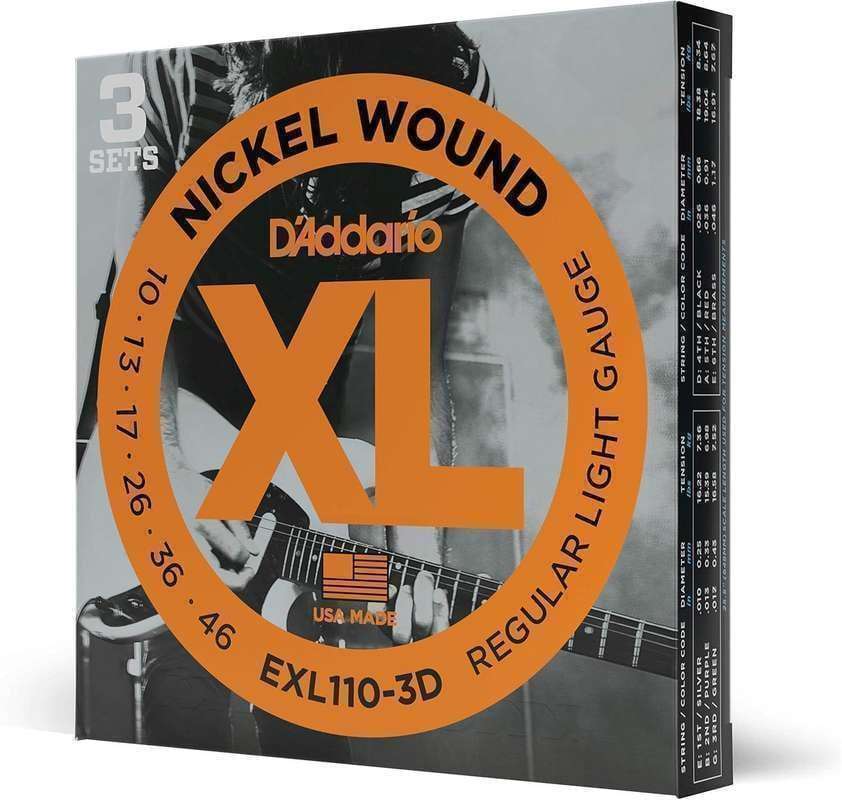
2. D'Addario EXL110 (.010-.046) — An Uncoated Alternative
EXL110 uses nickel-plated steel roundwound strings and the same six nominal gauges as Regular Slinky. This makes it a useful alternative when you want to compare two uncoated sets without deliberately changing gauge. It does not establish that one is universally better value or that either brand cannot produce a faulty string.
D’Addario’s EXL110 specification identifies the construction and available pack sizes. The linked catalog entry is EXL110-3D, a three-set pack; check the retailer’s selected variant before purchase.
Best fit: players seeking a conventional uncoated 10–46 option. Compare its delivered cost per set with Regular Slinky, then choose on your own feel and sound preferences.
View D'Addario EXL110 on Amazon — Check gauge and quantity
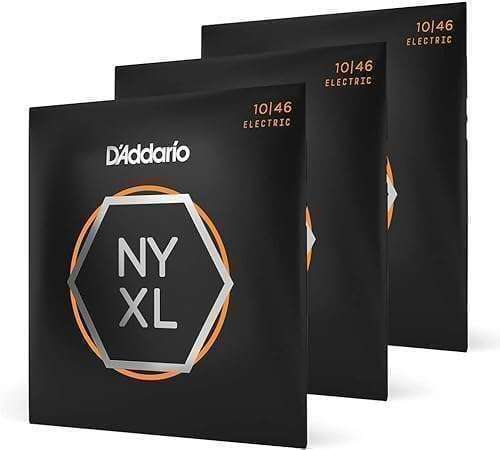
3. D'Addario NYXL (.010-.046) — Premium Uncoated Construction
NYXL1046 is also an uncoated nickel-plated steel roundwound set. D’Addario describes its NY Steel core and Fusion Twist construction as improving strength and tuning stability versus its standard strings. Those are manufacturer claims, not results measured by this site.
Consider it if: you want to compare a premium uncoated set while retaining 10–46. NYXL is not a coating, and a premium string cannot repair a binding nut slot, loose winding or damaged saddle. Investigate repeated pitch jumps after bends before treating a different packet as the solution.
View D'Addario NYXL on Amazon — The catalog listing is a three-set 10–46 pack
4. Ernie Ball Power Slinky (.011-.048) — A Heavier Option
Power Slinky increases the gauges to .011, .014, .018, .028, .038 and .048. At the same tuning it offers more resistance than Regular Slinky. Whether that suits your picking and bending is a personal choice; an SG does not need heavier strings to compensate for a lighter body.
Check before changing: nut fit, relief, action and intonation. If you only want a firmer low D, compare the bass-string gauge rather than automatically making all six strings heavier. Power Slinky’s .048 low string is only one possible choice for lower tuning, not a universal Drop C prescription or a promise of effortless bends.
View Ernie Ball Power Slinky on Amazon — Verify quantity as well as 11–48 gauge
5. Elixir Nanoweb (.010-.046) — A Coated Option
Elixir NANOWEB electric strings use coated nickel-plated steel wound strings. Try them if corrosion or early loss of your preferred tone is the main reason you replace strings. The manufacturer’s gauge chart identifies Light 12052 as 10–46 and Medium 12102 as 11–49, not 11–48.
Compare on your guitar: coating feel, sound and how long the set remains useful. There is no fixed replacement interval or guaranteed three-to-five-times lifespan for every player. Keep a brief installation/date log if you want to compare cost per playing hour rather than relying on a general longevity claim.
View Elixir Nanoweb on Amazon — Check the Light 10–46 multipack selection
6. Fender Pure Nickel 150s — A Material Choice for Casino or Humbuckers
Fender describes the 150 range as a warm-sounding pure-nickel option. It is reasonable to compare that material if you want a different wound-string response, but it does not reproduce a specific artist’s recorded Casino tone or guarantee less magnetic interference.
The Fender 150 specification distinguishes 150R 10–46 from 150L 9–42. To compare material while keeping your current 10–46 gauge, choose 150R. The affiliate bundle retained below is listed as 150L 9–42, so buying that also changes gauge; it is not a direct 10–46 replacement.
View the Fender 150L 9–42 bundle on Amazon — Check the selected variant; use Fender’s specification above for 150R 10–46
Epiphone String Gauge Guide by Model
Les Paul (Standard, Custom, Studio)
Starting point: retain the existing gauge if the guitar plays well; 10–46 is one useful standard-tuning option.
| Choice | Why consider it? | Check after changing |
|---|---|---|
| 9–42 | Less resistance for bends | Fretting pressure, buzz and intonation |
| 10–46 | A familiar middle starting point | Actual model specification and current setup |
| 11–48 | More resistance under the pick | Nut fit, relief and comfortable bending |
These are selection options, not factory specifications for every Standard, Custom or Studio. Pickups, bridges and model years differ. Our Best Strings for Les Paul guide explores set construction and buying choices in more detail.
SG (Standard, Custom, Special)
A thinner body is not a reason by itself to choose 11s. Start from your tuning, picking pressure and current gauge. Identify whether your particular SG has humbuckers, P-90s, a stopbar, a wraparound bridge or a vibrato before following setup instructions.
Both pickup types can use nickel-plated steel or pure nickel strings. If you like the gauge but dislike the amplified sound, try the tone controls and a controlled material comparison before buying a heavier set. Our SG setup guide covers the wider setup sequence; match its procedure to your hardware.
Casino (P-90 Pickups)
The official Casino Natural specification lists a 24.75-inch scale, P-90 pickups, Tune-o-Matic bridge, trapeze tailpiece and 10–46 strings. The trapeze is why this model does not follow the stopbar-threading instructions below.
Use 10–46 as that model’s documented starting point, not a maximum safe gauge. There is no evidence here for the former claim that heavier strings inevitably cause feedback or overpower a hollow body. Check the instrument and setup before a substantial gauge change. Nickel-plated steel and pure nickel are both choices; P-90s do not require pure nickel.
ES-335 / Sheraton
Identify the exact variant and its tailpiece. A semi-hollow model’s body construction alone cannot tell you whether 10s or 11s will suit your hands. Retain a comfortable existing set first, and change material or gauge separately when comparing results.
Drop Tuning Recommendations
| Tuning change | Start by checking | Reason |
|---|---|---|
| Standard E to E-flat | Feel of your existing set | Lower pitch reduces tension; you may still prefer the result |
| Standard E to Drop D | Low-string attack and pitch | Only the sixth string changes pitch |
| Drop C-sharp or Drop C | All six gauges and nut clearance | Lower tuning may call for a different balance across the set |
Use the D’Addario tension calculator to compare specified strings, scale and tuning. A gauge range alone does not describe every wound string’s construction. Avoid declaring a single set suitable for every lower tuning.
Setup check: a fixed stopbar avoids floating-tremolo balancing, but gauge changes can still affect playability and intonation. Measure first; do not automatically turn the truss rod or widen the nut slots.
String Material Comparison for Epiphone Guitars
Nickel-Plated Steel
Regular Slinky, EXL110 and NYXL use nickel-plated steel wound strings. Compare like-for-like gauges if you want to focus on construction and feel. A brand-wide statement that Epiphone pickups are always darker than Gibson pickups is not a useful basis for selecting a string.
Pure Nickel
Fender 150s provide a different wound-string material. Warmth is the manufacturer’s tonal description; the result also depends on pickup settings, amplifier, playing and the instrument. Lower output would not by itself make an amplifier break up earlier. Keep your amp settings consistent while comparing and avoid attributing every change to the wrap wire.
Coated Strings
A coating adds another variable, including feel. Compare your own usable lifespan, keeping notes on playing time and care. Coated strings can still wear out or break, so replace them when condition or performance requires it rather than following a universal calendar.
How to Restring an Epiphone Guitar
The following procedure is for a fixed Tune-o-Matic bridge and stopbar tailpiece. A Casino trapeze, wraparound bridge, Bigsby or locking vibrato needs its own procedure. Photograph the installed string path first. Keep a loose bridge or tailpiece supported so it cannot fall off, move or scratch the guitar when tension is removed.
Step-by-Step Restringing
- Record the old setup: write down tuning, all six gauges if known, and any existing buzz or tuning issue.
- Loosen the strings before removal: change one at a time if you want to preserve the position of loose hardware. Never pull a tensioned string out of its tuner.
- Clean accessible surfaces: start with a dry soft cloth. Use only a care product approved for the actual fretboard and finish; “lemon oil” is not a universal requirement.
- Thread the stopbar: for conventional stringing, feed from the rear toward the bridge and seat each ball end.
- Seat each string on its saddle: follow the photographed path without moving the bridge height or reversing its orientation.
- Fit the tuner: follow the installed tuner’s instructions. Ordinary posts need neat winds without overlapping; locking and split posts have different methods.
- Bring the strings gradually to pitch: settle them gently and retune until stable. Avoid pulling hard on a string to stretch it.
- Trim loose ends safely and play-check: keep sharp wire ends clear of hands and the finish, then compare the new setup with the record.
Top-Wrapping (Optional)
Top-wrapping feeds strings through a compatible stopbar from the bridge side, then routes them back over its top. It changes the path behind the saddle. It does not change the tuned tension of the same string at the same speaking length and pitch simply by changing the route.
Gibson’s top-wrapping explanation notes possible tailpiece wear and the absence of comprehensive evidence for tone or sustain improvements. Conventional stringing is a valid choice. Do not treat top-wrapping as a necessary tuning repair or apply it to a Casino’s trapeze.
Post-Restringing Setup
Use this checklist in your normal tuning, with the guitar held in playing position:
- Tuning return: play bends and retune. Listen for a ping at the nut or a sudden pitch jump; those observations help identify binding, rather than proving the strings are unsuitable.
- Relief: use the same capo/fretting method and measurement location before and after. Adjust only if the measured relief and playing symptoms call for it, following the truss-rod guide.
- Action: measure from fret top to string underside at the same fret. Compare bass and treble sides and check bends for choking; there is no single mandatory action for all Epiphones.
- Intonation: after relief and action are settled, compare the tuned open string and fretted 12th-fret note with normal fretting pressure. Retune after any saddle adjustment.
- Nut and saddles: stop if a new string will not seat properly. Nut filing and saddle reshaping remove material; ask a repairer to assess repeated binding or breakage.
- Pickup height: identify the mounting, then measure and balance using the Epiphone pickup-height guide. Casino dogears do not adjust like ring-mounted humbuckers.
Write down the date, set, tuning, relief, bass/treble action and remaining symptoms. Those observations make your next change a useful comparison. The Les Paul setup walkthrough explains the sequence for applicable hardware; its example measurements are not specifications for every Epiphone.
Genre-Specific String Recommendations for Epiphone
Rock & Classic Rock
Regular Slinky or EXL110 in 10–46 gives you a simple uncoated starting point. Choose the feel that works for both rhythm and bends; genre does not require a particular brand.
Blues
Compare nickel-plated steel with Fender 150R pure nickel if you want to explore material while retaining 10–46. Use the same amp settings and playing examples so the comparison is meaningful.
Jazz
Consider your preferred surface feel as well as gauge. Flatwounds are a separate construction to investigate; they can include a wound third string and require an intonation check. Elixir NANOWEB Medium is 11–49 if you want a heavier coated roundwound option.
Punk & Alternative
Power Slinky 11–48 is an option for more resistance, but lighter sets can also work. Check whether hard picking is pushing notes sharp before assuming the instrument needs more tension.
Metal & Hard Rock
Choose around the actual tuning and bass-string response. A 10–46 set in standard tuning and a lower-tuned set solve different problems; the SG or Les Paul name does not establish the right gauges.
Compare With Other Guitar String Guides
Picking strings for a different guitar? These sibling guides break down the best sets for each model:
- best strings for Stratocaster
- best strings for Telecaster
- best strings for Ibanez
- best acoustic guitar strings
Frequently Asked Questions (FAQ)
What string gauge do Epiphone guitars come with from the factory?
Check the exact model and year. The manufacturer specifications linked above list 10–46 for Casino Natural EOCANANH1 and Les Paul Standard 60s Ebony EILS6EBNH1. That does not establish a universal Epiphone factory gauge, and a used guitar may have been restrung or modified.
Are Epiphone string recommendations the same as Gibson?
Some models share a nominal scale length and similar hardware, so selection principles overlap. Match tuning, bridge, tailpiece and current setup before transferring advice. Neither brand has one pickup voicing or one specification across its entire range.
What strings are best for an Epiphone Casino?
The documented Casino Natural example uses 10–46. Nickel-plated steel is a useful starting point, and pure nickel is a material alternative. Its P-90s do not require pure nickel. The trapeze needs a different string path from a stopbar, and heavier gauges are not automatically a cause of feedback.
Can I use 9-gauge strings on my Epiphone Les Paul?
Yes, a lighter set is an option if you prefer less resistance. Check the setup and your fretting pressure afterwards. Do not assume a precise equivalence with another guitar’s gauge, a guaranteed loss of sustain, or an automatic need to adjust the truss rod.
Should I upgrade my Epiphone pickups before upgrading strings?
First establish what you want to change. If the strings are worn or corroded, replace them and reassess the sound with familiar amp settings. Check pickup height and controls before attributing a problem to the pickups. A new string set cannot diagnose an electrical fault.
How often should I change strings on my Epiphone?
Replace them when corrosion, roughness, persistent tuning or intonation problems, or a sound you dislike warrants it. Playing time, sweat and care vary. Keep an installation log if useful; neither coated nor uncoated strings have a reliable universal replacement interval.
Do I need to adjust my setup when changing string gauges on an Epiphone?
Check it, but adjust only when measurements and playing symptoms show a need. Tune first, check nut fit and relief, then action and intonation. A fixed bridge avoids floating-tremolo rebalancing but does not make every gauge change adjustment-free.
Why do my strings keep breaking at the bridge on my Epiphone?
Record where the break occurs and inspect the string path. Repeated failure at the same saddle can indicate a rough contact point, but other causes are possible. Have a repairer assess it before filing the saddle or changing tailpiece geometry; a premium string is not a mechanical repair.
What's the difference between Epiphone and Gibson string recommendations?
The useful distinction is the particular instrument, not the price tier or logo. Identify the scale, tuning, tailpiece, installed pickups and desired feel. Do not assume all Epiphone humbuckers sound darker or that a Gibson setup measurement applies unchanged.
Are expensive strings worth it on a budget Epiphone?
Compare the feature you need and the cost per set. Coating may be useful if corrosion is a problem; premium uncoated construction is a different choice. Neither promises a fixed lifespan or repairs a setup defect. Start with a small quantity until you know you like the set.
Conclusion
Choose the best strings for Epiphone by matching your model, tuning and preferred feel. Regular Slinky or EXL110 in 10–46 provides a straightforward starting point for a suitable six-string electric. NYXL offers a premium uncoated construction, NANOWEB adds a coating, and Fender 150s offer a pure-nickel alternative.
Once you've found your strings, make sure your setup matches. The Gibson Setup Cheat Sheet has action, relief, and pickup starting-height specs for Les Paul and SG style guitars on a printable card. And visit our Epiphone Hub for serial number lookup, troubleshooting, and more guides.
More Epiphone resources:
Specifications and linked manufacturer references checked October 5, 2026. This is a selection guide, not a hands-on test report.