Best Acoustic Guitar Under $500: Buyer's Guide for Beginners
The best acoustic guitars under $500 for beginners and budget buyers. Compare Yamaha FG800, Fender, Epiphone, Ibanez & Martin with specs, pros, and cons.
By Nick TheodoulouUpdated

On this page
- Best Acoustic Guitar Under $500: Complete Buying Guide (2026)
- The Reality: What $500 Actually Buys You
- How We Evaluated These Guitars
- Quick Comparison Table
- 1: Yamaha FG800 (Best Overall Value)
- 2: Fender FA-115 / FA-125 (Best Ultra-Budget Option)
- 3: Epiphone Starling (Best Starter Pick Under $200)
- 4: Ibanez AW54 (Best Warm Tone Under $500)
- 5: Martin LX1 Little Martin (Best Travel & Small-Body Guitar)
- How to Choose the Right Acoustic Guitar for You
- Used vs New: What $500 Buys on the Secondary Market
- What to Buy Next: Essential Accessories
- Frequently Asked Questions (FAQ)
- Conclusion: Pick Your Guitar and Start Playing
- Related Posts

Best Acoustic Guitar Under $500: Complete Buying Guide (2026)
Quick Answer: The Yamaha FG800 ($319-$399) for all-round beginners, or the Martin LX1 ($399-$449) for travellers. The Fender FA-115 ($179-$229) is the best ultra-budget option.
Own an acoustic? Check factory specs | Yamaha Serial Lookup | Taylor Serial Lookup | Martin Serial Lookup | Track in My Garage
Editor's Top Pick: The Yamaha FG800
"If I had $500 to spend on a first acoustic today, I'd buy a Yamaha FG800 without hesitation.
I've owned Martins and Taylors worth ten times as much, and the FG800 still impresses me every time I pick one up. The solid spruce top gives it a voice that no laminate-top guitar can match at this price. The neck is comfortable, the build quality is consistent, and it responds well to a proper setup.
With a fresh set of strings and the right setup, this punches way above its weight class."
— Nick, Editor & Tech Lead
The Reality: What $500 Actually Buys You
The acoustic guitar market has a sweet spot around $300-500. Below $200, you're buying laminated everything — plywood bodies that sound thin. Above $500, you enter solid wood back-and-sides territory, lovely but unnecessary for most beginners.
The $300-500 range is where you'll find solid spruce tops, proper bracing, and hardware that stays in tune. This guide shows the 5 best acoustic guitars under $500 — with pros, cons, and who each suits.
Tip: Buying used? Check fair market value with our Guitar Price Estimate before you pull the trigger — and if the deal looks too good to be true, run the free fake guitar quick-check to screen it for classic counterfeit tells.
How We Evaluated These Guitars
Every guitar on this list was assessed on four criteria: Tone (resonance, projection, sustain), Playability (neck comfort, action, fretwork), Build Quality (finish, joints, hardware), and Value (what you get for the money).
Quick Comparison Table
| Guitar | Price | Top Wood | Body Style | Best For | Our Rating |
|---|---|---|---|---|---|
| Yamaha FG800 | $319-$399 | Solid spruce | Dreadnought | Beginners, all-rounders | ★★★★★ Best Overall |
| Fender FA-115 / FA-125 | $179-$229 | Laminated spruce | Dreadnought | Ultra-budget beginners | ★★★★ Best Budget |
| Epiphone Starling | $169-$199 | Laminated spruce | Dreadnought | Absolute beginners, kids | ★★★★ Starter Pick |
| Ibanez AW54 | $349-$399 | Solid mahogany | Dreadnought | Warm tone seekers | ★★★★ Best Tone |
| Martin LX1 Little Martin | $399-$449 | Solid spruce (top only) | Modified 00/Travel | Travellers, small players | ★★★★★ Best Travel |
1: Yamaha FG800 (Best Overall Value)
Price: $319-$399
Where to Buy: Amazon, Sweetwater, Guitar Center, Reverb
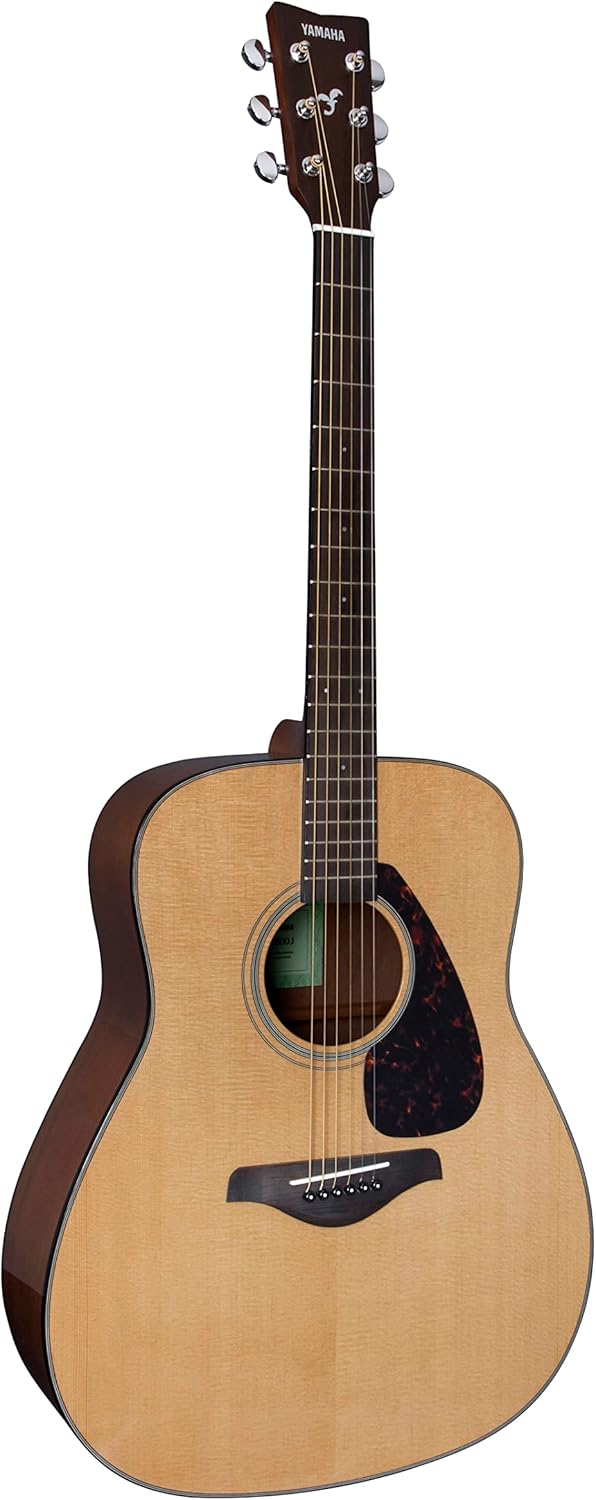
 Buy on Amazon
Why This Guitar
The Yamaha FG800 is the best-selling acoustic guitar in the world. Yamaha's scalloped bracing makes a solid spruce top vibrate more efficiently than guitars costing twice as much.
What you get:
- ✓ Solid spruce top (rare under $400)
- ✓ Nato back and sides
- ✓ Rosewood fingerboard
- ✓ 25.5" scale length
- ✓ Slim neck profile
- ✓ Chrome die-cast tuners
How It Plays
Arrives with playable action around 2.3mm low E and 1.8mm high E at the 12th fret — slightly high but buzz-free with room to lower.
String action: ~2.3mm/1.8mm
Fretwork: Clean, smooth ends
Neck feel: Slim C-shape
Tuning stability: Excellent
The Tone
Warm, woody bass; clear, singing treble; and sustain that outlasts any laminate-top guitar. The solid spruce top opens up and improves with playing time.
Ideal for: Folk, pop, country, fingerpicking
Less ideal for: Heavy flatpicking
Pros & Cons
Pros:
- ✓ Solid spruce top — rare under $400
- ✓ Consistent build quality
- ✓ Comfortable neck
- ✓ Great out-of-the-box playability
- ✓ Improves with age
- ✓ Excellent resale value
Cons:
- ✗ No case included
- ✗ Slightly high factory action
- ✗ Plain aesthetic
- ✗ Nato wood is functional but not glamorous
Best For
Beginners, songwriters, campfire players, and anyone who wants the most guitar for the least money.
Verdict
The best acoustic guitar under $500. The solid spruce top alone makes it worth the price. If unsure, buy this one.
Our Rating: ★★★★★
2: Fender FA-115 / FA-125 (Best Ultra-Budget Option)
Price: $179-$229
Where to Buy: Amazon, Guitar Center, Sweetwater, Best Buy
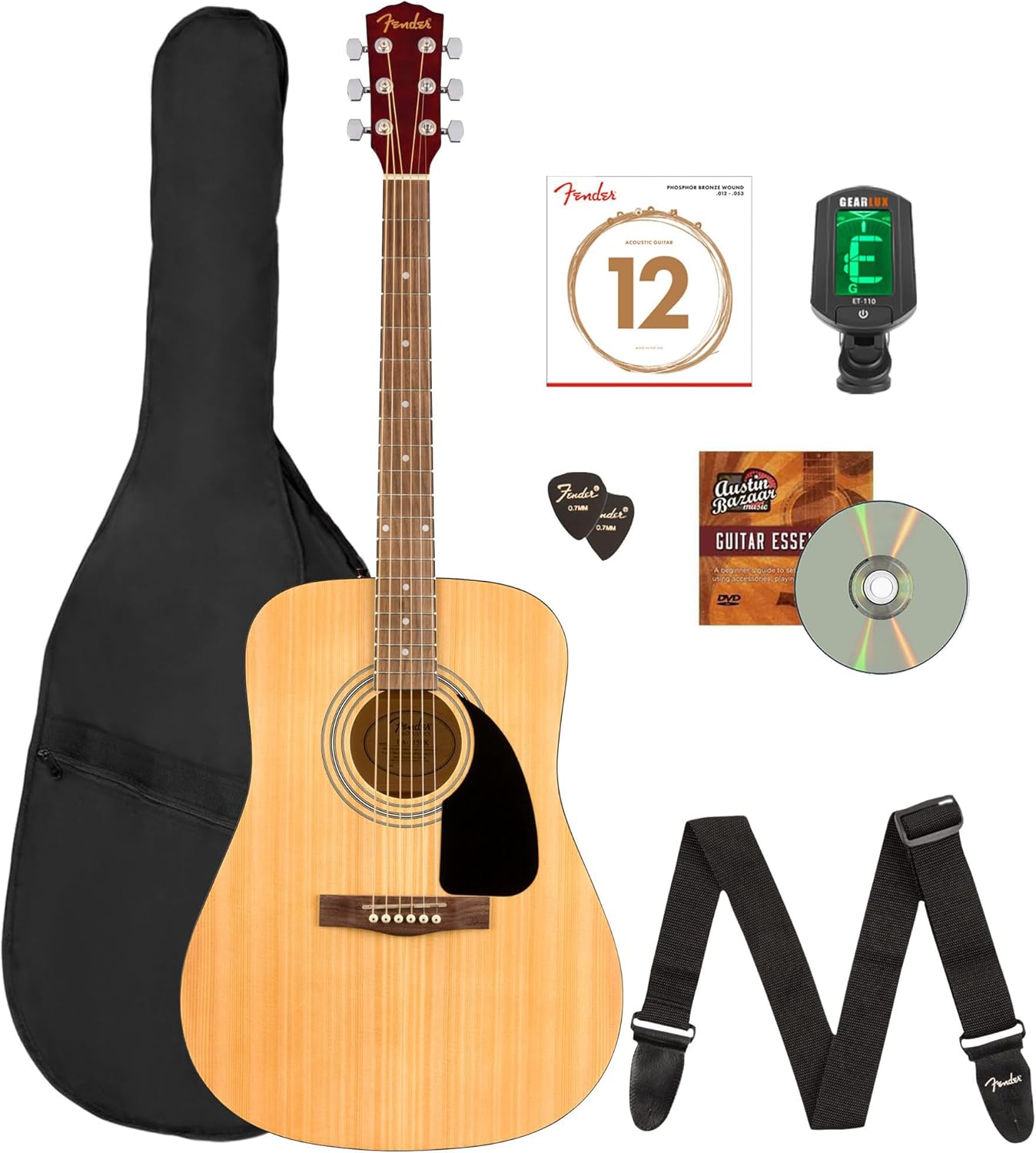
Why This Guitar
Fender's FA series targets the beginner market. The FA-115 and FA-125 are essentially the same guitar with minor updates — the FA-125 has slightly better tuners.
What you get:
- ✓ Laminated spruce top
- ✓ Laminated basswood back and sides
- ✓ Hardwood fingerboard
- ✓ 25.3" scale length (shorter = easier on fingers)
- ✓ Slim neck profile
- ✓ Often bundled with accessories
How It Plays
The short scale reduces string tension, making it easier on beginner fingers. Action is variable — often needs a setup.
String action: Variable — may need setup
Fretwork: Adequate
Neck feel: Very slim
Tuning stability: Fair
The Tone
Functional but not inspiring. Strummed chords are clear enough for learning, but projection and sustain are modest.
Ideal for: Absolute beginners, kids, casual strumming
Not ideal for: Recording, tone enthusiasts
Pros & Cons
Pros:
- ✓ Extremely affordable (often under $200 with bundle)
- ✓ Light and comfortable
- ✓ Bundle deals include everything to start
- ✓ Fender brand recognition
- ✓ Short scale = easier on fingers
Cons:
- ✗ Laminated top (won't improve with age)
- ✗ Tuning stability is mediocre
- ✗ Often needs immediate setup
- ✗ Hardware is budget-grade
- ✗ Poor resale value
Best For
Total beginners, kids, parents buying a first guitar, and anyone needing a beater.
Verdict
The best guitar under $200. The $100-150 jump to the FG800 is the most meaningful upgrade in guitar retail.
Our Rating: ★★★★
3: Epiphone Starling (Best Starter Pick Under $200)
Price: $169-$199
Where to Buy: Amazon, Guitar Center, Sweetwater, Reverb
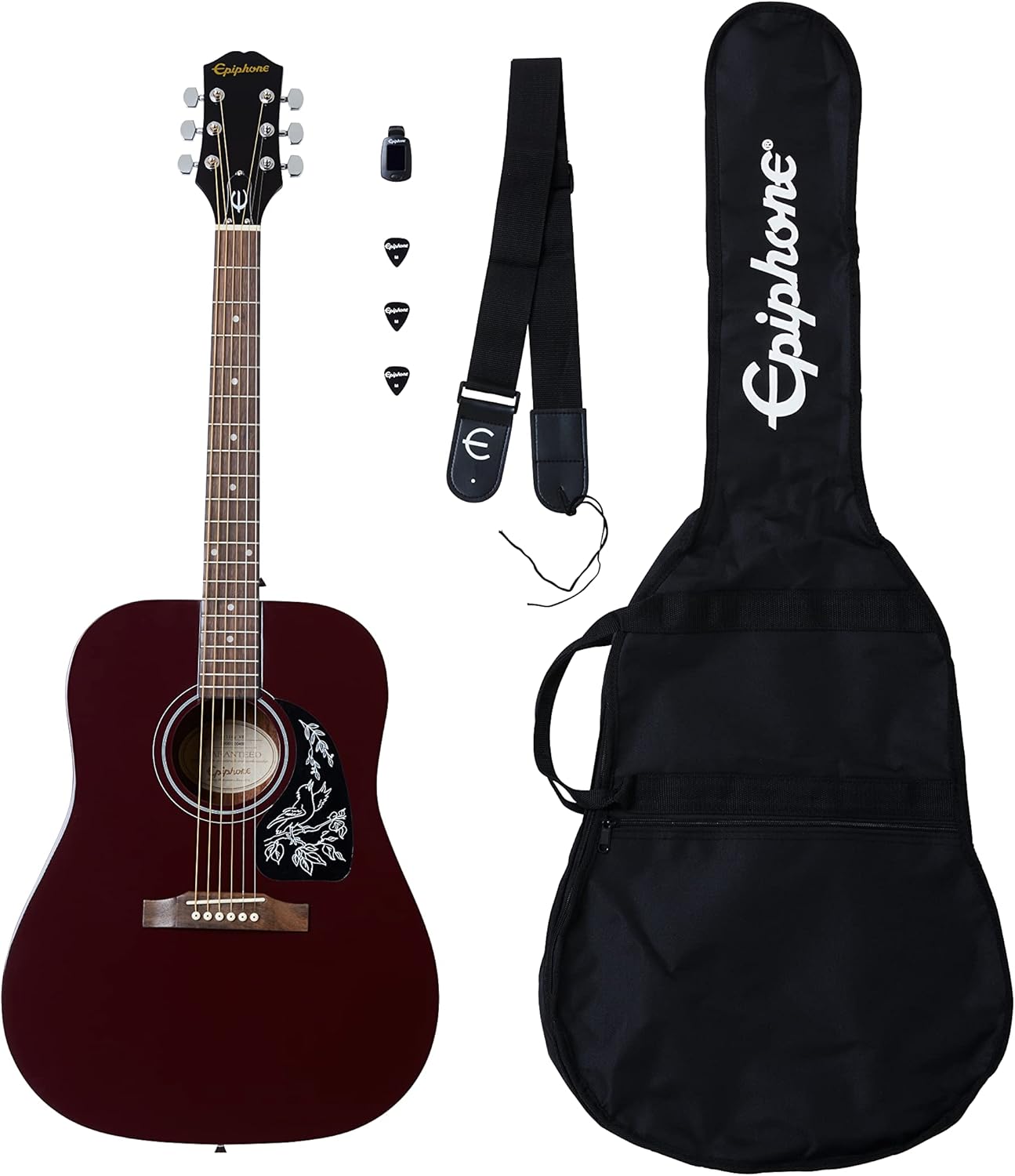
Why This Guitar
Epiphone is Gibson's budget line, and the Starling Player Pack is the fastest way to go from zero to playing.
What you get:
- ✓ Laminated spruce top
- ✓ Laminated mahogany back and sides (warmer than basswood)
- ✓ Rosewood fingerboard
- ✓ 25.5" scale length
- ✓ Slim taper neck
- ✓ Chrome hardware
- ✓ Player pack includes gig bag, tuner, strap, picks, and extra strings
How It Plays
Often arrives with surprisingly good action — Epiphone's factory setup is better than many competitors at this price.
String action: Playable out of the box
Fretwork: Generally clean
Neck feel: Slim taper D-profile
Tuning stability: Good
The Tone
Mahogany back and sides give a slightly warmer, darker tone than the FA-115. Still laminate, but the mahogany adds character. Projection is better than the FA-115.
Pros & Cons
Pros:
- ✓ Everything you need in one box
- ✓ Mahogany back/sides (warmer than basswood)
- ✓ Rosewood fingerboard
- ✓ Playable out of the box
- ✓ Classic dreadnought look
- ✓ Epiphone/Gibson heritage
Cons:
- ✗ Laminated everything
- ✗ Tone won't improve with age
- ✗ Hardware is basic
- ✗ No electronics option
- ✗ Low resale value
Best For
Budget beginners, players who want a classic look, backup/campfire guitars.
Verdict
The best starter pack under $200 for immediate playability. The Starling delivers if you need the cheapest playable acoustic with all the accessories. But if you can stretch to the FG800, do it.
Our Rating: ★★★★
4: Ibanez AW54 (Best Warm Tone Under $500)
Price: $349-$399
Where to Buy: Sweetwater, Guitar Center, Amazon, Reverb
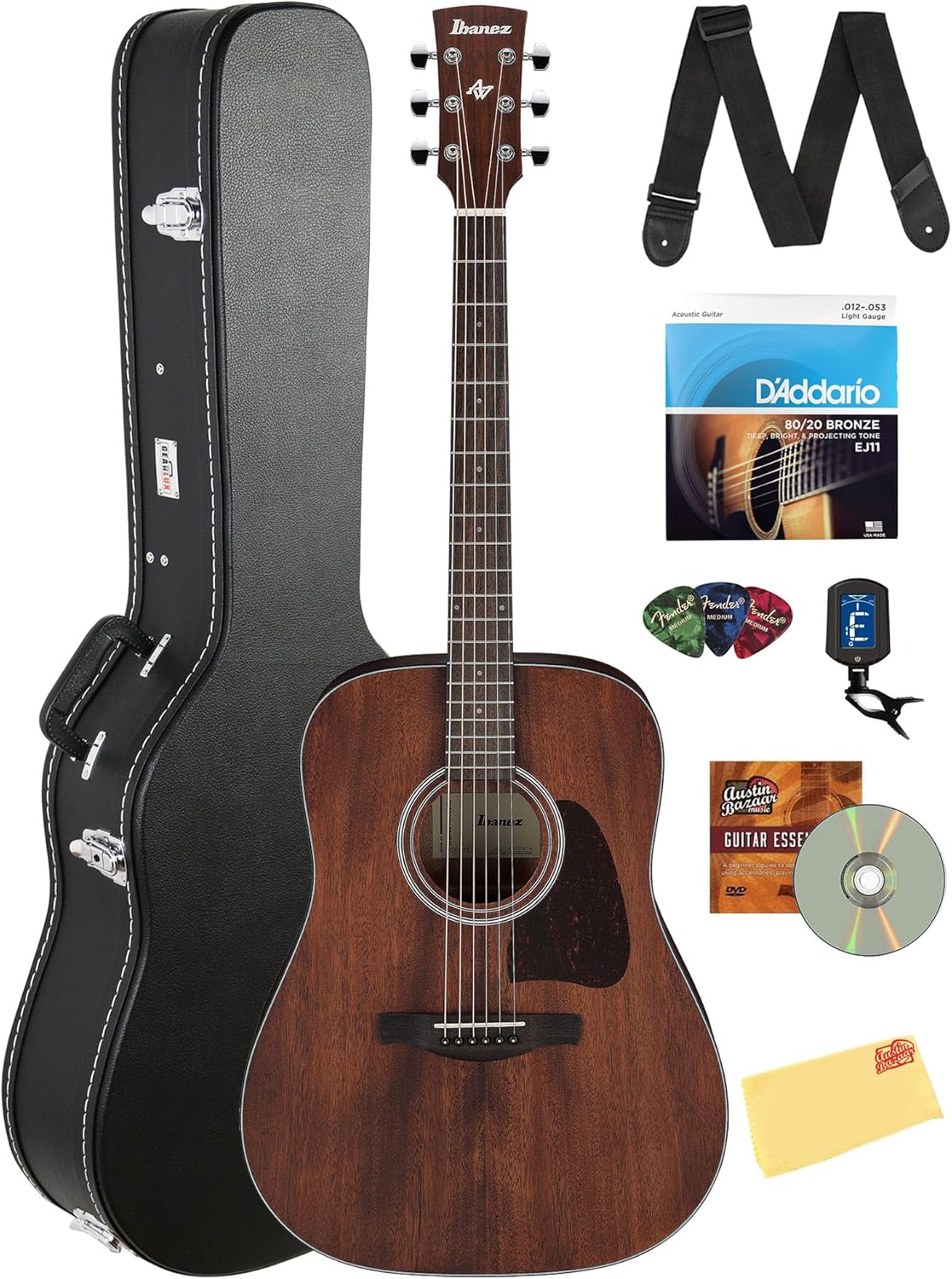
Why This Guitar
Ibanez's Artwood acoustic line is seriously underrated. The AW54 is all-mahogany construction at a remarkable price.
What you get:
- ✓ Solid mahogany top
- ✓ Mahogany back and sides
- ✓ Rosewood fingerboard and bridge
- ✓ 25.5" scale length
- ✓ Comfortable neck profile
- ✓ Open-pore finish
How It Plays
Ibanez makes some of the most comfortable necks in the business. The AW54's neck is slim but not too thin.
String action: Well-set from factory
Fretwork: Excellent for the price
Neck feel: Comfortably slim
Tuning stability: Very good
The Tone
All-mahogany construction gives warm, chocolatey midrange with controlled bass. Excellent for fingerstyle.
Ideal for: Fingerstyle, blues, folk, recording
Less ideal for: Heavy strumming, bright-tone seekers
Pros & Cons
Pros:
- ✓ Solid mahogany top (rare at this price)
- ✓ All-mahogany construction
- ✓ Excellent neck comfort
- ✓ Open-pore finish
- ✓ Great for fingerstyle
- ✓ Good tuning stability
Cons:
- ✗ No case included
- ✗ Plain look (brown on brown)
- ✗ Can sound muddy with aggressive strumming
- ✗ Less projection than spruce-top guitars
- ✗ Not ideal for bright-tone seekers
Best For
Fingerstyle players, blues and folk musicians, recording artists, and players who find spruce tops too bright.
Verdict
The best tone under $500 for warm-sound lovers. The AW54 is the specialist to the FG800's all-rounder. Fingerpickers and blues players should consider this.
Our Rating: ★★★★
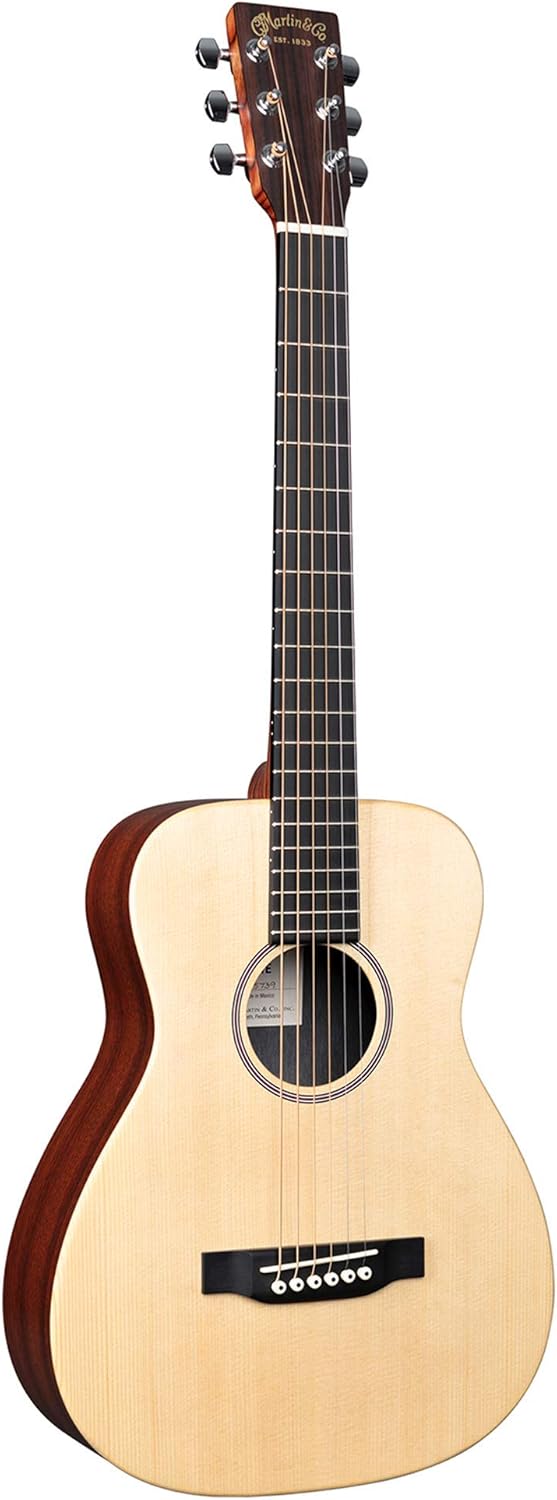
5: Martin LX1 Little Martin (Best Travel & Small-Body Guitar)
Price: $399-$449
Where to Buy: Sweetwater, Guitar Center, Amazon, Reverb
Why This Guitar
Martin is the most revered name in acoustic guitars. The LX1 Little Martin is their entry-level offering — a travel-sized guitar with Martin DNA. Ed Sheeran played one for years before getting his signature model.
What you get:
- ✓ Solid spruce top (on LX1E and select variants)
- ✓ Mahogany-pattern HPL back and sides
- ✓ Rust Stratabond neck (stable)
- ✓ 23" scale length
- ✓ Modified 00 body shape
- ✓ Fishman Sonitone electronics (on LX1E)
How It Plays
The short scale and compact body make this the most comfortable guitar on the list. Barre chords are easier, finger stretches are smaller.
String action: Excellent from factory
Fretwork: Very good
Neck feel: Comfortable low oval
Tuning stability: Excellent
The Tone
The LX1 sacrifices bass and volume for portability, but the clear midrange and articulate treble are surprisingly good for the size. The Fishman pickup on the LX1E sounds great plugged in.
Ideal for: Travel, small apartments, performing
Not ideal for: Campfire singalongs, full-bass seekers
Pros & Cons
Pros:
- ✓ Martin brand and heritage
- ✓ Comfortable and portable
- ✓ Solid spruce top (on select models)
- ✓ Excellent build quality
- ✓ Fishman electronics available (LX1E)
- ✓ Stable Stratabond neck
- ✓ Holds value well
Cons:
- ✗ Limited bass and volume
- ✗ HPL back/sides (not real wood)
- ✗ Expensive for what you get
- ✗ No full-size feel
- ✗ Some players outgrow it quickly
Best For
Travellers, players with smaller frames, songwriters, performers.
Verdict
The best travel guitar under $500. It's not a full-size acoustic, but it's genuinely playable, well-built, and portable.
Our Rating: ★★★★★ (for travel/small-body use case)
How to Choose the Right Acoustic Guitar for You
Body Style
Dreadnought is the safest beginner choice — loud, versatile, great for strumming and flatpicking. Concert/OM guitars are smaller and more comfortable for fingerstyle players or shorter arms. Travel/Mini guitars sacrifice bass for portability.
Tonewood
Prioritise a solid top. Solid spruce or mahogany top + laminated back/sides is the sweet spot under $500. Spruce is bright and responsive; mahogany is warm and focused; cedar is very warm and popular for fingerstyle. Rosewood back and sides are rich and complex but rare under $500.
Neck Profile
Look for a "slim" or "comfortable" neck profile. Beginners should avoid chunky vintage V-shapes until they know what they prefer.
Electronics
Skip the electronics unless you know you need them. A $400 acoustic-electric usually has a cheaper acoustic voice than a $400 pure acoustic. Add a pickup later for $100-150 if you start gigging. Exception: the Martin LX1E has a good Fishman system where the acoustic tone is already limited by size.
Used vs New: What $500 Buys on the Secondary Market
Buying new gets you warranty protection and no hidden damage. Best options: Yamaha FG800, Ibanez AW54, Martin LX1.
Buying used can get you all-solid wood construction. Look for Yamaha FG830 ($250-350), Seagull S6 ($350-450), Takamine GD30 ($300-400), or Martin DX1 ($400-500).
Risks: No warranty, potential hidden damage, setup costs ($75-100). Check for cracks, bridge lifting, neck straightness, and fret wear. And if you're selling an acoustic to fund the upgrade, see what your current guitar is worth before you list it.
Tip: Before buying used, check our Guitar Price Estimate to ensure you're paying a fair price.
What to Buy Next: Essential Accessories
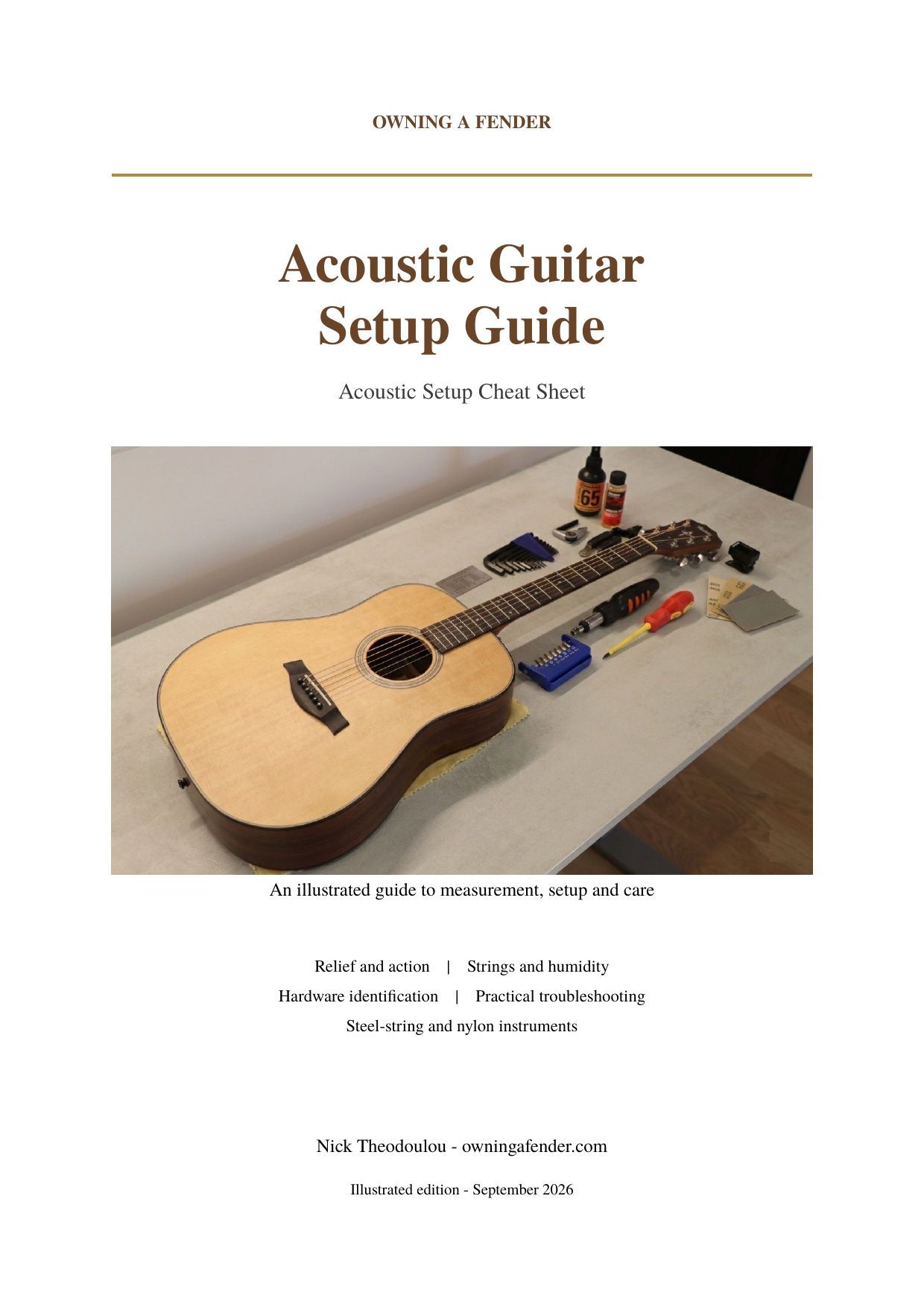
Every guitar on this list plays better after a proper setup ($75-100). Our Ultimate Acoustic Guitar Setup Guide walks you through every step, or grab the Acoustic Setup Cheat Sheet for quick reference:
Essential accessories ($50-100 total):
- Gig Bag or Case ($30-80) — Padded bag for home; hardshell for travel.
- Tuner ($15-30) — Clip-on tuners are convenient. The Snark ST-8 is the industry standard.
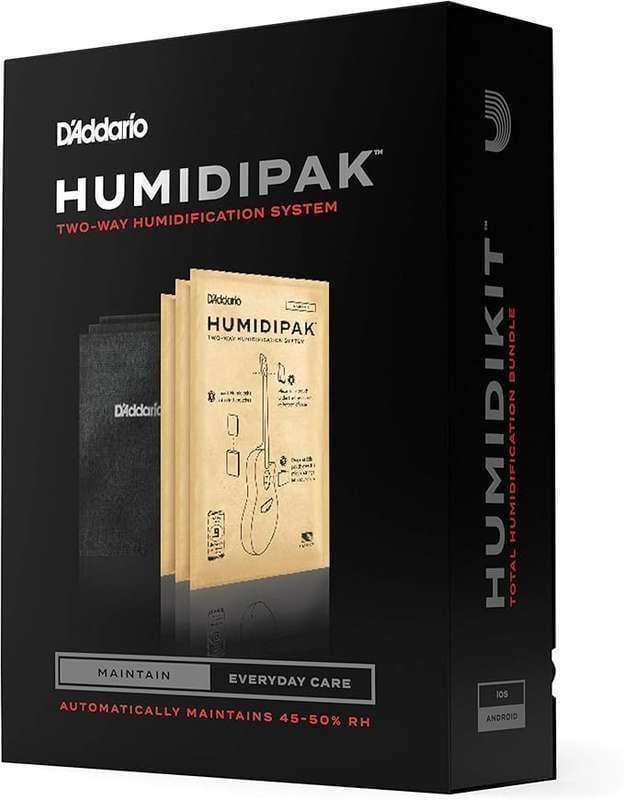
- Capo ($12-20) — Essential for changing keys.
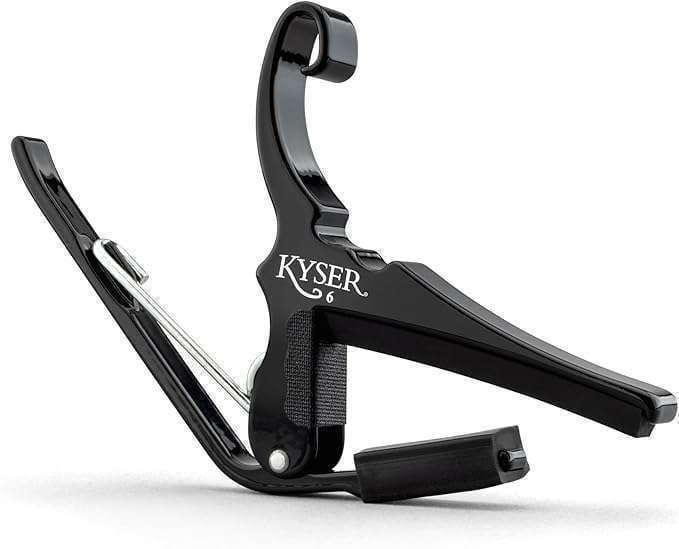
- Humidifier ($15-25) — Critical for acoustic guitars. A D'Addario Humidipak protects from dry air.
- String Winder ($5-10) — Makes string changes 10x faster.
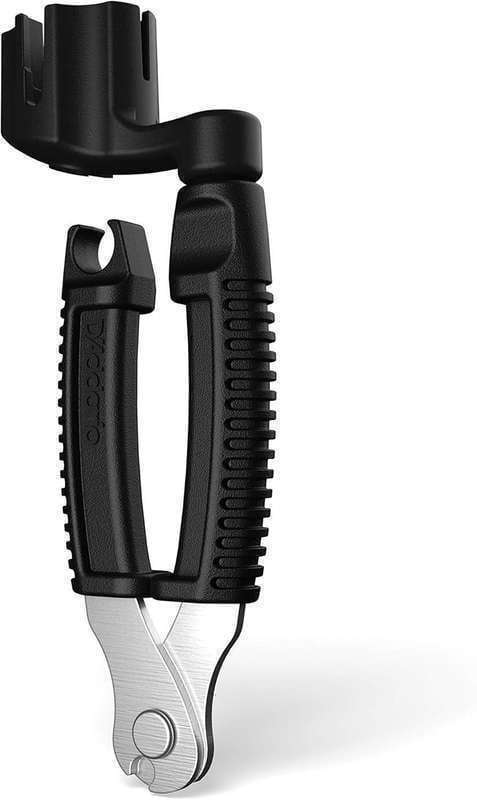
- Extra Strings ($8-15) — Start with light gauge phosphor bronze. See our Best Strings for Acoustic Guitar guide.
Frequently Asked Questions (FAQ)
What's the best acoustic guitar under $500?
Answer: The Yamaha FG800. Its solid spruce top is rare at this price and outperforms guitars costing twice as much. For travellers, the Martin LX1 is exceptional. For warm tone, the Ibanez AW54 is unbeatable.
Can a $300 acoustic guitar sound good?
Answer: Absolutely. Modern $300 acoustics are genuinely good. The Yamaha FG800 proves this — its solid spruce top and scalloped bracing compete with $600-800 guitars.
Should I get a dreadnought or concert acoustic?
Answer: Dreadnoughts are safest for beginners — loud, versatile, great for strumming. Concert guitars are smaller and more comfortable for fingerstyle. If unsure, buy a dreadnought.
How often should I change acoustic guitar strings?
Answer: Every 1-3 months, or when they sound dull. Coated strings last 3-6 months. See our Best Strings for Acoustic Guitar guide.
What's the difference between a solid top and laminate top?
Answer: A solid top is a single piece of wood that vibrates freely for richer, more resonant tone. A laminate top is multiple layers pressed together — cheaper and durable, but thinner sounding. Solid tops also improve with age. Under $500, prioritise a solid top.
Do cheap acoustic guitars stay in tune?
Answer: Modern budget guitars hold tune much better than old cheap guitars. The Yamaha FG800 and Ibanez AW54 are stable. Ultra-budget guitars ($150-200) sometimes slip — a $20 tuner upgrade usually fixes this.
How much should a beginner spend on an acoustic guitar?
Answer: $300-400 is the sweet spot. You get solid wood tops, good build quality, and stable tuning. Under $200 often means compromised playability that discourages practice.
Can I learn on a travel-size acoustic guitar?
Answer: You can, but it's not ideal. Travel guitars are easier to fret but have limited bass and smaller fret spacing that can create bad habits. Beginners should start on a dreadnought or concert size if possible.
Conclusion: Pick Your Guitar and Start Playing
You do not need to spend $1,000 to get a great acoustic guitar. The instruments on this list prove it.
Your decision tree:
- Best value? → Yamaha FG800
- Warm tone? → Ibanez AW54
- Portable? → Martin LX1
- Tightest budget? → Epiphone Starling or Fender FA-115
None of these will make you sound like James Taylor if you don't practice. But all are legitimate instruments that won't hold you back.
Once you buy, set it up right. Get the exact specs in our Ultimate Acoustic Guitar Setup Guide, or grab the Acoustic Setup Cheat Sheet ($19):
Tip: Buying used? Check our Guitar Price Estimate for fair market value.
Own multiple guitars? The Complete Collection ($49) includes setup specs for all guitar types.
Now stop reading and go play.
Related Posts
Acoustic Setup & Maintenance
- Ultimate Acoustic Guitar Setup Guide — Step-by-step setup process
- Martin Guitar Setup Guide — Martin-specific action, relief, saddle, and humidity specs
- Taylor Guitar Setup Guide — Taylor-specific specs and measurements
- Guitar Action Height Guide — Perfect your string height
- Best Strings for Acoustic Guitar — Interactive comparison tool
- Guitar Truss Rod Adjustment — Safe neck relief adjustment
Buying Guides
Tools
- Factory Specs Lookup — Find official factory specs
- Yamaha Serial Number Lookup
- Taylor Serial Number Lookup
- Martin Serial Number Lookup
- My Garage — Track your collection
Have questions about which acoustic to choose? Drop them in the comments and I'll help you decide based on your specific needs!
Keep reading
Next for your Acoustic
- Same guitarAcoustic Guitar Humidity: What to Check When Action ChangesRead
- Same guitarAcoustic Guitar Action Height: Measure Before You AdjustRead
- Same guitarAcoustic Guitar Truss Rod Adjustment: Measure FirstRead
Everything for your Acoustic
Open the hub