Ultimate Fender Mustang Setup Guide
Master your Fender Mustang setup with our comprehensive guide. Learn to adjust the unique Dynamic Vibrato, set perfect short-scale action, and optimize pickup height for that classic offset tone. This guide covers deep dives into bridge buzzing fixes, neck shimming, and intonation for both vintage and reissue models.

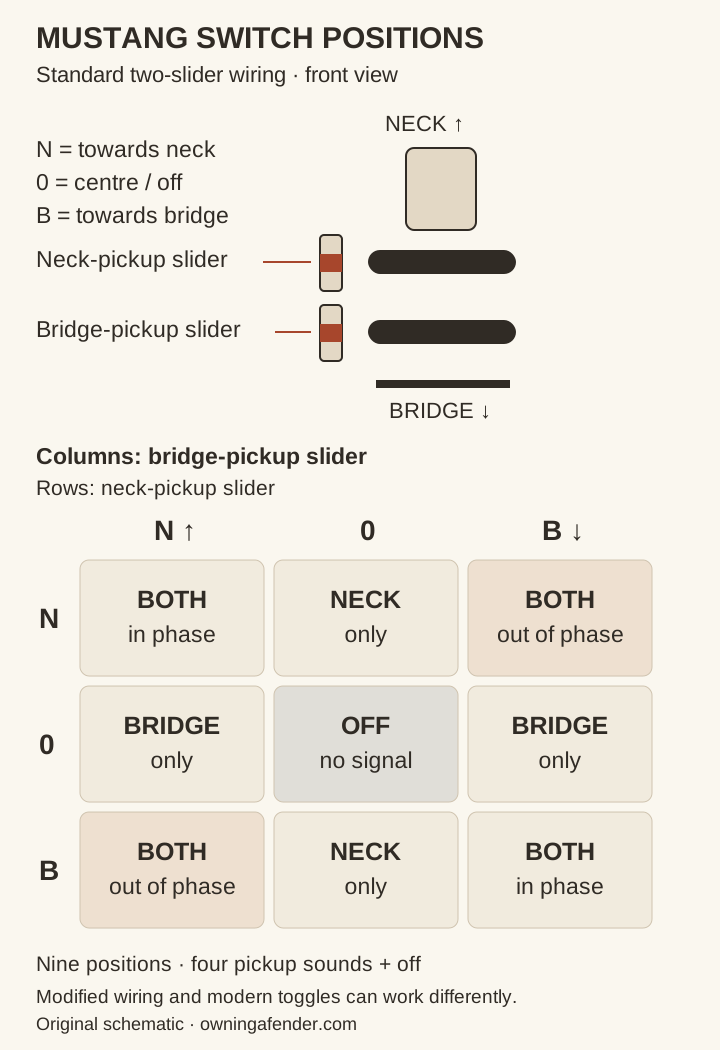
Before adjusting hardware, use the Mustang controls and switch-position chart to identify the active pickups and rule out a centre-off setting.
The Ultimate Guide to Setting Up Your Fender Mustang: Mastering the Short Scale & Dynamic Vibrato
The Fender Mustang is a unique beast in the offset world. With its 24-inch short scale length, phase-switching electronics, and the distinct "Dynamic Vibrato" system, it requires a specific approach to setup that differs significantly from the Stratocaster or Jazzmaster.
While its smaller stature makes it incredibly fun to play, the Mustang's bridge and vibrato system can be finicky if not set up correctly. This comprehensive guide will walk you through every step—from basic action adjustments to advanced tricks like neck shimming—to ensure your Mustang plays effortlessly and stays in tune.
Why we love it: The Classic Vibe and Sonic series Mustangs offer incredible value, delivering authentic offset specs and tone at a fraction of the vintage price.
📊 Quick Tools: Factory Specs • Serial Number Lookup • My Garage
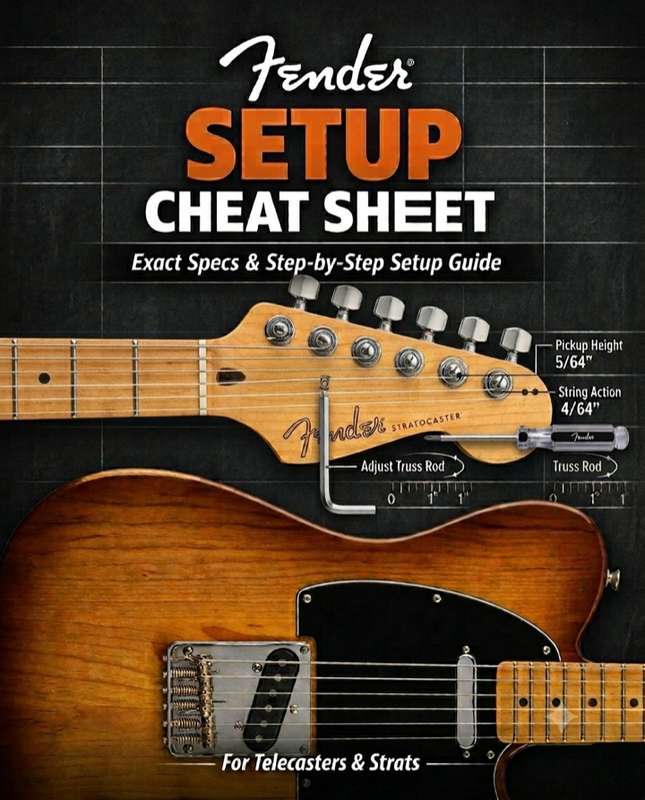
Part 1: Understanding Mustang String Height (Action)
Quick Answer: Mustang string height is the distance between the string and the fret top. Due to the lower tension of the 24" scale, slightly higher action is often preferred to prevent buzz. Standard targets are 1.6mm (high E) and 2.0mm (low E) at the 12th fret.
String height, or "action," defines how your guitar feels. On a short-scale guitar like the Mustang, the strings have less tension than a Stratocaster (25.5" scale) when tuned to the same pitch. This means the strings vibrate in a wider arc, potentially causing more buzz if the action is too low.
Standard Mustang Action Specifications
| String | Standard Height (12th Fret) | Note |
|---|---|---|
| High E | 1.5mm - 1.6mm (1/16") | Can go lower (1.2mm) with excellent fretwork |
| B | 1.6mm | |
| G | 1.7mm | |
| D | 1.8mm | |
| A | 2.0mm | |
| Low E | 2.0mm - 2.1mm (5/64") | Higher tension gauges allow lower action |
To measure accurately, you need a precision gauge. Don't guess—mm matters!
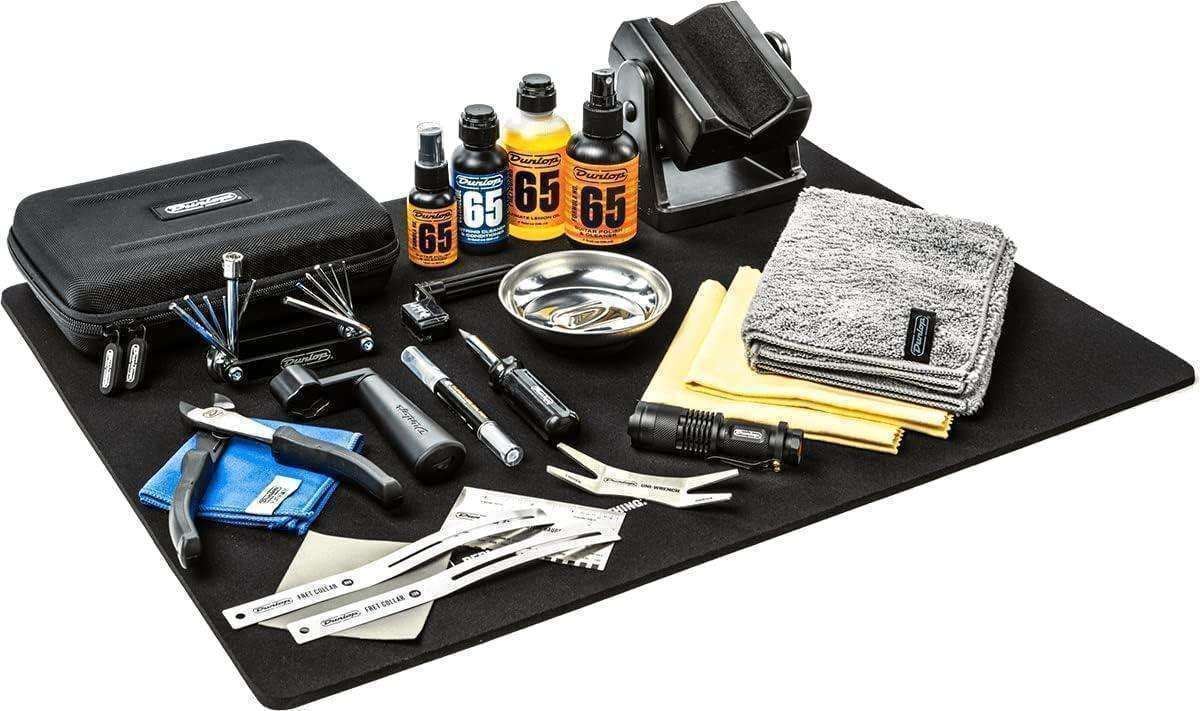
Essential Mustang Setup Tools
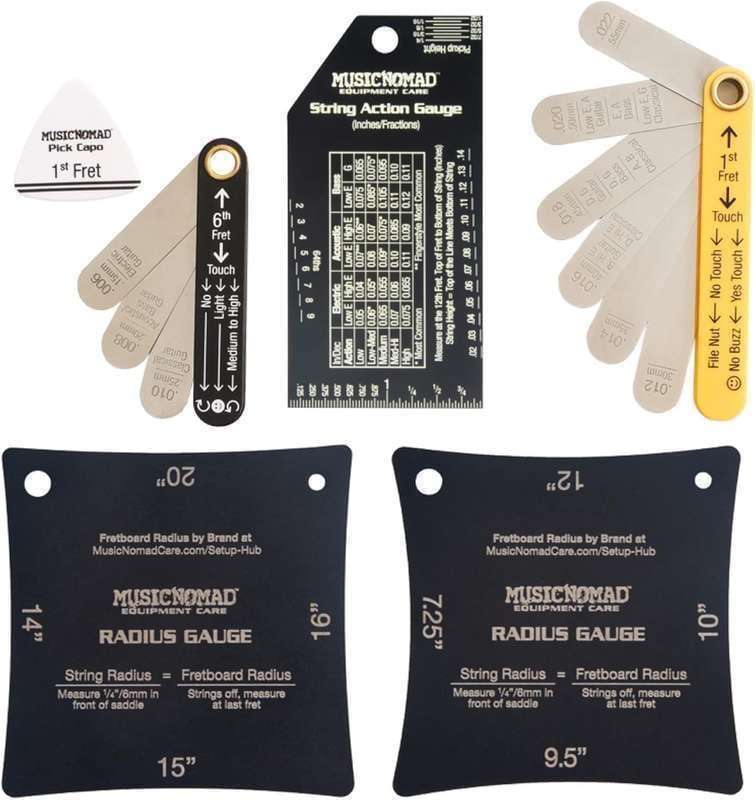
 Buy on Amazon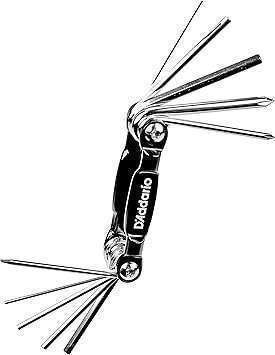

Part 2: Adjusting Action on a Mustang Bridge
Quick Answer: The Mustang bridge "floats" on two adjustable posts. Use an Allen key to raise/lower the posts for overall height. Do not rely solely on saddle screws for action; use them to match the radius.
Unlike a Strat bridge which is screwed flat to the body, the Mustang bridge rocks back and forth on two pointed posts.
Step-by-Step Adjustment
- Loosen Strings: Reduce tension to protect the knife edges on the posts.
- Adjust Post Height: Insert the appropriate Allen key (usually 1.5mm or .050") into the holes inside the wider bridge posts.
- Clockwise: Raises the bridge (Higher Action).
- Counter-Clockwise: Lowers the bridge (Lower Action).
- Level the Bridge: Ensure both sides are even relative to the fretboard radius.
- Radius Match: If individual strings feel off, use the tiny screws on the saddles themselves to fine-tune the curve to match your neck (usually 7.25" or 9.5").
Critical Tip: The bridge plate should not sit directly on the pickguard. It needs clearance to "rock" with the vibrato use. If it's decked, tuning stability will suffer.
Part 3: Measure the Pickups Actually Fitted
Quick answer: Identify the installed pickups and mounting before choosing a target. Mustang single-coils, MP-90s and humbuckers do not share one verified universal neck/bridge table. Follow the pickup maker's complete method and record both sides of both pickups.
Fender's general pickup measurement holds the last fret and measures pole top to string bottom. If a closed cover hides the pole, label a cover-to-string reading as such; it cannot be converted into a pole gap by guessing the cover thickness.
A pickup suspended from a guard or ring normally rises as its height screw tightens. A body-mounted pickup pressed against foam or springs normally lowers as that screw tightens. Confirm the actual mount and stop if the pickup does not follow a small adjustment.
- Finish required relief, action and bridge work, then tune.
- Record four gaps using the same held fret and contact points.
- Compare neck, bridge and the intended combined setting through a consistent clean amp.
- Make one small controlled trial, remeasure and keep or reverse it according to the result.
Use the Mustang pickup-height diagnostic guide and free worksheet for variant identification, mounting checks and a repeatable record. A phase setting or wiring fault can change the combined sound; pickup height is not automatically the cause.
Part 4: Solving Common Mustang Bridge Problems
Quick Answer: The most common issues are the "Sinking Bridge" (action drops over time) and "Bridge Buzz" (rattling components). Fix these with Loctite and proper Setup.
Problem 1: The Sinking Bridge
Mustang bridge height screws (inside the posts) often vibrate loose, causing the action to lower firmly while you play.
- Fix: Apply a small drop of Blue Loctite (242) to the threads of the height adjustment screws. Set your height, let it cure for 24 hours. Never use Red Loctite.
Problem 2: Bridge Buzz
The vintage-style saddle screws can rattle.
- Fix: Clear nail polish or Loctite on the threads can stop the rattle. Also, ensure your break angle is sufficient (see Part 8 about shimming).
For a deep dive into fixing buzz, check our detailed guide: Mustang Bridge Buzzing Fix Guide
Part 5: Fender Mustang Intonation Guide
Quick Answer: Intonation ensures your guitar plays in tune all the way up the neck. Adjust the saddle position forward (towards neck) if flat, or backward (towards tailpiece) if sharp.
Challenges with Vintage Saddles
Vintage Mustang bridges often have a single "barrel" saddle with no individual string height adjustment, and sometimes shared intonation screws. This is tricky.
- The Barrel: You must find a compromise. Usually, you prioritize the tuning of the plain strings (G, B, E) as they are used for melody/chords more often up the neck.
How to Intonate
- Tune Open: Get the string perfectly to pitch (e.g., E).
- Check 12th Fret: Fret the note at the 12th fret.
- Compare:
- Note is Sharp (+): The string is too short. Move the saddle Back (tighten screw).
- Note is Flat (-): The string is too long. Move saddle Forward (loosen screw).
- Re-Tune: You must re-tune the open string after every movement.
Part 6: Mustang Truss Rod Adjustment
Quick Answer: The truss rod controls neck relief (bow). For the 24" scale, a relief of 0.25mm (0.010") at the 8th fret is ideal.
Checking Relief
- Capo the 1st fret.
- Press the Low E string at the last fret (where neck meets body).
- Slide a feeler gauge under the string at the 8th fret. There should be a slight gap.
Adjusting
- Adjustment Location: Most Mustangs have the adjustment at the Heel of the neck. You may need to loosen the neck bolts and tilt the neck back to access it. Some modern Player/Vintera models have it at the headstock.
- Direction:
- Tighten (Clockwise): Straightens neck (less relief). Fixes high action/bow.
- Loosen (Counter-Clockwise): Bows neck (more relief). Fixes buzz in first few frets.
Wondering what your Mustang is worth? Try our Guitar Price Estimate.
Part 7: Dynamic Vibrato & "Cigar Tube" Setup
Quick Answer: The "Dynamic Vibrato" is the Mustang's defining feature. Setup involves two main variables: Tailpiece Height and Spring Tension.
1. Tailpiece (Cigar Tube) Height
You can raise or lower the entire tail bar (cigar tube) using the side posts.
- Lower: steeper break angle over bridge. More sustain, stiffer feel. Best for stability.
- Higher: shallow angle. Slinkier feel, but strings may pop out of saddles.
2. Spring Tension
Under the main vibrato plate (you have to unscrew it from the body), there are two springs. You can move them to different "notches" on the posts.
- Outer Notches: More tension. Use for 11s or 12s.
- Inner Notches: Less tension. Use for 9s or 10s.
Pro Tip: Lubricate the "knife edge" pivot points inside the unit with a little chapstick or graphite grease to ensure it returns to zero perfectly every time.
Part 8: Advanced Setup: Shimming and Hardtailing
Quick Answer: Mustangs are designed to have the neck shimmed. This increases the neck angle, allowing you to raise the bridge, which creates more downward pressure (break angle) on the saddles. This cures 90% of buzz and sustain issues.
Neck Shimming
If your action is low but the bridge is basically touching the pickguard, you need a shim.
- Place a thin strip of veneer (or a specialized shim) in the neck pocket closest to the body.
- This angles the neck back.
- Result: You must raise the bridge to compensate, creating a steeper string angle. The strings now push down harder on the bridge, stopping buzz and increasing resonance.
Reversible Hardtailing
Don't use the whammy bar?
- Remove the cigar tube.
- Place metal washers over the posts under the plate.
- Re-install. Tighten the tailpiece all the way down until it clamps onto the washers.
- Now it's a fixed bridge!
Part 9: Maintenance & Care
Quick Answer: Clean your fretboard, polish frets, and keep hardware tight. The Mustang has many moving parts—check them regularly.
Recommended Strings
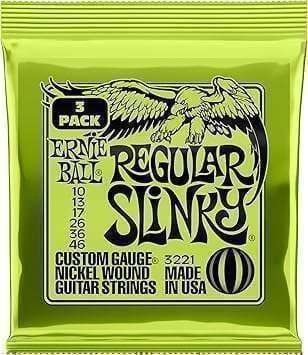
The short scale needs tension! We highly recommend 10s or 11s. 9s often feel like spaghetti on a Mustang.
Mustang Strings and Care

Safe Shipping for Your Mustang
Short-scale guitars are easy to ship but still require care. See our Fender Shipping Setup Guide for packing tips.
Complete Your Mustang Rig
The Mustang's plunky, resonant character pairs beautifully with these amps:
Classic Pairing - Vox AC15
The chime of a Vox complements the short-scale thud perfectly.
Modern & Versatile - Boss Katana 50
Great for dialing in those grunge and indie tones at bedroom volumes.
Amps for Your Mustang Rig


FAQ: Common Mustang Setup Questions
1. Why does my Mustang bridge buzz?
Answer: The vintage bridge rocks back and forth. Buzz usually comes from the bridge sinking (posts slipping) or low string tension. Use heavy strings or Loctite on the post screws. See our Bridge Buzzing Fix Guide.
2. Can I use Strat strings on a Mustang?
Answer: Yes, but be aware of tension. Standard 9s might feel too floppy on a Mustang due to the 24" scale. We recommend going up one gauge size from what you use on a Strat (e.g., if you use 9s on a Strat, use 10s on a Mustang).
3. How do I stop the tremolo from going out of tune?
Answer: Lubricate the nut slots and bridge saddle contact points with graphite. Ensure the "cigar" bar is balanced and pivot points are smooth. Old springs may need replacing if they don't return to zero.
4. What is the correct neck relief for a Mustang?
Answer: 0.010" (0.25mm) at the 8th fret is the standard factory spec. However, short-scale players sometimes prefer slightly flatter necks (0.008") if they play with a light touch.
Related Guides
- Mustang Pickup Upgrade Guide - Transform your tone.
- Mustang Bridge Buzzing Fix - Detailed troubleshooting.
- Guitar Action Height Guide - Universal setup tips.
- Jaguar Setup Guide - Compare with its offset cousin.
🛠️ Done with this setup? Log the spec — action, relief, strings — in My Gear Garage so you remember exactly what you did in six months. Free, no password — magic-link sign-in.