Factory Fender Setup vs Custom Setup: What Actually Matters?
Should you keep your Telecaster's factory setup or pay for a custom setup? Learn what factory specs actually mean, when a professional setup is worth $75-100, and how to decide what's right for your playing style.
Factory Fender Setup vs Custom Setup: What Actually Matters?
Quick Answer: Factory setup works for most players. Custom setup is worth it if you play harder/lighter than average, prefer specific string gauges, or have a style that demands precise action. The $75-100 investment pays for itself in playability.
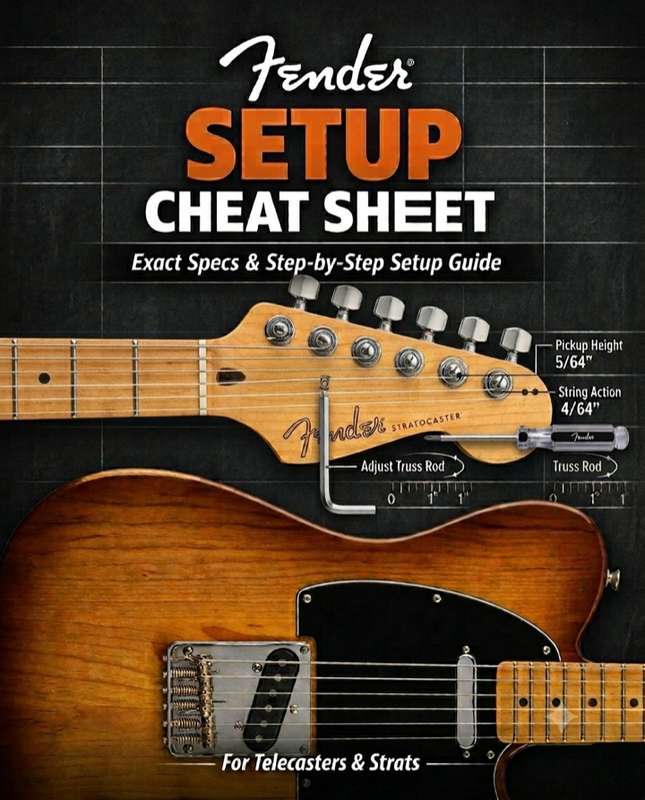
🎸 Already know you need custom specs? I've put the exact Fender measurements I use into a simple setup cheat sheet.
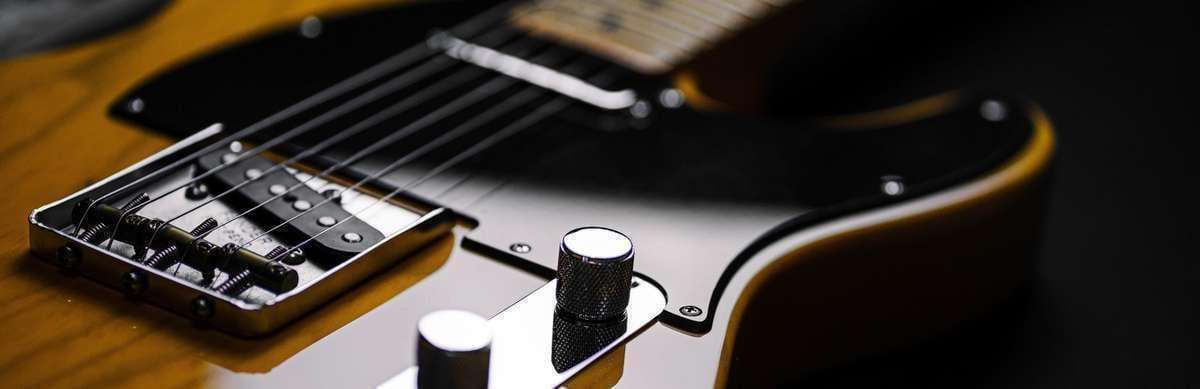 Photo by Chris Hardy on Unsplash
What Is "Factory Setup" Anyway?
When you buy a new Fender or Squier, it comes with a "factory setup"—a standardized set of specifications applied at the manufacturing plant.
Fender's typical factory specs:
| Measurement | Factory Target | Notes |
|---|---|---|
| String Action (12th fret) | 2.0mm bass / 1.6mm treble | "Medium" height |
| Neck Relief | 0.25mm (0.010") | Measured at 8th fret |
| Pickup Height | 2.4mm bass / 2.0mm treble | Neck pickup |
| Intonation | Set to factory spec | Usually accurate |
The problem: These specs are designed for an "average" player who doesn't exist.
They assume:
- You use .010-.046 strings
- You play with moderate attack
- You want "safe" action that won't buzz
- You live in a moderate climate
If any of these don't match you, factory setup is a compromise.
When Factory Setup Works Fine
Factory setup is good enough if:
- ✅ You're a beginner still developing your technique
- ✅ You use standard .010-.046 strings
- ✅ You play with moderate picking force
- ✅ You haven't developed strong preferences yet
- ✅ You're testing a new guitar before deciding to keep it
Real talk: Most players never change their factory setup and are perfectly happy. If your guitar feels comfortable and plays in tune, there's no rule saying you must change anything.
When Custom Setup Is Worth $75-100
Custom setup makes a real difference if:
1. You Changed String Gauges
Moving from .010s to .009s (or .011s) changes tension significantly. Without adjustment:
- Lighter strings → Lower tension → More buzz, intonation drift
- Heavier strings → Higher tension → Action feels stiff, neck bows more
A proper setup after gauge change includes truss rod, action, and intonation adjustments.
2. You Have a Specific Playing Style
Light touch players: Can run much lower action (1.2-1.4mm treble) without buzz. Factory setup is unnecessarily high for you.
Hard hitters: Need more clearance or relief to avoid fret buzz. Factory may buzz for you.
Slide players: Need significantly higher action (3.0mm+). Factory won't work.
3. Your Guitar Traveled or Changed Climate
Guitars shipped across climate zones often need adjustment. A guitar set up in California may develop issues in humid Florida or dry Arizona.
Wood moves. Necks shift. A setup gets it back to optimal.
4. You're Experiencing Problems
- Fret buzz in specific areas
- Tuning instability
- Action that feels "off"
- Intonation that's sharp/flat up the neck
All of these are fixable with proper setup—not by buying new parts.
The Hidden Truth About Factory Setup
Here's something manufacturers don't advertise: factory setup is about shipping, not playing.
Fender sets guitars slightly high because:
- High action prevents buzz complaints
- Wood settles during shipping (necks can shift)
- A buzzy guitar gets returned; a playable-but-not-optimal guitar gets kept
Factory specs are safe, not optimal.
Professional luthiers regularly lower action, optimize relief, and fine-tune intonation on brand-new guitars. It's standard practice, not a sign of a defective instrument.
What Actually Changes in a Custom Setup?
A professional setup typically includes:
| Adjustment | What They Do | Why It Matters |
|---|---|---|
| Truss Rod | Set neck relief to match your attack | Eliminates mid-neck buzz or stiffness |
| Saddle Height | Set action to your preference | Determines how easy/hard guitar plays |
| Intonation | Adjust saddle positions | Guitar plays in tune everywhere |
| Nut Slots | File if needed | Eliminates tuning issues, binding |
| Pickup Height | Optimize for your pickups | Balances output and clarity |
| Fret Level (if needed) | Level uneven frets | Eliminates buzz at specific frets |
A basic setup (no fret work) runs $75-100 at most shops. Fret leveling adds $100-200.
How to Know If You Need Custom Setup
Take this quick test:
-
Press the 12th fret G string. Does it buzz?
- Yes → Relief or action may be wrong
-
Bend the G string a whole step at the 12th fret. Does it choke out?
- Yes → Action is too low or frets are uneven
-
Play the 12th fret harmonic, then fret the 12th fret. Are they the same pitch?
- No → Intonation is off
-
Compare open chord to barred chord. Does the barred version sound "off"?
- Yes → Nut height or intonation issues
If you answered "yes" to any of these, a setup will help.
DIY vs Professional Setup
DIY setup makes sense if:
- You enjoy tinkering with gear
- You have the basic tools (hex keys, screwdrivers, feeler gauges)
- You're comfortable making small adjustments
- You have reference specs to work from
Professional setup makes sense if:
- You value your time over the $75-100 cost
- You don't have the tools or experience
- You need fret work (leave this to pros)
- You want it done right the first time
The Bottom Line
Factory setup is a starting point, not a destination.
If your guitar plays well and feels comfortable, don't feel pressured to change anything. But if you're experiencing issues, changed strings, or just want to optimize playability—a custom setup (professional or DIY) is worth the investment.
The difference between a "good enough" guitar and a "plays like butter" guitar is often just $75-100 and 30 minutes of work.
Frequently Asked Questions
Is factory setup "bad"?
Answer: No. It's conservative and safe, designed to ship without complaints. It's just not optimized for any specific player.
How often should I get my guitar set up?
Answer: Once per year minimum, or after any string gauge change, climate move, or if problems develop.
Can I set up my own guitar?
Answer: Yes. With the right specs and basic tools, most adjustments are straightforward. Just avoid truss rod extremes and fret work unless you're experienced.
What if my new guitar buzzes?
Answer: Slight buzz on isolated frets often indicates shipped-in condition or climate shift. A setup usually fixes it. Severe buzz across the neck may indicate manufacturing defects.
Related Posts
Setup Guides
- Ultimate Telecaster Setup Guide — Complete setup walkthrough
- Telecaster Truss Rod Adjustment — Detailed neck relief guide
- Stratocaster Setup Guide — Strat-specific setup
Tools & Resources
- Factory Specs Lookup — Find your guitar's factory specifications
- Serial Number Decoder — Verify year and origin