Telecaster String Gauges by Genre: Blues, Rock, Jazz & More
Choose the right Telecaster string gauge for your genre. Deep-dive into blues, country, rock, jazz, and metal string gauges with famous player setups, technique tips, and setup advice.
Choosing the right Telecaster string gauge isn't just about light vs. heavy — it's about matching your strings to the way you actually play. A blues player digging into bends on the 15th fret needs a completely different gauge than a country picker snapping hybrid-picked arpeggios at the 3rd fret.
The Telecaster's 25.5" scale length, single-coil pickups, and bright tonal character mean gauge choices are amplified compared to shorter-scale guitars. A .010 set on a Tele feels noticeably stiffer than on a Les Paul, and that difference matters when you're choosing strings for a specific genre and technique.
This guide breaks down exactly what gauge to use for blues, country, rock, jazz, metal, and ambient playing — with real-world examples from famous Telecaster players and the reasoning behind each choice. If you want to compare specific string brands and products, head to our Best Strings for Telecaster buyer's guide.
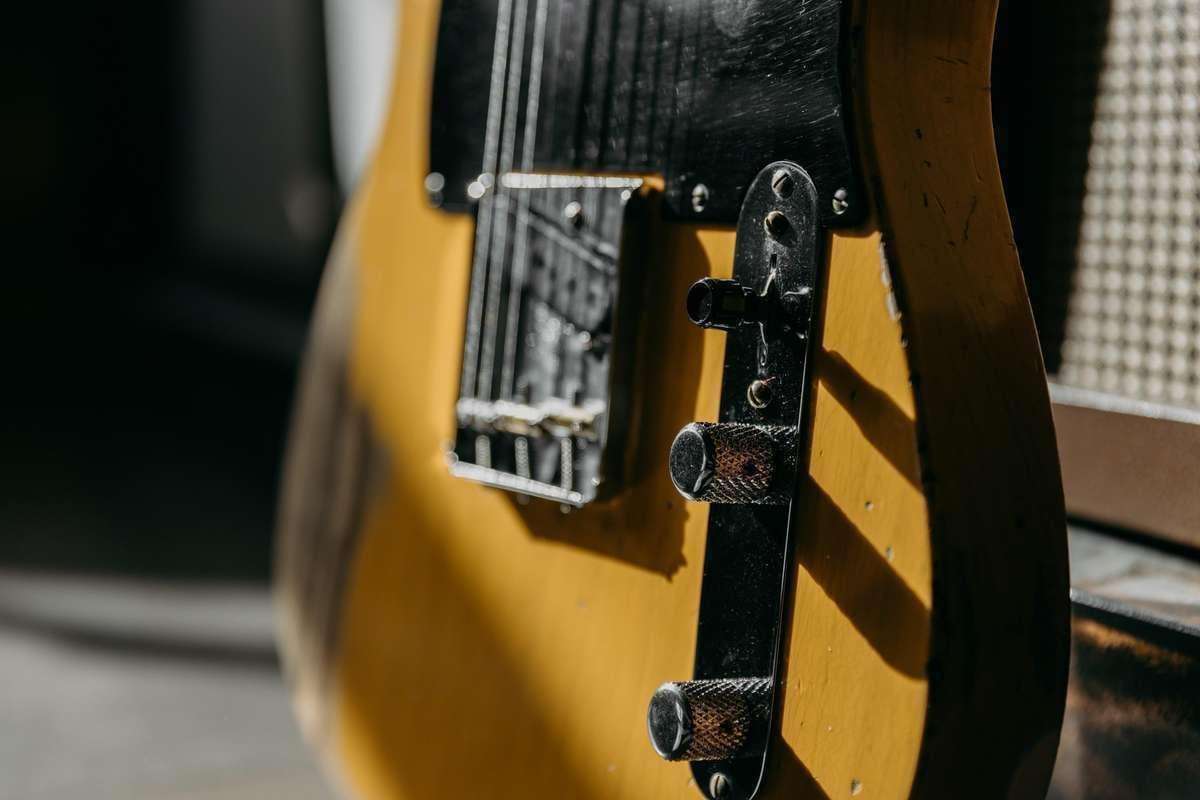 Photo by Eric Parks on Unsplash
 Buy on Amazon
How String Gauge Affects Your Telecaster's Tone and Feel
Before diving into genre-specific recommendations, it helps to understand what gauge actually changes about your playing experience.
Tension and the 25.5" Scale
The Telecaster's 25.5" scale length creates approximately 7-8% more tension than a 24.75" Gibson at the same gauge and tuning. This means:
- A .009 set on a Tele feels roughly like a .010 set on a Les Paul
- A .010 set on a Tele feels roughly like a .011 set on a Les Paul
- A .012 set on a Tele produces serious tension — similar to medium acoustic strings
This is why many Telecaster players use a gauge lighter than they'd use on a shorter-scale guitar. You're not "going lighter" — you're compensating for the physics of the instrument.
What Changes With Gauge
Lighter gauges (.008-.009):
- Easier bending (less force required)
- Brighter, thinner tone
- Lower string tension — can cause buzz if action is too low
- Less sustain and volume
- More prone to going sharp when fretting hard
Medium gauges (.010-.011):
- Balanced bending resistance and tone
- Fuller fundamental with good harmonic content
- Better tuning stability
- The "sweet spot" for most Telecaster players
Heavier gauges (.012-.013):
- Thick, piano-like tone with massive sustain
- Difficult to bend — requires real hand strength
- Excellent tuning stability, especially in alternate tunings
- Higher tension means higher action or more neck relief needed
The Setup Consequence
Every time you change string gauge, you're changing the tension on your neck. Going from .009s to .011s adds roughly 15-20 pounds of total tension across all six strings. Your neck will bow forward, your action will rise, and your intonation will shift.
This isn't a problem — it's just physics. But it means a gauge change requires a setup adjustment: neck relief, action height, and intonation all need re-dialing.
Blues: The Sweet Spot Between Bend and Tone
Recommended Gauge: .010-.046 (Regular) or .010-.052 (Skinny Top Heavy Bottom)
Blues Telecaster playing lives in the bends. You need enough string tension to get a full, singing sustain on bent notes, but not so much that a whole-step bend at the 12th fret tears your fingertips apart.
.010-.046 is the most versatile blues gauge. It gives you:
- Comfortable whole-step bends on the unwound strings
- Enough mass in the wound strings for thick, chunky rhythm tones
- Good dynamic range — responds well to picking intensity
- Balanced tension that doesn't fight the player
If you play blues-rock and want tighter low strings for heavier rhythm, consider .010-.052 (skinny top, heavy bottom). The thicker wound strings add bass and punch without making the plain strings harder to bend.
Famous Blues Telecaster Setups
Albert Collins — "The Master of the Telecaster"
- Gauge: .010-.046 (Regular)
- Tuning: Standard (sometimes with a capo)
- Why it worked: Collins' aggressive attack and dramatic bends needed strings that could take punishment without breaking. Regular gauge gave him the control and sustain for his signature "ice pick" tone.
Muddy Waters (later career)
- Gauge: .011-.050
- Tuning: Standard and Open G
- Why it worked: Muddy's slide and rhythm playing benefited from the heavier gauge. More mass equals more sustain and volume — critical when driving a cranked tube amp without overdrive pedals.
Mike Stern
- Gauge: .010-.046
- Tuning: Standard
- Why it worked: Stern's jazz-blues fusion requires the bending flexibility of .010s with enough fundamental for clean jazz voicings. The regular gauge balances both demands.
Blues Setup Tips
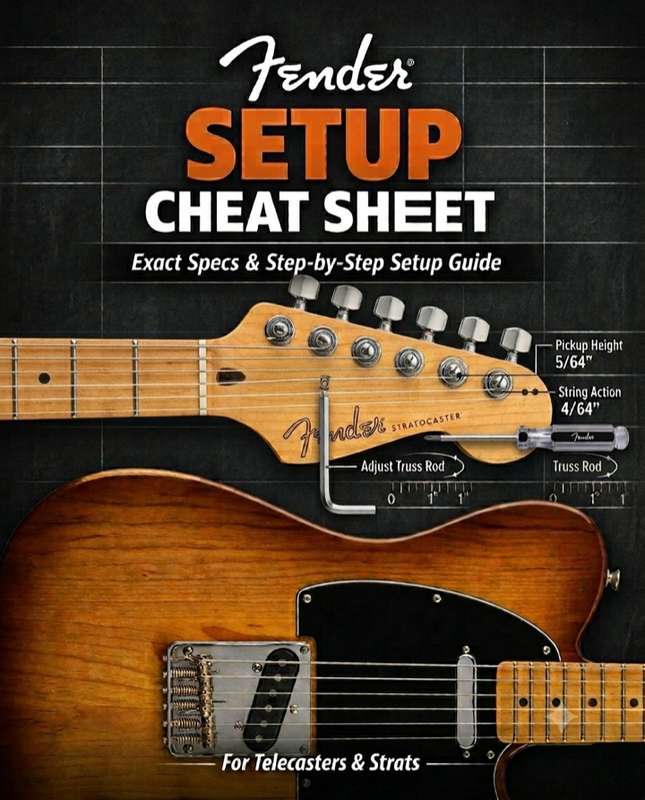
For blues playing, set your action slightly higher than rock specs — around 4/64" (1.6mm) on the treble side and 5/64" (2.0mm) on the bass side at the 17th fret. This gives bends more room before fretting out and adds sustain.
If you use a lot of vibrato, the extra action clearance prevents the note from choking when you push the string sideways. For full setup measurements, our Telecaster Setup Guide has the exact specs.

Country: Snap, Twang, and Chicken Pickin'
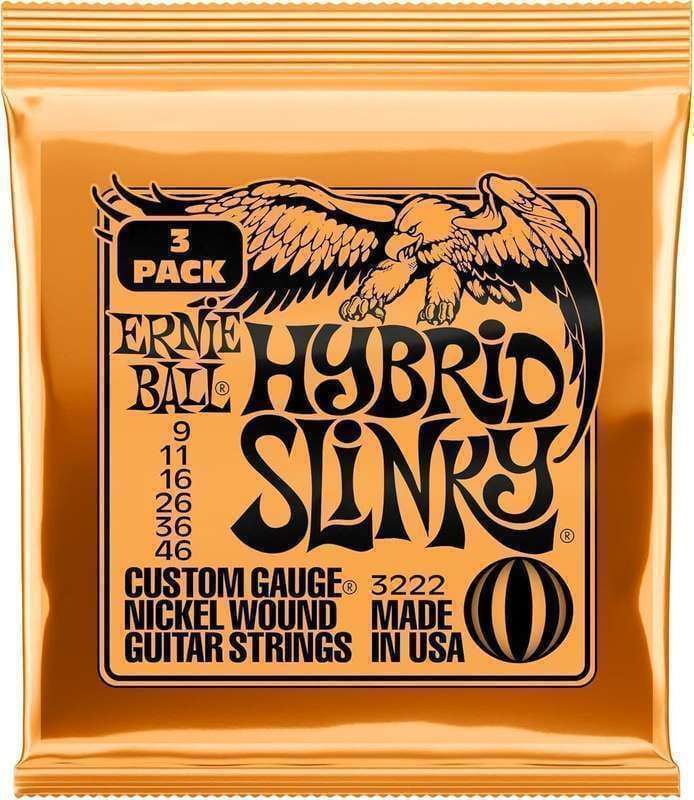
Recommended Gauge: .009-.042 (Light) or .009-.046 (Hybrid)
Country Telecaster playing is built on hybrid picking, fast runs, and that signature "snap" when you pull the string with your picking-hand fingers. Lighter gauges are essential here.
.009-.042 is the classic country gauge. Here's why:
- Light plain strings allow rapid-fire bends and double-stops
- Reduced tension makes hybrid picking (pick + fingers) effortless
- The "snap" of a light string plucked with a finger is louder and more percussive
- Faster vibrato with less effort
- Better for pedal-steel-style bends (bending two strings at different intervals)
.009-.046 (Hybrid) is a great compromise if you find .042 bass strings too floppy for rhythm playing. You keep the light tops for lead work while getting more definition from the wound strings.
Famous Country Telecaster Setups
James Burton — "The Pioneer"
- Gauge: .009-.042
- Tuning: Standard
- Why it worked: Burton's lightning-fast runs and signature "chicken pickin'" tone required the lightest possible strings. Less tension means less resistance, which means faster playing. His string choice became the template for country Telecaster tone.
Brad Paisley
- Gauge: .010-.046
- Tuning: Standard
- Why it worked: Paisley's playing balances country lead with rock-influenced rhythm. The .010 top gives him a slightly fuller tone than Burton's .009s while still allowing the bends his style demands.
Vince Gill
- Gauge: .010-.046
- Tuning: Standard
- Why it worked: Gill's cleaner, more articulate approach benefits from the extra mass of .010s. His bends are controlled and precise rather than wild, so the slightly higher tension doesn't hinder his technique.
Country Setup Tips
Country players typically run lower action than blues players — around 3/64" (1.2mm) treble and 4/64" (1.6mm) bass at the 17th fret. The lower action makes rapid-fire licks cleaner and reduces the force needed for each fretted note.
With .009s at low action, you may need slightly more neck relief (around .008"-.010") to avoid buzz on the middle frets during aggressive picking. Check our String Gauge Selection Guide for the full tension-to-relief relationship.
Rock: Power, Stability, and Crunch
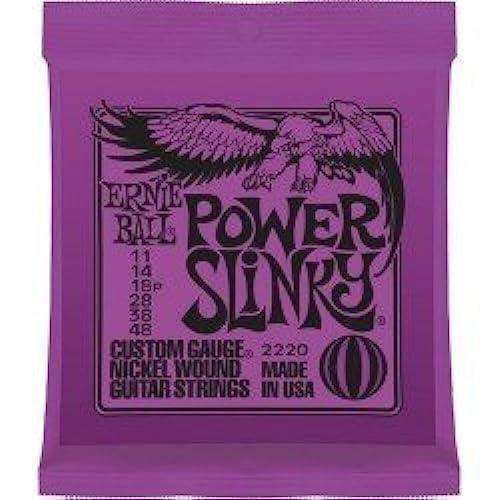
Recommended Gauge: .010-.046 (Regular) or .011-.048 (Power)
Rock Telecaster playing spans everything from clean arpeggios to high-gain rhythm. The gauge choice depends on whether you lean toward lead or rhythm.
.010-.046 is the rock all-rounder:
- Enough mass for full, distorted power chords
- Bends are still comfortable for solos
- Solid tuning stability during aggressive strumming
- The standard that most rock players settle on
.011-.048 suits players who prioritize chunky rhythm over lead bending:
- Thicker tone fills out a distorted mix
- Tighter string-to-string balance under heavy strumming
- Better suited for drop-D tuning (the .048 low E keeps tension when dropped)
- Bending is harder — you need strong hands and may limit bends to half-steps
Famous Rock Telecaster Setups
Keith Richards — "Human Riff"
- Gauge: .011-.048 (with a removed low E — 5-string Open G)
- Tuning: Open G (G-D-G-B-D)
- Why it worked: Richards' rhythm-heavy style doesn't require big bends. The heavier strings give him the thick, crunchy tone that defined the Rolling Stones' guitar sound. Open G tuning reduces tension, so .011s feel more like .010s.
Joe Strummer
- Gauge: .010-.046
- Tuning: Standard
- Why it worked: Strummer's aggressive downstroke rhythm playing needed durability and volume. Regular gauge strings could take the punishment of his relentless strumming attack.
Bruce Springsteen
- Gauge: .010-.046
- Tuning: Standard
- Why it worked: The Boss plays rhythm-driven rock with occasional lead fills. Regular gauge balances both needs — enough tone for open-chord rhythm and enough flexibility for melodic lines.
Rock Setup Tips
For rock playing, a medium action works best — 4/64" (1.6mm) treble and 4/64"-5/64" (1.6mm-2.0mm) bass at the 17th fret. This gives you clean chord definition without making single-note runs difficult.
If you use heavy distortion, slightly higher action prevents the string from buzzing against the frets and being amplified. Fret buzz that's inaudible clean becomes very noticeable through a cranked amp with gain.
Jazz: Warmth, Clarity, and Complex Voicings
Recommended Gauge: .011-.050 or .012-.052
Jazz Telecaster players need strings that produce a warm, round fundamental with clear note separation in complex chord voicings. Heavier gauges deliver this.
.011-.050 is the jazz starting point:
- Rich, warm fundamental with controlled brightness
- Clean note separation in extended chords (7ths, 9ths, 13ths)
- Excellent sustain for single-note melody lines
- Enough tension for precise fretting without bending notes sharp accidentally
.012-.052 is for the committed jazz player:
- Piano-like low end
- Maximum warmth and reduced brightness
- Superb sustain and volume acoustically (useful for practice without an amp)
- Very difficult to bend — but jazz rarely requires big bends
Famous Jazz Telecaster Setups
Ted Greene — "The Chord Master"
- Gauge: .013-.056
- Tuning: Standard
- Why it worked: Greene's chord-melody style demanded maximum string tension for clean voicing separation. With strings this heavy, each note in a complex chord rings clearly without adjacent strings bleeding into each other.
Julian Lage
- Gauge: .011-.050
- Tuning: Standard
- Why it worked: Lage's modern approach mixes jazz harmony with acoustic-influenced picking. The .011 gauge gives him warmth for jazz chords while staying flexible enough for his single-note improvisation.
Bill Frisell
- Gauge: .011-.049
- Tuning: Standard
- Why it worked: Frisell's spacious, atmospheric jazz needs strings that sustain cleanly through effects and volume swells. Medium-heavy strings provide the sustain and warmth his style requires.
Jazz Setup Tips
Jazz players often prefer higher action — 5/64" (2.0mm) treble and 6/64" (2.4mm) bass at the 17th fret. Higher action allows harder fretting for cleaner note articulation and eliminates any trace of fret buzz, which is unacceptable in a clean jazz context.
With .012s at higher action, your neck will need more relief (around .010"-.012") to prevent the strings from sitting too close to the middle frets. The Telecaster Setup Guide covers the exact relief-to-gauge relationship.
Metal and Hard Rock: Drop Tunings and High Tension
Recommended Gauge: .011-.054 or .012-.054 (for Drop C/D)
While the Telecaster isn't the first guitar that comes to mind for metal, it's increasingly popular in modern metal and hardcore. The key challenge is maintaining tension in drop and low tunings.
.011-.054 works for Drop D:
- The heavier low E (.054) stays tight when dropped a whole step
- Upper strings remain playable for leads
- The Telecaster's natural brightness cuts through a dense mix
.012-.054 or heavier works for Drop C and below:
- Maximum tension to prevent flubby low strings
- Clear note definition even through extreme distortion
- You will likely need a full setup and possibly wider nut slots
Setup Tips for Metal
Drop tunings require a complete setup re-dial. Lower tuning means lower tension, which means more neck relief, lower action, and re-intonated saddles. Don't just tune down and hope for the best — the geometry of the entire instrument changes.
For drop-D, increase your bass-side action by about 1/64" (0.4mm) compared to your standard tuning setup. For anything lower than Drop D, consult a tech or follow the step-by-step process in a comprehensive setup guide.
Ambient, Worship, and Clean Tones
Recommended Gauge: .010-.046 (Regular) or .011-.049
Clean Telecaster tones for ambient, worship, and atmospheric playing benefit from strings that sustain evenly and have a balanced frequency response.
.010-.046 works for most clean-focused players:
- Even string-to-string volume balance
- Clean bends for expressive swells
- Compatible with volume pedal and delay-heavy rigs
- Good sustain without excessive brightness
.011-.049 adds warmth and sustain:
- Fuller fundamental for fingerpicked arpeggios
- Less finger noise (critical for quiet, intimate passages)
- Better sustain for volume swells and pad-like textures
Setup Tips for Clean Playing
Clean tones expose every imperfection. Fret buzz, intonation drift, and uneven action become very obvious. Set your action to the standard Fender spec — 4/64" (1.6mm) treble and 5/64" (2.0mm) bass — and ensure your intonation is perfect using a strobe tuner. Any intonation error will be audible in clean chord voicings.
Quick Reference: Gauge by Genre
| Genre | Recommended Gauge | Tuning | Famous Players |
|---|---|---|---|
| Blues | .010-.046 | Standard | Albert Collins, Mike Stern |
| Country | .009-.042 | Standard | James Burton, Vince Gill |
| Rock | .010-.046 | Standard | Joe Strummer, Springsteen |
| Jazz | .011-.050+ | Standard | Julian Lage, Bill Frisell |
| Metal | .011-.054+ | Drop D/C | — |
| Ambient/Worship | .010-.046 | Standard | — |
What Happens When You Change Gauge
Switching from .009s to .011s (or vice versa) isn't just a matter of swapping strings. Here's the chain reaction:
- Neck relief changes — More tension bows the neck forward. Less tension lets it straighten. You'll need to adjust the truss rod.
- Action height changes — The string arc changes with different tension. Your action at the 12th and 17th frets will shift.
- Intonation shifts — Different gauge strings vibrate differently. Every saddle needs to be re-adjusted.
- Pickup height may need tweaking — Heavier strings have a stronger magnetic pull. Pickups set for .009s may be too close for .012s, causing a "warbling" tone.
This is why a gauge change is really a full setup change. You can do it yourself in about 30 minutes once you know the specs.
How to Choose: The Decision Framework
If you're still unsure, here's a simple decision tree:
Start with .010-.046. This is the default for a reason — it works for 80% of players across most genres.
Go lighter (.009s) if:
- You play country or need fast bending
- You have hand pain or are building finger strength
- You primarily play lead over rhythm
- You want a brighter, snappier tone
Go heavier (.011s+) if:
- You play jazz or need maximum warmth
- You use alternate/drop tunings regularly
- You primarily play rhythm over lead
- You want more sustain and volume
Try a hybrid set if:
- You switch between lead and rhythm constantly
- You want easy bends on top but tight bass strings
- You play genres that mix clean and dirty tones
Once you've decided on a gauge, head to our Best Strings for Telecaster buyer's guide to compare specific brands and products at your chosen gauge.
Frequently Asked Questions
Does string gauge actually change my Telecaster's tone?
Yes, significantly. Heavier strings produce a fuller fundamental with more bass and midrange. Lighter strings are brighter and thinner. On a Telecaster, this effect is amplified because the single-coil pickups are extremely sensitive to string vibration patterns. The same guitar can sound dramatically different with .009s vs .012s.
Can I switch gauges without adjusting my setup?
Going up or down by one gauge step (e.g., .009 to .010) usually requires minor adjustments — a slight truss rod tweak and intonation check. Jumping two or more steps (e.g., .009 to .012) will definitely require a full setup including neck relief, action, intonation, and possibly nut slot widening.
What gauge did the original Telecaster ship with?
Leo Fender shipped early 1950s Telecasters with heavy flatwound strings, approximately .012-.052. Roundwound strings didn't become common until the 1960s. Today's "standard" gauge of .009-.042 or .010-.046 would have been considered extremely light by 1950s standards.
Why do country players use lighter gauges than rock players?
Country playing relies heavily on bending, hybrid picking (using fingers to pluck strings), and rapid-fire runs. All of these techniques are easier with lower string tension. Country pickers also tend to use a cleaner tone where the brightness of light strings is an asset, not a liability.
Should I use the same gauge for open tunings?
Not necessarily. Open tunings (like Open G or DADGAD) change the tension on individual strings. Some strings go up in pitch (increasing tension) while others go down (decreasing tension). If you use open tunings regularly, experiment with custom gauge sets to balance tension across all strings.
What gauge is best for a Telecaster with a Bigsby?
For Bigsby-equipped Telecasters, .010-.046 is ideal. The Bigsby tremolo system needs enough string tension to return to pitch reliably after use. Too light (.009s) and the strings may not return to pitch consistently. Too heavy (.012s) and the Bigsby arm becomes stiff and impractical.
How often should I change strings if I switch genres?
If you're gigging in multiple genres with the same Telecaster, stick with one gauge that covers your needs (usually .010-.046) and adjust your technique rather than swapping strings. Changing gauge means re-setup every time, which isn't practical between gigs. For dedicated genre guitars, set each one up with its ideal gauge.
Do heavier gauge strings damage the guitar neck?
No. Fender necks are designed to handle gauges up to .013-.056 in standard tuning. The truss rod exists to counterbalance string tension. However, extremely heavy gauges (above .013) may require a truss rod adjustment and should be installed gradually — don't jump from .009s to .013s in one step.
Conclusion
The right string gauge for your Telecaster comes down to what you play and how you play it. Country pickers thrive on .009s, jazz players love .011s or .012s, and the vast majority of rock and blues players land on .010s.
Whatever gauge you choose, remember that changing gauge means changing your setup. The neck relief, action, intonation, and pickup height all need to be re-dialed for the new tension. It's not difficult — it takes about 30 minutes once you know the measurements — but skipping it means your guitar won't play or sound its best.
For the complete setup process with exact Fender specs, printable reference cards, and troubleshooting guides, check out the Fender Setup Guide.
Related guides:
- Best Strings for Telecaster — Buyer's Guide
- Telecaster String Gauge Selection Guide
- Ultimate Telecaster Setup Guide
- Telecaster Truss Rod Adjustment
- Complete Telecaster Resource Hub
- Factory Specs Lookup Tool — Find official Fender setup specs for your exact model