Welcome to your ultimate Jazz Bass resource hub. Whether you're dialing in dual-pickup heights for the first time or fine-tuning a vintage Marcus Miller-era model, you'll find everything you need right here.
Quick Navigation
🔧 Setup & Maintenance
- My Gear Garage - Track your collection and maintenance schedule
- Fender Serial Number Lookup - Decode your serial number to find production year and origin
- Factory Specs Lookup Tool - Find official factory setup specs for your J-Bass
- Ultimate Jazz Bass Setup Guide - Complete step-by-step J-Bass setup with dual pickup balancing, action height, neck relief, and intonation
- Jazz Bass Pickup Height and Balance - Measure both pickups and troubleshoot uneven string volume
- Coming Soon: Jazz Bass truss rod adjustment guide
- Coming Soon: Jazz Bass bridge setup and intonation guide
🎸 Strings & Upgrades
- String Gauge Recommendation Tool - Get personalised gauge picks for your Jazz Bass, playing style, and tuning
- Coming Soon: Jazz Bass string gauge selection guide
- Coming Soon: Popular J-Bass mods and upgrades
🛒 Buying & Comparisons
- Coming Soon: Complete Jazz Bass buying guide
- Coming Soon: Jazz Bass vs Precision Bass comparison
Featured Jazz Bass Guitars
Fender Jazz Bass
Bundle includes: Strap, cleaning kit, instructional video
Fender Precision Bass
Bundle includes: Strap, cleaning kit, instructional video
What Makes a Jazz Bass Special?
The Fender Jazz Bass, introduced in 1962, was built to give bassists a wider tonal palette than the Precision Bass. Its dual single-coil pickup design and slim 1.5-inch neck width make it the most versatile electric bass ever made — from smooth jazz to aggressive punk, from Jaco Pastorius to Marcus Miller.
Key Features:
- Dual single-coil pickups — Two independent pickups with individual height adjustment for a vast tonal range
- Slim 1.5-inch nut width — Narrower than P-Bass, ideal for smaller hands and faster playing
- 34-inch scale length — Standard scale with slightly tighter string spacing
- Volume-Volume-Tone layout — Simple wiring, maximum tonal flexibility
- Wider headstock — Distinctive silhouette, string trees often needed on vintage models
Jazz Bass Setup Specifications
The Jazz Bass requires slightly different setup approach than the P-Bass — particularly the dual pickup balancing:
Standard Jazz Bass Measurements
- String Height (12th fret): G: 2.0mm (5/64"), D: 2.1–2.2mm, A: 2.3–2.4mm, E: 2.4–2.7mm
- Pickup Height: Each pickup adjustable independently — typically 1.5–2.5mm from strings
- Neck Relief: 0.012" (0.30mm) at 8th fret for a 9.5-inch-radius neck (Fender's bass chart; 0.014" is the 7.25-inch vintage-radius row)
- Nut Width: 1.5" (38.1mm) — narrower than P-Bass
Essential Setup Tools for Jazz Bass
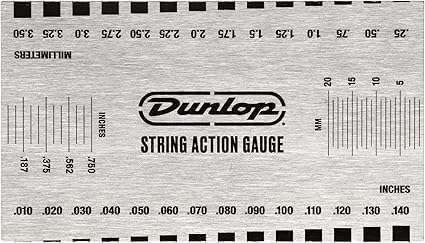
- String height gauge or precision ruler
- Feeler gauges for neck relief measurement
- Small Allen keys for saddle adjustment
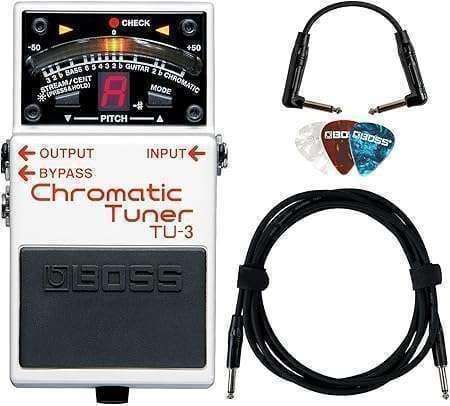
- Digital tuner for intonation setup
- Screwdriver for pickup height adjustment
- Truss rod wrench for neck relief
 Buy on Amazon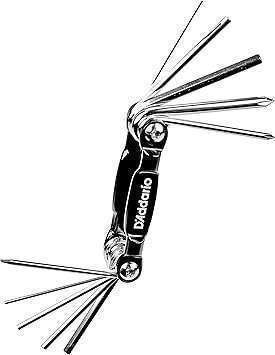

Jazz Bass Setup Process Overview
- Truss Rod - Set proper neck relief first — J-Bass necks can be more prone to back-bow
- String Height - Adjust bridge saddles, matching string arc to 9.5" fingerboard radius
- Pickup Height - Balance neck and bridge pickups independently for your preferred tone
- Intonation - Fine-tune saddle positions for accurate pitch across all frets
- Final Check - Test playability and tone across the entire neck
Jazz Bass Tone Characteristics
The Jazz Bass has a fundamentally different tonal character than the P-Bass — brighter, more articulate, with more top-end shimmer:
Dual-Coil Pickup Design
- Neck pickup: warm, full, slightly scooped mids — classic Jaco Pastorius warmth
- Bridge pickup: aggressive, punchy, defined — Marcus Miller growl
- Both together: the famous "J-Bass quack" when one pickup is rolled back
- Independent height adjustment lets you tune the balance precisely
Tone Wood Influence
- Alder body provides balanced tone with pronounced highs and mids
- Maple neck adds brightness and note attack
- Rosewood fretboard contributes warmth to the overall sound
- Vintage models often feature ash or alder bodies with unique tonal characteristics
Playing Style Impact
- Fingerstyle playing emphasises the natural warmth and articulation of each note
- Slap technique brings out the aggressive bridge pickup bite and percussive pop
- Pick playing provides sharp attack and defined note separation
- Both pickups full: full-range, modern bass sound with excellent note clarity
Popular Jazz Bass Topics
Setup & Maintenance
The Jazz Bass's dual-pickup design requires a more nuanced setup approach than single-pickup basses. Our setup guides cover everything from basic string height adjustment to precise pickup balancing for different playing styles. We provide detailed specifications for neck relief, string height, independent pickup positioning, and intonation.
Pickup Configuration
The J-Bass's two single-coil pickups offer a wide tonal range depending on height and balance. Our guides explain how to set pickup heights for different styles — from fingerstyle warmth to slap aggression — and how to diagnose and fix common pickup-related issues.
String Selection
Jazz Bass string spacing is tighter than P-Bass, which affects string gauge choices. From flatwounds for smooth jazz to precision-wound rounds for modern styles, we help you find the perfect string choice for your playing and tonal goals.
Common Jazz Bass Issues and Solutions
Fret Buzz and String Height
The tighter string spacing on a Jazz Bass makes fret buzz more audible. Our guides provide detailed procedures for measuring and adjusting string height to eliminate buzz while maintaining low action.
Intonation Problems
Jazz Bass intonation can be tricky due to the longer bridge string spacing. We provide step-by-step intonation procedures specifically optimised for J-Bass bridge geometry.
Tone and Pickup Issues
Loss of "J-Bass quack" or muddy tone from both pickups usually means pickup height imbalance. Our guides explain proper pickup balancing for both pickups full, neck only, and bridge only configurations.
Neck Relief and Truss Rod Adjustment
Jazz Bass necks are slightly more prone to back-bow than P-Bass due to the narrower nut width. We provide safe truss rod adjustment techniques with precise measurements for maintaining proper neck geometry.
Recording with a Jazz Bass
The Jazz Bass is the second most recorded bass in history — its tonal flexibility makes it the go-to for producers who need one bass to cover multiple roles.
The Modern Standard
Modern mix engineers often prefer Jazz Bass for its natural note clarity and midrange definition. The slimmer neck also makes it easier for bassists who switch between guitar and bass to maintain technique.
Pickup Blending
The dual-volume control setup gives you access to three distinct tones: neck only, bridge only, or both together. For recording, try blending 60% neck / 40% bridge for a modern, full-frequency bass sound with excellent note definition.
Direct vs Amp
Jazz Bass pairs well with both amp and direct signals. Going DI, try a subtle high-pass filter at 40Hz to clean up sub-bass rumble, and a touch of compression to even out the attack characteristics.
Other Bass Guitar Hubs
🎸 Explore Both Fender Basses
- Bass Guitar Hub — Both Precision Bass and Jazz Bass — compare and choose the right one for you
- Precision Bass Hub — Complete P-Bass resource with setup guides and string recommendations
- Telecaster Hub - Complete Telecaster resource with setup guides, wiring diagrams, and string recommendations
- Stratocaster Hub - Complete Stratocaster resource with setup guides, tremolo tips, and string recommendations
- Jaguar Hub - Offset guitar setup guides, tremolo configuration, and string gauge selection
- Jazzmaster Hub - Jazzmaster-specific setup techniques and bridge solutions
Explore our comprehensive Jazz Bass guides and get the most out of your J-Bass.