Jazz Bass Setup Guide: Exact Specs & Steps
Complete Fender Jazz Bass setup guide with exact J-Bass specs for string height, dual pickup height, neck relief, and intonation. Balance neck and bridge pickups for that classic Jazz Bass growl. Step-by-step with measurements.
The Ultimate Fender Jazz Bass Setup Guide: String Height, Pickup Height & Intonation Tips
A proper jazz bass setup transforms your J-Bass from a frustrating fight into a precise instrument that responds to every nuance. The Fender Jazz Bass stands apart from its sibling, the Precision Bass, with dual single-coil pickups, a slim 1.5-inch nut width, and a volume-volume-tone control layout that unlocks an enormous range of sounds. These differences mean that a Jazz Bass demands its own setup approach — especially when it comes to balancing two independently adjustable pickups.
This guide walks you through a complete, practical J-Bass setup: string height (action), dual pickup height and balancing, truss rod relief, intonation, and more. Whether you're chasing the growling bridge tone of Marcus Miller, the singing midrange of Jaco Pastorius, or a warm studio-ready neck pickup sound, these specs and steps will get you there.
🎸 Own a Jazz Bass? Use Factory Specs Lookup to verify specs, decode your serial, or add to My Garage to track setup history.
📊 Quick Tools: Factory Specs • Serial Number Lookup • My Garage
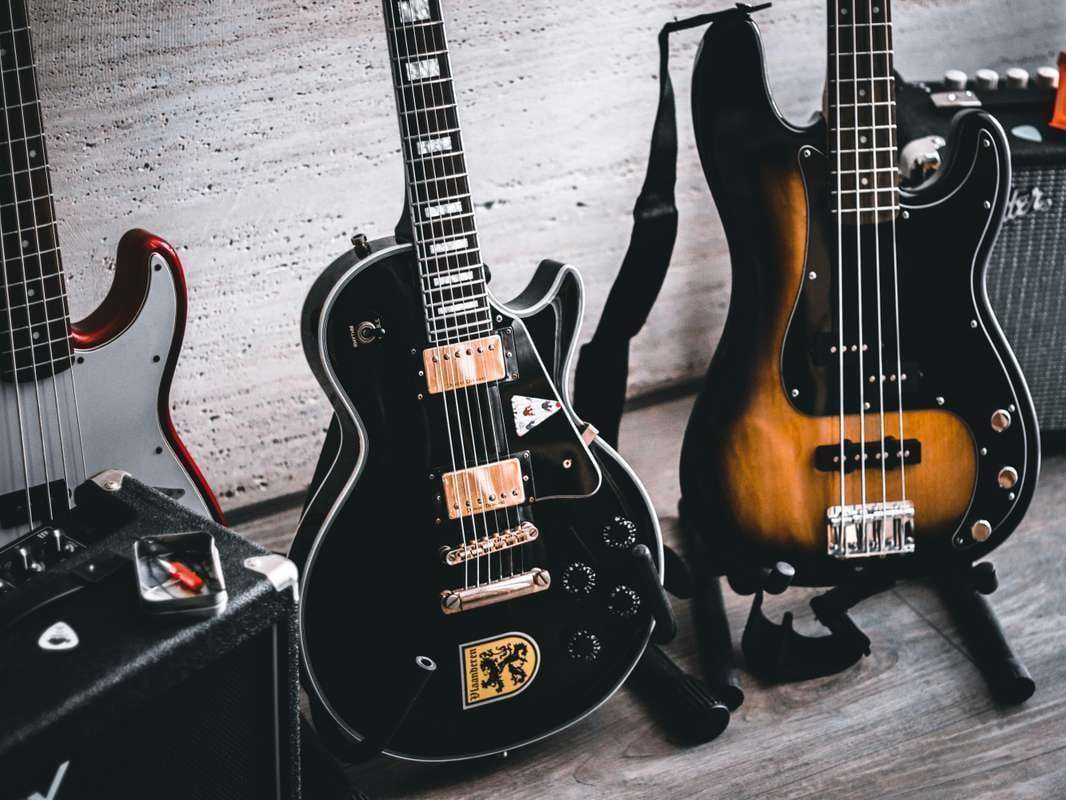
 Photo by Brooke Balentine on Unsplash
Part 1: Understanding Jazz Bass String Height (Action)
Action is central to both tone and feel. Jazz Bass string heights use the same starting points as other 34-inch scale Fender basses — measured at the 12th fret with the neck properly adjusted.
Quick Answer: Jazz Bass string height ranges from 2.0mm (G string) to 2.4–2.7mm (E string) at the 12th fret. The narrower 1.5-inch nut width means string spacing feels tighter than a P-Bass, so small action changes are more noticeable.
| String | Standard Height |
|---|---|
| G string | 2.0 mm (5/64") |
| D string | 2.1–2.2 mm (~5/64–3/32") |
| A string | 2.3–2.4 mm (3/32") |
| E string | 2.4–2.7 mm (6/64–7/64") |
The Jazz Bass's narrower neck makes technique-specific adjustments more important. Slap players need enough clearance for the thumb to strike cleanly without strings colliding on the tighter spacing. Fingerstyle players can often go lower than P-Bass owners because the slim neck profile encourages a lighter touch.
Part 2: Adjusting String Height on a Jazz Bass
Jazz Bass bridges use individual saddles with two height screws per string — the same fundamental design as the P-Bass. Your goal is even feel and a radius that follows the fretboard.
- Detune slightly to reduce tension.
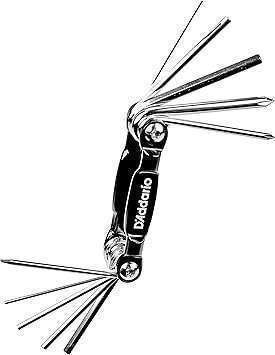
- Raise or lower each saddle with a small Allen key or a D'Addario Multi-Tool.
- Match the string arc to the fingerboard radius (9.5 inches on modern Fender Jazz Basses; vintage models may be 7.25 inches).
- Retune and re-measure at the 12th fret.
- Play across the entire neck. If you hear clank or localized buzz, increase that string's saddle slightly and recheck.
Tip: Establish clear "witness points" by gently pressing each string down right at the nut and saddle after tuning. This improves intonation accuracy and reduces random buzz — especially important on the Jazz Bass where the narrower string spacing makes buzz more audible.
For the bridge-saddle sequence and a repeatable measurement, set Jazz Bass string height at the bridge before balancing the pickups.
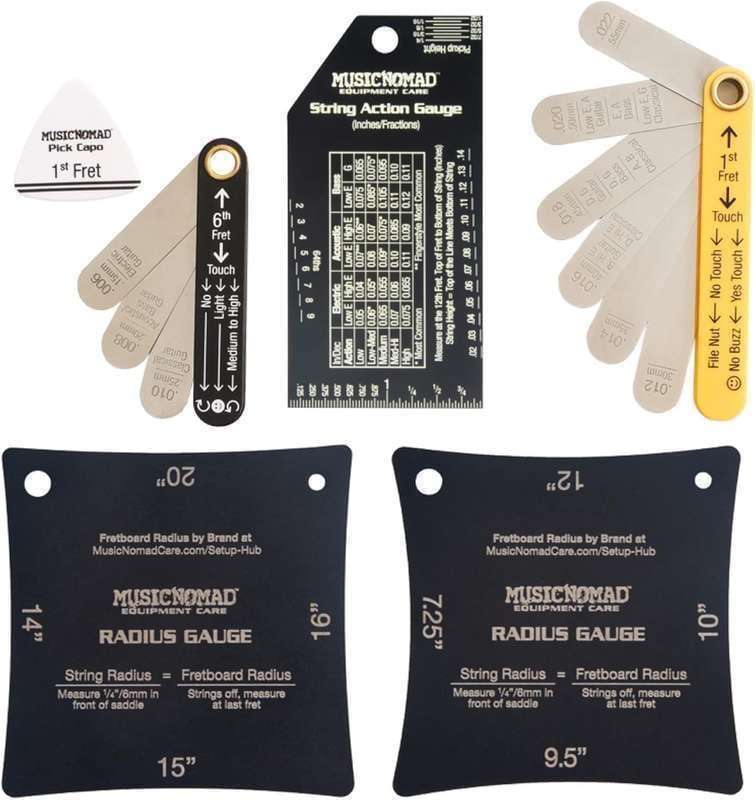
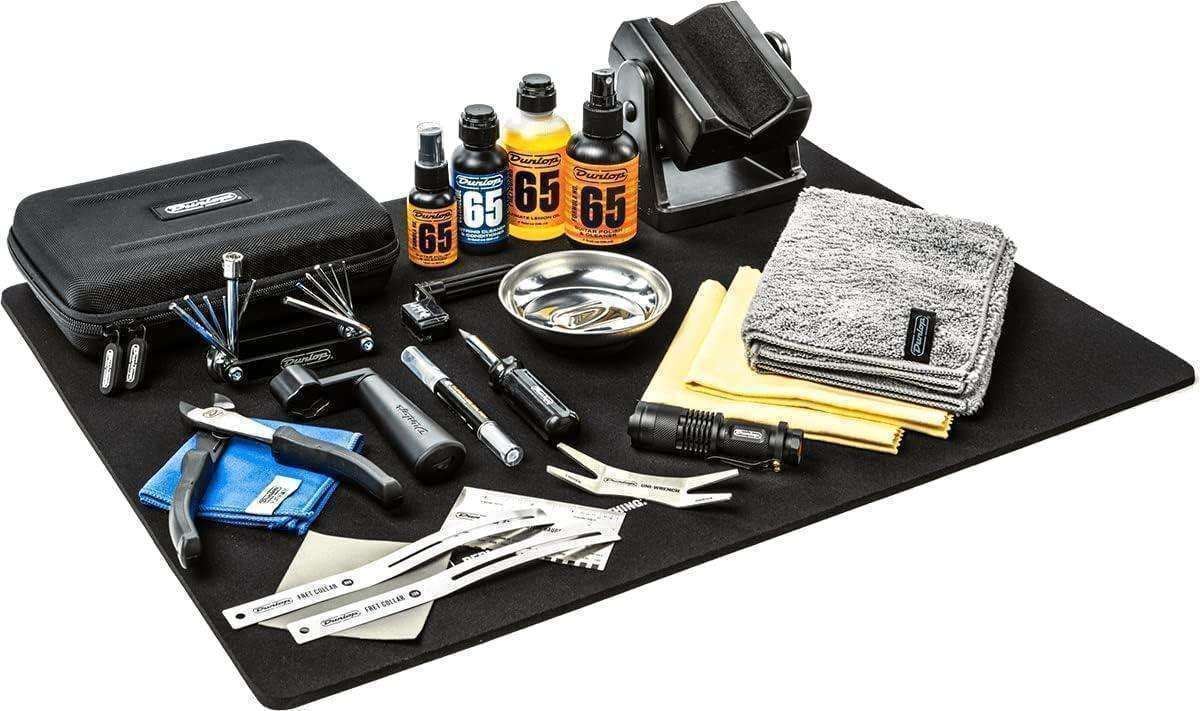
Essential Bass Setup Tools
 Buy on Amazon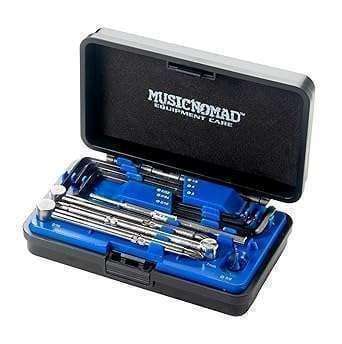
Part 3: Jazz Bass Pickup Height — The Key Differentiator
For pickup-type starting measurements and a repeatable listening test, see Jazz Bass pickup height and balance. The neck/bridge values below are a suggested balance to try, not universal factory specifications.
This is where the Jazz Bass setup fundamentally differs from a Precision Bass. Instead of one split-coil pickup, you have two independently adjustable single-coil pickups — a neck pickup and a bridge pickup — each with its own volume control. Getting the balance right between them is the single most important part of a Jazz Bass setup.
Measure with the last fret pressed, from the bottom of the string to the top of the pole piece:
| Pickup | Bass Side (E/A) | Treble Side (D/G) |
|---|---|---|
| Bridge | 2.4 mm (3/32", 6/64) | 2.0 mm (5/64") |
| Neck | 2.8 mm (7/64") | 2.4 mm (3/32", 6/64) |
Why the Neck Pickup Sits Lower
The neck position inherently produces more output because strings vibrate with a wider arc there. If both pickups sat at the same height, the neck pickup would overpower the bridge. Setting the neck pickup lower (2.8mm vs 2.4mm on the bass side) creates even perceived volume between the two.
Single-coil pickups also exert magnetic pull on the strings. If a pickup sits too close, the magnets will literally pull the string out of its natural vibration path, causing warbling, intonation problems, and uneven sustain. The Jazz Bass's single-coil design makes this more noticeable than a P-Bass split-coil.
Balancing Both Pickups
This is the step that makes or breaks a Jazz Bass setup:
- Solo the bridge pickup — turn the neck volume to zero. Set bridge pickup to spec (2.4mm bass / 2.0mm treble). Listen for clarity, growl, and articulation.
- Solo the neck pickup — turn the bridge volume to zero. Set neck pickup to spec (2.8mm bass / 2.4mm treble). Listen for warmth and fullness without muddiness.
- Blend both pickups at equal volume — this is the signature Jazz Bass sound. Listen for the characteristic scooped-mid tone with clear note separation.
- Fine-tune in 1/4-turn increments — adjust one pickup at a time until both solo tones are strong and the blended tone is balanced.
- Play through an amp at performance volume — pickup balance issues often only reveal themselves at real volume levels.
Tone Blending — The Jazz Bass Advantage
The volume-volume-tone control layout gives you a continuous range of sounds that no P-Bass can match:
- Both pickups full: The classic scooped-mid J-Bass tone — punchy, articulate, and instantly recognizable. This is the Jaco sound.
- Bridge solo: Aggressive growl and biting articulation. Marcus Miller territory. Great for slap and cutting through a loud mix.
- Neck solo: Deep warmth and round fundamentals. The session player's secret weapon for ballads and R&B.
- Slight roll-off of one pickup: Creates intermediate voices — rolling the neck back 10-20% from full adds definition without losing warmth.
Part 4: Neck Relief (Truss Rod) for Jazz Bass
Relief is the slight forward bow that gives strings room to vibrate. Too little relief causes widespread buzz; too much makes the action feel high.
- Target Relief: 0.30 mm (0.012 inches) at the 7th–8th fret for a 9.5-inch-radius neck — Fender's bass setup chart reserves 0.014 inches for the 7.25-inch vintage-radius row
- How to Measure: Capo at the 1st fret, fret the last fret with your picking hand, measure the gap at the 7th–8th fret with feeler gauges
The Jazz Bass neck is thinner front-to-back and narrower side-to-side than a P-Bass neck. This means it can respond to truss rod changes slightly faster — be conservative with adjustments.
Adjustment guidelines:
- Clockwise tightens the rod (reduces relief); counterclockwise loosens (adds relief).
- Move in small increments — no more than 1/8 turn — then let the neck settle. Use a well-fitting tool such as the MusicNomad Truss Rod Wrench Set to avoid stripping the nut.
- Re-measure and play-test before making further changes.
For a complete deep-dive into truss rod adjustment including seasonal changes and emergency procedures, see our Truss Rod Adjustment Guide.
Part 5: Jazz Bass Intonation Guide
Accurate intonation ensures your Jazz Bass plays in tune across the entire neck.
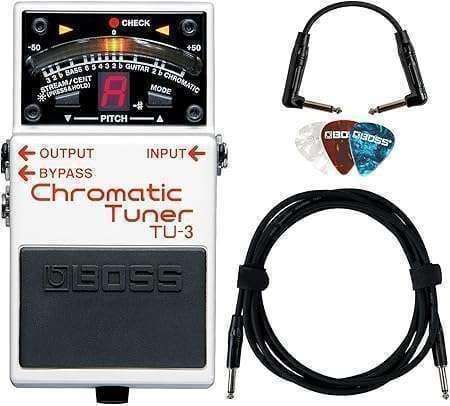
- Tune open strings precisely using a high-quality tuner like the Boss TU-3 Chromatic Tuner.
- Compare the 12th fret fretted note to the open string.
- If the 12th fret note is sharp, move the saddle back (lengthen the string). If flat, move it forward.
- Retune and recheck after each micro-adjustment.
- Repeat for all strings. Establish witness points again if results seem inconsistent.
Important for Jazz Bass: Check intonation with both pickups active (the way most players perform). Single-coil magnetic pull can subtly affect pitch perception, so checking with your normal pickup blend gives you the most accurate real-world result.
Common intonation issues on Jazz Bass:
- Not setting witness points after retuning
- Old or corroded strings (intonation drifts as strings wear)
- Checking intonation with one pickup soloed but playing with both active
Part 6: Nut Height, String Gauge, and the Narrow Jazz Bass Neck
The Jazz Bass nut width is 1.5 inches (38mm), significantly narrower than the P-Bass at 1.625 inches (41.3mm). This tighter string spacing has real implications for setup.
Nut slot depth should be 0.020–0.024 inches. If open strings buzz but fretted notes are clean, the nut slots may be too low. If the first frets feel stiff but action is fine higher up, the nut may be too high.
String Gauge Recommendations
String gauge affects feel more dramatically on a Jazz Bass because of the narrower spacing:
- Light (.040–.100): Easiest playability on the slim neck, brighter tone, ideal for fingerstyle and lighter touch
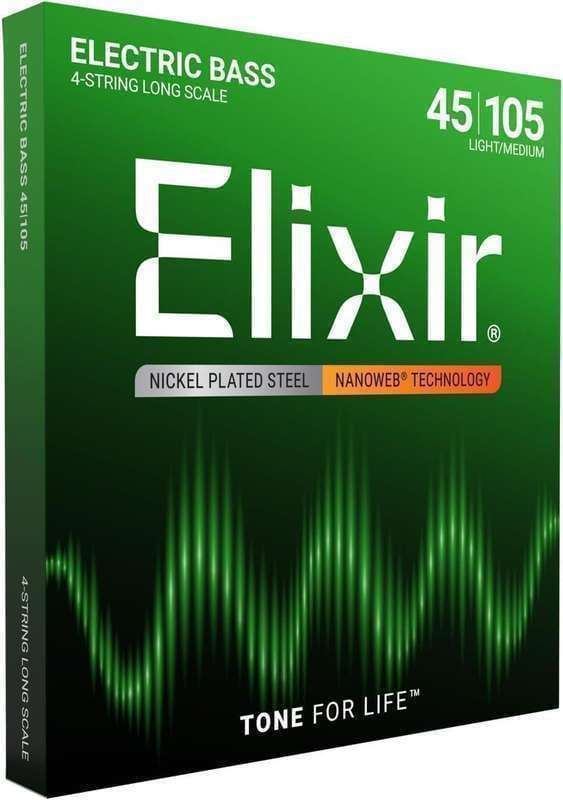
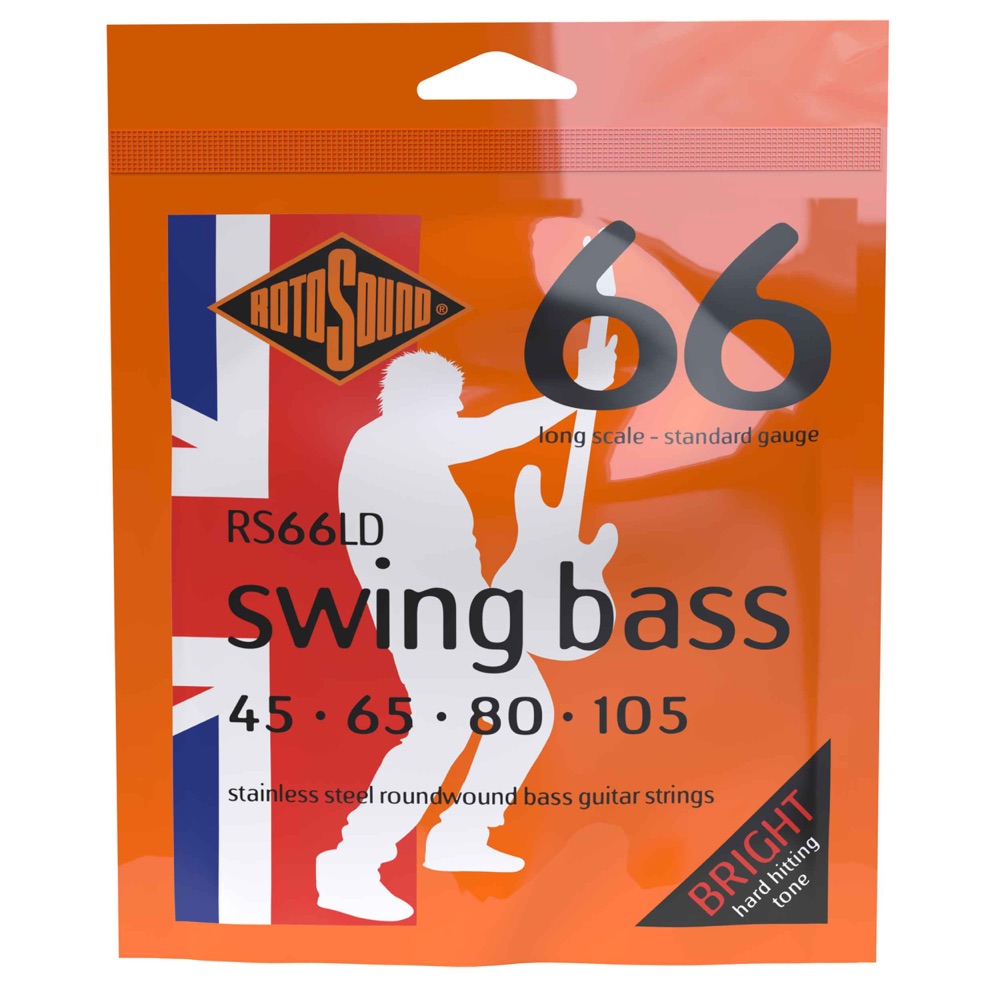
- Standard (.045–.105): Recommended starting point — balanced tension and tone
- Medium (.050–.110): More tension and fuller tone, but the tighter string spacing on a J-Bass makes heavier gauges feel even heavier than on a P-Bass
After any gauge change, re-adjust relief, action, and pickup height. Heavier strings need more relief; lighter strings need less.
For bass string recommendations including roundwound vs flatwound comparisons, see our Best Strings for Precision Bass Guide — the same strings work beautifully on a Jazz Bass.
Part 7: Jazz Bass Bridge Setup
The standard Jazz Bass uses a 4-saddle Fender bridge, identical in design to the P-Bass bridge.
- Set overall action with saddle heights using the specs from Part 1.
- Match the string radius to the 9.5-inch fretboard (vintage models: 7.25 inches).
- Intonate in the familiar stair-step pattern — E saddle furthest back, G shortest, with A and D in between.
- Ensure saddle screws don't protrude uncomfortably under your picking hand.
- Verify the ground connection and clean all contact points.
Vintage-style Jazz Basses often use threaded barrel saddles, while modern models use bent-plate saddles. Both work well when properly set up. Aftermarket high-mass bridges are a popular upgrade for increased sustain, but a stock bridge in good condition sets up beautifully.
Part 8: Comprehensive Jazz Bass Setup Checklist
Pre-Setup
- Clean instrument and hardware
- Install fresh strings
- Gather tools and a flat workspace
Neck
- Measure relief (target 0.30 mm / 0.012")
- Adjust truss rod in 1/8 turns, allow to settle
Action
- Set saddle heights to starting specs (G: 2.0mm to E: 2.4mm)
- Match fingerboard radius (9.5")
- Eliminate localized buzz by micro-raising individual saddles
Pickups
- Set bridge pickup height (bass: 2.4mm, treble: 2.0mm)
- Set neck pickup height (bass: 2.8mm, treble: 2.4mm)
- Solo each pickup and check output
- Blend both pickups and verify balanced volume
Intonation
- Tune precisely
- Set each saddle and retune between moves
- Recheck after final witness points
- Verify with both pickups active
Part 9: Troubleshooting Common Jazz Bass Issues
- Single-coil hum when soloing one pickup: This is normal. Jazz Bass single-coils hum when used alone — with both pickups at equal volume, the hum cancels out (they act as a humbucker). If hum is excessive even with both pickups active, check your grounding and shielding.
- Uneven volume between pickups: Re-measure pickup heights and rebalance. If one pickup consistently sounds weaker, check magnet strength and pole piece condition.
- Dead spots (typically 5th–7th fret on G string): More prominent on Jazz Bass than P-Bass due to the lighter headstock mass. Slight relief tweaks, different string brands, or a headstock fatfinger device can help.
- Excessive clank when slapping: Raise action slightly on E and A strings, add a touch more relief, and check that pickup height isn't too close (magnetic pull makes slap clank worse).
- Fret buzz in specific positions: Micro-raise that string's saddle. If it persists across multiple frets, add relief. If isolated to one or two frets, you may need fretwork.
Part 10: Advanced Setup and Genre-Specific Jazz Bass Tweaks
The Jazz Bass's dual-pickup design makes it uniquely adaptable to different genres. Here are starting points beyond the standard specs:
- Funk/Slap (Marcus Miller style): Favor the bridge pickup. Lower action (G: 1.8mm, E: 2.2mm) with standard relief. Roundwounds are essential. Raise the bridge pickup slightly for more aggressive bite.
- Jazz/Fusion (Jaco Pastorius style): Both pickups full and equal. Medium-low action with precise intonation. Roundwounds on a fretless (or fretted with very low action). This setup demands perfect pickup balance.
- R&B/Neo-Soul: Favor the neck pickup with bridge rolled back 20-30%. Flatwounds for warmth. Slightly higher action (add 0.2mm to all strings) for sustain and a rounder fundamental.
- Rock/Indie: Both pickups on with slight bridge emphasis. Medium action, roundwounds. Focus on even dynamics across all strings.
- Studio/Session: Lowest possible action without buzz. Pristine intonation is non-negotiable. Balanced pickups. Fresh roundwounds or half-rounds for tonal versatility.
Jazz Bass Maintenance and Care
- Change strings regularly based on use and sweat chemistry; wipe down after playing.
- Keep the fretboard conditioned as appropriate for the wood type.
- Periodically check relief and action as seasons change — the slimmer Jazz Bass neck can be more sensitive to humidity shifts.
- Clean pots and jack with contact cleaner if scratchy — the Jazz Bass has three pots (two volume, one tone) that all need attention.
Conclusion
A thoughtful Jazz Bass setup unlocks the full potential of this incredibly versatile instrument. The dual single-coil pickups are your biggest advantage and your biggest setup challenge — get the balance right between neck and bridge, and the entire tonal palette opens up. Combined with proper relief, sensible action, and precise intonation, your Jazz Bass will deliver everything from deep warmth to cutting growl.
Explore our detailed bass guides:
- Precision Bass Setup Guide — Complete P-Bass setup with split-coil specs
- Precision Bass Pickup Height Guide — Deep-dive into pickup adjustment
- Best Strings for Precision Bass — String recommendations for all styles (works for J-Bass too)
- Precision Bass Hub — All P-Bass resources
Bass Strings and Care Gear

Wondering what your bass is worth? Try our Guitar Price Estimate.
For more setup guides, check out our Stratocaster Setup Guide and Telecaster Setup Guide.
Frequently Asked Questions (FAQ)
1. What is the correct string height for a Jazz Bass?
Answer: Start around 2.0mm on the G string up to 2.4–2.7mm on the E string at the 12th fret. The Jazz Bass shares the same 34-inch scale as the P-Bass, so action specs are similar. Adjust for your technique — slap players may want slightly higher action due to the narrower string spacing.
2. How high should Jazz Bass pickups be?
Answer: With the last fret pressed, set the bridge pickup to 2.4mm (bass side) and 2.0mm (treble side). Set the neck pickup to 2.8mm (bass side) and 2.4mm (treble side). The neck sits lower to prevent it from overpowering the bridge pickup.
3. Why does my Jazz Bass hum when I solo one pickup?
Answer: Jazz Bass single-coil pickups hum naturally when used alone — this is inherent to single-coil design. With both pickups at equal volume, the hum cancels out because the two pickups act as a humbucker. If hum persists with both pickups active, check your grounding and cavity shielding.
4. What is the difference between Jazz Bass and Precision Bass setup?
Answer: The biggest difference is pickup configuration. The Jazz Bass has two independently adjustable single-coil pickups (neck and bridge) that need to be balanced against each other, while the P-Bass has one split-coil. The Jazz Bass also has a narrower 1.5-inch nut (vs 1.625-inch on P-Bass), which affects string spacing and perceived playability. Action and relief specs are very similar.
5. What relief should I set on a Jazz Bass?
Answer: Target 0.30mm (0.012 inches) at the 7th–8th fret for a 9.5-inch-radius neck, per Fender's bass setup chart (0.014 inches is the 7.25-inch vintage-radius row). The Jazz Bass neck is thinner and narrower than a P-Bass neck, so it may respond to truss rod changes faster. Always adjust in 1/8-turn increments and let the neck settle between changes.
6. How do I balance Jazz Bass pickups?
Answer: Set both pickups to factory spec first (bridge: 2.4mm bass / 2.0mm treble; neck: 2.8mm bass / 2.4mm treble). Solo each pickup to verify tone, then blend both at equal volume. Fine-tune in 1/4-turn increments until the blended tone has even output with clear note separation. Always test through an amp at performance volume.
7. Which strings work best for a Jazz Bass?
Answer: Standard .045–.105 roundwounds are the most versatile starting point. Roundwounds emphasize the Jazz Bass's natural brightness and growl. Flatwounds deliver vintage warmth and work particularly well with the neck pickup. Lighter gauges (.040–.100) feel easier on the narrow neck; heavier gauges (.050–.110) feel tighter than on a P-Bass due to the narrower string spacing.
8. Can I use the same setup specs for a Squier Jazz Bass?
Answer: Yes. Squier Jazz Basses share the same 34-inch scale, 9.5-inch fretboard radius, and pickup configuration as Fender Jazz Basses. The same action, pickup height, and relief specs apply. Squier models may benefit from upgrading the nut material and bridge saddles for improved tuning stability.
9. How do I set Jazz Bass intonation?
Answer: Tune each open string precisely, then compare the 12th fret fretted note to the open string. If sharp, move the saddle back (lengthening the string). If flat, move it forward. Retune and recheck after each adjustment. Check intonation with both pickups active for the most accurate real-world result.
10. Why do my Jazz Bass strings feel tighter than my P-Bass?
Answer: The Jazz Bass has a narrower 1.5-inch nut width compared to the P-Bass's 1.625-inch nut. This means string spacing is closer together, which can make the same string gauge feel tighter and less forgiving. If you find the tension uncomfortable, try dropping one gauge lighter than you'd use on a P-Bass — for example, .040–.100 instead of .045–.105.
🛠️ Done with this setup? Log the spec — action, relief, strings — in My Gear Garage so you remember exactly what you did in six months. Free, no password — magic-link sign-in.