Fender Bass Setup: The Complete Guide (Precision & Jazz Bass Specs)
Master your fender bass setup with exact factory specs for Precision and Jazz Bass. Learn string height, pickup height, neck relief, and intonation step-by-step.
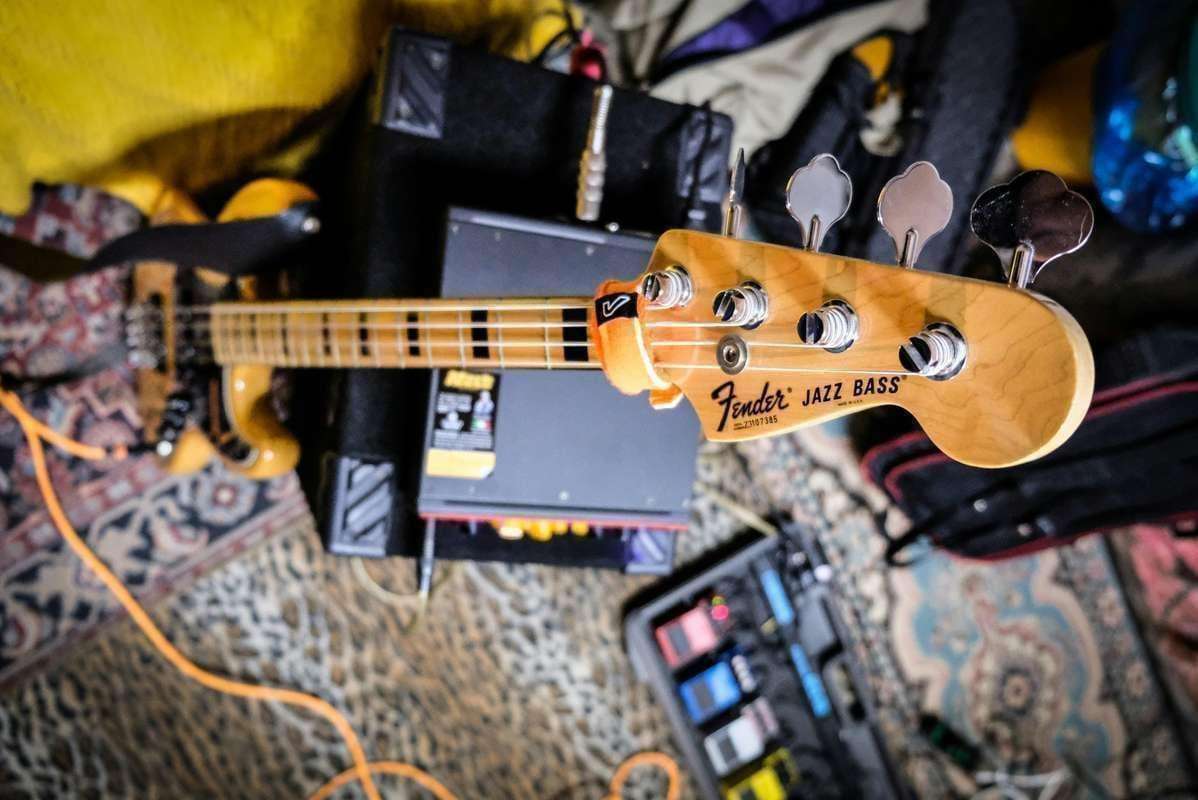
If you own both a Precision Bass and a Jazz Bass, you've probably noticed something frustrating. You grab your P-Bass and it feels perfect. Then you switch to your Jazz Bass and everything feels slightly off. The string spacing is different. The neck sits differently in your hand. Even the pickup response changes how you attack the strings.
A proper fender bass setup isn't just about getting one instrument right. It's about understanding how Fender's two iconic bass designs differ mechanically, and how to dial in both so they feel like they came from the same workshop. Whether you play one bass or both, this unified guide gives you a single reference for factory-correct specs, a shared workflow, and the subtle pitfalls that trip players up when they switch between models.
In this guide, we'll cover a side-by-side comparison of Precision and Jazz Bass setups, a single tool kit that works for both, a six-step process you can repeat on either instrument, and the common mistakes players make when moving from one bass to the other. If you own a Squier bass instead of a Fender, our Squier Bass Setup Guide has the beginner-specific specs and cheaper-hardware tips you need.
 Buy on Amazon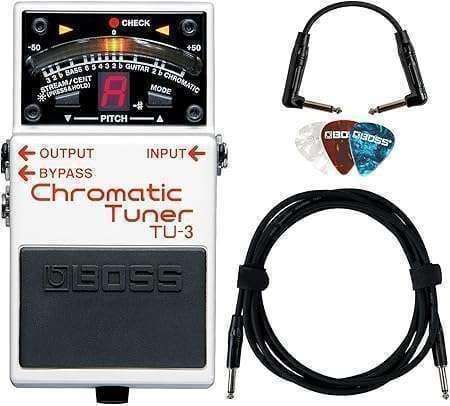
The Unified Setup Philosophy
Precision Bass and Jazz Bass setups share the same DNA. Both use a 34-inch scale length. Both mount hardware on similar bridges. Both rely on the same truss rod system hidden inside the neck. If you learn the fundamentals once, you can apply them to either instrument.
But the differences matter more than most players realize. The Precision Bass has a thicker neck profile and a single split-coil pickup that demands a slightly heavier touch. The Jazz Bass has a slimmer neck, narrower nut, and dual single-coil pickups that require balancing two independent sound sources. These differences affect everything from your action preferences to your pickup height targets.
The key insight is this: you don't need two completely different workflows. You need one workflow with two sets of numbers. The process is identical. The specs are different. Once you internalize that distinction, setting up either bass becomes a matter of reaching for the right row in the comparison table rather than memorizing two separate guides.
This approach also saves you money on tools. A single setup gauge set, one truss rod wrench, and one tuner handle both instruments. You don't need model-specific equipment. You need model-specific knowledge.
Tools You Need (Once)
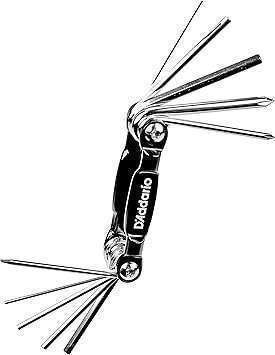
Before touching either bass, assemble a single kit that works for both. The tools are identical because the hardware is identical.
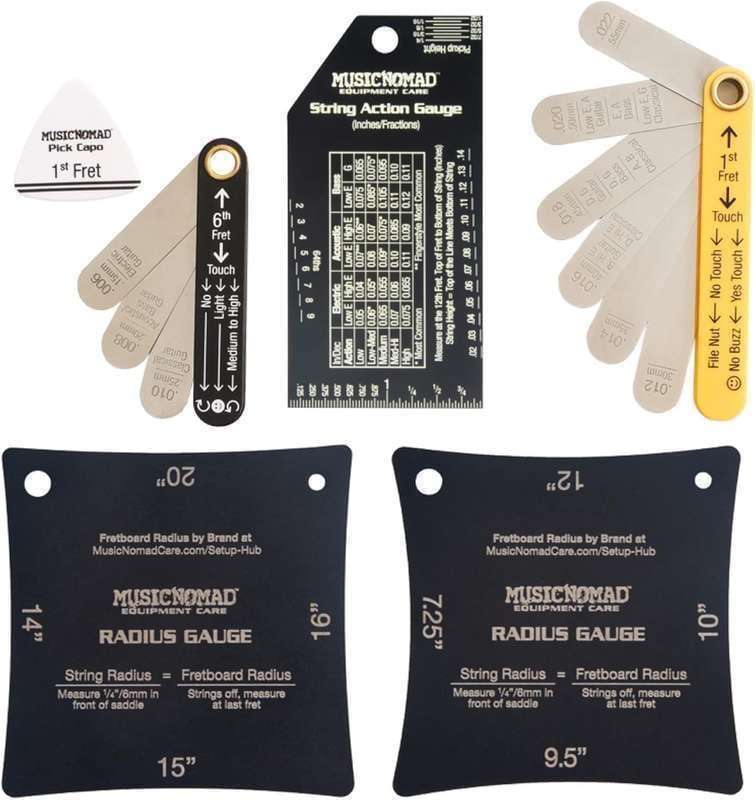
String action gauge. Measures string height at the 12th fret. Essential for both basses. Digital calipers work, but a dedicated gauge is faster.
Truss rod wrench. Most Fender and Squier basses use a 3/16" hex wrench or a Phillips-head adjustment at the heel. Verify your specific model before starting.
Feeler gauges. Measure neck relief at the 7th fret. The target range is the same for both Precision and Jazz Bass.
Screwdrivers and hex keys. Pickup height screws are typically Phillips head. Bridge saddles may use hex screws or flathead depending on the bridge type.
Electronic tuner. A chromatic tuner with 1-cent accuracy is the minimum. Pedal tuners keep both hands free during intonation work.
Capo and string cutter. Optional but recommended. A capo speeds up relief measurement. A string cutter gives clean ends during string changes.
Side-by-Side Factory Specs Comparison
This is where the fender bass setup specs diverge. Use this table as your single reference sheet for both instruments.
String Height at 12th Fret (Action)
| String | Precision Bass (mm) | Precision Bass (in) | Jazz Bass (mm) | Jazz Bass (in) |
|---|---|---|---|---|
| E (4th) | 2.0 | 5/64" | 1.8 | 4.5/64" |
| A (3rd) | 1.8 | 4.5/64" | 1.7 | 4/64" |
| D (2nd) | 1.6 | 4/64" | 1.5 | 3.5/64" |
| G (1st) | 1.5 | 3.5/64" | 1.5 | 3.5/64" |
What to notice: The Jazz Bass runs slightly lower action across the board. The slimmer neck and closer string spacing make lower action feel comfortable without excessive buzz. Precision Bass players often prefer the slightly higher factory spec for a more percussive attack.
Pickup Height Measurements
| Pickup | Bass Side (mm) | Treble Side (mm) |
|---|---|---|
| P-Bass Split-Coil | 3.2 | 2.4 |
| J-Bass Neck Pickup | 3.2 | 2.4 |
| J-Bass Bridge Pickup | 3.6 | 2.8 |
What to notice: The Jazz Bass bridge pickup sits higher than the neck pickup. This compensates for lower string vibration amplitude near the bridge. On the Precision Bass, the split-coil acts as one unit, so you balance the entire pickup tilt rather than two separate pickups.
Neck Relief
| Spec | Precision Bass | Jazz Bass |
|---|---|---|
| Target Relief | 0.25–0.30 mm (0.010"–0.012") | 0.25–0.30 mm (0.010"–0.012") |
| Measurement Point | 7th fret | 7th fret |
| Truss Rod Wrench | 3/16" hex or Phillips | 3/16" hex or Phillips |
What to notice: Relief targets are identical. The Jazz Bass neck may feel more responsive to truss rod adjustments due to its slimmer profile, so make smaller turns.

The 6-Step Universal Process
This fender bass setup guide uses one workflow for both instruments. At each step, use the comparison table above to grab the correct numbers for your bass.
Step 1 — Change Strings on Both Basses
Start with fresh strings. Old strings have unpredictable tension that makes measurements unreliable. If you're setting up both basses in one session, change strings on both, stretch them, and tune to pitch before measuring anything.
Stretch each string by pulling upward away from the fretboard. Repeat the stretch-and-tune cycle three or four times until pitch holds steady.
Step 2 — Set Neck Relief on Both Basses
Relief affects every other measurement, so set it first on both instruments before moving to action or pickup height.
Press the E string at the first fret and at the fret where the neck meets the body. Measure the gap at the 7th fret with a feeler gauge. Target 0.25–0.30 mm on both basses.
Loosen the truss rod counterclockwise for more relief. Tighten clockwise for less. Make small adjustments, let the neck settle for a minute, then re-check.
Step 3 — Dial in String Height
Measure each string at the 12th fret with your action gauge. Use the Precision Bass column for your P-Bass and the Jazz Bass column for your J-Bass.
Turn saddle height screws clockwise to lower action, counterclockwise to raise it. Work in quarter-turn increments and re-tune after each adjustment.
P-Bass note: The thicker neck profile means you can often run slightly higher action without fatigue. Many players prefer 2.0 mm on the E string for maximum punch.
J-Bass note: The slimmer neck rewards lower action. If you're used to your P-Bass, resist the urge to match the heights exactly. Trust the Jazz Bass factory spec.
Step 4 — Balance Pickup Height
Hold each string down at the last fret and measure the gap between the string and the pickup cover.
On the Precision Bass, adjust the four corner screws until the bass side reads 3.2 mm and the treble side reads 2.4 mm. Think of the split-coil as one unit.
On the Jazz Bass, set the neck pickup first (3.2 mm bass side, 2.4 mm treble side). Then set the bridge pickup higher at 3.6 mm bass side and 2.8 mm treble side. Solo each pickup to verify even output before blending them.
Step 5 — Lock in Intonation
Tune the open string to pitch. Fret at the 12th fret and check the tuner. The 12th fret note must match the open string exactly.
If sharp, move the saddle backward. If flat, move it forward. Adjust in 1 mm increments, re-tune the open string, and check again.
This process is identical on both basses. The only difference is that Jazz Bass players should verify intonation with both pickups active, since the blended tone is how most players use the instrument.
Step 6 — The Switching Test
Play both basses back-to-back. Run the same scales, the same lines, and the same attacks on each instrument. Listen for consistency in feel and response.
If your P-Bass feels perfect but your Jazz Bass feels stiff, the Jazz Bass action is probably too high. If your Jazz Bass feels fast but your P-Bass feels mushy, the P-Bass action might be too low. Use the factory specs as anchors, then adjust by feel.
Common Pitfalls When Switching Between Basses
Players who own both models make the same mistakes repeatedly. Here are the ones to avoid.
Matching Action Exactly
Your P-Bass and Jazz Bass should not have identical action measurements. The Jazz Bass factory spec is lower. If you force your Jazz Bass to match your P-Bass numbers, you'll end up with action that feels unnecessarily high on the slimmer neck. Trust the model-specific specs.
Ignoring Pickup Balance on the Jazz Bass
Precision Bass players switching to Jazz Bass often set both Jazz pickups to the same height. This creates uneven output. The bridge pickup must sit higher than the neck pickup. If you set them equal, the neck pickup overwhelms the blend and the bridge sounds thin.
Using the Same String Gauge Blindly
A string gauge that feels perfect on your P-Bass may feel stiff on your Jazz Bass. The narrower nut width on the Jazz Bass increases perceived tension. If your P-Bass runs 45-105 comfortably, try 45-100 or 40-100 on your Jazz Bass for equivalent feel.
Forgetting to Reset Your Hands
Your attack changes between basses. The P-Bass split-coil forgives a heavy, aggressive right hand. The Jazz Bass dual single-coils reward a more controlled touch. After switching instruments, give yourself five minutes to recalibrate your attack before judging the setup.
String Choices That Work on Both Basses
Finding one string set that performs well on both instruments saves money and simplifies your rig.
Standard 45-105 roundwounds are the safest choice for both basses. They deliver balanced tension on the P-Bass and comfortable feel on the Jazz Bass. This is the industry standard for a reason.
45-100 hybrid sets work well if your Jazz Bass feels slightly stiff with standard gauges. The lighter bottom end reduces tension without sacrificing the punch you expect from a P-Bass.
Flatwounds suit both instruments but produce very different tones. On a P-Bass, flatwounds deliver classic Motown thump. On a Jazz Bass, they produce a mellow, upright-like warmth. If you play both basses in the same gig, flatwounds create a more consistent tonal foundation than roundwounds.
For specific brand recommendations, see our guide to the best strings for Precision Bass.
Frequently Asked Questions
What is the ideal fender bass setup string height?
For a standard four-string Fender bass, factory string height at the 12th fret is approximately 2.0 mm on the E string and 1.5 mm on the G string for a Precision Bass. For a Jazz Bass, aim for 1.8 mm on the E string and 1.5 mm on the G string. Jazz Bass players often prefer slightly lower action due to the slimmer neck profile.
How high should Precision Bass pickups be?
The split-coil pickup should sit about 3.2 mm from the E and A strings on the bass side, and 2.4 mm from the D and G strings on the treble side. Measure while holding the string down at the last fret.
What is the factory string height for a Jazz Bass?
Fender recommends 1.8 mm on the E string and 1.5 mm on the G string at the 12th fret. The slimmer Jazz Bass neck makes lower action feel comfortable without excessive buzz.
How do I adjust neck relief on a Fender bass?
Press the E string at the first fret and at the fret where the neck meets the body. Check the gap at the 7th fret with a feeler gauge. Target 0.25–0.30 mm. Loosen the truss rod counterclockwise for more relief, or tighten clockwise for less.
What strings come stock on a Fender Precision Bass?
Most modern Fender Precision Basses ship with Fender 7250 nickel-plated steel strings in a 45-105 gauge. Jazz Basses often ship with the same gauge but may vary by series and year.
How often should I do a full bass setup?
Every three to six months, or whenever you notice playability changes. Seasonal humidity shifts affect neck relief and action. Also perform a setup after changing string gauges or traveling with your instrument.
Why does my Fender bass have fret buzz after setup?
Usually the action is too low or relief is insufficient. Check relief first. If relief is correct, raise the action slightly at the problematic saddle. If buzz persists on specific frets regardless of action, you may need a fret level.
Can I use the same setup specs for a Squier bass?
Yes. Squier basses share the same fundamental design as Fender basses. Start with Fender factory specs, then adjust by feel. Squier instruments may need slightly higher action to avoid buzz due to less consistent fretwork.
What tools do I need for a basic fender bass setup?
A string action gauge, truss rod wrench, feeler gauges, screwdriver set, and an electronic tuner. A capo and string cutter are helpful but optional. One tool kit handles both Precision and Jazz Bass setups.
How do I set intonation on a Fender bass?
Tune the open string to pitch, then fret at the 12th fret. If sharp, move the saddle backward. If flat, move it forward. Adjust in 1 mm increments, re-tune the open string, and check again. Repeat until the 12th fret matches perfectly.
Conclusion
A proper fender bass setup gives you two instruments that feel like they belong to the same family. The process is universal. The numbers are model-specific. If you internalize that distinction, you'll never need to guess which spec belongs to which bass again.
Use the comparison tables in this guide as your reference sheet. Set up both basses in a single session using the six-step workflow. Pay attention to the switching pitfalls, especially action height and pickup balance differences. And remember that your hands need a few minutes to recalibrate when you move from one instrument to the other.
For model-specific deep dives, see our Precision Bass Setup Guide and Jazz Bass Setup Guide. Curious when your bass was made? Run the serial number through our Fender Serial Number Lookup.