Jazzmaster Pickup Height: Complete Setup Guide With Exact Specs
Exact Jazzmaster pickup height specs in mm and 64ths for neck and bridge pickups. Step-by-step adjustment guide with measurements for every playing style — shoegaze, jazz, indie, and surf.

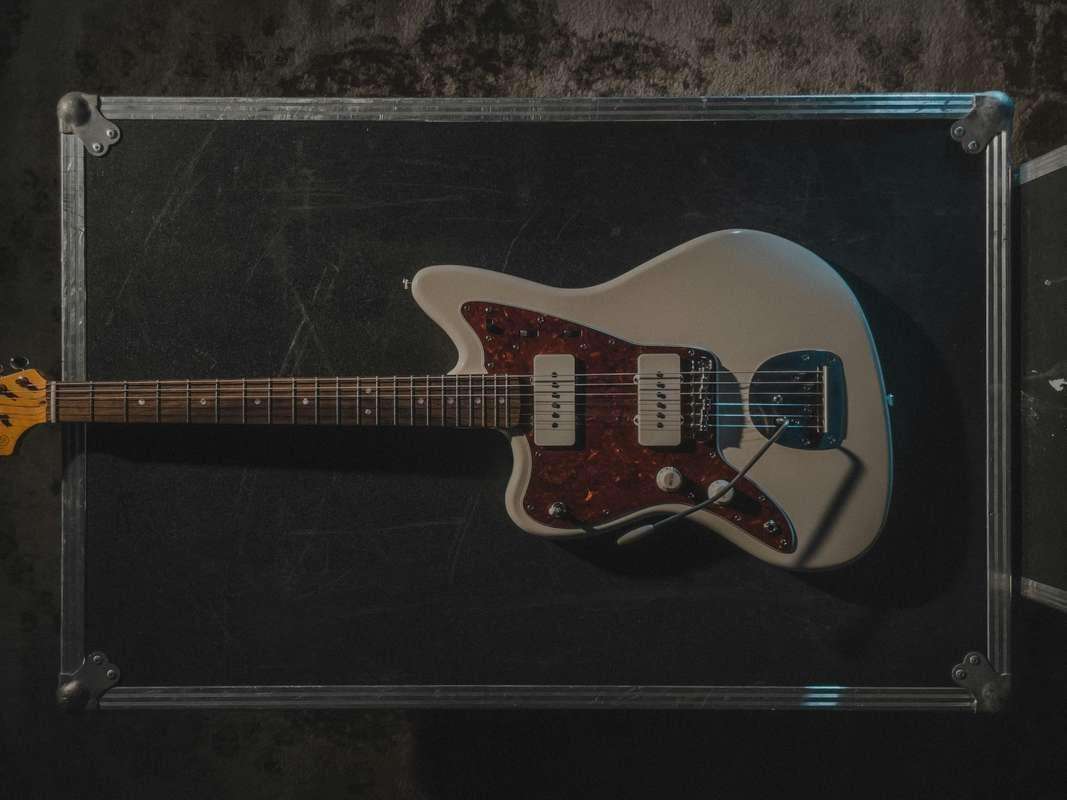
Getting your Jazzmaster pickup height right is one of the easiest ways to unlock the full potential of this iconic offset guitar. Whether you're chasing thick shoegaze walls, clean jazz voicings, or bright surf tones, the distance between your pickups and strings has a massive impact on output, clarity, and sustain. The Jazzmaster's wide, flat-wound pickups respond differently to height changes than standard single coils, so Stratocaster specs won't work here.
In this guide you'll get proven Jazzmaster pickup-height starting specs, a step-by-step adjustment walkthrough, and style-specific recommendations so you can dial in the perfect sound for your playing. We'll also cover how the Jazzmaster's unique rhythm circuit and floating tremolo interact with pickup height choices.
🧮 Try Our Pickup Height Calculator: Get your ideal pickup-to-string gaps and a raise/lower recommendation in seconds — free, no signup.
Factory Specs Tool to compare your current setup against factory standards, or add it to My Garage to track maintenance.
What Makes Jazzmaster Pickups Different?
Quick Answer: Jazzmaster pickups are wider and flatter than Stratocaster single coils, with a broader magnetic field that captures more string vibration. This makes them more sensitive to height adjustments.
Unlike the narrow, tall single coils on a Stratocaster, Jazzmaster pickups are essentially wide, flat single coils wound in a rectangular bobbin. This design was originally intended to produce a warmer, fuller tone that would appeal to jazz players — hence the name.
Key Differences from Strat Pickups
- Wider magnetic field — captures more of the string's vibration pattern
- Lower output than you might expect — the wide, flat coil design trades output for tonal complexity
- More sensitive to height changes — small adjustments produce noticeable tonal shifts
- Two pickups instead of three — neck and bridge only, no middle pickup to balance
How the Rhythm Circuit Affects Things
The Jazzmaster's rhythm circuit (the chrome panel on the upper bout) has its own volume and tone controls that bypass the main circuit. When using the rhythm circuit, the neck pickup runs through a darker, warmer signal path. This means your neck pickup height needs to work well in both the standard and rhythm circuits.
 Buy on Amazon
Jazzmaster Pickup Height Specs: Recommended Starting Points
Quick Answer: Fender does not publish a model-specific pickup height for the Jazzmaster — its setup instructions list pickup heights by pickup type, not by Jazzmaster position. A widely used starting point is 8/64" (3.2mm) bass side and 6/64" (2.4mm) treble side for both neck and bridge Jazzmaster pickups. Measure from the top of the pickup to the bottom of the string with the string fretted at the last fret, then fine-tune by ear.
All measurements are taken with the string fretted at the last (highest) fret, measuring from the top of the pickup pole piece or pickup surface to the bottom of the string.
Recommended Starting Specs
| Pickup | Bass Side | Treble Side |
|---|---|---|
| Neck Pickup | 8/64" (3.2mm) | 6/64" (2.4mm) |
| Bridge Pickup | 8/64" (3.2mm) | 6/64" (2.4mm) |
These are community-standard starting points, not Fender-published factory numbers. Fender's setup instructions give pickup heights by pickup type only; no Jazzmaster-specific row exists.
Why Both Pickups Share the Same Spec
Unlike a Stratocaster where the bridge pickup sits closest and the neck furthest, Jazzmaster setups typically start with both pickups at the same height. This is because:
- The wide, flat design already compensates for string vibration differences between positions
- Jazzmaster bridge pickups have inherently lower output than their Strat counterparts due to the wider bobbin
- The bridge position naturally has less string movement, so the same height produces a slightly brighter, thinner tone — which is the intended Jazzmaster character
Measurement Tips for Jazzmaster Pickups
Measuring Jazzmaster pickup height is slightly different from Strat pickups:
- Measure from the pickup surface, not individual pole pieces — Jazzmaster pickups have flat tops without protruding pole pieces on most models
- On vintage-style pickups with visible pole pieces, measure from the top of the pole piece
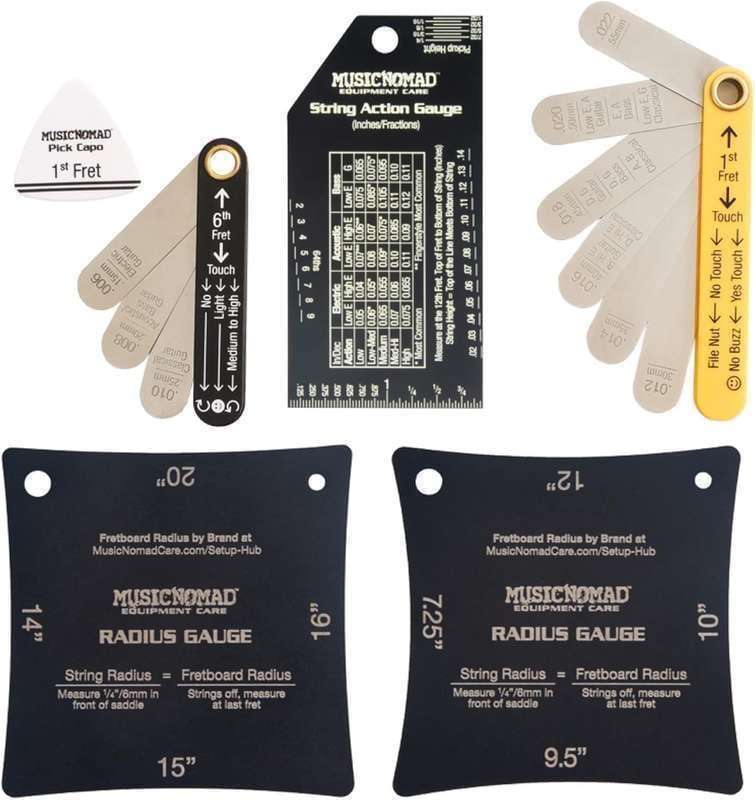
- Use a precision ruler or string height gauge — the Jim Dunlop String Height Gauge works perfectly
- Always fret at the last fret before measuring
Step-by-Step Jazzmaster Pickup Height Adjustment
Now let's walk through the complete adjustment process for both pickups.
Tools You'll Need
- Small Phillips screwdriver (for pickup mounting screws)
- 6" ruler or precision measuring tool like this Jim Dunlop String Height Gauge
- Capo (optional, for fretting at the last fret)
- Tuner like the Boss TU-3 Chromatic Tuner (to ensure accurate pitch during testing)
- Cable and amplifier (for tone testing)
- Guitar setup tool like the D'Addario Multi-Tool for various adjustments
Preparation
- Tune your guitar to pitch — pickup height measurements only work at proper string tension
- Set your action and neck relief first — pickup height should be the last adjustment in your setup sequence (truss rod → action → pickups → intonation)
- Clean your workspace — avoid scratching the finish around the pickguard
Adjusting the Bridge Pickup
The bridge pickup has the biggest impact on your lead tone and the Jazzmaster's signature bright, cutting sound:
- Fret the low E string at the last fret (or use a capo)
- Measure the gap between the pickup surface and the bottom of the string
- Target: 8/64" (3.2mm) on the bass side
- Turn the pickup mounting screws:
- Clockwise to lower the pickup (away from strings)
- Counter-clockwise to raise the pickup (toward strings)
- Make 1/4-turn adjustments and re-measure after each
- Repeat for the treble side — fret the high E string, target 6/64" (2.4mm)
- Test through your amp at playing volume
Adjusting the Neck Pickup
The neck pickup provides the warm, round tone the Jazzmaster is famous for:
- Follow the same process as the bridge pickup
- Target: 8/64" (3.2mm) bass, 6/64" (2.4mm) treble
- Test in both the standard and rhythm circuits
- The rhythm circuit uses only the neck pickup with its own tone control
- Make sure the pickup height works well in both modes
- Check the balance between neck and bridge by switching between them
- Output should be relatively even
- The bridge will naturally sound brighter and slightly thinner — that's normal
Fine-Tuning and Testing
After setting both pickups to the starting specs:
- Play through all pickup combinations — neck, bridge, and both together
- Test clean and with overdrive — pickup height affects how your signal drives the amp
- Play bends and vibrato — listen for any warbling or pitch instability (sign of pickups too close)
- Check sustain — play a note and let it ring; if it dies quickly, pickups may be too close
- Test the rhythm circuit — flip the switch and verify the neck pickup sounds warm and full

Jazzmaster Pickup Height for Different Playing Styles
These starting specs are a great baseline, but your ideal height depends on what you play. Here are style-specific recommendations:
Shoegaze and Noise Rock
Target feel: Thick, saturated tone with massive sustain for layered textures
Recommended adjustments:
- Raise both pickups 1/64" closer than the starting specs (7/64" bass, 5/64" treble)
- Higher output feeds more signal into pedal chains
- The extra magnetic pull is less noticeable through heavy effects
- Works especially well with high-gain fuzz and reverb
Best for:
- My Bloody Valentine-style wall of sound
- Sonic Youth-inspired noise textures
- Ambient and experimental playing
- Heavy reverb and delay-based music
Jazz and Clean Playing
Target feel: Warm, articulate tone with excellent dynamic response
Recommended adjustments:
- Lower both pickups 1/64" below the starting specs (9/64" bass, 7/64" treble)
- Reduces output for more headroom and cleaner signal
- Increases sustain and harmonic complexity
- Better touch sensitivity for expressive playing
Best for:
- Traditional jazz comping and soloing
- Clean funk rhythm
- Fingerstyle playing
- Studio recording where dynamics matter
Surf and Indie Rock
Target feel: Bright, articulate tone with punchy attack and clear note definition
Recommended adjustments:
- Keep the starting specs or lower bridge pickup by 1/64"
- Slightly lower neck for cleaner rhythm tones
- Emphasizes the Jazzmaster's natural brightness
- Great note separation for tremolo-picked passages
Best for:
- Dick Dale-style surf guitar
- Indie rock (Dinosaur Jr., Sonic Youth clean passages)
- Post-punk and new wave
- Jangly rhythm playing
Blues and Classic Rock
Target feel: Warm overdrive with singing sustain and responsive dynamics
Recommended adjustments:
- Raise neck pickup 1/64" closer (7/64" bass, 5/64" treble)
- Keep bridge at the starting specs
- The hotter neck pickup drives tube amps into natural breakup
- Bridge stays articulate for lead work
Best for:
- Blues lead and rhythm
- Classic rock tones
- Slide guitar
- Expressive bending and vibrato
Common Jazzmaster Pickup Height Problems and Fixes
Problem: Neck Pickup Sounds Muddy
Cause: Pickup too close to strings, capturing too much bass-heavy string vibration.
Fix: Lower the neck pickup 1/64" at a time until clarity improves. Test in both the standard and rhythm circuits.
Problem: Bridge Pickup Sounds Thin and Weak
Cause: Pickup too far from strings, not capturing enough signal.
Fix: Raise the bridge pickup 1/64" at a time. Be careful not to go higher than 6/64" on the bass side, as magnetic pull becomes an issue.
Problem: Volume Jump When Switching Pickups
Cause: Unbalanced pickup heights creating different output levels.
Fix: Lower the louder pickup rather than raising the quieter one. This preserves sustain while evening out volume.
Problem: Strings Warble or Go Out of Tune When Bending
Cause: Pickups too close, magnetic pull interfering with string vibration.
Fix: Lower both pickups 1/64" and test bends again. This is especially common on the bass strings where the magnetic pull is strongest.
Problem: Loss of Sustain
Cause: Magnetic pull from pickups too close to strings dampening vibration.
Fix: Lower pickups 1/64" at a time until sustain improves. Test by playing a note and timing how long it rings clearly.
Problem: Buzz or Rattle from Pickup Area
Cause: This is usually not a pickup height issue — it's more likely the Jazzmaster's notorious bridge buzz.
Fix: Check your bridge setup first. If the buzz only occurs when pickups are raised, the pickup springs may be loose or the mounting screws need tightening.
How Jazzmaster Pickup Height Interacts with Your Setup
Pickup height doesn't exist in isolation. Here's how it connects to the rest of your Jazzmaster setup:
Setup Order Matters
Always adjust in this sequence for best results:
- Truss rod — set proper neck relief
- Bridge saddle height — set string action
- Pickup height — optimize pickup-to-string distance
- Intonation — ensure accurate tuning across the neck
String Gauge Effects
Heavier strings (11s or 12s, common on Jazzmasters to reduce bridge buzz) have more mass and produce a stronger magnetic signal. If you use heavy strings:
- You may need to lower pickups slightly to avoid excessive magnetic pull
- The extra tension means less string vibration amplitude
- Start with the baseline specs and lower by 1/64" if you hear warbling
Bridge Height and Pickup Distance
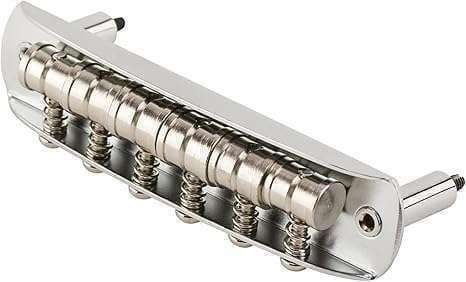
The Jazzmaster's adjustable bridge saddles directly affect the string-to-pickup distance:
- Lower action = strings closer to pickups = may need to lower pickups
- Higher action = strings further from pickups = may need to raise pickups
- Always re-check pickup height after changing your action
Tremolo Arm Usage
If you use the Jazzmaster's floating tremolo frequently:
- The tremolo changes string tension, which affects the string-to-pickup distance dynamically
- Set pickup height for the "at rest" position
- Avoid setting pickups too close, as the tremolo can push strings into the magnetic field during use
Jazzmaster vs Stratocaster Pickup Height: Key Differences
If you're coming from a Stratocaster, here's what to know:
| Feature | Jazzmaster | Stratocaster |
|---|---|---|
| Number of pickups | 2 (neck, bridge) | 3 (neck, middle, bridge) |
| Pickup shape | Wide, flat rectangle | Narrow, tall cylinder |
| Factory bass side | 8/64" (3.2mm) both | 5/64"-7/64" (graduated) |
| Factory treble side | 6/64" (2.4mm) both | 4/64"-6/64" (graduated) |
| Height sensitivity | Very sensitive | Moderately sensitive |
| Magnetic pull risk | Higher (wider field) | Lower (narrower field) |
| Adjustment screws | 2 per pickup | 2 per pickup |
The biggest difference is that Jazzmaster pickups sit further from the strings than Strat pickups. This is intentional — the wider magnetic field means they capture plenty of signal even at greater distances.

Frequently Asked Questions (FAQ)
1. What is the correct Jazzmaster pickup height?
Answer: Fender does not publish a model-specific pickup height for the Jazzmaster, so there is no official factory figure. The widely used starting point is 8/64" (3.2mm) on the bass side and 6/64" (2.4mm) on the treble side for both neck and bridge pickups. Measure from the top of the pickup surface to the bottom of the string with the string fretted at the last fret.
2. Should Jazzmaster neck and bridge pickups be the same height?
Answer: Yes, Jazzmaster setups typically start with both pickups at the same height — 8/64" bass, 6/64" treble. Unlike Stratocasters where each pickup has a different height, the Jazzmaster's wide, flat pickup design naturally compensates for the difference in string vibration between positions.
3. How do I measure Jazzmaster pickup height?
Answer: Fret the string at the last fret (or use a capo), then measure the gap between the top of the pickup surface and the bottom of the string using a ruler or string height gauge. Measure the low E string for the bass side and high E string for the treble side.
4. Why does my Jazzmaster neck pickup sound muddy?
Answer: The neck pickup is likely too close to the strings. Lower it 1/64" at a time and test after each adjustment. The wide Jazzmaster pickup captures a lot of bass-heavy string vibration when too close, resulting in a muddy tone. Also check your rhythm circuit tone control — it may be rolled off too far.
5. Can Jazzmaster pickup height cause bridge buzz?
Answer: Pickup height itself doesn't cause bridge buzz — that's typically a bridge saddle or string gauge issue. However, if pickups are too close, the magnetic pull can cause strings to vibrate unevenly, which may sound similar to buzz. Lower your pickups and see if the issue persists; if it does, check your bridge setup.
6. What pickup height is best for shoegaze on a Jazzmaster?
Answer: For shoegaze, raise both pickups 1/64" closer than the starting specs (7/64" bass, 5/64" treble). The higher output feeds more signal into your pedal chain, creating thicker textures through fuzz, reverb, and delay. The slight reduction in sustain is masked by heavy effects processing.
7. How does string gauge affect Jazzmaster pickup height?
Answer: Heavier strings (11s or 12s) produce a stronger magnetic signal and may need pickups lowered 1/64" to avoid magnetic pull issues. Lighter strings (9s or 10s) may need pickups raised slightly for adequate output. Always re-check pickup height after changing string gauge.
8. How often should I adjust Jazzmaster pickup height?
Answer: Adjust pickup height whenever you change string gauge, modify string action, adjust the truss rod, or notice changes in tone or sustain. Most players set it once during a full setup and only revisit if something changes. Seasonal humidity shifts can also affect neck relief, which indirectly changes the string-to-pickup distance.
9. Are Jazzmaster pickups the same as Stratocaster pickups?
Answer: No. Jazzmaster pickups are wider and flatter than Stratocaster single coils. They use a rectangular bobbin instead of a tall, narrow one, which gives them a broader magnetic field, warmer tone, and different response to height adjustments. You cannot use Strat pickup height specs for a Jazzmaster.
10. Can I use the same pickup height specs for a Squier Jazzmaster?
Answer: Yes. Squier Jazzmasters use the same pickup dimensions and mounting system as Fender models. The same 8/64" bass and 6/64" treble starting specs apply to all Jazzmaster-style guitars, including Squier Classic Vibe, Squier J Mascis, and Fender Player series models.
Want These Specs on Your Workbench?
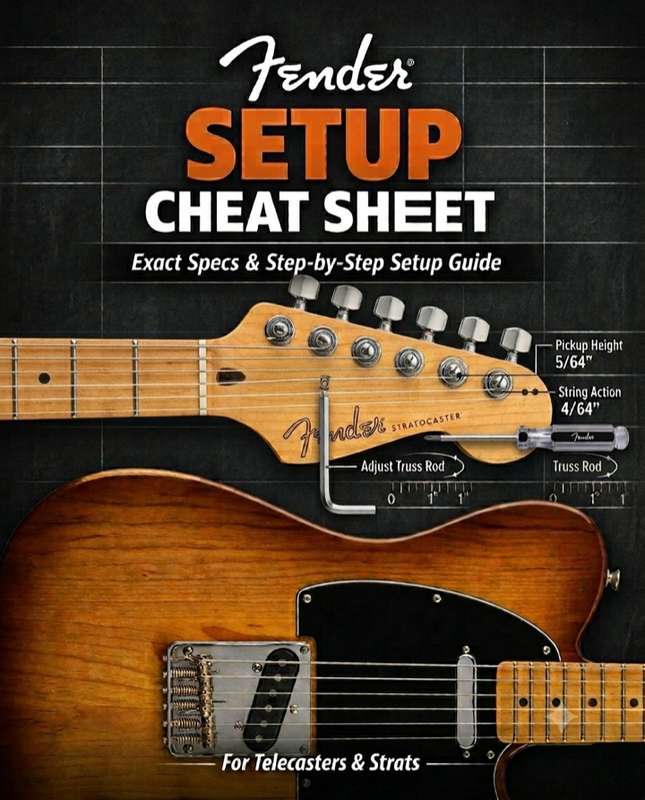
Pickup height is just one part of a complete Jazzmaster setup. The Fender Setup Cheat Sheet includes:
- The complete setup order: relief → action → bridge/vibrato → pickups → intonation
- Jazzmaster pickup and bridge checks: body-mounted pickup direction, saddle identification and mounting
- An offset tuning-and-rattle worksheet for bridge return, string escape and buzz symptoms
- Printable setup and offset pickup records for your own before/after settings
Get the Complete Setup Guide →
Quick Reference: Jazzmaster Pickup Height Specifications
| Component | Specification |
|---|---|
| Neck Pickup | Bass: 8/64" (3.2mm), Treble: 6/64" (2.4mm) |
| Bridge Pickup | Bass: 8/64" (3.2mm), Treble: 6/64" (2.4mm) |
| Adjustment Increment | 1/4 turn or 1/64" steps |
| Measurement Method | From pickup surface to string bottom, string fretted at last fret |
Conclusion: Getting the Most from Your Jazzmaster Pickups
Jazzmaster pickup height adjustment is a simple, free modification that takes 10-15 minutes but can dramatically improve your tone. The wide, flat pickups on these guitars are more sensitive to height changes than standard single coils, so even small adjustments make a real difference.
Start with the recommended specs — 8/64" bass and 6/64" treble for both pickups — then fine-tune based on your playing style. Shoegaze players can raise pickups for more output into their pedal chains, while jazz and clean players benefit from lowering pickups for better dynamics and sustain.
The key principles to remember:
- Both pickups at the same height — unlike Strats, Jazzmasters don't use graduated heights
- Measure from the pickup surface, not individual pole pieces
- Adjust in 1/64" increments and test after each change
- Test in both standard and rhythm circuits for the neck pickup
- Set action and relief before pickup height — always follow the correct setup order
For more comprehensive Jazzmaster setup guidance, explore these related articles:
Related Posts
Jazzmaster Setup and Maintenance
- Ultimate Jazzmaster Setup Guide — Complete step-by-step setup including bridge, tremolo, and action
- Best Strings for Jazzmaster — String recommendations for optimal tone and reduced bridge buzz
Guitar Setup Fundamentals
- Guitar Truss Rod Adjustment Guide — Set proper neck relief first
- Guitar Action Height Guide — String height adjustment basics
- Guitar String Gauges Guide — Understanding string tension and thickness
- Stratocaster Pickup Height Guide — Compare with Strat specs
Other Fender Setup Guides
- Telecaster Pickup Height Guide — Tele pickup specs and adjustment
- Stratocaster Setup Guide — Complete Strat setup from start to finish
- Telecaster Setup Guide — Complete Tele setup guide
- Serial Number Lookup — Find your guitar's production year
Last updated: February 10, 2026