Fender Neck Profiles: Shapes, Sizes and Feel
Fender neck profiles explained with original diagrams: C, V, D and U back shapes, neck depth, nut width, radius and specs from Fender's own product pages.
Understanding Fender neck profiles starts with one honest distinction: the profile name describes only the shape of the back of the neck. It does not fix the thickness, the nut width, the fingerboard radius or the fret size — those are separate specifications, and Fender publishes them per model and per replacement part rather than per profile name.
Quick answer: A Fender neck profile (Modern C, Deep C, Soft V, D, U) is the cross-sectional shape of the back of the neck. Two necks with different profile names can share an identical published depth — Fender's own Modern C and Deep C replacement necks both measure .820" at the 1st fret. To compare necks properly, check the back shape and the depth at a stated fret, nut width, fingerboard radius and fret size on the specific guitar or part.
This guide uses original diagrams and specifications taken directly from Fender's published product and replacement-neck pages. Where a number is not published for a given model, we say so instead of estimating it.
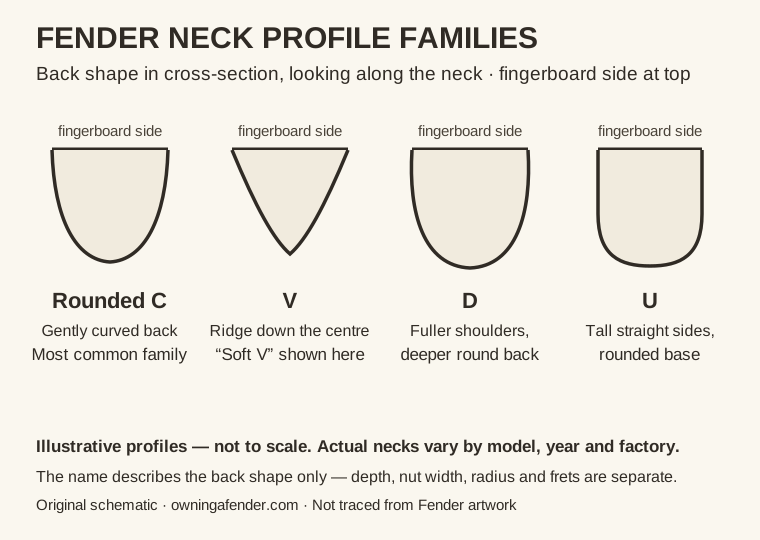
Original schematic. The outlines are illustrative, not to scale and not traced from Fender artwork; actual necks vary by model, year and factory.
In this guide:
- What a neck profile actually is
- The four shape families
- Modern C vs Deep C: a worked example
- The measurements behind the profile name
- Verified Fender examples
- How to compare necks in person
- What to record before you buy
- Frequently asked questions
🎸 Quick Tools: Action Height Calculator • Factory Specs Lookup • Serial Number Lookup
What a neck profile actually is
Slice a guitar neck across its width at any fret and look at the cut face. The flat top of that slice is the fingerboard; the curved bottom is the back profile — the part your palm and thumb touch. That curve is what names like "C", "V", "D" and "U" describe.
Everything else people bundle into the word "profile" is a separate measurement:
- Neck depth — the wood thickness from fingerboard underside to the deepest point of the back, measured at a stated fret (usually the 1st and 12th)
- Nut width — the width of the neck at the nut
- Fingerboard radius — the curvature of the playing surface from low E to high E
- Fret size — the height and width of the fret wire itself
A single guitar can combine any back shape with any of these. Fender's own catalogue proves the point: its Stratocaster model comparison lists Modern C, Deep C, Modern D and Soft V necks across current models, paired with radii from a round 7.25" to a flat 17", and fret wire from vintage-style to jumbo. The name never tells you the whole neck.
This also means a "Fender neck profile chart" that assigns one fixed thickness to each letter is misleading. A profile name is a shape family, not a dimensioned manufacturing standard — the verified examples below show why.
The four shape families
The diagram at the top of this page shows the four families as simple outlines. Here is what each name means and where Fender itself documents the shape.
Rounded C
The C is a gentle, continuous curve with no ridge and no flat shoulders — the baseline shape of most modern Fender necks. Within the family, Fender uses qualifiers that matter:
- Modern "C" — the current default. Fender specifies it on the Player II Stratocaster and on its American Professional Classic Telecaster replacement neck, among many others.
- Deep "C" — a fuller variant used on the American Professional II series. Fender's American Professional II Stratocaster replacement neck publishes its exact depths, covered in the worked example below.
- "C" Shape (vintage-style) — Fender's Classic Series 60's Stratocaster replacement neck carries the plain "C" Shape label with a 7.25" radius and vintage frets — a reminder that the same letter can come with very different surrounding specs.
V
The V replaces the smooth curve with a ridge running down the centre of the back, so the cross-section pinches to a soft point. Fender sells it in two strengths: a Soft "V" with a modest ridge and a hard V with a pronounced one. Verified current examples include Fender's Classic Series 50's Stratocaster Soft V replacement neck and, at the whole-guitar level, the Vintera '50s and American Original '50s Strats in Fender's comparison article above.
The V is genuinely polarising because of how the ridge meets your hand — some players find it locates the thumb, others find it digs in. Neither reaction is wrong, and no hand measurement settles it in advance. This is a shape to play before you buy.
D
The D keeps a curved back but with fuller, flatter shoulders, so more of the neck fills your palm. Fender's Stratocaster comparison documents a Modern "D" on the American Ultra Stratocaster, paired with a 10"–14" compound-radius fingerboard — a good example of profile and radius being independent choices.
U
The U has tall, nearly straight sides and a rounded base — the fullest outline of the four, and the origin of the "baseball bat" nickname. Verified example: Fender's Classic Series '70s Stratocaster "U" replacement neck, which publishes .820" at the 1st fret and .900" at the 12th with a 7.25" radius.
Note what that number means: this U-neck's published 1st-fret depth is identical to the Modern C and Soft V parts below. "U" describes where the wood sits, not simply how much of it there is.
Modern C vs Deep C: a worked example
The most common profile question we see is "how much thicker is a Deep C than a Modern C?" Fender's published replacement-neck specifications answer it precisely — and the answer is not what most charts claim.
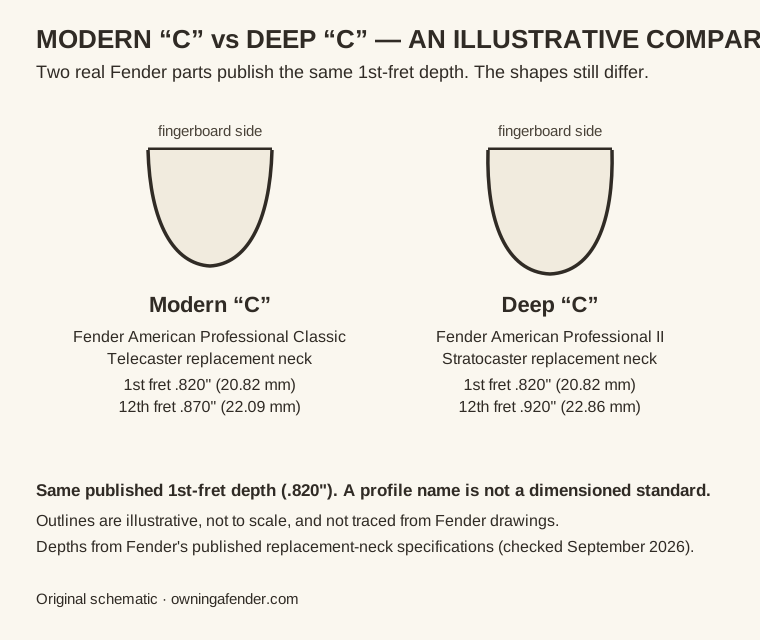
Illustrative comparison, not to scale and not traced from Fender drawings. The dimensions are Fender's published figures for the named replacement necks, checked September 2026.
| Specification | Modern "C" — American Professional Classic Telecaster neck | Deep "C" — American Professional II Stratocaster neck |
|---|---|---|
| Depth at 1st fret | .820" (20.82 mm) | .820" (20.82 mm) |
| Depth at 12th fret | .870" (22.09 mm) | .920" (22.86 mm) |
| Nut width | 1.685" (42.8 mm) | 1.685" (42.8 mm) |
| Fingerboard radius | 9.5" (241 mm) | 9.5" (241 mm) |
| Frets | 22 medium jumbo | 22 narrow tall |
Both necks start at exactly the same 1st-fret depth. The Deep C adds its extra wood as you move up the neck — .050" more by the 12th fret — and in the fullness of its shoulders. So the honest answer to "which is thicker?" is: at the 1st fret, neither; at the 12th fret, the Deep C, by a published half-millimetre-plus.
This is why we no longer publish a universal thickness table for profile names. Two Fender parts with different names can share a dimension, and two parts sharing a name can come from different factories and years. Check the specific model or part.
The measurements behind the profile name
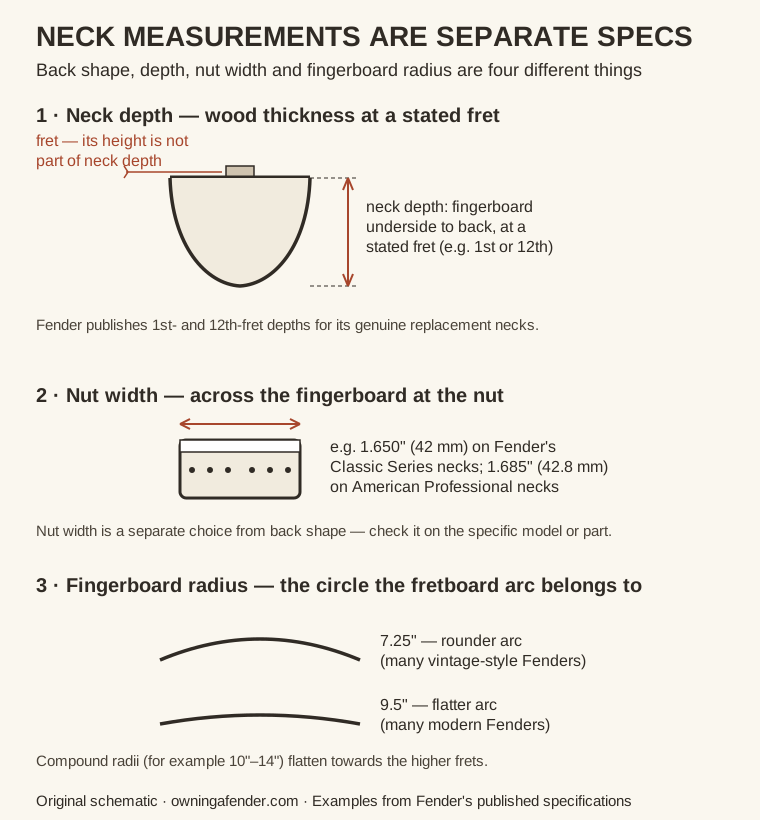
Original schematic. Depth is wood thickness only — fret height is not included. Real published examples: 1.650" and 1.685" nut widths, 7.25" and 9.5" radii.
Neck depth at a stated fret
Depth is the wood thickness from the underside of the fingerboard to the deepest point of the back, measured at a stated fret. Fender publishes it for its genuine replacement necks at the 1st and 12th frets — the 1st-fret figure dominates how open and barre chords feel, while the 12th-fret figure shapes upper-register work.
Two cautions when measuring at home. First, keep fret height out of it: the measurement is wood depth, so calipers sit against the fingerboard beside the fret, not on the fret crown. Second, always record the fret you measured at — a bare number without a location cannot be compared with anyone else's.
Nut width
Nut width is how wide the neck is at the headstock end. In the verified Fender examples below you can see two real values in current production: 1.650" (42 mm) on the Classic Series necks and the Player II Stratocaster, and 1.685" (42.8 mm) on the American Professional necks. That 0.035" difference is small on paper and obvious in the hand — string spacing at the nut changes with it.
Fingerboard radius
Radius is the curvature of the playing surface, expressed as the radius of the circle the arc is cut from. A smaller number is rounder: 7.25" is the vintage-style Fender arc, 9.5" the modern standard. Compound radii flatten as you climb the neck — Fender specifies 10"–14" on the American Ultra and a flat 17" on the HM Strat in its comparison article. Radius affects bending feel and chord comfort independently of the back profile, which is why "C with 7.25"" and "C with 9.5"" are meaningfully different guitars.
Fret size
Fret wire changes how your fingertips interact with the board. Fender's current range spans vintage-style wire (Classic Series necks), medium jumbo (American Professional Classic), narrow tall (American Professional II) and jumbo (American Performer, per Fender's comparison). Taller wire means your fingers rarely touch the fingerboard; smaller wire gives more fingerboard contact. Like radius, fret size is a separate line in the spec sheet — never implied by the profile name.
Verified Fender examples
Every row below comes from a live Fender product or replacement-part page, checked September 2026. Cells marked "not published in this source" mean exactly that — Fender's page does not state the figure, and we do not estimate it from photographs or the marketing name.
| Fender model / part | Profile name (as published) | Radius | Nut width | Depth, 1st fret | Depth, 12th fret |
|---|---|---|---|---|---|
| Player II Stratocaster (guitar) | Modern "C" | 9.5" | 1.650" (42 mm) | not published in this source | not published in this source |
| American Professional Classic Telecaster neck | Modern "C" | 9.5" | 1.685" (42.8 mm) | .820" (20.82 mm) | .870" (22.09 mm) |
| American Professional II Stratocaster neck | Deep "C" | 9.5" | 1.685" (42.8 mm) | .820" (20.82 mm) | .920" (22.86 mm) |
| Classic Series 50's Stratocaster Soft V neck | Soft "V" | 7.25" | 1.650" (42 mm) | .820" (20.82 mm) | .900" (22.86 mm) |
| Classic Series 60's Stratocaster neck | "C" Shape | 7.25" | 1.650" (42 mm) | .800" (20.32 mm) | .900" (22.86 mm) |
| Classic Series '70s Stratocaster "U" neck | "U" Shape | 7.25" | 1.650" (42 mm) | .820" (20.82 mm) | .900" (22.86 mm) |
Fret wire on these parts runs from 21 vintage-style frets (Classic Series) to 22 medium-jumbo (American Professional Classic) and 22 narrow-tall (American Professional II) — covered in fret size above.
Three honest observations from this table:
- Four different profile names share .820" at the 1st fret. Modern C, Deep C, Soft V and U all publish the same figure. If someone tells you a letter equals a thickness, Fender's own parts catalogue disagrees.
- Guitar pages and part pages publish different detail. The Player II Stratocaster page names the profile, radius, nut width and fret count but no depth. If depth matters to your decision, you may need to measure the actual guitar or find a corresponding replacement part.
- This is a snapshot, not the whole range. Discontinued lines, Custom Shop builds and older eras vary further. For a used guitar, confirm the exact model and year first — our serial number lookup and the Jazzmaster vs Strat neck comparison can help narrow down what you are holding.
How to compare necks in person
Specifications narrow the field; they cannot make the decision. Comfort judgements belong to the person playing, and no chart — including this one — can promise a profile will suit your hands. One limit of this article, stated plainly: we did not run instrument trials for it. The routine below is a method for your comparison, not a report of ours.
When you can try guitars in a shop or at home, keep the comparison controlled:
- Same position. Play every candidate seated the same way, then standing with the strap at the same height. Neck feel changes with playing position.
- Comparable setup where possible. Action and string gauge change how thick a neck feels. Two guitars with different setups are not a clean profile comparison — our action height guide explains what "comparable" means.
- A fixed routine. Play the same open chords, the same barre chords at the 3rd–5th frets, the same bends, and reach the same upper-fret passage on every guitar. Familiar material exposes differences faster than improvisation.
- Thumb placement. Try your normal grip, then thumb-behind and thumb-over variants. A ridge or a deep shoulder reveals itself when your thumb moves.
- Time. Give each guitar at least 15–20 minutes. First impressions of an unfamiliar shape often reverse after a short break — note how your hand feels after stopping, not just while playing.
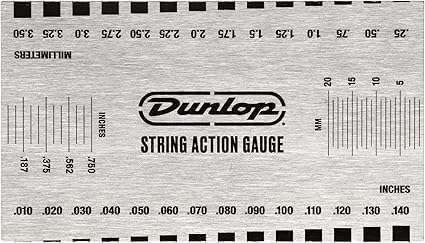
Record what you notice per guitar using the blank comparison record in the next section. If you want to note actual measurements while you compare, a string action gauge and a basic multi-tool cover the action and relief side of the worksheet:
Tools for measuring while you compare
 Buy on Amazon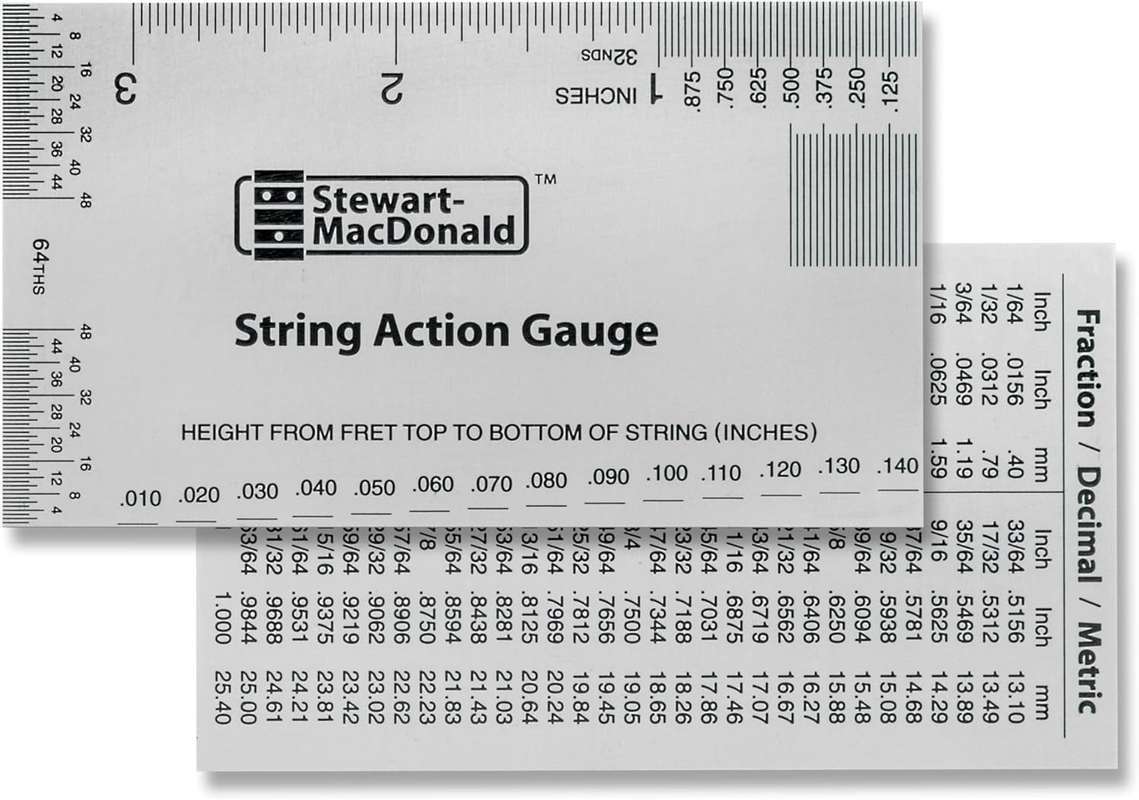
What to record before you buy
Bring this record — printed or on your phone — and fill a row per guitar. Leave cells blank rather than guessing; an honest blank beats an invented number.
| Field | Guitar A | Guitar B | Guitar C |
|---|---|---|---|
| Exact model / year (and part, if a neck) | |||
| Strings fitted (gauge, condition) | |||
| Action at 12th fret (low E / high E) | |||
| Profile name on the spec sheet | |||
| Fingerboard radius | |||
| Nut width | |||
| Chord and barre-chord observations | |||
| Bends and upper-neck reach | |||
| Hand feel after 15–20 minutes | |||
| Unresolved questions for the seller |
What a setup can and cannot change
This is the boundary worth stating clearly, because it shapes what you buy:
- A truss-rod adjustment changes relief — the slight forward bow of the neck under string tension. It does not reshape the back profile. Our truss rod guide covers relief properly.
- A setup can adjust action, relief, intonation and pickup height within the neck the guitar already has. String gauge changes tension and feel too.
- A setup cannot turn a V into a C, narrow a nut, or flatten a radius. Do not sand or reshape a neck as a fitting exercise — that is irreversible luthier work with resale and structural consequences, not an afternoon experiment.
- If the profile itself is wrong for you, the realistic options are a different guitar or a compatible replacement neck — and compatibility (scale length, heel shape, mounting) needs its own research before any purchase.
Our Fender setup workbook exists for the first two bullets: once you have chosen a guitar whose neck suits you, it helps you record a measured baseline and adjust the supported setup measurements. It does not promise comfort, and it cannot change the shape of the wood.
For model-specific setup routes once you have the right guitar:
Frequently asked questions
What is a neck profile on a guitar?
The neck profile is the cross-sectional shape of the back of the neck — the curve your palm and thumb rest against. Fender's families include C, V, D and U shapes, with qualifiers like "Modern" and "Deep". The profile is only one of five feel-related specifications; neck depth, nut width, fingerboard radius and fret size are separate.
What is the difference between Fender's Modern C and Deep C?
From Fender's published replacement-neck specifications: both measure .820" (20.82 mm) at the 1st fret, with the same 1.685" nut width and 9.5" radius. The Deep C is deeper at the 12th fret — .920" versus .870" — and fuller in the shoulders. The difference lives up the neck, not at the nut.
Does the profile name tell me the exact neck thickness?
No. A profile name is a shape family, not a dimensioned standard. Fender's Modern C, Deep C, Soft V and U replacement necks all publish an identical .820" depth at the 1st fret while differing at the 12th. Always check the specific model or part page for published dimensions.
What's the difference between neck profile and fretboard radius?
The profile is the shape of the back of the neck; the radius is the curvature of the playing surface. They are independent: a Modern C neck can carry a 7.25", 9.5" or compound radius. Profile affects how the neck fills your hand; radius affects chording and bending feel.
What is a "baseball bat" neck?
An informal name for the fullest U-style profiles — tall sides and a rounded base that fill most of the palm. Verified modern examples exist, such as Fender's Classic Series '70s "U" replacement neck (.820" at the 1st fret, .900" at the 12th). Whether the feel suits you is a hands-on question, not a spec-sheet one.
Which Fender guitars use a V-shaped neck?
Current documented examples include the Vintera '50s and American Original '50s Stratocasters (Soft V, per Fender's model comparison) and Fender's Classic Series 50's Soft V replacement neck. Vintage reissue lines change over time, so confirm the spec page of the exact model you are considering.
What nut widths does Fender use?
In the verified examples on this page: 1.650" (42 mm) on the Classic Series necks and the Player II Stratocaster, and 1.685" (42.8 mm) on American Professional series necks. Other models and eras differ — check the individual spec page rather than assuming one standard width.
Can I change the neck profile on my guitar?
Not through setup. Truss-rod adjustment changes relief, not shape, and sanding a neck thinner is irreversible luthier work we do not recommend as a fitting exercise. The practical routes are choosing a different guitar or fitting a compatible replacement neck — check scale length, heel and mounting compatibility first.
How do I measure neck depth at home?
With digital calipers: close them gently from the underside of the fingerboard (beside the fret, not on the fret crown) to the deepest point of the back. Record the value with the fret location — "1st fret" or "12th fret" — since the number is meaningless without it. Compare like-for-like frets between guitars.
Is there an official Fender neck profile chart with dimensions?
Not a single universal one. Fender publishes dimensions per product: guitar pages typically list profile name, radius, nut width and frets, while genuine replacement-neck pages add 1st- and 12th-fret depths. The verified examples table above links six current sources so you can see the pattern directly.
Conclusion: check the shape, then check the numbers
Fender neck profiles are simpler than the mythology around them. The name describes the back shape; the depth at a stated fret, nut width, radius and fret size are separate specs published per model and per part. Fender's own catalogue shows different names sharing dimensions and the same name wearing different specs — so the reliable workflow is: shortlist by shape family, verify the specific model's published numbers, then make the final call with your own hands using a controlled comparison.
Keep your notes. When you have the right guitar, a measured setup is what keeps it feeling right.