Epiphone Pickup Height: Humbuckers, P-90s & Casino
Set Epiphone pickup height with clear measurements and listening checks. Balance Les Paul humbuckers, adjust soapbar P-90s, and understand Casino dogear mounts.
By Nick TheodoulouUpdated

On this page
- Epiphone pickup-height starting measurements
- Identify your Epiphone pickup mounting first
- Prepare a repeatable pickup-height listening test
- Adjust Epiphone Les Paul and SG humbuckers
- Epiphone P-90 height: soapbars and Casino dogears
- Troubleshoot muddy, weak or uneven Epiphone pickups
- Epiphone pickup-height FAQ
- Record the Epiphone pickup settings that work
Epiphone pickup height is worth checking before replacing a muddy neck pickup or a quiet bridge pickup. The useful setting depends on the installed pickup, its mounting system, and what you hear through your amp. A Les Paul humbucker and a Casino dogear P-90 do not move in the same way, even though both need sensible string clearance.
Quick answer: Hold the outer strings at the highest fret and measure the gap above the pickup, using the maker's specified measuring surface. Without a model-specific specification, approximately 2.4 mm is a general trial gap for many passive pickups, not an Epiphone factory standard. Adjust ring-mounted humbuckers with their height screws; Casino dogear mounting screws do not provide the same adjustment. Finish by comparing neck and bridge separately.
Last updated: September 9, 2026. General adjustment and dogear fitting guidance checked against Gibson, Seymour Duncan, Lollar and Fralin references.
- Starting measurements and what they mean
- Identify the pickup mounting
- Prepare a useful listening test
- Adjust Les Paul and SG humbuckers
- Handle soapbar P-90s and Casino dogears
- Troubleshoot muddy or uneven sound
- Frequently asked questions
- Record the settings that work
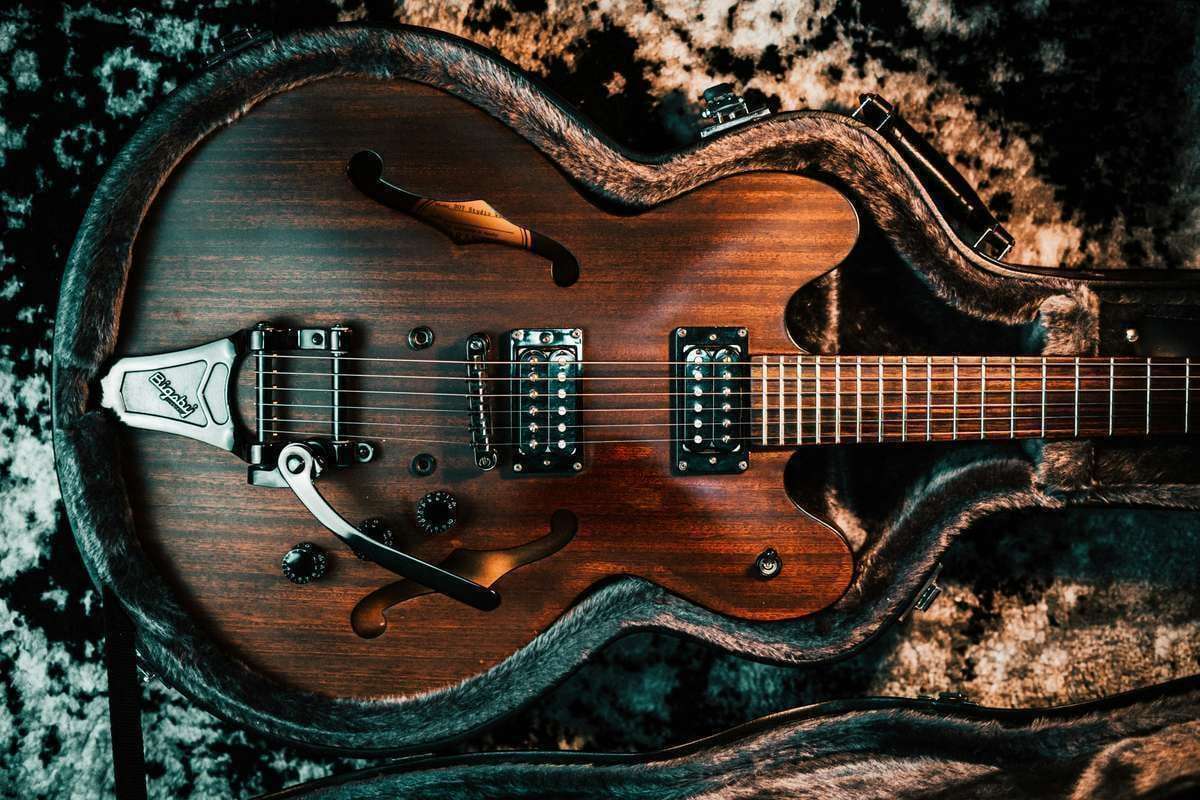
Illustrative guitar photograph; identify your own pickup mounting before using the adjustment instructions.
Epiphone pickup-height starting measurements
There is no single setting that describes every Epiphone pickup. Replacements, different mounting rings, changed strings and individual pole adjustments all make the model name an incomplete specification. Start with the instructions for the pickup actually installed, if you can identify it.
Seymour Duncan's adjustment reference gives 3/32 inch, approximately 2.4 mm, as a general starting gap for many pickups. Its method holds the string at the last fret and measures between the string underside and corresponding pole. This is a useful fallback reference, not a claim that Epiphone sets every Les Paul or ProBucker to that number.
| Situation | Useful reference | What to do next |
|---|---|---|
| Known pickup with published instructions | Its maker's specified gap and measuring surface | Follow those instructions first |
| Passive humbucker without an identified specification | Approximately 3/32 inch / 2.4 mm as a trial gap | Check clearance and compare both pickups through a clean amp |
| Neck pickup dominates or sounds congested | Your recorded starting gap | Try a slightly larger gap, especially under the low strings |
| P-90 with a fixed dogear mount | Existing clearance and correct cover geometry | Assess mounting before attempting to move it |
| Active pickup or unusual replacement | Manufacturer's own guidance | Do not apply a passive-pickup table automatically |
Useful conversions are 1/16 inch ≈ 1.6 mm, 3/32 inch ≈ 2.4 mm, and 1/8 inch ≈ 3.2 mm. These are reference distances, not three compulsory stages of an adjustment. A ruler cannot tell you whether the sound you prefer needs another turn.
Keep the measuring convention consistent
Pickup height is a gap above the pickup, not how far the cover protrudes from its mounting ring. The neck and bridge can look very different while still having reasonable clearance. Do not lower the bridge pickup just to make the exposed covers look equally tall.
Record four values: neck low E, neck high E, bridge low E and bridge high E. Note whether you measured above an exposed pole or a covered surface. If a manufacturer specifies the cover, use that surface consistently rather than silently mixing two methods.
The complete Epiphone setup guide covers the broader sequence. Settle string gauge, tuning, relief and action before the final pickup-height pass: changing the strings' position afterward changes the gaps you just measured.
For Les Paul and SG owners who want a printable reference for the wider setup, the Gibson guide covers those guitar families. The Casino mounting discussion below is separate from that product's Les Paul/SG scope.

Identify your Epiphone pickup mounting first
Look at how the pickup is supported, not just the name on the headstock. Epiphone model families include different pickup configurations, and a used guitar may have been modified. A pickup labelled ProBucker describes a pickup family; it does not identify every screw around it.
Ring-mounted humbuckers
A typical ring-mounted humbucker hangs from two height screws, one at either end of the pickup. The smaller corner screws secure the ring to the guitar. The row of individual pole screws shapes string balance; it does not raise the entire pickup.
Before turning anything, distinguish those three jobs. If you loosen a ring corner while expecting the pickup to rise, the frame may simply lift away from the body. Take a close photograph if the hardware is unfamiliar, then compare it with the installed pickup's instructions.
Soapbar P-90s
Soapbar pickups normally have their body-mounting screws within the rectangular cover, separate from the six adjustable poles. Their height movement depends on the supporting springs, foam or other mounting arrangement underneath. Some installations have useful travel; others are effectively constrained.
Do not assume every screw that turns freely is producing controlled movement. Watch the pickup while making a small adjustment. If it stays put, stop and identify what supports it rather than winding the screw farther out.
Casino dogear P-90s
Dogear covers have projecting mounting ears. The screws through those ears secure the assembly to the guitar; loosening them is not equivalent to raising a suspended humbucker. A fixed dogear pickup may need a correctly fitted spacer to change its overall height.
Lollar's Casino and dogear fitting guide explains why neck angle, bridge height and cover dimensions matter. A spacer that suits one guitar is not automatically the correct size for yours. Identify both the mount and the available clearance before buying parts.
Prepare a repeatable pickup-height listening test
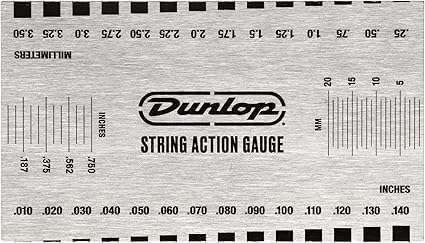
You need a small ruler, a driver that properly fits the adjustment screws, a tuner, and a clean amp sound. A setup gauge can be convenient, but you do not need a new toolkit if your existing tools let you read the gap and turn the screws without slipping.
Choose a comfortable listening level and switch off compression, distortion and heavy modulation for the first comparison. Use the same pick, amp settings and short musical passage throughout. Otherwise, a different picking attack can make a tiny adjustment seem more important than it is.
Save a baseline before adjusting
Write down the tuning, string gauge, four gaps and guitar-control positions. Record a short neck-only phrase followed by the same phrase on the bridge pickup. Include low-string chords, a melody on the top strings and one sustained note.
Use healthy strings for this comparison. An old low E and a fresh high E can create unevenness that you might mistakenly try to solve with pickup tilt. If you need a replacement set, choose a familiar gauge first; the Epiphone string guide covers alternatives without requiring a pickup upgrade.
Decide what improvement sounds like
Choose one problem: less boomy neck bass, more bridge presence, or a smoother volume change at the selector. Avoid trying to maximize output, clarity, sustain and distortion all at once. A setting that suits a driven lead part might be less attractive for clean chord work.
Keep a simple note beside each trial: “neck low strings clearer,” “bridge too sharp,” or “no useful difference.” A reversible change with a clear comparison is more informative than twenty unrecorded turns.
Measuring and adjustment tools on Amazon
 Buy on Amazon
Adjust Epiphone Les Paul and SG humbuckers
Work on one pickup at a time. Keep the guitar stable, protect the finish from the tool, and mute the amp while the screwdriver is against the pickup. There is no need to remove the pickup ring or disturb the wiring for an ordinary height adjustment.
Set the bridge pickup as your listening reference
Select the bridge pickup with the guitar volume and tone controls at your chosen reference settings. Measure both outer-string gaps. If the existing setup already has ample clearance and sounds good, record it before deciding whether a generic trial measurement would improve anything.
With a conventional suspended humbucker, tightening the height screw clockwise normally lifts that side of the pickup; loosening normally lowers it. Confirm by watching the actual movement. Use a small fraction of a turn, then measure again, because screw pitch and mounting arrangements differ.
Do not remove the height screw from its threaded attachment. If the pickup drops, stops moving or sits against the ring, stop rather than forcing it. A compressed spring or a binding cover is a mounting problem, not an invitation to apply more torque.
Adjust the neck to suit the bridge
Switch to the neck pickup and repeat the same phrase at the same picking strength. If the neck overwhelms the bridge, try lowering it slightly. If only the low strings feel too heavy, experiment with that side first while keeping the high-string gap recorded.
Equal ruler measurements do not guarantee equal perceived volume. Nor must both selector positions sound identical: a neck pickup and bridge pickup are meant to offer different sounds. Aim for a useful musical transition that does not require a surprise amp adjustment every time you switch.
Gibson's pickup-height lesson encourages exploring pickup and pole-piece adjustment before replacing the pickups. Treat that as a listening process. The lesson is not evidence that every Epiphone shares a single factory specification.
Check string clearance and coil splits
After each useful trial, play your hardest normal attack, bends and upper-fret notes. Make sure the strings do not hit the pickup or pole screws. A static gap that looks acceptable is not a substitute for a playing check.
For a coil-split guitar, finish the main comparison in full-humbucker mode, then check the split sound. A split normally changes level and character; do not force the full humbucker dangerously close merely to make the split mode louder. Decide which mode is your main reference and note the compromise.
Epiphone P-90 height: soapbars and Casino dogears
Treat P-90 mounting and P-90 sound as separate questions. First establish whether the assembly can move safely. Then decide whether changing its distance is likely to improve your recorded comparison. A large visible gap alone does not prove that a pickup needs replacement.
Adjust a supported soapbar carefully
Identify the mounting screws rather than the six poles. If the pickup is supported on springs or compressible material, a small screw adjustment may allow controlled movement. Observe both ends, keep the cover clear of the rout, and check that the pickup remains supported.
Unlike a humbucker suspended from its ring, a body-mounted screw may tighten the pickup downward against its support. Do not transfer a clockwise-equals-up rule from one mounting type to another. If the movement is uncertain, return to the recorded starting point and inspect the arrangement with a technician.
Assess a Casino spacer before fitting it
For a fixed dogear assembly, increasing the whole pickup's height usually means changing the support beneath its mounting surface. The spacer must fit the cover and the guitar's top, leave the lead unobstructed, and retain secure mounting. Arbitrary washers under the ears are not a substitute for a properly supported assembly.
Fralin's dogear measuring guide shows why cover height and body-to-string measurements matter when choosing a dogear arrangement. Follow the maker's measuring locations. Do not order a spacer from the gap above one pole alone.
A simple planning example helps: if a level pickup has 4.0 mm clearance and its maker recommends a 2.5 mm working gap, the difference is 1.5 mm. That arithmetic estimates the change at the measuring point; it does not establish that a flat 1.5 mm spacer fits a curved top or a tilted pickup. The actual fit still needs checking.
Use pole screws for fine balance
Once the overall position is sensible, individual poles can help refine a string that dominates or disappears. Change one pole slightly and compare the same phrase again. Do not raise all six as far as possible to compensate for a pickup assembly that sits much too low.
In Lollar's discussion of P-90 construction, raising the whole coil is distinguished from extending the pole screws. This matters when assessing a dogear spacer: the two changes are not interchangeable. Keep the hardware secure and leave generous clearance during hard playing.
Separate height from hollowbody feedback
A Casino that feeds back near a loud amp does not automatically have the wrong pickup height. Test at lower volume, farther from the speaker and with less gain before changing the hardware. If an assembly rattles or squeals unusually, record the conditions and seek a mounting or electronics inspection.
Avoid chasing that symptom by tightening cover screws aggressively against the top. The useful result is a secure, correctly supported pickup and a workable stage position. Pickup-height adjustment should not become unplanned surgery on a hollow guitar.
Troubleshoot muddy, weak or uneven Epiphone pickups
Change one variable at a time and return to the baseline if a trial makes things worse. The table suggests tests, not diagnoses guaranteed from a short description.
| Symptom | First useful check | What the result tells you |
|---|---|---|
| Neck pickup sounds boomy | Lower its bass side slightly and repeat the clean phrase | Improvement supports a height/balance adjustment |
| Bridge feels weak beside neck | Compare each separately, then lower the louder pickup | A balanced pair may not require raising the quieter one |
| One string dominates | Check string condition and picking consistency before one pole adjustment | Separates a local imbalance from the whole pickup level |
| Metallic click on hard notes | Watch string clearance above covers and poles | Contact needs more clearance |
| Sound becomes thin only with both pickups selected | Recheck controls and any wiring changes | Height alone may not explain the combined sound |
| Height screw turns but nothing moves | Stop and inspect the mounting | More turns may release the screw or stress the assembly |
Do not label every ProBucker “too hot”
The family name does not tell you how your particular neck and bridge behave relative to every other Epiphone pickup. Begin with the installed set's guidance and your baseline recording. Lower a pickup because a controlled comparison improves, not because a generic table says every ProBucker needs extra clearance.
If your clean sound is balanced but your main pedal exaggerates the neck bass, repeat the test with that pedal engaged. You may prefer a compromise between the clean and driven settings, or a small amp/pedal adjustment. Save both comparisons instead of declaring one measurement universally correct.
Check strings before buying pickups
Use the same gauge when replacing worn strings for a diagnostic test. Changing construction and gauge together makes it harder to identify which change helped. These are alternative familiar string sets, not three products you need to buy for a pickup adjustment.
Replacement string alternatives on Amazon



Epiphone pickup-height FAQ
What is the correct Epiphone Les Paul pickup height?
Use the specification for the installed pickups when available. About 2.4 mm is a general passive-pickup trial gap, measured with the outer string held at the highest fret; it is not a universal Epiphone factory number. Record all four neck/bridge and bass/treble gaps, then compare output and playing clearance.
Should neck and bridge pickups be the same height?
They do not need the same exposed height above the rings or identical string gaps. Compare each pickup separately through the same amp settings. If the neck dominates, lowering it can produce a more useful balance than raising the bridge. Finish by checking the combined selector position.
Which way do I turn an Epiphone humbucker height screw?
On a conventional ring-mounted humbucker, clockwise normally raises that side and counterclockwise lowers it. Confirm movement on your actual mount and use small adjustments. The ring's corner screws and the individual pole screws have different jobs. Body-mounted soapbars do not necessarily follow the same direction rule.
Why is my Epiphone neck pickup muddy?
A small string gap, worn strings, guitar controls or the amp sound can all contribute. Start with a clean, repeatable comparison and try lowering the neck pickup's bass side slightly. Keep the original measurement so you can reverse the change. One symptom does not prove that the pickup needs replacing.
Do ProBuckers always need to sit lower?
No universal extra lowering distance follows from the ProBucker name alone. Check the particular pickup and compare its output with the other position. Use more clearance when it improves your sound or solves contact, rather than assuming every ProBucker is hotter than every other Epiphone humbucker.
Can I raise Casino dogear pickups with the mounting screws?
Loosening the screws through the ears does not lift a fixed dogear pickup like a suspended humbucker. Changing its overall height may require a correctly fitted spacer or mounting assessment. Measure the guitar and cover geometry, maintain secure support, and do not leave the assembly loose as a height adjustment.
How do I adjust an Epiphone soapbar P-90?
Identify the mounting screws and supporting arrangement first. Springs or compressible support may allow height movement, while another installation may have little available travel. Watch the pickup during small adjustments and stop if it binds or does not move. The six pole screws provide a separate fine adjustment.
Should I set pickup height in coil-split mode?
Choose your main playing mode as the reference, usually the full humbucker, then check the split mode afterward. A change in level is expected when splitting a suitable humbucker. Do not sacrifice string clearance or the full-pickup sound simply to make the split setting match its volume.
Should I adjust pickup height before upgrading pickups?
It is a useful, reversible first comparison when the current pickups and mounting are working correctly. Save the original gaps, improve the neck/bridge balance, and evaluate with healthy strings. If the desired character still is not there, you will have a clearer description of what a replacement needs to change.
Record the Epiphone pickup settings that work
Write down the final four gaps, measuring surface, string set, tuning and control positions. Include a sentence about what changed in the sound. That makes the next string change or setup check a comparison with your own guitar, rather than a fresh search for someone else's preferred numbers.
The pickup-height calculator can provide another starting reference, and My Gear Garage can keep your instrument notes together. Identify the hardware before applying any calculator result. For a used guitar you are evaluating, our guitar price estimate addresses market value separately from whether a pickup adjustment improves its sound.
Keep reading
Next for your Epiphone
- Same guitarEpiphone Fake Checker — Free Epiphone Authenticity Quick-CheckRead
- Same guitarBest Strings for Epiphone: 6 Sets ComparedRead
Everything for your Epiphone
Open the hub