Jackson & Charvel Setup Guide: Factory Specs and Floyd Rose
Jackson and Charvel setup guide with Jackson's published specs: 4/64" and 3/64" action at the 17th fret, neck relief, Floyd Rose balance and pickup height.
By Nick TheodoulouUpdated

Your Jackson setup0 of 5 done
Let the neck settle before you set the string height
A bigger truss rod change keeps moving for hours, so pros leave it overnight. Re-measure the relief tomorrow, then carry on.
Your ticks are saved on this device.
On this page
- Jackson Setup Specs at a Glance
- Know Your Jackson Hardware Before You Start
- Charvel Setup: So-Cal, San Dimas and DK24
- Tools for a Jackson or Charvel Setup
- Step 1: Set Neck Relief
- Step 2: Set Action at the 17th Fret
- Step 3: Match the Saddles to a 12"–16" Compound Radius
- Step 4: Balance a Floating Floyd Rose
- Step 5: Set Pickup Height
- Step 6: Set Intonation
- Troubleshooting Jackson and Charvel Setups
- FAQ
- Final Checks
- Related Posts
A Jackson guitar setup is easier than it looks, because Jackson publishes its factory numbers: string height at the 17th fret, neck relief, and pickup height with the last fret held. Charvel, Jackson's sister brand, has no separate chart, but its support FAQ gives the same neck and bridge instructions. This guide gives you those numbers, the order to set them in, and the hardware that changes the job: Floyd Rose balancing, heel-mount truss rod wheels, hardtails and EverTune.
Last updated: October 23, 2026. Every number links to the manufacturer source it comes from.
Quick answer: Jackson's factory spec is 4/64" (1.6 mm) bass side and 3/64" (1.2 mm) treble side at the 17th fret, tuned to pitch with no capo. Relief is .004" at the 8th fret on Jackson's spec sheet and .007"–.008" (0.18–0.20 mm) in its owner's manual; past .020", tighten the rod. Humbuckers sit 4/64" (1.6 mm) from the strings with the last fret held, and a floating trem plate sits parallel to the body. Work in this order: relief, action, trem balance, pickups, intonation.
What's in this guide:
- Jackson setup specs at a glance
- Know your hardware
- Charvel setup
- Step 1: neck relief
- Step 2: action at the 17th fret
- Step 3: saddle radius
- Step 4: balance a floating Floyd Rose
- Step 5: pickup height
- Step 6: intonation
- Troubleshooting and FAQ
Original schematic, not to scale.
Jackson Setup Specs at a Glance
These are Jackson's published targets for a six-string electric with its factory strings. Jackson calls them minimum specifications, "meant to guide you", and says compensations may be needed if you change string gauge.
| Spec | Published figure | How to measure | Source |
|---|---|---|---|
| Action, bass side | 4/64" (1.6 mm) | 17th fret, tuned, no capo | Spec sheet, manual |
| Action, treble side | 3/64" (1.2 mm) | Same | Spec sheet, manual |
| Neck relief | .004" (spec sheet); .007"–.008" / 0.18–0.20 mm (manual) | 8th fret (spec sheet); 7th fret (manual) | Spec sheet, manual |
| Relief ceiling | .020" (0.51 mm): tighten the rod above this | Capo fret 1, low E at neck-joint fret, 8th fret | Jackson and Charvel FAQs |
| Pickups, humbucker | 4/64" (1.6 mm) bass and treble | Last fret held, pole piece to string | Spec sheet, manual |
| Pickups, single-coil | 5/64" (2.0 mm) bass / 4/64" (1.6 mm) treble | Same | Spec sheet, manual |
| Pickups, EMG | "As close as desired" while allowing for vibration | Same | Spec sheet |
| Fingerboard radius | 12"–16" compound | Model spec sheet | Spec sheet, product pages |
| Factory strings (6-string) | .009–.042 | Model spec sheet | Manual, product pages |
| Floating trem | Base plate parallel to the body | Side view, tuned to pitch | Manual, Floyd Rose |
Sources, checked October 23, 2026: Jackson Factory Setup Specifications, the Jackson owner's manual, Jackson's neck adjustment FAQ, the Charvel FAQs and Floyd Rose's string tuning instructions. The 0.51 mm conversion is ours.
One warning before you go low: Jackson's manual says problems caused by lowering string height below its factory specification are not covered by the Jackson warranty. Not sure which model or year you own? Run the serial through the free Jackson serial number lookup or Charvel serial number lookup first.
Know Your Jackson Hardware Before You Start
Every current Jackson six-string we checked shares the same neck basics: a 25.5" scale, a 12"–16" compound radius, a 1.6875" (42.86 mm) nut, 24 frets and .009–.042 strings. What changes is the bridge and where the truss rod adjusts, and those two details decide your procedure.
| Jackson listing | Bridge | Truss rod adjusts at |
|---|---|---|
| X Series Soloist SL3X DX | Floyd Rose Special (recessed) | Nut (dual-action rod) |
| X Series Rhoads RRX24 | Floyd Rose Special (recessed) | Nut (dual-action rod) |
| X Series Kelly KEX | Floyd Rose Special (recessed) | Nut (dual-action rod) |
| Pro Plus Series Dinky DKA | Floyd Rose 1000 Series (recessed) | Heel-mount wheel |
| American Series Soloist SL3 | Floyd Rose 1500 Series | Heel-mount wheel |
| JS Series Dinky Arch Top JS22 | 2-point fulcrum tremolo | Nut (dual-action rod) |
| JS Series Dinky JS32Q DKA HT | Jackson HT6 string-through hardtail | Nut |
| Pro Series Dinky DK Modern ET6 | EverTune F6 | Heel-mount wheel |
Sources, checked October 23, 2026: Jackson spec sheets for the SL3X DX, RRX24, KEX, Pro Plus DKA, American Series SL3, JS22 DKA, JS32Q DKA HT and DK Modern EverTune 6. Older and used guitars can differ.
Floyd Rose models: Soloist, Rhoads, Kelly and most Dinkys
A double-locking Floyd Rose sets string height at two studs on the front edge of the bridge, not at the saddles. Intonation moves by loosening each saddle's lock screw and sliding the saddle, according to Jackson's bridge FAQ. Unclamp the locking nut any time you tune with the headstock tuners.
Hardtail, 2-point and EverTune models
On a hardtail or non-locking tremolo, Jackson says each string's height adjusts with Allen screws on either side of its saddle, and intonation uses the screw that holds the saddle to the bridge plate. A 2-point trem also has a spring claw in the back cavity. EverTune has its own order of operations, covered in Step 2.
Where the truss rod adjusts
Jackson's manual says the rod sits behind a plastic cover on the headstock of most Jacksons, and the X and JS Series pages still list "Truss Rod Adjustment at Nut". Pro Plus, American Series and the EverTune Dinky list a heel-mount adjustment wheel at the body end of the fingerboard. Check the "Truss Rod Nut" line on your spec sheet before you reach for a wrench.
Charvel Setup: So-Cal, San Dimas and DK24
Charvel's own history page says Grover Jackson built the first Charvel-branded guitars, and the brands still share a setup playbook. The Charvel FAQs give the same relief check as Jackson's (no more than .020" at the 8th fret, rod turned in quarter turns) and the same bridge-by-bridge notes. What Charvel does not publish is an action, relief or pickup-height chart; we checked its FAQ, owner's-manual and support pages on October 23, 2026.
So for a Charvel, start from Jackson's numbers above. That is a sister-brand figure, not a Charvel specification, but the hardware lines up closely:
| Charvel listing | Bridge | Frets | Truss rod |
|---|---|---|---|
| Pro-Mod So-Cal Style 1 HSS FR E | Floyd Rose 1000 Series, recessed | 22 | Heel-mount wheel |
| Pro-Mod San Dimas Style 1 HH FR | Floyd Rose 1000 Series, recessed | 22 | Heel-mount wheel |
| Pro-Mod DK24 HH HT E | Charvel HT6 string-through | 24 | Heel-mount wheel |
| Pro-Mod DK24 HH 2PT CM | Gotoh Custom 510 tremolo | 24 | Heel-mount wheel |
| Pro-Mod Plus So-Cal HH EVTN6 E | EverTune F6 | 22 | Heel-mount wheel |
Sources, checked October 23, 2026: Charvel spec sheets for the So-Cal Style 1 HSS FR E, San Dimas Style 1 HH FR M, DK24 HH HT E, DK24 HH 2PT CM and So-Cal HH EVTN6 E.
All five list a 25.5" scale, a 12"–16" compound radius, a 1.6875" nut and .009–.042 strings, like the Jacksons, and the So-Cal and San Dimas Floyd models are the same job. What changes is the heel wheel on every Pro-Mod listed, 22 frets on the So-Cal and San Dimas listings, and the non-Floyd bridges on the DK24 and EverTune models.
Tools for a Jackson or Charvel Setup
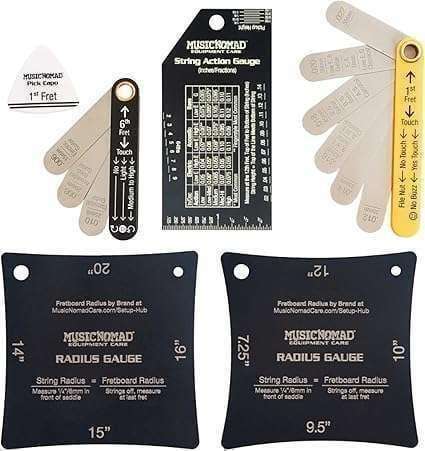
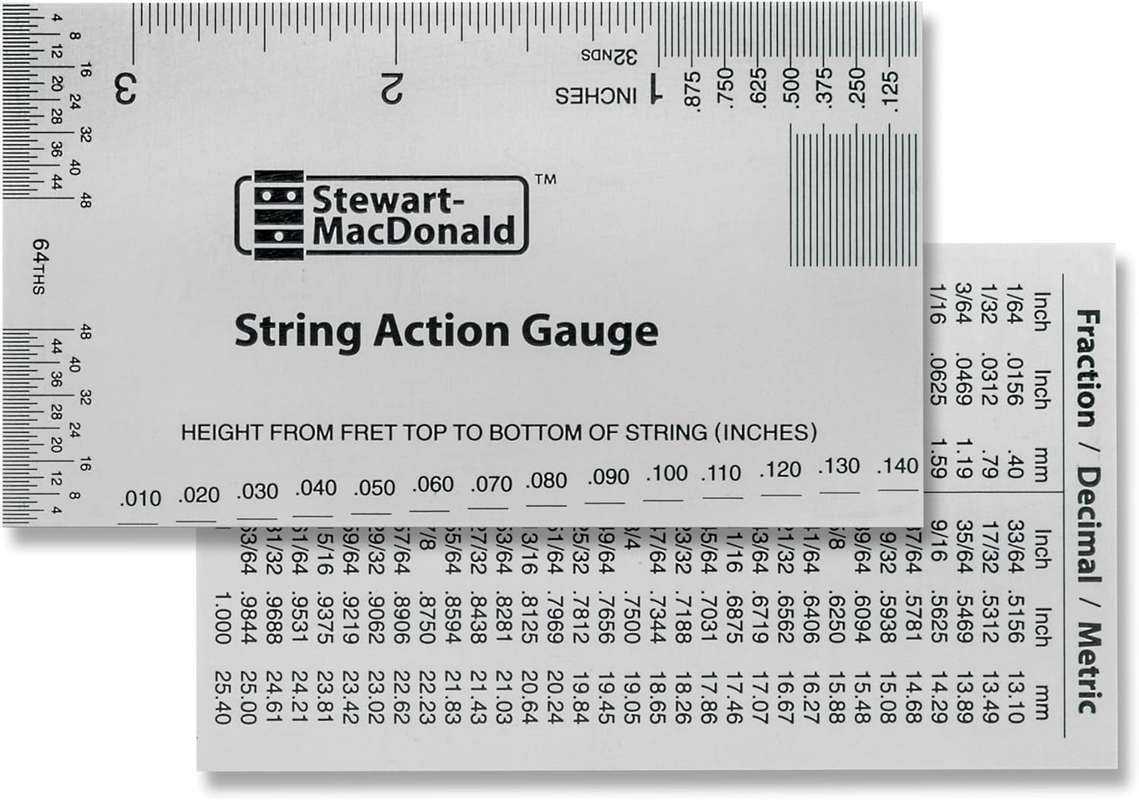
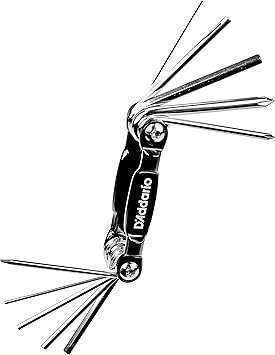
You need a feeler or relief gauge, an action rule that reads in 64ths or millimetres, a capo, an accurate tuner and the wrenches that came with the guitar (or a multi-tool with the right sizes). Several spec sheets above list a truss rod wrench, and the hardtail DK24 and JS32Q list a saddle-height wrench too. Affiliate links may earn us a commission at no extra cost to you.
Tools for a Jackson or Charvel setup
 Buy on Amazon

Step 1: Set Neck Relief
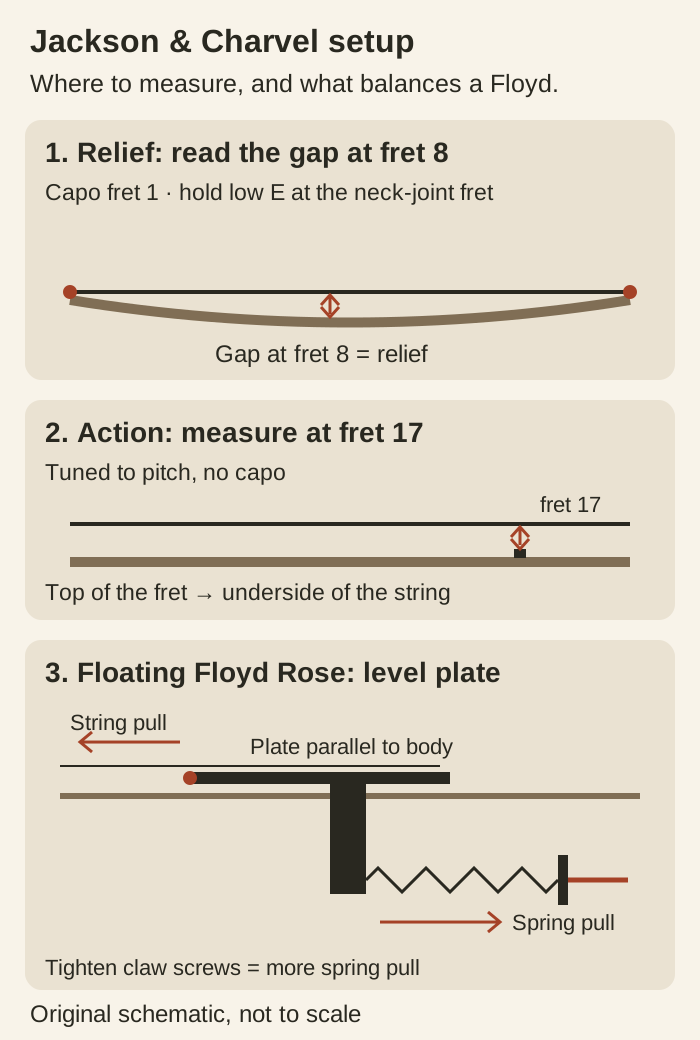
Relief comes first because every action number depends on it. Jackson's FAQ method works on both brands: tune to pitch, capo the 1st fret, hold the low E at the fret where the neck meets the body, and slide a feeler gauge under the string at the 8th fret.
Jackson publishes three relief figures:
- .004" at the 8th fret on the current factory spec sheet, a minimum for factory strings.
- .007"–.008" (0.18–0.20 mm) in the owner's manual's factory table, measured at the 7th fret with the low E held at the last fret.
- .020" as the FAQ's ceiling. Above it, tighten the rod.
So Jackson's published range runs from .004" to .008". If you pick hard or fit heavier strings, start nearer the top; Jackson says its specs can be modified, within limited parameters, for how hard you pick and fret. Turn the rod in quarter turns, as both FAQs specify, and let the neck settle for a few minutes before re-measuring.
Headstock adjuster (X Series, JS Series)
Tighten (clockwise) to remove relief and loosen (counterclockwise) to add it, per Jackson's manual and FAQ. If there is no gap at all, the FAQ says to loosen in quarter turns. Our truss rod adjustment guide has the full walk-through.
Heel-mount wheel (Pro Plus, American Series, Charvel Pro-Mod)
The wheel does the same job from the body end, without removing the neck. Because you face it from the opposite end, it is easy to get the direction backwards: make one quarter turn, retune, re-measure, and confirm which way the neck moved before going further.
If a rod or wheel feels stiff, stop. Both brands say not to attempt neck adjustments unless you are comfortable, and to see a qualified repair specialist otherwise.
Step 2: Set Action at the 17th Fret
Tune to pitch, remove the capo, and measure from the top of the 17th fret to the underside of each outer string. Jackson's target is 4/64" (1.6 mm) on the low E and 3/64" (1.2 mm) on the high E. Do not compare these with a 12th-fret chart. Our action height guide covers rulers and reading technique.
Floyd Rose: raise or lower the two studs
Floyd Rose's tuning instructions set action at the two pivot screws with a 3 mm Allen wrench, and warn that this slightly changes your tuning. Move both studs in small, equal steps, retune and re-measure. If the fine tuners run out of travel, Floyd Rose says to repeat the full tuning procedure.
HT6 hardtails and 2-point trems: set each saddle
Set the two E strings to the published figures with the saddle-height wrench, then fill in the middle strings in Step 3. Retune after every change, because moving a saddle knocks its string out of tune.
EverTune F6: the order is fixed
EverTune's quick start puts each saddle in its active Zone 2 first: slacken the headstock peg, tighten until the pitch holds steady while you pluck, then two more half turns. Tune at the bridge with the hex key, then set playing position at the peg. Only then adjust action (the hex screw on top of the bridge) and intonation, resetting playing position after each. EverTune says those usually only need setting once, unless you change gauge or tuning.
If the low E buzzes at Jackson's height, do not keep dropping the bridge. Check relief, then look for a high fret; the fret buzz guide walks through the diagnosis.
Step 3: Match the Saddles to a 12"–16" Compound Radius
A compound board is rounder at the nut (12") and flatter at the top frets (16"). At the bridge the strings run over the flat end, so that is the curve your saddle heights should follow. On an HT6 hardtail or 2-point trem, set the outer strings first, then shape the middle four into an even curve between them; a radius gauge under the strings near the bridge makes it quick.
A Floyd Rose has no per-string height screws. Floyd Rose's saddle height notes say its six-string systems are 10" radius with the preinstalled shim and 12" without, and that matching a different radius means shimming individual saddles, for example with copper or aluminium tape. That is rounder than the 16" end of the board, so check whether the middle strings sit noticeably higher than the outer ones up the neck before deciding anything needs shimming.
Step 4: Balance a Floating Floyd Rose
A floating Floyd balances string tension against spring tension. The goal in both the Jackson manual and Floyd Rose's instructions is the base plate parallel to the top of the guitar with every string at pitch.
- Unclamp the three nut clamps and set the fine tuners to the middle of their range.
- Tune every string with the headstock tuners, starting from the low E.
- Re-check the low E. Each string you tune pulls the others the opposite way, so Floyd Rose says to tune slightly sharp or flat to compensate, and repeat until all six hold pitch.
- Look at the plate from the side. Tilted forward, away from the body: tighten the claw screws clockwise. Tilted back toward the body: loosen them counterclockwise. Retune after each change.
- When the plate is parallel and the strings are at pitch, clamp the nut and finish with the fine tuners only.
Floyd Rose notes the spring step is only needed at first setup, or when you change string gauge or tuning. Decide your strings and tuning first, balance once, then leave the claw alone.
Restringing without losing the balance
Jackson's manual says to slip a small stack of business cards or a pencil under the bridge plate before loosening the strings, to keep it parallel while they are slack. Fender's locking-trem guide adds that a block needs soft foam or cloth underneath to protect the finish. Cut the ball end off each new string, clamp it at the saddle without overtightening, stretch it, and retune several times before locking the nut.
Drop tunings and gauge changes
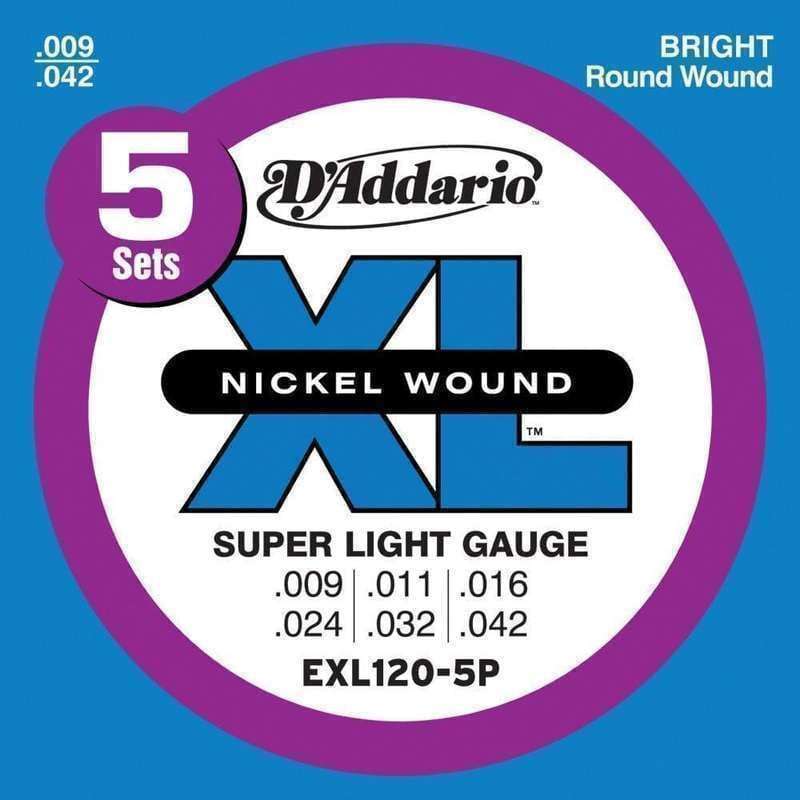
Jackson's manual is direct: heavier strings need more spring tension, and lighter strings and drop tunings need less. Tune down to D standard and the springs win, so the plate tilts back toward the body: loosen the claw screws to level it. Fit heavier strings at the same tuning and the plate tilts forward: tighten the claw. Our string gauge guide helps you pick a set before you rebalance. To keep the factory feel, both brands ship .009–.042 on every six-string listing we checked.
9-42 strings, the factory gauge
Decked 2-point trems
A 2-point trem can float or rest on the body. For a bridge resting on the body, Fender's guide suggests an extra half turn on each claw screw so it stays down during bends. Our Ibanez Edge tremolo guide covers the same balancing logic on another locking trem.
Step 5: Set Pickup Height
Hold each string at the last fret and measure from the top of the pole piece to the underside of the string, on the bass and treble sides. Jackson's figures:
| Pickup type | Bass side | Treble side |
|---|---|---|
| Humbucker | 4/64" (1.6 mm) | 4/64" (1.6 mm) |
| Single-coil | 5/64" (2.0 mm) | 4/64" (1.6 mm) |
| EMG (active) | As close as desired, allowing for string vibration | Same |
Source: Jackson Factory Setup Specifications, checked October 23, 2026.
Jackson notes that pickups differ in magnetic pull, so treat these as a start and listen. If a strong passive humbucker sounds compressed or warbles at 4/64", Seymour Duncan's own pickup adjustment tips suggest starting at about 1/8" and warn that a pickup too close pulls on the strings. Every Charvel Pro-Mod listed above uses Seymour Duncans.
Step 6: Set Intonation
Intonation goes last, because relief, action and trem balance all change it. Compare the 12th-fret harmonic with the fretted 12th-fret note. If the fretted note is sharp, move the saddle back, away from the neck; if flat, move it forward.
On a Floyd, loosen the saddle lock screw, slide the saddle, re-tighten and retune. As the manual points out, retuning with the headstock tuners means unclamping the nut; clamp it again and fine-tune once every string intonates, then check the plate is still parallel. On an EverTune, the quick start sets intonation with the rear screws, then resets playing position.
Troubleshooting Jackson and Charvel Setups
The Floyd will not return to pitch after a dive. Floyd Rose's troubleshooting tips start with the clamps: nut clamp screws, string clamps at the nut and bridge, and saddle intonation screws should all be tight. If it still drifts, Floyd Rose says the knife edges may be damaged, a job for a repairer. Fender's guide also suggests a dab of lip balm or petroleum jelly at the pivot contact points.
The other strings go flat when I bend one. On a floating bridge the bend pulls the bridge forward, which slackens the other strings. Floyd Rose calls this normal operation, not a fault.
Fine tuners have run out. Unclamp the nut, reset the fine tuners to mid-range, and repeat the tuning steps.
Buzz after dropping the action. Go back to relief, then check for a high fret before raising the bridge.
A truss rod or heel wheel that will not turn. Stop. Both brands send you to a qualified repair specialist for neck work you are unsure of, and to their Authorized Service Centers for repairs.
FAQ
What action does Jackson set at the factory?
Jackson's published spec is 4/64" (1.6 mm) on the bass side and 3/64" (1.2 mm) on the treble side, measured at the 17th fret, tuned to pitch with no capo. Jackson calls these minimums for factory strings, and its manual says problems from going lower are not covered by warranty.
How much neck relief should a Jackson have?
Jackson's spec sheet lists .004" at the 8th fret, and its owner's manual lists .007"–.008" (0.18–0.20 mm). Its FAQ says to tighten the truss rod if the gap at the 8th fret is more than .020". Adjust in quarter turns.
Does Charvel publish its own setup specs?
Not that we could find. Charvel's support pages, checked October 23, 2026, have no action or relief chart, but its FAQ gives the same relief check and bridge instructions as Jackson's. Start from Jackson's numbers.
Where is the truss rod on a Jackson or Charvel?
It depends on the model. Current X Series and JS Series Jacksons adjust at the nut. Pro Plus, American Series, the EverTune Dinky and every current Charvel Pro-Mod we checked use a heel-mount wheel at the body end of the fingerboard.
How do I level a floating Floyd Rose on a Jackson?
Tune all strings to pitch with the nut unclamped, then look at the base plate from the side. If it tilts forward away from the body, tighten the claw screws clockwise; if it tilts back toward the body, loosen them. Retune after each change, then clamp the nut and fine tune.
Do I need to rebalance the trem for drop tuning?
Yes. Floyd Rose says the spring adjustment is needed when you change gauge or tuning, and Jackson's manual says drop tunings need less spring tension. Loosen the claw screws until the plate sits parallel at the new tuning.
How do I raise or lower the action on a Floyd Rose?
Adjust the two pivot studs on the front edge of the bridge. Floyd Rose's instructions use a 3 mm Allen wrench on the pivot screws and note the change slightly alters your tuning. Retune and re-measure at the 17th fret.
What pickup height should Jackson humbuckers be set to?
Jackson's spec is 4/64" (1.6 mm) on both sides, measured from the pole piece to the string with the last fret held. For EMG actives, Jackson says as close as you like while still allowing for string vibration.
What strings come on a Jackson or Charvel?
Every current six-string Jackson and Charvel listing we checked ships with .009–.042 nickel-plated steel strings. Jackson's owner's manual lists .009–.052 for seven-strings with a trem and .009–.054 without one.
How do I set intonation on a Floyd Rose?
Compare the 12th-fret harmonic with the fretted note. If the fretted note is sharp, loosen the saddle lock screw and move the saddle back; if flat, move it forward. Re-tighten, unclamp the nut to retune, and repeat until both notes match.
Final Checks
The order is the whole trick: relief, action at the 17th fret, a parallel plate, pickups, then intonation. Change one thing at a time and leave the springs alone until you change strings or tuning. Own an ESP or LTD too? See our LTD setup guide.
Buying or selling? Date the guitar with the free Jackson serial number lookup and get a Guitar Valuation Report.
Related Posts
Superstrat and Floyd Rose Guides
- Ibanez Edge Tremolo Setup — balance and troubleshooting on another locking trem
- ESP Guitar Setup — fixed and Floyd Rose ESP examples
- Schecter Setup Guide — truss rod, 7-string and multiscale setup
- Cort Setup Guide — Cort's factory specs for G, KX and X electrics
- Jackson Serial Number Lookup — date your Jackson
- Charvel Serial Number Lookup — date your Charvel
Universal Setup Guides
- Guitar Truss Rod Adjustment — neck relief for all guitars
- Guitar Action Height Guide — measure and set string height
- Fret Buzz Troubleshooting — find the cause before you adjust
- Guitar String Gauges — choose a set before you rebalance
🛠️ Done with this setup? Log the spec — action, relief, strings — in My Gear Garage so you remember exactly what you did in six months. Free, no password — magic-link sign-in.