ESP Guitar Setup: Relief, Action and Bridge Checks
Plan your ESP guitar setup with E-II model examples, repeatable relief and action measurements, bridge checks and a worksheet to take to your technician.
An ESP guitar setup starts with identifying the bridge and recording how the instrument plays today. A serial number can help with dating, but it cannot tell you whether a previous owner changed the bridge, strings or pickups. This guide helps you build a useful setup record before choosing an adjustment.
Quick answer: Identify your exact ESP model and installed bridge, choose your intended strings and tuning, then record relief, action and tuning behaviour. Compare readings taken with the same method. Use the bridge manufacturer's instructions for adjustments and a qualified technician for neck, nut or fret problems. The model examples below establish hardware differences, not universal ESP factory setup targets.
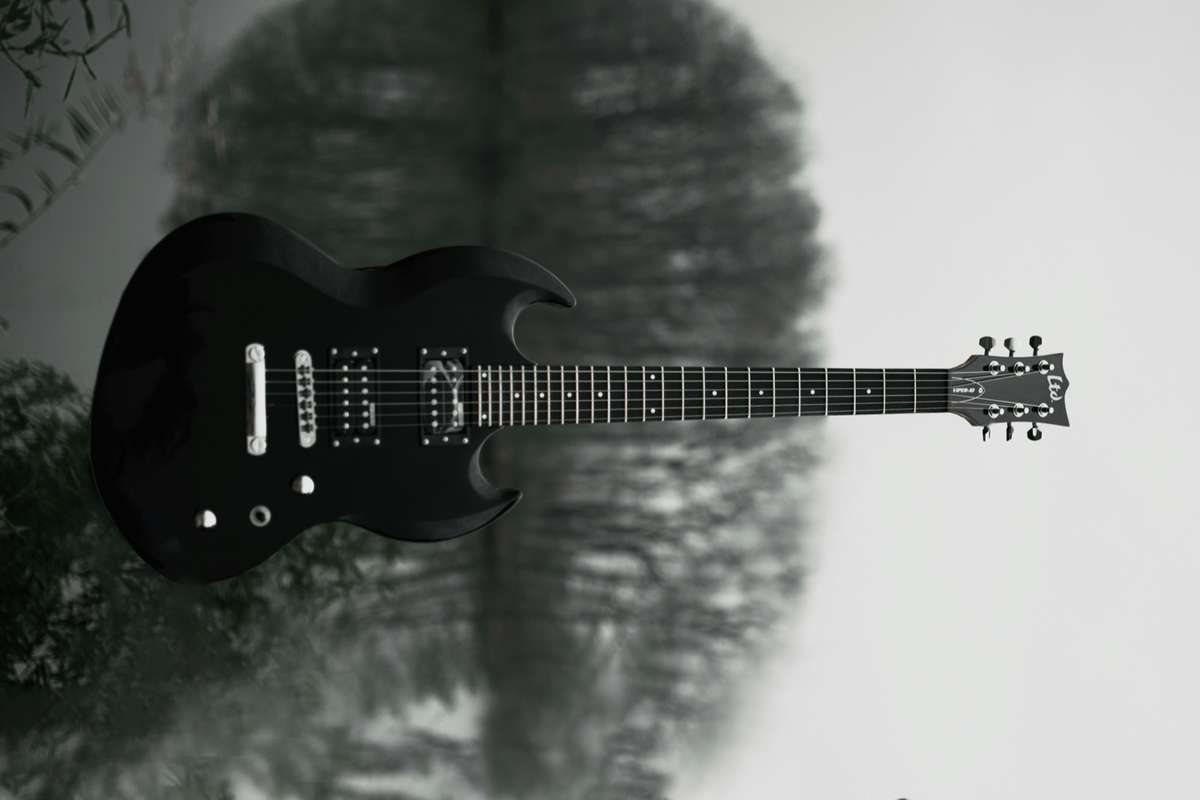
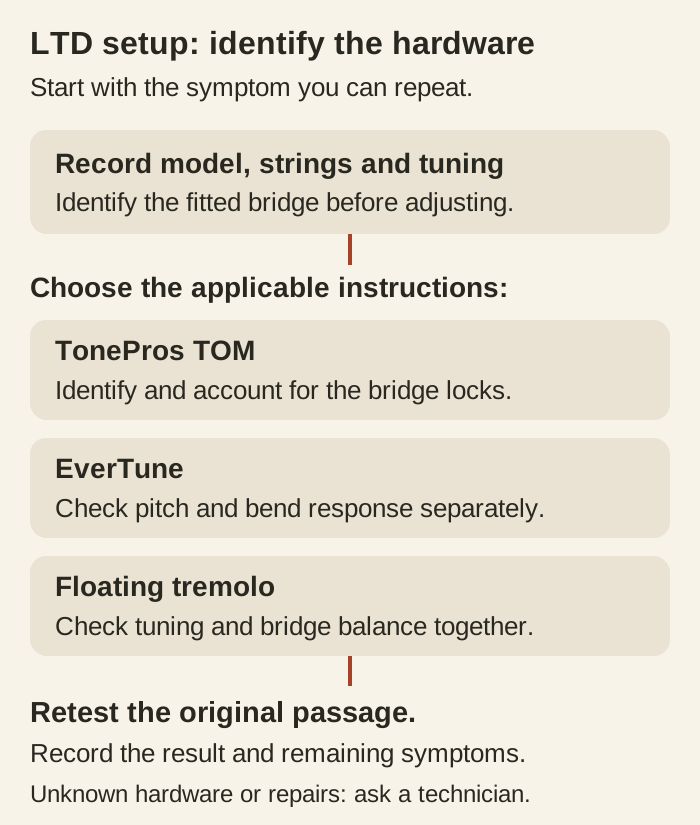
This is a measurement and decision guide for six-string ESP and E-II electric guitars. It includes fixed-bridge and Floyd Rose examples. If the headstock says LTD, the LTD setup guide covers EC-1000 variants, EverTune and troubleshooting after string changes.
In this guide:
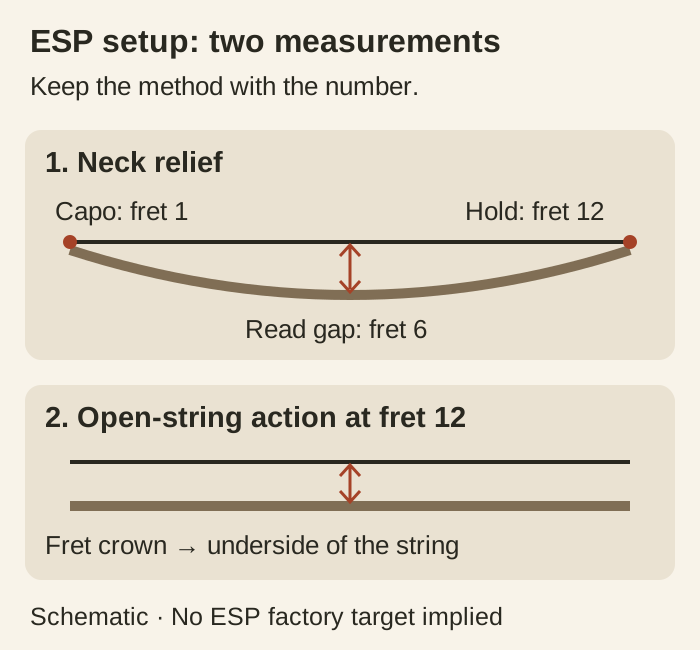
Original schematic, not to scale. It illustrates two different measurements, not an ESP factory specification.
Identify Your ESP Model and Hardware
Start with the full model designation on your paperwork or the manufacturer's listing, then compare it with the instrument. Preserve suffixes such as NT-II and the finish name. A family name like Horizon is a starting point for research, not enough information to order parts or choose a bridge procedure.
The ESP serial number decoder can supply dating clues. Keep the result separate from confirmed physical details. When paperwork and visible hardware disagree, photograph the difference and ask the seller or ESP support before treating the guitar as an untouched catalogue example.
E-II Horizon NT-II versus E-II M-II
These specific listings show why two guitars with the same scale and fingerboard radius can need different setup workflows.
| Listed example | Scale / radius | Bridge and nut | Listed string set |
|---|---|---|---|
| E-II Horizon NT-II, See Thru Black Cherry Sunburst | 25.5 inches / 305 mm | Gotoh TOM and tailpiece; bone nut | .010–.046 |
| E-II M-II, Snow White, neck-through | 25.5 inches / 305 mm | Floyd Rose Original SE; locking nut | .009–.042 |
Sources: ESP's Horizon NT-II specification table and E-II M-II Snow White specifications, checked September 19, 2026. These are the listed configurations, not a guarantee about other years, finishes or modified instruments.
The fixed-bridge example sends you to its bridge-height and individual-saddle instructions. The double-locking example adds bridge balance and nut clamps to the process. Neither the shared radius nor the model's price establishes how low your strings should sit.
What to photograph before doing anything
Take clear pictures of the bridge from above and from the side, the nut, the front and back of the headstock, and any visible model marking. Include the string packet if you have it. You are building a record that someone else can interpret without guessing which version you own.
Avoid dismantling a working guitar just to complete this checklist. Visible markings and existing paperwork are often enough to identify the next source to consult. If an adjustment point is hidden, find the relevant instructions before removing covers or inserting a tool.
A useful note reads “E-II M-II, Snow White, bridge marked Floyd Rose, current string packet unavailable.” That is more actionable than a confident but unverified year-and-specification list. Unknown details can remain unknown until you have better evidence.
Prepare Your ESP Setup Record
Decide what you want the guitar to do before measuring it. Write the intended tuning, the full string set and the playing problem in one sentence. “The G string chokes during a bend around fret fifteen” gives you a repeatable test; “make the action perfect” does not.
For a newly arrived instrument, work through the new-guitar setup checklist before making alterations. Photograph anything concerning and contact the seller promptly. A repair experiment should not replace a straightforward discussion about a damaged or incorrectly supplied instrument.
Use the tools you already own
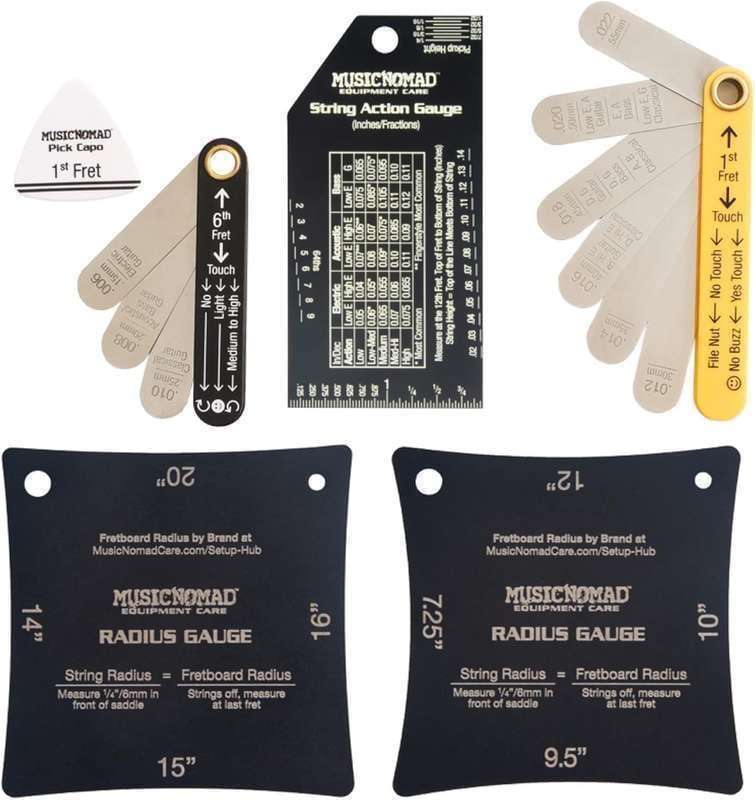
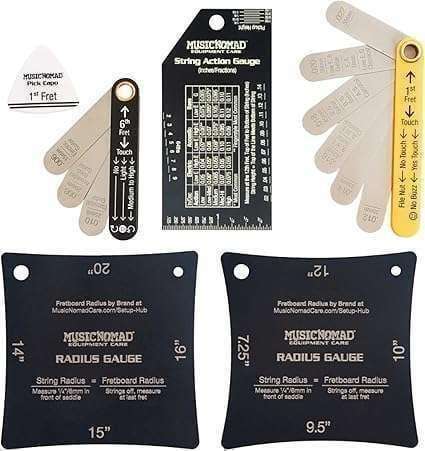
You need a reliable tuner, a suitable capo, feeler gauges or a relief gauge, and a ruler designed to read string height from a fret crown. Good lighting matters more than owning a large kit. Use a stable, protected position that does not load the neck while you measure.
An ordinary ruler with a blank margin below zero makes tiny clearances awkward to read. Check where its scale begins. If you cannot obtain the same reading twice, improve your viewing angle and method before interpreting the difference as movement in the guitar.
The products below are optional alternatives for assembling a measuring kit. The setup gauge set overlaps with the separate gauges; you do not need all three. Affiliate links may earn us a commission at no extra cost to you.
Optional measurement tools
 Buy on Amazon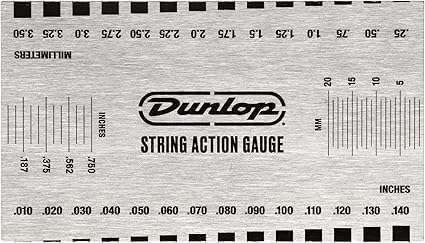
A worksheet that separates facts from targets
Copy this table into a notebook. Fill the first column with observations, leaving target values blank until they are supported by the exact model's documentation or agreed with your technician.
| Item | Before | After / service note |
|---|---|---|
| Full model, finish and visible bridge marking | ___ | ___ |
| Strings: make and all six gauges | ___ | ___ |
| Tuning, lowest string to highest | ___ | ___ |
| Relief method and measured gap | ___ | ___ |
| Open-string action, fret 12, bass / treble | ___ mm / ___ mm | ___ mm / ___ mm |
| Problem note: string, fret and technique | ___ | ___ |
| Intonation: harmonic versus fretted note | ___ | ___ |
| One change made | ___ | ___ |
An entry such as “2.0 mm at fret 12, low E, open string” is an example of how to write a measurement, not a recommended ESP action height. Always include the string, fret and whether a capo was used. A bare number loses the context needed to compare it later.
Measure ESP Neck Relief Consistently
Relief describes the neck's lengthwise curve. Action describes string clearance above a particular fret. They interact, but measuring one does not replace measuring the other. Start by checking the guitar at its intended pitch so subsequent notes refer to the same string tension.
A clearly named measurement method
For a repeatable observation, one available method is MusicNomad's first-to-twelfth-fret approach: hold the low E at fret 1 with a capo, fret it at 12, and check the gap above fret 6. Keep the guitar in playing position and avoid lifting the string with the gauge. See MusicNomad's explanation of its relief method.
This is a third-party measuring method. We are not adopting its suggested gauge thickness as an ESP factory target. If the exact instrument's instructions use different endpoints, follow those and record the method rather than comparing the resulting number directly with this one.
Try the reading more than once. A capo pressing too hard, a finger moving to another fret, or a gauge bending the string can change what you see. If you only have one gauge thickness, record whether it fits and how it contacts the string; do not invent a precise gap between available sizes.
Decide whether the reading explains the symptom
A relief measurement becomes useful alongside the playing test. Note whether the issue affects several strings over a region of the neck or one isolated note. The same audible rattle can have different causes, so the record should describe the symptom without declaring a diagnosis.
The ESP support FAQ advises using a qualified repair technician for truss-rod adjustment. A low relief reading is not permission to turn an unidentified adjuster. Bring your model, tuning and observations to the technician so the neck can be assessed with the rest of the setup.
Our truss-rod guide explains the terminology and common mistakes. For an ESP service decision, the installed rod and instrument instructions take precedence over a generic wrench size or turn count. If the guitar already plays well, recording the baseline is a worthwhile outcome without changing it.
Check Action on Fixed and Floyd Rose Bridges
Remove the relief-measuring capo before taking this article's action readings. With the guitar tuned, measure at fret 12 from the top of the fret to the underside of the low E, then the high E. Label these as open-string readings so they are not confused with a capoed setup method.
The action-height guide explains the measurement and playability trade-offs in more detail. MusicNomad also illustrates using a string-action gauge. If following another procedure, retain its fretting and capo conditions throughout rather than mixing parts of different methods.
Fixed TOM bridge: check what the height control moves
On the listed Horizon NT-II, identify the Gotoh TOM and separate tailpiece. Before adjusting either, find the instructions for the fitted parts. Photograph the existing bridge position and examine whether the instrument has acquired replacement hardware or locking features.
Do not confuse string height with saddle position along the string's length. A complaint about high action and a complaint about fretted pitch are different questions. Moving both controls at once makes it harder to tell what improved and what still needs work.
A sensible service request is “measure relief, assess whether the bridge can safely provide the needed clearance, then check intonation.” This gives the technician an objective while leaving room to find nut or fret problems. It is more useful than asking them to reproduce another player's numbers regardless of your guitar.
Floyd Rose: settle the bridge before judging the action
A floating bridge links the tension of the strings to its spring system. A changed tuning or string set can alter the bridge's resting position. Until tuning and bridge balance are stable, an action reading may describe an intermediate state rather than the setup you will play.
Floyd Rose's tuning instructions describe releasing the nut clamps, positioning the fine tuners within their usable range, tuning repeatedly and checking bridge balance before locking and fine tuning. Follow the instructions for the actual installed system; a similar-looking licensed bridge may need its own documentation.
If the bridge is unfamiliar, have a technician establish the first setup and show you the restringing procedure. Ask them to record the chosen tuning and string set. That small handover makes future routine changes easier than discovering the spring system while every string is off the guitar.
Do not use a generic saddle-shimming recipe solely because a catalogue lists a fingerboard radius. The fitted bridge, saddle arrangement and any previous modifications also matter. Record uneven string clearance as a symptom to assess, rather than guessing which shim or replacement part belongs underneath it.
Test Intonation, Pickups and Playing Comfort
With tuning stable, compare the twelfth-fret harmonic with the fretted note on the same string using a tuner. Fret with normal pressure and keep the instrument in playing position. Retune the open string between comparisons and write down whether the fretted note is sharp, flat or close enough for your practical needs.
This is an observation step, not a complete saddle-adjustment procedure. Different bridges secure their saddles differently. Before moving one, read its manufacturer's instructions, including any requirements to release tension or locks; never assume an adjustment screw can be forced under load.
Build a short playing test you can repeat
Choose a familiar open-chord passage, a rhythm part in the middle of the neck and a lead phrase with bends. Play each through the same clean amp settings before and after the setup. Add your normal gain setting afterward, because it can change how noticeable some noises are.
Write down the exact passage that still feels wrong. A recording can help you compare the result, but a louder take does not automatically mean better sustain or improved adjustment. Keep the pick, tuning and playing intensity as consistent as you reasonably can.
Separate electronics from mechanical setup
Check every pickup selection and any voice switches before changing pickup height. Keep the amplifier and guitar controls in the same positions while comparing. If a sound disappears only in one setting, note that separately from fret buzz or action measurements.
Identify the installed pickup model and consult its maker before choosing a clearance. Active and passive systems, direct mounts and mounting rings do not justify a single universal ESP pickup-height number. Record any existing height with its measurement point and string-fretting condition so a technician can reproduce it.
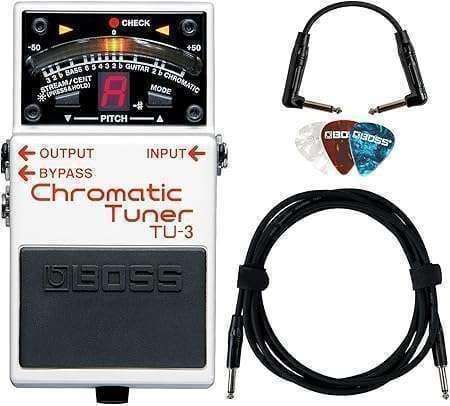
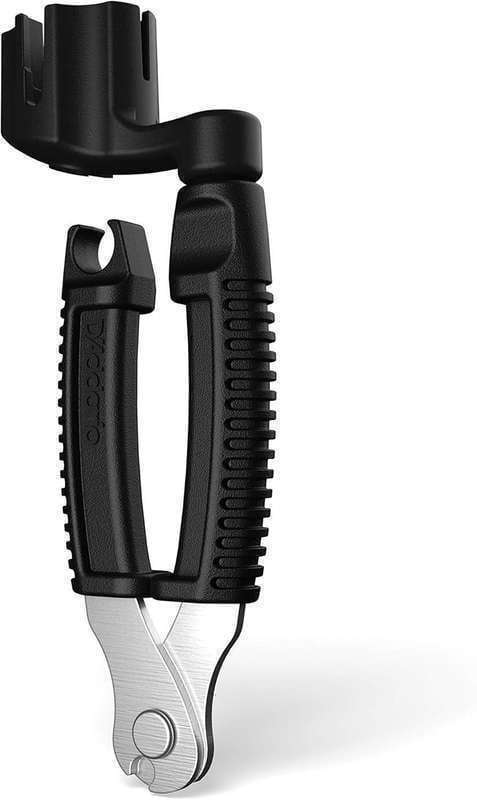
A tuner and a string-changing tool can help with this final check, but they solve different jobs. Choose one tuner you can read comfortably; a second tuner is an alternative, not a requirement for an accurate setup record.
Tuning and restringing options

Turn the record into a service brief
Give the technician your preferred tuning, strings, playing examples and before measurements. State your priority: cleaner heavy rhythm, easier bends, more consistent tuning, or a compromise between them. Ask which observations suggest routine adjustment and which require repair.
After the work, repeat the same measurements and playing test. Keep the successful result as your personal baseline. You now have something more useful than a borrowed factory-spec chart: a documented setup that was assessed on your actual guitar for the way you play.
ESP Guitar Setup FAQ
What is the correct action height for an ESP guitar?
The model pages cited here do not publish a universal ESP action target. Measure your current setup with a stated method and discuss the result alongside fret condition, tuning and playing style. A catalogue's scale or radius does not supply the missing action measurement.
Can the ESP serial number tell me the setup specifications?
A serial result can help research the instrument's history. It does not verify the current bridge, pickups, strings or modifications. Match the full model and physical hardware with appropriate documentation before using setup instructions or ordering replacement parts.
Does an E-II Horizon use the same bridge as an M-II?
The specific Horizon NT-II and M-II examples in this guide use different bridges. Identify the exact variant rather than applying one family's procedure to the other. The comparison table is a research starting point, not a specification list for every year.
How should I record ESP neck relief?
Record the held frets, measured fret, string, tuning and gap together. This article describes one named measurement method and distinguishes it from factory specifications. Repeat the same method during later checks so a changed number represents a meaningful comparison.
Should I adjust the truss rod to lower all the strings?
Do not treat the rod as a general action control. Neck relief, bridge clearance, nut condition and fret condition need to be assessed together. Follow ESP's service guidance and use a qualified technician when neck adjustment is needed.
Why do my other strings move out of tune during a bend?
A floating tremolo responds to changes in string tension, so the other strings can drop in pitch during a bend. That behaviour alone does not prove a faulty tuner. Distinguish it from a bridge that fails to return to its original pitch afterward; see Floyd Rose troubleshooting.
Can I copy the listed factory string gauge onto a used ESP?
A listed string set describes that particular configuration. A used instrument may already be adjusted for another set or tuning. Identify what is installed and decide what you want to use before arranging any changes, especially with a floating bridge.
Does lower action always mean a better setup?
A useful setup supports your actual playing. Very low clearance may not suit your picking strength, bends or fret condition. Compare comfort, clean notes and tuning with a repeatable passage instead of treating the smallest ruler reading as the goal.
Where can I find setup help for an LTD instead?
Use the LTD guitar setup guide for EC-1000 fixed-bridge and EverTune examples, a symptom worksheet and string-change planning. It has separate model research and does not assume that every LTD shares the hardware in this ESP guide.
What should I bring to a guitar technician?
Bring the guitar, intended strings, tuning, a description of the problem and any measurements already taken. Include the full model designation and photographs of uncertain hardware. A short example of the passage that causes trouble helps make the requested result concrete.