Got a Guitar for Christmas? 10-Minute Checks Before You Play
Got a guitar for Christmas? Do these 10-minute checks first: settle it in a warm room, tune it, then check the neck, string height, buzz and electronics, and date it.
By Nick TheodoulouUpdated

On this page
 Ten minutes of checks on Christmas Day tells you whether the guitar is ready to play or needs a small fix while the returns window is still open.
Got a Guitar for Christmas? Start Here
Got a guitar for Christmas? The best thing you can do in the first hour costs nothing: let it warm up, tune it, and spend ten minutes checking that it arrived the way it left the factory. Most new guitars are fine. A few have a loose part, a sharp fret end or strings set too high, and Christmas is the one time of year when a delivery may have spent a night in a cold van.
This guide walks you through those ten minutes in order. You will know whether the guitar is ready to play, whether it needs a simple adjustment, or whether it should go back while the shop's returns window is still open. You will also find out exactly what you have been given, because the serial number on the headstock tells you the year and the factory.
Quick answer: If the guitar came in from the cold, leave it in its box or case for a few hours. Then tune it, play every string at a few frets, look along the neck, check the string height at the 12th fret, plug it in if it is electric, and look up the serial number. Keep the box and receipt until you are happy.
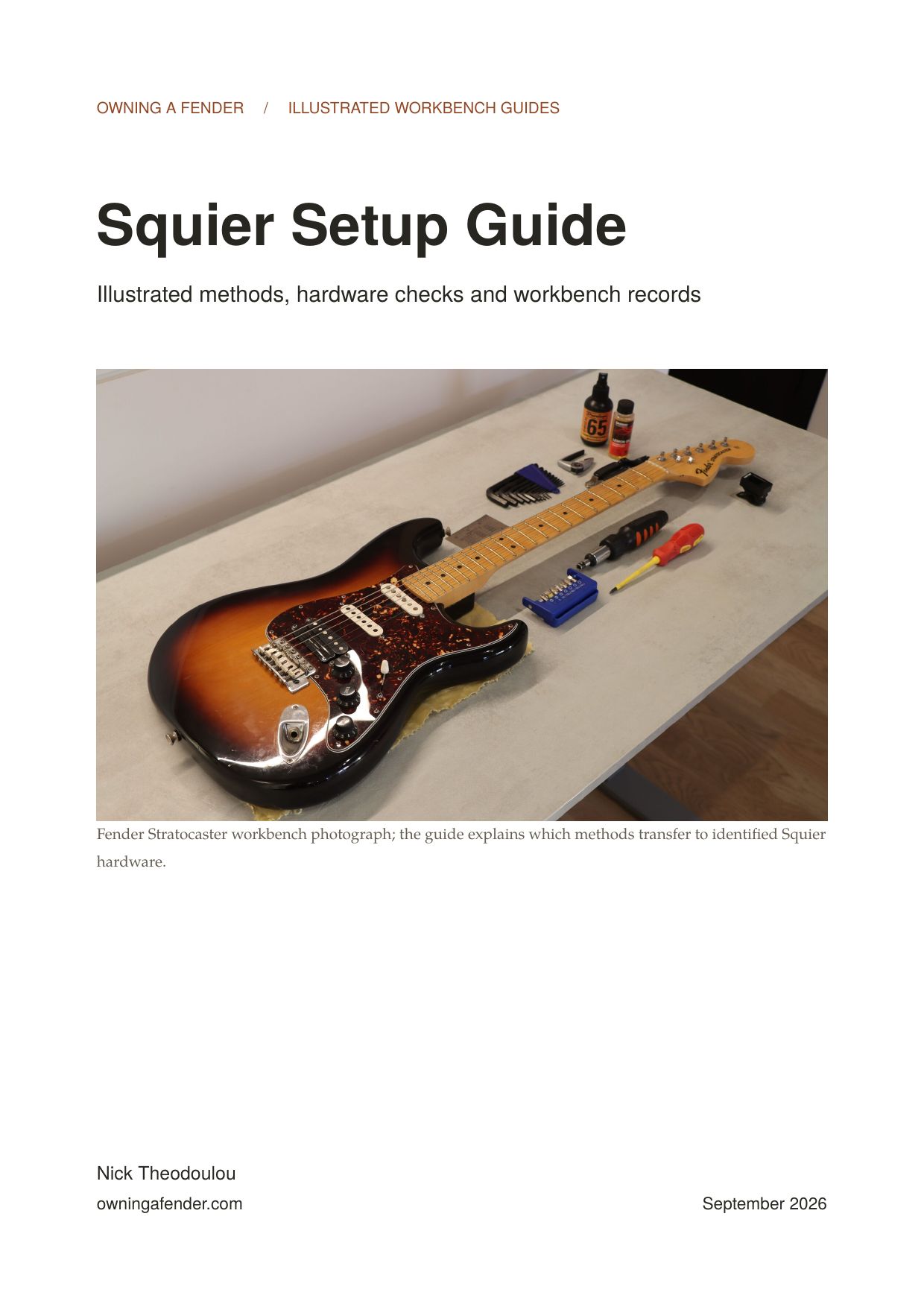
Before You Open the Box: The First Hour
Let a cold guitar warm up slowly
Wood and finish move with temperature. A guitar that has sat in a cold car, a garage or a delivery van can get fine cracks in the finish (called finish checking) if it goes straight into a warm living room and out of its case. Leave it in its box or case for a few hours so it warms up slowly. If the box feels cold to the touch, wait longer.
This matters most for guitars with a nitrocellulose finish and for acoustics, but it costs nothing to do with any guitar.
Keep everything that came with it
Keep the box, the packing, the receipt or gift receipt and any paperwork until the checks below are done. Most shops need the original packaging for a return, and the receipt is your proof of purchase if something turns out to be faulty.
If the guitar was a gift, the person who bought it holds the receipt. It is worth asking for a gift receipt now rather than in mid-January.
Check what is in the box
A new electric guitar normally comes with a tremolo arm (if it has a vibrato bridge), truss rod key or Allen keys, and sometimes a cable or gig bag. Starter packs add a small amp, a strap, picks and a tuner. Check the box contents against the shop's listing. A missing truss rod key is common and annoying, so find out on day one rather than when you need it.
The 10-Minute Check
Do these in order. Each one takes a minute or two, and none of them needs tools beyond a ruler with millimetre marks.
1. Look it over in good light
Check the body, the back of the neck and the headstock for cracks, dents and finish damage. Look closely where the neck meets the body and around the headstock, the two places most likely to be damaged in transit. Turn every tuning peg and check it feels smooth. Check the strap buttons are tight.
Small finish marks from the factory are normal on budget guitars. A crack in the wood is not, and that is a return.
2. Tune it, then tune it again
New strings stretch. A new guitar will drop out of tune again and again for the first day or two, and that is normal, not a fault. Tune it with a clip-on tuner or an app, then gently pull each string up away from the fretboard a few times along its length and retune. Repeat two or three times and the tuning will settle.
If one string keeps going flat after a day of stretching, check that it is wound round its tuning post at least two or three times and that the tuner is not slipping.
3. Play every string at a few frets
Play each string open, then at the 1st, 5th, 12th and 15th frets. Listen for buzzing, a note that dies straight away, or a note that does not sound at all. A light buzz you can only hear unplugged is common and often fine. A buzz you can hear through the amp, or a note that will not sound, is worth investigating.
Run your hand along both edges of the fretboard as well. In winter, dry indoor air can shrink the fretboard slightly so the fret ends stick out and feel sharp. This is called fret sprout. It is common in December and January, and it is not a reason to panic. The fix is to raise the room humidity and, if it does not settle, have the fret ends filed.
4. Sight down the neck
Hold the guitar by the body with the headstock pointing away from you and look down the edge of the fretboard. A good neck has a very slight forward dip in the middle under string tension. This is called relief.
A neck that looks clearly bowed, or one that bends the other way so the strings touch the middle frets, needs a truss rod adjustment. That is a normal setup job, not a fault, but if you are not comfortable doing it, it is fair to ask the shop.
5. Check the string height at the 12th fret
With the guitar in tune, measure the gap between the bottom of the low E string and the top of the 12th fret. Do the same on the high E. For a quick first check, these are practical starting ranges, not factory specs:
| Guitar type | Low E at 12th fret | High E at 12th fret |
|---|---|---|
| Electric | About 1.6–2.2 mm | About 1.4–1.8 mm |
| Steel-string acoustic | About 2.4–2.8 mm | About 1.6–2.0 mm |
Makers measure in different ways (Fender, for example, measures string height at the 17th fret), so use these only to spot a guitar that is clearly too high. If your guitar is well above these numbers, it will feel hard to play and chords higher up will sound sharp. High action is the most common reason a new player gives up, and it is a setup issue, not a faulty guitar. The guitar action height guide shows how to measure it properly and how to lower it. For your exact model's figures, use the setup specs lookup.
6. Plug it in and test every control (electric guitars)
Plug into an amp at low volume. Try every pickup selector position, turn every volume and tone knob from end to end, and gently wiggle the cable where it goes into the guitar.
Scratchy noises when you turn a knob are common on new guitars that have sat in a warehouse and often clear with use. A position that gives no sound at all, or a crackle every time the cable moves, is a fault worth reporting to the shop.
7. Check the tuning higher up the neck
Play the 12th-fret harmonic on each string (touch the string lightly directly over the 12th fret and pick it), then fret the same string at the 12th fret. The two notes should read the same on your tuner. If the fretted note is noticeably sharp or flat, the intonation needs setting. That is an adjustment at the bridge, not a fault, and it is usually done after the string height is right. The intonation checker walks you through it.
8. Note anything you are unsure about
Write down anything you are unsure about, with a photo. If you contact the shop, a clear description ("the G string buzzes at the 3rd fret through the amp") gets a better answer than "it doesn't sound right". The new guitar day checklist has a printable intake sheet if you want to record every measurement.
Find Out Exactly What You Have Been Given
Read the serial number
Every major brand puts a serial number on the guitar, usually on the back of the headstock or on the neck plate. It tells you when and where the guitar was made, and sometimes which series it is.
A few examples of modern serials:
- Fender USA: "US" followed by the year, so US24 is 2024.
- Fender Mexico: "MX" followed by the year, so MX24 is 2024.
- Squier (Indonesia): letters for the factory, then the year, such as ICS23 (Cort, 2023) or ISS23 (Samick, 2023).
Put the full number into the serial number lookup and it will decode the year, factory and country. There are dedicated decoders for Fender, Squier, Gibson, Epiphone and Yamaha, among others.
Not sure which model it is?
If the box has gone or the headstock only says the brand, the identify my guitar tool asks a few questions about the body, pickups and headstock and narrows it down. Knowing the exact model matters when you buy strings, look up setup specs or ask for help online.
Keep the story of the guitar
A first guitar often becomes a keepsake. The Guitar History Report turns the serial number into a short PDF covering when and where your guitar was made, what was happening at the factory in that era, and the specs for your model year. It is not a valuation, just the guitar's story, which makes it a nice thing to print and keep in the case.
Normal, Fixable or Send It Back?
Most of what you find on a new guitar falls into the first two columns. Here is how to tell them apart.
| What you find | Normal or fixable at home | Contact the shop |
|---|---|---|
| Goes out of tune for the first day or two | Normal: new strings stretching | If it still will not hold tune after two or three days |
| Strings feel high or hard to press | Fixable: setup (relief, then string height) | Only if adjustments do not bring it down |
| Light buzz unplugged, not through the amp | Normal on most electrics | — |
| Buzz through the amp on several frets | Often relief or string height | If one fret buzzes and nothing helps (a high fret) |
| Sharp fret ends in winter | Common: dry air (fret sprout) | If they are sharp enough to cut, or it arrived that way |
| Scratchy knob | Often clears with use | If the noise continues or a control does nothing |
| Crack in the wood, loose neck, dead pickup | — | Yes, before you adjust anything |
A quick word on returns. In the UK, a guitar bought online usually comes with a 14-day right to cancel from the day it is delivered, and a guitar that is faulty can be rejected within 30 days. Many shops extend their Christmas returns window into January. Elsewhere, the shop's own policy is what counts. Either way, check the policy now rather than later, and do not make major adjustments to a guitar you think you may send back.
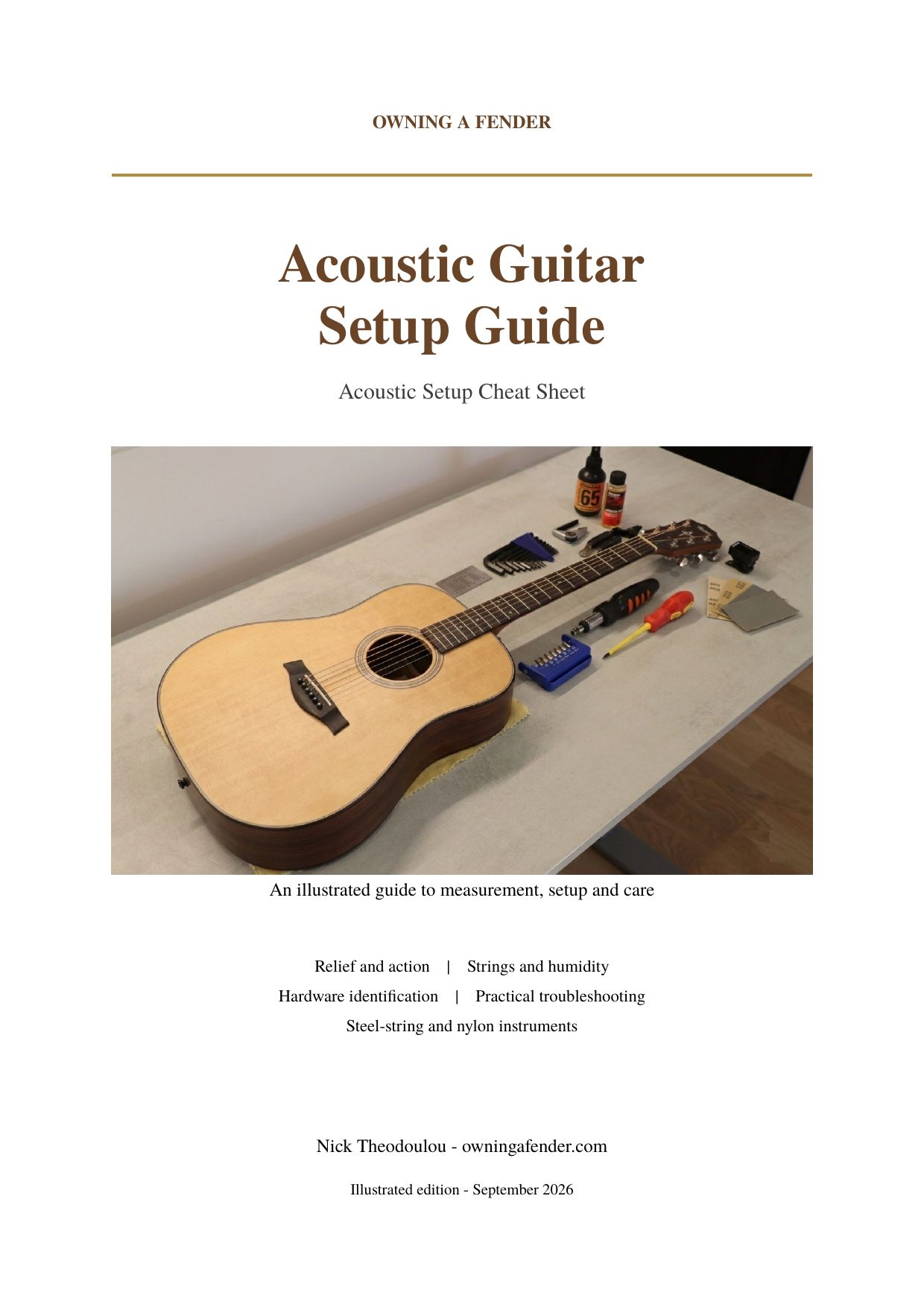
Winter Care for a New Guitar
Watch the humidity
Central heating dries the air, and guitars are made of wood. Below about 40% relative humidity, a fretboard can shrink, fret ends can stick out, and an acoustic top can sink or, in bad cases, crack. Solid-wood acoustics are the most at risk. Laminate and electric guitars are tougher but still show it in the fret ends.
A cheap digital hygrometer in the case or the room tells you where you stand. Aim for 45–55%. The acoustic guitar humidity checker tells you whether your reading is a problem and what to do about it, and the acoustic humidity guide covers humidifiers in more detail.
Winter Care for a New Guitar

 Buy on Amazon

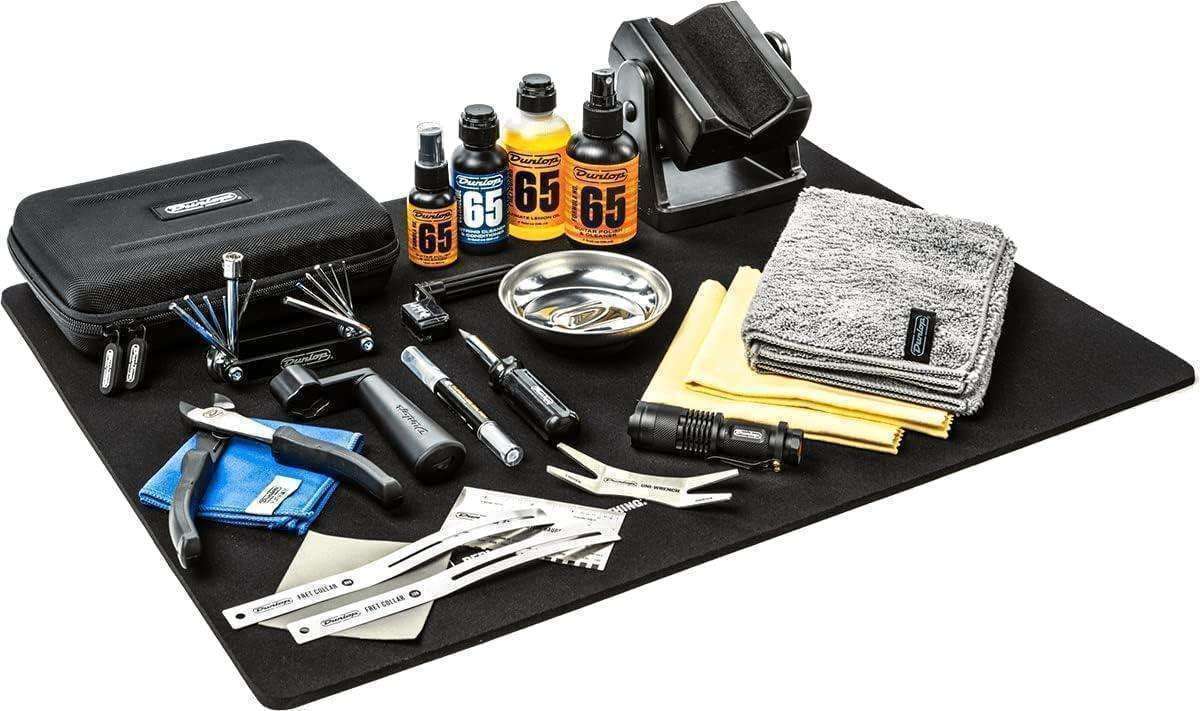
Where to keep it
Keep the guitar away from radiators, fires and outside walls, and out of a cold car. A wall hanger is fine in a room with stable humidity. In a very dry house, the case with a humidifier pack is safer.
Spending the Christmas Money: First Gear Worth Buying
If you were given money as well as a guitar, these are the things that make the first months easier. None of them is essential on day one, but each one solves a problem most new players hit within weeks.
A clip-on tuner
A clip-on tuner reads the vibration through the headstock, so it works in a noisy room with the family watching. It is quicker than an app and you will use it every time you play.
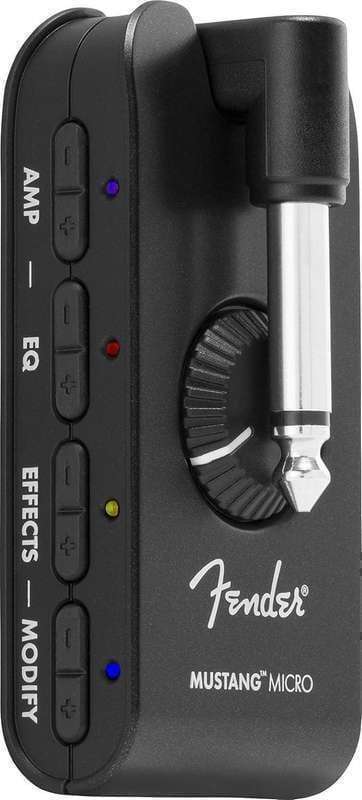
A headphone amp
For an electric guitar, a headphone amp that plugs straight into the guitar lets you practise on Christmas night without waking the house. It is also the cheapest way to play with effects.
Spare strings and a string winder
You will break a string sooner or later, usually the high E. A spare set means you can keep playing, and a string winder with a built-in cutter makes changing them a five-minute job.
First Gear for a New Player

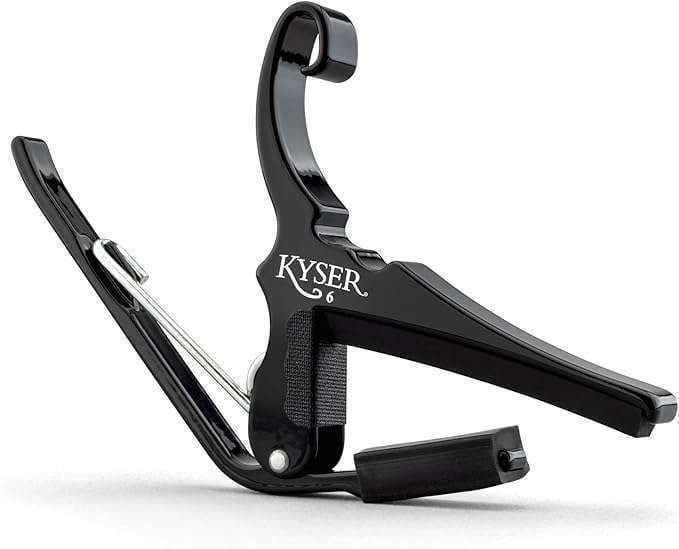
Spare Strings and a String Winder


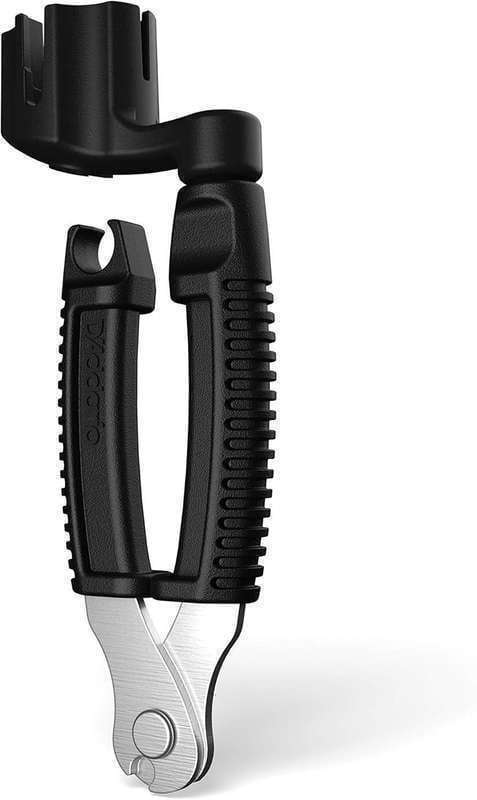
A setup, either at home or at a shop
If the 10-minute check showed high action or tuning that drifts higher up the neck, a setup is the single biggest improvement you can make. A shop setup usually costs a few tens of pounds or dollars and may have a waiting list in January. With the right specs, most of it is a careful afternoon at home. The guide to setup costs compares the two.
FAQ
What should I do first with a guitar I got for Christmas?
If it came in from the cold, leave it in its case or box for a few hours to warm up slowly. Then tune it, stretch the new strings, play every string at a few frets, and check the string height at the 12th fret. Keep the box and receipt until you are happy with it.
Why does my new guitar keep going out of tune?
New strings stretch for the first day or two. Tune, gently pull each string up away from the fretboard along its length, and retune. Repeat two or three times. If one string still drifts after a few days, check it is wound round the post at least two or three times.
Do new guitars need a setup?
Many do. Guitars leave the factory with a general setup, then travel and sit in warehouses where temperature and humidity change. If the strings feel high or chords sound out of tune higher up the neck, a setup will help. The new guitar day checklist covers it in detail.
How do I find out what year my guitar was made?
Look for the serial number on the back of the headstock or the neck plate and enter it into the serial number lookup. On modern Fenders, the two digits after "US" or "MX" are the year.
Why are the fret ends on my new guitar sharp?
In winter, central heating dries the air and the fretboard shrinks slightly, so the metal fret ends stick out. Raising the room humidity often helps. If they stay sharp, a shop can file them smooth in under an hour.
Should I leave a new guitar in its case when it arrives?
Yes, if it has been in a cold car, van or porch. A few hours in the case lets it warm up slowly and protects the finish from cracking. If it arrived at room temperature, you can open it straight away.
Is a buzzing string a fault?
Usually not. A light buzz you can only hear unplugged is normal on most electric guitars. A buzz you can hear through the amp on several frets is usually a setup issue. A buzz on one fret that nothing fixes may be a high fret, and that is worth reporting to the shop.
Can I return a guitar I got for Christmas?
Usually, with the receipt or a gift receipt. In the UK, online purchases normally carry a 14-day right to cancel from delivery, and faulty goods can be rejected within 30 days. Many shops also extend returns over Christmas. Check the shop's policy and keep the original packaging.
What gear should a new guitarist buy first?
A clip-on tuner, a spare set of strings and a string winder cover most early problems. For an electric guitar, a headphone amp lets you practise quietly. A strap and a capo are cheap and useful too.
How much is the guitar I was given worth?
For insurance, note the serial number and take a few photos. If you want a figure, the Guitar Valuation Report gives a low, mid and high estimate from the model, year and condition you enter.
Enjoy It, and Set It Up When You Are Ready
Most guitars given at Christmas are fine out of the box, and ten minutes of checks tells you which kind you have. Tune it, play it, look along the neck, measure the string height, and look up the serial number. If something is broken, contact the shop while the returns window is open. If it is just high action or tuning that wanders higher up the neck, a setup turns a good guitar into one that is easy to play.
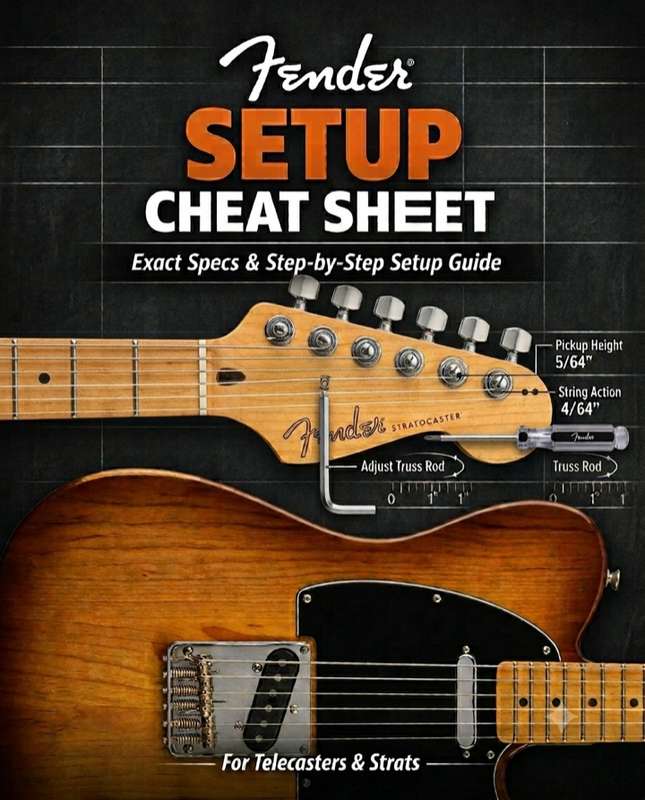
If you want to put a figure on the guitar for your insurance, the Guitar Valuation Report gives a range from the details you provide. And if the guitar is a Fender, the setup guide below has your model's specs on one printable card.
Keep reading
Next in guitar setup
- Setup basicsDo New Guitars Need a Setup? New Guitar Day ChecklistRead
- Setup basicsGuitar Fret Buzz: Causes, Fixes, and a Step-by-Step Diagnostic GuideRead
- Setup basicsHow Much Does a Guitar Setup Cost? Pro Shop vs DIYRead
Everything on guitar setup
Open the hub