Fender Serial Number Lookup: Free Decoder & Year Guide
Use our free Fender serial number lookup to check year and origin. Find serial locations, USA/Mexico/Japan charts, and what to do when no result appears.
What's Next?
Now that you've decoded your Fender guitar, here are the best places to continue:
- Fender Setup Guide — Exact specs for Strat, Tele, Jazzmaster, Jaguar, Mustang, Bass
- Setup Specs Lookup — Find factory specs by year and model
- Guitar Action Height Guide — Dial in perfect string height
- My Gear Garage — Track your collection and maintenance schedule
- Garage Pro — Maintenance log with unlimited guitars, full history & smart reminders
- Fender vs Squier — See how your model compares
- All Guitar Serial Number Lookups — Decode Gibson, PRS, Taylor, Martin, Ibanez and more
A Fender serial number lookup is a useful first step when dating a Stratocaster, Telecaster, Jazzmaster or bass. Start with the free decoder above, then compare its result with the country marking and the actual instrument.
Quick answer: A Fender serial number can suggest a production year or range and country of origin. It does not, by itself, prove the exact model, originality or authenticity. If the official Fender lookup returns no result, keep the full number and country marking, check the relevant dating chart, and compare the instrument with its paperwork before drawing a conclusion.
Jump to the answer you need:
- How the free checker works
- No result from Fender's lookup
- Finding the exact model
- Serial number locations
- USA dating charts · Mexico · Japan · Squier
- Documented serial-number exceptions
- Unreadable or missing numbers · FAQ
Fender Serial Number Lookup & Checker: Decode Your Guitar Instantly
Use the decoder for an initial date estimate, then use the country-specific reference below for overlaps and exceptions. This page is an independent reference; our decoder interprets serial formats and is not a search of Fender's factory records.
Fender Serial Number Checker
The tool above is a free Fender serial number checker with no sign-up required. A recognised format returns the date and origin information available for that format. An unrecognised result means the tool could not resolve your entry; it does not establish that the guitar is counterfeit.
Fender Serial Number Not Found: What to Do Next
A blank result in the official Fender serial lookup is not an authenticity verdict. Fender's own lookup guidance says its database is incomplete, including some modern instruments shipped directly to distributors.
- Copy the whole marking. Keep every letter and digit, and note spaces, country wording and where the number appears. Photograph it before trying alternative readings of a faint character.
- Choose the matching country chart. A letter prefix without its country marking can be misleading. If the headstock says Squier, use the Squier serial lookup for its broader factory coverage.
- Check the exceptions below. Reissues, overlapping year codes and special runs need more context than a single decoded year.
- Ask for evidence of the exact model. Compare the instrument with a dated receipt, model/part number, specification sheet or period catalogue. Keep a mismatch unresolved until you can explain it.
- Escalate a purchase concern. Send clear photographs and the full number to the selling dealer or Fender support. A valuable or disputed instrument may need inspection by an experienced guitar technician or vintage specialist.
A matching database entry is useful corroboration, but it cannot tell you whether the guitar in front of you still has its original neck, body or hardware.
How to Identify Your Fender Model from a Serial Number
Treat date, model and originality as separate questions. Several Fender models share the same serial format, so a year result is not enough to identify a Player, American Professional, vintage reissue or retailer special run.
Record these details together before comparing model specifications:
| Evidence to keep | What to compare | What it cannot establish alone |
|---|---|---|
| Full serial and country marking | Result from the decoder, official lookup and country chart | Exact model or authenticity |
| Model/part number on original paperwork | Matching catalogue or manufacturer's specification sheet | Whether parts were changed later |
| Clear headstock, body, bridge and pickup photographs | Features expected on that specific model | Hidden components or originality |
| Known repair and replacement history | Explanation for mismatched parts or dates | A complete history when records are missing |
Once the model is identified, use the setup specs lookup or the model-specific guides below. A serial year alone does not determine fretboard radius, neck profile or the right action height.
Part 1: Where Is My Fender Serial Number?
Before you can lookup your specific year, you need to find the number. Fender has moved the location several times over the last 70 years.
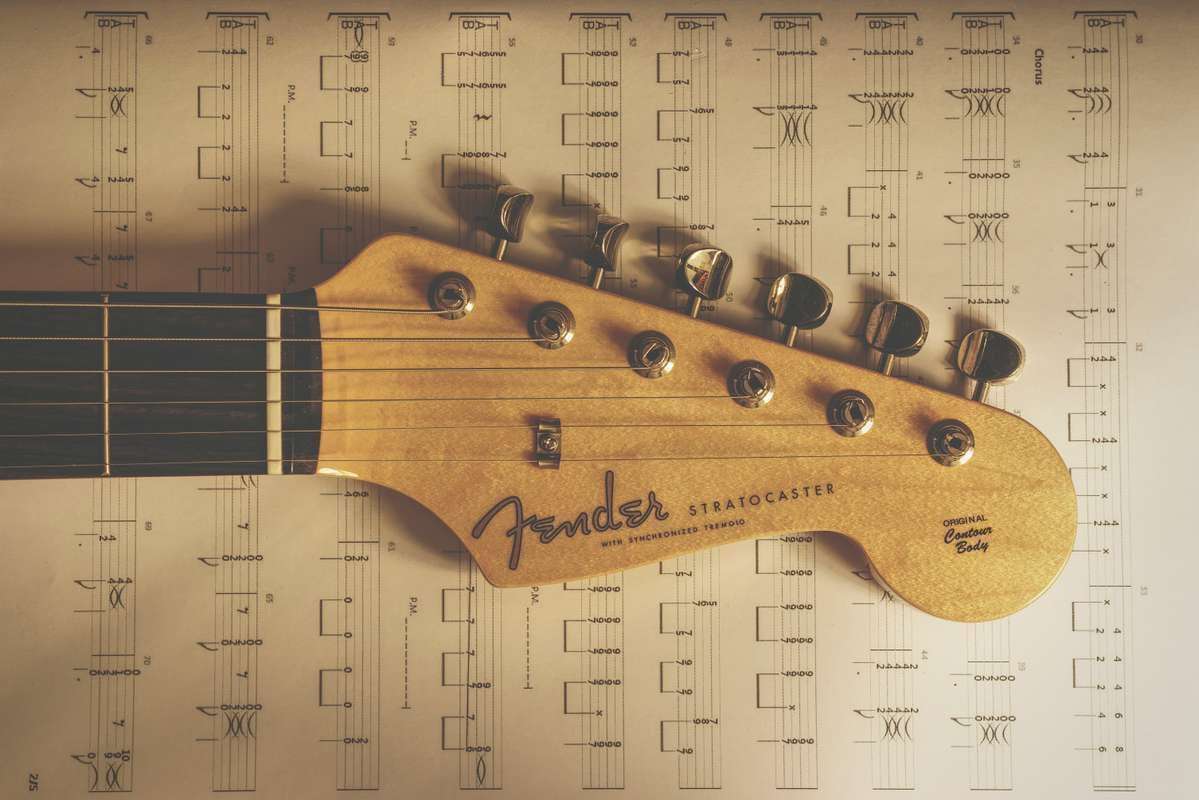
- Headstock (Back): Most common on modern Fender (USA/Mexico) and Squier guitars.
- Headstock (Front): Common on 70s era "CBS" models and some modern reissues.
- Neck Plate: A roughly 2x2 inch metal plate where the neck bolts to the body. Standard for vintage guitars (1954-1976) and vintage reissues (AVRI).
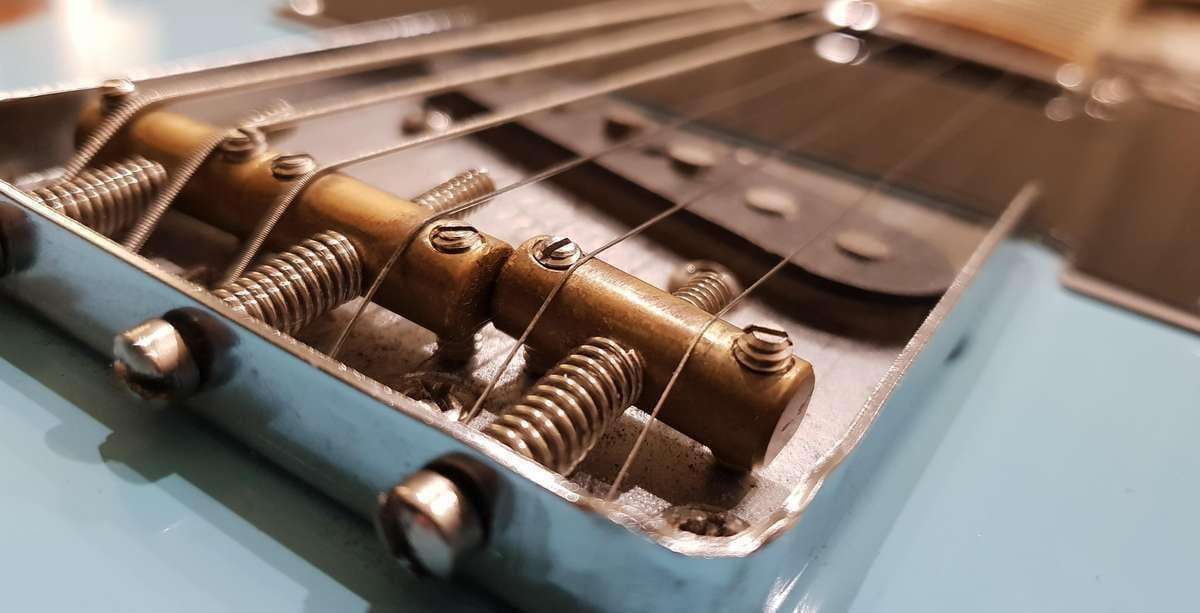
- Bridge Plate: Check early Telecasters and later vintage reissues. A bridge serial does not establish that a Telecaster was built in the 1950s.
- Neck Heel: Some markings are hidden at the body end of the neck. Do not remove the neck merely to try the lookup; ask a technician if internal inspection becomes necessary.
- Acoustic Soundhole: Fender acoustics commonly carry their serial inside the body. Use the appropriate acoustic dating information rather than assuming an electric-guitar format.
Fender documents the common headstock, neck-plate and acoustic locations; its non-standard serial guide also lists bridge-plate numbers on later US ’52 Vintage Telecasters.
How to Read Your Serial Number
Once you've found your serial number, understanding its format is crucial. Fender serial numbers follow specific patterns that reveal the guitar's origin and era.
🎸 What's Next? Now that you know your guitar's year, the next step is setting it up to play its best. Factory specs—action height, pickup height, neck relief—changed significantly across Fender eras. A 1962 Strat needs different measurements than a 2020 Player Series. Want the exact specs for your era? Check out our Complete Fender Setup Guide
Modern USA Format (2010-Present):
- Usual format:
US+ 2-digit year + 6-digit identifier - Example:
US17123456= Made in 2017 - The first two digits after "US" directly indicate the year
Letter Prefix Era (1976-2009):
- Format: Letter + digit + 4-5 digits
- Letters indicate decade: S (70s), E (80s), N (90s), Z (2000s)
- Example format:
E9suggests the late 1980s/1990 transition; compare the USA table and instrument details - The digit suggests a year within that decade, but decal use can overlap years
Vintage Format (1950-1976):
- Format: Numbers only (no letters)
- Early models: 4-6 digits on bridge plate or neck plate
- L-Series:
L+ 5 digits (1963-1965) - F-Plate: 6-digit numbers (1965-1976)
Mexico Format:
- Format:
MN/MZ/MX+ year digits + serial MN= 1990s,MZ= 2000s,MX= 2010-present- Example format:
MX18points to the 2018 production period; Mexican year codes can carry into the following year
Japan Format:
- Format varies by era:
JV(1982-1984),SQ(1983-1984),E(1984-1987),JD(2012+) - Example:
JD18123456= 2018 year code with Made in Japan wording
Serial Number vs. Date Code: What's the Difference?
Many guitar owners confuse serial numbers with date codes. Understanding the difference is essential for accurate dating.
Serial Number:
- Unique identifier assigned during production
- Used for tracking and inventory
- May not directly indicate the exact production date
- Can span multiple years (especially in vintage era)
- Located on headstock, neck plate, or bridge
Date Code:
- Stamped on the neck heel (requires removing neck)
- Format varies by era; not every number is a calendar day
- The letter indicates neck width (A, B, C, D), not quality
- Dates a component, not necessarily final assembly of the guitar
- Used internally by Fender for production tracking
When to Use Each:
- Use Serial Number: For quick dating, modern guitars (post-1976), and general identification
- Use Date Code: As supporting evidence when a vintage serial is missing or ambiguous; interpret the actual era-specific format
Keep the distinction: A neck date can support the dating of that neck. It does not prove when the complete guitar was assembled or whether the neck is original to the body.
Part 2: USA Serial Numbers and Date Ranges
American-made Fender guitars follow distinct eras.
Modern Era (2010 - Present)
Fender simplified the system in 2010.
- US + 2 Digits = Year
- US10 = 2010
- US17 = 2017
- LE = Limited Edition
The "Letter" Era (1976 - 2009)
Fender used a letter to denote the decade.
- S = Seventies (1970s)
- E = Eighties (1980s)
- N = Nineties (1990s)
- Z = Zeros (2000s)
| Prefix | Year Range | Example | Notes |
|---|---|---|---|
| S7, S8, S9 | 1977 - 1981 | S912345 | Note: S9 was used for several years. |
| E3, E4 | 1982 - 1988 | E312345 | E4 overlaps later years; check the full chart |
| E9 | 1989 - 1990 | E912345 | Decal carryover |
| N9 | 1990 / 1999-2000 | N912345 | Early decal anomaly and later carryover |
| Z0 | 2000 - 2001 | Z012345 | |
| DZ | 2000s | DZ5... | Deluxe Series (American Deluxe) |
Vintage Era (1950 - 1976)
These are approximate ranges, not a sequence that proves an exact production date. Fender warns that numbers and components can overlap years.
| Range | Year | Location |
|---|---|---|
| 0001 - 5300 | 1950-1954 | Bridge Plate |
| 0001 - 8000 | 1954 | Neck Plate |
| L00001 - L99999 | 1963-1965 | Neck Plate |
| 100000 - 200000 | 1965-1967 | Big "F" Plate |
| 200000s - 300000s | 1969-1970 | Big "F" Plate |
Part 3: Mexico Serial Numbers (MIM)
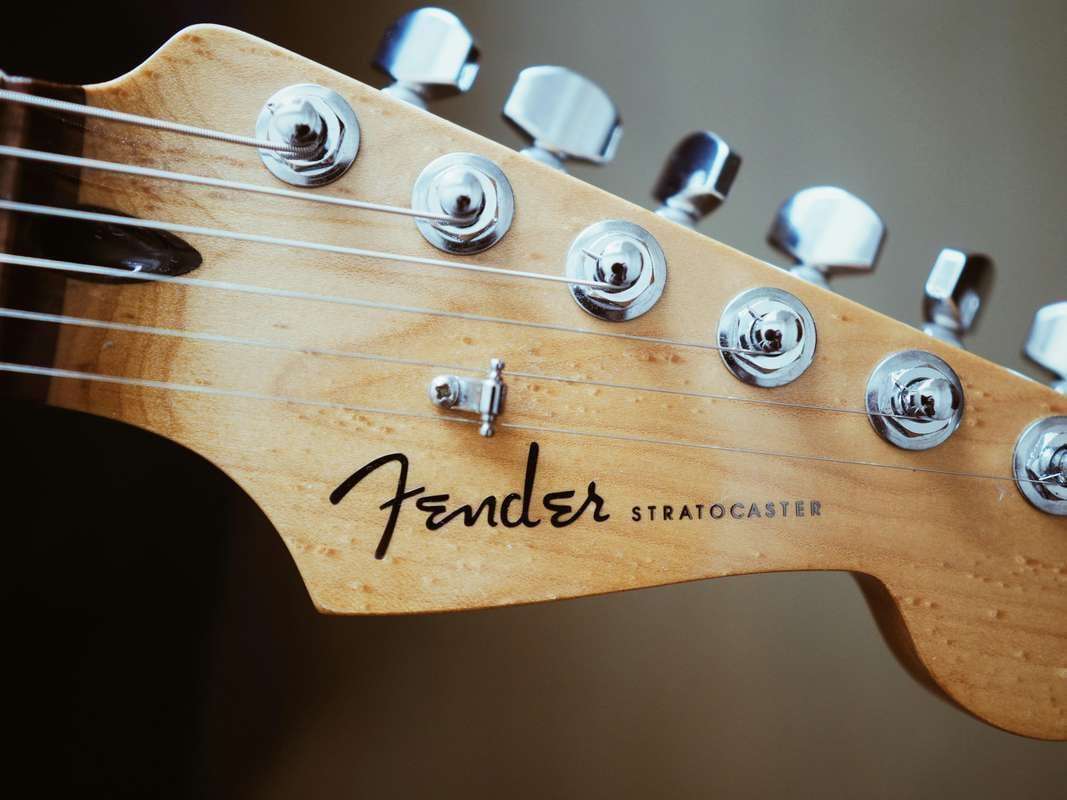
Made in Mexico (MIM) Fenders are incredibly popular. Their common codes are useful starting points, with year overlaps documented in Fender’s Mexican dating chart.
- MN = Mexico Nineties (1990s)
- MZ = Mexico Zeros (2000s)
- MX = Mexico (2010 - Present)
| Prefix | Year | Example |
|---|---|---|
| MN4 | 1994 - 1995 | MN412345 |
| MZ5 | 2005 - 2006 | MZ512345 |
| MX11 | 2011 - 2012 | MX11123456 |
| MX18 | 2018 | MX18..... |
Note: The Player Series (introduced 2018) uses standard MX serials.
Fender Factory Locations Explained
Understanding where your Fender was made provides crucial context about its quality, value, and specifications. Fender operates factories in three countries, each with distinct characteristics.
Corona, California (USA) - 1985-Present
- Fender's flagship factory since moving from Fullerton
- Produces American Standard, American Professional, American Ultra, and Custom Shop models
- Known for: Premium quality control, hand-rolled fingerboard edges, Plek machine neck profiling
- Serial prefixes: Modern
USformat (2010+), letter prefixes (1976-2009) - Typical price range: $1,200-$3,500+ for production models
Ensenada, Mexico — instrument production from 1990
- Produces Player Series, Classic Series, and some Squier models
- Quality has improved dramatically since the 1990s
- Known for: Excellent value, consistent quality, modern manufacturing
- Serial prefixes:
MN(1990s),MZ(2000s),MX(2010+) - Typical price range: $500-$1,200 for production models
Japan - Multiple Factories (1982-Present)
- Fujigen Gakki (1982-1997, 2007-Present): Premium MIJ models
- Dyna Gakki (1997-Present): Current production
- Known for: Exceptional craftsmanship, attention to detail, collectible status
- Serial prefixes:
JV(1982-1984),SQ(1983-1984),E(1984-1987),JD(2012+) - Typical price range: $800-$2,500+ depending on era and model
Historical Factories:
- Fullerton, California (1946-1985): Original Fender factory. Pre-CBS (1946-1965) and CBS era (1965-1985) guitars are highly collectible.
- CBS Era (1965-1985): Quality varied, but many excellent guitars were made. Serial numbers from this era can be ambiguous.
Why Factory Location Matters:
- Resale Value: USA models typically hold value better than MIM
- Specifications: Different factories used different hardware, pickups, and neck profiles
- Collectibility: Japanese models from the 1980s (JV series) are highly sought after
- Quality Perception: While modern MIM guitars are excellent, USA models command premium prices
Part 4: Japan Serial Numbers (MIJ / CIJ)
Japanese Fenders are legendary for their craftsmanship.
- MIJ (Made in Japan): Used roughly 1982-1997 and 2007-Present.
- CIJ (Crafted in Japan): Used from 1997, with a transition back to MIJ during 2007–2008.
| Prefix | Year | Notes |
|---|---|---|
| JV + 5 Digits | 1982-1984 | The "Holy Grail" of Japanese Fenders |
| SQ + 5 Digits | 1983-1984 | Squier Japan (Very high quality) |
| E + 6 Digits | 1984-1987 | Standard MIJ |
| JD + 2 Digits | 2012+ | Year code with Made in Japan wording (JD12 = 2012) |
Part 5: Squier Serial Numbers
Squier serials can be messy, as they were made in Japan, Korea, China, and Indonesia.
- CY = China (Yako factory) - Common on Affinity/Standard.
- COB / CGS = China - Classic Vibe Series (Early).
- ICS / ISS = Indonesia (Cort / Samick) - Current Classic Vibe & Standard.
- First 2 digits usually equal year.
- ICS19xxxx = 2019
- ISS21xxxx = 2021
Decade-by-Decade Changes: What Your Serial Number Reveals
Your Fender's production decade tells you more than just its age—it reveals the specs, quality standards, and historical context of your guitar. Here's what changed in each era:
1950s: The Birth of the Electric Guitar
Serial Range: 0001-60,000+ (approximate)
- Neck Profile: Thick "U" shape, 7.25" radius
- Frets: Small vintage frets
- Pickups: Single-coil, hand-wound
- Hardware: Kluson tuners, 6-saddle bridges
- Value: $3,000-$50,000+ depending on model and condition
- Notable: Pre-CBS era, highest collectibility
1960s: The Golden Age
Serial Range: 60,000-300,000+ (approximate)
- Neck Profile: Transitioned from "U" to "C" shape
- Frets: Medium jumbo introduced mid-decade
- Pickups: Transitioned to machine-wound, then back to hand-wound
- Hardware: Transitioned to Fender-branded tuners
- Value: $2,500-$30,000+ depending on year and model
- Notable: CBS acquisition in 1965, quality remained high through 1969
1970s: The CBS Era
Serial Range: S-prefix (S7, S8, S9)
- Neck Profile: Thinner "C" shape, wider nut widths
- Frets: Large jumbo frets
- Pickups: Lower output, different magnet types
- Hardware: 3-bolt neck introduced (1971), heavier bodies
- Value: $800-$5,000+ (less collectible than 60s)
- Notable: Quality control issues, but many excellent guitars made
1980s: The Rebirth
Serial Range: E-prefix (E3, E4, E9)
- Neck Profile: Return to vintage "C" shape
- Frets: Medium jumbo, better quality
- Pickups: Improved winding, better magnets
- Hardware: Return to 4-bolt neck, improved tremolo systems
- Value: $1,000-$4,000+ (Dan Smith era highly collectible)
- Notable: Quality improvements, Japanese Fenders (JV series) highly sought after
1990s: Modern Standardization
Serial Range: N-prefix (N9, N0)
- Neck Profile: Modern "C" shape standardized
- Frets: Medium jumbo standard
- Pickups: American Standard pickups introduced
- Hardware: 2-point tremolo on Strats, improved bridges
- Value: $800-$2,500+ (good value for money)
- Notable: Consistent quality, Mexican production expanded
2000s: The Digital Age
Serial Range: Z-prefix (Z0-Z9)
- Neck Profile: S-1 switching introduced, compound radius available
- Frets: Medium jumbo, narrow-tall option
- Pickups: SCN (Samarium Cobalt Noiseless) pickups
- Hardware: Locking tuners standard on some models
- Value: $700-$2,000+ (modern features)
- Notable: American Deluxe series, improved electronics
2010s-Present: The Modern Era
Serial Range: US-prefix (US10-US26+)
- Neck Profile: Multiple options (Modern C, Deep C, U-shape)
- Frets: Narrow-tall standard, compound radius available
- Pickups: V-Mod, Custom Shop pickups on higher-end models
- Hardware: 2-point tremolo standard, locking tuners on Pro series
- Value: $1,200-$3,500+ (retail), holds value well
- Notable: American Professional series, Player Series (MIM) excellent value
Key Takeaway: These are broad historical themes, not specifications for an individual guitar. Identify the actual model and inspect its features; vintage reissues and modified instruments can differ substantially from a decade summary.
Found Your Year? Get Your Model's Setup Specs
Now that you know when your guitar was made, the next step is finding the correct setup specifications for your specific model:
| Your Guitar | Setup Guide | Factory Specs |
|---|---|---|
| Stratocaster | Complete Strat Setup Guide | Factory Specs Lookup |
| Telecaster | Complete Tele Setup Guide | Factory Specs Lookup |
| Jaguar | Jaguar Setup Guide | Factory Specs Lookup |
| Jazzmaster | Jazzmaster Setup Guide | Factory Specs Lookup |
| Mustang | Mustang Setup Guide | Factory Specs Lookup |
| Precision Bass | P-Bass Setup Guide | Factory Specs Lookup |
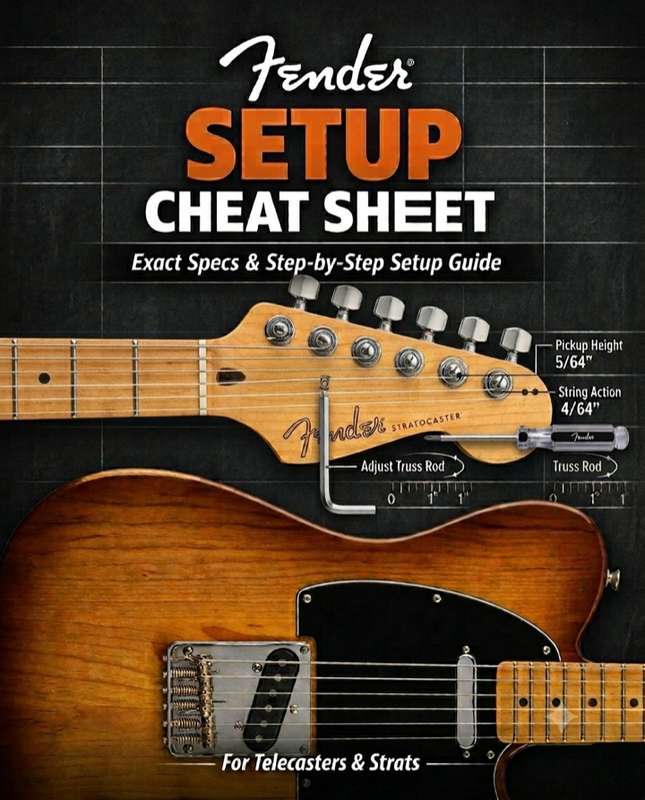
Want all specs in one printable reference? The Fender Setup Cheat Sheet covers every model with exact measurements you can keep at your workbench.
Just Got a Used Fender?
If you're looking up a serial number, you probably just bought a used guitar—congratulations! The next step is getting it set up properly. Used guitars almost always need a fresh setup after changing hands.
Why used guitars need setup:
- Previous owner's string gauge and action preferences may not match yours
- Shipping and climate changes affect neck relief
- Strings are probably due for a change
Your next steps:
- Check Factory Specs for your specific model year
- Get the Setup Guide with printable specs for your workbench
- Add to My Garage to track your guitar's setup history
What's Your Fender Worth?
Serial numbers help determine a guitar's age, but condition and playability are what really drive value. A well-setup guitar with proper action and intonation can sell for 10-20% more than one that plays poorly.
Key factors that affect Fender value:
- Originality - All-original parts command premium prices
- Playability - Proper setup shows the guitar was cared for
- Condition - Fret wear, finish cracks, and hardware corrosion matter
- Documentation - Original case, tags, and receipts add value
If you're selling or just want your guitar playing its best, a proper setup is the highest-ROI improvement you can make. Our Fender Setup Guide shows you exactly how to dial in factory specs.
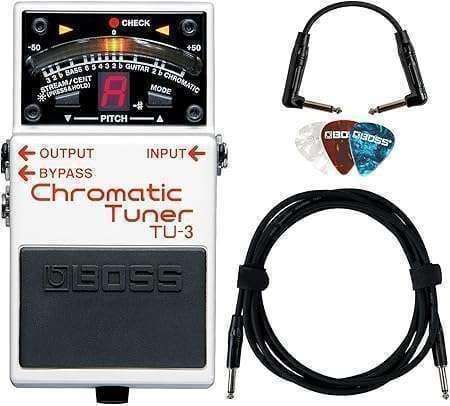
Tools for Evaluating a Fender
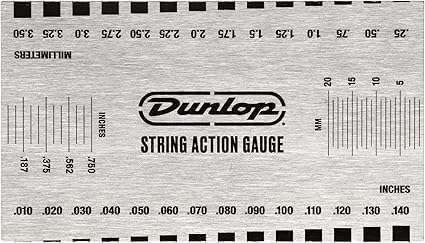
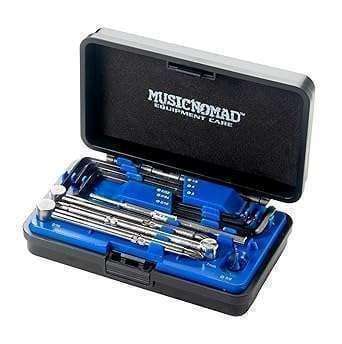
Whether you're buying, selling, or just checking your guitar's condition, these tools help measure action and check playability:
 Buy on Amazon
Recommended Strings for Your Fender
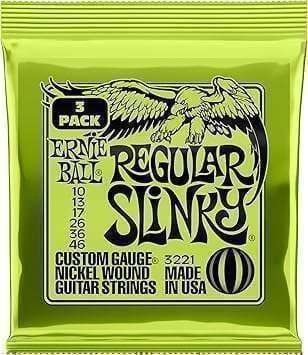
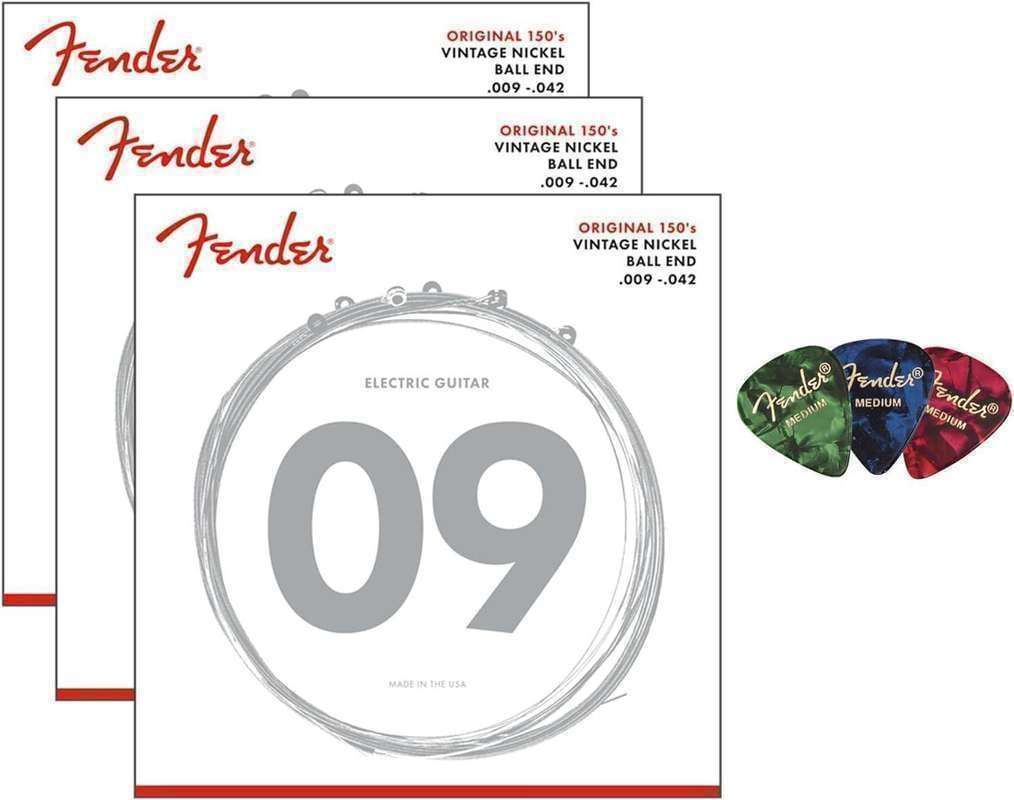
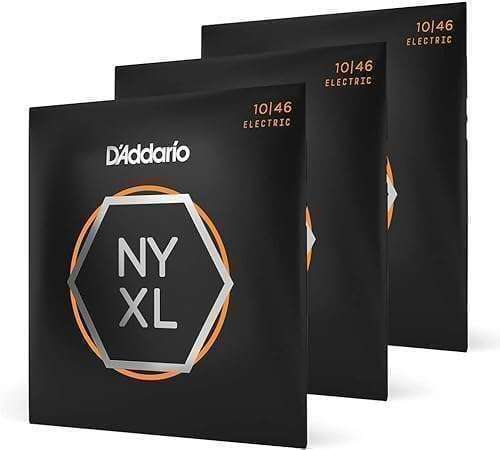
Now that you've identified your Fender's production year, it's time to freshen up your strings. Different eras and models benefit from different string choices:
For vintage-style Strats and Teles (1950s-1960s specs): Pure nickel strings deliver that warm, vintage tone. Try 10-46 gauge for the authentic feel.
For modern Player Series and American Professional: Nickel-plated steel strings (10-46) offer the bright, punchy tone modern Fenders are known for.
For heavier styles on any Fender: 11-48 gauge provides fuller tone and better sustain, especially on shorter-scale models.
Essential Maintenance for Your Fender
A well-maintained Fender plays better, sounds better, and holds its value. After identifying your guitar, consider these maintenance essentials:
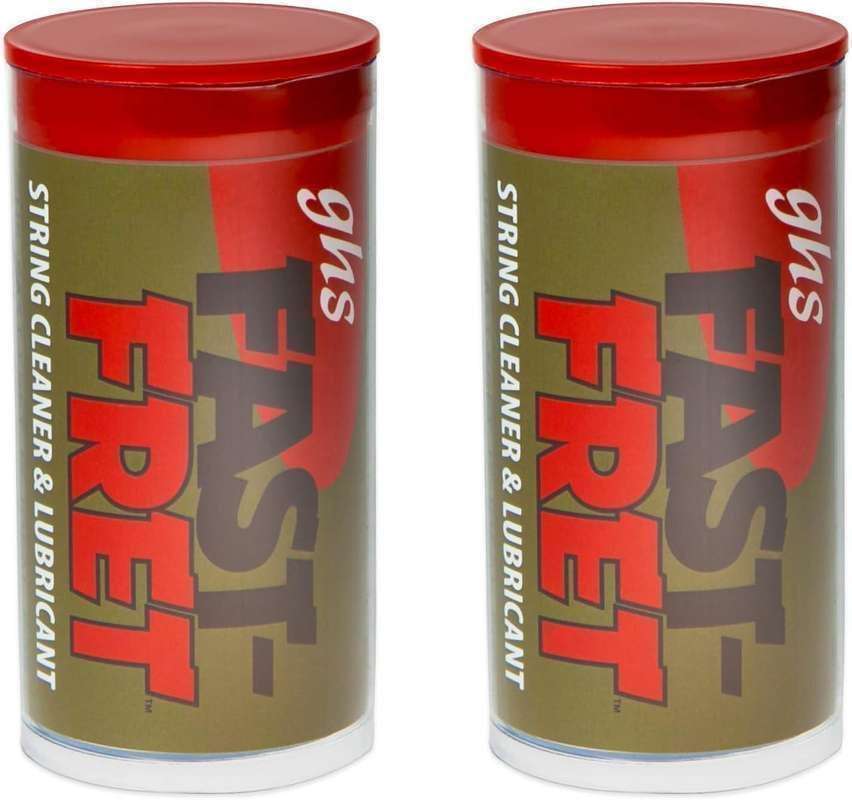
String care: Clean strings after every session to extend life by 2-3x. A string cleaner is one of the best ROI investments you can make.
Fretboard conditioning: Rosewood and Pau Ferro fingerboards need occasional conditioning to prevent cracking and maintain playability.
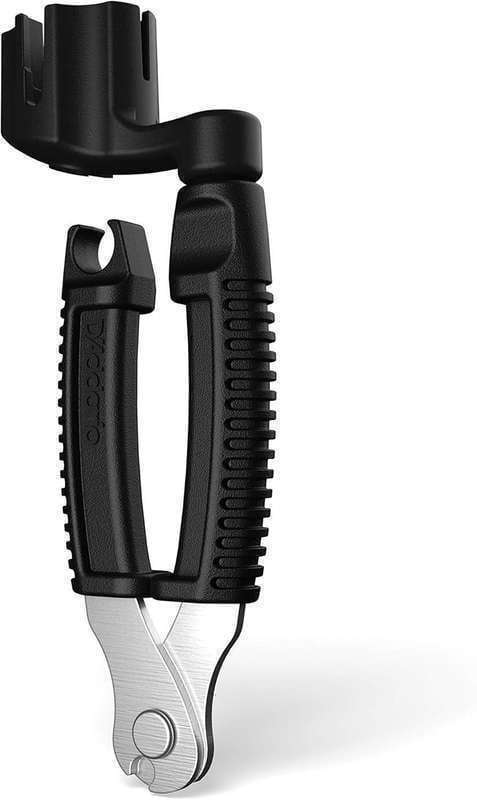
Hardware care: Keep moving parts (tremolo systems, tuners) lubricated for smooth operation and tuning stability.
Fender Serial Number Exceptions: What the Records Actually Show
These are documented format exceptions, not guitars we have personally inspected. They show why the next piece of evidence matters more than forcing a single-year answer.
| Marking or situation | What the source establishes | Useful next check |
|---|---|---|
| S9 on a US instrument | Fender lists this prefix across 1978–1981 | Compare model features and component dates |
| N9 on a US instrument | Some 1990 instruments received N9 decals; the chart also lists N9 in 1999–2000 | Keep both possibilities open until other evidence distinguishes them |
| 10, a space, then seven digits | A short-lived 2009/2010 scheme; Fender stored the seven-digit suffix without the 10 | Record the full decal and country wording; the database entry may differ |
| A + six digits on a Japanese instrument | Fender lists 1985–1986 with Made in Japan, but 1997–1998 with Crafted in Japan | Read the country wording as well as the prefix |
| Four or five bridge-plate digits on a ’52-style Telecaster | Fender lists later US Vintage reissues using this location too | Identify the actual model before treating it as a 1950s original |
| AMXN | Fender documents 1997–1998 California Series instruments with shared US/Mexico origin | Do not reduce this special series to an ordinary MN year code |
Sources: Fender USA dating chart, Japanese chart, non-standard serials and Mexican exceptions. Checked 5 October 2026.
When components disagree: Keep each observation separate: the neck's marking, the body's features, hardware and any replacement history. A replacement part can explain a mismatch, but a matching serial does not resolve it by itself. Photograph only what is accessible; leave disassembly to a competent technician when further inspection is warranted.
Common Pitfalls & Authentication Tips
1. The "S9" Confusion
S9 does not guarantee 1979. Fender’s US chart includes it across 1978–1981. Potentiometer and neck markings can add context, but they date components and may belong to replacements.
2. Squier vs Fender
Squier "Classic Vibe" guitars often have serials on the back of the headstock. Some older Korean Squiers have "Fender" logos with a small "Squier Series" script. Do not infer a country from one letter alone: Fender documents exceptions, including US export instruments with an I prefix.
3. Fake Serials
Counterfeiters often print random serials.
- Check the font: Fender uses very specific typefaces.
- Check the specs: If a guitar dates to 1962 but has a modern 2-point tremolo, it's either a fake or a heavily modified partscaster.
Authentication Checks: When to Investigate Further
These checks help flag details to investigate. They cannot certify authenticity from a serial alone; compare the specific model, its records and the instrument itself.
Want the structured version? Run the free Fender fake checker — a two-minute red-flag checklist tuned to Fender's details (decals, string trees, neck plates, serials) that returns an instant risk band.
Red Flags in Serial Numbers
1. Format Mismatches
- Serial/model combination conflicts with records after allowing for reissues and replaced parts
- Letters in wrong positions (e.g., "SU" instead of "US")
- Too many or too few digits for the format
- An unfamiliar prefix still needs checking against the manufacturer’s exception records
2. Font and Stamping Issues
- Marking differs from documented examples of that model; headstock decals are normal on many genuine Fenders
- Font doesn't match Fender's standard typeface for that era
- Serial looks "too new" on a vintage guitar
- Inconsistent depth or clarity of stamping
3. Location Problems
- Serial in wrong location for that model/year
- Multiple serial numbers (should only have one)
- Serial appears to be removed and reapplied
- Serial doesn't match the guitar's apparent age
Physical Authentication Checklist
Neck Plate (Vintage Models)
- Compare the neck joint with the specific model; the three-bolt change did not apply to every Fender
- Plate should match the era (Fender logo style, font)
- Serial should be stamped, not printed
- Check for signs of tampering or replacement
Headstock
- Logo style must match the era
- Serial location (front vs. back) must match the decade
- Decal quality and placement should be period-correct
- No signs of logo removal and replacement
Body and Hardware
- Pickup routes match the era (e.g., no swimming pool route on 1960s Strats)
- Compare the bridge with the actual model specification; reissues deliberately use earlier designs
- Control cavity should show period-correct wiring and components
- Pot codes (if visible) should align with serial number era
Neck Heel Date Code
- Ask a technician to inspect hidden markings if the available evidence warrants it
- Date code should align with serial number range
- Letter code (A, B, C, D) indicates neck width, not quality
- Stamping should look authentic (not hand-engraved)
Common Counterfeit Patterns
1. "Too Good to Be True" Vintage
- 1950s-1960s serials on guitars with modern features
- Perfect condition "vintage" guitars at suspiciously low prices
- Serial numbers from highly collectible years (1954, 1959, 1965)
2. Modern Fakes
- Chinese-made guitars with USA serial numbers
- Model details or paperwork conflict with the seller’s description
- Serial format correct but guitar specs don't match
3. Partscaster Confusion
- Legitimate Fender parts assembled into a guitar
- May have real serial number from donor guitar
- Check if all components match the serial's era
When to Get Professional Authentication
For a valuable, vintage or disputed purchase:
- Get it authenticated by a reputable dealer or expert
- Check pot codes (potentiometer date codes) for additional verification
- Request documentation of the guitar's history
- Use escrow services for high-value transactions
Remember: A correct serial number doesn't guarantee authenticity—it's just one piece of the puzzle. Always verify physical specs, hardware, and documentation match the serial number's era.
Still unsure it's the real thing? The free fake Fender quick-check runs the classic counterfeit tells — price, seller behaviour, serial number, decals, workmanship — plus Fender-specific tells like decal fonts, string trees, neck plates, and returns an instant risk band in two minutes. It can't see the guitar, but it tells you how hard to look before you pay.
Value by Serial Number: What's Your Fender Worth?
While serial numbers reveal age and origin, several factors determine actual market value. Here's how serial numbers impact pricing:
Vintage Era (1950-1976): Premium Pricing
Pre-CBS (1950-1964):
- 1950-1954 Telecasters: $8,000-$50,000+ (bridge plate serials)
- 1954-1964 Stratocasters: $15,000-$100,000+ (depending on year and condition)
- Serial Range Impact: Lower numbers (earlier production) command premium
- Key Years: 1954 (first Strat), 1959 (Les Paul year), 1962-1964 (pre-CBS peak)
CBS Era (1965-1976):
- 1965-1969: $3,000-$15,000+ (transition period, still collectible)
- 1970-1976: $1,500-$6,000+ (quality varied, less collectible)
- Serial Impact: L-series (1963-1965) and early F-plate (1965-1967) most valuable
Modern USA (1976-Present): Depreciation Then Stability
1976-1989 (Letter Prefix Era):
- S-prefix (1970s): $800-$3,000+ (CBS era, variable quality)
- E-prefix (1980s): $1,000-$4,000+ (Dan Smith era collectible)
- Value Factor: E3/E4 (1983-1985) Dan Smith Strats highly sought after
1990-2009:
- N-prefix (1990s): $800-$2,500+ (good value, consistent quality)
- Z-prefix (2000s): $700-$2,000+ (modern features, holds value)
- Value Factor: American Standard series (1990s-2000s) excellent value
2010-Present (US-prefix):
- US10-US26: $1,200-$3,500+ (retail), typically holds 60-80% of value
- Value Factor: American Professional series (2016+) holds value best
- Depreciation: Most modern Fenders lose 20-40% in first 2 years, then stabilize
Mexico (MIM): Value Leader
1990s (MN-prefix):
- MN4-MN9: $400-$1,200+ (excellent value, quality improved over time)
- Value Factor: Early 1990s MIM less valuable, late 1990s better quality
2000s (MZ-prefix):
- MZ0-MZ9: $500-$1,200+ (consistent quality, great value)
- Value Factor: Classic Series models hold value better than Standard
2010-Present (MX-prefix):
- MX10-MX26: $500-$1,200+ (Player Series excellent value)
- Value Factor: Player Series (2018+) best value in Fender lineup
- Depreciation: Minimal—MIM guitars hold value well due to low initial cost
Japan (MIJ/CIJ): Collectible Status
1982-1984 (JV-prefix):
- JV Series: $2,000-$6,000+ (highly collectible "Holy Grail" status)
- Value Factor: First Japanese Fenders, exceptional quality
1984-1997 (E-prefix, MIJ):
- E-series: $1,200-$3,500+ (excellent quality, collectible)
- Value Factor: Fujigen factory models highly regarded
1997-2007 (CIJ):
- CIJ models: $1,000-$2,500+ (good quality, less collectible than MIJ)
- Value Factor: Transition period, quality still excellent
2012-Present (JD-prefix):
- JD Series: $1,200-$3,000+ (modern Japanese production)
- Value Factor: Dyna Gakki factory, premium quality
Factors That Affect Value Beyond Serial Number
1. Condition (Most Important)
- Mint: 100% of value
- Excellent: 85-95% of value
- Very Good: 70-85% of value
- Good: 50-70% of value
- Fair/Poor: 30-50% of value
2. Originality
- All-original parts: Premium pricing
- Replaced pickups: -10-20% value
- Refinished body: -30-50% value
- Non-original neck: -40-60% value
3. Documentation
- Original case: +10-15% value
- Tags and paperwork: +5-10% value
- Receipts and provenance: +10-20% value
4. Setup and Playability
- Well-setup guitar: +10-20% value
- Poor setup/buzz: -10-20% value
- Professional setup history: +5-10% value
Pro Tip: A serial number tells you the guitar's age and origin, but condition and originality determine 70% of the value. A well-maintained, all-original 1990s American Standard often sells for more than a beat-up 1970s CBS-era guitar.
Special Edition Serial Prefixes: FSR, Artist Models, and Limited Runs
Fender produces many special edition guitars that may have unique serial number formats or additional identifiers. Here's how to identify them:
FSR (Fender Special Run)
What It Means: Guitars ordered by specific retailers (Guitar Center, Sweetwater, etc.) with unique colors or specs.
Serial Format:
- Usually follows standard format for country/era
- May have additional sticker or documentation
- Sometimes omitted from general lookup databases
- Check retailer documentation for confirmation
Common FSR Models:
- Exclusive color options
- Unique pickup configurations
- Special hardware combinations
- Limited production runs
Value Impact: FSR models can be more valuable if the configuration is desirable, or less valuable if the special features aren't popular.
Artist Series and Signature Models
Serial Format:
- Follows standard country/era format
- May have additional model designation
- Check headstock for artist signature/logo
- Documentation usually confirms artist model status
Examples:
- Eric Clapton Stratocaster
- Stevie Ray Vaughan Stratocaster
- Jimi Hendrix Stratocaster
- John Mayer Stratocaster
Value Impact: Artist models typically hold value well, especially if the artist is iconic. Limited edition artist models can appreciate significantly.
Limited Edition and Anniversary Models
Serial Format:
- May have special prefix or suffix
- Often includes certificate of authenticity
- Production numbers may be limited (e.g., "1 of 500")
- Check Fender's official records for verification
Examples:
- 50th Anniversary Stratocaster (2004)
- 60th Anniversary Stratocaster (2014)
- Custom Shop limited runs
- Dealer exclusives
Value Impact: Limited editions can appreciate significantly, especially if production numbers are low and the model is desirable.
Custom Shop Serial Numbers
Format:
- No single prefix identifies every Custom Shop instrument
- May have master builder initials
- Serial format differs from production models
- Certificate of authenticity included
Value Impact: Custom Shop models command premium prices ($3,000-$10,000+) and typically hold value well.
How to Verify Special Editions
- Check Documentation: Original tags, certificates, and receipts
- Contact Fender: Ask whether supporting records are available for the serial and model
- Compare Specs: Special editions often have unique hardware/pickups
- Research Model: Look up the specific model number and year
- Check Retailer: If FSR, the original retailer may have records
Pro Tip: Special edition serials may not appear in standard lookup tools. Always verify with Fender or check the guitar's physical features and documentation.
Shopping for a Fender? Start Here
If you're researching serial numbers before buying, these guides help you find the best value:
- Best Stratocasters Under $500 – Top picks with detailed comparisons
- Telecaster vs Stratocaster – Specs and features
- Tele vs Strat: A Player's Guide – Player perspectives, touring and recording
- Best Strings for Stratocaster – String recommendations by playing style
- Best Strings for Telecaster – Tele-specific string guide
Other Guitar Serial Number Lookup Tools
Not a Fender? We also have free serial number decoders for other brands:
- Squier Serial Number Lookup – Decode Squier guitars made in Indonesia, China, Korea, and Japan
- Gibson Serial Number Lookup – Decode Gibson guitars from Nashville, Kalamazoo, Bozeman, and Custom Shop
- Epiphone Serial Number Lookup – Decode Epiphone guitars from Qingdao China, Korea, Japan, and Indonesia
- Ibanez Serial Number Lookup – Decode Ibanez guitars from FujiGen Japan, Cort Korea, Indonesia, and more
- PRS Serial Number Lookup – Decode PRS guitars from USA, Korea, and Indonesia
- Yamaha Serial Number Lookup – Decode Yamaha guitars from Japan, Taiwan, and Indonesia
- Taylor Serial Number Lookup – Decode Taylor guitars from El Cajon and Tecate (all eras)
- Takamine Serial Number Lookup – Decode Takamine guitars from Sakashita, Japan and China G-Series
- Martin Serial Number Lookup – Decode Martin guitars from 1898 to present
- Jackson Serial Number Lookup – Decode Jackson guitars from USA, Japan, Indonesia, and Korea
- Charvel Serial Number Lookup – Decode Charvel guitars from San Dimas USA, Japan, and modern production
- Gretsch Serial Number Lookup – Decode Gretsch guitars from USA Custom Shop, Japan, Korea, and China
- Schecter Serial Number Lookup — Decode Schecter guitars from Korea, Indonesia, China, and USA
- ESP Serial Number Lookup — Decode ESP/LTD guitars from Japan, USA, Korea, Indonesia, and China
- Guild Serial Number Lookup – Decode Guild acoustic and electric guitars
- Rickenbacker Serial Number Lookup – Decode Rickenbacker electric guitars and basses
- Cort Serial Number Lookup – Decode Cort electric and acoustic guitars from Korea and Indonesia
Related Tools & Guides
- Factory vs Custom Setup: What Actually Matters? – When is custom setup worth $75-100?
- Factory Specs Lookup – Find the exact nut width, fretboard radius, and pickup height for your model.
- Stratocaster Hub – Complete setup and buying guides.
- Telecaster Hub – History and maintenance for Telecasters.
- Jaguar Hub – Dating offset guitars.
Comparison Tables: USA vs. Mexico vs. Japan
Understanding the differences between Fender's three production locations helps you make informed buying decisions and understand your guitar's value.
| Feature | USA (Corona, CA) | Mexico (Ensenada) | Japan (Fujigen/Dyna Gakki) |
|---|---|---|---|
| Price Range | $1,200-$3,500+ | $500-$1,200 | $1,200-$3,000+ |
| Quality Control | Premium | Excellent (modern) | Exceptional |
| Neck Profile | Multiple options | Modern C standard | Period-correct vintage |
| Pickups | Custom Shop/V-Mod | Standard Fender | Period-accurate |
| Hardware | Premium (locking tuners on Pro) | Standard quality | High-quality period pieces |
| Finishing | Hand-rolled edges, Plek | Machine-finished | Hand-finished details |
| Resale Value | Holds 60-80% | Holds 70-90% (better % due to lower initial) | Holds 70-85% |
| Collectibility | High (vintage USA) | Moderate | Very High (1980s MIJ) |
| Best For | Professional players, collectors | Value seekers, beginners | Vintage enthusiasts, collectors |
| Serial Prefixes | US (2010+), S/E/N/Z (1976-2009) | MX (2010+), MZ (2000s), MN (1990s) | JD (2012+), JV/E (1980s) |
Key Takeaway: All three factories produce excellent guitars. USA models offer premium features, Mexico offers best value, and Japan offers exceptional craftsmanship with collectible status (especially 1980s models).
Decade Comparison: Spec Changes Over Time
How Fender specifications evolved decade by decade:
| Decade | Neck Profile | Fret Size | Pickups | Bridge | Typical Value Range |
|---|---|---|---|---|---|
| 1950s | Thick U-shape, 7.25" radius | Small vintage | Hand-wound single-coil | 6-saddle | $3,000-$50,000+ |
| 1960s | U to C transition, 7.25" radius | Medium jumbo | Machine then hand-wound | 6-saddle, tremolo | $2,500-$30,000+ |
| 1970s | Thin C-shape, wider nut | Large jumbo | Lower output | 3-bolt neck (1971+) | $800-$5,000+ |
| 1980s | Vintage C-shape return | Medium jumbo | Improved winding | 4-bolt return | $1,000-$4,000+ |
| 1990s | Modern C standardized | Medium jumbo | American Standard | 2-point tremolo | $800-$2,500+ |
| 2000s | S-1 switching, compound radius | Medium jumbo, narrow-tall | SCN Noiseless | Locking tuners available | $700-$2,000+ |
| 2010s+ | Multiple profiles available | Narrow-tall standard | V-Mod, Custom Shop | 2-point standard, locking on Pro | $1,200-$3,500+ |
Evolution Pattern: Fender moved from thick, vintage-style necks to thinner, more playable profiles, then back toward vintage-inspired designs. Pickup technology improved, and hardware became more reliable. Modern Fenders offer the best of both worlds: vintage-inspired tone with modern playability.
Serial Prefix Quick Reference
A selection of common Fender serial prefixes. Use the country charts and documented exceptions above when a result is ambiguous:
| Prefix | Year Range | Country | Era | Notes |
|---|---|---|---|---|
| 0001-5300 | 1950-1954 | USA | Pre-CBS | Bridge plate (Telecasters) |
| 0001-8000 | 1954 | USA | Pre-CBS | Neck plate (first Strats) |
| L00001-L99999 | 1963-1965 | USA | Pre-CBS | L-Series neck plate |
| 100000-200000 | 1965-1967 | USA | CBS | Big "F" plate |
| 200000s-300000s | 1969-1970 | USA | CBS | Big "F" plate |
| S7, S8, S9 | 1977-1981 | USA | CBS | S9 used into 1981 |
| E3, E4 | 1982-1988 | USA | Modern | Overlapping decal use |
| E9 | 1989-1990 | USA | Modern | |
| N9 | 1990/1999-2000 | USA | Modern | Ambiguous—check specs |
| Z0-Z9 | 2000-2009 | USA | Modern | Z = Zero (2000s) |
| US10-US26+ | 2010-Present | USA | Modern | Direct year indicator |
| MN4-MN9 | 1994-1999 | Mexico | Modern | MN = Mexico Nineties |
| MZ0-MZ9 | 2000-2009 | Mexico | Modern | MZ = Mexico Zeros |
| MX10-MX26+ | 2010-Present | Mexico | Modern | MX = Mexico |
| JV + 5 digits | 1982-1984 | Japan | Vintage Reissue | "Holy Grail" JV Series |
| SQ + 5 digits | 1983-1984 | Japan | Squier | High-quality Squier Japan |
| E + 6 digits | 1984-1987 | Japan | Modern | Standard MIJ |
| JD + 8 digits | 2012-Present | Japan | Modern | Made in Japan marking |
| CY | Various | China | Squier | Yako factory |
| ICS/ISS | 2010+ | Indonesia | Squier | Cort/Samick factories |
Pro Tip: Bookmark this table for quick reference. When you see an unfamiliar prefix, check this table first before assuming it's fake or non-standard.
Troubleshooting Guide: Can't Find Your Serial Number?
If you're having trouble locating or identifying your Fender's serial number, follow this step-by-step guide:
Step 1: Check All Common Locations
Headstock (Front and Back):
- Look carefully—serials can be small and faint
- Use good lighting and a magnifying glass if needed
- Check both front and back of headstock
Neck Plate:
- Look at the metal plate on the back of the body; no string removal is needed
- Serial may be stamped on the metal plate
- Check for any additional numbers or codes
Bridge Plate (Telecasters Only):
- Early Telecasters and some later vintage reissues carry bridge-plate serials
- May be worn or difficult to read
- Start with the visible plate; do not remove the bridge just to try the lookup
Neck Heel (Hidden):
- Hidden markings may require a technician to remove the neck
- Date-code formats vary by era
- A neck date refers to the component, not necessarily the complete guitar
Step 2: Serial Number is Unreadable
If Worn or Faded:
- Try different lighting angles
- Use a magnifying glass
- Take a photo and enhance it digitally
- Keep an unedited photograph alongside any brightened copy; do not trace, scrape or rub the finish
If Partially Visible:
- Even partial serials can help narrow down the era
- Compare visible characters to format tables above
- Check pot codes as alternative dating method
If Completely Missing:
- Check if neck has been replaced (different serial on neck heel)
- Look for date codes on neck heel
- Check potentiometer codes in control cavity
- Examine physical features (logo style, hardware) to estimate era
Step 3: Serial Number Doesn't Match Any Format
Possible Reasons:
- Custom Shop or Special Edition - May have unique format
- Partscaster - Assembled from parts, may have mixed serials
- Replacement Neck - Neck serial doesn't match body era
- Non-Standard Production - Limited run or prototype
- Counterfeit - Fake serial number (see authentication guide above)
What to Do:
- Check physical features (hardware, logo, body routes) to estimate era
- Have a technician interpret hidden date codes if further inspection is needed
- Check pot codes in control cavity
- Contact Fender customer service with photos
- Consult with a Fender expert or reputable dealer
Step 4: Serial Number Format is Ambiguous
Common Ambiguities:
S9 Prefix (1978-1981 in Fender’s chart):
- Treat potentiometer codes as component dates, allowing for replacement parts
- Examine hardware and logo style
- Consult detailed S9 dating guides
N9 Prefix (1990 or 1999-2000):
- Check physical features (logo, hardware, pickups)
- N9 from 1990 will have different specs than 1999
- Pot codes can help narrow down
L-Series (1963-1965):
- Use the range as supporting evidence, not an exact production date
- Fender’s 1963 entries include the transition from 90,000s to L10,000s and L10,000s through L20,000s
- Fender lists L20,000s through L50,000s for 1964
- Fender lists L50,000s through L90,000s for 1965; treat these as approximate overlapping ranges
Numerical Only (Vintage):
- Use approximate ranges from tables above
- Use a professionally interpreted neck date as additional component evidence
- Compare to known examples from that era
Step 5: Still Can't Identify It?
Final Steps:
- Take Clear Photos: Serial number, headstock (front and back), neck plate, body, hardware
- Keep Existing Records: Retain receipts, model numbers and any documented repairs
- Document Visible Features: Logo style, bridge, pickups and hardware; let a technician inspect hidden parts
- Contact Fender: Customer service can help with unusual serials
- Consult Experts: Post on Fender forums or contact reputable dealers
Remember: Not every serial number will be in a database. Vintage guitars, special editions, and partscasters may require manual identification using physical features and date codes.
Frequently Asked Questions (FAQ)
How do I read my Fender serial number?
Start with the complete number, its location and the country marking. Common US decade prefixes include S, E, N and Z; modern US and MX formats include a two-digit year code. Overlaps and exceptions mean the result can be a range. Use the country-specific chart and compare the actual model.
Can I look up my Fender guitar by serial number?
Yes. The free decoder above interprets supported formats to suggest a production period and origin. You can also check Fender’s official lookup for a factory record where available. Neither result alone proves originality or authenticity.
1. Does Fender have a database of every serial number?
No complete public database is available. Fender says not every serial is entered, including some modern instruments supplied directly to distributors. A missing record is a reason to gather more evidence, not proof of a fake.
2. My serial number doesn't come up in the search. Is it fake?
A missing result alone cannot establish that. Copy the full marking, confirm its country and location, check the appropriate chart and compare model paperwork. Ask the seller or Fender support about discrepancies; use a specialist inspection when the purchase warrants it.
3. What does "FSR" mean?
Answer: "FENDER SPECIAL RUN." These are guitars ordered by specific retailers (like Guitar Center or Sweetwater) with unique colors or specs. Their serials usually follow standard conventions but are sometimes omitted from general lookup tools. FSR models can be more or less valuable depending on the desirability of the special features.
4. How do I date a Fender neck?
A neck-heel marking can help date the neck, but its format depends on the era and it does not establish final guitar assembly. Start with external markings and paperwork. Ask a technician to inspect and interpret hidden codes if necessary.
5. What does the letter in my Fender serial number mean?
In common US formats, S, E, N and Z indicate the 1970s, 1980s, 1990s and 2000s. The next digit is a year clue, with overlaps. The same letter can mean something different on a Japanese or other-country instrument, so include the country wording.
6. How do I tell if my Fender is American or Mexican?
Answer: Check the serial number prefix. USA models use "US" (2010+), "S/E/N/Z" (1976-2009), or numerical only (pre-1976). Mexican models use "MX" (2010+), "MZ" (2000s), or "MN" (1990s). Also check the headstock—USA models say "Made in U.S.A." while Mexican models say "Made in Mexico" or "Crafted in Mexico."
7. Where is the serial number on a Telecaster?
Check both sides of the headstock, the neck plate and the visible bridge plate. Location depends on the model as well as the era: later US ’52 Vintage Telecasters also carry bridge-plate serials. That location alone does not make a guitar a 1950s original.
8. What year is my Fender with serial number starting with [format]?
Use the free decoder and the country chart above. US17 suggests 2017; older letter prefixes can span several years. Keep the range when evidence is ambiguous, especially for S9, N9 and vintage numerical serials.
9. Are Mexican Fenders as good as American?
Answer: Modern Mexican Fenders (especially Player Series from 2018+) offer excellent value and quality. While American Fenders typically have premium features (better pickups, hardware, finishing), Mexican Fenders are well-made and represent the best value in the Fender lineup. The gap in quality has narrowed significantly since the 1990s.
10. How much is my vintage Fender worth?
Answer: Value depends on condition, originality, model, and year. Pre-CBS era (1950-1964) guitars range from $3,000-$100,000+. CBS era (1965-1976) ranges from $1,500-$15,000+. Key factors: all-original parts, excellent condition, and documentation significantly increase value. A professional appraisal is recommended for high-value guitars. For a complete breakdown of the factors that drive guitar prices, see our complete guide to guitar valuation.
11. What does "MIM" mean on Fender guitars?
Answer: "MIM" stands for "Made in Mexico." It's a common abbreviation used by players and collectors to identify Mexican-made Fenders. MIM Fenders are produced at Fender's Ensenada, Mexico factory and offer excellent value. The Player Series (introduced 2018) is the current MIM lineup.
12. Can I date my Fender by the neck stamp?
It can support the dating of the neck, not necessarily the complete instrument. A component may have been stored before assembly or replaced later. Interpret the actual era-specific marking and compare it with the rest of the guitar.
13. What's the difference between MIJ and CIJ?
Answer: MIJ (Made in Japan) and CIJ (Crafted in Japan) both indicate Japanese production, but from different eras. MIJ was used roughly 1982-1997 and 2007-present (Fujigen and Dyna Gakki factories). CIJ was introduced in 1997; both wordings appear during the 2007–2008 transition. Both indicate high-quality Japanese craftsmanship, with early MIJ (JV series) being highly collectible.
14. How do I authenticate a vintage Fender?
Answer: Authentication requires multiple checks: serial number format and location, physical features (logo style, hardware, body routes), neck heel date code, potentiometer codes, and overall condition. Red flags include format mismatches, wrong hardware for the era, and signs of tampering. For high-value guitars ($1,000+), professional authentication is recommended.
15. What does FSR mean on Fender serial numbers?
Answer: FSR stands for "Fender Special Run"—guitars ordered by specific retailers with unique colors or specifications. FSR serials usually follow standard format but may not appear in general lookup databases. Check retailer documentation or contact Fender to verify FSR status. Value impact varies based on desirability of the special features.
16. Is there a free Fender serial number checker?
Yes. The checker above is free and requires no sign-up or payment. It interprets supported Fender and Squier serial formats and returns available dating and origin information. Unknown formats and exceptions may need further research.
17. How do I check my Fender serial number?
Enter the full number in the free checker above, then compare the result with the country marking and relevant chart. For unclear results, keep photographs and model paperwork and follow the no-result checklist on this page.
18. How do I use the Fender serial number decoder?
Enter the full serial in the tool above and select Lookup. It compares the entry with supported serial formats. Read any range or uncertainty in the result, and use the country marking, model documentation and exception notes to investigate further.
Now That You Know Your Guitar's Year...
The next step is setting it up to play its best. Factory specs—action height, pickup height, neck relief—changed significantly across Fender eras. A 1962 Strat needs different measurements than a 2020 Player Series, and getting these right is the secret to unlocking your guitar's true voice.
Related Fender Guides
Now that you know your guitar's year and origin, explore our model-specific hubs for setup specs, buying advice, and maintenance tips:
-
How to Date a Fender or Squier (UK Guide) — the full serial-system walkthrough for US, Japan, Mexico, China and Indonesia, with UK secondhand buying shortcuts
-
Stratocaster Hub — Complete setup guides, string recommendations, and pickup upgrades for Fender's most iconic model
-
Telecaster Hub — Wiring diagrams, setup specs, and buying guides for the original Fender solid-body
-
Bass Hub — Precision Bass and Jazz Bass setup guides, pickup height specs, and maintenance tips
-
Jazzmaster Hub — Bridge setup, pickup adjustments, and wiring mods for offset lovers
-
Jaguar Hub — Unique switching explained, setup specs, and maintenance guides