Fender MX Series Serial Numbers: + Mexico Dating & Value Guide
Decode Fender MX serial numbers from 2010 onward. Learn how the two-digit year code works, which Ensenada factory models use MX, and what your Mexican Fender is worth today.
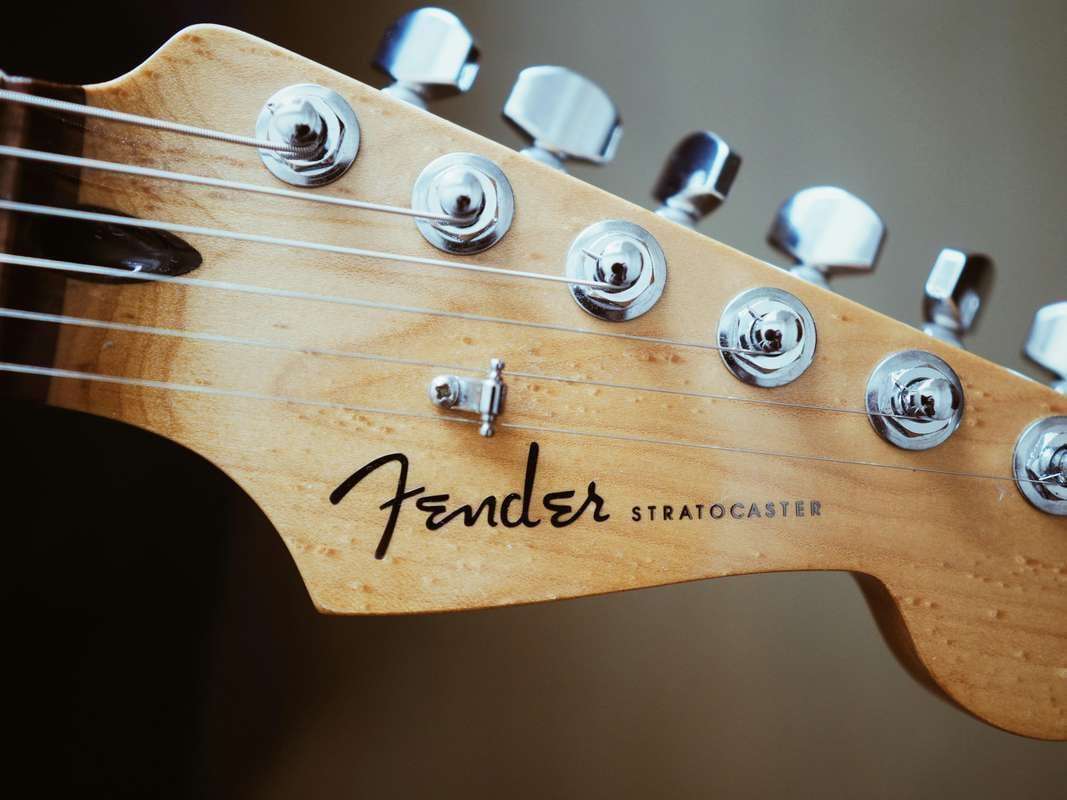 The MX prefix on a Fender serial number means the guitar was built in Mexico from 2010 onward. The two digits after MX tell you the exact year.
Fender MX-Series Serial Numbers: 2010+ Mexico Dating & Value Guide
Fender MX-series serial numbers are the key to dating any modern Mexican Fender made from 2010 to the present. If your serial starts with the letters MX followed by two digits and a six-digit number, you are looking at an instrument built in Fender's Ensenada, Mexico factory during the Player, Vintera, or Player II era. The format is simple, the year is unambiguous, and these guitars represent the best-selling line in Fender's modern catalog.
This guide covers every MX prefix year from MX10 (2010) through the current production year. You will learn how to read the number, where it appears on the guitar, and how MX replaced the earlier MZ and MN systems.
If you already have the serial in hand, run it through the free Fender serial number decoder for an instant year-and-country read.
What the MX Prefix Means
The MX prefix identifies Fender guitars built in Mexico from 2010 onward. The letter M stands for Mexico, and the X marks the specific decade-and-year coding system Fender adopted at the start of the 2010s. Unlike the older single-letter systems used for USA guitars, MX uses a two-digit year code right after the prefix.
Here is how the format breaks down:
- MX = Made in Mexico, 2010+
- Next two digits = the full production year
- Final six digits = the production sequence number
An MX18123456 serial was built in 2018. An MX22123456 serial was built in 2022. The system is cleaner than the 1990s MN prefix or the 2000s MZ prefix because the year is written in full rather than as a single digit.
MX serials replaced the MZ prefix, which ran from 2000 through 2009. Before MZ, Mexican Fenders used the MN prefix for the 1990s. The Ensenada factory has been the center of Mexican Fender production since the early 1990s, and the MX system is the numbering convention it has used through the Player Series launch, the Vintera expansion, and the Player II refresh.
Why Modern Mexican Fenders Matter
The 2010s and 2020s were the era when Mexican Fenders stopped being treated as budget alternatives and started being recognized as professional instruments in their own right. Player Series models introduced in 2018 brought alder bodies, modern C-shaped necks, and 9.5-inch fingerboard radii to the standard line. Vintera models from 2019 onward added period-correct pickups and neck profiles for players who want vintage feel without vintage prices. Player II, launched in 2024, refined the line with rolled fingerboard edges, upgraded finishes, and revised electronics.
For working musicians, MX-era Fenders are often the sweet spot: built with the same engineering standards as USA models and priced so that gigging and modification are practical.
The Complete MX-Series Serial Number Table
Use this table as your first reference. Each row shows the year, factory, format, and common model families for that MX prefix.
| Prefix | Year | Country | Factory | Format example | Notes |
|---|---|---|---|---|---|
| MX10 | 2010 | Mexico | Ensenada | MX10123456 | First year of the MX prefix; Standard and Classic Player lines |
| MX11 | 2011 | Mexico | Ensenada | MX11123456 | Standard Series and Blacktop models |
| MX12 | 2012 | Mexico | Ensenada | MX12123456 | Standard Series, Classic Player, and Road Worn models |
| MX13 | 2013 | Mexico | Ensenada | MX13123456 | Standard Series and Deluxe models |
| MX14 | 2014 | Mexico | Ensenada | MX14123456 | Standard Series, Classic Player, and Limited Edition runs |
| MX15 | 2015 | Ensenada | Ensenada | MX15123456 | Standard Series and Deluxe Roadhouse / Nashville models |
| MX16 | 2016 | Mexico | Ensenada | MX16123456 | Standard Series, Classic Player, andoffset/wide-range models |
| MX17 | 2017 | Mexico | Ensenada | MX17123456 | Final Standard Series year before the Player transition |
| MX18 | 2018 | Mexico | Ensenada | MX18123456 | Player Series launch year; modern C necks and alder bodies |
| MX19 | 2019 | Mexico | Ensenada | MX19123456 | Player Series expands; Vintera vintage line introduced |
| MX20 | 2020 | Mexico | Ensenada | MX20123456 | Player Series and Vintera continue through production constraints |
| MX21 | 2021 | Mexico | Ensenada | MX21123456 | Player Plus introduced; Vintera models expand |
| MX22 | 2022 | Mexico | Ensenada | MX22123456 | Player Series and Vintera remain the core lines |
| MX23 | 2023 | Mexico | Ensenada | MX23123456 | Player Series and Vintera continue; limited colors and runs |
| MX24 | 2024 | Mexico | Ensenada | MX24123456 | Player II launch year; refreshed finishes and hardware |
| MX25 | 2025 | Mexico | Ensenada | MX25123456 | Current production; Player II and Vintera lines |
If your serial starts with MX10, you are holding a 2010 Ensenada Fender from the first year of the MX system. If it starts with MX18, it is a Player Series guitar from the 2018 launch year. MX24 and MX25 instruments are the newest Mexican Fenders, including the Player II refresh.
MX vs MZ vs MN: Three Decades of Mexican Serial Numbers
The MX prefix is the third major serial system used by Fender Mexico since the Ensenada factory opened.
MN Prefix: 1990s Mexican Fenders
The MN prefix ran from the early 1990s through 1999. Like the USA N and Z prefixes, it used a single digit for the year: MN4 for 1994, MN9 for 1999. These were the first mass-produced Mexican Fenders, and they established Ensenada as a major Fender facility. Early 1990s Mexican Fenders were simpler in spec than modern MX guitars, but clean examples are now respected budget vintage instruments.
MZ Prefix: 2000s Mexican Fenders
The MZ prefix replaced MN around 2000 and ran through 2009. MZ5 meant 2005, MZ0 meant 2000. This decade saw the Ensenada factory grow significantly and produce the Standard Series that many players still consider the classic affordable Fender line. MZ-era guitars are common on the used market and are often bought as mod platforms or reliable gigging instruments.
MX Prefix: 2010+ Mexican Fenders
The MX prefix arrived in 2010 and switched to a two-digit year code. This removed the ambiguity of the single-digit system. An MX11 can only be 2011, where an MN1 could be confused with 1991 or 2001 depending on context. The two-digit system also aligned Mexican numbering with the modern USA US-prefix system, which also uses a two-digit year code.
If your Mexican Fender serial starts with MX, you can ignore the MN and MZ eras entirely. The guitar is 2010 or newer.
The Ensenada Factory and MX Production
All MX-prefix guitars were built in Fender's Ensenada, Baja California factory. This facility has been the heart of Mexican Fender production since the early 1990s and has grown into one of the largest guitar factories in the world.
What Makes Ensenada Different
Ensenada builds Fender-designed instruments using Fender-specified materials, tooling, and quality control. Many parts and processes are shared with Corona, California. The difference between a USA Fender and a Mexican Fender is usually in finishing details, hardware grade, and labor cost, not in fundamental design.
Player Series and the MX Era
The biggest product story of the MX era is the 2018 launch of the Player Series, which replaced the long-running Standard Series. Updates included alder bodies, modern C-shaped necks, 9.5-inch radii, 22 medium jumbo frets, and updated bridges and electronics. The Player Series became Fender's best-selling line and remains the default recommendation for players who want a real Fender without paying USA prices. MX18 through MX23 serials are overwhelmingly Player Series guitars.
Vintera and Vintage-Style Models
In 2019, Fender introduced Vintera as a Mexican-made vintage-styled line. Vintera guitars use period-correct pickups, neck profiles, and finishes to recreate the feel of 1950s, 1960s, and 1970s Fenders. MX19 through MX25 serials include Vintera Stratocasters, Telecasters, Jazzmasters, Jaguars, and Mustangs, plus Precision and Jazz Bass models. Vintera gave players vintage-style specs at a mid-range price.
Player II Refresh
Player II launched in 2024 as an update to the Player Series with rolled fingerboard edges, revised finishes, and upgraded hardware on select models. MX24 and MX25 serials include the first Player II instruments.
Where to Find the Serial Number
On MX-era Fenders, the serial number is almost always on the back of the headstock. Fender Mexico standardized headstock stamping and printing in the 2010s, so the location is consistent across models.
- Back of the headstock: This is the standard location for MX serials. It may be stamped into the wood or printed on a decal.
- Neck plate: Some limited runs or special models may use a numbered neck plate, but the headstock is the first place to check.
- Inside the neck pocket: On rare occasions, a secondary stamp appears inside the neck pocket or on the neck heel, but this is not the primary serial location.
If the serial is hard to read, angle a light across the stamp. A phone photo with the flash off often captures the detail better than the naked eye. Avoid using metal polish or abrasive cleaners near the serial, as this can wear away a printed decal.
How to Verify an MX-Series Serial Number
A serial number is the starting point, not the final verdict. Verify it against the physical guitar.
Cross-Check the Decal
The front headstock decal should match the serial era. MX-era Fenders carry one of these identifiers:
- "Made in Mexico" on standard production models
- "Fender" with a small "Made in Mexico" or country stamp elsewhere on some lines
- "Player Series," "Vintera," or "Player II" branding on some model-specific decals
A "Made in U.S.A." decal with an MX serial is a red flag. MX serials are exclusively Mexican production.
Inspect the Hardware and Stamps
Original hardware helps confirm the model and year. On a Player Series Stratocaster, look for the two-point tremolo, modern sealed tuners, and 9.5-inch radius fingerboard. On a Vintera model, look for period-correct pickups, vintage-style bridges, and era-specific neck profiles. Removing the neck lets you see date stamps or inspector marks. On Mexican guitars, neck heels and body cavities often have stamps that align with the serial year.
Run the Decoder
The Fender serial number decoder will read an MX-series serial and return the most likely year, country, and factory. It is the fastest sanity check, especially when comparing multiple guitars or shopping online.
Likely Models and Specs by MX-Series Year
The MX prefix does not tell you the model. Fender applied the same serial system across Stratocaster, Telecaster, Jazzmaster, Jaguar, Mustang, Precision Bass, Jazz Bass, and many signature models.
MX10 through MX17: Standard Series and Classic Player Era
Before the Player Series, Mexican Fenders were grouped under the Standard Series and Classic Player Series. Common models include:
- Standard Stratocaster and Standard Telecaster
- Classic Player '50s, '60s, and '70s Stratocaster and Telecaster models
- Standard Jazzmaster and Jaguar
- Standard Precision Bass and Jazz Bass
- Road Worn and Deluxe variants
Typical specs for a 2010-2017 Mexican Standard Stratocaster:
- Body: Alder or ash depending on finish and year
- Neck: Maple with maple or pau ferro fingerboard
- Fretboard radius: 9.5 inches
- Frets: 21 medium jumbo frets
- Pickups: Three Fender Standard single-coils
- Bridge: Six-screw vintage-style tremolo or two-point tremolo depending on year
These guitars are reliable gigging instruments and common mod platforms. Values are lower than Player Series models in most cases, but clean examples with original cases still sell well.
MX18 through MX23: Player Series Era
The Player Series dominates these years. Common models include:
- Player Stratocaster and Player Telecaster
- Player Jazzmaster, Jaguar, and Mustang
- Player Precision Bass and Jazz Bass
- Player Lead II and III
- Player Plus models from MX21 onward
Typical specs for a 2018-2023 Player Series Stratocaster:
- Body: Alder
- Neck: Maple with maple or pau ferro fingerboard
- Fretboard radius: 9.5 inches
- Frets: 22 medium jumbo frets
- Pickups: Player Series Alnico single-coils or humbuckers
- Bridge: Two-point synchronized tremolo
These guitars are the modern benchmark for affordable professional Fenders. They are consistent, widely available, and hold value better than earlier Mexican Standard guitars.
MX19 through MX25: Vintera Era
Vintera models run alongside Player Series production. Common models include:
- Vintera '50s, '60s, and '70s Stratocaster and Telecaster
- Vintera Jazzmaster and Jaguar
- Vintera Mustang
- Vintera Precision Bass and Jazz Bass
Vintera guitars emphasize period-correct specs. A Vintera '60s Stratocaster, for example, uses a 7.25-inch fingerboard radius, vintage-style frets, and pickups voiced for 1960s tones. These models appeal to players who want vintage feel without paying American Vintage prices.
MX24 and MX25: Player II Era
Player II models launched in 2024. Updates include:
- Rolled fingerboard edges for a smoother feel
- Refined finishes and color options
- Upgraded hardware on select models
- Player II-specific pickups
It is too early for long-term value data, but Player II guitars are positioned as the direct successor to the Player Series and carry similar new pricing.
Value: What Is an MX-Series Fender Worth?
Pricing an MX-series Fender without seeing it is difficult, but the main value drivers are consistent.
Model, Line, and Condition
Player Series and Vintera guitars generally command more than older Standard Series Mexican Fenders. Player Plus and Vintera Modified models with upgraded features sit at the top of the Mexican used market. Newer MX guitars in excellent condition hold value well because they are still current models, while older MX10-MX17 Standard Series guitars have mostly stabilized. Original finish, pickups, hardware, and electronics add the most value. Modified or worn guitars should be priced as player instruments rather than collector pieces.
Condition Tiers
For a ballpark sense of where MX-series guitars trade today, expect project guitars at the bottom, player-grade with wear in the working-player range, clean original examples in the sweet spot, and mint or near-mint instruments with case and paperwork at the top. Because prices move with the wider guitar market, compare live listings of the same year, model, line, and condition. For a more precise range, the Guitar Price Estimate tool returns market-based numbers for the exact year and model.
Setup and Maintenance for an MX-Series Fender
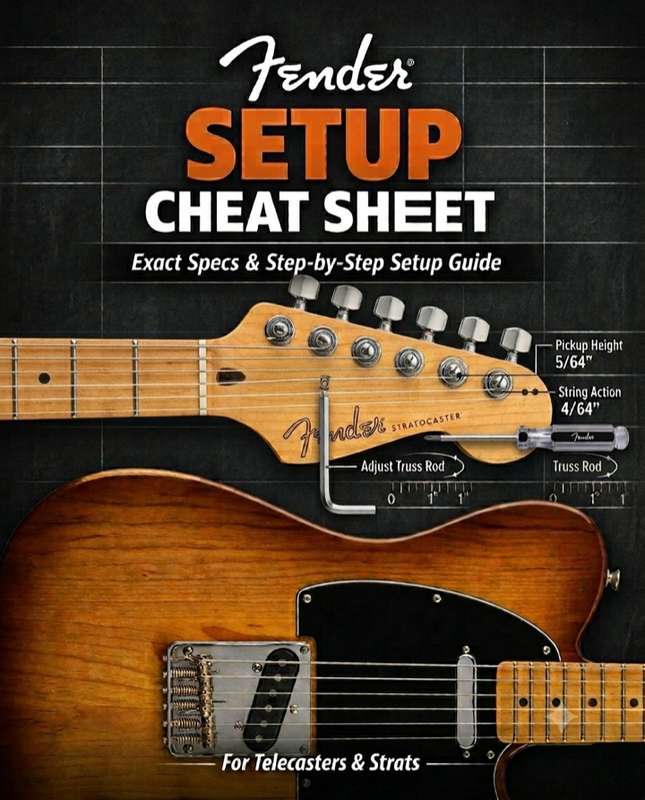
A Mexican Fender from the 2010s or 2020s should not need major work, but a proper setup makes a big difference. For a typical MX-era Player Series Stratocaster, start with these general targets:
- Neck relief: roughly 0.010 inches at the 7th fret with the string held at the 1st and last frets
- Action at the 17th fret: about 4/64 inches on the high E and 5/64 inches on the low E
- Pickup height: around 6/64 inches from the bottom of the low-E string to the bridge pickup pole piece, and 5/64 inches on the high-E side
These are starting points. Measure, adjust in small steps, and let the neck settle overnight between truss-rod turns. For exact factory measurements by model and year, use the Setup Specs Lookup or the printable Fender Setup Guide.
MX-Series Serials vs Other Letter Prefixes
Once you understand the MX prefix, the rest of Fender's letter-year system falls into place:
- S prefix: late 1970s (S7, S8, S9 for 1977, 1978, 1979)
- E prefix: 1980s (E3 through E9)
- N prefix: early 1990s (N0 through N3)
- Z prefix: 2000s (Z0 through Z9)
- US prefix: modern USA guitars with a two-digit year code
- MN prefix: 1990s Mexican Fenders
- MZ prefix: 2000s Mexican Fenders
- MX prefix: 2010+ Mexican Fenders with a two-digit year code
If your serial does not fit the MX pattern, the Fender serial number decoder will route it to the correct decade and factory.
Internal Links and Next Steps
- Fender Serial Number Lookup - Decode any Fender or Squier serial instantly
- Guitar Worth Calculator - Get a market range for your year and model
- Setup Specs Lookup - Find factory measurements by model and era
- Fender E-Series Serial Numbers - 1980s Fenders, the CBS-to-FMIC transition
- Fender N-Series Serial Numbers - The 1990s follow-up to the E prefix
- Fender Z-Series Serial Numbers - Dating 2000s Fenders
- Fender S-Series Serial Numbers - The 1970s predecessor to the E system
FAQ
What year is my MX Fender serial number?
An MX Fender serial number uses the two digits after MX as the production year. MX18123456 was made in 2018, MX22123456 in 2022, and MX24123456 in 2024. The format is MX + two-digit year + six-digit sequence number.
Are MX Fenders made in Mexico?
Yes. The MX prefix is used exclusively for Fender guitars built in the Ensenada, Mexico factory from 2010 onward. If your serial starts with MX, the guitar is Mexican-made.
What does MX stand for on a Fender serial number?
The M stands for Mexico and the X is part of the two-digit year coding system Fender introduced in 2010. MX replaced the earlier MZ prefix used for Mexican Fenders in the 2000s.
What is the format of an MX Fender serial number?
The standard format is MX followed by two year digits and six production digits, for a total of ten characters. Example: MX20123456 is a 2020 Mexican Fender with sequence number 123456.
Are MX Fenders good guitars?
Yes. MX-era Mexican Fenders are generally well-built professional instruments. The Player Series, Vintera line, and Player II refresh have been praised for quality, consistency, and value. They are used by gigging musicians and hobbyists worldwide.
What is the difference between MX and MZ Fender serial numbers?
MX serials started in 2010 and use a two-digit year code. MZ serials were used from 2000 through 2009 and use a single-digit year code. An MX18 is a 2018 guitar, while an MZ8 is a 2008 guitar.
What models use MX serial numbers?
Fender used the MX prefix across most of its Mexican electric line. Common models include the Player Stratocaster, Player Telecaster, Player Jazzmaster, Player Jaguar, Player Mustang, Player Precision Bass, Player Jazz Bass, Vintera models, Player Plus models, and Player II models.
How much is a Mexican MX Fender worth?
Value depends on the line, model, originality, and condition. Player Series and Vintera guitars typically hold value better than older Standard Series models. Use the Guitar Price Estimate tool and compare live listings for the most accurate current range.
Can an MX Fender be a Squier?
No. MX serials are used for Fender-branded Mexican instruments. Squier guitars made in Mexico or elsewhere use different prefixes and serial systems, such as CY, ICS, or CV prefixes.
What should I do after I date my MX-series Fender?
After you know the year and model, verify originality, check market value, and give the guitar a proper setup. Use the Fender serial number decoder to confirm the date, the Guitar Price Estimate tool for pricing, and the Setup Specs Lookup or Fender Setup Guide for factory measurements.
Conclusion
Fender MX-series serial numbers are the cleanest dating system Fender Mexico has ever used. The two-digit year code removes the guesswork of older single-digit systems, and the Ensenada factory has built a strong reputation through the Player, Vintera, and Player II eras.
If you have an MX-series Fender, start with the serial table above, confirm the "Made in Mexico" marking, and inspect the hardware and stamps to confirm the model line. Then run the number through the Fender serial number decoder for a quick digital check, and use the Guitar Price Estimate tool if you are buying, selling, or insuring the guitar.
Once the guitar is dated and valued, the final step is making it play its best. A Mexican Fender from the 2010s or 2020s that has been properly set up can feel as good as instruments costing much more. The Fender Setup Guide puts those specs on one printable page, so you can dial in action, relief, intonation, and pickup height without guessing.