Fender Z Series Serial Numbers: s Dating & Value Guide
Decode Fender Z-series serial numbers (Z0-Z9). Learn which year your 2000s Fender was made, USA Corona vs Mexico MZ/MN, likely models, and current value.
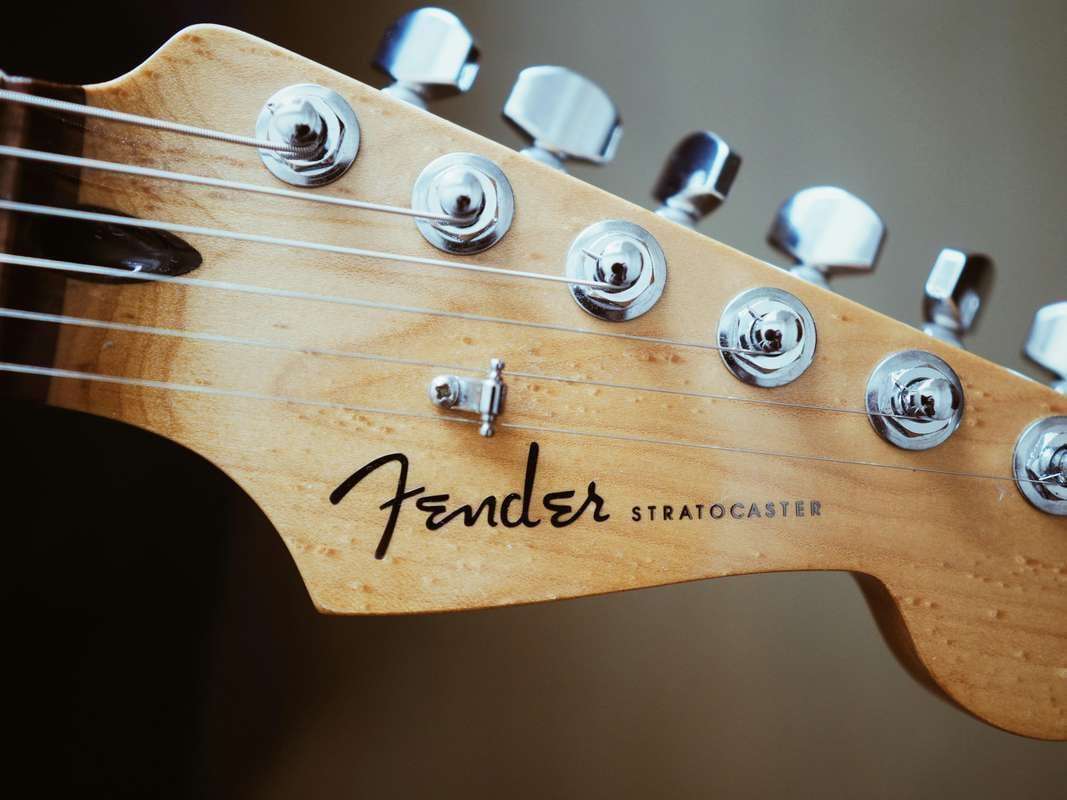 The Z prefix on a Fender serial number places the guitar squarely in the 2000s. The digit that follows it gives the exact year.
Fender Z-Series Serial Numbers: 2000s Dating & Value Guide
Fender Z-series serial numbers are the quickest way to date a 2000s Fender electric guitar or bass. If your serial starts with the letter Z followed by a single digit, you are looking at an instrument built during a decade of stable, modern production at Fender's Corona, California factory. The Z prefix covers 2000 through 2009, bridging the N-series era of the 1990s and modern two-digit US prefix that began around 2010.
This guide covers every common Z prefix from Z0 through Z9 for standard USA production. It also explains how to avoid confusing a USA Z-series Fender with a Mexican MZ-series or MN-series guitar, because those letters can look similar in online listings.
If you already have the serial in hand, run it through the free Fender serial number decoder for an instant year-and-country read.
What the Z Prefix Means
The letter prefix system Fender introduced in 1976 assigns each decade a letter. Z stands for the 2000s. The digit after the Z is the last digit of the production year. A Z0 was built in 2000, a Z5 in 2005, and a Z9 in 2009.
Unlike the E-series of the 1980s, which was shared between USA and Japanese factories, the Z prefix on standard production guitars is a USA identifier. Nearly all Z-series Fenders were built at the Corona factory. The confusion instead comes from Mexico, where Fender used M + N (MN) for the 1990s and M + Z (MZ) for the 2000s. An MZ5 serial is a 2005 Mexican Fender, while a Z5 serial is a 2005 American Fender. The missing M makes a big difference.
The Z system also sits at a transition point. Early Z0 guitars were still part of the American Standard series that carried over from the 1990s. By the middle of the decade, Fender had reorganised its USA catalogue into the American Series, Highway One, and various Deluxe and Special Edition models. Late Z8 and Z9 guitars overlap with the refreshed American Standard line and the eventual move to the US prefix format in 2010.
Why 2000s Fenders Matter Today
The 2000s are often overlooked by collectors, but they are a practical sweet spot for players. The wood is fully cured, the hardware is modern and replaceable, and the build quality is consistent.
The Complete Z-Series Serial Number Table
Use this table as your first reference. Every entry is for standard USA production at the Corona factory unless noted otherwise.
| Prefix | Year | Country | Factory | Notes |
|---|---|---|---|---|
| Z0 | 2000 | USA | Corona | First year of the Z prefix; late American Standard spec |
| Z1 | 2001 | USA | Corona | American Standard and American Series overlap |
| Z2 | 2002 | USA | Corona | American Series line matures; Highway One launches |
| Z3 | 2003 | USA | Corona | Consistent Corona CNC production |
| Z4 | 2004 | USA | Corona | American Series, Deluxe, and Highway One all available |
| Z5 | 2005 | USA | Corona | Mid-2000s production peak; special runs common |
| Z6 | 2006 | USA | Corona | American Standard updates; classic colours return |
| Z7 | 2007 | USA | Corona | American Series replaced by new American Standard line |
| Z8 | 2008 | USA | Corona | Late 2000s spec; S-1 switching on some models |
| Z9 | 2009 | USA | Corona | Final year of Z prefix; US two-digit prefix takes over around 2010 |
If your serial starts with Z0, you are holding a 2000 Corona-built Fender. If it starts with Z9, it is a 2009 Corona-built Fender.
USA Z-Series: Corona Modern Production
The most important thing to know about a Z-series Fender is that it was built in Corona, California, during Fender's modern production era. By 2000, Fender had invested heavily in CNC machining, Plek fret dressing on higher-end models, and consistent supply chains. The result is a decade of USA guitars that are generally well made, easy to set up, and predictable in resale value.
Early Z-Series (Z0-Z2, 2000-2002)
The first Z-series guitars carried over many details from the N-series 1990s American Standard line. Neck profiles were often slimmer than 1950s reissues but fuller than modern C shapes, fingerboards were usually maple or rosewood, and finishes were thick polyurethane on most standard models. Z0 and Z1 guitars can be hard to distinguish from late N-series instruments because the transition was gradual. The serial is the only reliable way to separate a 2000 Z0 from a 1999 N9.
Highway One models began appearing around 2002 and 2003. These were a more affordable American line with thinner nitrocellulose lacquer finishes, jumbo frets, and a stripped-down feature set. A Highway One Stratocaster or Telecaster from the Z2-Z4 window can be great value because it gives you an American-made guitar with a vintage-style finish at a lower price than the American Standard.
Mid Z-Series (Z3-Z5, 2003-2005)
By the middle of the decade, Corona production had settled into a rhythm. The American Series name replaced American Standard on some models, while Deluxe versions added noiseless pickups, locking tuners, and more switching options. Z3, Z4, and Z5 guitars are common on the used market because Fender produced large numbers of them.
These years are also when Fender issued many special colours, anniversary models, and limited runs. If you are looking at a Z-series Fender with an unusual finish or configuration, check the model name carefully. A standard American Series Stratocaster is not priced the same as a special-run American Deluxe in a rare colour.
Late Z-Series (Z6-Z9, 2006-2009)
Late Z-series guitars saw the return of more vintage-correct details on the American Standard line, including a more substantial bridge block on Stratocasters, improved tuners, and a revised neck shape. S-1 switching appeared on some American Deluxe models. By Z8 and Z9, the American Standard line had been refreshed again, and the instruments were closer in feel to the US10+ guitars that followed in 2010.
Telling a Z-Series USA Apart from MZ/MN Mexico
The biggest risk when reading a Z-series serial is misreading the prefix. Mexican Fenders use two-letter prefixes where the second letter is the decade code. MN means Mexico, 1990s. MZ means Mexico, 2000s. A Z prefix with no M is always USA.
How to Spot the Difference
- Prefix length: A USA Z-series serial is one letter plus digits, such as Z5123456. A Mexican MZ serial is two letters plus digits, such as MZ5123456.
- Headstock decal: USA Z-series guitars say "Made in U.S.A." or "Corona, California" on the back of the headstock. Mexican guitars say "Made in Mexico" or "Crafted in Mexico."
- Serial location: On 2000s Fenders, the serial is usually printed or stamped on the back of the headstock.
- Tuners and hardware: USA models typically use higher-grade Fender-branded tuners and bridges. Mexican models from the same years often use similar designs but with slightly different plating or casting marks.
- Neck plate: Many USA Z-series guitars have a plain or engraved Fender neck plate. Mexican neck plates can look similar but are sometimes stamped differently.
- Price: At equivalent condition, a USA Z-series guitar usually sells for more than a Mexican MZ guitar. If a seller advertises a "Z-series" guitar at a price that seems low for an American model, double-check the serial for a missing M.
If a listing photo is cropped to hide the country stamp, ask for a clear shot of the back of the headstock. The decal is the final word.
The MN vs MZ Confusion
MN serials are Mexican guitars from the 1990s, not the 2000s. An MN9 is a 1999 Mexican Fender, while a Z9 is a 2009 American Fender. If a seller has written the prefix incorrectly, you could be looking at a guitar that is ten years older and from a different country than you expected. Always verify the full serial with the decoder before committing to a price.
Where to Find the Serial Number
On 2000s Fenders, the serial is almost always on the back of the headstock. Fender had moved away from neck-plate serials for most standard production by this era, so look for a printed or stamped number under the tuners.
If the number is hard to read, angle a flashlight across the stamp so the shadows highlight the edges, or take a photo with the flash off and increase the contrast later. Heavy wear on a supposedly mint instrument can be a warning sign of a refinished or replaced headstock.
How to Verify a Z-Series Serial Number
A serial number is the starting point, not the final verdict. Verify it against the physical guitar.
Cross-Check the Decal
The back of the headstock should carry a country-of-manufacture decal that matches the serial. For a USA Z-series guitar, expect "Made in U.S.A." or "Corona, California - U.S.A." For a Mexican MZ guitar, expect "Made in Mexico." A mismatch is a red flag. A "Made in Mexico" decal with a plain Z prefix is almost certainly a misread or a swapped neck.
Inspect the Hardware and Stamps
Original hardware helps confirm the model and year. On a USA Z-series Stratocaster, look for the bridge block size, tuner style, and pickguard screw spacing. Removing the neck lets you see date stamps or factory codes on the neck heel and in the neck pocket. On USA guitars, a body date within the same calendar year as the serial is normal. On Mexican guitars, Ensenada factory codes will appear.
Run the Decoder
The Fender serial number decoder will read a Z-series serial and return the most likely year, country, and factory. It is the fastest sanity check, especially when comparing listings or settling a debate about whether the prefix is missing an M.
Likely Models and Specs by Z-Series Year
The Z prefix does not tell you the model. Fender applied the same serial system across Stratocaster, Telecaster, Jazzmaster, Jaguar, Mustang, Precision Bass, and Jazz Bass. You need the model name, features, and hardware to narrow it down.
Z0 and Z1 (2000-2001)
Mostly late American Standard instruments carrying over from the 1990s. Common models include the American Standard Stratocaster, American Standard Telecaster, American Standard Precision Bass, and American Standard Jazz Bass. The first American Series badging appeared toward the end of this window.
Typical specs for a 2000-2001 USA American Standard Stratocaster:
- Body: Alder or ash depending on finish
- Neck: Maple with maple or rosewood fingerboard
- Fretboard radius: 9.5 inches
- Frets: 22 medium-jumbo frets
- Pickups: Three American Standard single-coils
- Bridge: Two-point synchronized tremolo with solid block
These guitars feel more modern than 1980s E-series instruments. The necks are usually a comfortable C shape, the finishes are durable, and replacement parts are easy to find.
Z2 and Z3 (2002-2003)
Highway One models joined the catalogue around this time, giving buyers a lighter, lacquer-finished American option. American Series models continued with updated pickup designs and switching. Special runs and colour changes were common.
Z4 and Z5 (2004-2005)
By the middle of the decade, the American Series and Deluxe lines were well established. Z4 and Z5 guitars often have the most variation because Fender was experimenting with finishes, pickup configurations, and hardware options. If you are buying one, ask for the original spec sheet or catalogue page to confirm whether the pickups, bridge, and tuners are original.
Z6 and Z7 (2006-2007)
The American Standard line was refreshed around this period, bringing back some vintage-correct features while keeping modern playability. Neck shapes became a bit more substantial, bridges were improved, and quality control was generally strong.
Z8 and Z9 (2008-2009)
These are the final Z-prefix guitars before Fender moved to the US + two-digit-year format. They represent the most refined version of the 2000s American Standard line. S-1 switching, locking tuners, and noiseless pickups were available on Deluxe models, while standard models stayed closer to tradition. A clean Z9 is often functionally similar to a 2010 US10 guitar.
Value: What Is a Z-Series Fender Worth?
Pricing a Z-series Fender without seeing it is difficult, but the main value drivers are consistent.
USA vs Mexico
All else being equal, a USA Z-series Fender commands more than a Mexican MZ guitar. American-made hardware, finishing, and resale prestige all factor in. That said, a clean, original Mexican MZ guitar in a desirable colour can sell for more than a USA Z guitar with replaced parts or a refinished body.
Model and Features
A plain American Standard Stratocaster or Telecaster is the baseline. Deluxe models with noiseless pickups, locking tuners, or S-1 switching usually sell for more. Highway One models occupy a middle tier. Limited colours, anniversary editions, and artist models can command premiums depending on collectibility.
Originality and Condition
Original finish, pickups, hardware, and electronics add the most value. Issues that reduce price include a refinished or oversprayed body, changed pickups, replaced tuners, bridge, or pickguard, a non-original neck plate or decal, and significant fret wear or neck issues. A guitar with sensible upgrades is not ruined; it just needs to be priced as a player guitar rather than a collector piece.
Condition Tiers
For a ballpark sense of where Z-series guitars trade today:
- Project or parts guitar: the lowest tier, often bought for the neck or body alone
- Player-grade with wear and minor modifications: a solid daily instrument at a working-player price
- Clean and mostly original: the sweet spot for most buyers
- Mint or near-mint with case and paperwork: the top of the market for that year and model
Because prices move with the wider used-guitar market, the best current value check is to compare three to five live listings of the same year, model, country, and condition. For a more precise range, the Guitar Price Estimate tool returns market-based numbers for the exact year and model.
Setup and Maintenance for a Z-Series Fender
A 2000s Fender that has not been set up recently will almost certainly benefit from fresh work. Neck relief drifts, frets wear, and pickup heights shift over two decades.
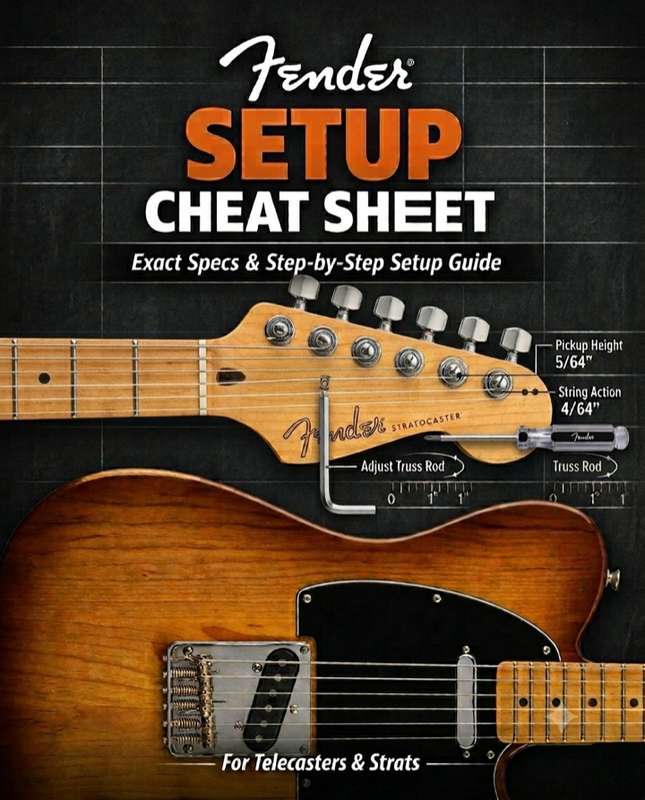
For a typical Z-series Stratocaster, start with these general targets:
- Neck relief: roughly 0.010 inches at the 7th fret with the string held at the 1st and last frets
- Action at the 17th fret: about 4/64 inches on the high E and 5/64 inches on the low E
- Pickup height: around 6/64 inches from the bottom of the low-E string to the bridge pickup pole piece, and 5/64 inches on the high-E side
These are starting points, not rules. Measure, adjust in small steps, and let the neck settle overnight between truss-rod turns. For exact factory measurements by model and year, use the Setup Specs Lookup. For a printable one-page reference, the Fender Setup Guide collects the key specs onto a single card.
Z-Series Serials vs Other Letter Prefixes
Once you understand the Z prefix, the rest of Fender's letter-year system falls into place:
- S prefix: late 1970s (S7, S8, S9 for 1977, 1978, 1979)
- E prefix: 1980s (E3 through E9)
- N prefix: 1990s (N0 through N9)
- Z prefix: 2000s (Z0 through Z9)
- US prefix: modern USA guitars with a two-digit year code
- MX, MZ, MN prefixes: Mexican production from the 1990s onward
If your serial does not fit the Z pattern, the Fender serial number decoder will route it to the correct decade and factory.
Internal Links and Next Steps
- Fender Serial Number Lookup - Decode any Fender or Squier serial instantly
- Guitar Worth Calculator - Get a market range for your year and model
- Setup Specs Lookup - Find factory measurements by model and era
- Fender E-Series Serial Numbers - The 1980s predecessor to the Z prefix
- Fender N-Series Serial Numbers - The 1990s lead-in to the Z system
- Fender S-Series Serial Numbers - The 1970s predecessor to the E system
- Fender MX-Series Serial Numbers - Mexican-made Fenders from the 1990s onward
FAQ
What year is a Z9 Fender serial number?
A Z9 Fender serial number was made in 2009. The Z prefix means the 2000s, and the 9 is the last digit of the year. Most Z9 guitars are USA models built at the Corona factory.
Is a Z-series Fender USA or Mexico?
A plain Z-series serial is USA. Mexican guitars from the same decade use the MZ prefix, which adds an M before the Z. Always check the full serial and the "Made in U.S.A." or "Made in Mexico" decal on the back of the headstock.
What does the Z stand for in Fender serial numbers?
The letter Z stands for the 2000s in Fender's letter-year dating system. It replaced the N prefix of the 1990s and was replaced by the modern US prefix around 2010. The digit after the Z gives the specific year.
Are Z-series Fenders good guitars?
Yes. Z-series Fenders were built during a period of stable, modern production at Fender's Corona factory. They are generally well made, easy to set up, and consistent in quality. They are popular with players who want an American Fender without the premium of a vintage instrument.
How do I know if my Z5 Fender is American or Mexican?
Look at the full serial and the headstock decal. An American Z5 has a single-letter prefix, such as Z5123456, and a "Made in U.S.A." decal. A Mexican MZ5 has a two-letter prefix, such as MZ5123456, and a "Made in Mexico" decal. Run the serial through the Fender serial number decoder when in doubt.
What models were made with Z-series serial numbers?
Fender used the Z prefix across most of its electric line. Common models include the Stratocaster, Telecaster, Jazzmaster, Jaguar, Mustang, Precision Bass, and Jazz Bass. The American Standard, American Series, Highway One, and Deluxe lines all carried Z-series serials.
What replaced the Z-series serial format?
Fender moved to a US prefix with a two-digit year code around 2010. A serial such as US10123456 indicates a 2010 USA Fender. This format continued into the 2020s before some lines adopted other numbering systems.
How much is a 2000s Z-series Fender worth?
Value depends on model, originality, and condition. USA Z-series guitars typically trade from the high hundreds to around the mid-teens in dollars, with Deluxe, limited, and mint examples higher. Use the Guitar Price Estimate tool and compare live listings for a current range.
Can a Fender have a Z serial and be a reissue?
Yes, some reissue and special-run guitars from the 2000s carried Z-prefix serials. The model name, decal, and hardware usually reveal whether the guitar is a standard production model or a reissue.
What should I do after I date my Z-series Fender?
After you know the year and factory, verify originality, check the current market value, and give the guitar a proper setup. Use the Fender serial number decoder to confirm the date, the Guitar Price Estimate tool for pricing, and the Setup Specs Lookup or Fender Setup Guide for factory measurements.
Conclusion
Fender Z-series serial numbers cover a solid decade of American-made Fender production. From the turn-of-the-millennium American Standard line through the Highway One and American Series models of the mid-2000s, the Z prefix marks guitars that are practical, playable, and easy to date.
If you have a Z-series Fender, start with the serial table above, check the headstock decal to confirm the country, and inspect the hardware and stamps to confirm originality. Then run the number through the Fender serial number decoder for a quick digital check, and use the Guitar Price Estimate tool if you are buying, selling, or insuring the guitar.
Once the guitar is dated and valued, the final step is making it play its best. A 2000s Fender that has been properly set up can feel as good as any modern instrument. The Fender Setup Guide puts those specs on one printable page, so you can dial in action, relief, intonation, and pickup height without guessing.