Pre-CBS Fender Serial Numbers: 1954–1964 Dating Guide
Decode pre-CBS Fender serial numbers from 1954–1964. Learn the plain neck-plate and L-prefix ranges, spaghetti and transition logos, neck heel date codes, era specs, and what these instruments are worth today.
Pre-CBS Fender Serial Numbers Explained
Pre-CBS Fender serial numbers are the key to dating any Fender guitar or bass built before the January 1965 sale of the company to CBS.
This guide covers Fender guitars and basses made from 1954 through 1964: the approximate serial ranges by year, where the number appears, how decals and neck plates changed, what the neck heel date means, and why pre-CBS instruments command the prices they do. The tables also include the earliest Telecasters back to 1950 for completeness, but the focus is the 1954–1964 span shared by Stratocaster, Telecaster, Precision Bass, and Jazz Bass.
If you already have the serial in hand, run it through the free Fender serial number decoder for an instant year read.
What Does Pre-CBS Mean?
Pre-CBS means the guitar was built before CBS purchased Fender in January 1965. During this period, Leo Fender's small Fullerton team built the instruments that defined the electric guitar with smaller production runs, lighter bodies, and more hand work.
Collectors treat 1954–1964 as the core pre-CBS vintage window. Early Telecasters (1950–1954) carried serials on the bridge plate; from 1954 onward the shared neck-plate sequence covered Stratocaster, Telecaster, and the basses. A 1965 instrument may still carry transition features, but its serial usually falls into the L-series or the early F-series neck plate used after the CBS sale.
Pre-CBS Fender Serial Number Ranges by Year
Fender did not use a strict one-number-per-year system. The ranges below are the commonly accepted approximate boundaries used by collectors and dealers. Overlaps happen because Fender reused or skipped blocks, and because instruments sometimes sat before shipping.
All Pre-CBS Fenders, 1954–1964
| Approximate Year | Serial Range | Notes |
|---|---|---|
| 1954 | 0001 – 7000 | Stratocaster debuts; Teles move to neck plate |
| 1955 | 7000 – 9000 | Shared sequence across guitars and basses |
| 1956 | 9000 – 17000 | Production increases; early custom colors |
| 1957 | 17000 – 25000 | Some numbers appear with a "0" or "-" prefix |
| 1958 | 25000 – 34000 | Jazzmaster introduced; slab rosewood boards |
| 1959 | 34000 – 44000 | Jazz Bass debuts; more custom colors |
| 1960 | 44000 – 59000 | Slab rosewood still common |
| 1961 | 59000 – 71000 | Jaguar introduced |
| 1962 | 71000 – 93000 | Spaghetti logo still common |
| 1963 | 93000 – 99999 | Late plain-number serials; L series begins |
| 1964 | 0L00001 – L59000 | L-prefix neck plates; transition logo appears |
Early Telecaster Bridge Plate Numbers (1950–1954)
Telecaster serials started on the bridge plate before moving to the neck plate in mid-1954.
| Approximate Year | Serial Range | Location | Notes |
|---|---|---|---|
| 1950–1952 | 0001 – 0999 | Bridge plate | Broadcaster, Nocaster, early blackguard Tele |
| 1952–1954 | 0000 – 5300 | Bridge plate | Blackguard era; brass saddles, ash bodies |
For a precise read, especially near the 1962–1964 transition, use the Fender serial number decoder and cross-check the neck heel date.
Where to Find the Serial Number on a Pre-CBS Fender
Bridge Plate (1950–1954 Telecasters Only)
The earliest Esquires, Broadcasters, Nocasters, and Telecasters carried the serial stamped on top of the metal bridge plate, between the saddles. This is the only serial location on many 1950s blackguard Teles. If the bridge plate has been replaced, the original serial may be lost.
Neck Plate (1954–1964)
In mid-1954, Fender moved the serial to a chrome neck plate on the back of the guitar. The plate itself is plain on pre-CBS instruments; it does not have the large "F" logo that CBS introduced in 1965. The serial is stamped across the center of the plate in a clean, shallow font. On some late 1962 and 1963 guitars, the L prefix appears as part of the number.
Spaghetti Logo vs Transition Logo
The headstock decal is one of the quickest visual clues for a pre-CBS Fender.
Spaghetti Logo (1954–1964)
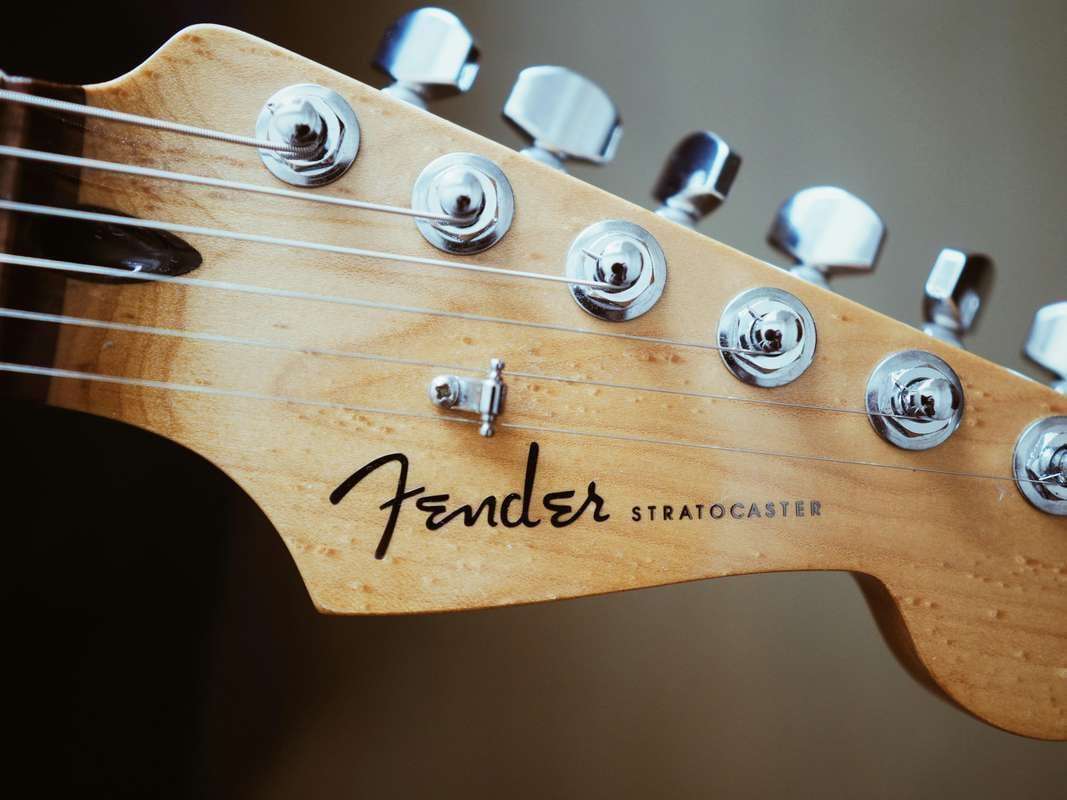
The original Fender logo is a thin, cursive "spaghetti" script in gold. It appears on the headstock front of Stratocasters, Telecasters, Jazzmasters, Jaguars, and basses through most of the pre-CBS era. If the headstock has a small spaghetti logo and the rest of the guitar matches the 1950s or early 1960s, you are on the pre-CBS path.
Transition Logo (1965–1967)
The transition logo keeps the spaghetti script but adds a thicker black outline and a more pronounced tail. It appears right around the CBS sale, so a transition logo on a guitar with an L-plate serial may be a late 1964 or early 1965 transition instrument. By 1965 the bold CBS-era block logo with patent numbers became standard.
For more on logo dating, see the Fender model identification guide.
Neck Plate Stamps and the L Series
Pre-CBS neck plates are simple chrome rectangles. They do not carry the large "F" logo that appeared after January 1965. The serial stamp is centered and uses a small, consistent font.
Plain Sequential Plates (1954–1962)
From 1954 through most of 1962, the neck plate simply shows the number. There is no letter prefix. These plates are easy to read but also easy to fake, so collectors look at the font depth, plate finish, and surrounding hardware to judge originality.
L-Series Plates (Late 1962–1965)
When Fender crossed into the 100,000 range, the serial gained an "L" prefix. The letter may appear as "0L00001" or "L00001" depending on the stamping die. L-series plates are found on late 1962, 1963, 1964, and very early 1965 instruments. An L-series serial alone does not prove pre-CBS status; confirm with neck dates, pot codes, and hardware.
Spotting a Swapped Neck Plate
Because pre-CBS guitars are valuable, sellers sometimes move a vintage neck plate onto a later guitar to inflate the price. Red flags include a plain-number plate on a guitar with CBS-style hardware, an L-series plate on a guitar with a spaghetti logo, fresh chrome on an otherwise worn plate, or a serial font that looks modern or uneven.
If the neck plate and the rest of the guitar disagree, trust the body, neck, and hardware over the plate. The Fender authenticity checker can help you flag mismatches before you buy.
Neck Heel Dates: The Hidden Production Calendar
The most reliable date on a vintage Fender is often written in pencil on the neck heel. Fender employees marked the neck with the month and year it was shaped, usually in a format like "4-58" or "10-62." This date is more specific than the serial number because it records when the neck itself was made, not when the complete guitar shipped.
Later in the pre-CBS era, some neck heels carry stamps such as 5 MAR 64 B, where the trailing letter indicates the nut width profile: A is narrow, B is standard, C is slightly wider, and D is widest. The letter is not a quality grade.
It is normal for the neck to be a few weeks or months older than the serial would suggest, because necks were made ahead of final assembly. Problems arise when the gap is too large. A neck dated 1958 on a guitar with a 1964 serial, or a 1965 neck date on a guitar claimed as pre-CBS, suggests a swapped neck or a mislabeled instrument. Always compare the neck date, body date, pot codes, and serial when authenticating a vintage Fender.
Key Pre-CBS Era Specs
Pre-CBS Fenders changed in small but important ways almost every year. Here are the biggest markers to look for.
1954–1957: Early Stratocaster and Telecaster
- Bodies: Lightweight ash or alder, often under 3.5 kg (7.5 lb) for Strats.
- Necks: One-piece maple with a soft V or thick C profile; Stratocaster fingerboard radius is 7.25 inches.
- Frets: 21 small vintage-style frets.
- Pickups: Hand-wound single-coils with black or grey bottoms; staggered pole pieces.
- Finishes: Two-tone sunburst on Strats (1954–1958); blond or black on early Teles.
- Hardware: Six-screw tremolo on Stratocaster; brass barrel saddles on Telecaster; Kluson-style tuners.
These early guitars are the most collectible. A 1954 or 1955 Stratocaster in original condition can trade for six figures, and the earliest blackguard Teles are in the same league.
1958–1962: Rosewood Boards and Evolving Finishes
- Fingerboards: Slab rosewood boards appear on Strats around 1959; Teles follow soon after.
- Inlays: Clay dots remain standard through 1964.
- Finishes: Three-tone sunburst replaces two-tone on Strats around 1959; Teles stay mostly blond or sunburst.
- Neck profiles: The V shape softens into a rounder C; necks slim slightly compared with 1954–1957.
- Pickups: Windings become more consistent, but output stays in the vintage range.
This period includes some of the most famous vintage Strats, including the 1962 instruments with slab-board rosewood.
1963–1964: Late Pre-CBS Transition
- Logo: Spaghetti logo still common; transition logo begins to appear very late in 1964.
- Neck plates: L-series prefix replaces plain numbers.
- Pickguards: Three-ply white or mint green on Strats; three-ply white on Teles.
- Neck profiles: Slimmer C shapes become common as Fender prepares for higher production.
Late pre-CBS guitars can be excellent values for players who want vintage tone without paying the premium for a 1950s instrument.
How to Verify a Pre-CBS Serial Number
A serial number is the starting point, not the final verdict. Follow this checklist to confirm the guitar matches the serial.
- Decode the serial with the Fender serial number decoder.
- Check the decal. Spaghetti logos generally indicate 1954–1964; the transition logo appears around 1964–1965; the bold CBS logo with a patent line indicates 1965 onward.
- Inspect the neck plate. Pre-CBS plates are plain chrome without the large "F" logo. Reproduction plates often use the wrong metal, font, or placement.
- Read the neck heel date. It should fall within a few months of the serial year. Large gaps suggest a replacement neck.
- Check pot codes and body stamps. A 1961 Stratocaster should have pots from 1960 or 1961, not 1965.
- Cross-reference the model features. Make sure the hardware, pickup style, pickguard, and finish are correct for the claimed year.
For high-value purchases, use the Fender fake checker and consider a professional appraisal.
Value: Why Pre-CBS Fenders Cost What They Do
Pre-CBS Fenders sit at the top of the vintage electric-guitar market. The reasons are simple: limited production, historical importance, lightweight construction, and the tonal character associated with the original Fullerton factory.
Value by Year and Model
- 1954–1957 Stratocasters: The most valuable production Strats. Maple-board early examples in original condition can sell for well into six figures.
- 1958–1962 Stratocasters: Rosewood-board vintage Strats from this window are also highly collectible, often trading from the upper five figures into low six figures.
- 1963–1964 Stratocasters: Late pre-CBS transition models offer strong vintage tone at a discount to earlier years, typically trading in the mid-to-upper five figures.
- 1950–1954 Telecasters: Blackguard and early blonde Teles are blue-chip collectibles; exceptional examples reach six figures.
- 1955–1964 Telecasters: Values remain strong but are generally below the earliest blackguard instruments. Clean original examples trade from the upper four figures upward.
- Pre-CBS Basses: Precision Bass and Jazz Bass values are lower than equivalent Strats and Teles, but clean early examples still command serious money.
Condition and Originality
Original finish is the biggest value driver. A refinished pre-CBS guitar can lose 30% to 50% of its value compared with an original-finish example. Replaced pickups, bridge, tuners, or pickguard also reduce value. Original case and paperwork add premiums, sometimes 10% to 20%.
For a current market range, use the Guitar Price Estimate tool or check the Fender Stratocaster value guide and Fender Telecaster value guide.
Setup and Maintenance for a Pre-CBS Fender
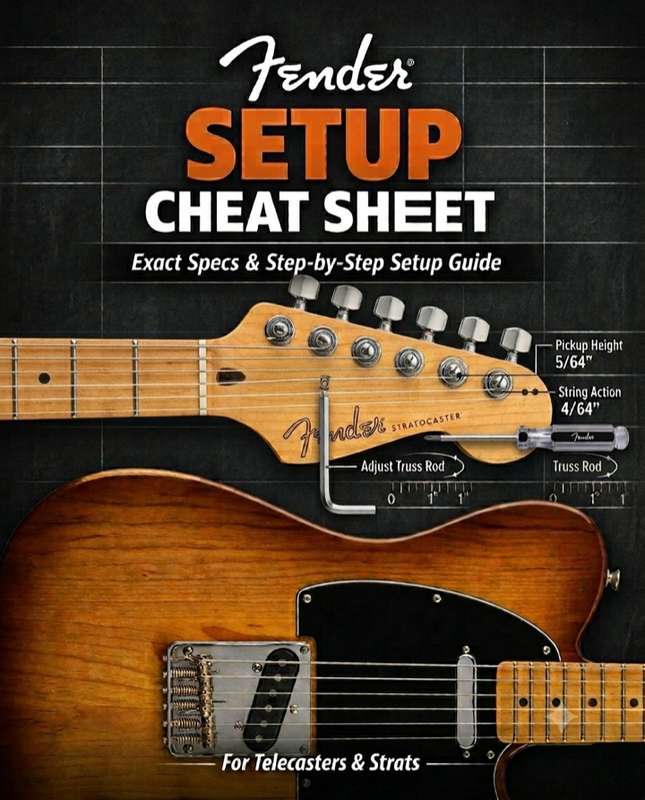
A pre-CBS Fender is old enough that it needs careful maintenance. Wood has settled, frets may be low, and original finishes are fragile. For a typical pre-CBS Stratocaster, start with these targets:
- Neck relief: roughly 0.010 inches at the 7th fret with the string held at the 1st and last frets
- Action at the 17th fret: about 4/64 inches on the high E and 5/64 inches on the low E
- Pickup height: around 6/64 inches from the bottom of the low-E string to the bridge pickup pole piece, and 5/64 inches on the high-E side
For Telecasters, action targets are similar, but the bridge pickup is often set slightly closer to the strings for more bite. For exact factory measurements by model and year, use the Setup Specs Lookup or the printable Fender Setup Guide.

 Buy on Amazon
Pre-CBS vs CBS-Era: Where Is the Line?
The pre-CBS era ends in January 1965, when CBS completed its purchase of Fender. In practice, the transition was gradual. Some very late 1964 guitars already show features that would become standard in 1965, and some early 1965 guitars carry pre-CBS transition parts.
The main CBS-era changes are F-logo neck plates in 1965, the bold logo with patent numbers replacing the transition logo, three-bolt neck plates later in the CBS era, and larger headstocks and heavier bodies in the late 1960s and 1970s. If your guitar has an L-series serial, a transition logo, and no F-logo neck plate, it is likely late pre-CBS or a very early 1965 transition instrument. For post-1965 numbering, see the CBS-era Fender serial numbers guide.
Internal Links and Next Steps
- Fender Serial Number Lookup - Decode any Fender or Squier serial instantly
- Fender Authenticity Checker - Photo-based red-flag screening before you buy
- Fender Model Identification - Read headstock, decal, and hardware clues
- Vintage Stratocaster Identification - Visual markers by era
- Vintage Telecaster Identification - Visual markers by era
- CBS-era Fender Serial Numbers - Dating 1965–1985 Fenders
- Fender Stratocaster Value Guide - Market ranges by year and model
- Fender Telecaster Value Guide - Market ranges by year and model
- Stratocaster Setup Guide - Factory setup measurements by era
- Telecaster Setup Guide - Factory setup measurements by era
- Guitar Price Estimate - Get a market value for your guitar
- Fender Setup Guide - Printable specs card for every major Fender era
FAQ
What year is my pre-CBS Fender serial number?
Pre-CBS Fenders use plain sequential serial numbers. Match your number to the year ranges in the tables above, or enter it into the Fender serial number decoder for an instant read.
What does pre-CBS mean on a Fender?
Pre-CBS means the guitar was built before CBS purchased Fender in January 1965. These instruments were made at the original Fullerton, California factory and are generally the most collectible Fenders.
How do I know if my Fender is pre-CBS?
Check the serial number against the ranges above, inspect the headstock logo, and look at the neck plate. Pre-CBS guitars usually have a spaghetti or transition logo and a plain neck plate without the large "F" introduced in 1965.
Where is the serial number on a pre-CBS Stratocaster?
Pre-CBS Stratocasters have the serial on the neck plate. A very small number of the first 1954 Strats had it on the back of the plastic tremolo cover instead.
Where is the serial number on a 1950s Fender Telecaster?
The earliest 1950–1954 Telecasters have the serial stamped on the bridge plate. From mid-1954 onward, the serial moved to the neck plate on the back of the guitar.
What is an L-series Fender serial number?
L-series serials begin with the letter L and were used from late 1962 through 1965 as Fender crossed into the 100,000 range. An L-series guitar can be late pre-CBS or early CBS, so confirm with neck dates and hardware.
Can a pre-CBS Fender serial number be fake?
Yes. Neck plates, decals, and stamps can be reproduced or swapped. Always verify the serial against the logo, neck plate style, neck heel date, pot codes, and hardware. Use the Fender fake checker for a structured review.
How much is a pre-CBS Fender worth?
Value depends on model, year, condition, and originality. Early 1950s Teles and 1954–1957 Strats can reach six figures in original condition. Late pre-CBS instruments typically trade from the upper four figures into the five figures. Use the Guitar Price Estimate tool for a current range.
Conclusion
Pre-CBS Fender serial numbers are the doorway to one of the most important chapters in electric-guitar history. From the first Stratocasters in 1954 through the L-plate instruments of 1964, the plain sequential serials, spaghetti and transition decals, and handwritten neck heel dates tell a clear story about when and how each guitar was made.
If you have a pre-CBS Fender, start with the serial ranges in this guide, check the logo and neck plate, and confirm the neck heel date. Then run the serial through the Fender serial number decoder and cross-check the physical details with the Fender authenticity checker. For pricing, use the Guitar Price Estimate tool and the model-specific value guides.
Once the guitar is dated, authenticated, and valued, the final step is making it play its best. A properly set-up pre-CBS Fender can still perform at the highest level. The Fender Setup Guide gives you the factory-correct specs on one printable page, so you can adjust action, relief, intonation, and pickup height without guessing.