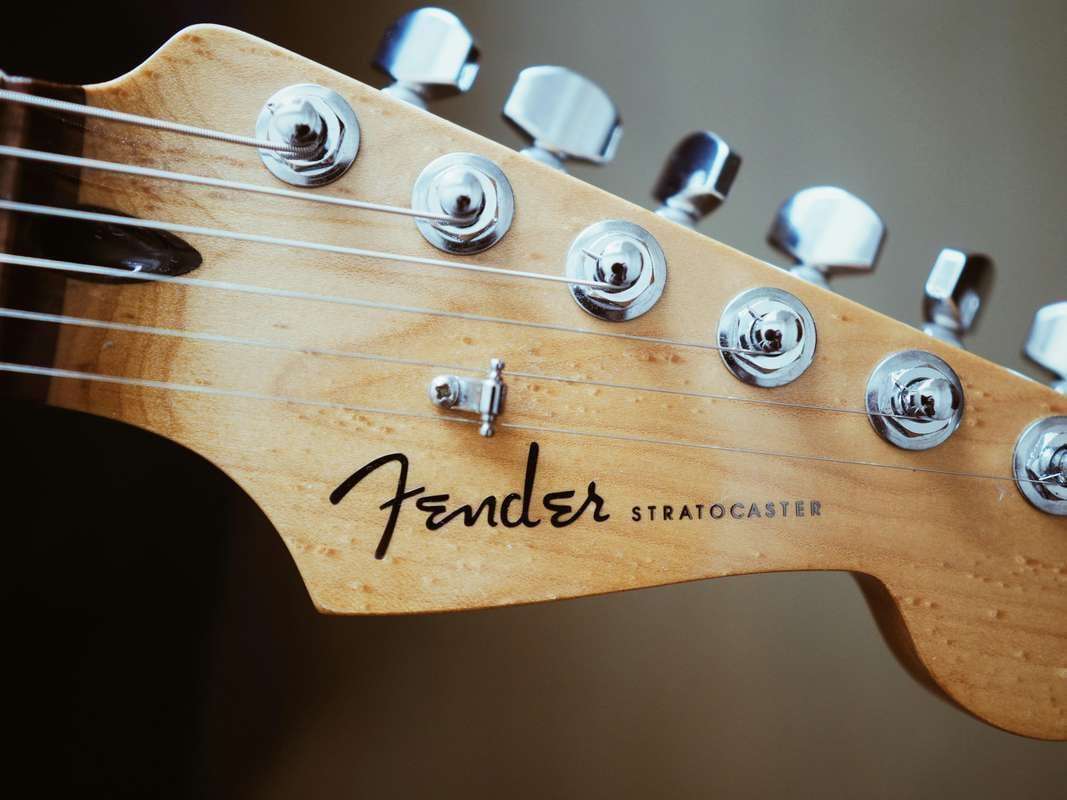
Vintage Fender Telecaster Identification Guide
Learn vintage Fender Telecaster identification by era: body contours, bridge plates, decals, pickups, neck profiles, and finishes from 1950 through 1985.
Vintage Fender Telecaster Identification: What to Look For
Vintage Fender Telecaster identification is the process of matching a guitar's physical details to the era it was built. The Telecaster has been in continuous production since 1950, and its construction changed in visible, measurable ways across the pre-CBS, CBS, and early FMIC years. A single feature like the bridge plate, decal, or pickup cover can place a guitar within a five-year window.
Start with the Fender serial number decoder for the year and factory, then use this guide to confirm that the hardware, finish, and wood match that serial. For high-value instruments, pair this guide with the Fender authenticity checker and a hands-on inspection.
The Four Eras of Vintage Telecaster Production
Most collectors divide vintage Telecasters into four eras. Each one has a distinct set of identification markers.
| Era | Years | Ownership | Key Identification Traits |
|---|---|---|---|
| Blackguard / Early Blonde | 1950–1954 | Fender family | Bridge-plate serial, single-ply black pickguard, ash body, butterscotch blonde |
| Pre-CBS | 1954–1964 | Fender family | Neck-plate serial, spaghetti logo, maple then rosewood fingerboard, thinner finish |
| CBS Era | 1965–1976 | CBS | F-series neck plate, big headstock, three-bolt neck with micro-tilt, grey-bottom pickups |
| Late CBS / FMIC Transition | 1976–1985 | CBS, then FMIC | S and E prefixes, Fullerton to Corona move, return to four-bolt necks on some models |
These boundaries are not perfectly sharp. Fender used parts until they ran out, so transition guitars can carry mixed features. The serial gives you the calendar year; the physical details tell you which production batch the guitar came from.
Serial Numbers: The First Filter
Before you study wood or hardware, find the serial number and run it through the Fender serial number lookup. The number tells you the year and factory, which narrows the list of features the guitar should have.
- 1950–1954: Serial stamped on the bridge plate.
- 1954–1976: Serial on the metal neck plate.
- 1976–1985: S-prefix or E-prefix on the neck plate or headstock.
The serial is the starting point, not the final verdict. Necks, bodies, and hardware get swapped, and decals are easy to reprint. Always cross-check the serial against the physical features in this guide. For a deeper dive into the pre-CBS numbering system, see our pre-CBS Fender serial numbers guide. For the CBS-era F, S, and E prefixes, see the CBS-era Fender serial numbers guide.
Body Wood and Construction by Era
Telecaster bodies changed in ways that affect weight, resonance, and value.
1950–1954: Ash and the Blackguard Body
The earliest Telecasters, including Broadcaster and Esquire variants, were made from ash. The bodies were one or two pieces, lightly contoured on the back, and finished in butterscotch blonde nitrocellulose lacquer. The single-ply black pickguard is why collectors call these "Blackguards."
Key markers:
- Wood: Ash, visible grain under the translucent blonde finish.
- Finish: Butterscotch blonde nitrocellulose lacquer, thin enough to show grain.
- Pickguard: Single-ply black Bakelite or phenolic, roughly 1/16 inch thick, five screws.
- Body contour: Slight rear contour, much less pronounced than later Strats.
Original Blackguards are among the most valuable production electric guitars. A refinished body or replaced pickguard slashes value.
1954–1964: Pre-CBS Standardization
By 1954 Fender moved the serial number to the neck plate. Ash remained common for blondes, but alder appeared on sunburst and custom-color guitars. The pickguard changed from black Bakelite to single-ply white celluloid around 1954, then to three-ply white-black-white (W/B/W) nitrate by 1959.
Key markers:
- Wood: Ash for blondes, alder increasingly common for opaque colors.
- Finish: Nitrocellulose lacquer, thin by modern standards.
- Pickguard: Single-ply white 1954–1958, three-ply W/B/W from 1959 onward.
- Fingerboard: Maple until mid-1959, then slab-board rosewood.
The transition to rosewood is one of the clearest pre-CBS dating tools. A 1958 Telecaster should have maple; a 1960 should have rosewood.
1965–1976: CBS-Era Changes
CBS ownership brought cost-saving changes. Bodies were generally thicker and heavier. Finishes shifted to thicker polyester, though nitrocellulose still appeared in the mid-1960s. Alder became dominant.
Key markers:
- Wood: Alder on most standards; ash still used for some natural and blonde finishes.
- Finish: Polyester became common by the late 1960s and standard through the 1970s.
- Body weight: Noticeably heavier on average than pre-CBS guitars.
- Pickguard: Three-ply W/B/W, then some B/W/B variations.
1976–1985: Late CBS and FMIC Transition
Late-1970s Telecasters continued the CBS formula, while early FMIC guitars from 1985 onward began refining production. Fullerton-built early 1980s guitars share many 1970s traits; Corona-built late-1985 guitars mark the start of modern production.
Key markers:
- Wood: Alder or ash depending on finish.
- Finish: Polyester on CBS-era guitars, with some nitrocellulose on special runs.
- Neck joint: Three-bolt on many 1970s models; four-bolt returning on some late-1970s and 1980s standards.
Bridge Plate Evolution: The Telecaster Signature
No feature identifies a Telecaster faster than the bridge plate.
1950–1954: The Original Bridge-Plate Serial
On the earliest Teles, the serial number was stamped onto the metal bridge plate between the bridge pickup and the saddles. The plate was steel with three compensated brass barrel saddles.
Key markers:
- Serial location: Stamped on top of the bridge plate.
- Saddles: Three brass barrel saddles.
- Plate material: Plain steel, often with a light chrome finish.
- Pickguard screws: Five screws, not the later eight.
1954–1969: Traditional Bridge Plate
After the serial moved to the neck plate, the bridge kept the same basic design. Brass barrel saddles remained standard, and the plate gained the familiar squared corners.
1969–1985: CBS-Era Bridges
CBS-era bridges sometimes used six individual saddles instead of three barrel saddles, starting around 1969 on some models. By the late 1970s, some Telecasters had stamped steel saddles or other cost-saving changes.
Key markers:
- Pre-CBS: Three brass barrel saddles, steel plate, no six-saddle option.
- CBS era: Six-saddle bridges appear on some models; saddles may be steel or cast.
- Late 1970s–1980s: Hardware varies; original-style three-barrel bridges return on reissues.
Neck Profiles and Fingerboards
Telecaster necks changed shape, radius, and fingerboard material across the vintage years.
1950s: Chunky and Round
Early Telecaster necks were thick by modern standards. The profile was often a deep U or soft V, with a depth around 0.95–1.00 inch at the first fret and 1.00–1.05 inches at the twelfth fret. The fretboard radius was 7.25 inches, with small vintage-style frets.
Key markers:
- Profile: Deep U or soft V.
- Depth at 1st fret: Roughly 0.95–1.00 inch.
- Depth at 12th fret: Roughly 1.00–1.05 inches.
- Fingerboard: Maple, one-piece neck until 1959.
- Radius: 7.25 inches.
- Frets: 21 vintage-style frets.
1959–1962: Slab Rosewood Boards
In mid-1959 Fender introduced rosewood fingerboards. These early boards were thick "slab boards" without a separate veneer. The neck profile remained fairly full through 1962.
Key markers:
- Fingerboard: Brazilian rosewood slab board, thick and flat on the bottom.
- Profile: Medium C to U shape, still substantial.
- Inlays: Clay dots.
1962–1964: Veneer Rosewood and Slimming Necks
Around 1962, Fender switched from slab rosewood to a thinner veneer board glued onto a curved maple neck. Profiles also began slimming toward a C shape.
Key markers:
- Fingerboard: Veneer rosewood, thinner than slab boards.
- Profile: Medium C, slimmer than 1950s necks.
- Inlays: Clay dots, transitioning to pearl dots later in the decade.
1965–1985: CBS-Era and Later Profiles
CBS-era Telecasters often had slimmer, faster neck profiles. The late 1960s brought the "big headstock," and the 1970s introduced the three-bolt neck joint with micro-tilt on many models.
Key markers:
- Profile: Slim C or D shape from the late 1960s onward.
- Headstock: Larger headstock from late 1965 onward.
- Neck joint: Three-bolt with micro-tilt on many 1971–1980 models; four-bolt returning on some later examples.
- Radius: Mostly 7.25 inches, with some late-1970s and 1980s models at 9.5 or 12 inches.
Headstock Decals and Logos
The headstock decal is one of the easiest visual dating tools, but also one of the easiest to fake.
1950–1956: The Spaghetti Logo
The original Fender "spaghetti" logo was a thin, cursive gold decal on the headstock front with no other text. It should look delicate, with thin strokes and clean curves.
1956–1964: Spaghetti Logo with Patents
By the late 1950s, Fender added patent numbers below the spaghetti logo. The "Made in U.S.A." stamp usually appeared on the back of the neck plate rather than the headstock.
1965–1985: CBS-Era and Later Decals
CBS kept the spaghetti logo but introduced the larger "big headstock" in late 1965. The logo remained similar, but the headstock proportions changed. "Made in U.S.A." text often moved to the front of the headstock below the logo. The big headstock remained common through the 1970s, with some models returning to a smaller shape in the 1980s.
Pickups and Electronics
Telecaster pickups changed winding specs, baseplate color, and cover style across the vintage years.
1950–1964: Black-Bottom Pickups
Vintage Telecaster pickups from the 1950s and early 1960s used black fiberboard bottom flats, alnico magnets, and a bright, cutting tone. Bridge pickups were mounted to the steel bridge plate.
Key markers:
- Bottom flat: Black fiberboard.
- Magnets: Alnico III or V, depending on year.
- Cover: Neck pickup often had a metal cover.
- Output: Lower DC resistance than modern pickups, typically 6.0k–7.5k ohms bridge and 5.5k–6.8k ohms neck.
1965–1976: Grey-Bottom Pickups
CBS-era pickups are known for grey or gray-green fiberboard bottom flats. Winding specs drifted through the 1970s, and some pickups became slightly hotter.
Key markers:
- Bottom flat: Grey or gray-green fiberboard.
- Output: Slightly higher on average than 1950s pickups.
- Cover: Nickel or chrome neck pickup cover.
1976–1985: Transition and Standardization
Late-1970s and early-1980s pickups continued the grey-bottom tradition. By the mid-1980s, Fender began moving toward the modern pickup designs used on American Standard models.
Tuners and Hardware
Small hardware details help confirm the era of a vintage Telecaster.
1950s: Kluson Single-Line Tuners
Early Telecasters used Kluson single-line tuning machines, often with "Kluson Deluxe" in a single line on the back. The buttons were usually white plastic or "keystone" shaped.
1960s: Kluson Double-Line Tuners
By the mid-1960s, Kluson tuners often carried "Kluson Deluxe" in two lines. These remained common through the CBS era.
1970s–1985: Fender-Branded and Sealed Tuners
CBS-era Telecasters sometimes switched to Fender-branded or sealed tuners. Some late-1970s guitars used Schaller-style tuners with "F" buttons. Post-1985 Corona guitars gradually introduced modern hardware.
Finish and Color Transitions
The finish on a vintage Telecaster tells you almost as much as the serial number.
Butterscotch Blonde (1950–1954)
The original Blackguard finish was a translucent yellow-tan nitrocellulose lacquer over ash. It aged to butterscotch, amber, or brown, with the ash grain visible through the finish.
Two-Color Sunburst (1954–1958)
Fender introduced a two-color sunburst around 1954, with a dark edge fading to a yellow or amber center. The nitrocellulose finish checked and faded with age.
Three-Color Sunburst and Custom Colors (1958–1985)
The three-color sunburst, with red between the dark edge and amber center, appeared around 1958. Custom colors like Fiesta Red, Dakota Red, Daphne Blue, and Olympic White became available through the 1960s. CBS-era custom colors sometimes used thicker finishes and different base coats.
Key markers:
- Pre-CBS finishes: Thin nitrocellulose, visible checking, possible wear through to the wood.
- CBS-era finishes: Thicker polyester on later guitars, less checking, more plastic-like appearance.
- Refinishes: A refinished vintage Telecaster can lose 30% to 70% of its value depending on era and quality.
Value Implications by Era
Identification matters because value varies enormously by era.
| Era | Condition | Typical Market Position |
|---|---|---|
| 1950–1954 Blackguard | All original | High five figures to six figures |
| 1954–1964 pre-CBS | All original | Mid five figures to high five figures |
| 1965–1976 CBS | Clean original | Low four figures to low five figures |
| 1976–1985 late CBS / FMIC | Clean original | Mid three figures to mid four figures |
For a precise estimate, use the Guitar Price Estimate or read our Fender Telecaster value guide. Originality matters more than perfection: a worn but all-original 1954 Tele is usually worth more than a refinished mint guitar with replaced pickups.
Common Authenticity Red Flags
A vintage Telecaster should pass both the serial-number check and the physical-feature check.
Serial vs. Features Do Not Match
If the serial points to 1958 but the guitar has a rosewood fingerboard, grey-bottom pickups, and a big headstock, the neck or body has been swapped. Believe the most conservative interpretation when the serial and features disagree.
Reproduction Decals
Modern decals can look close to original but often fail under magnification. Original decals are silk-screened under the finish and show age-appropriate checking. Repro decals may sit on top of the finish or have slightly different fonts.
Refinished Bodies
A refinished body is not a dealbreaker for a player, but it is for a collector. Check for over-spray in the neck pocket and pickup cavities, modern paint chemistry, and a lack of finish checking.
Swapped Pickups
Original pickups are major value drivers. A 1950s pickup should have a black bottom flat and alnico magnets. A 1970s pickup should have a grey bottom flat. If the pickups look too clean or have modern wiring, they may be replacements.
Wrong Neck Plate
A pre-CBS guitar should have a plain chrome neck plate with the serial stamped into it. A CBS-era guitar should have an F-stamped neck plate from 1965 onward. If the neck plate style does not match the serial era, investigate further.
For a structured checklist, use the free Fender fake checker.
 Buy on Amazon
How to Inspect a Vintage Telecaster
If you have the guitar in hand, work through this checklist.
- Photograph everything before removing parts. Side-lighting reveals faint stamps.
- Read the serial at the Fender serial number lookup.
- Check the neck pocket for date and body stamps.
- Inspect the pickups for bottom-flat color, magnet type, and original solder joints.
- Measure the neck profile with calipers at the first and twelfth frets.
- Examine the finish for checking, wear patterns, and signs of refinishing.
- Compare the hardware to documented original examples from the same year.
If two or more features conflict with the serial, treat the guitar as a parts assembly or modified instrument until a professional appraiser says otherwise.
Internal Links and Next Steps
- Fender Serial Number Lookup — Decode the year and factory from any Fender serial.
- Fender Authenticity Check — Run through a structured red-flag checklist.
- Pre-CBS Fender Serial Numbers — Year-by-year serial ranges for 1954–1964.
- CBS-Era Fender Serial Numbers — Serial ranges and features for 1965–1985.
- Fender Telecaster Value Guide — Market ranges by era, origin, and condition.
- Telecaster Setup Guide — Factory setup specs for every era.
- Fender Setup Guide — Printable one-page reference for action, relief, and pickup height.
Frequently Asked Questions
How do I identify a vintage Fender Telecaster?
Start with the serial number to find the year and factory. Then check the bridge plate, neck plate, headstock decal, fingerboard material, pickup bottom flats, and finish. Each era has consistent markers that should match the serial year.
What is a Blackguard Telecaster?
A Blackguard Telecaster is an early Telecaster from 1950 to roughly 1954 with a single-ply black pickguard. The name comes from the guard, not the body color. These guitars usually have ash bodies, butterscotch blonde finishes, and bridge-plate serial numbers.
When did Fender switch from maple to rosewood on Telecasters?
Fender introduced rosewood fingerboards on Telecasters around mid-1959. The earliest boards were thick slab rosewood; by 1962 Fender switched to a thinner veneer rosewood board.
What does a CBS-era Telecaster look like?
CBS-era Telecasters from 1965 onward usually have a larger headstock, F-series neck plate, and from 1971 onward many models used a three-bolt neck joint with micro-tilt. Pickups have grey bottom flats, and finishes are often thicker polyester.
How can I tell if my Telecaster is pre-CBS?
A pre-CBS Telecaster was built before January 1965. It should have a serial number below roughly L99999 or 100000, a smaller headstock, spaghetti logo, and pre-CBS features like thin nitro finish, black-bottom or early grey-bottom pickups, and no three-bolt neck joint.
What is a three-bolt neck joint on a Telecaster?
A three-bolt neck joint uses three screws and a micro-tilt adjustment mechanism to set neck angle. Fender introduced it on many models around 1971 as a cost-saving measure. It is a reliable CBS-era identifier when combined with other features.
Are 1970s Telecasters vintage?
Yes. Most collectors consider 1970s Telecasters vintage, especially those built before 1985. They are CBS-era instruments and are valued below pre-CBS guitars but can be excellent players.
How do I know if my vintage Telecaster has original pickups?
Remove the pickguard and inspect the bottom flats. Pre-CBS pickups usually have black fiberboard bottoms. CBS-era pickups usually have grey or gray-green bottoms. Check the solder joints, magnet type, and DC resistance against documented specs for the year.
Does a refinish ruin a vintage Telecaster's value?
A refinish usually reduces value significantly, especially on pre-CBS instruments. On a 1950s Blackguard, a refinish can reduce value by tens of thousands of dollars. On a 1970s CBS-era Tele, the impact is smaller but still meaningful.
Where is the serial number on a vintage Telecaster?
Early 1950s Teles have the serial on the bridge plate. From 1954 through 1976 the serial is on the metal neck plate. From 1976 onward it may be on the neck plate or back of the headstock, depending on the prefix.