Fender Model Identification Guide: How to Tell What Fender You Have
Learn how to identify any Fender guitar by headstock shape, decals, body contours, pickups, hardware, serial number, and neck heel stamps. Includes real vs fake red flags.
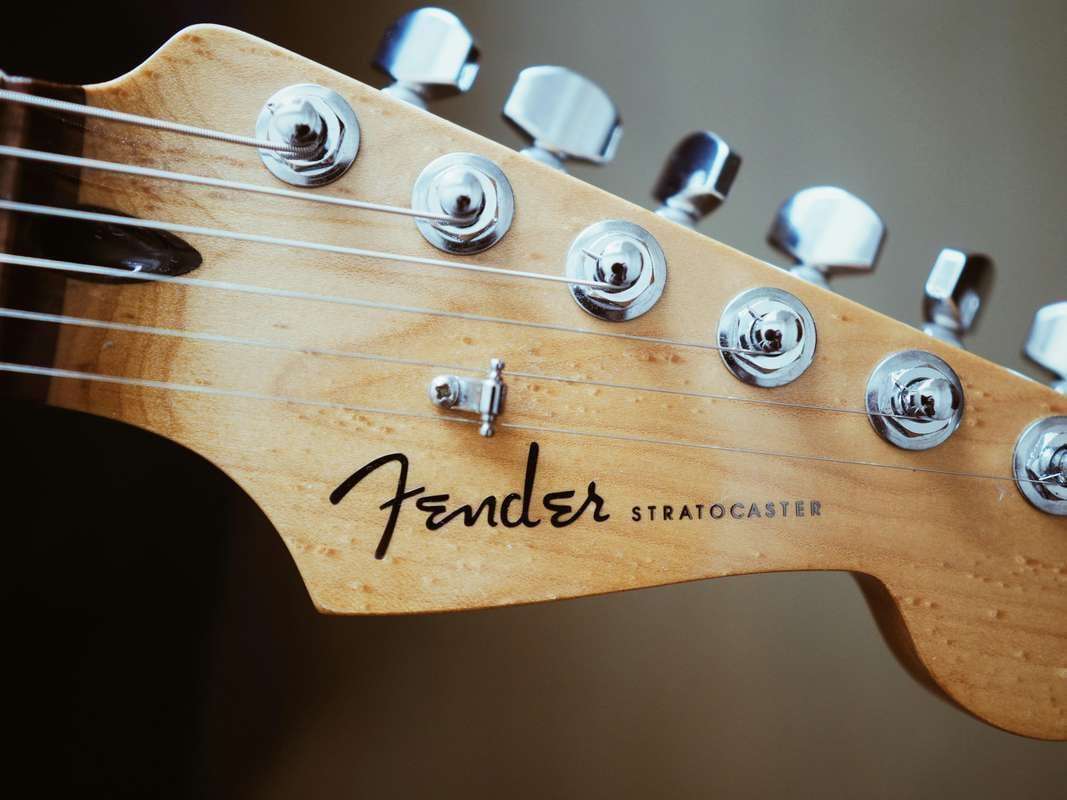 The headstock shape, decal style, and serial location are the three fastest clues to what Fender model and era you own.
Fender Model Identification: How to Tell What Fender You Have
Fender model identification is the process of working out exactly which Fender guitar or bass you own, where it was made, and roughly when. You do not need to be a luthier to get it right. With a few visual checks and the serial number, most Fenders can be identified in minutes.
This guide walks through the six main identification methods: headstock shape, decals and logos, body shape and contours, pickups and hardware, serial number location and format, and neck heel stamps. It also covers the common red flags that mean a guitar is not what the seller claims.
If you already have the serial number, start with the free Fender serial number decoder for an instant year and country read. Then use the checks below to confirm the model and spot anything that does not match.
Method 1: Identify the Model by Headstock Shape
The headstock is the easiest place to start because every core Fender model has a distinct outline and tuner layout. You can often name the model from a single clear photo of the front or back of the headstock.
Stratocaster Headstock
The Stratocaster headstock is long and asymmetrical, with all six tuners in a straight line on one side. Pre-CBS Strats (1954-1965) have a smaller headstock sometimes called the "small" or "vintage" shape. After the CBS purchase in 1965, Fender enlarged the headstock for better brand visibility. That larger shape has defined most Strats ever since. Modern reissues and some custom models return to the small headstock.
Key Stratocaster clues:
- Six-in-line tuners
- One string tree (butterfly or disc style, depending on era)
- Trademark asymmetric curve
- 21 or 22 frets on the neck
Telecaster Headstock
The Telecaster headstock looks like a refined rectangle with rounded corners. It is shorter and squarer than a Strat headstock, and the transition from the nut to the tuner posts is more gradual. The six tuners are also in line.
Key Telecaster clues:
- Six-in-line tuners
- Squarer, more compact shape than a Strat
- Usually two string trees on vintage models, one on modern models
- 21 or 22 frets
Jazzmaster Headstock
The Jazzmaster shares the Strat-style asymmetric outline but is noticeably larger. The extra width was originally needed to house the wider tuner spacing and the larger logo used in the late 1950s. Jazzmasters almost always have a 21-fret neck and the larger pre-CBS style headstock.
Key Jazzmaster clues:
- Large, Strat-like asymmetric shape
- Six-in-line tuners
- 21 frets
- Often a "Jazzmaster" model decal below the main logo
Jaguar Headstock
The Jaguar headstock is similar to the Jazzmaster at first glance, but the Jaguar has a shorter 24-inch scale length. That makes the neck look slightly shorter overall compared to a Jazzmaster. Jaguars also have their own model decal and chrome control plates that are visible in body shots.
Key Jaguar clues:
- Large Strat-style headstock
- Shorter 24-inch scale (22 frets)
- Six-in-line tuners
- Chrome control plates on the body
Mustang Headstock
The Mustang uses a smaller version of the Fender asymmetric shape. Because the Mustang is a short-scale student model, the headstock looks compact compared to a Strat or Jazzmaster. The pickguard is also a distinctive feature: a small, rounded shape rather than the large Strat-style guard.
Key Mustang clues:
- Small asymmetric headstock
- Short 24-inch scale
- 22 frets
- Small, simple pickguard
Precision Bass Headstock
The Precision Bass headstock is large and paddle-shaped, wider than most guitar headstocks to accommodate the four big bass tuners. It has four tuners in line on one side. The body has a double-cutaway horn shape similar to a Strat.
Key Precision Bass clues:
- Four inline tuners on a wide headstock
- Split-coil humbucking pickup
- Double-cutaway body
Jazz Bass Headstock
The Jazz Bass headstock is narrower and more tapered than a Precision Bass headstock, with four inline tuners. The body has a pronounced offset waist, different from the Precision's symmetrical double cutaway.
Key Jazz Bass clues:
- Four inline tuners on a narrower headstock
- Two single-coil pickups
- Offset waist body
Method 2: Read the Decal and Logo
Fender has used a small number of logo styles over the decades, and the decal style is one of the strongest clues to the era. A decal that does not match the claimed age is a major red flag.
Spaghetti Logo (1954-1964)
The original Fender logo is a thin, flowing gold script often called the "spaghetti" logo. It appeared on the first mass-production Stratocasters, Telecasters, and Precision Basses. If the headstock has a small spaghetti logo and the guitar claims to be from the 1970s or later, something is wrong.
Transition Logo (1965-1967)
The transition logo keeps the spaghetti script but adds a thicker black outline and sometimes the words "Fender" with a more pronounced tail. This is the logo CBS used during the changeover period.
CBS Block Logo (1968-1980s)
Starting in 1968, Fender moved to a bold, block-letter logo. This is the "CBS" or "big" logo. It remained common through the 1970s and into the 1980s on standard models. Many reissues and special models returned to the spaghetti style later.
Modern Script Logo (1976-Present)
From 1976 onward, Fender standardized the familiar modern script logo. It is a cleaner version of the original spaghetti design and appears on most American, Mexican, and Japanese production guitars from the late 1970s to today.
Country Stamps and Model Names
Look below or beside the main logo for extra text:
- "Made in U.S.A." indicates American production
- "Made in Japan" or "Crafted in Japan" indicates Japanese production
- "Made in Mexico" indicates Mexican production
- Model names like "Stratocaster," "Telecaster," "Jazzmaster," "Jaguar," or "Mustang" often appear below the logo
A missing country stamp on a modern production Fender is unusual. A sticker, screen-printed decal, or crooked logo can also suggest a replacement or fake.
Method 3: Body Shape and Contours
Once you know the headstock, confirm the model by looking at the body. Each Fender has a signature silhouette.
Stratocaster Body
The Stratocaster has a double-cutaway body with deep, rounded horns. It also has the famous comfort contours: a bevel on the back where the guitar rests against the player, and a smaller arm contour on the front. No other Fender model has exactly this combination of double cutaways and dual contours.
Telecaster Body
The Telecaster is a single-cutaway slab body. Early Teles had almost no contouring. Modern Teles sometimes have a small arm contour, but the single-cutaway silhouette and the large pickguard are unmistakable.
Jazzmaster and Jaguar Bodies
Both models use an offset waist design. The waist is shifted toward the bridge end of the body, giving them a distinctive asymmetrical look. The Jazzmaster is slightly larger and has a rhythm circuit section above the main controls. The Jaguar is smaller, with more chrome plates and switches.
Mustang Body
The Mustang uses a shorter, more compact offset body. It looks like a downsized Jaguar with a simpler control layout and a small pickguard.
Precision Bass Body
The Precision Bass has a symmetrical double-cutaway body with a large pickguard. The upper horn is longer than the lower horn, giving it a slightly lopsided Strat-like appearance.
Jazz Bass Body
The Jazz Bass has the same offset waist as the Jazzmaster and Jaguar guitars. The two long horns and the narrow waist make it easy to separate from a Precision Bass.
Method 4: Pickups and Hardware
Pickups are one of the most reliable model identifiers because they are expensive to fake correctly and rarely changed unless the guitar has been modified.
Stratocaster Pickups
A standard Stratocaster has three single-coil pickups in a row, angled bridge pickup, and a 5-way selector switch. Vintage Strats have three knobs: volume, tone for the neck pickup, and tone for the middle pickup. The pickguard is large and covers most of the body front.
Telecaster Pickups
A Telecaster has a bridge pickup mounted in a metal plate and a neck pickup covered with a chrome or nickel cover. The control plate is angled and holds a 3-way switch, volume knob, and tone knob. This is one of the simplest pickup layouts in electric guitar history.
Jazzmaster Pickups
Jazzmasters use wide, rectangular soapbar-style single-coil pickups. They look like humbuckers but are true single coils. The controls are split into two circuits: a lead circuit near the bridge and a rhythm circuit near the neck.
Jaguar Pickups
Jaguars use single-coil pickups with metal claw surrounds. They are smaller and more angular than Jazzmaster pickups. Jaguars also have multiple chrome plates and a 24-inch scale neck.
Mustang Pickups
Mustangs use two single-coil pickups with unusual chrome covers and on-off switches for each pickup. The control layout is simple and sits on a small pickguard.
Precision Bass Pickup
The Precision Bass is defined by its split-coil humbucking pickup. The two halves are offset to cover the strings at different points. There is one volume knob and one tone knob.
Jazz Bass Pickups
The Jazz Bass has two single-coil pickups: one near the bridge and one near the neck. Each has its own volume control, plus a shared master tone. This dual-volume layout is unique to the Jazz Bass among Fender basses.
Bridges and Tuners
Bridge design also narrows down the model and era:
- Vintage Strat: six-screw tremolo
- Modern Strat: two-point tremolo
- Vintage Tele: three-saddle bridge
- Modern Tele: six-saddle bridge
- Jazzmaster/Jaguar: floating tremolo with a lock button
- Mustang: Dynamic vibrato or hardtail
- Vintage Fenders: Kluson-style tuners with split posts
- 1970s Fenders: F-tuners with the F logo
- Modern Fenders: sealed tuners, often locking on American models
Method 5: Serial Number Location and Format
The serial number is the single best clue for dating a Fender and confirming where it was made. It also helps catch mismatches between the claimed model and the actual production year.
Where Fender Puts the Serial
- Back of the headstock: Most common on modern Fender and Squier guitars
- Front of the headstock: Common on 1970s CBS-era models and some reissues
- Neck plate: Standard for vintage guitars from 1954-1976 and vintage reissues
- Bridge plate: Found only on very early Telecasters from 1950-1954
- Neck heel: Hidden inside the neck pocket, common on early Japanese models and reissues
What the Serial Tells You
Fender serial prefixes point to a country and era:
| Prefix | Country | Era |
|---|---|---|
| US | USA | 2010-present |
| S | USA | Late 1970s |
| E | USA / Japan | 1980s |
| N | USA / Japan | Early 1990s |
| Z | USA | 2000s |
| MN | Mexico | 1990s |
| MZ | Mexico | 2000s |
| MX | Mexico | 2010-present |
| JV | Japan | 1982-1984 |
| SQ | Japan | 1983-1984 |
| JD | Japan | 2012-present |
Run any serial through the Fender serial number decoder for an instant read. If the decoded year does not match the decal or hardware, ask more questions before buying.
Method 6: Neck Heel Stamps and Date Codes
For vintage Fenders and many reissues, the neck heel contains a date code that is often more accurate than the serial number. The neck must be removed from the body to see it.
How to Read a Neck Heel Date Code
Vintage Fender neck heels are stamped in a format like this:
5 MAR 64 B
This breaks down as:
- 5 = day of the month
- MAR = month
- 64 = year
- B = neck width profile (A, B, C, or D)
The letter does not indicate quality. It indicates the neck width at the nut. A-width is narrow, B is standard, C is slightly wider, and D is the widest.
Why the Neck Heel Code Matters
Serial numbers can be swapped, worn, or ambiguous. A neck heel date code is stamped directly into the wood during production and rarely changes. When you need to confirm the exact year of a vintage Fender, the neck heel is usually the final word.
Body Pots and Pencil Dates
Some Fender bodies have pencil dates inside the neck pocket or control cavities. Potentiometers also have manufacturer date codes. These can confirm the year within a few months, especially when the serial number is unclear.
Common Identification Mistakes
Even experienced players misidentify Fenders sometimes. Here are the traps to avoid.
Trusting the Decal Alone
A decal can be replaced. A Squier body with a Fender decal becomes a "Fender" only to careless buyers. Always cross-check the serial number, country stamp, and hardware.
Ignoring the Neck Pocket
Two Fenders with the same body shape can have very different values depending on the neck. A 1962 Strat neck on a 1980s body is not a 1962 Strat. Check stamps and date codes when possible.
Confusing Squier with Fender
Squier is Fender's budget brand. Squier guitars are real Fender-family instruments, but they are not Fender-branded guitars. A Squier with a Fender decal is a modified or fake instrument, not an upgrade.
Assuming a Partscaster Is a Factory Guitar
A partscaster is a guitar built from mixed Fender and aftermarket parts. It might play beautifully, but it is not worth the same as a factory-original example. Mismatched serials, wrong decals for the era, and non-original hardware are the main tells.
Real vs Fake: Quick Red Flags
When you are buying a used Fender, combine the identification checks above with these warning signs:
- Decal that looks raised, crooked, or under a thick finish layer
- Serial number that decodes to a different year than claimed
- Wrong headstock shape for the model
- Hardware style that did not exist in the claimed era
- Missing country stamp on a modern production model
- Two visible serial numbers on different parts
- Price far below the typical market range
For a structured photo-based check, use the $9 Authenticity Checker. It flags the details that are hardest to spot in listing photos.
Internal Links and Next Steps
- Fender Serial Number Lookup - Decode any Fender or Squier serial instantly
- Fender JV and SQ Series - The first Japanese Fender and Squier guitars, 1982-1984
- Fender MN and MZ Series - 1990s and 2000s Mexican Fenders
- Fender Japan Serial Numbers - Complete MIJ and CIJ dating guide
- Fender E-Series Serial Numbers - 1980s USA and Japan dating
- Fender N-Series Serial Numbers - The 1990s follow-up to the E prefix
- Fender Z-Series Serial Numbers - Dating 2000s Fenders
- Fender S-Series Serial Numbers - The 1970s predecessor to the E system
- Fender MX-Series Serial Numbers - Mexican-made Fenders from the 1990s onward
- Guitar Worth Calculator - Get a market range for your year and model
- Setup Specs Lookup - Find factory measurements by model and era
- Authenticity Checker - Photo-based screening before you buy
FAQ
How do I identify my Fender guitar model?
Start with the headstock shape and body silhouette to name the model. Then read the decal style to narrow the era, check the serial number for year and country, and inspect the pickups and hardware to confirm originality. The Fender serial number decoder will decode the serial instantly.
How can I tell what year my Fender was made?
The serial number is the fastest way. Modern USA guitars use a US prefix followed by a two-digit year. Vintage guitars use numbers only on the neck plate or bridge. Japanese and Mexican guitars use their own prefix systems. For vintage Fenders, the neck heel date code is often more precise than the serial.
Where is the serial number on a Fender?
Modern Fenders usually have the serial on the back of the headstock. Vintage Fenders from 1954-1976 have it on the neck plate. Early Telecasters from 1950-1954 have it stamped on the bridge plate. Some Japanese models and reissues hide the serial inside the neck pocket on the heel.
What does the neck heel stamp mean on a Fender?
The neck heel stamp is a production date code, usually in the format "day month year letter." The letter indicates the neck width at the nut: A is narrow, B is standard, C is slightly wider, and D is widest. It does not indicate quality.
How do I tell a Stratocaster from a Telecaster?
The Stratocaster has a double-cutaway body with two comfort contours and three single-coil pickups. The Telecaster has a single-cutaway slab body and a bridge pickup mounted in a metal plate. The headstocks are also different: the Strat headstock is longer and more asymmetric.
How can I tell if my Fender is American, Mexican, or Japanese?
Check the country stamp on the headstock and the serial prefix. "Made in U.S.A." with US, S, E, N, or Z prefixes indicates American production. "Made in Mexico" with MN, MZ, or MX prefixes indicates Mexican production. "Made in Japan" or "Crafted in Japan" with JV, SQ, E, A, B, C, or JD prefixes indicates Japanese production.
What is the difference between Made in Japan and Crafted in Japan Fenders?
"Made in Japan" (MIJ) generally refers to Fender Japan instruments produced from 1982 through the mid-1990s. "Crafted in Japan" (CIJ) was used from the mid-1990s through the 2000s for export production. Both terms refer to Japanese-built Fenders, but the factory contracts and era differ.
Can you identify a Fender without the serial number?
Yes, in most cases. The headstock shape, body contours, decals, pickups, and hardware are usually enough to identify the model. The serial number is mainly needed for precise dating and to confirm the country of origin.
What are the most common fake Fender giveaways?
The most common red flags are a decal that sits on top of the finish, a serial number that decodes to the wrong year, wrong hardware for the claimed era, missing country stamps, two serial numbers on different parts, and a price that is far below market value.
How much is my Fender worth?
Value depends on model, year, country of origin, originality, and condition. American vintage and pre-CBS instruments command the highest prices. Mexican and Japanese models are generally more affordable but include many collectible exceptions. Use the Guitar Price Estimate tool for a market-based range.
Conclusion
Fender model identification comes down to six reliable checks: headstock shape, decal style, body contours, pickups and hardware, serial number, and neck heel stamps. None of these clues is definitive on its own, but together they give you a clear picture of what you are holding.
Start with the headstock to name the model, then use the decal and serial to place the guitar in the right era and country. Cross-check the hardware and body shape to confirm originality. If anything does not line up, slow down and dig deeper, especially when buying used.
For a fast digital check, run the serial through the Fender serial number decoder. For a market value range, use the Guitar Price Estimate tool. And if you are buying a used Fender and want extra confidence, the Authenticity Checker screens listing photos for the details that give fakes away.
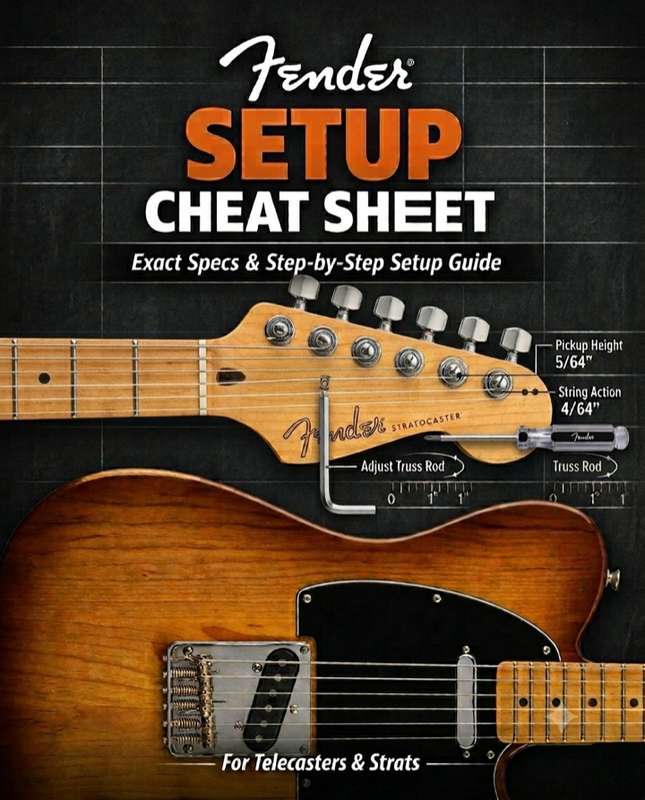
Once you know what you have, the next step is making it play its best. The Fender Setup Guide collects factory specs for Stratocaster, Telecaster, Jazzmaster, Jaguar, Mustang, and Bass on one printable page, so you can set up action, relief, intonation, and pickup height without guessing.