Fender Japan Serial Numbers: Complete MIJ & CIJ Dating Guide
Decode Fender Japan serial numbers from JV and SQ through E, A, B, C, MIJ, CIJ, and modern JD prefixes. Date your Fuji-Gen or Dyna Gakki Fender and understand its value.
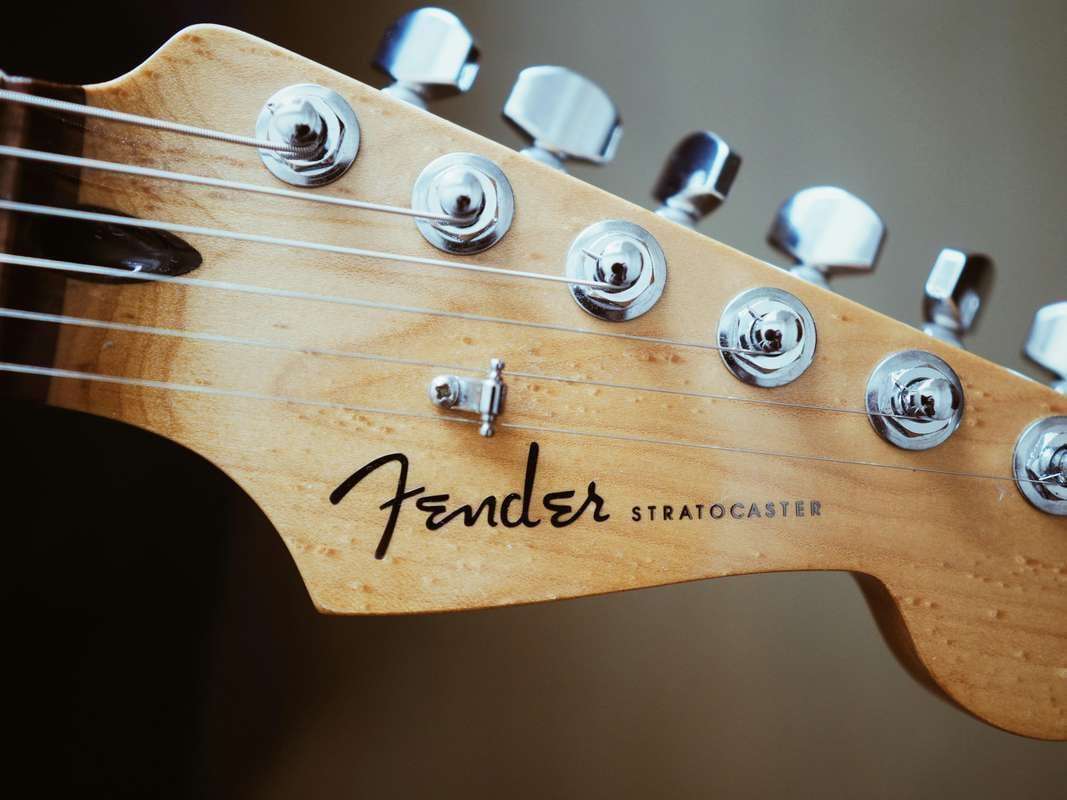 The first two letters of a Fender Japan serial number point to the factory era. JV and SQ mean early 1980s Fuji-Gen, while JD marks modern Dyna Gakki production.
Fender Japan Serial Numbers: Complete MIJ & CIJ Dating Guide
Fender Japan serial numbers cover one of the most respected chapters in Fender history. From the first Fuji-Gen JV and SQ guitars of 1982 through the MIJ and CIJ decades and into the modern Dyna Gakki JD era, Japanese Fenders have earned a reputation for exceptional build quality and strong resale value. This guide covers every major format: JV, SQ, E, A, B, C, the long MIJ and CIJ letter runs, and the current JD system.
If you already have the serial in hand, run it through the free Fender serial number decoder for an instant year-and-country read.
What the Japan Serial Prefixes Mean
Fender Japan has used several serial systems since production began in 1982. Unlike the USA letter-year system, where one letter covers a whole decade, Japanese prefixes often point to a specific contract or factory period.
The earliest guitars built by Fuji-Gen Gakki carried JV and SQ prefixes. These are the most collectible Japanese Fenders ever made. When Fuji-Gen switched to the E, A, B, and C prefixes in the mid-to-late 1980s, the numbering followed a similar pattern but with overlapping ranges. In the 1990s and 2000s, Fender Japan moved through single-letter prefixes, and the decals shifted from "Made in Japan" (MIJ) to "Crafted in Japan" (CIJ). Since 2012, modern Japanese Fenders have used JD prefixes assigned to the Dyna Gakki factory.
The key thing to remember is that the prefix alone does not always give a single year. Overlapping prefixes were common, especially during factory transitions. The decal, serial location, and hardware are needed to confirm the exact era.
Why Japanese Fenders Matter Today
Japanese Fenders filled an important gap in the early 1980s. When CBS-era USA quality was inconsistent and prices were rising, Fuji-Gen delivered guitars that often matched or exceeded American build quality at a lower cost. Collectors now prize the earliest examples, while players value the consistent workmanship across every era. Modern Dyna Gakki JD guitars continue that tradition with premium finishes and period-correct specs.
The Complete Fender Japan Serial Number Table
Use this table as your primary reference. Approximate ranges are marked where prefixes overlapped between factories or contract periods.
| Prefix | Years | Factory | Decal | Notes |
|---|---|---|---|---|
| JV + 5 digits | 1982-1984 | Fuji-Gen | Made in Japan | First Fender Japan production; highest collectibility |
| SQ + 5 digits | 1983-1984 | Fuji-Gen | Made in Japan / Squier | Squier Japan line; equal build quality to JV |
| E + 6 digits | 1984-1987 | Fuji-Gen | Made in Japan | Standard MIJ export production |
| A + 6 digits | 1985-1986 | Fuji-Gen | Made in Japan | Transitional post-JV/SQ numbering |
| B + 6 digits | 1985-1988 | Fuji-Gen | Made in Japan | Overlaps with E and C periods |
| C + 6 digits | 1988-1990 | Fuji-Gen | Made in Japan | Late 1980s MIJ production |
| F, G, H, I, J, K, L, M | 1989-1997 | Fuji-Gen | Made in Japan | Sequential letter prefixes through the 1990s |
| N, O, P, Q, R, S, T, U, V | 1997-2011 | Dyna Gakki / others | Crafted in Japan / Made in Japan | CIJ era and return to MIJ |
| JD + 8 digits | 2012-present | Dyna Gakki | Made in Japan | Current Japanese production; JD12 = 2012 |
If your serial starts with JV or SQ, you are holding one of the earliest and most collectible Japanese Fenders. If it starts with E, A, B, or C, it is a mid-to-late 1980s MIJ guitar. A JD prefix means modern Dyna Gakki production from 2012 onward.
JV and SQ: The Holy Grail Era (1982-1984)
The JV series is the beginning of Fender Japan. In 1982, Fender contracted Fuji-Gen Gakki to produce guitars for the domestic Japanese market and for export. The JV prefix stands for "Japanese Vintage," and these instruments were built to vintage-correct specs with careful attention to detail. Many collectors consider JV Strats and Teles the finest non-Custom Shop Fenders ever made.
The SQ series ran alongside JV in 1983 and 1984. These were sold under the Squier brand, not the Fender brand, but they were built in the same Fuji-Gen factory to the same high standards. A common misconception is that Squier means lower quality. For early SQ guitars, the opposite is true. They share the same materials, hardware, and craftsmanship as JV Fenders and are now highly collectible in their own right.
How to Spot a JV or SQ Guitar
- Serial format: JV or SQ followed by five digits, usually stamped on the back of the headstock.
- Decal: JV Fenders carry a "Made in Japan" spaghetti-logo decal. SQ guitars usually carry a Squier logo with "Made in Japan."
- Neck heel stamps: Fuji-Gen neck heels from this era often have date stamps or factory codes that confirm 1982-1984 production.
- Tuners and hardware: Gotoh tuners, vintage-style bridges, and period-correct pickup routes are typical.
- Body wood: Alder or basswood bodies, generally lighter than later export models.
If a seller claims a guitar is JV or SQ but the serial has six or seven digits, or the decal looks modern, be cautious. JV and SQ numbers are always five digits after the prefix.
Value of JV and SQ Guitars
JV Fenders are the most valuable Japanese Fenders on the used market. Clean, original examples routinely sell for several thousand dollars, with the rarest models and colors commanding premium prices. SQ Squiers from the same era are slightly more affordable but still highly collectible. Condition and originality matter enormously. A refinished or modified JV Strat can lose half its value or more.
E, A, B, and C: The Mid-1980s MIJ Expansion (1984-1990)
After the JV and SQ runs, Fuji-Gen shifted to six-digit prefixes. The E series is the most common and well documented, running from roughly 1984 to 1987. The A, B, and C prefixes overlap with the E period and continued into the late 1980s. These guitars are often called "standard MIJ" because they were produced in larger numbers and exported worldwide.
E Series (1984-1987)
The E prefix is the bridge between the collectible JV/SQ era and the later standard MIJ years. E-series guitars were built at Fuji-Gen for export and are known for solid construction, good hardware, and consistent finishes. They are less collectible than JV guitars but still highly playable and desirable.
A, B, and C Series (1985-1990)
The A, B, and C prefixes are less commonly discussed than JV, SQ, or E, but they represent the same Fuji-Gen production line. Overlapping prefixes were used because Fender assigned different letter blocks to different models, export batches, or distribution channels. A general rule of thumb is:
- A: roughly 1985-1986
- B: roughly 1985-1988
- C: roughly 1988-1990
These guitars share the same MIJ build quality as E-series instruments. The exact year is less important than the overall era. For dating purposes, an A, B, or C prefix places the guitar firmly in the mid-to-late 1980s.
MIJ vs CIJ: What the Decal Tells You
The decal on the headstock is one of the fastest ways to place a Japanese Fender in its correct era.
Made in Japan (MIJ)
The MIJ decal was used from 1982 through 1997 and then returned around 2007. If your guitar says "Made in Japan" and has a JV, SQ, E, A, B, C, or 1990s letter prefix, it is a MIJ instrument. The MIJ era includes the most collectible Japanese Fenders and is generally preferred by vintage enthusiasts.
Crafted in Japan (CIJ)
The CIJ decal appeared from roughly 1997 to 2007. This was a transitional period when Dyna Gakki and other contractors took on more production. CIJ guitars are still high quality, but they are usually less collectible than MIJ instruments from the 1980s and early 1990s. Prices for CIJ Fenders are generally lower than equivalent MIJ models.
Modern Made in Japan (JD Era)
Since 2012, Japanese Fenders have returned to the "Made in Japan" decal with JD serial numbers. These guitars are built by Dyna Gakki and are considered premium instruments. They are not vintage, but they carry on the Japanese Fender reputation for precise construction and vintage-inspired specs.
Modern JD Serial Numbers: Dyna Gakki (2012-Present)
The JD prefix is the current Japanese Fender serial format. The letters JD stand for the Dyna Gakki factory, and the first two digits after JD give the year. For example:
- JD12xxxxxx = 2012
- JD18xxxxxx = 2018
- JD24xxxxxx = 2024
JD guitars are easy to date because the year is encoded directly into the serial. They are built to high standards and are often compared favorably to American-made Fenders. While they lack the vintage collectibility of JV or SQ guitars, they are excellent instruments for players who want Japanese build quality in a new guitar.
Where to Find the Serial Number on a Japanese Fender
Japanese Fenders usually place the serial number in one of these locations:
- Back of the headstock: This is the most common location for JV, SQ, E, A, B, C, and JD guitars.
- Neck plate: Some early export models have the serial on the neck plate, though this is less common than on USA guitars.
- Neck heel: Removing the neck may reveal date stamps or factory codes inside the neck pocket.
If the headstock stamp is faint, use angled light or a phone camera without flash to capture the detail. A magnifying glass can help with heavily worn numbers.
How to Verify a Japanese Fender Serial Number
A serial number is the starting point, not the final answer. Always verify it against the physical guitar.
Cross-Check the Decal
The decal should match the serial era. JV and SQ guitars should have early 1980s-style decals. E, A, B, and C guitars should have 1980s MIJ decals. CIJ guitars should have 1997-2007 "Crafted in Japan" decals. JD guitars should have modern "Made in Japan" decals.
A mismatch is a warning sign. For example, a JV serial on a guitar with a CIJ decal is almost certainly a parts guitar or a forgery.
Inspect the Hardware and Stamps
Original hardware helps confirm the era. JV and SQ guitars typically have Gotoh tuners, vintage-style bridges, and correct pickup routes. E-series guitars may have slightly different hardware depending on the model and export market. Removing the neck lets you inspect Fuji-Gen or Dyna Gakki factory stamps and date codes.
Run the Decoder
The Fender serial number decoder will read a Japanese serial and return the most likely year, country, and factory. It is the fastest way to sanity-check a guitar when shopping online or comparing multiple instruments.
Likely Models by Japanese Serial Era
Japanese Fenders were produced across the full Fender electric line. JV and SQ guitars focus on Stratocasters, Telecasters, Jazzmasters, Jaguars, Mustangs, Precision Basses, and Jazz Basses. The E, A, B, and C eras added standard models and export variants. The MIJ and CIJ decades expanded into reissues, signature models, and special runs. Modern JD guitars continue that broad model range as premium production instruments.
Value: What Is a Japanese Fender Worth?
Pricing a Japanese Fender without seeing it is difficult, but the value drivers are consistent.
Era and Prefix
JV and SQ guitars command the highest prices. E-series guitars are the next tier. A, B, and C guitars are similar to E-series in value. CIJ guitars are generally the most affordable vintage Japanese Fenders, while modern JD guitars hold steady as premium used instruments.
Originality and Condition
Original finish, pickups, hardware, and electronics add the most value. Issues that reduce price include refinished or oversprayed bodies, changed pickups, replaced tuners or bridges, non-original decals, and significant fret wear or neck problems. A guitar with one or two sensible player upgrades is not ruined; it just needs to be priced as a player instrument rather than a collector piece.
Condition Tiers
For a ballpark sense of where Japanese Fenders trade today:
- Project or parts guitar: the lowest tier, often bought for the neck or body alone
- Player-grade with wear and minor modifications: a solid daily instrument at a working-player price
- Clean and mostly original: the sweet spot for most buyers
- Mint or near-mint with case and paperwork: the top of the market for that year and model
Because prices move with the wider vintage market, the best current value check is to compare three to five live listings of the same prefix, model, and condition. For a more precise range, the Guitar Price Estimate tool returns market-based numbers for the exact year and model.
Setup and Maintenance for a Japanese Fender
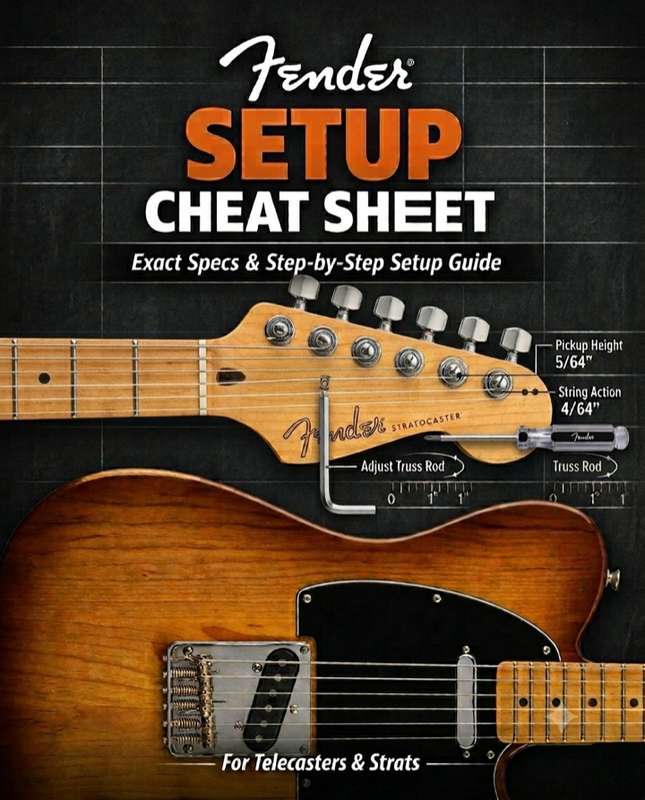
A Japanese Fender from any era will play its best after a proper setup. Neck relief drifts, frets wear, and pickup heights shift over time. These guitars were built to standard Fender measurements.
For a typical MIJ Stratocaster, start with these general targets:
- Neck relief: roughly 0.010 inches at the 7th fret with the string held at the 1st and last frets
- Action at the 17th fret: about 4/64 inches on the high E and 5/64 inches on the low E
- Pickup height: around 6/64 inches from the bottom of the low-E string to the bridge pickup pole piece, and 5/64 inches on the high-E side
Measure, adjust in small steps, and let the neck settle overnight between truss-rod turns. For exact factory measurements by model and year, use the Setup Specs Lookup. For a printable one-page reference, the Fender Setup Guide collects the key specs onto a single card.
Spotting Fakes and Problem Listings
Japanese Fenders are often faked or misrepresented because of their high values. Watch for these warning signs:
- Wrong serial format: JV and SQ should have exactly five digits. A JV serial with six digits is suspicious.
- Decal mismatch: A vintage serial paired with a modern decal, or a MIJ decal on a CIJ-era serial, suggests a parts guitar.
- Non-original parts: Replaced necks, bodies, or electronics are common and not necessarily deal-breakers, but they affect value.
- Too-good pricing: A clean JV Strat at a bargain price is often a fake or a scam listing.
- Missing country stamp: Authentic Japanese Fenders have "Made in Japan" or "Crafted in Japan" on the headstock.
For high-value purchases, use the Fender Authenticity Checker and compare the guitar against known original examples.
Japanese Serials vs Other Fender Prefixes
Once you understand the Japanese system, it is easier to place your guitar in the global Fender lineup:
- JV/SQ: early 1980s Fuji-Gen Japan
- E/A/B/C: mid-to-late 1980s MIJ
- MIJ/CIJ letter prefixes: 1990s and 2000s Japan
- JD: 2012-present Dyna Gakki Japan
- S/E/N/Z: USA letter-year system from 1976-2009
- US: modern USA guitars with a two-digit year code
- MX/MZ/MN: Mexican production from the 1990s onward
If your serial does not fit the Japanese pattern, the Fender serial number decoder will route it to the correct decade and factory.
Internal Links and Next Steps
- Fender Serial Number Lookup - Decode any Fender or Squier serial instantly
- Guitar Worth Calculator - Get a market range for your year and model
- Setup Specs Lookup - Find factory measurements by model and era
- Fender Authenticity Checker - Spot fakes and verify original details
- Fender E-Series Serial Numbers - The 1980s letter-prefix system shared with USA guitars
- Fender N-Series Serial Numbers - 1990s USA Fenders
- Fender Z-Series Serial Numbers - 2000s USA Fenders
- Fender S-Series Serial Numbers - Late 1970s USA Fenders
- Fender MX-Series Serial Numbers - Mexican-made Fenders from the 1990s onward
- JV and SQ Series - Deep dive into the earliest Japanese Fenders
- MN and MZ Series - 1990s and 2000s Mexican Fender serials
- Fender Model Identification - Identify any Fender by its physical features
FAQ
How do I date a Fender Japan serial number?
Check the first one or two letters. JV and SQ mean 1982-1984. E, A, B, and C place the guitar in the mid-to-late 1980s. Single-letter prefixes from the 1990s onward run sequentially through the alphabet. JD means 2012 or later, with the first two digits giving the year. Run the serial through the Fender serial number decoder for a quick read.
What is the difference between MIJ and CIJ?
MIJ stands for "Made in Japan" and was used roughly 1982-1997 and from 2007 onward. CIJ stands for "Crafted in Japan" and was used roughly 1997-2007. Both indicate Japanese production, but MIJ guitars from the 1980s and early 1990s are generally more collectible.
Are JV Fenders the best Japanese Fenders?
Many collectors and players consider JV Fenders the finest non-Custom Shop Japanese Fenders ever made. They were built by Fuji-Gen in 1982-1984 to vintage-correct specs with exceptional attention to detail. SQ Squiers from the same era are equally well built.
What does JD mean on a Fender serial number?
JD indicates a modern Japanese Fender built by the Dyna Gakki factory from 2012 onward. The first two digits after JD give the year. For example, JD18xxxxxx was made in 2018.
How much is a Japanese Fender worth?
Value depends on era, prefix, model, originality, and condition. JV and SQ guitars command the highest prices, often several thousand dollars for clean examples. E, A, B, and C guitars are typically less expensive but still collectible. CIJ guitars are generally more affordable, and modern JD guitars hold steady as premium used instruments. Use the Guitar Price Estimate tool for a current range.
Where is the serial number on a Japanese Fender?
Most Japanese Fenders have the serial number stamped or printed on the back of the headstock. Some early models may have it on the neck plate. Removing the neck can reveal additional date stamps or factory codes inside the neck pocket.
Can a Fender Japan serial number be fake?
Yes. Common red flags include the wrong number of digits after JV or SQ, a decal that does not match the serial era, missing country stamps, and hardware that is incorrect for the period. Use the Fender Authenticity Checker and compare the guitar to verified original examples.
What models were made in Japan?
Fender Japan produced Stratocasters, Telecasters, Jazzmasters, Jaguars, Mustangs, Precision Basses, Jazz Basses, and many reissue and signature models. The model range expanded in the 1990s and 2000s and remains broad in the modern JD era.
Is a Squier Japan guitar as good as a Fender Japan guitar?
Early Squier Japan guitars, especially SQ models from 1983-1984, were built in the same Fuji-Gen factory as JV Fenders and are comparable in quality. Later Squier Japan guitars vary by era and factory, so inspect each guitar individually.
What should I do after I date my Japanese Fender?
After you know the year and factory, verify originality, check the current market value, and give the guitar a proper setup. Use the Fender serial number decoder to confirm the date, the Guitar Price Estimate tool for pricing, and the Setup Specs Lookup or Fender Setup Guide for factory measurements.
Conclusion
Fender Japan serial numbers tell the story of one of the most important partnerships in electric guitar history. From the first JV and SQ guitars in 1982 through the E, A, B, and C eras, the MIJ and CIJ decades, and into the modern JD era, Japanese Fenders have delivered consistent quality and strong value.
If you have a Japanese Fender, start with the serial table above, check the headstock decal, and inspect the hardware and stamps to confirm originality. Then run the number through the Fender serial number decoder and use the Guitar Price Estimate tool if you are buying, selling, or insuring the guitar.
Once the guitar is dated and valued, the final step is making it play its best. The Fender Setup Guide puts those specs on one printable page, so you can dial in action, relief, intonation, and pickup height without guessing.