Fender MN / MZ Serial Numbers: 1990s & s Mexico Dating Guide
Decode Fender MN and MZ serial numbers. Learn how to date 1990s and 2000s Mexican Fenders from Ensenada, understand the USA-to-Mexico transition, and estimate current value.
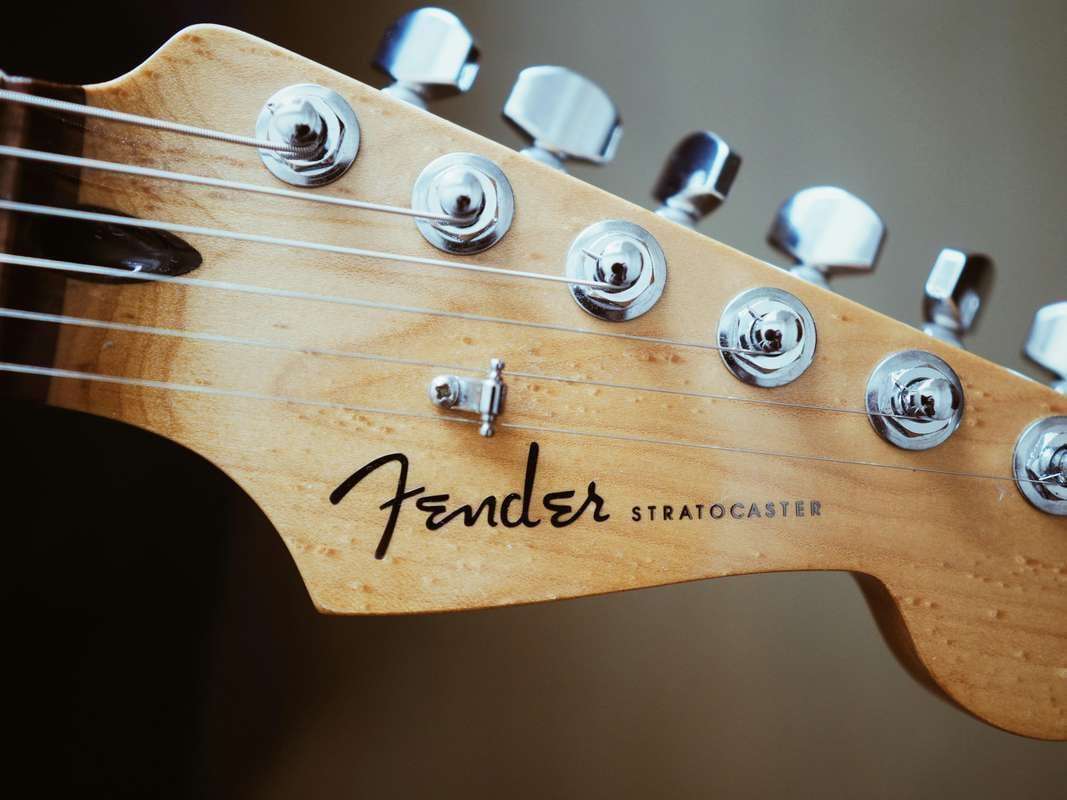 The first two letters of a Mexican Fender serial number tell you the country and the decade. MN means the 1990s; MZ means the 2000s.
Fender MN / MZ Serial Numbers: 1990s & 2000s Mexico Dating Guide
Fender MN and MZ serial numbers identify the first two decades of Mexican Fender production at the Ensenada factory. If your serial starts with MN, you are looking at a guitar made between 1990 and 1999. If it starts with MZ, it was built between 2000 and 2009. These prefixes cover the period when Fender deliberately moved much of its standard-line production from the USA to Mexico, reshaping the entry-level and mid-range guitar market.
This guide covers every common MN and MZ prefix, how to read the number, where to find it, and how to tell a 1990s Standard from a 2000s model. You will also learn why Mexican Fenders from this era are not just affordable alternatives: many are well-built instruments with their own following among players and collectors.
If you already have the serial in hand, run it through the free Fender serial number decoder for an instant year-and-country read.
What the MN and MZ Prefixes Mean
Fender's Mexican serial system is a three-part code. The first letter is always M, which stands for Mexico. The second letter is the decade. N represents the 1990s, and Z represents the 2000s. The digit immediately after those two letters is the last digit of the production year.
An MN6 serial was made in Mexico in 1996. An MZ3 serial was made in Mexico in 2003. After the year digit, the remaining digits are the production number. Early MN serials usually have six digits total, while MZ serials can have six or seven digits depending on the year and model line.
The system is straightforward once you see it, but there are two common points of confusion. First, the MX prefix that appears on later Mexican Fenders follows the same logic: M for Mexico, X for the 2010s. Second, some special runs and limited editions use slightly different formatting, so a serial that begins with M but does not fit the MN/MZ pattern may still be Mexican.
Why Mexican Fender Production Started
Fender opened its Ensenada factory in the late 1980s. The goal was to produce affordable versions of its core models while reserving USA manufacturing for higher-end instruments and premium lines. By the early 1990s, Mexican Stratocasters, Telecasters, Precision Basses, and Jazz Basses had become the standard entry point for players who wanted a real Fender logo without the USA price tag.
The move was part of a broader strategy. Fender USA focused on American Standard, American Vintage, and Custom Shop instruments. Fender Mexico took over the Standard Series and many derivative models. This division is still visible today: Player Series, Vintera, and similar lines are made in Mexico, while American Professional, American Original, and Ultra lines are made in the USA.
The Complete MN / MZ Serial Number Table
Use this table as your primary reference. The year digit is the third character, right after MN or MZ.
| Prefix | Year | Country | Factory | Notes |
|---|---|---|---|---|
| MN0 | 1990 | Mexico | Ensenada | Early Mexican Standard production |
| MN1 | 1991 | Mexico | Ensenada | Standard line established; common export model |
| MN2 | 1992 | Mexico | Ensenada | Consistent specs across Strat and Tele |
| MN3 | 1993 | Mexico | Ensenada | Quality improvements visible in fit and finish |
| MN4 | 1994 | Mexico | Ensenada | Popular era for budget-friendly Standards |
| MN5 | 1995 | Mexico | Ensenada | Mid-1990s production peak for many models |
| MN6 | 1996 | Mexico | Ensenada | Common year for Stratocaster and Telecaster |
| MN7 | 1997 | Mexico | Ensenada | Hardware and finish refinements continued |
| MN8 | 1998 | Mexico | Ensenada | Late-1990s Standard models |
| MN9 | 1999 | Mexico | Ensenada | Final year of MN prefix |
| MZ0 | 2000 | Mexico | Ensenada | Transition to the Z decade prefix |
| MZ1 | 2001 | Mexico | Ensenada | Early 2000s Standard Series |
| MZ2 | 2002 | Mexico | Ensenada | Common production year |
| MZ3 | 2003 | Mexico | Ensenada | Quality generally strong by this point |
| MZ4 | 2004 | Mexico | Ensenada | Mid-2000s models |
| MZ5 | 2005 | Mexico | Ensenada | Continued Standard Series and Classic Series |
| MZ6 | 2006 | Mexico | Ensenada | Highway One and Classic Player lines active |
| MZ7 | 2007 | Mexico | Ensenada | Classic Player and Road Worn introductions |
| MZ8 | 2008 | Mexico | Ensenada | Late-2000s production |
| MZ9 | 2009 | Mexico | Ensenada | Final year of MZ prefix; MX begins around 2010 |
If your serial starts with MN followed by a 6, it is a 1996 Mexican Fender. If it starts with MZ followed by a 3, it is a 2003 Mexican Fender. The country stamp on the headstock should confirm this, since all MN and MZ instruments were built in Mexico.
Mexican vs USA Fenders in the 1990s and 2000s
The most important context for MN and MZ guitars is how they related to USA Fenders of the same era. They were not copies or seconds. They were parallel product lines aimed at different price points.
The USA-to-Mexico Transition
By the late 1980s, Fender had decided that its USA factory would focus on premium instruments. Standard Series Stratocasters and Telecasters, which had been USA-made, were shifted to Mexico. This transition let Fender compete with the growing number of affordable imports from Japan, Korea, and later Indonesia and China.
For players, the practical result was that a new Fender Standard Stratocaster in 1992 cost noticeably less than an American Standard Stratocaster. The Mexican guitar often used similar body shapes and pickup layouts but with more cost-conscious hardware, finishes, and fretwork. Over time, the gap narrowed. By the mid-2000s, many players considered Mexican Fenders genuinely good instruments, not just budget options.
Build Differences Between MN/MZ and American Models
There were consistent differences between Mexican and USA Fenders during the MN and MZ years:
- Body wood: Mexican Standards typically used alder or ash, similar to USA models, though wood selection and weight could vary more.
- Neck finish: Mexican necks often had a polyurethane finish that felt different from the thinner finishes on American necks.
- Fretwork: Early 1990s Mexican fretwork could be uneven, but quality improved steadily through the MZ era.
- Hardware: Tuners, bridges, and pickups on Mexican Standards were often sourced from different suppliers than those on American Standards.
- Electronics: Pots, switches, and wiring were generally lower-cost parts, though functional and easy to upgrade.
These differences matter if you are comparing a 1996 Mexican Stratocaster to a 1996 American Standard. They matter less if you are judging an MN or MZ guitar on its own merits as a player instrument.
Identifying an MN or MZ Fender
Dating the guitar is only the first step. You also want to confirm that the serial, decal, and hardware all tell the same story.
Where to Find the Serial Number
On MN and MZ Fenders, the serial number is almost always on the back of the headstock. It is printed or stamped near the top, just below the tuners. Some earlier MN guitars may have the serial on the neck plate, but by the mid-1990s the headstock back was standard.
If the serial is hard to read, try these tricks:
- Angle a light across the print so the characters cast tiny shadows.
- Take a close-up photo with the flash off and zoom in.
- Clean the area gently with a soft cloth; grime can hide digits.
Cross-Check the Decal
The headstock decal should say "Made in Mexico" or show the Fender logo with a country indication on the back of the headstock. MN and MZ serials were never used on USA guitars. If someone tells you an MN or MZ guitar is American, the serial itself proves otherwise.
Also check the logo style. Mexican Standards from the 1990s used the classic spaghetti Fender logo. Later MZ-era models, especially Classic Player and Road Worn lines, sometimes used decals that mimicked specific vintage eras.
Inspect the Hardware and Stamps
Removing the neck reveals the neck heel and neck pocket, which often contain date stamps or factory codes. On Mexican guitars, these can help confirm the year even if the headstock serial is worn. Body stamps inside the pickup cavity or control cavity are also useful.
Original hardware is another clue. Early MN Standards often had six-screw tremolos, sealed tuners, and plastic pickup covers. Later MZ Standards and Classic Player models sometimes featured upgraded bridges, better tuners, and vintage-style pickups.
Likely Models and Specs by MN/MZ Year
The MN and MZ prefixes cover a wide range of models. Fender applied the same serial system across Stratocaster, Telecaster, Jazzmaster, Jaguar, Mustang, Precision Bass, Jazz Bass, and derivative lines.
MN Era (1990–1999): The Standard Series Years
The 1990s Mexican Standard line included the core models:
- Standard Stratocaster
- Standard Telecaster
- Standard Precision Bass
- Standard Jazz Bass
Typical specs for a mid-1990s Mexican Standard Stratocaster:
- Body: Alder or ash
- Neck: Maple with maple or rosewood fingerboard
- Fretboard radius: 7.25 inches or 9.5 inches depending on year and model
- Frets: 21 or 22 medium-jumbo frets
- Pickups: Three ceramic or alnico single-coils
- Bridge: Six-screw vintage-style tremolo
- Tuners: Sealed die-cast tuners
Early MN guitars sometimes had thicker finishes and simpler wiring than later models. By MN7, MN8, and MN9, fit and finish had improved noticeably. Many working players prefer a clean late-1990s Mexican Standard over an earlier example because the fretwork and hardware are more consistent.
MZ Era (2000–2009): Expansion and Special Lines
The 2000s saw Mexican production expand beyond the Standard Series. Notable lines included:
- Classic Series: Vintage-inspired specs, including 7.25-inch radii and vintage-style pickups.
- Classic Player: Modified vintage specs with hotter pickups, 12-inch radii, and modern hardware.
- Highway One: USA-made body and neck with a thin satin finish, though some related production overlapped with Mexico.
- Road Worn: Aged finishes and hardware to mimic decades of play wear.
- Blacktop and Modern Player: Higher-output and alternative pickup configurations.
Typical specs for a mid-2000s Mexican Standard Stratocaster:
- Body: Alder
- Neck: Maple with rosewood or maple fingerboard
- Fretboard radius: 9.5 inches on most Standards
- Frets: 21 medium-jumbo frets
- Pickups: Three alnico or ceramic single-coils
- Bridge: Two-point tremolo on some models, six-screw on others
- Tuners: Sealed tuners, often improved over the 1990s design
The MZ era is when Mexican Fenders really hit their stride for many buyers. A 2005 or 2006 Mexican Standard is often a reliable, good-sounding guitar that needs nothing more than a proper setup.
Quality Evolution: 1990s vs 2000s Mexican Fenders
There is a common belief that all 1990s Mexican Fenders were rough and all 2000s Mexican Fenders were great. The truth is more gradual. Quality improved over time, but individual examples vary.
The 1990s Reputation
Early MN guitars had a mixed reputation. Some arrived from the factory with fret sprout, thick finishes, or hardware that needed replacing. Others played perfectly from day one. The inconsistency was the main issue, not a universal lack of quality. By the second half of the decade, QC had tightened and the average guitar was noticeably better.
The 2000s Improvement
During the MZ years, Fender invested in the Ensenada factory. Better tooling, more consistent wood drying, and upgraded hardware suppliers made a difference. The introduction of the Classic Player and Road Worn lines also showed that Fender was willing to put more premium features on Mexican-made instruments.
By 2009, a Mexican Fender was no longer automatically seen as a beginner guitar. Many experienced players owned Mexican Standards as reliable backup or mod platforms. That reputation carried into the 2010s with the Player Series and beyond.
Value: What Is an MN or MZ Fender Worth?
Pricing an MN or MZ Fender depends on the same factors as any used guitar: model, year, originality, and condition. Because these were mass-produced instruments, there is no single price. The best approach is to compare live listings and sales of the same model and year.
Model and Line
A Standard Stratocaster or Telecaster is the most common MN/MZ guitar and has the most predictable market. Special lines like Classic Player, Road Worn, or Blacktop can command more because they offer features that players seek out. Basses follow a similar pattern, with Precision and Jazz Bass Standards forming the baseline and special editions fetching more.
Originality and Condition
Original finish, pickups, hardware, and electronics add value. Common issues that reduce price include:
- Refinished or oversprayed body
- Changed pickups, tuners, bridge, or pickguard
- Significant fret wear or neck issues
- Non-original case or missing accessories
- Cracks, breaks, or repairs
A guitar with sensible upgrades is not ruined, but it should be priced as a player instrument rather than a collector piece.
Condition Tiers
For a general sense of where MN and MZ guitars trade today:
- Project or parts guitar: the lowest tier, often bought for the neck or body
- Player-grade with wear and minor modifications: a solid daily instrument
- Clean and mostly original: the sweet spot for most buyers
- Mint or near-mint with case and paperwork: the top of the market for that year and model
Because prices move with the wider used-guitar market, the best current value check is to compare three to five live listings of the same year, model, and condition. For a more precise range, the Guitar Price Estimate tool returns market-based numbers for the exact year and model.
Setup and Maintenance for an MN or MZ Fender
A 1990s or 2000s Fender that has not been set up recently will almost certainly benefit from fresh work. Neck relief drifts, frets wear, and pickup heights shift over decades. These guitars were built to standard Fender measurements, so the factory specs are well documented.
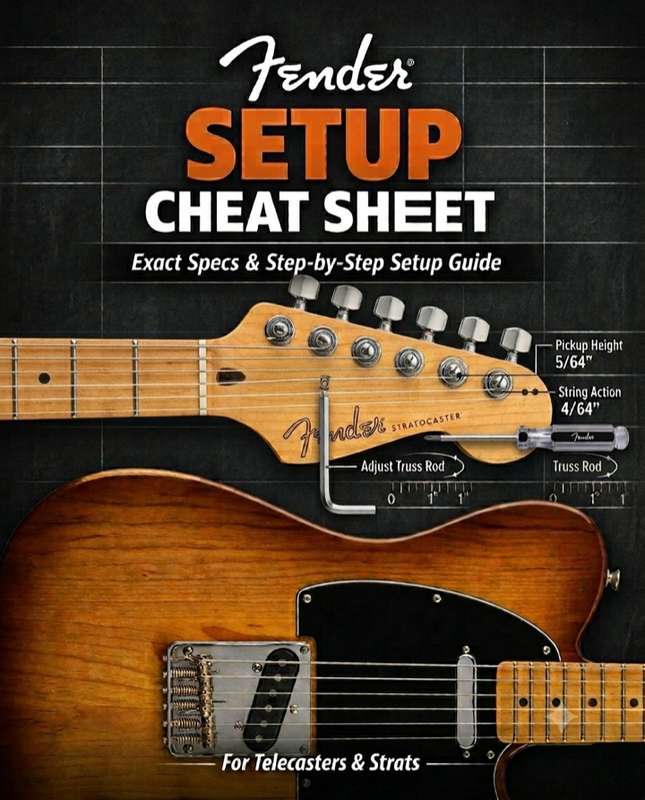
For a typical MN or MZ Stratocaster, start with these general targets:
- Neck relief: roughly 0.010 inches at the 7th fret with the string held at the 1st and last frets
- Action at the 17th fret: about 4/64 inches on the high E and 5/64 inches on the low E
- Pickup height: around 6/64 inches from the bottom of the low-E string to the bridge pickup pole piece, and 5/64 inches on the high-E side
These are starting points, not rules. Measure, adjust in small steps, and let the neck settle overnight between truss-rod turns. For exact factory measurements by model and year, use the Setup Specs Lookup. For a printable one-page reference, the Fender Setup Guide collects the key specs onto a single card.
MN / MZ Serials vs Other Mexican Prefixes
Once you understand MN and MZ, the rest of the Mexican serial timeline falls into place:
- M + number only: very early Mexican production, late 1980s to around 1990
- MN prefix: 1990s Mexican production
- MZ prefix: 2000s Mexican production
- MX prefix: 2010s Mexican production
- M + 8 digits: modern Mexican Fenders, roughly 2021 onward, using a new eight-digit system
If your serial does not fit the MN/MZ pattern, the Fender serial number decoder will route it to the correct decade and factory.
Internal Links and Next Steps
- Fender Serial Number Lookup - Decode any Fender or Squier serial instantly
- Guitar Worth Calculator - Get a market range for your year and model
- Setup Specs Lookup - Find factory measurements by model and era
- Fender Authenticity Check - Verify your Fender is genuine
- Fender E-Series Serial Numbers - 1980s Fender dating guide
- Fender N-Series Serial Numbers - 1990s follow-up to the E prefix
- Fender Z-Series Serial Numbers - Dating 2000s Fenders
- Fender S-Series Serial Numbers - The 1970s predecessor to the E system
- Fender MX-Series Serial Numbers - Mexican-made Fenders from the 2010s onward
FAQ
What year is my MN Fender serial number?
An MN Fender serial number was made in the 1990s. The digit after MN is the last digit of the year. MN0 is 1990, MN5 is 1995, and MN9 is 1999.
What year is my MZ Fender serial number?
An MZ Fender serial number was made in the 2000s. The digit after MZ is the last digit of the year. MZ0 is 2000, MZ5 is 2005, and MZ9 is 2009.
Are MN and MZ Fenders made in Mexico?
Yes. The M in MN and MZ stands for Mexico. These guitars were built at the Fender factory in Ensenada, Baja California.
How do I tell if my Fender is MN, MZ, or MX?
Look at the first two letters of the serial number on the back of the headstock. MN means the 1990s, MZ means the 2000s, and MX means the 2010s. All three are Mexican-made prefixes.
Are 1990s Mexican Fenders good guitars?
Yes, but quality varies by year and individual example. Early 1990s MN guitars can be inconsistent, while late-1990s and 2000s examples are generally well regarded. A proper setup and minor upgrades can make an MN or MZ Fender a reliable player guitar.
What is the difference between a Mexican and American Fender from the 1990s?
American Fenders from the 1990s typically had higher-end hardware, better fretwork, thinner finishes, and higher resale value. Mexican Fenders were more affordable, with cost-conscious parts and finishes. Both were real Fenders built to similar body and neck designs.
How much is a Mexican Fender from the 1990s or 2000s worth?
Value depends on model, year, originality, and condition. Standard Stratocasters and Telecasters are the most common. Special lines like Classic Player or Road Worn can fetch more. Use the Guitar Price Estimate tool and compare live listings for a current range.
Where is the serial number on an MN or MZ Fender?
The serial number is usually printed on the back of the headstock, just below the tuners. Some very early MN guitars may have the serial on the neck plate instead.
Can an MN or MZ Fender be a reissue or special edition?
Yes. While most MN and MZ serials appear on Standard Series guitars, Fender also used these prefixes on Classic Series, Classic Player, Road Worn, Blacktop, and other Mexican-made lines. The decal and model name usually reveal the specific line.
What should I do after I date my MN or MZ Fender?
After you know the year and factory, verify originality, check the current market value, and give the guitar a proper setup. Use the Fender serial number decoder to confirm the date, the Guitar Price Estimate tool for pricing, and the Setup Specs Lookup or Fender Setup Guide for factory measurements.
Conclusion
Fender MN and MZ serial numbers cover the first two decades of modern Mexican Fender production. From the launch of the Ensenada Standard line in the early 1990s to the expansion into Classic Player and Road Worn models in the 2000s, these prefixes represent the era when Mexican Fenders became a genuine part of the Fender story.
If you have an MN or MZ Fender, start with the serial table above, confirm the "Made in Mexico" stamp on the headstock, and inspect the hardware and stamps to confirm originality. Then run the number through the Fender serial number decoder for a quick digital check, and use the Guitar Price Estimate tool if you are buying, selling, or insuring the guitar.
Once the guitar is dated and valued, the final step is making it play its best. A 1990s or 2000s Mexican Fender that has been properly set up can feel as good as many newer instruments. The Fender Setup Guide puts those specs on one printable page, so you can dial in action, relief, intonation, and pickup height without guessing.