Fender E Series Serial Numbers: 1980s Dating & Value Guide
Decode Fender E-series serial numbers (E3–E9). Learn which year your 1980s Fender was made, USA vs Japan differences, likely models, and current value.
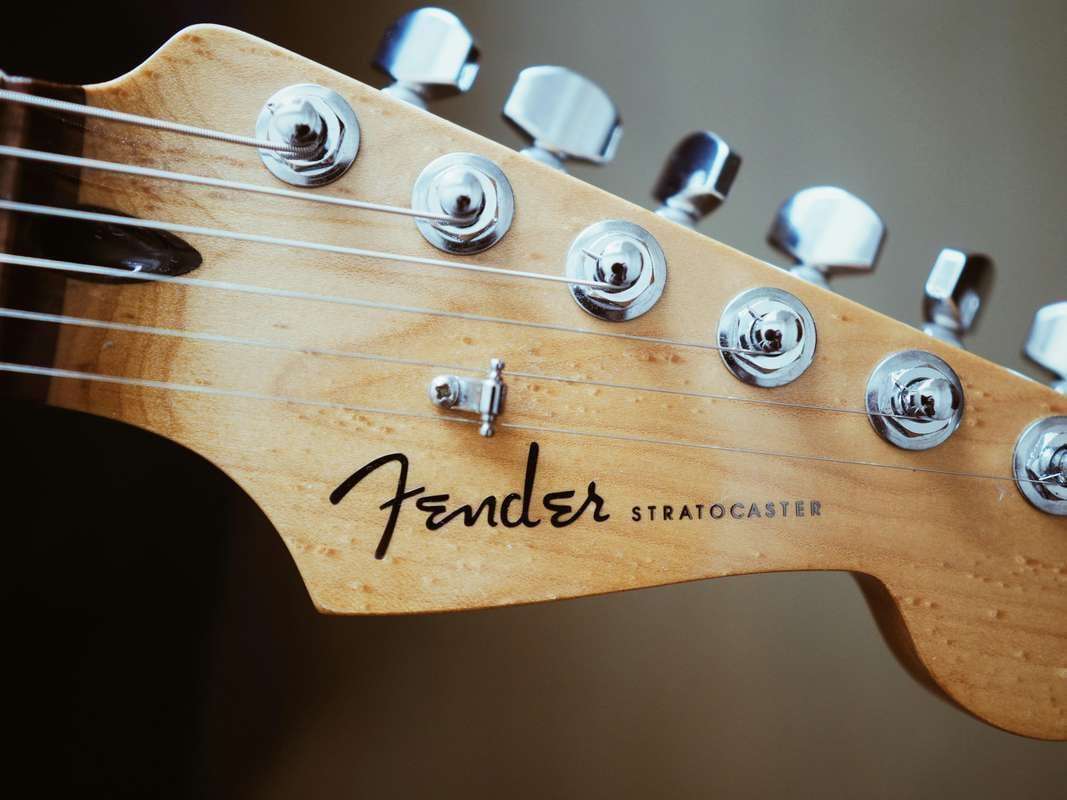 The E prefix on a Fender serial number points straight to the 1980s. The digit that follows it tells you the exact year.
Fender E-Series Serial Numbers: 1980s Dating & Value Guide
Fender E-series serial numbers are the fastest way to place a 1980s Fender in the right year, factory, and market bracket. If your serial starts with the letter E followed by a single digit, you are looking at an instrument made during one of the most interesting decades in Fender history. That one letter captures the CBS-to-FMIC transition, the rise of Japanese Fender production, and the last of the pre-Corona USA builds.
This guide covers every common E prefix: E3, E4, E5, E6, E7, E8, and E9 for USA instruments, plus the parallel E4 through E7 Fuji-Gen guitars built in Japan. You will learn how to read the number, where it appears, and why some E-series guitars are worth several times more than others.
If you already have the serial in hand, run it through the free Fender serial number decoder for an instant year-and-country read.
What the E Prefix Means
The letter prefix system Fender introduced in 1976 made dating a guitar a two-character exercise. E stands for the 1980s. The digit after the E is the last digit of the production year. An E4 was built in 1984, an E8 in 1988, and so on.
The E system ran on both sides of the 1985 sale of Fender from CBS to a group led by Bill Schultz. An E4 or E5 might have left the Fullerton factory under CBS ownership, while an E8 or E9 almost certainly came out of Corona, California. The serial alone does not tell you which factory. You need to look at the neck plate, body stamps, and decal style to separate a Fullerton-era E-series from a Corona-era one.
The biggest source of confusion is that Fender Japan also used the E prefix. Between 1984 and 1987, Fuji-Gen built Fender-branded guitars with E4 through E7 serials. An E5 could be a 1985 USA Fender or a 1985 Japanese Fender. The headstock decal, serial location, and country stamp are the only reliable ways to tell them apart.
Why 1980s Fenders Matter Today
The 1980s sits in the middle of Fender's collectible timeline. Early CBS-era USA instruments have dated hardware and thin finishes, while the first wave of Japanese Fenders rivalled American quality at a lower price. For players, an E-series Fender is often a sweet spot: old enough to have stable wood, but young enough that parts are still available and prices remain reasonable.
The Complete E-Series Serial Number Table
Use this table as your first reference. The USA and Japan rows overlap because both factories used the same prefix pattern in the mid-1980s.
| Prefix | Year | Country | Factory | Notes |
|---|---|---|---|---|
| E3 | 1983 | USA | Fullerton | CBS-era; transition from S-prefix late-1970s numbering |
| E4 | 1984 | USA | Fullerton | Last full year of CBS-era Fullerton production |
| E4 | 1984 | Japan | Fuji-Gen | Early Fender Japan export line; check "Made in Japan" decal |
| E5 | 1985 | USA | Fullerton / Corona | Transition year; CBS sale to FMIC in March 1985 |
| E5 | 1985 | Japan | Fuji-Gen | Fender Japan export production; strong build quality |
| E6 | 1986 | USA | Corona | Post-CBS production; new tooling and spec changes |
| E6 | 1986 | Japan | Fuji-Gen | Common in European and UK markets |
| E7 | 1987 | USA | Corona | Mid-1980s Corona era; production ramping up |
| E7 | 1987 | Japan | Fuji-Gen | Final year of the E-prefix Fuji-Gen run |
| E8 | 1988 | USA | Corona | Solid Corona production; generally consistent builds |
| E9 | 1989 | USA | Corona | Late 1980s USA standard line; N-prefix takes over around 1990 |
If your serial starts with E3, you are holding a 1983 USA Fullerton Fender. If it starts with E4, check the headstock decal and "Made in..." stamp to decide whether it is USA or Japanese. E8 and E9 are almost always USA Corona guitars because Fuji-Gen had mostly stopped using the E prefix by then.
USA E-Series: Fullerton vs Corona
The most important split in the USA E-series is not the year. It is the factory.
Fullerton-Era E-Series (E3–E5)
Fender's Fullerton factory produced guitars from the early 1950s until 1985. CBS-era Fullerton instruments from the early 1980s are known for slim neck profiles, thick polyester finishes, three-bolt neck plates on many models, and standard single-coil pickups that still carried the classic Fender voice. E3, E4, and many E5 guitars came out of Fullerton. Because 1985 was a transition year, an E5 could be among the last Fullerton guitars or the first produced after the move. The neck plate stamp and body date stamps are the best way to confirm the factory.
Corona-Era E-Series (E5–E9)
After the CBS sale, Fender moved much of its USA production to Corona, California. Quality varied for the first couple of years while the new team rebuilt supplier relationships, but by E7, E8, and E9, Corona production had stabilised. Late-1980s Corona guitars often have more consistent neck pockets and finish work, four-bolt neck plates returning as standard on many models, American Standard features appearing toward the end of the decade, and higher resale values than equivalent-year CBS-era guitars.
If you are valuing an E-series USA Fender, the first question is not "what year?" but "what factory and what condition?" A clean Fullerton E4 in original condition can outsell a refinished or modified Corona E9, even though the E9 is newer.
Japanese E-Series: The Fuji-Gen Factor
The Japanese E-series is a separate story. In 1982, Fender partnered with Fuji-Gen Gakki to produce Fender-branded guitars in Japan. The earliest carried JV and SQ prefixes, but by 1984 Fuji-Gen moved into the E-prefix system. Japanese E-series serials run from roughly E4 through E7.
These guitars were built to high standards. Many players and collectors consider the best Fuji-Gen E-series instruments equal or superior to contemporary USA Fenders in fit and finish. They were also made with a closer eye to vintage-correct details than the USA line of the same years.
How to Spot a Japanese E-Series Fender
- Headstock decal: Japanese E-series Fenders usually carry a "Made in Japan" or "Crafted in Japan" decal. USA guitars say "Made in U.S.A." or show the Fender logo without a country stamp on the front.
- Serial location: Japanese E-series serials are usually stamped or printed on the back of the headstock. USA serials from the 1980s can appear on the headstock or the neck plate.
- Tuners and hardware: Fuji-Gen guitars often used Gotoh tuners and specific bridge designs that differ from the hardware on USA models.
- Neck pocket stamps: Japanese guitars frequently have a stamped neck heel date or factory code indicating Fuji-Gen.
- Body wood and weight: Many Japanese E-series guitars use basswood or alder bodies that are typically lighter than some of the heavier CBS-era USA bodies.
If a seller describes an E-series guitar as "USA made" but the headstock says "Made in Japan," trust the decal. Serial prefixes were shared across factories, but the country-of-manufacture stamps were not.
Are Japanese E-Series Fenders Collectible?
Yes, with the usual caveats. Clean, original Fuji-Gen E-series guitars are sought after by players who want 1980s Fender tone and build quality without paying the premium for a USA Fullerton instrument. Value depends heavily on model, originality, and condition. JV and SQ Squiers from the same era still command the highest prices among Japanese Fender-family guitars, but a nice E-series Fender Japan Stratocaster or Telecaster is a respectable collectible in its own right.
Where to Find the Serial Number
On 1980s Fenders, the number is usually in one of these places:
- Back of the headstock: Most common for Japanese E-series guitars and many late-1980s USA models.
- Neck plate: Common for early 1980s USA Fullerton models.
- Neck heel: Some Japanese guitars also stamp the serial inside the neck pocket or on the heel.
If the serial is hard to read, angle a light across the stamp. A phone photo with the flash off often captures the detail better than the naked eye.
How to Verify an E-Series Serial Number
A serial number is the starting point, not the final verdict. Verify it against the physical guitar.
Cross-Check the Decal
The front headstock decal should match the serial era. In the 1980s, Fender used several logo styles:
- Spaghetti logo with "Made in U.S.A." on USA guitars
- Spaghetti logo with "Made in Japan" or "Crafted in Japan" on Japanese guitars
- Transition-era gold or black decals on some special models and reissues
A mismatch is a red flag. A "Made in Japan" decal with an E8 or E9 serial, for example, is unlikely to be original because Fuji-Gen had mostly stopped using the E prefix by then.
Inspect the Hardware and Stamps
Original hardware helps confirm the factory and year. On a USA E-series Stratocaster, look for the bridge type, tuner brand, and pickguard screw spacing. On a Japanese E-series, Gotoh tuners and specific bridge designs are common. Removing the neck lets you see date stamps, factory codes, or inspector marks. On USA guitars, a body date within a year or two of the serial year is normal. On Japanese guitars, Fuji-Gen neck heels often have a letter/number code confirming the factory.
Run the Decoder
The Fender serial number decoder will read an E-series serial and return the most likely year, country, and factory. It is the fastest sanity check, especially when comparing multiple guitars or shopping online.
Likely Models and Specs by E-Series Year
The E prefix does not tell you the model. Fender applied the same serial system across Stratocaster, Telecaster, Jazzmaster, Jaguar, Mustang, Precision Bass, and Jazz Bass.
E3 and E4 (1983–1984)
Mostly USA Fullerton instruments. Common models include the Standard Stratocaster, Standard Telecaster, Precision Bass, and Jazz Bass. You will also see some reissue models and the occasional Jazzmaster or Jaguar.
Typical specs for a 1983–1984 USA Standard Stratocaster:
- Body: Alder or ash depending on finish
- Neck: Maple with maple or rosewood fingerboard
- Fretboard radius: 7.25 inches
- Frets: 21 vintage-style frets
- Pickups: Three Fender single-coils
- Bridge: Six-screw vintage-style tremolo
These guitars usually feel different from a modern Player Series or American Professional II. The necks are often slimmer, the finishes thicker, and the tremolo hardware lighter.
E5 (1985)
1985 is the transition year. Some E5 guitars are the last Fullerton CBS-era instruments, others the first Corona FMIC-era instruments. Specs vary noticeably within the same year. If you are buying an E5, ask for photos of the neck plate, body stamps, and pots (which often have date codes that narrow the build window). Japanese E5 guitars from Fuji-Gen are also common, especially in Europe and the UK.
E6 and E7 (1986–1987)
By E6 and E7, USA production was largely settled in Corona. The American Standard line began to take shape with updated bridges, better hardware, and more consistent finishes. Japanese E6 and E7 guitars continued from Fuji-Gen and remained competitive in quality. For collectors, E6 and E7 USA guitars are often safer buys than E5 transition guitars because the production line had stabilised.
E8 and E9 (1988–1989)
These are solidly Corona-era USA guitars. The N prefix took over around 1990, so E8 and E9 represent the final years of the E-series system. American Standard features were well established by this point. Values for clean E8 and E9 Strats and Teles are generally strong because they combine 1980s character with post-CBS build consistency. Japanese E8 and E9 guitars are rare because Fuji-Gen had moved away from the E prefix.
Value: What Is an E-Series Fender Worth?
Pricing an E-series Fender without seeing it is difficult, but the main value drivers are consistent.
USA vs Japan
All else being equal, a USA E-series Fender usually commands more than a Japanese E-series Fender. The gap is largest for collectible early 1980s Fullerton guitars and smallest for late-1980s Corona guitars compared to high-end Fuji-Gen exports. A clean, original Japanese E-series guitar can still sell for more than a modified or refinished USA guitar.
Fullerton vs Corona
Fullerton-era E3 and E4 guitars are generally more desirable to collectors than Corona-era E7, E8, and E9 guitars, but condition matters more than factory. A beaten Fullerton E4 with replaced pickups and a refinished body may sell for less than a pristine Corona E9.
Originality and Condition
Original finish, pickups, hardware, and electronics add the most value. Issues that reduce price include refinished or oversprayed body, changed pickups, replaced tuners, bridge, or pickguard, non-original neck plate or decal, and significant fret wear or neck issues. A guitar with one or two sensible upgrades is not ruined; it just needs to be priced as a player guitar rather than a collector piece.
Condition Tiers
For a ballpark sense of where E-series guitars trade today:
- Project or parts guitar: the lowest tier, often bought for the neck or body alone
- Player-grade with wear and minor modifications: a solid daily instrument at a working-player price
- Clean and mostly original: the sweet spot for most buyers
- Mint or near-mint with case and paperwork: the top of the market for that year and model
Because prices move with the wider vintage market, the best current value check is to compare three to five live listings of the same year, model, country, and condition. For a more precise range, the Guitar Price Estimate tool returns market-based numbers for the exact year and model.
Setup and Maintenance for an E-Series Fender
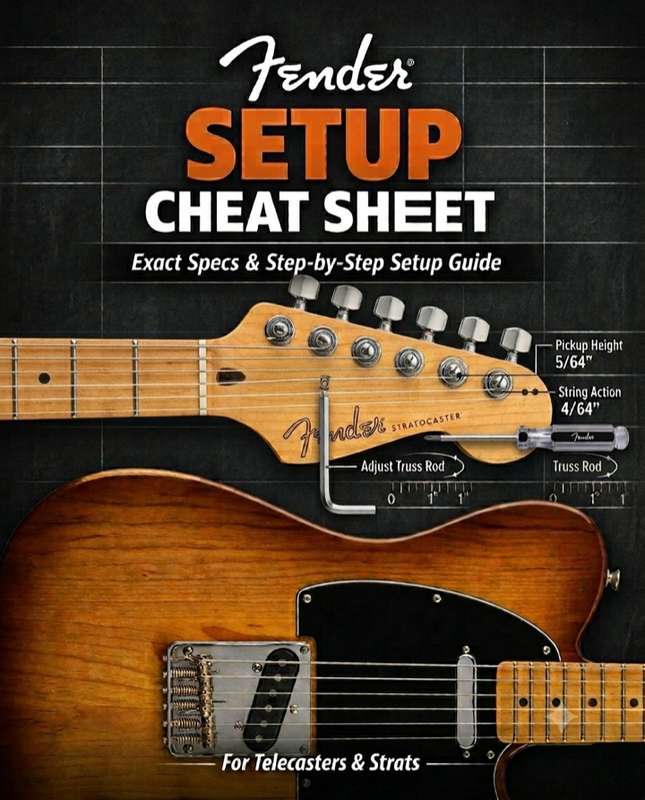
A 1980s Fender that has not been set up recently will almost certainly benefit from fresh work. Neck relief drifts, frets wear, and pickup heights shift over four decades. These guitars were built to standard Fender measurements, so the factory specs are well documented.
For a typical E-series Stratocaster, start with these general targets:
- Neck relief: roughly 0.010 inches at the 7th fret with the string held at the 1st and last frets
- Action at the 17th fret: about 4/64 inches on the high E and 5/64 inches on the low E
- Pickup height: around 6/64 inches from the bottom of the low-E string to the bridge pickup pole piece, and 5/64 inches on the high-E side
These are starting points, not rules. Measure, adjust in small steps, and let the neck settle overnight between truss-rod turns. For exact factory measurements by model and year, use the Setup Specs Lookup. For a printable one-page reference, the Fender Setup Guide collects the key specs onto a single card.
E-Series Serials vs Other Letter Prefixes
Once you understand the E prefix, the rest of Fender's letter-year system falls into place:
- S prefix: late 1970s (S7, S8, S9 for 1977, 1978, 1979)
- E prefix: 1980s (E3 through E9)
- N prefix: early 1990s (N0 through N3)
- Z prefix: 2000s (Z0 through Z9)
- US prefix: modern USA guitars with a two-digit year code
- MX, MZ, MN prefixes: Mexican production from the 1990s onward
If your serial does not fit the E pattern, the Fender serial number decoder will route it to the correct decade and factory.
Internal Links and Next Steps
- Fender Serial Number Lookup - Decode any Fender or Squier serial instantly
- Guitar Worth Calculator - Get a market range for your year and model
- Setup Specs Lookup - Find factory measurements by model and era
- Fender N-Series Serial Numbers - The 1990s follow-up to the E prefix
- Fender Z-Series Serial Numbers - Dating 2000s Fenders
- Fender S-Series Serial Numbers - The 1970s predecessor to the E system
- Fender MX-Series Serial Numbers - Mexican-made Fenders from the 1990s onward
FAQ
What year is an E9 Fender serial number?
An E9 Fender serial number was made in 1989. The E prefix means the 1980s, and the 9 is the last digit of the year. Most E9 guitars are USA models built at the Corona factory.
Is an E-series Fender USA or Japan?
It can be either. The E prefix was used by both Fender USA and Fender Japan in the mid-1980s. Check the headstock decal: USA guitars say "Made in U.S.A." while Japanese guitars say "Made in Japan" or "Crafted in Japan." The serial location and hardware also help confirm the country.
What does the E stand for in Fender serial numbers?
The letter E stands for the 1980s in Fender's letter-year dating system. It replaced the S prefix of the late 1970s and was replaced by the N prefix at the start of the 1990s. The digit after the E gives the specific year.
Are E-series Fenders good guitars?
Yes, E-series Fenders can be excellent guitars, but quality varies by factory and year. Fullerton-era USA guitars from the early 1980s have a distinct character and are collectible. Corona-era USA guitars from the late 1980s are generally more consistent. Japanese E-series guitars from Fuji-Gen are well built and often represent strong value for players.
How do I know if my E4 Fender is American or Japanese?
Check the headstock decal and serial location. An American E4 usually has a "Made in U.S.A." decal and may have the serial on the neck plate or back of the headstock. A Japanese E4 usually has a "Made in Japan" decal, the serial on the back of the headstock, and often Gotoh tuners. Run the serial through the Fender serial number decoder when in doubt.
What models were made with E-series serial numbers?
Fender used the E prefix across most of its electric line. Common models include the Stratocaster, Telecaster, Jazzmaster, Jaguar, Mustang, Precision Bass, and Jazz Bass. Both USA and Japanese factories produced these models during the E-series years.
Did CBS own Fender during the entire E-series run?
No. CBS owned Fender until March 1985. E3 and E4 guitars are CBS-era instruments. E5 guitars may be from either side of the sale, and E6 through E9 are FMIC-era guitars built at Corona.
How much is a 1980s E-series Fender worth?
Value depends on country, factory, model, originality, and condition. USA Fullerton-era E3 and E4 guitars typically command the highest prices, while late-1980s Corona guitars and Japanese Fuji-Gen guitars are often more affordable. Use the Guitar Price Estimate tool and compare live listings.
Can a Fender have an E serial and be a reissue?
Yes, some reissue and special-run guitars from the 1980s carried E-prefix serials. The decal and hardware usually reveal whether the guitar is a standard production model or a reissue.
What should I do after I date my E-series Fender?
After you know the year and factory, verify originality, check the current market value, and give the guitar a proper setup. Use the Fender serial number decoder to confirm the date, the Guitar Price Estimate tool for pricing, and the Setup Specs Lookup or Fender Setup Guide for factory measurements.
Conclusion
Fender E-series serial numbers cover one of the most important transitions in the company's history. From the last CBS-era Fullerton guitars to the first FMIC-era Corona builds, and from the rise of Japanese Fender production to the letter-prefix system that lasted into the 1990s, the E prefix tells a story that goes far beyond the year.
If you have an E-series Fender, start with the serial table above, check the headstock decal to confirm the country, and inspect the hardware and stamps to confirm originality. Then run the number through the Fender serial number decoder for a quick digital check, and use the Guitar Price Estimate tool if you are buying, selling, or insuring the guitar.
Once the guitar is dated and valued, the final step is making it play its best. A 1980s Fender that has been properly set up can feel as good as any modern instrument. The Fender Setup Guide puts those specs on one printable page, so you can dial in action, relief, intonation, and pickup height without guessing.