Fender JV / SQ Serial Numbers: 1982-1984 Japan Dating Guide
Decode Fender JV and SQ serial numbers from 1982-1984 Fuji-Gen Japan. Learn the difference between JV Fender Japan and SQ Squier Japan, how to spot fakes, and current value.
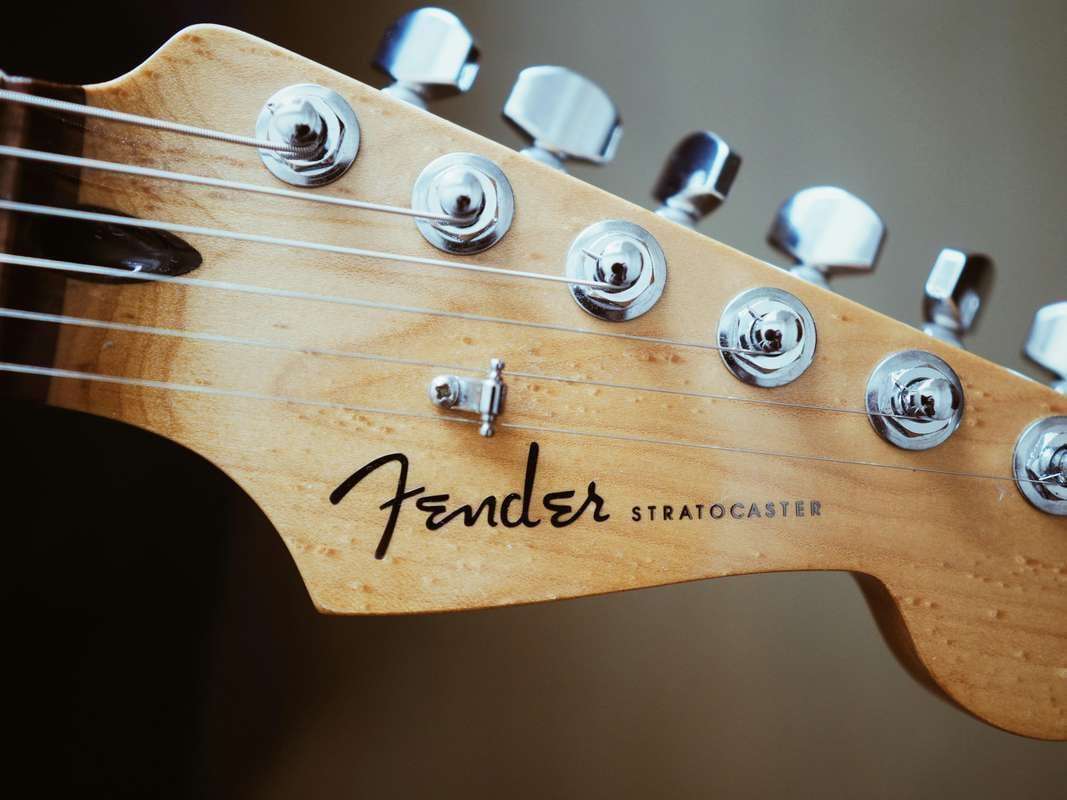 The JV and SQ prefixes on a Fender-family guitar point to the earliest days of Japanese production. They are also some of the most copied serial formats on the used market.
Fender JV / SQ Serial Numbers: 1982-1984 Fuji-Gen Japan Dating & Value Guide
Fender JV and SQ serial numbers mark the very beginning of Fender's official Japanese production line. If your guitar carries a JV or SQ prefix followed by five digits, you are holding a piece made at the Fuji-Gen Gakki factory in Matsumoto, Japan, between 1982 and 1984. These instruments are the foundation of the Made in Japan (MIJ) Fender story, and the best examples are now treated as holy-grail vintage guitars.
This guide covers both prefixes. JV serials appear on Fender-branded guitars from the first Japanese Vintage reissue line. SQ serials appear on the parallel Squier by Fender Japan line that shared the same factory, tooling, and quality standards. You will learn how to read the number, tell JV from SQ, spot the most common fakes, and understand what these guitars are worth today.
If you already have the serial in hand, run it through the free Fender serial number decoder for an instant year-and-country read.
What JV and SQ Serial Numbers Mean
Fender opened its Japan line in 1982 through a partnership with Fuji-Gen Gakki. The goal was simple: build vintage-correct Fender guitars at high quality for export markets. The earliest serial system used a two-letter prefix and a five-digit number.
JV stands for the first Fender Japan Vintage series. JV serials were used on Fender-branded guitars from 1982 until early 1984. These are the instruments many collectors call the best MIJ Fenders ever made.
SQ stands for the early Squier Japan line. SQ serials were used on Squier-by-Fender guitars from 1983 through 1984. The SQ line ran alongside the JV line and used the same Fuji-Gen factory and many of the same parts. Squier was positioned as the import companion brand, but the build quality was far above later budget Squier guitars.
Both prefixes are short. JV production ran roughly from mid-1982 to March 1984. SQ production filled 1983 and 1984. After these prefixes, Fuji-Gen moved into the E, A, B, and C prefix systems that covered the rest of the 1980s.
Why JV and SQ Guitars Matter
The early 1980s were a transitional time for Fender. CBS still owned the American company, quality had become inconsistent, and Japanese manufacturing was proving it could match or beat American fit and finish at a lower price. Fuji-Gen had already built guitars for other major brands, so it had the tooling and experience to produce convincing vintage-correct Fenders.
JV and SQ guitars were built with an unusually close eye to 1950s and 1960s details. That focus on vintage accuracy, combined with limited production numbers, is why clean examples are now so collectible.
The Complete JV/SQ Serial Number Table
Use this table as your primary reference. Remember that the JV prefix is Fender-branded and the SQ prefix is Squier-branded, even though both came from the same factory.
| Prefix | Years | Brand | Factory | Notes |
|---|---|---|---|---|
| JV | 1982-1984 | Fender | Fuji-Gen | First Fender Japan Vintage line; Fender logo, Made in Japan |
| SQ | 1983-1984 | Squier | Fuji-Gen | Early high-quality Squier Japan; Squier logo, Made in Japan |
A JV serial like JV12345 was built in 1982, 1983, or early 1984. An SQ serial like SQ12345 was built in 1983 or 1984. The exact year is not encoded in the digits the way it is with later letter prefixes, so you estimate the year from the number range and the physical features of the guitar.
Rough Number Ranges by Year
Because the serial digits are sequential rather than year-coded, collectors use approximate ranges:
- JV 00001 to roughly JV 06000: often 1982 production
- JV 06001 to roughly JV 15000: often 1983 production
- JV 15001 and higher: typically early 1984
- SQ serials: concentrated in 1983 and 1984, with lower numbers usually earlier
These ranges are guidelines, not factory records. The safest way to narrow the year is to combine the serial range with neck heel stamps, pot codes, and pickup dates.
JV vs SQ: Two Tiers of Early Japanese Production
The biggest misconception about JV and SQ guitars is that the Squier-branded SQ line is automatically lower quality. In 1983 and 1984, that was not true. Both lines were built on the same Fuji-Gen production line with similar materials and standards.
JV Fender Japan Guitars
JV guitars carry the Fender logo and a Made in Japan decal. They were marketed as the official Fender vintage reissue line and included models based on 1957 and 1962 Stratocasters, 1952 and 1962 Telecasters, Precision Basses, and Jazz Basses. The finishes, hardware, and neck profiles were intended to look and feel like 1950s and 1960s originals.
Because they wore the Fender name, JV guitars sold for more when new and still command the top of the used market today.
SQ Squier Japan Guitars
SQ guitars carry the Squier by Fender logo and also say Made in Japan. They shared the same factory and were built with the same attention to detail. The main differences were branding, some model variations, and a slightly different market position.
In today's used market, an original SQ Stratocaster or Telecaster is often worth 60 to 80 percent of an equivalent JV model. That still places clean SQ guitars well above most later Squier instruments and many other import guitars from the same decade.
How to Tell JV from SQ at a Glance
- Headstock logo: JV guitars have a Fender spaghetti or transition logo. SQ guitars have a Squier by Fender logo.
- Serial prefix: JV begins with JV; SQ begins with SQ.
- Decal wording: Both should say Made in Japan on the front of the headstock.
- Model codes: JV model names often reference vintage years, such as '57 Strat or '62 Strat. SQ models may use similar styling but carry Squier branding.
If the logo has been replaced or the decal is a modern reproduction, the serial prefix and neck heel stamps become even more important.
How to Spot an Authentic JV or SQ Guitar
The high value of JV and SQ guitars has made them a favorite target for counterfeiters and for sellers who try to pass off later guitars as 1982-1984 originals. A real JV or SQ has several consistent traits.
The Serial Format and Font
A genuine JV or SQ serial is a prefix followed by exactly five digits. The stamping or printing should match the style used by Fuji-Gen in the early 1980s. Be cautious if:
- The serial has more or fewer than five digits
- The font looks modern, laser-etched, or printed with an unusual typeface
- The prefix is lowercase or uses unusual spacing
- The serial is only on a sticker and not stamped or printed on the headstock
The Headstock and Decal
Real JV and SQ headstocks have a specific shape that differs from later Japanese Fenders and from modern Squier guitars. The Made in Japan decal should sit cleanly under the finish, not look like an after-market sticker. The logo font weight and spacing should match known original examples.
A common fake is a cheaper Squier or non-Fender guitar with a reproduction Fender or Squier decal added later. The decal alone is never enough proof.
Hardware and Construction Details
Original Fuji-Gen hardware from this era includes:
- Gotoh or similarly styled vintage tuners
- Correct vintage-style bridges with proper saddle spacing
- Three-ply pickguards on most Stratocaster models
- Correct neck pocket shape and heel stamp codes
- Truss rod adjustment at the heel or headstock depending on model
Removing the neck usually reveals the most useful clues. Fuji-Gen neck heels from the JV/SQ era often carry a date or factory code written in pencil or stamped into the wood. Body cavities should be clean and routed for the correct pickups and electronics.
When to Use the Authenticity Checker
If a deal looks too good to be true, or if the seller's photos are limited, run the free Fender authenticity quick-check. It walks through the classic counterfeit red flags and gives you an instant risk band. For high-value purchases, the $9 Authenticity Checker screens the actual listing photos and flags the details that give careful fakes away.
Where to Find the Serial Number
JV and SQ serials are almost always located on the back of the headstock. They may be stamped into the wood or printed on the headstock face under the clear finish.
Less commonly, you may also find:
- A matching number written on the neck heel, visible only when the neck is removed
- Factory codes or inspector stamps inside the neck pocket
- Date codes on the pots or pickups that narrow the build window
Because the serial is the starting point, not the final proof, always compare it to the physical details of the guitar.
Likely Models and Specs by Prefix
JV and SQ prefixes were not limited to one model. Fender Japan used them across the core electric line.
Common JV Models
- JV Stratocaster '57 and '62 reissues
- JV Telecaster '52 and '62 reissues
- JV Precision Bass and Jazz Bass
Typical specs for a JV Stratocaster:
- Body: Alder or basswood depending on finish and model
- Neck: Maple with maple or veneer rosewood fingerboard
- Fretboard radius: 7.25 inches
- Frets: 21 vintage-style frets
- Pickups: Three single-coils voiced for vintage output
- Bridge: Six-screw vintage-style tremolo
- Tuners: Vintage-style Gotoh or equivalent
Common SQ Models
- SQ Stratocaster
- SQ Telecaster
- SQ Precision Bass and Jazz Bass
SQ guitars often share the same core specs as their JV equivalents. The biggest differences are branding, some hardware choices, and minor finish details. A clean SQ Stratocaster can feel and sound nearly identical to a JV Stratocaster from the same year.
Value: What Is a JV or SQ Fender/Squier Worth?
Pricing a JV or SQ guitar without seeing it is difficult, but the value drivers are consistent.
JV vs SQ Branding
All else being equal, a Fender-branded JV guitar commands more than a Squier-branded SQ guitar. The gap is usually smallest for the cleanest, most original examples and largest for player-grade instruments with wear or modifications.
Originality and Condition
Original finish, pickups, hardware, electronics, decals, and case add the most value. Things that reduce price include:
- Refinished or oversprayed body
- Changed pickups, tuners, bridge, or pickguard
- Replaced neck or neck plate
- Non-original decal or refinished headstock
- Significant fret wear, neck issues, or body damage
- Missing original case or paperwork
A guitar with one or two sensible upgrades is not ruined, but it should be priced as a player guitar rather than a collector piece.
Condition Tiers
For a ballpark sense of where JV and SQ guitars trade today:
- Project or parts guitar: the lowest tier, often bought for the neck or body alone
- Player-grade with wear and minor modifications: a solid daily instrument at a working-player price
- Clean and mostly original: the sweet spot for most buyers
- Mint or near-mint with original case and paperwork: the top of the market for that model
Because vintage prices move with the wider market, the best current value check is to compare three to five live listings of the same model, prefix, and condition. For a more precise range, the Guitar Price Estimate tool returns market-based numbers for the exact year and model.
Setup and Maintenance for a 1980s MIJ Fender
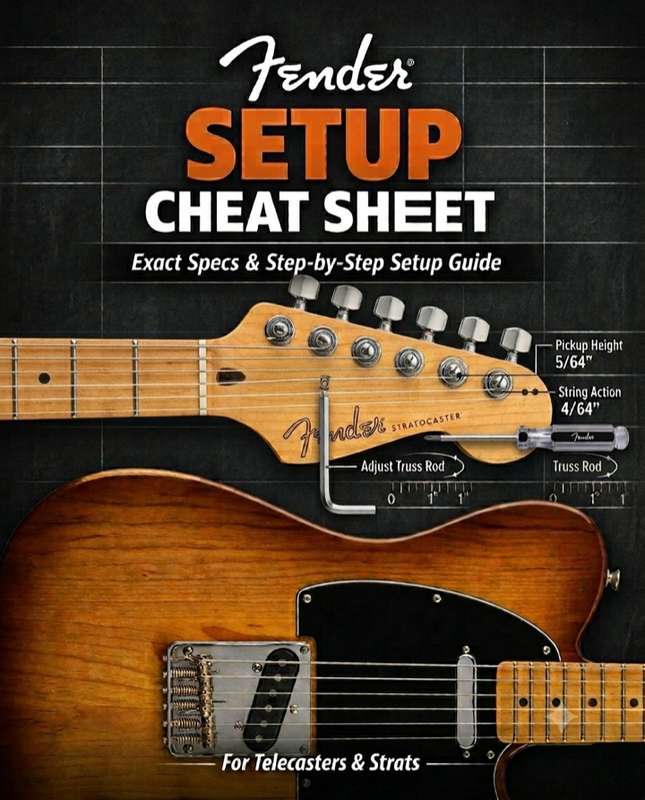
A JV or SQ guitar that has not been set up recently will almost certainly benefit from fresh work. Neck relief drifts, frets wear, and pickup heights shift over four decades. These guitars were built to standard Fender measurements, so the factory specs are well documented.
For a typical JV or SQ Stratocaster, start with these general targets:
- Neck relief: roughly 0.010 inches at the 7th fret with the string held at the 1st and last frets
- Action at the 17th fret: about 4/64 inches on the high E and 5/64 inches on the low E
- Pickup height: around 6/64 inches from the bottom of the low-E string to the bridge pickup pole piece, and 5/64 inches on the high-E side
These are starting points, not rules. Measure, adjust in small steps, and let the neck settle overnight between truss-rod turns. For exact factory measurements by model and year, use the Setup Specs Lookup. For a printable one-page reference, the Fender Setup Guide collects the key specs onto a single card.
JV/SQ vs Later Japanese Serial Numbers
Once you understand the JV and SQ prefixes, the rest of the Japanese Fender timeline falls into place:
- JV/SQ: 1982-1984, first Fuji-Gen Fender Japan production
- E prefix: 1984-1987, also used by Fuji-Gen for export Fender Japan guitars
- A/B/C prefixes: 1984-1987 transition years and later 1980s production
- Made in Japan / Crafted in Japan: 1980s through 2000s, depending on era and factory
- Dyna Gakki JD prefix: 2012 onward, modern Japanese Fender production
If your serial does not fit the JV or SQ pattern, the Fender serial number decoder will route it to the correct decade and factory.
Internal Links and Next Steps
- Fender Serial Number Lookup - Decode any Fender or Squier serial instantly
- Guitar Worth Calculator - Get a market range for your year and model
- Setup Specs Lookup - Find factory measurements by model and era
- Fender Authenticity Checker - Free red-flag checklist to spot fake Fenders and Squiers
- Fender E-Series Serial Numbers - The next Japanese prefix after JV/SQ
- Fender N-Series Serial Numbers - 1990s Fender dating guide
- Fender Z-Series Serial Numbers - Dating 2000s Fenders
- Fender S-Series Serial Numbers - 1970s predecessor to the E system
- Fender MX-Series Serial Numbers - Mexican-made Fenders from the 1990s onward
- Fender MN/MZ-Series Serial Numbers - Mexico Ensenada serials from the 1990s and 2000s
- Fender Japan Serial Numbers - Complete MIJ and CIJ dating guide
- Fender Model Identification - How to identify any Fender by sight
FAQ
What years are Fender JV serial numbers?
Fender JV serial numbers were used from 1982 until early 1984. They appear on the first Fender Japan Vintage series guitars built at the Fuji-Gen factory.
What is the difference between JV and SQ serial numbers?
JV serials are on Fender-branded guitars from the first Japan Vintage line. SQ serials are on Squier-by-Fender guitars from the same factory and era. Both were built by Fuji-Gen to high standards, but JV guitars usually command higher prices.
Are JV Fenders made in Japan?
Yes. JV Fenders were made in Japan at the Fuji-Gen Gakki factory in Matsumoto. The front headstock decal should say Made in Japan.
Are Squier SQ guitars collectible?
Yes. Original SQ Squier guitars from 1983 and 1984 are collectible because they share the same Fuji-Gen factory and build quality as JV Fenders. Clean SQ Stratocasters and Telecasters sell for strong prices compared to most later Squier instruments.
How can I tell if a JV Fender is real?
Check that the serial starts with JV followed by exactly five digits, the headstock shape and decal match known originals, and the hardware and neck heel stamps are consistent with 1982-1984 Fuji-Gen production. Run the free Fender authenticity quick-check for a fast risk assessment.
Where is the serial number on a JV or SQ guitar?
The serial number is usually on the back of the headstock, either stamped into the wood or printed under the clear finish. Some guitars also have matching codes on the neck heel or inside the neck pocket.
What models were made with JV and SQ serial numbers?
Common models include Stratocaster, Telecaster, Precision Bass, and Jazz Bass. JV models were often vintage reissues based on 1950s and 1960s designs. SQ models covered similar shapes under the Squier brand.
How much is a 1982-1984 Fender Japan guitar worth?
Value depends on whether it is JV or SQ, the model, originality, and condition. Clean original JV Stratocasters and Telecasters often sell for the highest prices, while SQ models typically trade at a discount. Compare live listings and use the Guitar Price Estimate tool for a current range.
Did Fender use JV and SQ prefixes after 1984?
No. JV and SQ prefixes were only used during the 1982-1984 Fuji-Gen startup period. Later Japanese Fenders moved to E, A, B, C, and other prefixes.
What should I do after I date my JV or SQ guitar?
After you know the year and factory, verify originality, check the current market value, and give the guitar a proper setup. Use the Fender serial number decoder to confirm the date, the Guitar Price Estimate tool for pricing, and the Setup Specs Lookup or Fender Setup Guide for factory measurements.
Conclusion
Fender JV and SQ serial numbers represent the birth of official Japanese Fender production. Built by Fuji-Gen Gakki between 1982 and 1984, these guitars combined vintage-correct details with build quality that often rivaled American instruments of the same decade. Today, clean JV Fenders and original SQ Squiers are some of the most desirable vintage MIJ guitars on the market.
If you have a JV or SQ guitar, start with the serial table above, confirm the branding and Made in Japan decal, and inspect the hardware and neck stamps to verify originality. Then run the number through the Fender serial number decoder for a quick digital check, and use the Guitar Price Estimate tool if you are buying, selling, or insuring the guitar.
Once the guitar is dated and valued, the final step is making it play its best. A well-set-up JV or SQ guitar can feel as good as any modern instrument. The Fender Setup Guide puts those specs on one printable page, so you can dial in action, relief, intonation, and pickup height without guessing.