Jazz Bass Pickup Height: Specs and Pickup Balance
Set Jazz Bass pickup height with measurements in mm and inches. Balance neck and bridge pickups, fix uneven string volume, and check clearance for slap playing.
By Nick TheodoulouUpdated

On this page
Jazz Bass pickup height affects both the balance between strings and the blend of the two pickups. A useful adjustment begins with a repeatable measurement, then checks each pickup separately before listening to them together. You do not need a new set of pickups to find out whether the existing ones can sound more even.
Quick answer: Measure from the pickup pole to the underside of the string while holding the last fret. Fender lists 2.8 mm bass-side and 2.0 mm treble-side starting gaps for standard J pickups; vintage-style and Noiseless pickups start at 3.2 mm and 2.4 mm. Check the exact pickup specification, then adjust each pickup for clearance and balance by ear.
Last updated: September 9, 2026. Manufacturer starting measurements checked against Fender's bass setup instructions.
- Pickup-height chart and measurement
- Prepare a repeatable listening test
- Adjust the two pickups
- Balance neck and bridge output
- Troubleshoot uneven strings and unwanted noise
- Frequently asked questions
- Save your settings

Jazz Bass pickup-height chart: mm and inches
Fender's general starting points distinguish pickup construction, not just the instrument name. That distinction matters when comparing two Jazz Basses: an instrument fitted with replacement pickups may need a different reference from a stock model.
| Pickup category in Fender's reference | Bass-side gap | Treble-side gap |
|---|---|---|
| Standard J pickup | 7/64 inch / approximately 2.8 mm | 5/64 inch / approximately 2.0 mm |
| Vintage-style pickup | 8/64 inch / approximately 3.2 mm | 6/64 inch / approximately 2.4 mm |
| Fender Noiseless series | 8/64 inch / approximately 3.2 mm | 6/64 inch / approximately 2.4 mm |
Source: Fender's bass adjustment and care reference. These are starting gaps, rounded as in the manufacturer's chart. A pickup manufacturer's model-specific instructions take precedence over this general reference.
Measure the gap, not the exposed pickup cover
The measurement describes the space through which the string moves. It is not the height of the pickup above the pickguard, and it is not string action above a fret. Two pickups can protrude different amounts from the body yet have similar working clearances.
Hold the E string at the last fret and place a small ruler beside the pole under that string. Read from the top of the pole to the bottom of the string without pushing the string sideways. Repeat at the G string, then repeat both measurements at the other pickup.
For a covered replacement pickup, follow its maker's specified measuring surface. Do not remove a cover just to imitate the exposed-pole method. Put that measuring convention beside the numbers in your notes so a later adjustment is comparable.
Why four measurements are useful
A four-string Jazz Bass gives you four reference gaps: neck/E, neck/G, bridge/E, and bridge/G. Recording only “pickup height: 3 mm” loses the information needed to reproduce the setup. Write down all four before touching a screw.
The pickup does not have to be level with the pickguard. A slight side-to-side tilt can help achieve the intended outer-string clearances. Keep the housing free to move in its rout rather than forcing it against the edge of the pickguard.
When to set action first
Lowering the saddles changes the relationship between strings and pickups. Finish neck relief and string action before the final pickup adjustment; otherwise a successful measurement can become too close later. The Jazz Bass action-height guide covers that earlier stage.
For the whole instrument, use the complete Jazz Bass setup guide. This article concentrates on pickup measurement and listening tests so you can keep the rest of the setup stable while working.
Prepare a repeatable Jazz Bass pickup test
Keep the sound settings fixed
Use a clean amplifier setting at a comfortable volume. Bypass compression, overdrive, modulation, and automatic input-level processing while making comparisons. Those effects can hide an output difference or make an ordinary change seem much larger.
Start with your usual playing position and a consistent tone-control setting. On a bass with onboard EQ, begin from its documented neutral settings and check the battery if the output sounds distorted. Do not adjust onboard bass boost halfway through a pickup-height comparison.
Keep the amplifier gain fixed too. It is easy to raise a pickup, turn the amp down instinctively, and conclude that nothing changed. Record a short example before each change if your ears need a more reliable comparison.
Choose a short test phrase
Use the same phrase at the same tempo for every pass. Include notes on all four strings, a sustained note, and a few accents at your normal playing strength. You are testing consistency, so a familiar line is more useful than an elaborate solo.
Repeat the phrase with fingers, a pick, or slap only if those are techniques you actually use. A height that works for a soft fingerstyle part may leave insufficient clearance for a forceful pop. Your hardest normal attack belongs in the test.
Gather only the tools you need
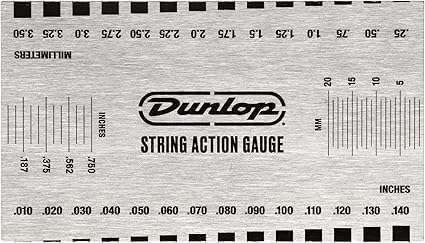
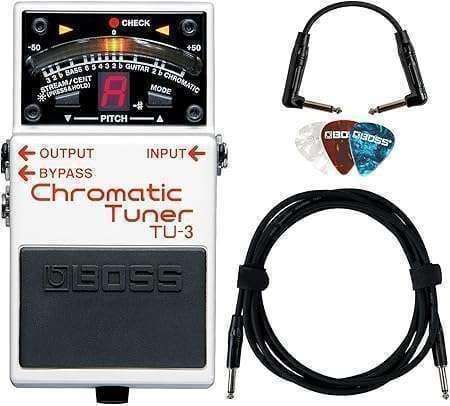
A small ruler and a correctly fitting screwdriver are usually enough for pickup adjustment. A tuner helps keep comparisons consistent because an out-of-tune bass makes sustained notes and intervals harder to judge. Put a cloth beside the work area to protect the finish from a dropped tool.
The tools below cover measurement, screw adjustment, and tuning. You do not need to buy replacements for equivalent tools already on your bench. Check that the screwdriver tip fits your pickup screws; a loose fit can damage their heads.
Tools for Measuring and Adjusting Pickups
 Buy on Amazon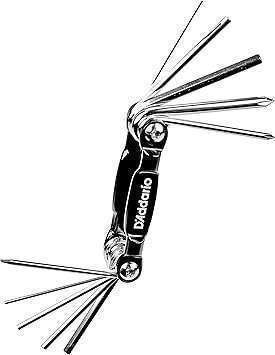
Record the starting sound
With both volume controls up, play the test phrase and note the problem in specific terms. “G string disappears when I move to the bridge pickup” is useful. “The bass needs better tone” is too broad to judge after a change.
Then solo each pickup. On the usual two-volume layout, turn the other pickup down; on a blend-equipped bass, use its normal solo positions. Confirm the control arrangement before assuming a knob changes only one pickup.
How to adjust Jazz Bass pickup height
Start with the neck pickup
Measure and record both outer-string gaps, using the last-fret convention above. If the pickup is conspicuously close, increase the gap before testing strong attacks. Begin from the appropriate reference for the fitted pickup, rather than from another player's screw-turn count.
Make a small change at one side and remeasure. About a quarter turn is a useful way to limit each experiment, but it is not a fixed millimetre adjustment: screw threads and mounting materials differ. Watch what the pickup actually does.
Conventional mounting screws usually draw a pickup down as they are tightened and let its supporting foam or springs lift it as they are loosened. Check that movement visually. If turning a screw produces no movement, stop and inspect the mount rather than continuing to unwind it.
Play the neck pickup alone, keeping your plucking position consistent. Listen for a stronger E string masking the D and G strings, or for an aggressive transient that overwhelms the note. Make one modest adjustment, repeat the same phrase, and retain it only if the result improves.
Then set the bridge pickup
Repeat the process with the bridge pickup alone. Do not demand that it sound identical to the neck pickup: it samples the string at a different location, so a different tonal character is part of the instrument. Compare usable loudness and articulation instead.
If the bridge pickup seems quieter, first compare it using the same plucking position and a similar passage. Moving your right hand toward the bridge at the same time changes the experiment. You can explore different hand positions after establishing a stable pickup balance.
Check clearance across the neck
After setting the reference gaps, play low, middle, and high fretted notes. Include your normal strongest attacks and watch for the string striking the pickup. A measurement that looks tidy can still be unsuitable for your technique.
Do not raise the whole pickup to solve a problem confined to one fret. A buzz or dead note in one position may need attention elsewhere in the setup. Pickup height is best used for broad balance and clearance, not as a substitute for fret diagnosis.
Avoid forcing poles or screws
Standard exposed Jazz Bass pole pieces are not little height-adjustment screws. Do not try to turn or hammer them to fix one quiet string. Replacement designs vary, so only make individual pole adjustments when the maker explicitly provides for them.
A screw that suddenly becomes difficult to turn, a cover wedged against the pickguard, or foam that no longer raises the pickup is a mechanical issue. Resolve that before chasing a tone target. Leave enough thread engaged to hold the pickup securely.
Balance Jazz Bass neck and bridge pickup output
Decide what balanced means for your playing
Some players want a similar perceived level when switching between solo pickups. Others mostly use both pickups together and want that blend to sound even. Choose your main use before deciding whether a quieter bridge pickup needs changing.
Use a simple three-pass comparison: neck alone, bridge alone, then both at your usual blend. Keep the same phrase, hand position, and amp setting. If possible, listen back without looking at which setting was recorded.
Do not expect the blended sound to be the arithmetic sum of the solo sounds. The two pickups respond to different parts of the vibrating string, and their combination has its own character. A change in fullness with both selected is not automatically a fault.
Try lowering the louder pickup first
If the neck pickup overwhelms the bridge, lowering it slightly is a useful reversible experiment. That preserves clearance at the quieter pickup instead of pushing it closer and closer to the string. Remeasure after the adjustment and compare the three passes again.
Once the blend works, check solo playing. A bass can sound pleasing with both pickups full but make an awkward volume jump when you roll one away. Small compromises in the physical heights may give you a more usable range from the controls.
Judge string balance separately
Play a repeated pattern that crosses all four strings without changing picking intensity deliberately. Also play the same pitch on different strings where practical. This helps separate a string-level issue from the tonal differences between low and high notes.
Tilting the pickup changes a whole side, not just one string. If the D is too strong but the G is weak, raising the treble side may not solve both. Check the strings, their alignment over the pickup, and the mechanical setup before considering replacement electronics.
Keep a simple setup log
| Setting | Before | After |
|---|---|---|
| Neck pickup: E-string gap | Record mm | Record mm |
| Neck pickup: G-string gap | Record mm | Record mm |
| Bridge pickup: E-string gap | Record mm | Record mm |
| Bridge pickup: G-string gap | Record mm | Record mm |
| Strings and tuning | Brand, gauge, tuning | Note any change |
| Listening result | Describe the problem | Keep or revert |
There is no need to copy a celebrity's numbers to make the log useful. Its purpose is to let you return to a known good setting after a string change, a service, or an experiment that did not work.
Troubleshoot a weak G string, clacks, and uneven output
One string stays quieter on both pickups
Start with that string. Check for damage, an unusual witness point at the saddle, or a badly seated replacement before making both pickups compensate for it. Compare the symptom on several frets and with a consistent attack.
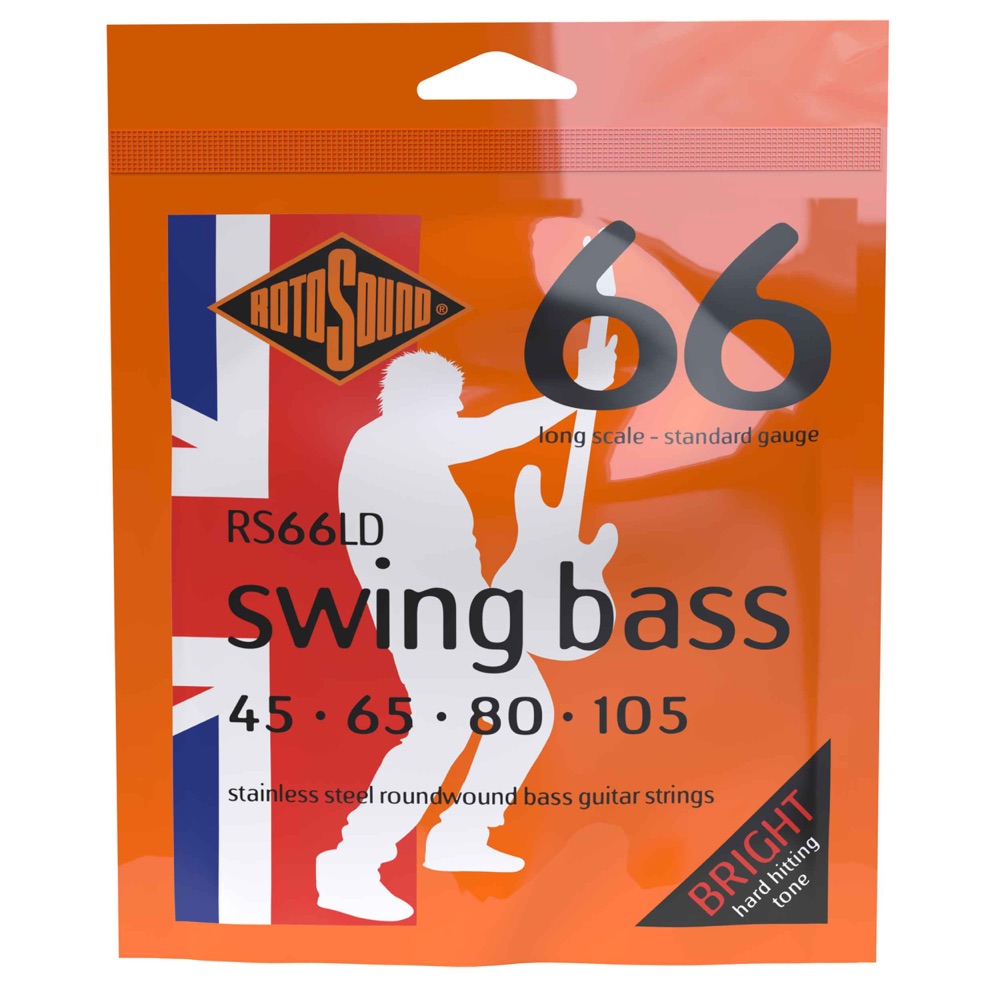
If you decide to replace strings, fit the gauge and construction you intend to keep. A replacement set changes the listening baseline, so repeat the measurements afterward. These are roundwound options for different preferences, not a requirement for fixing pickup balance.
Roundwound Bass String Options


Slap produces a loud click against the pickup
Watch where the string lands during the attack. If it contacts the pickup, increase the gap and test again. Do not judge this only with the string held at the last fret; the reference measurement and the playing-clearance test answer different questions.
Also listen through the amplifier. A percussive acoustic click may not be the same as an intrusive amplified transient. Your target is clean clearance and a sound that works at the volume you use.
Notes warble or the tuner seems unsettled
Temporarily lower the pickups and repeat the same sustained note. If the symptom changes, restore height gradually while keeping enough clearance. If it does not, investigate strings, frets, and the rest of the setup rather than assuming every pitch problem is magnetic.
Keep this a controlled test: do not change action, strings, and pickup height together. Otherwise an improvement tells you little about which adjustment mattered. A short recording is particularly helpful for sustained-note comparisons.
Hum remains after adjusting the pickups
Pickup height is not a repair for a grounding fault or unwanted environmental noise. Compare the sound in another position in the room, with a different cable, and with the usual pickup combinations. If the instrument has developed a new buzz or intermittent signal, inspect the electrical path separately.
For related measurements, the pickup-height calculator provides another reference. Choose an applicable instrument configuration and preserve the measuring convention; a calculator cannot identify an unknown replacement pickup by appearance.
Jazz Bass pickup-height FAQ
Should Jazz Bass pickups be the same height?
They do not have to protrude equally above the body. Measure the string-to-pole gap at each pickup and compare their sound separately. The best physical heights are those that give useful balance and enough clearance for your playing.
Do I measure with the strings open or fretted?
Use the last fret for the Fender starting measurements shown here. Hold the string down, then measure its underside to the pole top. An open-string measurement is a different reference and should not be compared directly with the table.
What is the starting height for standard Jazz Bass pickups?
Fender's general standard-J reference is approximately 2.8 mm on the bass side and 2.0 mm on the treble side. Check the fitted pickup's instructions first; vintage-style, Noiseless, and replacement designs may use another starting point.
Can pickup height fix a weak G string?
It may help when the treble side is simply too far away. If the string stays weak on both pickups, check the string and mechanical setup too. A whole-side height adjustment cannot independently control every string's output.
Is there a special pickup height for slap?
There is no single setting for every slap player. Begin with the appropriate pickup reference and test your strongest normal slap and pop. Increase clearance if the strings strike the pickup or the amplified attack becomes intrusive.
Should I raise the bridge pickup if it sounds quieter?
First compare both pickups with the same hand position and phrase. Try lowering the louder neck pickup before bringing the bridge pickup very close. Judge the blend and both solo settings after each change.
Can I adjust the individual pole pieces?
Do not treat ordinary Jazz Bass pole pieces as adjustment screws. Only adjust individual poles if your particular pickup was designed for it and its manufacturer explains how. Use the mounting screws for normal whole-pickup height changes.
Do five-string Jazz Basses use these exact gaps?
Treat the four-string table as a reference, not a guaranteed five-string specification. Check your pickup maker's guidance and give the low B enough clearance for its movement. Test the bass at your intended tuning and playing strength.
How often should I recheck pickup height?
Recheck after changes to action, strings, or pickup mounting, and whenever the balance changes noticeably. If the instrument is stable and sounds right, there is no reason to keep moving the screws on a fixed schedule.
Save the Jazz Bass settings that work
The useful result is an instrument that stays balanced across your normal playing techniques. Keep the four measurements, the string details, and a short sound example together. If an experiment disappoints, return to that record instead of starting from memory.
Find the rest of the model's maintenance resources in the Jazz Bass hub. Finish with a final tuning and an ordinary song or rehearsal passage; a setup should work in music as well as in a measurement exercise.
Keep reading
Next for your Jazz Bass
- Same guitarJazz Bass String Height: Exact Specs and Setup GuideRead
- Same guitarJazz Bass Value Guide: How Much Is a Fender J-Bass Worth?Read
- Same guitarJazz Bass Serial Numbers: Dating & Identification GuideRead
Everything for your Jazz Bass
Open the hub