Jazz Bass String Height: Exact Specs and Setup Guide
Exact Jazz Bass string height specs in mm and 64ths at the 12th fret, plus step-by-step saddle adjustment and settings for fingerstyle, pick, and slap.
After changing action, recheck Jazz Bass pickup height and balance: lowering the strings also reduces pickup clearance.
Jazz Bass String Height: Exact Specs and Setup Guide
Dialing in your Jazz Bass string height is the single biggest playability upgrade you can make without spending anything. The Jazz Bass bridge gives you four individually adjustable saddles, and a couple of millimeters of adjustment is the difference between a bass that fights your fingers and one that plays fast, clean, and buzz free. Set it wrong and you get fret clank on every pop, dead notes above the 12th fret, or an action so high that fast lines turn into hard work.
This guide gives you the exact factory measurements in mm and 64ths of an inch, a step-by-step saddle adjustment walkthrough, and starting points for fingerstyle, pick, and slap playing. The specs apply to Fender Player, American Professional, and American Vintage Jazz Basses, and they are sensible starting points for Squier Classic Vibe and Affinity Jazz Basses too.

📋 Quick Answer: Fender factory Jazz Bass string height is 2.4 mm (6/64 in) on the low E and 2.0 mm (5/64 in) on the high G — Fender's published reference measures these at the 17th fret (9.5–12-inch radius row); this guide measures at the 12th fret, where the same values work as starting points. Neck relief is 0.30 mm (0.012 in) at the 8th fret for a 9.5-inch-radius neck. Set relief first, then adjust each saddle in small even turns, retuning before every measurement.
What's in this guide:
- Factory specs: exact 12th-fret measurements for all four strings
- Tools and preparation: what you need before touching a screw
- Measuring correctly: the method that avoids false readings
- Step-by-step adjustment: saddle height and radius
- Settings by playing style: fingerstyle, pick, and slap
- Problems and fixes plus FAQ
Jazz Bass String Height Specs: Fender Factory Measurements
String height (action) is measured with the bass in playing position, strings open, from the top of the 12th fret to the bottom of each string. These are the starting points for a Fender Player or American Professional Jazz Bass — Fender's own bass setup reference publishes the same outer-string values but measures them at the 17th fret for a 9.5–12-inch radius, so treat the 12th-fret readings here as practical equivalents, not a verbatim factory table (checked September 2026):
| String | Height at 12th fret | Metric |
|---|---|---|
| E | 6/64 in | 2.4 mm |
| A | 5.5/64 in | 2.2 mm |
| D | 5.2/64 in | 2.1 mm |
| G | 5/64 in | 2.0 mm |
| Neck relief | 0.012 in at the 8th fret | 0.30 mm |
The A and D heights are not separate factory numbers; they follow the 9.5-inch fretboard radius, so each string sits in a gentle arc between the E and G heights. Treat every one of these as a starting point. A bass with level frets and a light touch can go lower; a heavy right hand or uneven frets will need more clearance. Vintage-style and Squier Jazz Basses use the same bridge layout, so the same numbers work as a baseline.
Relief is part of the same measurement system. Check it by capoing the 1st fret, holding the E string at the last fret, and measuring the gap at the 8th fret. Fender's bass setup chart specifies 0.30 mm (0.012 in) for a 9.5–12-inch-radius neck — the 0.014 in (0.35 mm) figure belongs to the 7.25-inch vintage-radius row. If relief is off, fix it before touching the saddles, because a truss rod change moves every string height reading you just took. Our Jazz Bass setup guide covers the full adjustment order, and the Setup Specs Lookup lists the numbers for your exact model.
Tools and Preparation
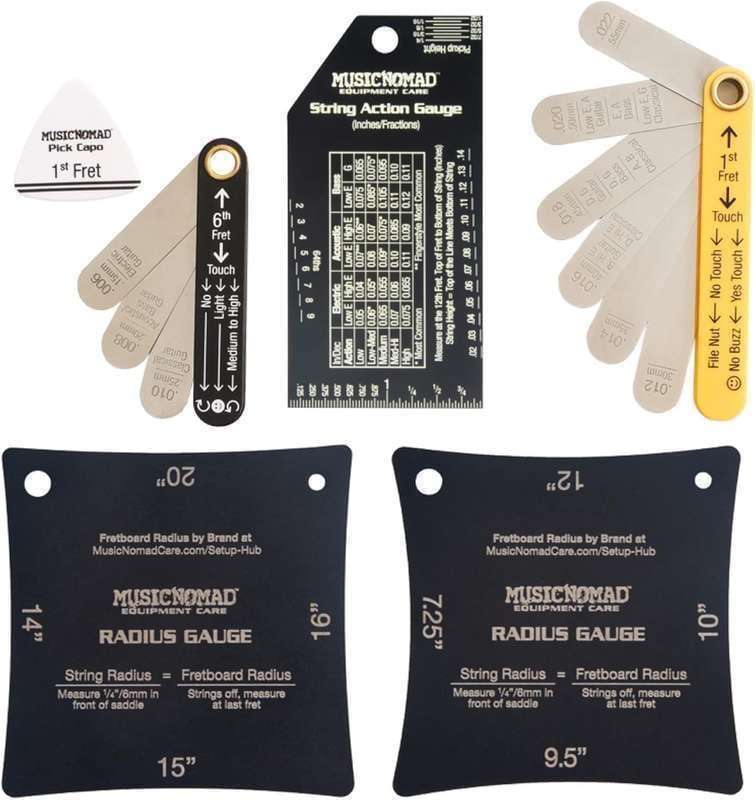
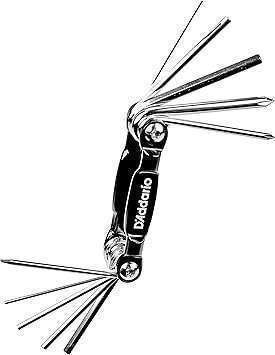
You need the correct hex (Allen) key for your saddle height screws, a precision ruler or string action gauge that reads in 64ths or tenths of a millimeter, a capo, and an accurate tuner. Vintage-style threaded saddles and modern bent-steel saddles both use two height screws per saddle, but the key size differs between Fender and Squier hardware, so check the fit before you start.
Tools for measuring Jazz Bass action
 Buy on Amazon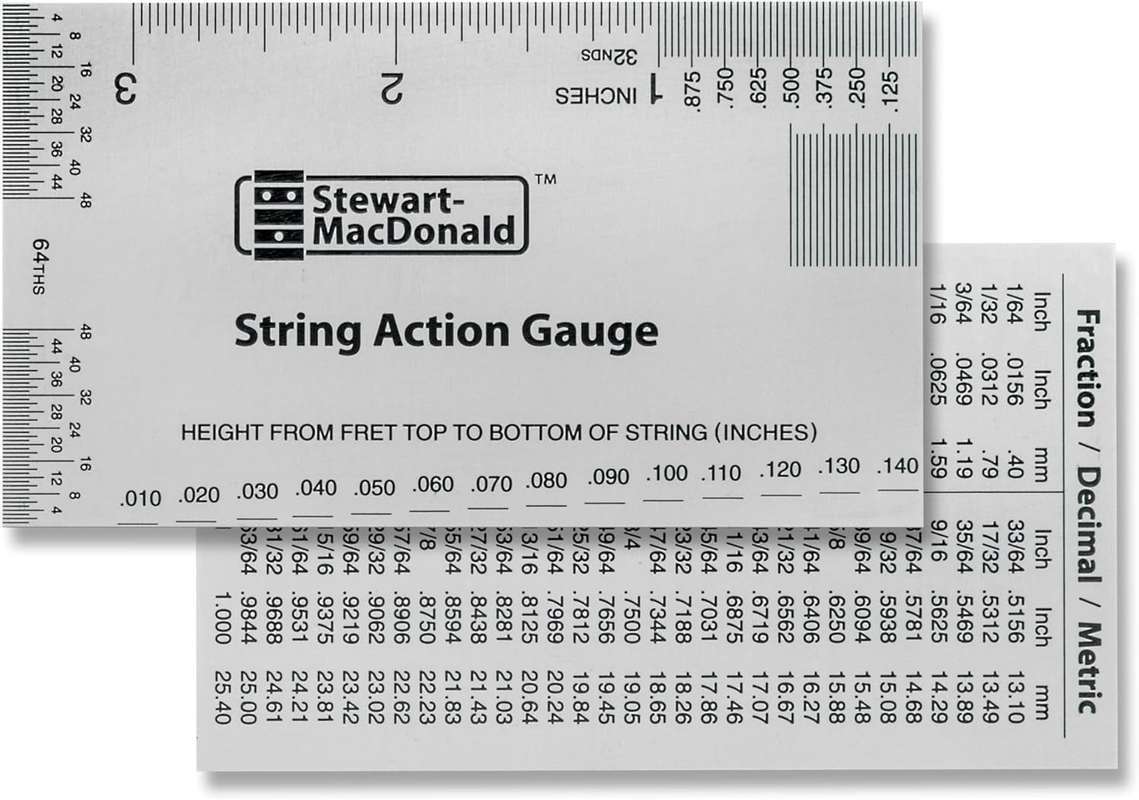
Get the bass ready before you measure anything:
- Fit the strings you actually play. A gauge change alters tension, relief, and the saddle height you need. There is no point setting action for a 45-105 set if you are about to switch to flats or a lighter roundwound.
- Tune to pitch. Every measurement assumes full string tension.
- Check relief first. Capo at the 1st fret, hold the last fret, measure at the 8th. Adjust the truss rod in eighth turns until you are near 0.30 mm.
- Record your starting numbers. Note the 12th-fret height on all four strings so you can always return to a known state.
How to Measure Jazz Bass String Height Correctly
Most bad setups start with a bad measurement. Three habits keep your readings honest.
Measure in playing position
Lay the bass on its back and gravity pulls the neck and strings differently. Hold the bass as you would when playing, or support it upright, and measure with the strings open. Read from the top of the 12th fret wire to the bottom of the string, not to the top of the string.
Retune before every reading
Every saddle turn changes string tension slightly. If you adjust two saddles and then measure both, the second reading is wrong. Tune the string back to pitch before you trust the ruler.
Measure all four strings, not just the E and G
The outer strings tell you the bridge's overall height, but the A and D tell you whether the saddle arc matches the fretboard radius. A middle string that sits too low is the classic cause of a bass that buzzes only on certain strings.
Step-by-Step: Adjusting Jazz Bass Saddle Height
Each Jazz Bass saddle has two height screws, one on each side. Both screws must move together, or the saddle tilts and the string can slip out of its slot under hard playing.
- Start with the low E. Turn both saddle screws in small, equal amounts. Clockwise lowers the saddle, counter-clockwise raises it. Aim for 2.4 mm (6/64 in) at the 12th fret.
- Retune the string to pitch and re-measure. Repeat until the reading is stable.
- Set the high G to 2.0 mm (5/64 in) using the same process.
- Set the A and D so the four strings follow the fretboard radius, around 2.2 mm and 2.1 mm. A radius gauge helps, but careful measuring and a play test are enough for a first setup.
- Play every note on every string. Check for fret buzz, choked bends above the 12th fret, and dead spots. Small problems usually mean one saddle is a quarter turn too low, not that the whole action needs to rise.
- Re-check intonation when you are done. Saddle height changes the string's speaking length slightly, so confirm the 12th-fret octave still matches the open string.
If a saddle runs out of travel, or the action cannot go low without rattling everywhere, the cause is usually relief, a high nut slot, or fretwork rather than the bridge. The generic action height guide explains how to tell those apart, and persistent buzz has its own diagnostic order in the Jazz Bass setup guide.
Jazz Bass Action by Playing Style
Factory specs suit most players, but your right hand technique changes what the bass can tolerate. Adjust in quarter-turn steps from the factory baseline and keep notes.
Fingerstyle
Goal: fast, even response with minimal left-hand effort.
- Factory heights are the right starting point: 2.4 mm E, 2.0 mm G.
- A light touch with level frets can often run 0.2 mm lower across the board.
- If you dig in hard on the E and A, keep those two at factory or slightly above, because aggressive plucking needs swing room.
Pick playing and rock
Goal: punchy attack that stays clean when you hit hard.
- Stay at factory specs, or add 0.1 to 0.2 mm on the E and A if you hear clank on downstrokes.
- Pick attack drives the string downward into the fret plane, so a heavy pick hand needs more clearance than the same player using fingers.
- Check palm-muted passages at the 15th fret and above; that is where a too-low G string chokes first.
Slap and funk
Goal: clean pops and thumps without excessive fret rattle.
- Start at factory specs and expect to go slightly higher: many slap players run 2.6 to 2.8 mm on the E so the thumb hit lands cleanly.
- A little fret clank is part of the slap sound, but if every note buzzes, raise the saddles a quarter turn before blaming your technique.
- Keep the G at or slightly above 2.0 mm so pops ring instead of choking.
Jazz, soul, and studio work
Goal: warm, controlled tone with minimal noise for recording.
- Factory or slightly lower works well with a light touch and flatwound strings.
- Lower action reduces left-hand noise when shifting positions, which matters when the track is quiet.
- Re-measure after switching to flats; their higher tension can pull relief forward and drop the action on its own.
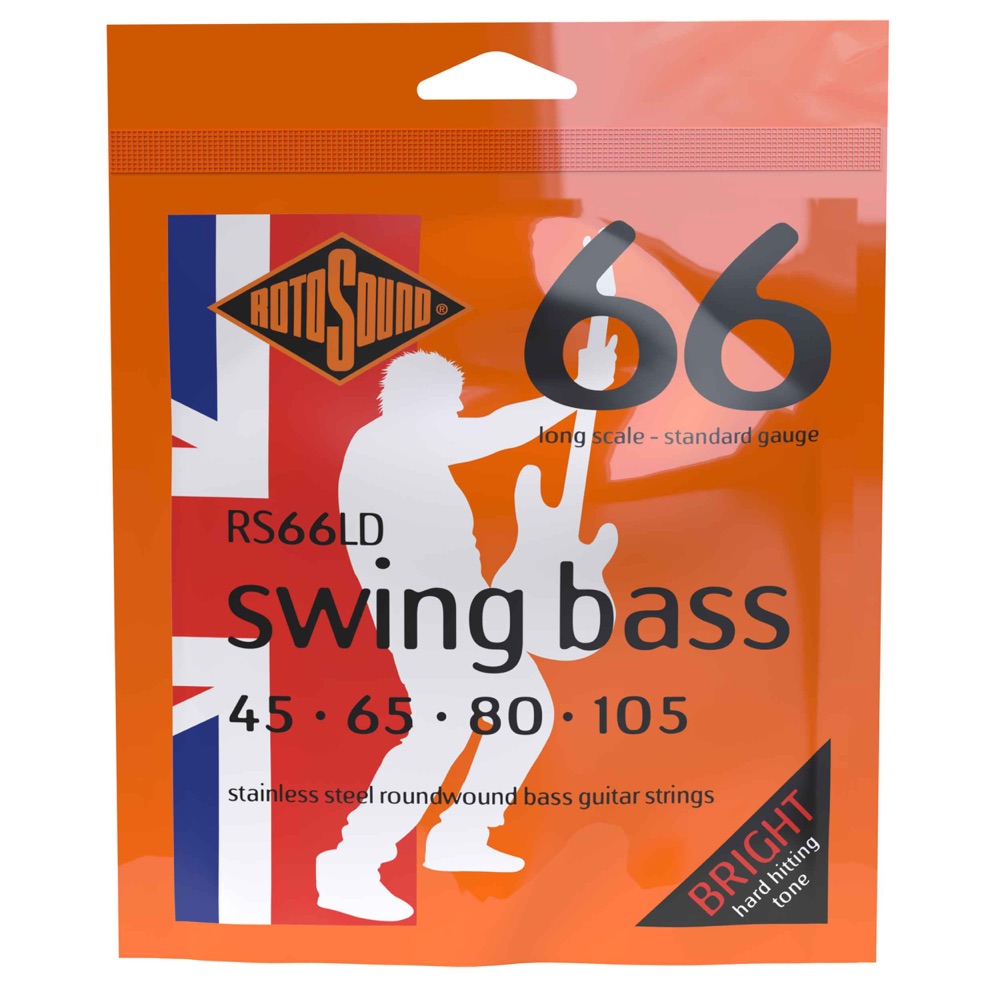
Fresh strings for a Jazz Bass setup


Common Jazz Bass String Height Problems, Diagnosed in Order
| Symptom | Likely cause | First response |
|---|---|---|
| Buzz on frets 1 to 5 | Too little relief | Add a small amount of relief, then re-measure |
| Buzz above the 12th fret | Saddle too low or a high fret | Raise the affected saddle a quarter turn |
| Buzz on one string only | One saddle too low or tilted | Level both screws on that saddle and re-set height |
| Open strings buzz | Nut slots too low | Test by fretting at the 1st fret; nut work is a tech job |
| Every string buzzes | Action too low overall or neck too straight | Check relief first, then raise all saddles evenly |
| Action feels high but measures right | High nut slots raising first-position action | Measure 1st-fret clearance; factory target is 0.020 to 0.024 in |
| Notes choke above the 15th fret | Action too low for the neck's fall-away | Raise the bridge end saddles slightly |
| Saddles at maximum height, still buzz | Neck angle or fret level problem | Stop adjusting and see a technician |
The nut check deserves a moment. Fret each string at the 3rd fret and look at the clearance over the 1st fret: you want a tiny gap, roughly the thickness of a business card. If the string sits on the 1st fret, open notes will buzz no matter what the saddles do.
How String Height Interacts with the Rest of Your Setup
Action is one link in a chain. Change the links around it and the measurement moves.
Relief first, always
Adding relief lifts the strings in the middle of the neck, which reads as higher action at the 12th fret. Straightening the neck does the opposite. That is why the setup order is truss rod, then saddles, then pickups, then intonation. If you skip ahead, you will set the same saddle twice.
Pickup height depends on action
Lower action puts the strings closer to the pickups, which increases output and, taken too far, magnetic pull on the bass strings. If you drop the action significantly, check pickup height afterward. Our Precision Bass pickup height guide covers the measurement method, and the same approach applies to the Jazz Bass's two single coils.
String gauge changes everything at once
Heavier strings add tension, which pulls more relief into the neck and raises the action. Lighter strings do the reverse. Any meaningful gauge change means re-checking relief, action, and intonation in that order. Budget ten minutes for it with each new set.
Deciding whether to keep tweaking or move up to a better Jazz Bass? A quick Guitar Price Estimate shows what your current bass is worth, which makes the repair-versus-upgrade math much easier.
Frequently Asked Questions
What is the correct Jazz Bass string height?
Fender's published starting spec is 2.4 mm (6/64 in) on the low E and 2.0 mm (5/64 in) on the high G, measured at the 17th fret on a 9.5–12-inch-radius neck; at the 12th fret (this guide's method) the same values work as starting points, with the A and D following the fretboard radius in between, and neck relief at 0.30 mm (0.012 in) at the 8th fret. Measure from the top of the fret to the bottom of the string in playing position.
What is the ideal Jazz Bass action at the 12th fret?
For most players, the factory 2.4 mm E and 2.0 mm G is the ideal balance of speed and cleanliness. Light fingerstyle players can often go 0.2 mm lower, while hard pick players and slap players usually want 0.1 to 0.4 mm more clearance on the E and A.
How do I measure string height on a Jazz Bass?
Tune to pitch, hold the bass in playing position, and measure from the top of the 12th fret wire to the bottom of each open string with a precision ruler or action gauge. Retune before every reading, because saddle adjustments change string tension.
Should Jazz Bass action be the same on all four strings?
No. The E string vibrates in the widest arc and needs the most clearance, so it sits highest at 2.4 mm. The G sits lowest at 2.0 mm. The A and D follow the 9.5-inch fretboard radius between them, forming a gentle arc rather than a flat line.
Why does my Jazz Bass buzz on the first few frets?
Buzz in the first five frets usually means too little relief: the neck is too straight or slightly back-bowed. Add relief in eighth turns of the truss rod, retune, and re-measure. If only open strings buzz, suspect low nut slots instead.
Why does my Jazz Bass buzz above the 12th fret?
Upper-fret buzz points to a saddle set too low or an isolated high fret. Raise the affected saddle a quarter turn and retest. If one fret keeps choking notes at any height, the fret itself needs leveling.
Is lower action always better on a Jazz Bass?
No. The best action is the lowest one that plays cleanly with your technique. A heavy right hand needs more string clearance, so an ultra-low action that works for a light fingerstyle player will rattle constantly for someone who digs in. Prioritize clean notes over the lowest possible number.
What string height is best for slap bass?
Start at factory specs, then raise the E and A by 0.2 to 0.4 mm if your thumb attack produces more clank than you want. Many slap players land around 2.6 to 2.8 mm on the E. Keep the G near 2.0 mm so pops ring clearly.
Do I need to adjust string height after changing string gauge?
Usually, yes. A heavier gauge increases tension, pulls in more relief, and changes the saddle height you need. After any gauge change, re-check relief, then action, then intonation in that order.
Does string height affect intonation on a Jazz Bass?
It does. Higher action means the string travels further when fretted, which stretches it sharp, especially on the lower frets. Set your final string height first, then intonate by comparing the open string with the fretted 12th-fret octave.
Conclusion: Measure, Adjust, Retune, Repeat
Setting Jazz Bass string height is a fifteen-minute job with a hex key and a ruler, and it is fully reversible if you record your starting measurements. Start at the factory numbers: 2.4 mm on the low E, 2.0 mm on the high G, A and D following the fretboard radius, and relief at 0.30 mm. Then tune the action to your hands: a little lower for light fingerstyle, a little higher for pick and slap.
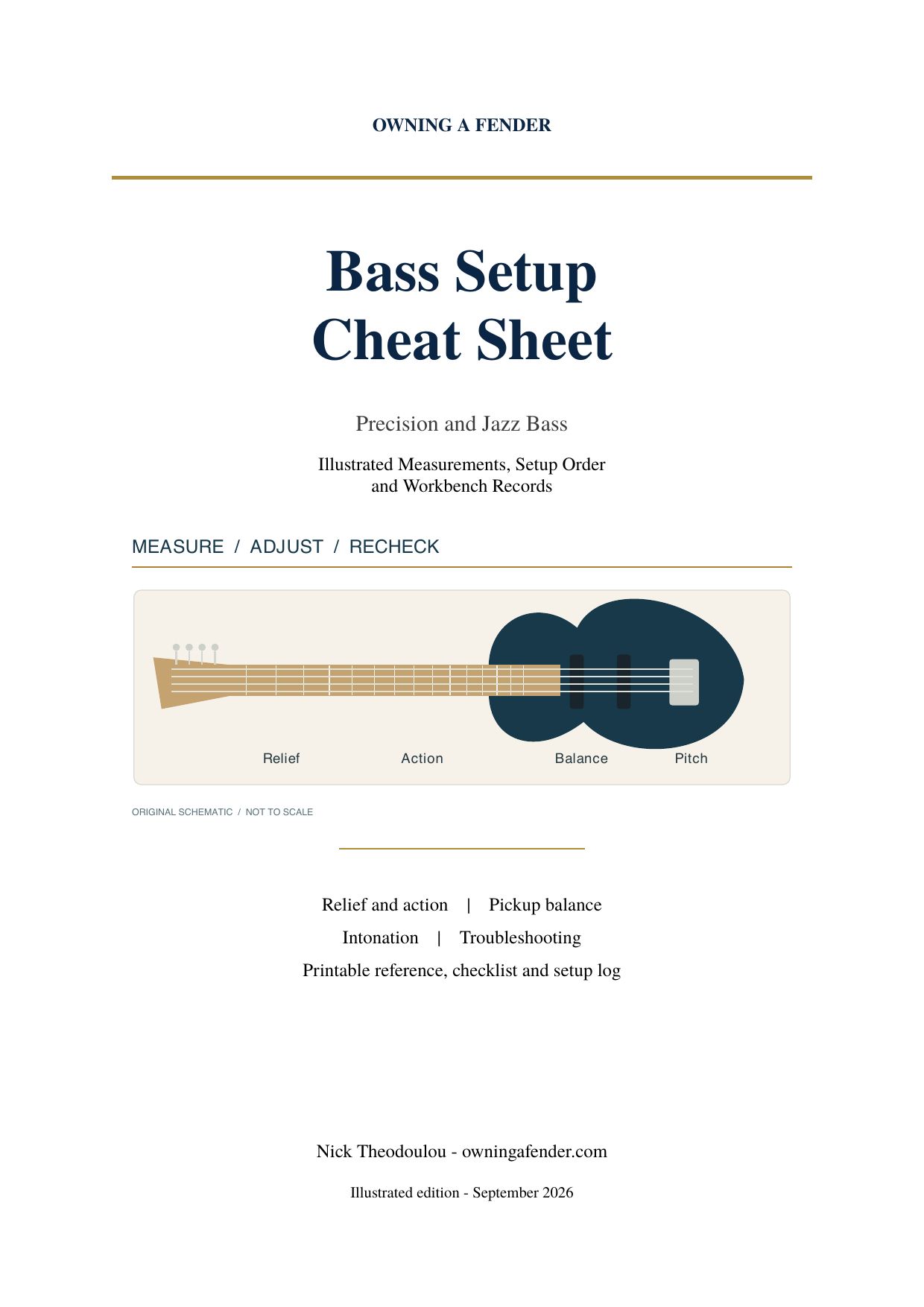
Keep the setup order straight: relief, action, pickups, intonation. If you are weighing up a used Jazz Bass or deciding whether a fret level is worth it, a Guitar Price Estimate grounds the decision in current market value. For the bench, the Bass Setup Cheat Sheet puts every Jazz Bass spec on one printable card, and the complete Jazz Bass setup guide covers the rest of the adjustment chain.