Stratocaster Truss Rod Adjustment Guide
Master Stratocaster neck relief the safe way. This guide covers Strat truss rod relief specs, headstock vs heel access, correct wrench sizes, how to measure with feeler gauges, and which direction to turn. Fix fret buzz and dial in smooth playability.
Getting Stratocaster neck relief right is one of the biggest playability upgrades you can make. Too little relief and you'll hear fret buzz, especially in the middle of the neck; too much and the action feels stiff. This guide gives you Strat-specific relief specs, a step-by-step method, and safety best practices so you can adjust with confidence.
For a complete setup (action, pickups, intonation, tremolo), see our Ultimate Stratocaster Setup Guide.
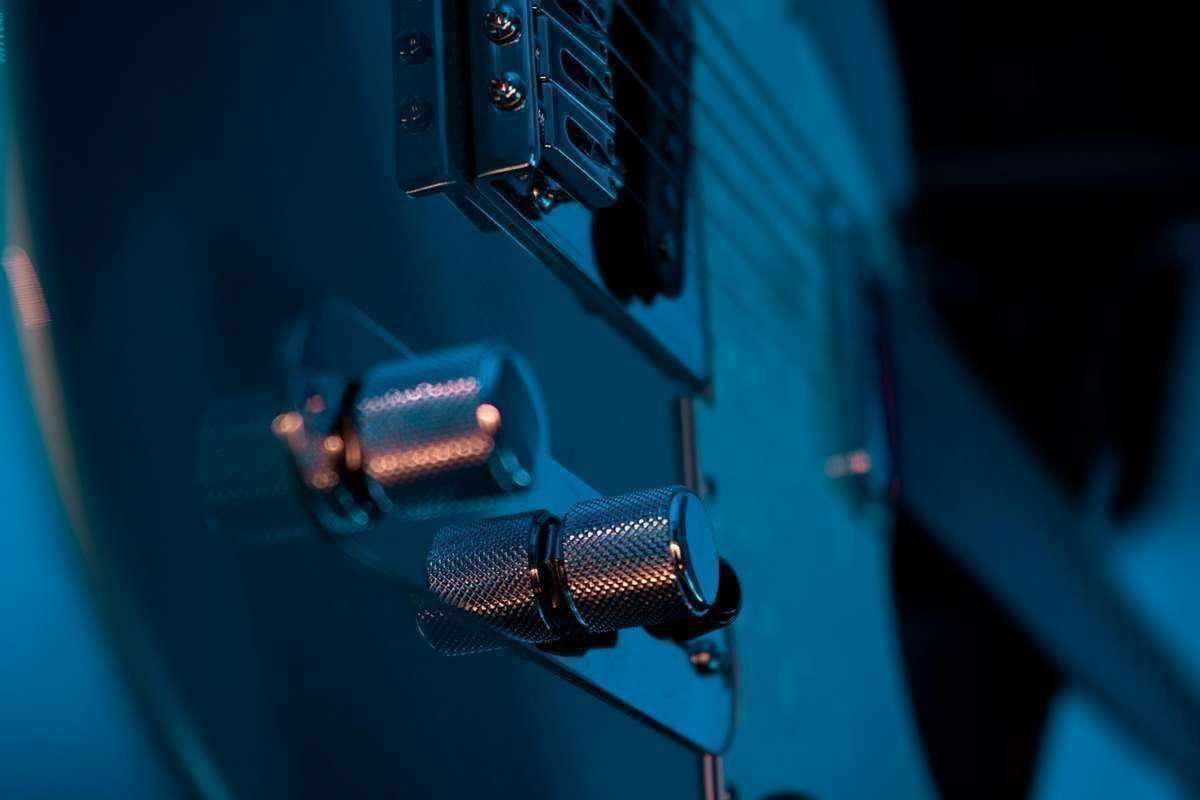 Photo by Krzysztof Hepner on Unsplash
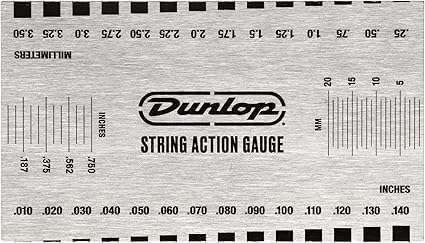
 Buy on Amazon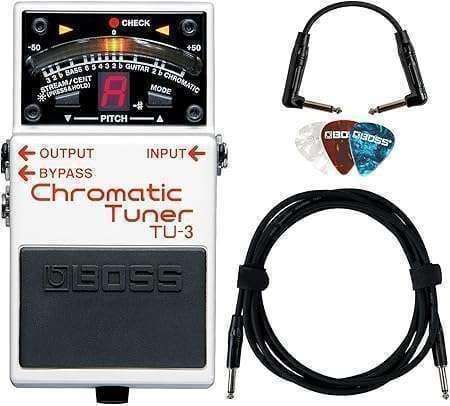
Why Relief Matters on a Stratocaster
The Stratocaster uses a 25.5" scale length, the same as the Telecaster. String tension pulls the neck into a forward bow; the truss rod counteracts that to set the amount of relief—the small gap between the bottom of the string and the frets around the 7th–8th fret when you capo the 1st fret and press the string at the last fret.
- Too little relief (back bow): The neck is too straight or bowed backward. Strings hit the frets and buzz, especially in the middle of the neck.
- Too much relief (up bow): The neck has excessive forward bow. Action feels high and stiff in the middle; you may have to press harder.
Getting relief in the right range is step one of any Stratocaster setup. After that you set action at the bridge and intonation.
Stratocaster Truss Rod: Headstock vs Heel Access
Before you turn anything, identify where your Strat's truss rod is adjusted.
Headstock Adjust (Most Modern Strats)
Found on: Player Series, American Professional II, American Ultra, Performer, most Squier Strats (Affinity, Classic Vibe, etc.).
- Location: A hole at the headstock, usually under a black or walnut plastic plug, near the nut.
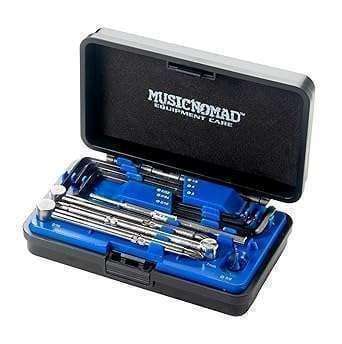
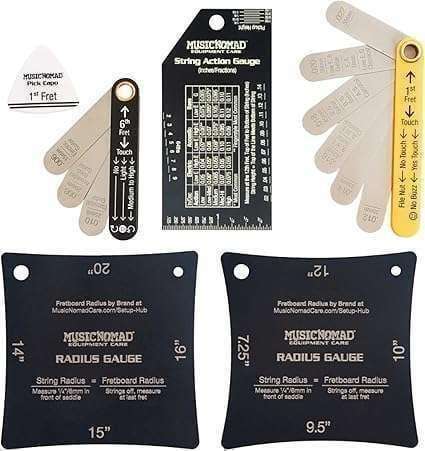
- Tool: Typically 3/16" (4.76 mm) Allen key for USA/Mexico Fenders; 4 mm or 5 mm for some Asian-built Squiers. The MusicNomad Truss Rod Wrench Set covers most Fenders.
- Advantage: You can adjust with strings at pitch. No need to remove the neck or loosen strings.
- Direction: Clockwise = straighten (less relief). Counterclockwise = more relief (more bow).
Heel Adjust (Vintage and Reissue Strats)
Found on: American Vintage II, Vintera, and many 50s/60s reissues.
- Location: The truss rod nut is at the heel of the neck, inside the neck pocket. You must loosen the strings and either tilt or remove the neck to access it.
- Tool: Often a Phillips-head screwdriver or a special truss rod driver that fits through the body. Check your model; vintage-style nuts can be easy to strip.
- Procedure: Loosen strings, capo at 1st fret to keep strings tidy, remove the four neck bolts, tilt the neck back (or remove it), make the adjustment, reattach, tune up, and re-measure.
- Direction: Same as headstock—clockwise = less relief, counterclockwise = more relief. The rod is just accessed from the other end.
Pro tip: If you're not sure which wrench size you need, check Fender's support site for your model or use a set like the MusicNomad MN235 so you have 1/8", 3/16", and 4 mm covered.
Target Relief Specs (Stratocaster)
Quick answer: Stratocaster target relief is typically 0.20–0.30 mm (0.008–0.012") for most players. Factory spec for many modern Strats is around 0.25 mm (0.010").
| Playing style | Target relief | Notes |
|---|---|---|
| Light touch / fingerstyle | 0.15–0.25 mm (0.006–0.010") | Less string movement, so less relief needed. |
| Typical / mixed | 0.20–0.30 mm (0.008–0.012") | Standard factory range. Good for most styles. |
| Heavy strumming / high gain | 0.25–0.35 mm (0.010–0.014") | More room for string vibration reduces buzz. |
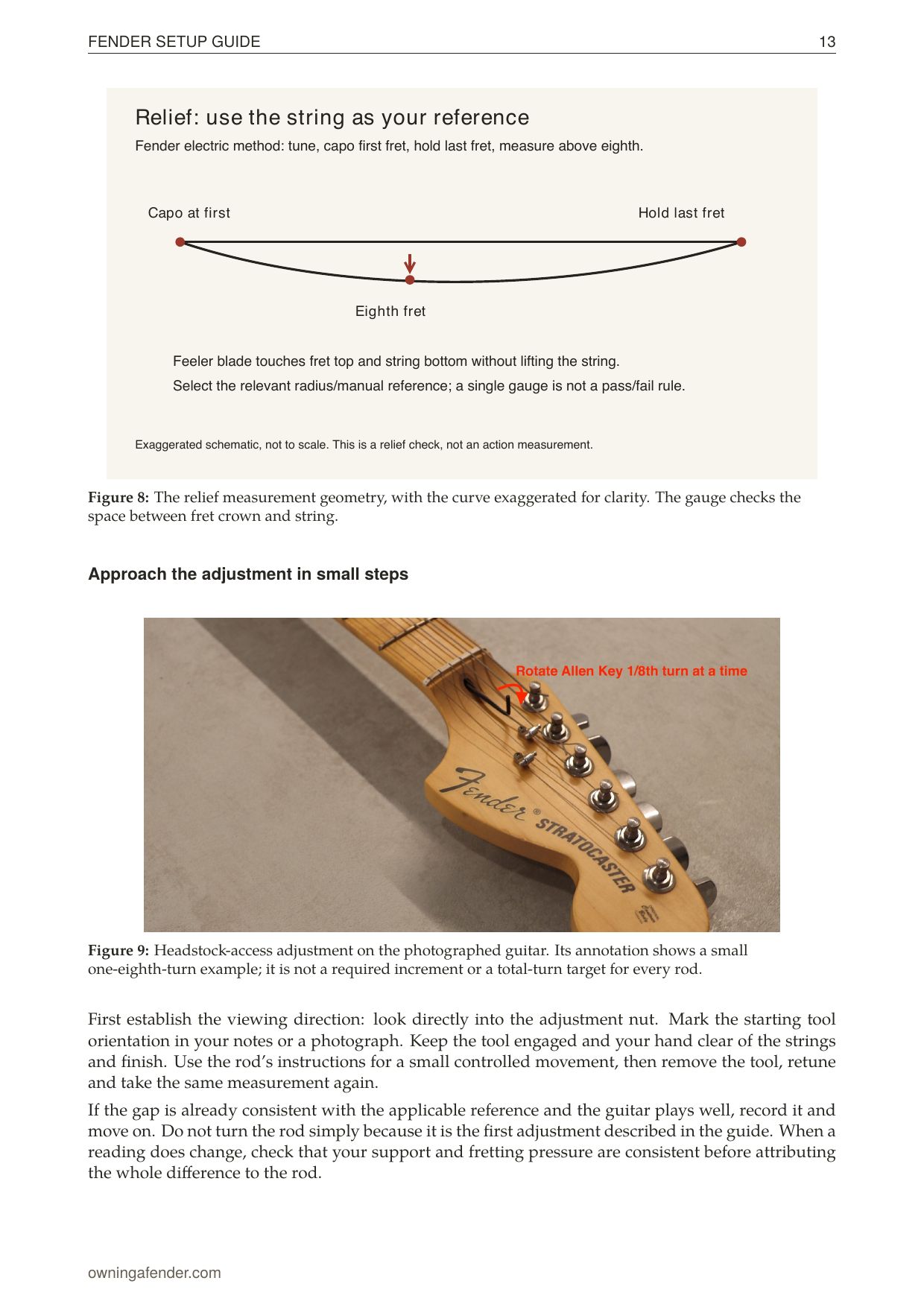
Relief is measured at the 7th–8th fret with a capo on the 1st fret and the string pressed at the last fret (21st or 22nd). Measure the gap between the bottom of the string and the top of the 8th fret.
Different Strat eras (50s, 60s, 70s, modern) sometimes had different factory specs; if you're restoring a specific year, our Factory Specs Lookup can help. For most players, 0.008–0.012" is a safe, versatile target.
Tools You'll Need
- Capo — to hold the 1st fret and free both hands for measuring.
- Feeler gauges — e.g. MusicNomad Precision Truss Rod Gauge or a standard feeler set that includes 0.008", 0.010", 0.012".
- Truss rod wrench — 3/16" or 4 mm for most modern Strats; MusicNomad MN235 set covers multiple sizes.
- Tuner — e.g. Boss TU-3. Always measure and adjust with the guitar tuned to pitch.
How to Measure Neck Relief
- Tune to pitch — Full tension on the neck. Measuring with slack strings is meaningless.
- Capo 1st fret — Removes nut height from the equation.
- Fret last fret — Press the low E (or high E) at the 21st or 22nd fret. The string becomes a straight edge from nut to saddle.
- Measure at 8th fret — Slide a feeler gauge between the bottom of the string and the top of the 8th fret. If 0.010" slides in without moving the string but 0.012" lifts it, you're in the 0.010" range.
- Interpret — Too much gap (e.g. 0.020") = too much relief, tighten the rod. No gap or buzz = too little relief, loosen the rod.
Truss Rod Adjustment Direction (Stratocaster)
Clockwise (righty-tighty) = Straighter neck = Less relief. Use when action is too high in the middle or the neck has too much bow.
Counterclockwise (lefty-loosey) = More bow = More relief. Use when you have fret buzz in the middle of the neck or the neck is too flat/back-bowed.
Golden rule: No more than 1/8 turn at a time. Retune, wait 15–30 minutes if possible, then re-measure. Wood responds slowly; multiple small adjustments are safer than one big turn.
Step-by-Step: Adjusting Your Stratocaster Truss Rod
- Measure current relief — Note the gap (e.g. 0.006" or 0.018").
- Choose target — e.g. 0.010" for a typical player.
- Adjust — If relief is too high, turn clockwise 1/8 turn. If too low (or buzzing), turn counterclockwise 1/8 turn.
- Retune — Bring strings back to pitch.
- Wait — 15–30 minutes minimum so the neck can settle.
- Re-measure — Check the gap again.
- Play-test — Listen for buzz and feel the action. Repeat with another 1/8 turn if needed.
Never force the truss rod. If it won't turn with moderate pressure, stop and confirm wrench size and direction. Forcing can strip the nut or damage the rod.
Troubleshooting
| Symptom | Likely cause | Fix |
|---|---|---|
| Buzz in frets 1–7 | Back bow (not enough relief) | Loosen truss rod (counterclockwise) |
| Buzz in frets 12+ | Too much relief or high frets | Tighten truss rod (clockwise); if buzz persists, check fret level |
| High action in middle | Too much relief | Tighten truss rod (clockwise) |
| Stiff feel mid-neck | Too much relief | Tighten truss rod (clockwise) |
| Buzz on open strings only | Nut slots too low | Truss rod won't fix; nut needs attention |
| Rod won't turn | Wrong wrench or maxed out | Use correct size; if still stuck, see a tech |
Stratocaster Relief by Era (Reference)
- Vintage 50s/60s reissues: Often shipped with slightly more relief (0.012" or so). Heel-adjust; measure after any change.
- 70s style (bullet truss rod, 3-bolt): Headstock adjust; same direction rules. Some players prefer a bit more relief for stability.
- Modern (2-point trem, American Pro/Ultra): Usually 0.008–0.012"; headstock adjust with 3/16" or 4 mm. Bi-flex rods on some models allow both directions from a neutral point.
For a full setup order (relief → action → pickups → intonation), see the Ultimate Stratocaster Setup Guide. Once relief and action are settled, set your Stratocaster pickup height before intonating. For universal truss rod theory and safety, see our Guitar Truss Rod Adjustment Guide.
Frequently Asked Questions
What wrench do I need for Stratocaster truss rod?
Most modern USA and Mexican Stratocasters use a 3/16" Allen key for headstock-adjust rods. Some Squiers use 4 mm or 5 mm. Vintage heel-adjust Strats often need a Phillips screwdriver or a dedicated truss rod driver. A multi-size set like the MusicNomad MN235 covers most Fenders.
Which way do I turn the truss rod on a Stratocaster to fix buzz?
Turn counterclockwise (loosen) to add relief. That gives the strings more clearance in the middle of the neck and usually reduces buzz. Make 1/8 turn at a time, retune, wait 15–30 minutes, then re-measure.
How much relief should a Stratocaster have?
A typical target is 0.008–0.012" (0.20–0.30 mm) measured at the 8th fret with capo on 1st and string pressed at the last fret. Lighter playing can use less; heavy strumming or high gain may need 0.010–0.014".
Can I adjust the truss rod with strings on?
Yes, if your Strat has headstock truss rod access (most modern Strats). Adjust at pitch, make a small turn, retune, and re-measure. If your Strat has heel access (vintage/reissue), you must loosen the strings and access the nut from the neck pocket.