Factory Specs vs Actual Specs: Why They Differ
Learn the difference between factory specifications and your actual guitar setup. Why factory specs matter, how to measure your specs, and when to deviate from factory standards.
The Secret Most Guitarists Don't Know
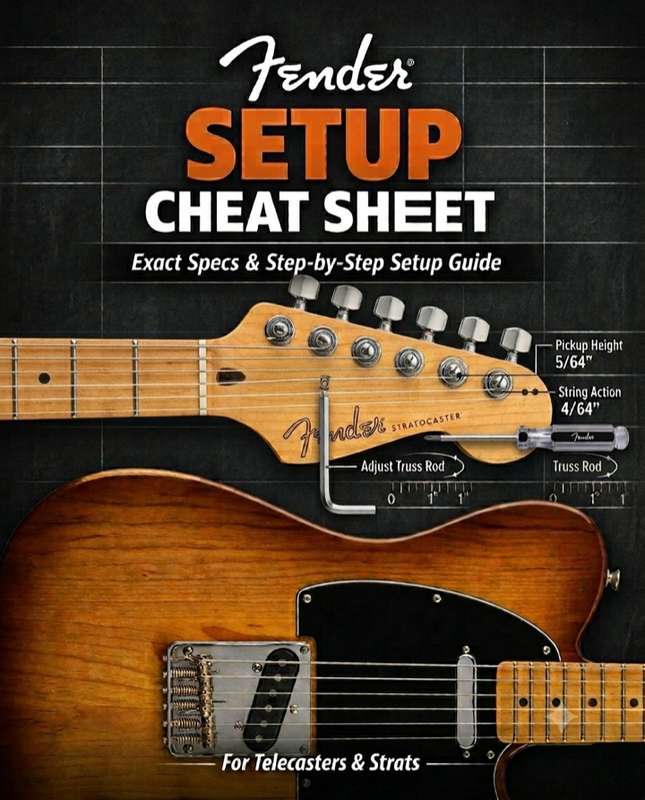
When you buy a Fender guitar, it arrives at the dealer with very specific measurements:
- Action height precisely set to 1.8mm treble, 2.2mm bass
- Pickup height calibrated for optimal tone output
- Neck relief dialed in for playability and intonation
- Strings stretched and intonated
These aren't accidents or approximations—they're the result of Fender's decades of research into what feels and sounds good.
But here's the truth most people miss:
Your guitar's current specs probably aren't at factory settings anymore. Humidity changes, string tension, playing wear, and modifications all shift those measurements. Understanding the difference between factory specs and your current setup is the key to better tone, playability, and resale value.
What Are Factory Specs?
Factory specifications are the manufacturer's recommended baseline settings for a specific guitar model and year.
Fender publishes these for every model:
- String action height at the 12th fret
- Pickup heights (bridge and neck pickups)
- Neck relief (straightness of the neck)
- Recommended string gauge
- Nut slotting specifications
- Intonation range
Example: 2025 American Strat Factory Specs
| Spec | Measurement | Why It Matters |
|---|---|---|
| Action (Treble) | 1.8mm (0.071") | Higher treble = less buzz, but harder to play |
| Action (Bass) | 2.2mm (0.087") | Higher bass = more resonance, harder to fret |
| Pickup Height (Bridge) | 2.4mm | Increases output and high-end bite |
| Pickup Height (Neck) | 2.8mm | Slightly higher for balanced output |
| Neck Relief | Slight bow (0.010") | Prevents buzz at the first fret |
| String Gauge | 10-46 | Balanced tone and playability |
| Intonation | ±5 cents at 12th fret | Industry standard accuracy |
How To Measure Your Current Specs
Don't guess—measure. Here's exactly how to do it.
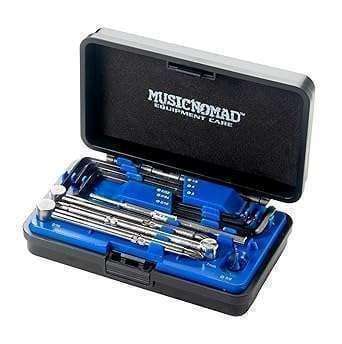
You'll Need:
- 📏 Straightedge (even a metal ruler works)
- 📏 Feeler gauge or credit card (0.010" thin object)
- 🔩 Small screwdriver (Phillips or flathead)
- 📸 Phone camera (to document before/after)
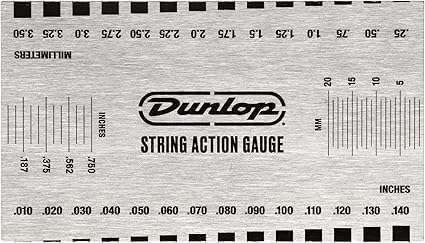
 Buy on Amazon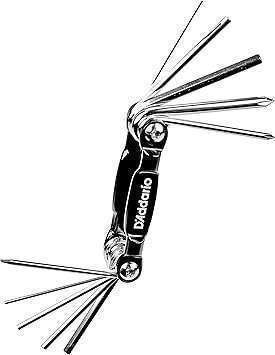
How to Measure Action Height
Action is measured at the 12th fret (the fret in the middle of your guitar).
- Fret the guitar at the 1st fret (hold down the high E string at fret 1)
- Place your straightedge across frets 12-21 at the treble (high E) side
- Measure the gap between the string and the fret with a feeler gauge
- That's your action height on the treble side
Repeat on the bass side (low E string).
Example Results:
- Factory spec: 1.8mm treble / 2.2mm bass
- Your guitar: 3.5mm treble / 3.8mm bass
- Conclusion: Action is too high, needs lowering
How to Measure Pickup Height
- Place straightedge across both pickup poles (for single-coil)
- Measure distance from pole to string when string is fretted at 22nd fret
- Note the measurements for both bridge and neck pickups
Typical ranges:
- Bridge: 2.2mm - 2.6mm (higher = more output, hotter tone)
- Neck: 2.4mm - 3.0mm (usually higher than bridge for balanced output)
How to Check Neck Relief
- Fret the high E string at the 1st fret
- Fret the high E string at the 21st (or last) fret
- Place feeler gauge at the 7th fret
- The gap you see = neck relief
Factory specs: ~0.010" (very slight bow)
- Too much bow: String buzz (especially at lower frets)
- Too straight/back-bowed: String buzz at higher frets, dead tone
Why Compare Your Specs to Factory?
Reason 1: You're Hearing Dead Spots or Buzz
Scenario: "My Stratocaster has buzz on the 7th fret"
What factory comparison tells you:
- Check if action is lower than factory
- If yes → raise the bridge saddle
- If no → check neck relief (might need truss rod adjustment)
Without factory specs, you're just guessing.
Reason 2: You Changed Strings
Scenario: "I switched from 10-46 to 11-49 strings"
What you need to do:
- Factory spec: 1.8mm action with 10-46 strings
- After string change: Re-check action (it may have increased)
- May need slight truss rod adjustment to maintain playability
- Intonation will need re-checking
Factory specs with the old gauge don't apply to the new gauge. You need to adjust.
Reason 3: Your Guitar Sounds Dull or Weak
Scenario: "This pickup sounds thin compared to YouTube reviews"
What factory comparison tells you:
- Pickup height is too low (not enough output)
- Solution: Increase pickup height to factory spec
- This usually takes 30 seconds and makes a huge difference
Many people blame pickups when they should adjust the height first.
Reason 4: You're Selling or Trading In
Scenario: You're trading a guitar to a shop. The tech inspects it and says:
- "This guitar is set up poorly. We'd need $200 in work to sell it."
What you could have done:
- Compare your specs to factory specs
- Adjust action back to factory (free 5-minute job)
- Adjust pickups to factory height (free 2-minute job)
- Sell/trade for full value instead of discount
Factory-spec condition = higher resale value.
When To Follow Factory Specs vs. Deviate
✅ FOLLOW Factory Specs If:
- You're new to setups — Factory specs are proven to work
- You're troubleshooting issues — Start with factory, then adjust
- You're selling/trading — Buyers expect factory specs
- You prefer "normal" playability — Most people do
- You don't know what you like yet — Factory is a great baseline
❌ DEVIATE From Factory If:
Example 1: You Prefer Lower Action
- Factory: 1.8mm treble / 2.2mm bass
- Your preference: 1.5mm treble / 1.8mm bass
- Why: Less resistance, faster playing
- Tradeoff: Slightly higher buzz risk, needs perfect neck relief
Example 2: You Prefer Higher Pickups for More Output
- Factory bridge: 2.4mm
- Your preference: 2.8mm (higher)
- Why: More output, bigger tone, better sustain
- Tradeoff: May lose some treble clarity
Example 3: You Use Heavier Strings
- Factory spec assumes 10-46
- You use 11-49 or 12-54
- Need to: Adjust action and intonation slightly higher
- Why: Heavier strings require more tension to stay in tune
Example 4: You're Fingerstyle vs. Flatpick
- Fingerstyle: Often prefer higher action (more clearance, resonance)
- Flatpick: Often prefer lower action (less resistance)
- Factory spec: Splits the difference
Your Setup Journey: A Real Example
Let's follow Tom's setup process:
Starting Point
Tom just bought a 2022 Mexican Strat. It plays okay but feels "off."
Step 1: Measure Current Specs
- Action: 3.2mm treble / 3.6mm bass (too high!)
- Pickup height (bridge): 2.8mm
- Neck relief: 0.015" (too much bow)
Step 2: Check Factory Specs
Using Factory Specs Lookup Tool:
- Factory action: 1.8mm treble / 2.2mm bass
- Factory pickup (bridge): 2.4mm
- Factory neck relief: 0.010"
Step 3: Identify Problems
Current vs Factory Comparison:
Action:         3.2/3.6 vs 1.8/2.2 → TOO HIGH
Pickup:         2.8 vs 2.4 → TOO HIGH
Neck relief:    0.015" vs 0.010" → TOO MUCH BOW
Tom's guitar came from the dealer poorly set up!
Step 4: Make Adjustments
First: Back off truss rod slightly
- Target: 0.010" relief instead of 0.015"
- This will help with the overall action
Second: Lower the bridge saddle
- Target: 1.8mm treble / 2.2mm bass
- Takes 10 minutes to file saddle correctly
Third: Adjust pickup height
- Lower bridge pickup from 2.8mm to 2.4mm
- This takes 30 seconds (just unscrew the springs)
Step 5: Remeasure and Verify
- Action: Now 1.8mm / 2.2mm ✅
- Pickup: Now 2.4mm ✅
- Neck relief: Now 0.010" ✅
Result
Before: Stiff to play, dull tone, poor intonation After: Smooth playability, clear tone, perfect intonation Time spent: 45 minutes Cost: $0 Value added: $200+ (resale value, personal enjoyment)
The Factory Specs Lookup Tool
We built this to make the process easier.
How It Works
- Go to Factory Specs Lookup
- Search your guitar model (e.g., "Fender Stratocaster 2022")
- Get the factory specifications instantly
- Compare to your current specs using our measurement guide
- Adjust as needed
The tool has specs for:
- ✅ All modern Fender models (2010-present)
- ✅ Mexican (MIM) Fenders
- ✅ Squier guitars
- ✅ Select vintage models
- ✅ Gibson, PRS, Ibanez (expanding)
Common Questions About Factory Specs
"Do all Stratocasters have the same factory specs?"
No. Different years and product lines vary:
- American vs. Mexican: American has slightly lower action
- 2010 vs. 2025: Specifications have evolved
- Vintage vs. Reissue: Different specs, different eras
Use our tool to find the specific specs for your model/year.
"Can I damage my guitar by adjusting specs?"
Unlikely. Factory specs are safe ranges. However:
- Truss rod: Over-tightening can crack the neck (rare but serious)
- Saddle filing: Mistakes are permanent
- Nut filing: Professional work recommended
- Pickups: Safe to adjust heights
Start with pickup height adjustments (safest). Work with a tech for saddle/nut work if unsure.
"Is factory spec the best setup?"
Factory spec is the starting point, not gospel. Many professionals deviate:
- Lower action for shredding
- Higher pickups for more output
- Heavier strings for tone
- Custom neck relief preferences
Factory is the baseline. Adjust from there based on your preference.
"My specs differ from factory by a little bit. Should I fix it?"
If your guitar plays well and sounds good, don't fix it. The small differences (±0.2mm) are negligible.
Fix it if:
- You're hearing buzz
- You're getting dead spots
- You're having intonation issues
- You're selling the guitar (reset to factory for maximum value)
"What if I don't have the exact factory specs for my vintage guitar?"
Use the closest available:
- Can't find 1974 Tele specs? Use 1970s Telecaster specs
- Can't find MIM 1996? Use mid-90s MIM specs
- Use it as a guideline, not a law
Vintage guitars often benefited from slight adjustments anyway. Factory spec was the starting point; decades of playing and wear changed things.
Action Plan: Compare Your Guitar Today
15-Minute Task
-
Measure your current specs (use our measurement guide above)
- Action height at 12th fret
- Pickup heights
- Neck relief
-
Look up factory specs using Factory Specs Lookup
-
Compare
- Make a simple table (Current vs. Factory)
- Identify gaps
-
Decide whether to adjust
- Playing well? → Maybe leave it
- Buzz or dead spots? → Fix it
- Selling? → Reset to factory
-
Add to your Garage — Save these measurements in My Guitar Garage
Pro Resources
Tools We've Built
- Factory Specs Lookup Tool — Instant factory specs for any model
- Guitar Garage — Track and store your specs
- Serial Number Lookup — Find your guitar's year and origin
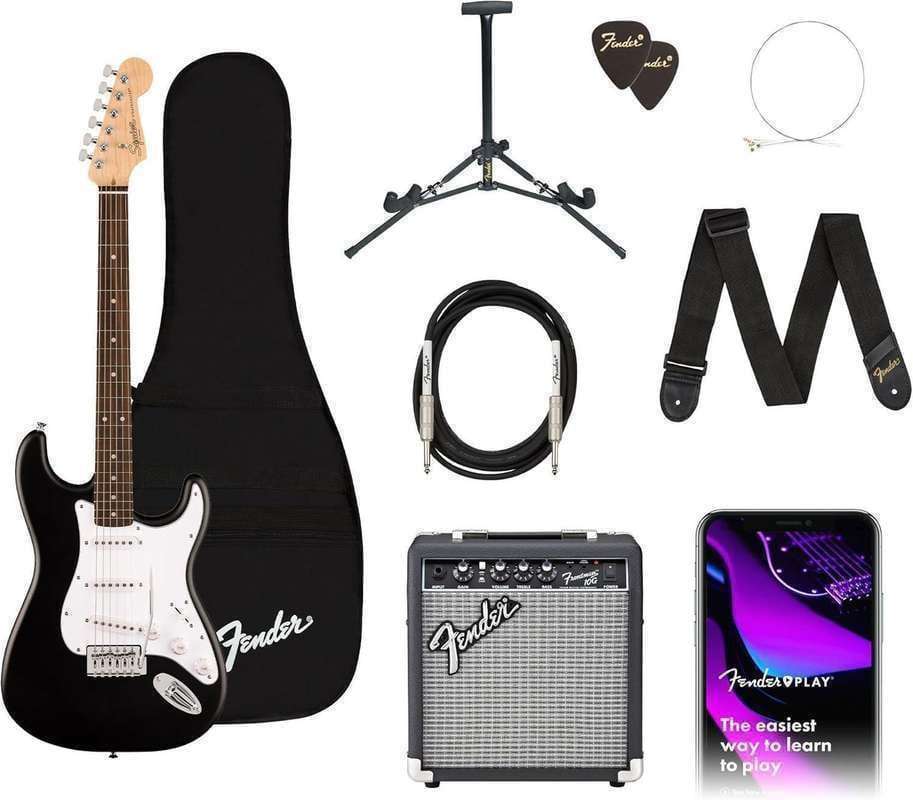
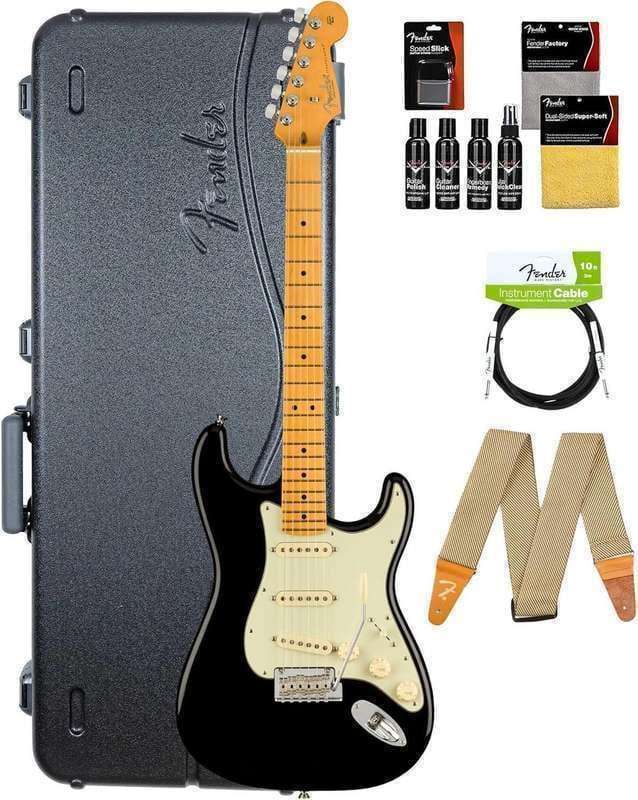
Upgrade Your Setup with Premium Guitars
Ready to buy a new guitar to compare specs with? Here are excellent options in every price range:
Related Guides
- Stratocaster Setup Guide — Detailed walkthrough
- Telecaster Setup Guide — Tele-specific tips
- Truss Rod Adjustment — Advanced setup
- Action Height Guide — Deep dive into action
Conclusion
Factory specs aren't a rigid requirement—they're a proven baseline.
By understanding and comparing factory specs to your current setup, you gain:
- ✅ Instant diagnosis of setup issues
- ✅ Confidence in making adjustments
- ✅ Better resale value (when set to factory)
- ✅ Better performance tailored to your preferences
Start by measuring your specs today, looking them up, and comparing. You might discover a simple 30-second adjustment that transforms how your guitar plays.
Ready to check your specs? Use the Factory Specs Lookup Tool →