Fender Jaguar Wiring Guide: Volume & Tone Pot Mods
Complete guide to Jaguar volume and tone pot mods. Learn how the rhythm/lead circuits work, install treble bleed caps, swap pot values, and wire up a Jaguar circuit mod from scratch.
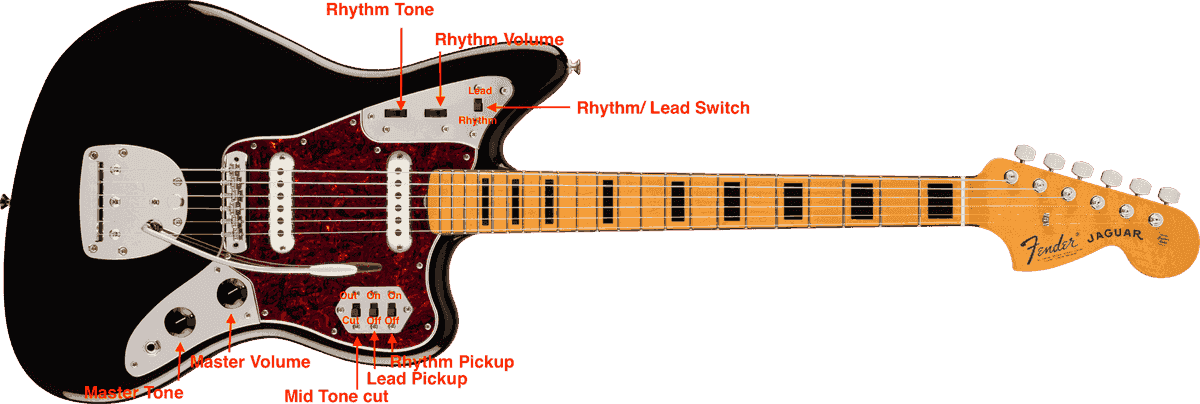
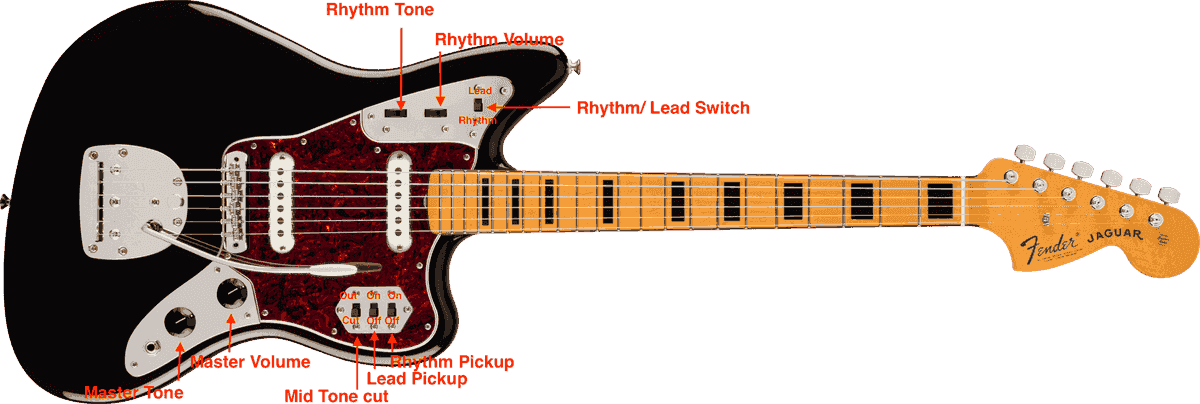 Figure 1: Jaguar wiring diagram showing the dual-circuit architecture with rhythm and lead circuits.
Introduction: Why Modify Your Jaguar's Wiring?
The Fender Jaguar's wiring is at once its greatest strength and its most common failure point. Those chrome plates and slider switches look imposing, but the stock electronics often hold back what the pickups and body can really do. Whether you're dealing with muddy volume rolls, brittle highs, or a rhythm circuit that never sees use because it sounds too dark, wiring modifications can transform your Jaguar from a quirky surf machine into a genuinely versatile instrument.
This guide covers everything from basic pot value swaps to installing treble bleed capacitors and upgrading the rhythm circuit. All modifications are reversible and require no permanent routing or drilling — everything plugs into the existing wiring harness.
📄 Want every Jaguar spec on one card? The Fender Setup Cheat Sheet includes pickup height specs, pot values, and capacitor codes for every major Jaguar model — printable and pocket-sized.
Part 1: How Jaguar Wiring Works — Lead vs. Rhythm Circuits
Before touching a soldering iron, you need to understand what you're modifying. The Jaguar operates on two completely independent circuits, each with its own potentiometer set.
The Lead Circuit
The lead circuit is your standard operating mode. Controlled by the lower chrome plate, it uses:
- 1Meg (1MΩ) audio taper potentiometers for both volume and tone
- 0.003µF (3nF) ceramic disc capacitor on the Mid Tone Cut (strangle) switch
- Three slider switches selecting pickups and activating the high-pass filter
The 1Meg pot value is the key thing to understand. Compared to a Stratocaster's 250k pots, the Jaguar's pots let through significantly more high frequencies. That's why Jaguars sound bright and aggressive — but also why they can get harsh when you roll the tone knob down partway. You lose high frequencies not because the pickup output drops, but because the pot's resistance to high frequencies drops as you turn it.
The Rhythm Circuit
The rhythm circuit lives on the upper horn and activates only the neck pickup. It uses:
- 50k potentiometers (vintage) or 1Meg (some later models) for the roller knobs
- A different capacitor value on the tone pot — typically 0.022µF to 0.047µF
- A separate signal path that completely bypasses the lower plate controls
The rhythm circuit's higher capacitance value is what makes it sound dark and warm. For jazz comping or running into a fuzz pedal, this is beautiful. For everything else, many players find it too dark to be useful.
 Buy on Amazon
Part 2: The Volume Pot Problem — And How to Fix It
Why Volume Rolls Sound Muddy on a Jaguar
Potentiometers work by acting as a variable resistor between the signal and ground. As you roll the volume down, you're increasing the resistance to ground, which progressively shunts more of your signal into the ground path. The problem is that this doesn't just reduce overall loudness — it disproportionately reduces high frequencies. Your guitar sounds like it's being filtered through a pillow.
This is especially noticeable on a Jaguar because the 1Meg pots have very little resistance to high frequencies at the start. The natural brightness of the pickups masks the issue at full volume, but as soon as you roll back to 7 or 8, the tone collapses.
The fix is a treble bleed capacitor (sometimes called a "volume bump" or "high-frequency compensation").
How a Treble Bleed Works
A treble bleed creates an alternative path for high frequencies to bypass the volume pot's ground shunt. Think of it as a high-pass filter running in parallel with the volume control. At full volume, the capacitor's effect is minimal. As you roll back, the capacitor increasingly routes high frequencies directly to the output, compensating for what the pot is removing.
The result: your volume rolls are smooth, natural, and retain clarity at any level.
Installing a Treble Bleed on Your Jaguar
What you need:
- 470pF capacitor (film or ceramic, any voltage rating above 50V)
- 100k resistor (1/4 watt, metal film preferred)
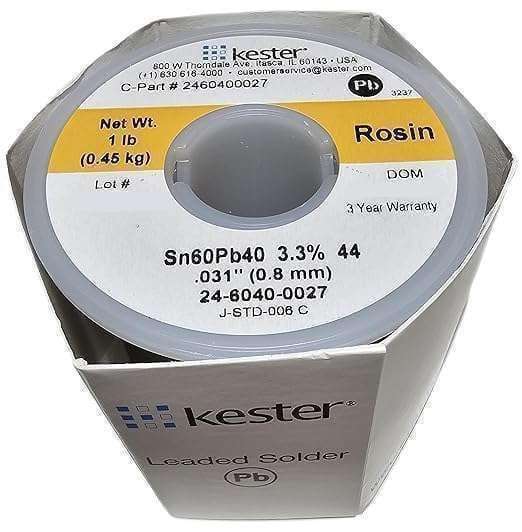
- Rosin core solder
The circuit: Connect the resistor and capacitor in series, then attach the series combination across the input and output terminals of the volume pot. This is called a series treble bleed — the resistor limits lows from bleeding through, while the capacitor passes highs.
The two terminals you need are the wiper (middle terminal) and the input terminal (the one connected to the pickup hot wire).
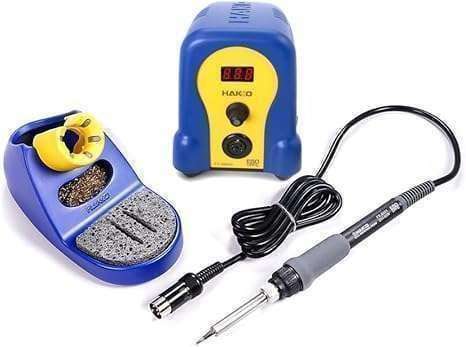
⚠️ Important: Make sure your soldering iron is properly grounded. Static discharge can damage the pot's carbon track. If your iron isn't grounded, touch the tip to the metal part of your guitar's hardware briefly before working near components.
Steps:
- Remove the pickguard or control plate to access the pots
- Identify the volume pot (it will have a wire from the pickup connected to one of the outer terminals)
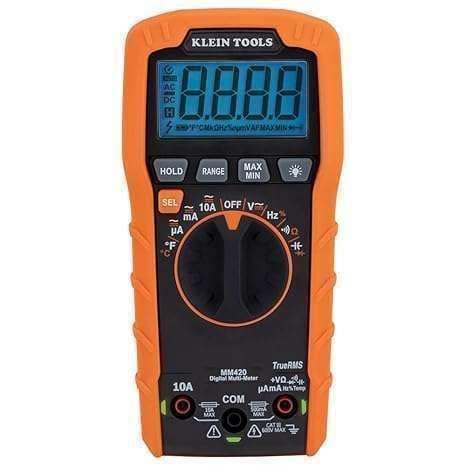
- Set your multimeter to continuity mode and identify which terminal is which
- Solder one leg of the capacitor to the input terminal
- Solder one leg of the 100k resistor to the other leg of the capacitor
- Solder the free end of the resistor to the wiper (middle) terminal
- Insulate all connections with heat-shrink tubing or electrical tape
- Reassemble and test
Part 3: Pot Value Swaps — Getting the Best of Both Worlds
What Pot Value Actually Does
The pot value (measured in ohms, e.g., 250k, 500k, 1Meg) determines how much resistance the pot provides to the signal at maximum rotation. A lower value means more high frequencies are shunted to ground before they reach the output — resulting in a darker tone. A higher value means more high frequencies pass through — resulting in a brighter tone.
| Pot Value | Effect on Tone | Best For |
|---|---|---|
| 250k | Dark, warm | Jazz, blues, humbucker guitars |
| 500k | Balanced, slightly bright | Versatile, all-rounder |
| 1Meg | Very bright, aggressive | Bright single coils, surf |
Why Jaguar uses 1Meg: The Jaguar was designed for bright, cutting tones that could pierce through a dense surf mix. The 1Meg pots were a deliberate choice to maximize the pickup's top-end shimmer. However, the trade-off is that the tone gets harsh when the volume is rolled back even slightly.
Option 1: Replace 1Meg with 500k
The most common swap for players who find their Jaguar too harsh is dropping from 1Meg to 500k. This reduces brightness just enough to tame the harshness while maintaining the Jaguar's characteristic sparkle. The tone remains distinctly "Jaguar" rather than sounding like a Stratocaster.
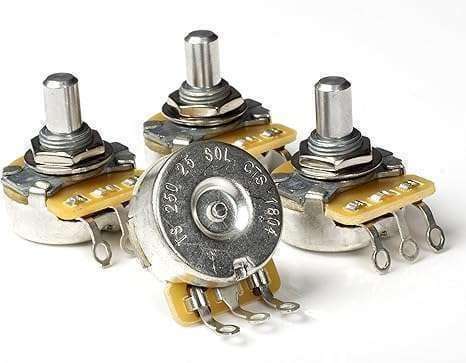
What to buy: CTS audio taper potentiometers, 500k, single-shaft or split-shaft depending on your knob preference. The CTS 500k Audio Pot (4 Pack) gives you spares for the tone pot too.
Option 2: Push-Pull Pot for Dual Personality
The ultimate solution is installing a push-pull potentiometer on either the volume or tone pot. This lets you switch between two pot values on the fly — 250k for warmth and 1Meg for brightness, all from the same control.
The wiring involves a DPDT (double-pole double-throw) switch built into the pot. When the push-pull is up, you get 1Meg resistance. When pulled down, a parallel resistor drops the effective value to 250k.
This is a more advanced mod that requires careful wiring, but the result is a Jaguar that can cover everything from warm jazz tones to cutting surf sparkle without changing guitars.
Part 4: Rhythm Circuit Upgrades
The Dark Side — Making the Rhythm Circuit Usable
The rhythm circuit is brilliant for jazz comping, but many players find 50k pots combined with the standard tone capacitor make it too dark for anything practical. If you've never used your rhythm circuit because it sounds like a blanket over your neck pickup, here's how to fix it.
Upgrade 1: Swap the Rhythm Tone Capacitor
The capacitor in the tone circuit determines how dark the tone knob can go. Stock Jaguar rhythm circuits typically use a 0.022µF or 0.047µF ceramic disc capacitor. Replacing this with a quality film capacitor in the 0.015µF to 0.033µF range opens up the high end considerably while retaining the warm character.
For the most natural vintage tone, consider a paper-in-oil (PIO) capacitor. These were used in the original 1960s Jaguars and have a warm, complex character that modern ceramics can't replicate. Values between 0.022µF and 0.033µF work well.
⚠️ Watch the voltage rating: Any capacitor in a guitar circuit sees very low signal voltage (less than 1V). A 100V ceramic disc is fine, but paper-in-oil caps often come in lower voltage ratings — anything above 25V is sufficient.
Upgrade 2: Add a Bright Switch to the Rhythm Circuit
A more drastic improvement is installing a small slide switch or push-button that adds a parallel capacitor to the rhythm circuit, effectively brightening it on demand. When the switch is off, the rhythm circuit sounds standard. When engaged, the added capacitor passes more high frequencies, making the rhythm circuit sound almost like the lead circuit.
This is an excellent project if you want to use the rhythm circuit for clean rhythm playing without switching to the lead circuit mid-song.
Part 5: Full Wiring Harness — Building a Mod Platform
Why Build a New Harness
If your Jaguar has the original wiring from the 1960s or 1970s, the chances are high that the potentiometers are worn, the capacitors have drifted in value, and the cloth pushback wire is crumbling. Building a new harness from scratch gives you a clean foundation to work from and lets you implement every upgrade in one session.
Recommended Component List
| Component | Recommendation | Why |
|---|---|---|
| Pots | CTS 500k or 1Meg audio taper | Genuine US manufacture, reliable shaft sizes |
| Capacitors | Orange drop or PIO for tone | Stable value, vintage tone |
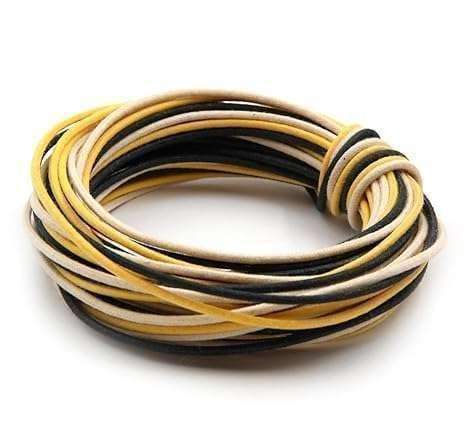
| Wire | Gavitt pushback cloth wire | Authentic look, reliable |
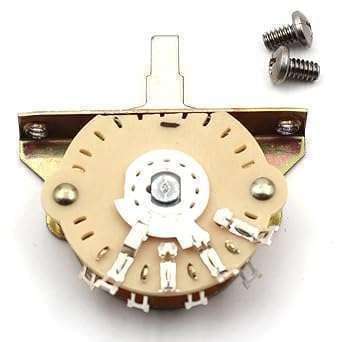
| Switches | Oak Grigsby 3-way or 4-way | Durable, positive click |
| Input jack | Switchcraft 1/4" mono | Standard, replaceable |
Wire Routing Notes
When building or modifying your harness, keep the following routing principles in mind:
- Keep signal wires away from ground planes — routing the hot wire from the pickup too close to the back of the control plate can introduce hum
- Use twisted pairs for the pickup leads — this reduces RF interference
- Keep ground wires short and direct — a star grounding configuration where all grounds connect to a single point on the back of a pot is cleaner than daisy-chaining ground connections
- Avoid crossing the signal wire over the output jack ground — this can create a loop that picks up 60Hz hum
Part 6: Pickup Height — Wiring's Companion
Wiring modifications and pickup height work hand in hand. After upgrading your pots, you'll want to revisit your pickup heights to see if the tone balance has shifted.
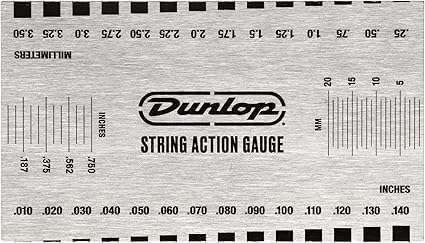
Jaguar Pickup Height Specs (measured from the top of the pole piece to the bottom of the string, with the string pressed at the last fret):
| Pickup | Bass Side | Treble Side | Why |
|---|---|---|---|
| Neck | 2.2mm | 1.8mm | Lower than bridge to balance output |
| Bridge | 2.0mm | 1.6mm | Bridge pickups are typically hotter and sit closer |
These are starting points. After your wiring mod, listen carefully to whether the neck pickup sounds too bright or the bridge sounds too weak relative to each other. A small adjustment of 0.2mm per side can make a significant difference.
For the full specification and a printable reference card, see our Jaguar Pickup Height Guide and the Fender Setup Cheat Sheet.
Part 7: Common Wiring Mistakes and How to Avoid Them
Mistake 1: Cold Solder Joints
A cold solder joint looks dull and grainy rather than shiny and smooth. It creates an intermittent connection that causes crackling, dropouts, or complete signal loss. Always:
- Heat both the component lead and the terminal pad simultaneously before applying solder
- Use a soldering iron tip that's properly tinned
- Apply enough solder to make a complete fillet but not so much that it blobs
Mistake 2: Forgetting to Tin Wire Ends
Bare stranded wire doesn't take solder well. Always tin the wire end before soldering it to a terminal — apply a small amount of solder to the stripped end first, let it cool, then flux and apply to the terminal.
Mistake 3: Installing Capacitors with the Wrong Polarity
Film capacitors and ceramic discs are non-polar — they can be installed in either direction. However, electrolytic capacitors (sometimes used for bass cut circuits) are polar and will explode if installed backwards. If your circuit uses electrolytics, the negative lead is always marked with a stripe.
Mistake 4: Crossing Signal and Ground Wires
If your guitar develops a 60Hz hum after a wiring mod, you likely routed a hot signal wire too close to a ground wire or the output jack sleeve connection. Re-route the wires so the pickup hot wire and output hot wire don't run parallel to the ground wire for more than a few centimeters.
Frequently Asked Questions
What pot value do vintage Jaguars use?
Vintage Jaguar lead circuits use 1Meg (1MΩ) audio taper potentiometers for both volume and tone. The rhythm circuit uses 50k potentiometers in vintage models, though some later variants used 1Meg. This difference is the main reason the rhythm circuit sounds so much darker.
How do I stop my Jaguar volume pot from sounding muddy?
Install a treble bleed capacitor (470pF) in series with a 100k resistor, connected across the input and wiper terminals of the volume pot. This preserves high frequencies as you roll back the volume, keeping the tone clear and natural at any level. Alternatively, consider swapping 1Meg pots for 500k pots.
What does a treble bleed capacitor do?
A treble bleed capacitor creates an alternative high-frequency path that bypasses the volume pot's ground shunt. As you roll back the volume, the capacitor routes high frequencies directly to the output, compensating for the natural brightness loss that occurs with standard volume pot operation.
Can I use the rhythm circuit and lead circuit simultaneously?
No. The Jaguar's circuit design means only one circuit can be active at a time. The upper horn switch selects which circuit is engaged. When the rhythm circuit is active, the lower plate controls are completely bypassed.
What capacitor value should I use for Jaguar tone mods?
For a warmer rhythm circuit tone, try a 0.022µF paper-in-oil capacitor. For brighter, more open rhythm tones, a 0.015µF film capacitor works well. For the lead circuit Mid Tone Cut (strangle) switch, the stock 0.003µF is correct and rarely needs changing.
Are Jaguar pots different from Strat pots?
Jaguar pots use the same housing size and shaft dimensions as Stratocaster pots (shaft diameter, spline type, and thread pitch are all identical). The key difference is the electrical value — Jaguar leads use 1Meg vs Strat's 250k — and the fact that the rhythm circuit uses independent potentiometers on the upper horn.
How often should I clean Jaguar potentiometers?
Clean Jaguar pots every 6-12 months if the guitar is played regularly. Use a contact cleaner spray (like DeoxIT) applied to the potentiometer's carbon track through the back of the pot housing. Work the pot through its full rotation several times to distribute the cleaner evenly. This prevents scratchiness and extends pot life significantly.
Is the Jaguar wiring harness easy to replace entirely?
Yes. The Jaguar's harness is one of the easiest to replace because all connections are accessible from the front of the guitar (no PCB to desolder). With a pre-built harness and good soldering technique, a complete rewire takes 2-3 hours. Using pre-made wiring kits from providers like ToneShaper can significantly speed up the process.
Does a wiring mod affect the tremolo's return to pitch?
No. The tremolo system is completely mechanical and doesn't interact electrically with the control circuit. However, if your wiring mod involves removing the control plate entirely, be careful not to disturb the ground wire that connects the bridge ground to the circuit — losing this connection will introduce hum.
What's the best pot value for a Jaguar with heavy distortion?
If you're playing heavy distortion, consider swapping to 250k pots rather than keeping 1Meg. The extra brightness from 1Meg pots can make distortion sound harsh and fizzy. A darker pot value keeps the distorted tone focused and punchy rather than thin and scratchy.
Related Posts
- Jaguar Controls Explained — Master every switch and knob on your Jaguar
- Ultimate Jaguar Setup Guide — Full specs for string height, pickup height, and intonation
- Jaguar Tremolo Setup Guide — Lock, spring tension, and return-to-pitch tuning
- Best Strings for Jaguar — String gauge recommendations for stability and tone