Best Home Practice Amp: 6 Picks for Bedroom Tone
Find the best home practice amp for quiet playing and bedroom tone. 6 top amps compared — headphone models, power-scaling combos, and effects for every budget.
Best Home Practice Amp: Quiet Bedroom Tone Without Sacrificing Sound
Let's be honest: the best home practice amp isn't the loudest one on the shelf. It's the one that sounds genuinely great at the volumes you can actually use — 2 a.m., neighbours on the other side of the wall, a partner trying to sleep. If your amp only starts to sing when the neighbours start to knock, you're not practicing, you're negotiating.
The truth is that most players don't need a 40-watt headroom monster for daily practice. They need an amp that delivers good tone at conversational volume, plugs into headphones for silent sessions, and doesn't fight you every time you turn it on. The good news: there are more great options for quiet practice today than ever before, from a $105 headphone amp that fits in a gig bag to power-scaled tube combos that break up beautifully at low volume.
In this guide I've compared the six best home practice amps on the market in 2026, sorted by what they're actually best at, with the exact features that matter for bedroom players, honest pros and cons, and a comparison table so you can shortlist fast. Whether you're a beginner on a budget or a pro who needs a reliable silent rig, there's a pick here for you.
What Makes a Great Home Practice Amp
Before we get to the recommendations, it's worth thinking about what separates a genuinely good practice amp from one that sounds great only in a shop. The features below matter more at home than they do on a stage:
Headphone Output (Non-Negotiable)
Silent practice is the single biggest reason to pick a certain amp for home use. A good headphone output should sound like the amp — not a muffled afterthought. Digital modeling amps like the BOSS Katana and Fender Mustang sound genuinely excellent through headphones because the cab simulation is built in.
Power Scaling or Low-Wattage Modes
This is the magic that lets a tube amp break up at bedroom volume. A switch that drops the amp to 0.5W or 1W lets you push the power section into natural overdrive without waking anyone. Modeling amps go further with full wattage control — the Katana drops from 50W all the way to 0.5W.
Audible at Low Volume, Room to Grow
A true practice amp rewards clean, defined tone at modest volume and still has something left when you rehearse with a drummer. If an amp only sounds good loud, it's a stage amp you're using wrong.
Built-In Effects Are a Bonus
At home you probably don't want a pedalboard taking over the coffee table. Amps with onboard reverb, delay, modulation, and a decent drive channel keep your floor tidy while still letting you jam.
Other things matter too — size, weight, takeaways for the back of a car, and whether the controls are actually easy to use at midnight. But those four are the ones that define a home amp.
The 6 Best Home Practice Amps
Below are my picks, ranked by what they're best at for home practice. Every amp here has been tested at the volumes that matter — quiet enough for an apartment, loud enough to feel real. Want the shortlist? Start here:
Top 3 Home Practice Picks
 Buy on Amazon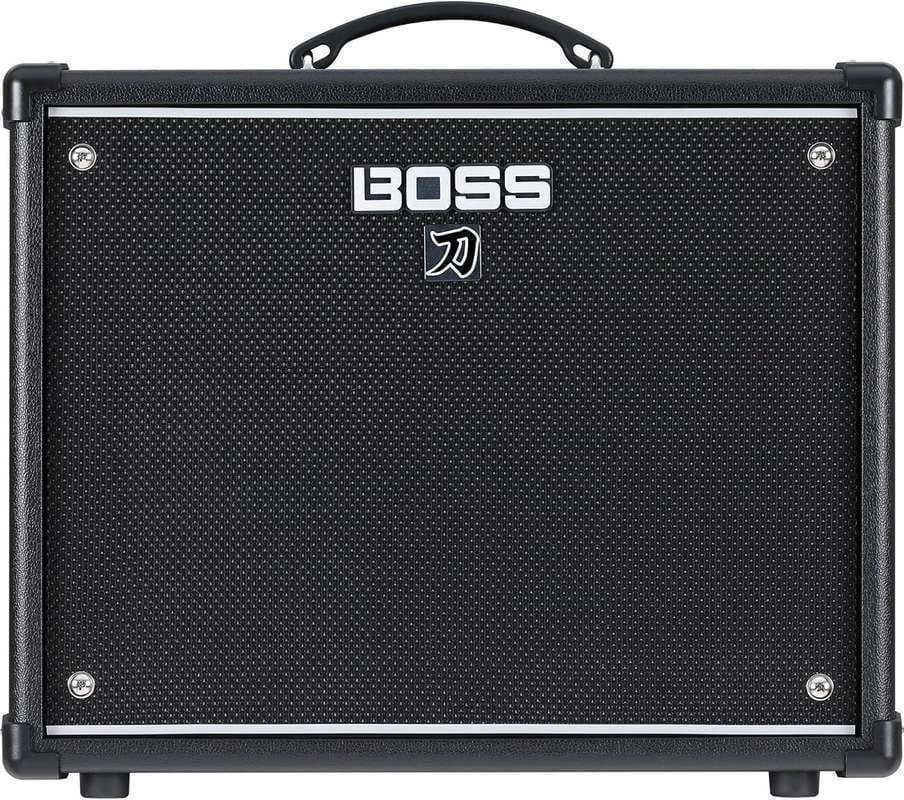
1. BOSS Katana-50 Gen 3 — Best Overall Home Practice Amp
The Katana-50 Gen 3 is the amp I'd recommend to almost anyone who wants a proper practice amp that doesn't compromise. BOSS's Katana line has been a genre-defining budget modeling amp for years, and the Gen 3 polish makes it the best home practice amp for most players.
- 5 amp "character" voices — clean, crunch, lead, brown, and acoustic — each switchable at the panel
- 0.5W / 25W / 50W output select — drop to 0.5W for quiet practice, or open it up when you're alone
- Stereo headphone output with cab-simulated tones that sound genuinely good through phones
- 60+ onboard effects via the BOSS Tone Studio app, or the essential knobs on the panel
- Power Amp In jack so it grows with you — use it as a pedal platform or session rig later
It also has a built-in tuner, a 12" speaker that sounds fuller than the price suggests, and it's loud enough to keep up with a drummer when you finally graduate from the bedroom.
Best for: Players who want one amp that covers quiet practice now and gigging later. Power: 50W (switchable to 25W / 0.5W) · Speaker: 12" · Headphone out: Stereo, cab-simulated
Get the BOSS Katana-50 Gen 3 — The best overall home practice amp
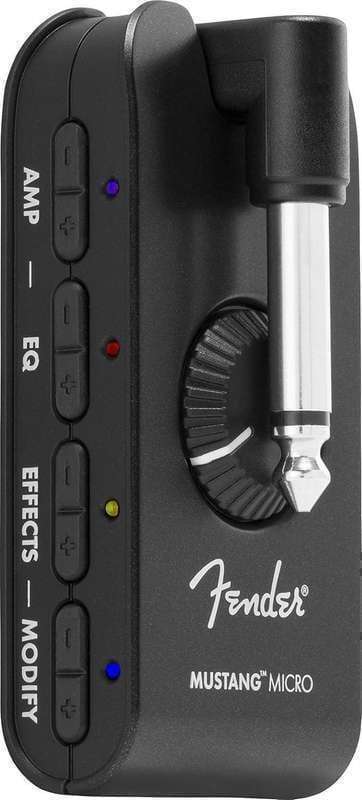
2. Fender Mustang Micro — Best for Silent & Travel Practice
The Mustang Micro is a headphone amplifier the size of a matchbox that plugs straight into your guitar's jack. No speaker, no cables beyond your headphones, no noise in the room. If "quiet" is your absolute #1 priority — or you practice on the couch and in hotel rooms — this is the winner.
- 12 amp models + 12 effects stacked on a dead-simple three-knob interface
- Built-in tuner and reverb — genuinely useful, not a spec-sheet checkbox
- Bluetooth for streaming backing tracks from your phone into the mix
- Months of battery life from a single charge, and it folds into a gig bag pocket
- Great through headphones — the cab sim makes your guitar sound huge in your ears
The only real trade-offs: it's headphones-only (so it can't fill a room on its own), and the small buttons aren't great while wearing thick glasses — but for pure silent practice nothing beats it for the price.
Best for: Apartment dwellers, travellers, and parents of sleeping toddlers. Power: Headphone amp (no speaker) · Speaker: None · Headphone out: Yes, mono with effects
Get the Fender Mustang Micro — The best silent practice companion
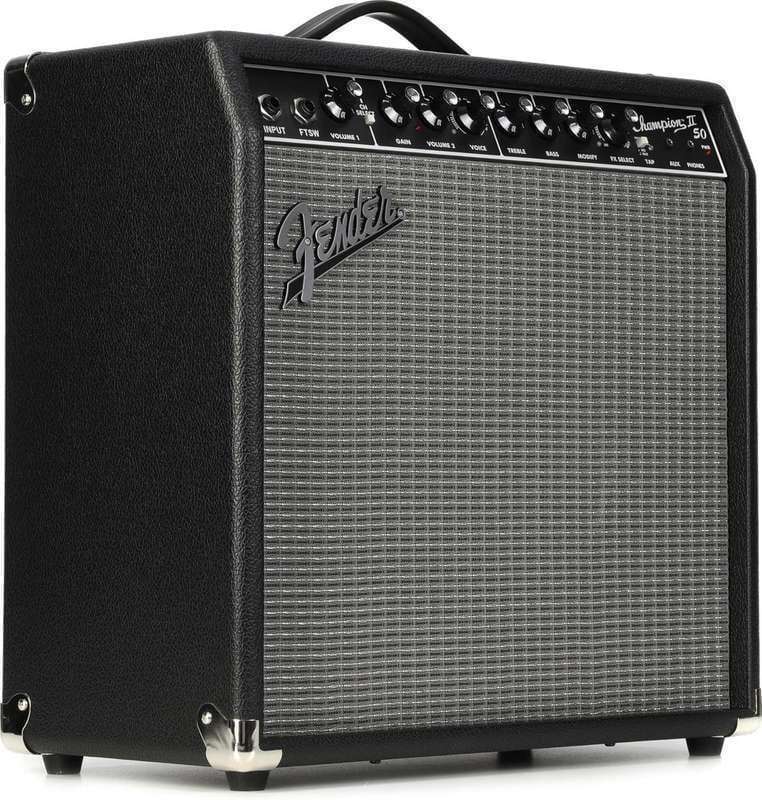
3. Fender Champion II 50 — Best Budget Combo Amp
If you want a proper combo amp with an actual speaker — at the bedroom level — the Champion II 50 is the smart money pick. Fender's Champion line nails the "clean American" tone and gives you a surprising effects suite for the price.
- Real 12" speaker that sounds room-filling, not tinny
- Built-in effects — chorus, flanger, delay, reverb, and a few drive models
- Dual-channel with a solid drive voice, not just a clean-and-loud affair
- Simple, tactile controls — no menu-diving, ideal for beginners
- Headphone out for late-night sessions
It doesn't have the deep modeling engine of the Katana, and there's no power-scaling switch, so you rely on the master volume for quiet play (which it handles fine). But for its price, the Champion II gives you a real, honest Fender combo you'll happily own for years.
Best for: Beginners and budget buyers who want a genuine 12" combo. Power: 50W · Speaker: 12" · Headphone out: Yes
Get the Fender Champion II 50 — The best value 12" combo for home
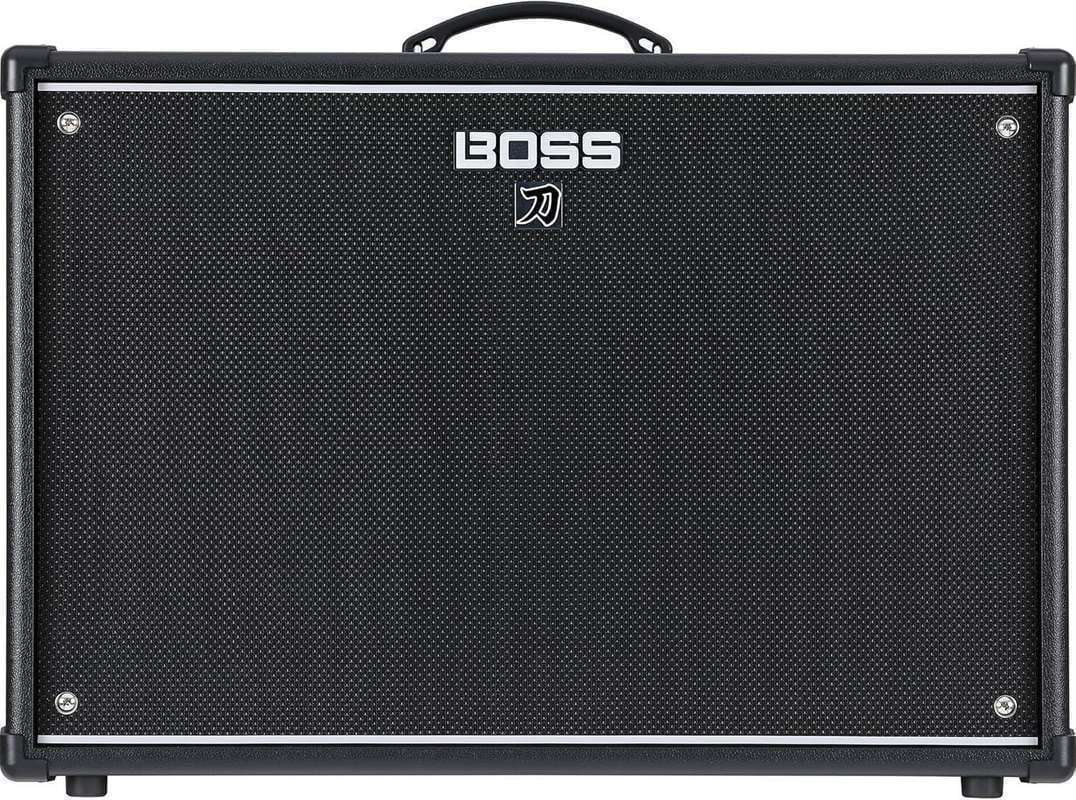
4. BOSS Katana-100/212 — Best Amp That Also Lets You Gig
The Katana-100/212 is the big brother of pick #1, and it earns its place here for a specific reason: it's the home practice amp you can carry to a gig without packing a second rig. The extra headroom and the 2×12 speaker give it a fuller voice at both ends of the volume range.
- 100W with the same 0.5W / 25W / 100W power scaling — dead quiet at home, stage-ready at the push of a button
- Two 12" speakers for a bigger, more open tone
- Deeper effects suite with more user presets and a live-effects workflow
- Stereo expand and line-out options for recording and midi control
- Reads saved tones from your Katana-50, so it grows with you
If you already have a Katana-50, this is a natural upgrade; if you're buying one amp that does quiet-and-loud, this is arguably the better buy. The trade-off is size and price.
Best for: Players who also gig, record, or rehearse with a band. Power: 100W (switchable to 25W / 0.5W) · Speaker: 2×12" · Headphone out: Stereo
Get the BOSS Katana-100/212 — The home amp that also gigs
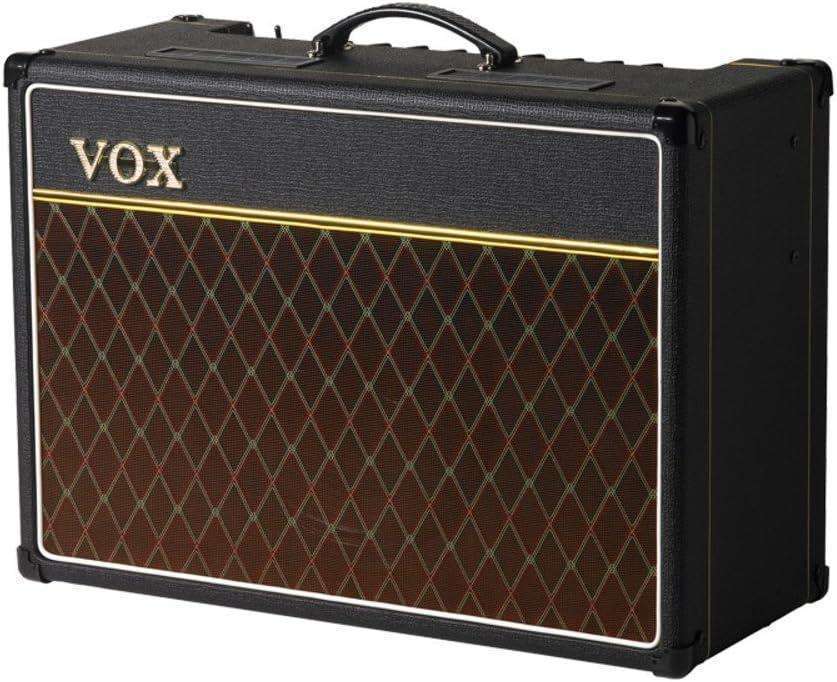
5. Vox AC15C1 — Best Tube Amp for Home
Yes, a tube amp can work at home — if it has the right voicing. The Vox AC15 is the classic British chime, and in 15W form it's the tube amp that most players actually manage to use in a house. It's louder than you'll need, but its character is usable at low-to-medium volume in ways a big 40W headroom amp isn't.
- All-tube signal path — the legendary Vox top-boost chime that pedals love
- 15W with a single 12" Celestion Greenback — punchy, present, and articulate
- Effect loop and spring reverb on the classic plate
- Response and dynamics that make practice feel like a real session
- Takes pedals beautifully, so it's a long-term pedal-platform amp
Be realistic: a 15W tube amp is still loud. Plan to keep the master low and use its natural breakup at more-than-quiet volume. If clean-at-home with pedal drive is your thing, this is the most rewarding tube pick.
Best for: Tube purists and pedal players who want British character. Power: 15W (tube) · Speaker: 12" Celestion Greenback · Headphone out: No
Get the Vox AC15C1 — The classic British chime for home
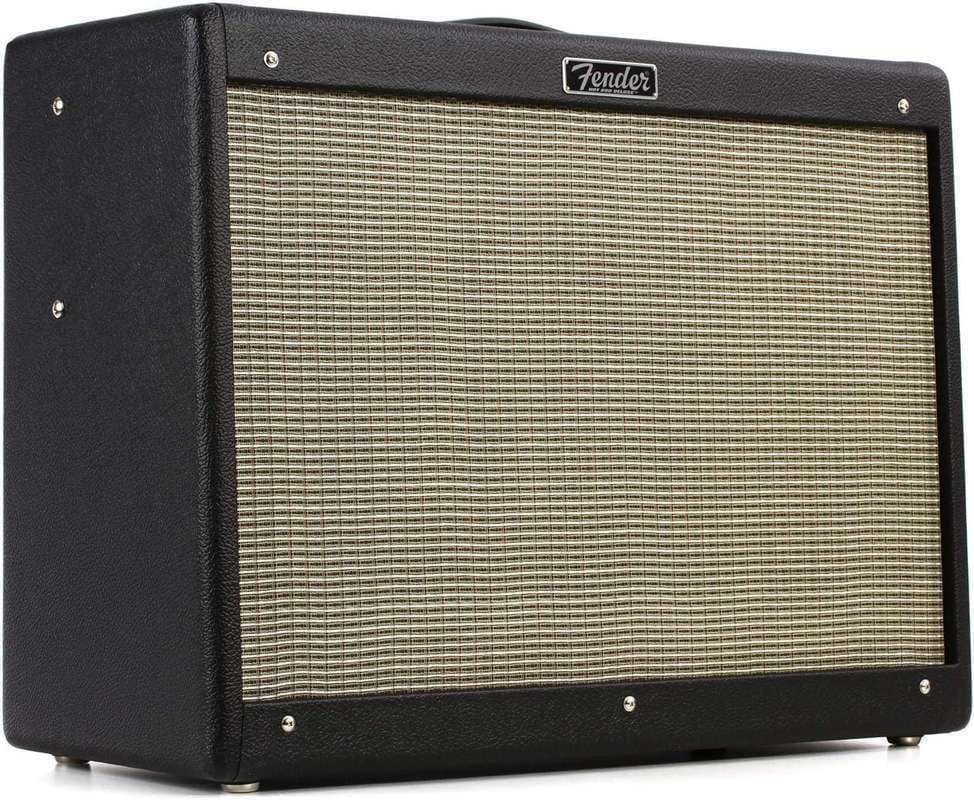
6. Fender Hot Rod Deluxe IV — Best for Clean Headroom
The Hot Rod Deluxe is famous for one thing: clean headroom that gets genuinely loud. That makes it a stage amp first, but it earns a place on this list with a caveat — if your home practice is all about big, sparkly cleans at the edge of breakup, this does it better than anything in its class.
- 40W all-tube with a 12" speaker — famously loud, with abundant headroom
- Sparkling Fender clean that stays clean far beyond bedroom volume
- Three channels with a memorable drive voice
- Replacement-friendly and gig-proven for decades
- The classic "American clean" benchmark
This is the least "practical for a bedroom" pick — honestly, it's overkill for most apartment players. But if you're a gigging guitarist who wants your practice amp to double as your main stage amp (gain staging and all), the Hot Rod Deluxe is the buy.
Best for: Clean-headroom lovers who also gig with the same amp. Power: 40W (tube) · Speaker: 12" · Headphone out: No
Get the Fender Hot Rod Deluxe IV — The classic clean for home and stage
Home Practice Amp Comparison Table
| Amp | Power | Speaker | Headphone out | Power scaling | Price | Best for |
|---|---|---|---|---|---|---|
| BOSS Katana-50 Gen 3 | 50W | 12" | Yes (stereo) | 0.5/25/50W | ~$260 | Best overall |
| Fender Mustang Micro | Headphone | None | Yes | n/a | ~$105 | Silent travel |
| Fender Champion II 50 | 50W | 12" | Yes | No | ~$241 | Best budget combo |
| BOSS Katana-100/212 | 100W | 2×12" | Yes (stereo) | 0.5/25/100W | ~$450 | Home + gigs |
| Vox AC15C1 | 15W tube | 12" | No | No | ~$700 | Tube purists |
| Fender Hot Rod Deluxe IV | 40W tube | 12" | No | No | ~$850 | Clean headroom |
Bigger & Gig-Ready Options
Tube vs Modeling Amps for Home Use
The tube-versus-modeling debate is older than the internet, but for home practice the answer is clearer than most forum threads suggest.
Modeling amps win at home on utility. Headphone outputs that actually sound good, power scaling down to half a watt, built-in effects, Bluetooth backing tracks, and presets you can summon silently — modeling amps like the Katana and Mustang pack every quiet-practice feature into one box. That's why the top of this list is dominated by them.
Tube amps win on feel and simplicity. A tube amp at its sweet spot has a response and compression that modeling still approximates rather than fully replaces. But you pay for that in volume and flexibility — most tube amps have no headphone out and no power scaling, which is precisely the tool you need at home.
The honest take: if you're mostly practicing quietly and just want to play, get a good modeling amp and don't look back. If you're chasing a specific tube character and have the discipline to keep the volume under control, a low-wattage tube combo like the AC15 is a joy. You can always run a modeling amp as your reliable silent rig — but more on that below.
Watts and Volume: How Much Do You Actually Need?
There's a persistent myth that you need 15 or 20 watts minimum to "push" a speaker. At home, that's backwards — most players practice at under a watt of real power, because that's what the walls allow.
- 0.5W is genuinely enough for quiet practice with a cab sim or good headphone tone
- 5–25W combos are the sweet spot if you want a real speaker in the room
- 50W+ with power scaling gives you the same amp for practice and gigs
- Tube wattage is "louder" than solid-state wattage for the same number — 15 tube watts is loud
The takeaway: buy for the volume you'll actually use, not the number on the box. Power scaling and a quality headphone out are worth far more at home than raw wattage. If you're unsure what your current setup is worth on the used market, a quick Guitar Price Estimate can tell you before you trade up.
Headphone & Silent Practice Setup
Because silent practice is half the reason to buy one of these, a few tips to get the most out of it:
- Use good headphones. The amp only sounds as good as what's on your ears. A comfortable pair of over-ears matters more than the flagship features.
- Turn the cab sim on. On a modeling amp, the headphone tone is designed to be listened to directly — trust it.
- Add a backing track. Bluetooth and aux inputs turn a practice amp into a mini jam rig.
- Don't fight your own mix. Keep your guitar balanced under the backing track rather than buried in effects.
Frequently Asked Questions
What is the best home practice amp for beginners?
Answer: The BOSS Katana-50 Gen 3 is the best all-rounder for beginners — it sounds great at low volume, has a built-in tuner and effects, and drops to 0.5W for quiet practice. For the tightest budget, the Fender Champion II 50 offers a real 12" combo at a lower price.
What is the best quiet practice amp that won't wake anyone up?
Answer: The Fender Mustang Micro is the best for total silence — it's a headphone amp with no speaker, so nothing enters the room. If you want a combo amp with a speaker, pick one with a good headphone output and power scaling, like the Katana-50.
How many watts do I need for a home practice amp?
Answer: Far fewer than you think. Most home practice happens at under one watt of real power. A 0.5W power-scaling mode, or a 5–25W combo with a master volume, is plenty for a bedroom. Buy for the volume you'll actually use.
Are tube amps too loud for home practice?
Answer: Most tube amps are louder than a bedroom needs, but a low-wattage tube combo like the Vox AC15 is manageable if you keep the master down and use pedals for drive. If loud cleans are a dealbreaker, pick a modeling amp with power scaling instead.
Do I need a headphone output on a practice amp?
Answer: Strongly recommended. A quality headphone out with built-in cab simulation is what lets you practice at 2 a.m. Without it, quiet practice means cranking the speaker down to near-silence, which usually sounds poor.
What's the difference between power scaling and a master volume?
Answer: A master volume only lowers how loud the amp is, while power scaling actually reduces the amp's output wattage — letting tube amps break up at low volume. Modeling amps like the Katana combine both with a 0.5W switch for genuinely quiet, good-sounding practice.
Is the Boss Katana good for home practice?
Answer: Yes — the Katana-50 Gen 3 is widely considered the best home practice amp for its price. It combines great low-volume tone, a stereo headphone out, 0.5W power scaling, and a large built-in effects library, and it can still open up for gigs later.
Can I use a headphone amp like the Mustang Micro for recording?
Answer: Indirectly — it's great for silent practice and tone exploration, but it doesn't have a dedicated USB recording output. The Katana-100 and 100/212 offer more for direct recording. For practice and travel, the Mustang Micro is hard to beat.
Should I buy a modeling amp or a tube amp for home?
Answer: For primarily quiet, flexible home practice, a modeling amp with a headphone out and power scaling is the practical winner. Choose a tube amp only if you specifically want its response and character and can keep the volume controlled.
How loud should my practice amp be for an apartment?
Answer: Aim for a solid-state amp with a 0.5W–25W scaling range or a low-wattage tube combo. Through headphones you can practice at any hour; through the speaker, keep it at conversation volume. Avoid high-headroom amps you'll never be able to open up.
Conclusion
The best home practice amp isn't the most expensive or the loudest — it's the one that sounds good at the volume you'll actually use, and that you'll actually want to pick up every day. For most players that means a modeling amp with a quality headphone out and power scaling, and the BOSS Katana-50 Gen 3 is my clear top pick for that job.
If your priority is total silence, the Fender Mustang Micro is unbeatable value. If you want a real combo on a budget, get the Champion II 50. And if you're a tube player who can handle the volume, the Vox AC15 delivers the classic British chime at home.
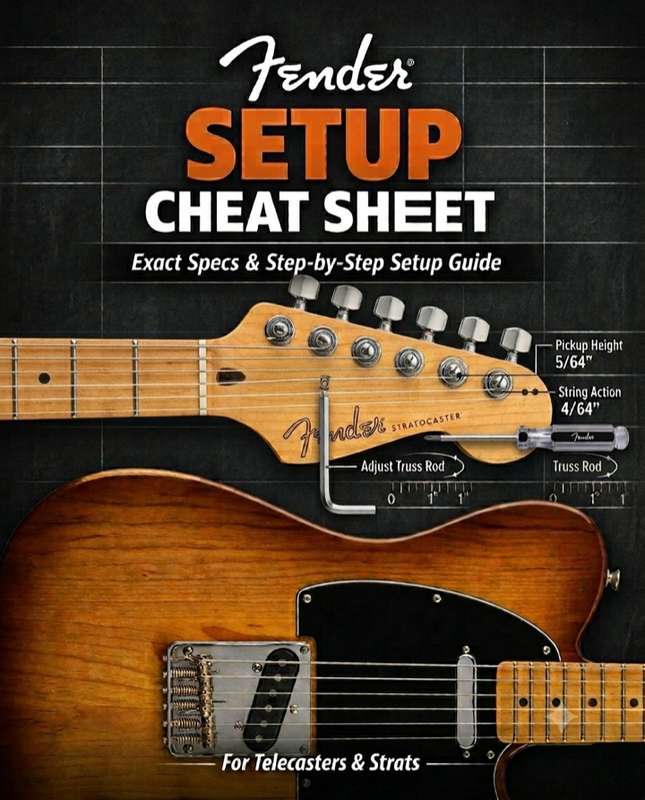
One last thing: before you drop money on a new amp, make sure your guitar is actually set up so you're hearing it at its best. A great amp can't fix a poorly set-up guitar — but a properly dialed-in instrument makes even a budget amp sing. Check your guitar's worth before trading up, and if your current instrument needs a setup, the Fender Setup Cheat Sheet has every measurement on one printable card.
Whichever amp you choose, the goal is simple: play more. A practice amp that sounds great at midnight is the one that gets you picking up the guitar every single day.
Ready to hear your tone? Grab one of the practice amps above and start with your clean channel turned down low — you might be surprised how much you can find in half a watt.