Les Paul String Gauge: 9s, 10s, 11s & Drop Tunings
Compare Les Paul string gauges for blues, rock, jazz and drop tunings. Choose 9s, 10s, 11s or hybrids, then check your setup after changing strings.

The best Les Paul string gauge is the one that suits your tuning, picking hand and bends. Genre gives you a useful starting point, but it cannot tell you how hard you fret a chord or how much resistance you enjoy under your fingers.
Quick Answer: Start with 10–46 for a balanced Les Paul setup in standard tuning. Try 9–42 for easier bends, 9–46 for lighter treble strings with the same bass gauges as many 10s sets, or 11–48 if you prefer more resistance. For drop tunings, choose the bass strings around the actual tuning. Check relief, action and intonation after changing gauge; adjust only where needed.
On this page:
Les Paul String Gauge Comparison: 9s, 10s, 11s and Hybrids
Gauge is string diameter in thousandths of an inch. A set described as 10–46 normally starts with a .010-inch high E and ends with a .046-inch low E. The four middle strings matter too: two packs with the same first and last gauges can have different G, D or A strings.
The following choices are practical starting points for a six-string Les Paul with a conventional fixed bridge. They are not factory requirements or rules about which music you can play.
| Set | Useful starting point for | Main tradeoff to test |
|---|---|---|
| 9–42 | Easy bends, a light fretting touch, standard tuning | Does your usual grip pull chords sharp? |
| 9–46 | Light lead strings with firmer bass than a typical 9–42 set | Does the difference between treble and bass feel balanced? |
| 10–46 | Mixed rhythm and lead in standard tuning | Are repeated bends comfortable for a full session? |
| 10–52 | Familiar 10s on top with heavier bass for rhythm or dropped low strings | Do the larger wound strings fit the nut properly? |
| 11–48 | Players who prefer firmer resistance in standard or E-flat tuning | Are the plain strings unnecessarily hard to bend? |
| 11–54 or 12–56 | A starting comparison for lower tunings | Does each string have useful tension in your actual tuning? |
If your current set already works, use it as the baseline. A guitarist happy with 9s does not need to move to 10s to get a legitimate rock tone. Likewise, a player who likes 11s does not have to change because somebody else finds them stiff.
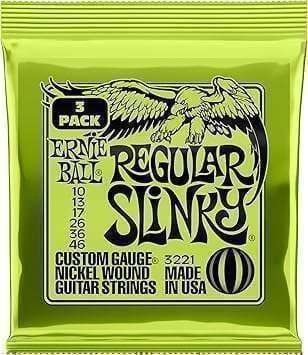
For shopping, these three options let you compare a light set, a hybrid set and a conventional 10–46 set. Check the pack quantity as well as the gauges before ordering.
Compare 9–42, 9–46 and 10–46 Sets
 Buy on Amazon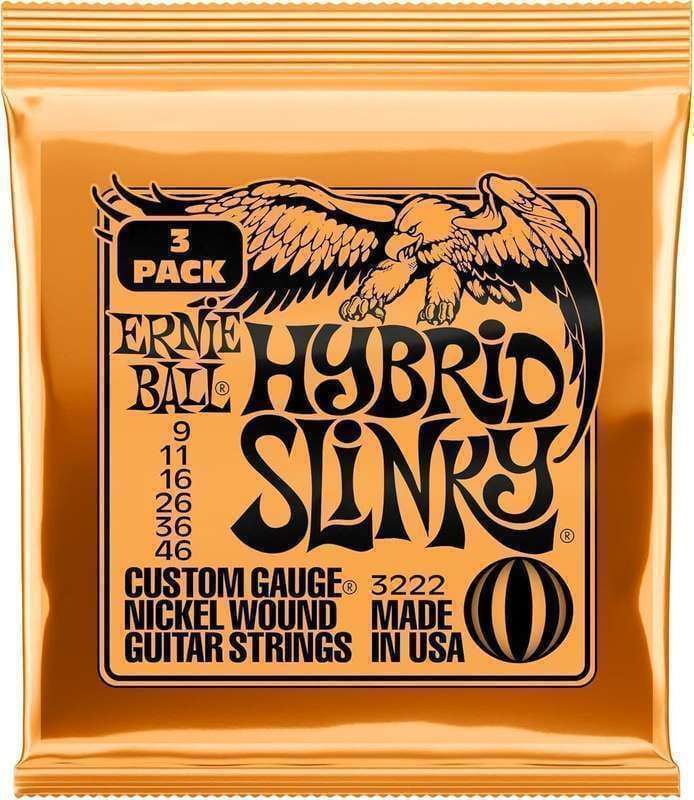
What the Les Paul's 24.75-Inch Scale Changes
Gibson lists a 24.75-inch scale and a 10–46 factory set for the Les Paul Standard ’60s model. Check your own model's specification, especially if you own a different production year, a signature model or a modified instrument.
For the same string construction and pitch, tension is proportional to the square of scale length. Comparing nominal 24.75-inch and 25.5-inch scales gives (24.75 ÷ 25.5)² ≈ 0.942, or about 5.8% less tension on the shorter scale. This is a calculation, not a measurement of every Les Paul. D’Addario's tension tool lets you compare specific strings, pitches and scale lengths.
That does not make 10s on a Les Paul equivalent to 9s on a Strat. Changing diameter is a separate change, and wound-string construction also affects tension. Avoid whole-gauge shortcuts when comparing two guitars.
Perceived stiffness includes more than the tension required to tune a string. Action, fret height, the string's construction and the way you bend all influence the experience. A badly adjusted guitar with light strings can feel harder to play than a well-adjusted guitar with a slightly heavier set.
Keep those variables separate when experimenting. First compare gauges on the same guitar at the same tuning. Then check whether its setup changed. Moving between two different instruments tells you which complete setup you prefer, but it does not isolate the effect of scale length.
Les Paul Strings for Blues: Start With Your Bends
Try 9–42 or 10–46 in standard tuning. Choose using the bends you actually play: a whole-step bend on the B string, a held bend with vibrato, and a phrase that repeats several times. A set that feels impressive for ten seconds may become tiring halfway through a song.
If 10s make you squeeze harder, lose control of vibrato or avoid certain phrases, trying 9s is reasonable. If 9s feel difficult to control because your usual fretting pressure sends notes sharp, first try a lighter grip. Then compare 10s if you still prefer more resistance.
For a blues player who likes light treble strings but finds the low strings too loose, 9–46 is a useful middle option. You change the feel of the lead strings without making the bass side as light as a typical 9–42 set.
A practical blues comparison
Record the same short phrase with your current strings and the replacement set. Keep the pickup selection, amp settings and recording level consistent. Include an unbent note, a bend and a chord so you judge the whole job rather than only the first bright notes from new strings.
Do not use heavier gauge as a guaranteed sustain upgrade. A note that dies during a bend may be hitting a fret, and excessive fretting effort can make a phrase less controlled. Resolve the playability problem before buying a thicker set to compensate for it.
Les Paul Strings for Rock: Balance Rhythm and Lead
10–46 is a useful baseline for mixed rhythm and lead. If you mainly want firmer low strings, compare a 10–52 hybrid before increasing all six gauges. Moving to 11s also makes the treble strings harder to bend; that may be unnecessary for the problem you are trying to solve.
Play a low-string riff with your normal attack, then play it more gently. Listen for the note starting noticeably sharp and settling down. A heavier bass string may suit an aggressive picking hand, but picking technique and tuning accuracy still matter.
Use your real rehearsal volume and distortion settings when evaluating the sound. A set that seems less lively unplugged may work perfectly through your normal rig. Keep the comparison focused on tuning, comfort and the sound you need in the arrangement.
Standard tuning versus E-flat
Tuning every string down a semitone reduces tension without changing the gauges. If you move between standard and E-flat, decide which tuning deserves the best setup. You may prefer 10s in both, or 11s in E-flat, but neither choice is compulsory.
If you change tuning regularly, note whether action, buzzing or intonation become unacceptable in either tuning. A practical compromise is often more useful than repeatedly adjusting the guitar for each song. Larger tuning changes may justify a separate instrument set up for that purpose.
Les Paul Strings for Jazz: Gauge, Winding and the G String
10–46 or 11–48 can both work for jazz. Players who mainly play chords may prefer a firmer set, while players who mix chords with blues-style bends may want lighter plain strings. Jazz playing does not require 12s, and a thicker set does not automatically make complex voicings clearer.
Consider string construction separately from gauge. Roundwounds and flatwounds have different surfaces and responses, so switching from roundwound 10s to flatwound 12s changes several things at once. Read the full set specification instead of treating the first gauge as a complete description.
Plain or wound G?
A wound G can change the feel of chord work and the resistance during bends. It can also require a different intonation setting from the plain G it replaces. Make this a deliberate choice if a set is marketed for jazz; do not assume it contains the same type of G string as your existing pack.
Play the chord shapes you use above the fifth fret and check them with a tuner. Listen for clarity at your normal amp settings, then try any bends you need. If the heavier or wound G prevents a technique you use regularly, it is not a good fit just because the packaging matches your genre.
Les Paul Strings for Metal, Drop D and Drop C
Choose strings for the tuning, then refine for your picking style. “Metal strings” is too broad a category: standard E, drop D and drop C place different demands on the same set.
| Tuning | Starting comparison | What to check |
|---|---|---|
| Standard E | 10–46 versus 10–52 | Whether only the bass strings need more resistance |
| Drop D: D A D G B E | Your current set, then a heavier low string or hybrid | Low D attack and intonation; the other five strings stay at standard pitch |
| E-flat standard | 10–46 versus 11–48 | Comfort on all six strings after tuning down |
| Drop C: C G C F A D | 11–54 versus 12–56 as trial options | Low C tension, treble-string bends, nut fit and saddle travel |
| C standard or lower | A tension calculation for each string before buying | Whether the chosen guitar and hardware suit the intended setup |
These are trial ranges, not promises that a particular low string will feel tight for everyone. A gentle player and a hard picker may prefer different sets at the same pitch.
Drop D does not require heavier treble strings
Only the sixth string drops in pitch when moving from standard tuning to drop D. If you already like your lead-string feel, there is no automatic reason to increase the first five gauges. Try your current low E at D before deciding it needs replacement.
For lower tunings, check the manufacturer's tension information for the exact set. Wound-string core and wrap choices mean equal outer diameters do not guarantee identical tension between brands.
Check hardware limits before fitting a much heavier set
A larger string may bind in a nut slot. Warning signs include a ping during tuning or a string that does not return consistently to pitch. Do not force the string into place or widen a slot casually: a slot cut too wide or deep may need repair.
Intonation also needs enough saddle travel. If a suitable adjustment cannot be reached, have the setup assessed rather than accepting badly tuned chords. A lower-tuning plan should include those practical checks, not just a shopping recommendation.
Les Paul Strings for Country and Clean Leads
9–42, 9–46 and 10–46 are sensible comparisons for clean leads and country playing. The best choice depends on bend control, double-stops and the balance between picked and finger-plucked notes.
Try a held double-stop bend against an unbent string. Then play an open-position chord with your usual grip. You want a gauge that lets you reach the bend accurately without making the other notes sharp through excessive pressure.
Do not choose gauge solely to make a humbucker guitar brighter. Pickup selection, tone controls, pick attack and amplifier settings all affect the result. Set the string feel first, then refine the sound with the controls you already have.
Setup Checks After Changing Les Paul String Gauge
A gauge change is a reason to check the setup. It does not mean every screw needs turning. Record the current tuning, full set gauges and anything you dislike before removing the old strings.
- Fit and tune the new set. Seat the strings correctly and let tuning settle before judging the setup. Keep the previous pack details so you can return to a known combination.
- Check nut movement. Listen for binding and watch for inconsistent return to pitch. Larger gauges may need professional nut work; that is separate from turning the truss rod.
- Measure neck relief. Compare with your previous reading or the guidance for your model. Use the same fretting and measuring method each time. More total tension can change relief, but measure the actual result.
- Check action and bends. Play across the neck, including full bends on the upper frets. Investigate where a note buzzes or chokes before moving the bridge.
- Check intonation at pitch. Compare the fretted 12th-fret note with the appropriate reference, using normal fretting pressure. Retune after each saddle adjustment and repeat the comparison.
- Listen through your normal rig. Check string-to-string balance, clean chords and your usual gain sound. Revisit pickup height only if there is a specific balance or clearance problem.
Do not lower the tailpiece automatically for “maximum sustain,” or use it as a substitute for correct action. Tailpiece height is a separate setup variable. Leave a working arrangement alone unless you are addressing a measured clearance or playability issue.
The Les Paul setup walkthrough covers the adjustment sequence in more detail. Use the factory specs lookup to find relevant model guidance rather than assigning one relief measurement to an entire genre.
Choose Your Next Set Without Changing Everything at Once
Write down one problem: bends feel too stiff, the dropped low string feels loose, or strings become rough before you want to replace them. Choose a change that addresses that problem specifically.
For example, a player happy with 10–46 except for the low D should compare bass-string options. A player who likes the tension but dislikes corrosion should compare string materials or coatings at the same gauges. Changing gauge, brand, winding and tuning together makes the result harder to interpret.
These alternatives cover 11–48 Power Slinky, 10–46 NYXL and 10–46 coated XS. They are different options to compare, not three interchangeable heavy-gauge sets.
Compare Firmer Feel, Construction and Coating
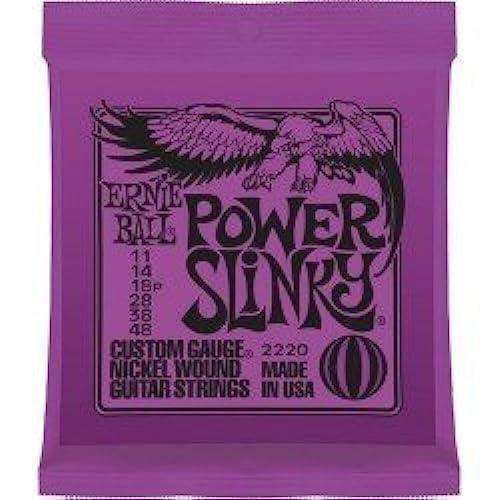

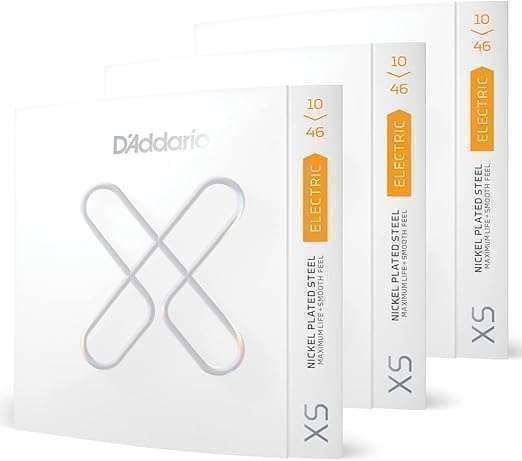
Give the new set several normal playing sessions, provided it is comfortable and the guitar behaves properly. Keep a short record: tuning, gauges, bend comfort, chord tuning and any setup work. That record is more useful for the next purchase than remembering that one brand felt “better.”
If you want to compare brands once you have chosen the gauge, use the Les Paul string buyer's guide. If you are ready to check the instrument itself, the Gibson Setup Cheat Sheet provides a printable reference to use alongside the walkthrough.
Les Paul String Gauge FAQ
What gauge strings come on a Les Paul from the factory?
Gibson lists 10–46 for the Les Paul Standard ’60s model cited above. Factory strings vary by model and specification, so check your own instrument's listing. A used guitar may have different strings from those originally supplied.
Can I use 9s on a Les Paul?
Yes. A 9–42 set is a reasonable choice for easier bends in standard tuning. Check chord tuning with your normal fretting pressure, and check relief and buzzing after the change. The short scale does not make 9s exactly equivalent to 8s on another guitar.
Are 11s too heavy for a Les Paul?
Not automatically. Some players prefer their resistance, especially when tuning down, but others find the treble strings tiring. Try them for a specific reason and check nut fit and setup. They are not simply the same feel as 10s on a longer-scale guitar.
What is the best Les Paul string gauge for drop D?
Start by trying your current set with only the low E tuned to D. If that string feels too loose, compare a heavier sixth string or a hybrid set. You do not have to increase the treble gauges to solve a low-string problem.
Do heavier strings guarantee more sustain?
No. Sustain depends on the instrument, setup, technique and amplified sound as well as the strings. If notes die during bends, check for fret interference. Choose gauge for useful tension and control rather than a guaranteed sustain increase.
What is a hybrid Les Paul string set?
A hybrid combines lighter treble strings with heavier bass strings than a typical set starting at the same gauge. Common examples are 9–46 and 10–52. Compare all six gauges on the packet because the first and last numbers do not describe the whole set.
Should I use a wound G for jazz?
A wound G is an option, not a requirement. Check whether its feel suits your chord work and any bends you play. Changing between plain and wound G strings can require an intonation adjustment, so include that in your comparison.
Do I need a full setup every time I change gauge?
Check relief, action, nut movement and intonation after a gauge change. Adjust only where the checks show a problem or a measurement outside your intended setup. Replacing strings with the same set does not automatically require moving the bridge or truss rod.
How often should I change Les Paul strings?
Use condition and performance rather than a fixed calendar. Replace strings when corrosion, roughness, damaged windings or a sound you no longer like makes playing worse. Tuning problems can also come from the nut or installation, so do not assume old strings are always responsible.
Are coated strings worth trying on a Les Paul?
They can be worth comparing if corrosion or surface feel is your main concern. Start with the gauges you already like, then evaluate the coating separately. Lifespan depends on the product, playing conditions and care; there is no universal replacement interval or multiplier.