Bass Guitar Fret Buzz: Find the Cause Before Adjusting
Diagnose bass guitar fret buzz by string and fret. Check playing attack, neck relief, action and recent string changes before adjusting a bass or buying parts.
By Nick TheodoulouUpdated

On this page
- Quick Bass Fret Buzz Diagnosis
- Is It Fret Buzz, String Clank or Electrical Hum?
- Map Bass Buzz by String and Fret
- Measure Relief and Action Before Adjusting the Bass
- Bass Fret Buzz After Changing Strings
- Retest the Bass and Keep a Useful Record
- Bass Fret Buzz: Frequently Asked Questions
- Make the Next Bass Setup Easier
Bass guitar fret buzz is a symptom, not an instruction to turn the truss rod. Before adjusting anything, find out which string makes the noise, which notes trigger it, and whether the sound matters through your normal clean amp setting. That short investigation can save you from raising every saddle to fix one troublesome fret.
This guide is for fretted electric basses, including Precision, Jazz and Squier-style instruments. It helps you separate a setup adjustment from string noise, playing technique, loose hardware or a repair. Fretless instruments have a different playing surface and need a different assessment.

Quick answer: Test the same note unplugged and through a clean amp, then compare the open string with notes at the first, fifth, twelfth and higher frets. Record where the unwanted rattle begins. Check relief before action, and use the bass manufacturer's measuring method. One isolated bad note, a low nut slot or loose hardware needs a different response from a whole-neck setup adjustment.
Find your next check:
- Quick bass buzz diagnosis
- Mechanical buzz, clank or electrical hum?
- Map the problem along the neck
- Short sustain and suspected dead spots
- Measure relief and action
- Buzz after changing strings
- Retest and keep a record
- Frequently asked questions
Quick Bass Fret Buzz Diagnosis
Use this table to choose an inspection, not to declare a fault from the sound alone. More than one issue can occur on the same instrument. Start with the smallest repeatable example of the problem: one string, one note and one normal pluck.
| What happens | Check first | Avoid doing immediately |
|---|---|---|
| Open string rattles; first-fret note is clean | Nut slot, string seating and hardware near the headstock | Filing the nut slot deeper |
| Several lower frets buzz | Fretting technique and measured neck relief | Raising every saddle without checking relief |
| Many upper frets buzz | Action and fret condition in that area | Adding a large amount of neck relief |
| One or two notes fail in the same place | Local fret condition and whether the next fret interferes | Repeated whole-neck adjustments |
| Buzz started with different strings or tuning | Installation, string compatibility and changed relief/action | Assuming the old measurements still apply |
| Rattle comes from the bridge or headstock | Loose components and whether each saddle sits securely | Buying new pickups or changing the neck angle |
| Noise persists with all strings muted | Cable, amplification, power and electronics | Trying to cure it with saddle height |
Decide what “fixed” means for your playing. A bassist who wants a percussive attack and one who needs a clean, sustained recording may accept different amounts of string contact. Your target is a comfortable instrument that produces the intended sound with your normal technique, not silence under every possible pluck.
This is also why comparing only action numbers can mislead. Two players can use the same bass and make very different amounts of clank. Before copying someone else's setup, make the noise repeatable and note whether it affects note length, pitch or the amplified sound.
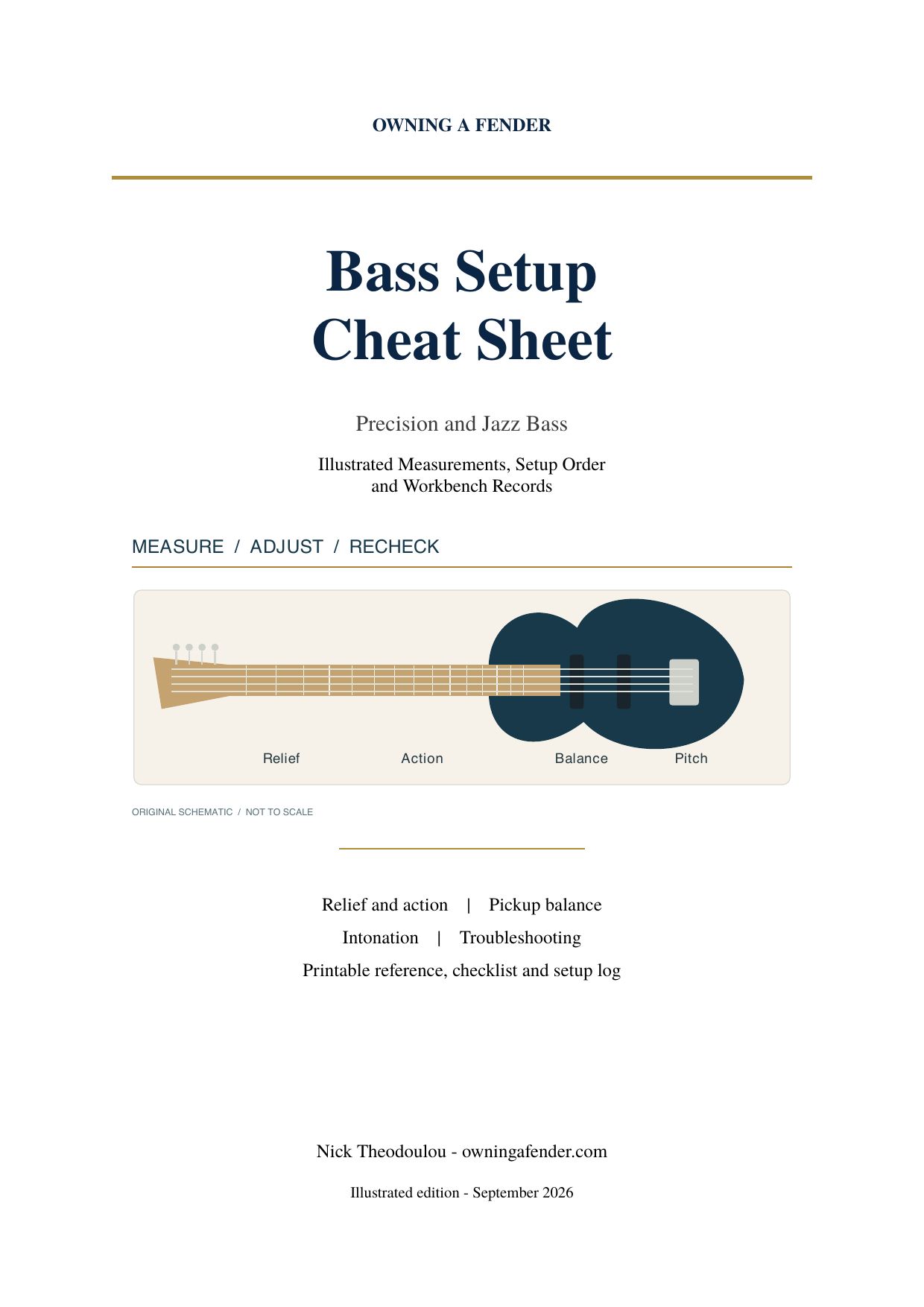
The Bass Setup Cheat Sheet brings the measurement sequence, troubleshooting map and setup checklist together for the workbench. The diagnosis below remains free; the PDF is useful when you want the reference beside the bass during future string changes and adjustments.
Is It Fret Buzz, String Clank or Electrical Hum?
Listen through a simple, clean signal
Play the troublesome note unplugged, then through the amp with effects bypassed and a clean setting. Use a sensible listening level and repeat the same attack. A recording on your phone can help you compare the character of the noise, although it will not diagnose the instrument for you.
Next, gently mute all the strings. If a steady buzz remains through the speaker, you may be investigating an electrical problem rather than fret contact. Try a known-working cable and normal amp input before touching the setup. An active bass with distorted output may also need its battery checked according to its manual.
The two problems can coexist. Write down whether you hear a constant background noise, a brief strike at the beginning of a note, or a metallic rattle that follows the vibrating string. “It buzzes” is much less useful than a description of when the noise starts and stops.
Repeat the note with ordinary playing pressure
Place your fretting finger close behind the intended fret, then compare a gentle, normal and deliberately heavy pluck. Keep the test realistic: a hard downward pluck can drive the string toward the frets in a way that a lighter stroke does not.
If the note cleans up when you change finger placement, practice that placement before deciding the instrument needs work. If the same note fails even with careful technique, continue to the location checks. Fender's fret-buzz overview is a useful reminder that playing technique and instrument condition both deserve attention.
Listen for a loose part
A vibrating screw, tuner component or bridge part can sound surprisingly similar to fret buzz. While a helper plays the note, gently touch a suspected loose part to see whether the rattle changes. Keep fingers away from moving strings and do not tighten an unidentified fastener just because it is nearby.
For example, a bridge rattle that disappears when you steady a saddle deserves a bridge inspection. It is not evidence that the truss rod needs another turn. If you cannot locate the source confidently, a short recording and a clear note about the affected pitch help a technician reproduce it.
Map Bass Buzz by String and Fret
Open-string buzz versus first-fret buzz
Play the open string, then fret the first note with consistent pressure. If the open note rattles and the fretted note does not, the nut and the string's seating deserve inspection. Roger Sadowsky discusses this distinction in his bass setup article.
Do not file a nut slot deeper as a general cure for open-string buzz. If the slot is already too low, further filing makes the situation worse. A damaged or poorly fitted string can also complicate the diagnosis, so inspect the installation and explain the symptom before ordering a new nut.
“Buzzing on the first fret” means something different if you are holding the string down at the first fret. In that case, compare frets two through five as well. Record whether the problem follows several low notes or stays at one location; that difference guides the next inspection.
Buzz across several lower frets
After checking technique, measure relief using the instructions for the bass. Relief describes curvature, not simply the gap under an open string. A nearly straight or back-bowed neck can reduce clearance for a section of the vibrating string, but the sound alone does not tell you how much adjustment to make.
Use the same string and measuring frets every time. If your notes say “gap at eighth fret” but omit where the string was held down, the measurement is hard to reproduce. Record that method before comparing the number with a manufacturer's specification.
Buzz across the upper frets
If lower notes play cleanly but a broad stretch of upper notes rattles, check the action and the frets in that area. Adding more relief is not a universal cure: it changes the neck's curve and may make the middle of the neck feel unnecessarily high without solving the upper-register problem.
A small, reversible saddle adjustment may be appropriate after the measurements are understood. Retune and repeat the same notes after each change. If useful saddle travel is exhausted or the problem persists at reasonable playing heights, stop and have the instrument inspected.
One isolated bad note
Make a simple note map: string name, fret number and what the note does. Does it rattle briefly, lose sustain, or barely sound at all? Compare adjacent frets and the same pitch on another string, where available. These comparisons help a repairer reproduce the symptom; they do not identify the cause by themselves.
Bass dead spots: investigate short sustain before buying parts
A bass dead spot usually describes a note that fades unusually quickly compared with nearby notes. It need not produce the metallic rattle of fret contact. A string fault, local fret interference or pickup interaction can also affect a note, so “short sustain” is a useful observation before “structural dead spot” becomes a diagnosis.
In Helmut Fleischer's bass-specific study, Dead Spots of Electric Basses II: Diagnosis, measurements on five structurally different basses examined how vibrating strings transfer energy into the instrument. Greater energy loss through the neck support helped explain faster decay at particular notes. The study used vibration and electrical-signal measurements, not a phone stopwatch; it does not establish a universal dead-spot fret or minimum acceptable sustain time for your bass.
Start with a repeatable comparison in your normal playing position. Keep the string set, tuning, pickup selection, plucking location and amp settings unchanged. Bypass compression, noise gates and other effects that alter the fade. Use the same recording position or clean input throughout. You are collecting useful comparisons, not recreating the laboratory measurement.
- Play the suspect note several times with ordinary fretting pressure and a similar attack. Listen for rattle, choking, pitch wobble and the way the note fades.
- Repeat at the neighboring frets on that string. If a pluck or finger placement was obviously different, repeat it rather than treating that take as a result.
- Compare the same pitch on another string when available. Different strings and positions naturally sound different: a similar fade is a clue to record, while a clean comparison does not rule out resonance.
- Check string condition and seating, then look for unintended fret or pickup contact. Follow the installed pickup maker's gap-measuring method; Fender's bass instructions note that magnetic pull varies with pickup type. Check the baseline before deciding an adjustment is needed.
Use this blank note worksheet alongside the broader setup record below. Record the instrument, strings, tuning and signal settings once, then use one row per location. “Not checked” is better than an assumed result.
| Comparison | String / fret / pitch | Rattle, fade or pitch behavior | Repeat result / recording label |
|---|---|---|---|
| Suspect note | — | — | — |
| Neighbor below | — | — | — |
| Neighbor above | — | — | — |
| Same pitch, another string | — | — | — |
| Original note after one justified change | — | — | — |
If you choose to log seconds, write down what counted as the end of the note and keep the recording level and method unchanged. A listening log has no universal pass mark; a quieter recording, automatic gain or background noise can change the apparent endpoint. The audible pattern and repeatability matter more than an impressive-looking number.
Persistent short sustain with no clear string, contact or setup fault deserves an assessment. Bring the comparison recordings and note map. Do not order a headstock weight, replacement bridge or new pickups as an automatic cure, or file the nut or frets to treat a suspected resonance. The Bass PDF's troubleshooting map and blank setup record can organize the handoff; neither the article nor the PDF promises a cure for structural resonance.
Measure Relief and Action Before Adjusting the Bass
Gather a small measuring kit
You need a tuner, a ruler suitable for string action, feeler gauges and a capo for methods that call for one. If making an adjustment, identify the correct tool for the actual hardware. A guitar hex key is not automatically the correct size for a Squier or Fender bass.
You do not need to buy every item in a toolkit to begin. Borrowing a suitable ruler and tuner is enough to make your symptom record more precise. Choose tools for a measurement you will actually make; none of them substitutes for diagnosing an isolated fret or a damaged nut.
Optional tools for repeatable bass measurements
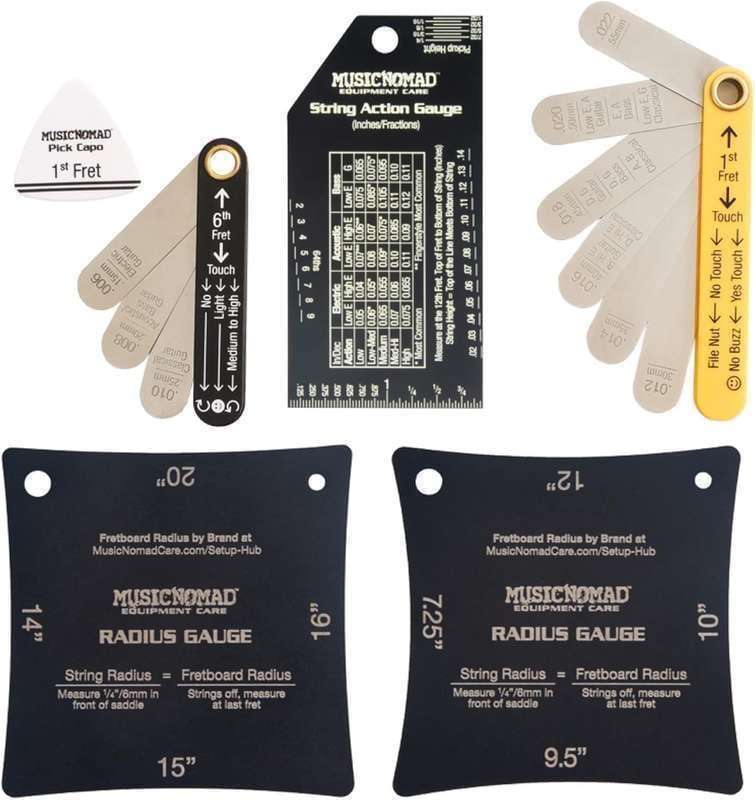
 Buy on Amazon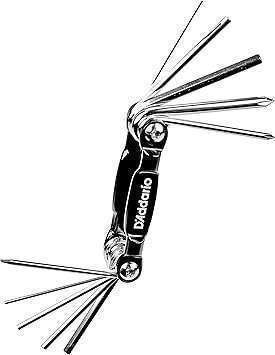

Keep the measuring fret attached to the number
For a Fender-style reference, Fender's bass setup instructions specify a first-fret capo, the lowest string held at the last fret, and relief measured at the eighth. Its general 9.5–12-inch-radius row gives 0.012 inch, approximately 0.30 mm, as a relief reference.
The same source measures action at the seventeenth fret, not the twelfth. Its 9.5–12-inch row gives 6/64 inch on the bass side and 5/64 inch on the treble side. Those are reference settings for the source's instrument assumptions, not guaranteed buzz-free targets for every bass.
Other makers use different methods. Sadowsky's setup instructions are useful for understanding a maker-specific process. Choose the applicable source rather than mixing one manufacturer's number with another manufacturer's measuring position. Use the Setup Specs Lookup as a starting reference and check its method against your instrument's documentation.
Make one reversible change, then repeat the test
If an adjustment is warranted, photograph the starting position and record it. Follow the maker's instructions for string tension, tool fit and adjustment direction. Stop if a truss rod resists, produces no clear response, or requires repeated large changes.
After a small adjustment, tune back to the intended pitch before measuring again. Compare the same string and fret with the same playing attack. Changing relief, action and strings at once prevents you from learning which change affected the problem.
For a Squier instrument, the Squier Bass setup guide provides the broader setup sequence. Keep a record of the particular bridge and neck you have, especially on an older or modified instrument.
Bass Fret Buzz After Changing Strings
A string change is useful diagnostic context. Write down the old and new brand, gauge, construction, scale length and tuning. Similar-looking sets do not necessarily feel or behave identically on the same instrument.
First check that the strings are suitable for the bass and correctly installed. Confirm their seating at the bridge and nut and follow the string maker's winding instructions. A damaged or poorly seated string needs attention before you compensate for it with the setup.
Then remeasure relief and action. Do not assume the old setup is still correct after moving to a lighter set, a different construction or lower tuning. Equally, do not assume the truss rod needs changing simply because the packaging has different numbers: use the measured result.
Is the new sound actually a new fault?
Fresh strings can make familiar finger and contact noises more noticeable. Compare note length and the amplified result rather than judging only by how bright the unplugged attack sounds. A brighter noise with the same sustain and comfortable feel is a different observation from a note that now chokes completely.
Record both. An old set may have masked a setup problem, while a new set may simply reveal more of your normal articulation. Neither possibility proves that a brand of strings is defective or that a full repair is necessary.
Replace strings when the evidence supports it
If a string is visibly damaged or the set is the wrong type for the instrument, replacement can be the appropriate next step. If the same fret fails with a correctly installed set, repeatedly buying strings is unlikely to be an efficient investigation.
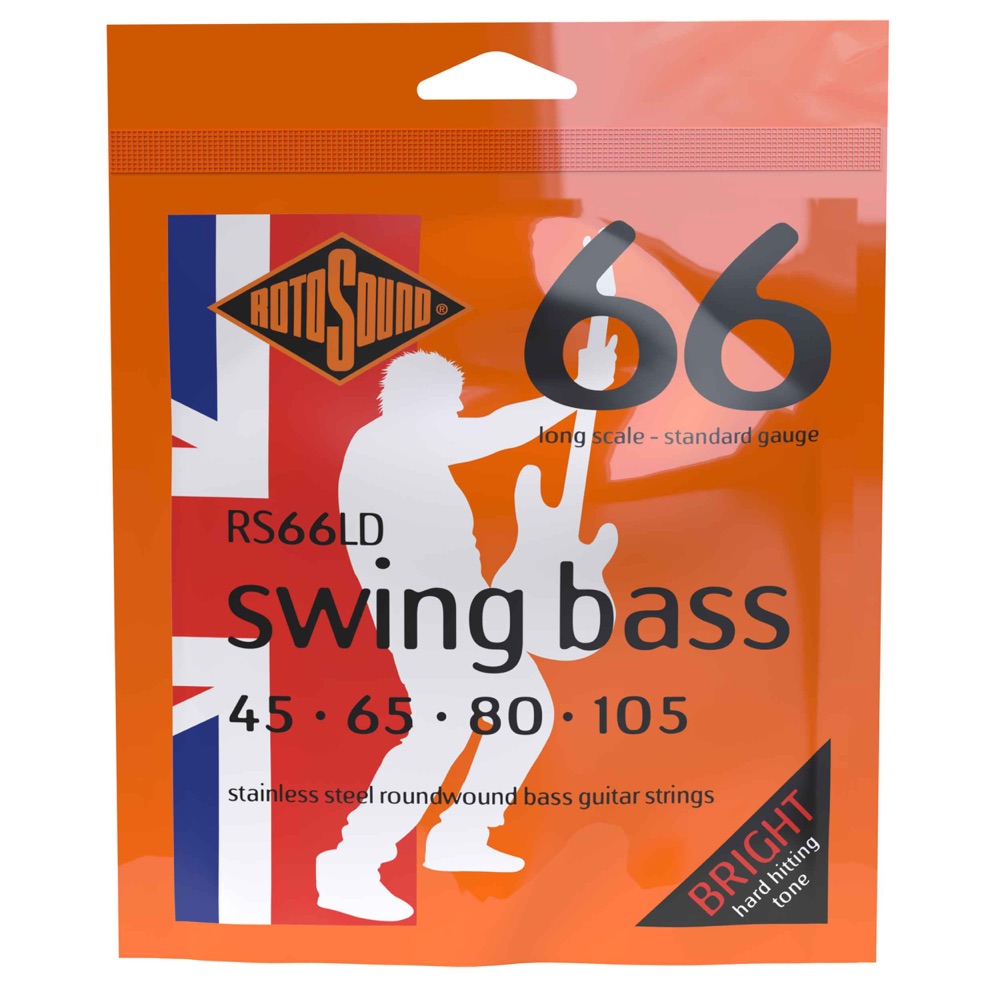
The Precision Bass string comparison explains different string choices. Check scale length and bridge compatibility, not just gauge. The examples below are alternatives when a replacement set is needed, not a shopping list required to fix every buzz.
Replacement bass strings when the current set needs changing


Retest the Bass and Keep a Useful Record
After any change, test the original troublesome note before playing the whole neck. This catches an adjustment that improves one area while making another uncomfortable. Finish with the actual picking, fingerstyle or slap approach you intend to use.
Copy this worksheet into a notebook or your setup record:
| Before changing anything | After one adjustment |
|---|---|
| String, fret and description of noise | Same note, same attack: better, unchanged or worse? |
| String set and tuning | Any change to strings or pitch? |
| Relief reading and measurement method | New relief using the identical method |
| Action reading and measuring fret | New action at that same fret |
| Clean amplified result | Sustain and noise through the same amp setting |
| Adjustment and starting position | Final position, or reason for restoring the baseline |
Three hypothetical examples show why this matters. An E string that rattles only when open calls for a different inspection from four strings buzzing across the lower frets. A single high-register note that fails while its neighbors ring calls for another. These are examples of how to describe a problem, not diagnoses of your instrument.
If an adjustment gives no useful improvement, record that rather than continuing indefinitely. A technician who receives “A string, frets seven and eight, unchanged after a measured saddle adjustment” has a better starting point than “I turned everything until it seemed worse.”
Seek professional help for a resistant truss rod, damaged nut, suspect fretwork, visible structural movement or an instrument that cannot achieve comfortable playability within normal adjustment travel. The goal is a playable bass, and recognizing where routine setup ends is part of doing the job well.
Bass Fret Buzz: Frequently Asked Questions
Is a little fret buzz normal on bass?
Some players accept a percussive string attack. Judge whether the noise is unwanted through your normal amplification and whether it shortens or chokes the note. Your preferred sound matters, but a suddenly failing note still deserves investigation.
How do I fix fret buzz on bass?
Identify when and where it happens, check technique and string installation, then measure relief and action using the maker's method. Change one thing at a time. Nut or fret damage requires a different response from a routine setup adjustment.
Why is my bass buzzing on lower frets?
Check fretting technique and measured relief first. Several affected low notes can point toward insufficient clearance in that area, but one isolated note may need a local fret inspection. Do not decide the truss-rod adjustment from the sound alone.
Why is my bass buzzing on the first fret?
Clarify whether the open string buzzes or whether the first-fret note buzzes while held down. An open-only problem can involve the nut or string seating. A fretted-note problem calls for comparison with nearby frets and a relief check.
Why is my bass buzzing on higher frets?
Check action and local fret condition after establishing relief. Adding a large amount of relief may make the bass harder to play without solving the upper-fret problem. Stop if useful saddle adjustment does not resolve it.
Can high pickups cause bass fret buzz?
First determine whether the noise is actual fret contact. A string striking a pickup is a different mechanical contact; magnetic pull can also affect the note. Check clearance with the maker's method instead of treating every unusual sound as fret buzz.
Why did my bass start buzzing after restringing?
Check the new string type, installation and tuning, then compare measured relief and action. Fresh strings can also reveal more attack noise. A change in brightness alone is different from a new note that loses sustain.
Should I raise every bass saddle to stop buzzing?
Not automatically. Map the affected strings and notes first. A global change can make clean strings unnecessarily difficult to play while leaving an open-string nut problem or isolated high fret unresolved.
Can I use guitar action measurements for my bass?
Use the bass maker's reference, including its measuring fret, radius assumptions and string-fretting method. A number measured at the seventeenth fret should not be treated as the same target at the twelfth.
Do I need new strings or a professional setup?
Replace damaged or unsuitable strings when that is the identified issue. If the installation is correct but the same notes fail, get a setup or repair assessment. Bring the note map and before/after measurements rather than repeatedly changing parts.
Make the Next Bass Setup Easier
Once the unwanted noise is resolved, save the settings that work for your strings, tuning and playing style. That record makes the next string change or seasonal check more useful. Browse the bass guide hub for related setup and ownership topics.
Keep reading
Next for your Bass
- Same guitarBass Guitar Intonation: Fix Sharp and Flat NotesRead
- Same guitarSquier Bass Setup Guide: P-Bass, J-Bass & PJ Action SpecsRead
- Same guitarFender Bass Setup: The Complete Guide (Precision & Jazz Bass Specs)Read
Everything for your Bass
Open the hub