Gibson Fake Checker: Verify Your Guitar Is Authentic
Free Gibson fake checker (Chibson). Two-minute red-flag checklist tuned for Gibson: headstock angle, scarf joints, inlays, serial stamps and hardware. Get an instant risk band before you pay.
The free Gibson authenticity quick-check above runs the red-flag checklist experienced Gibson buyers use — including the Gibson-specific details that "Chibson" copies get wrong: headstock angle, scarf joints, inlays, serial stamps, and hardware. Answer each question honestly ("not sure" never counts against the guitar) and you'll get a clear risk band in about two minutes.
No email required, no signup. Just a straight answer on whether the Gibson deal in front of you deserves a closer look.
What the Gibson Checklist Covers
- Price — a "Les Paul Standard" at a third of its market price is the oldest Chibson trick in the book
- Seller behaviour — rushing you, dodging questions, refusing returns
- Serial number — missing, poorly stamped, or inconsistent with the claimed year? Decode it.
- Weight — genuine Les Pauls run 8.5–10 lbs; copies using cheaper woods feel suspiciously light
- Hardware — thin, cheap-looking bridge and tailpiece posts are a copy signature
- Logo and decals — spelling, spacing, or printing errors in the headstock logo
- Workmanship — rough fret ends, sloppy finish edges, and glue marks point to a copy shop
Plus the Gibson-family checks: headstock angle and shape, inlay quality, the scarf joint (genuine Gibsons never have one), control cavity routing, and bridge/tailpiece post quality.
The Gibson Tells That Catch Chibsons
Headstock angle — genuine Gibsons have a steep 14–17 degree angle, carved from the same piece of mahogany as the neck. A shallow angle or a headstock that looks glued on is the single most reliable Chibson tell.
Scarf joint — because the headstock is carved from the neck's wood, there is no seam. A visible diagonal seam or glue line at the base of the headstock means it isn't a Gibson.
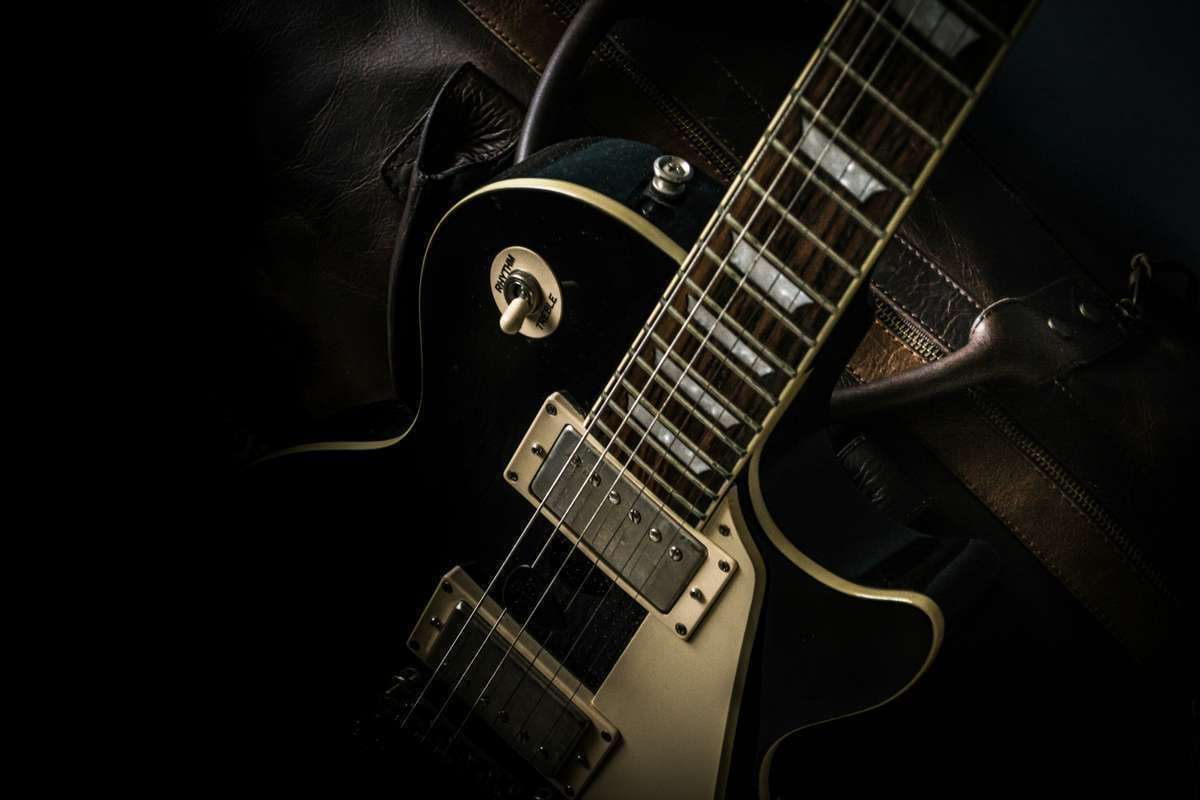
Inlays — genuine Les Pauls have mother-of-pearl trapezoids sitting flush in the board. Printed, plastic-looking, or raised inlays are a shortcut tell.
Serial stamp — genuine Gibsons use a single-press stamp with consistent depth. Shallow, uneven, or hand-stamped digits indicate a copy, and the format must match the claimed era.
Cavity routing — factory cavities are cleanly routed with tidy wiring. Rough, uneven routing with ragged edges is a hallmark of copy production.
What the Free Check Can't See
A checklist can't look at the guitar. A good Chibson — real wood, correct headstock angle, copied serial — can pass a paper checklist. The details that give careful fakes away live in the photos: the logo's font weight, the inlay's lustre, the stamp's depth.
That's what the $9 Authenticity Checker is for: upload the actual listing photos — headstock, body, hardware, serial — and get specific risk flags on the real guitar, with human review. On a $2,000+ purchase, it's the cheapest insurance you'll ever buy.
Before You Buy: Decode the Serial
Run the serial through the free Gibson serial number lookup and check the result against the guitar's claimed year and factory. Genuine serials from 1977 follow the YDDDYRRR format (year, day, factory); if the decoded year contradicts the listing, that's a stop-and-ask moment.
Frequently Asked Questions
Is this Gibson fake checker really free?
Yes — completely free, no email required. Answer the checklist and get an instant risk band, with checks tuned to Gibson's details. If you want the actual listing photos screened afterwards, the optional $9 Authenticity Checker goes deeper.
What is a Chibson?
"Chibson" is slang for a counterfeit Gibson made in China — the name combines "China" and "Gibson." Chibsons range from obviously fake (wrong headstock, no serial) to convincing copies that need close inspection. The checks on this page catch both ends of that range.
How do I tell if a Gibson is fake?
Check the headstock angle (genuine Gibsons are 14–17 degrees and carved from the neck wood), look for a scarf joint seam (genuine Gibsons never have one), verify the serial format and year, and inspect the inlays and bridge posts. This page's checklist runs all of those for you.
Do genuine Gibson headstocks have scarf joints?
No. Genuine Gibson headstocks are carved from the same piece of mahogany as the neck, so there is no seam. A visible scarf joint is one of the most reliable fake-Gibson tells. (The opposite is true for Epiphone — genuine Epiphones often have scarf-jointed necks, so don't flag a seam on an Epiphone.)
Are Epiphones fake Gibsons?
No. Epiphone is Gibson's own budget brand. If you're checking an Epiphone, use the Epiphone authenticity quick-check — its checks account for details that are legitimately different on Epiphones.
Can a checklist prove a Gibson is real or fake?
No — and be suspicious of any free tool that claims it can. A checklist tells you how hard to look; a photo check does the looking. On a $2,000+ guitar, the $9 photo screening is a rounding error.
Conclusion
Chibsons fail on the headstock: the angle, the scarf joint, the inlays, the serial, and the hardware. Run the free checklist on every used Gibson listing before money changes hands.
When it comes back clean, one honest caveat remains: careful fakes pass paper checks. The $9 Authenticity Checker screens the actual photos and flags the details that give careful fakes away.