Best Strings for Les Paul: Sets, Materials and Buying Tips
Compare the best strings for Les Paul guitars: everyday 10–46 sets, coatings, pure nickel and pack sizes, plus practical checks after fitting your new strings.
Find Your Perfect Electric Strings
Approximate prices in USD. Check the retailer for current prices.
Results (12)
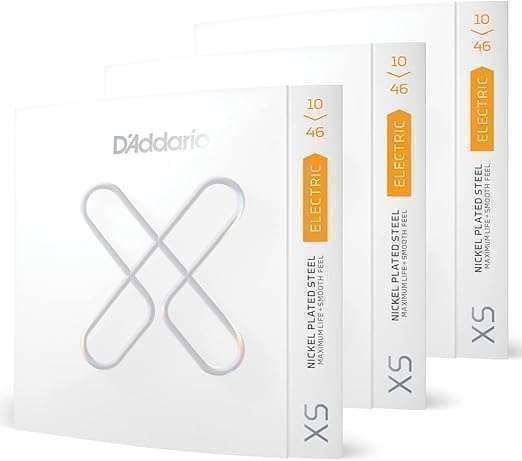
D'Addario
XS Electric
Tone: Balanced
Material: Nickel Coated
Longevity: Long (Coated)
Long-lasting coated strings with maximum life and smooth feel.
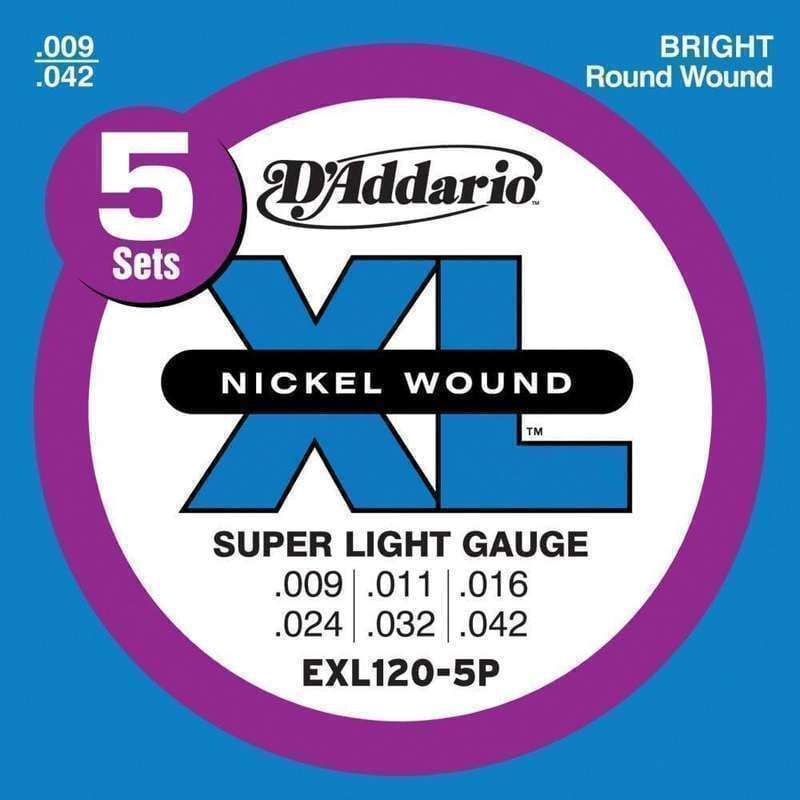
D'Addario
XL Nickel (EXL120)
Tone: Bright & Flexible
Material: Nickel Wound
Longevity: Standard
Super light gauge for maximum flexibility and biting tone.
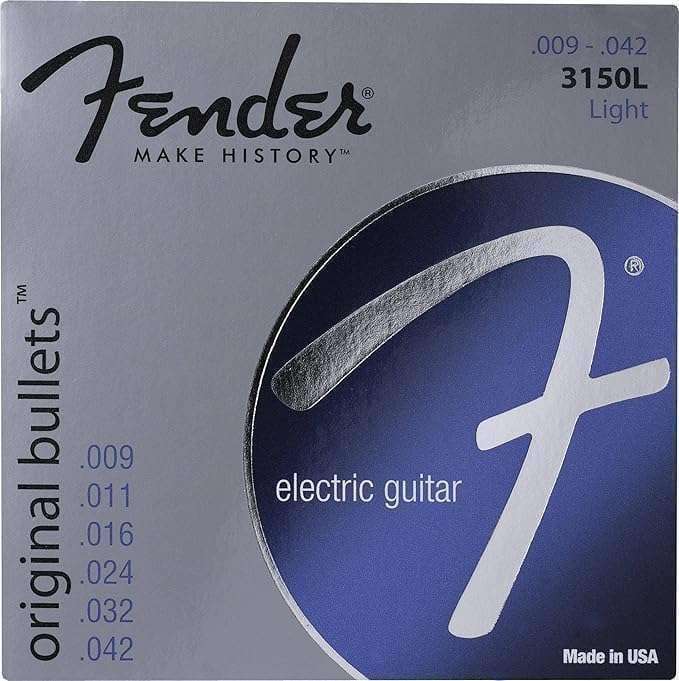
Fender
Original Bullets
Tone: Vintage Fender
Material: Pure Nickel / Nickel-Plated
Longevity: Standard
Designed specifically for Stratocasters. Bullet ends for enhanced stability.
The best strings for Les Paul guitars depend on what you want to improve: bending comfort, the feel of the wound strings, resistance to corrosion or the cost of regular replacements. Start with the gauges you already like, then compare construction and pack options. That makes a useful comparison much easier than changing everything at once.
Quick answer: For standard tuning, Ernie Ball Regular Slinky 10–46 and D’Addario EXL110 10–46 are straightforward uncoated starting points. NYXL1046 offers a different uncoated construction at the same gauges. Consider coated strings if corrosion is your main concern, or pure nickel if you want to explore a different wound-string response. Check all six gauges and the number of sets before buying.
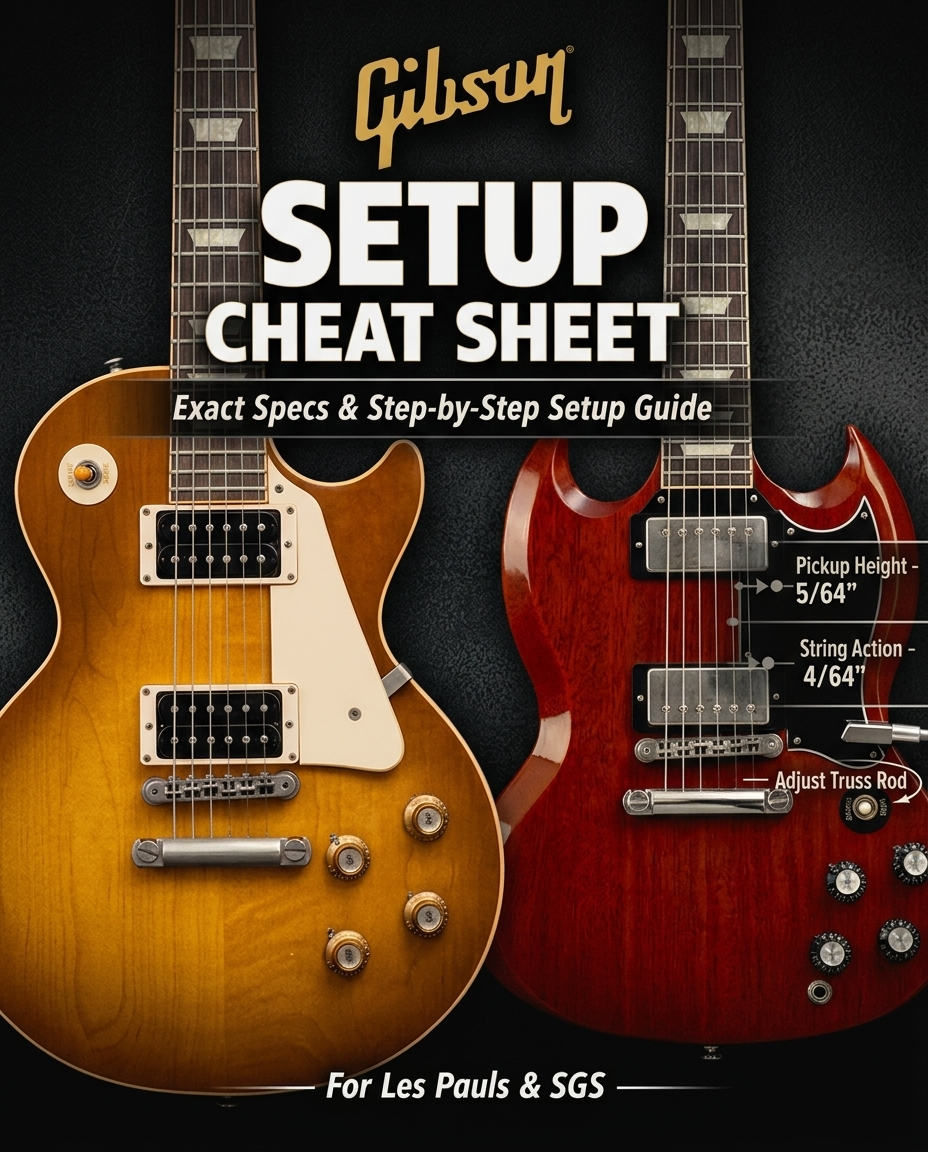
This is a buying guide based on manufacturer specifications, not a hands-on string shootout. Sound and feel descriptions help narrow a trial; they do not establish a winner on your guitar. The supplied product photograph illustrates the guitar type, rather than documenting our tests.

In this guide
- Choose the problem before the brand
- Compare three everyday string sets
- Coated strings, pure nickel and other alternatives
- Read the packet and compare costs
- Check your Les Paul after fitting strings
- Les Paul string questions
- Make your next string change useful
Choose the Problem Before the String Brand
Keep a working gauge as your reference
If your existing strings feel comfortable, photograph the packet or write down the complete set before replacing them. A change from one 10–46 set to another makes construction easier to compare. Moving to 11s, changing tuning and choosing a coating at the same time gives you several possible explanations for the result.
A useful starting reference is the Gibson Les Paul Standard ’60s specification: Gibson lists .010, .013, .017, .026, .036 and .046 strings with a nominal 24.75-inch scale. That is evidence for this model, not a factory specification for every Les Paul, Epiphone or modified guitar.
If your question is primarily whether to use 9s, 10s, 11s or a heavier bass string, start with the Les Paul string gauge guide. It covers genres, hybrids and lower tunings in detail. This page concentrates on choosing the actual pack once you have a gauge direction.
Separate feel, condition and tuning problems
Stiff bends suggest a different investigation from rusty windings. If the tension already suits you but the strings become rough quickly, try a construction or coating change at the same gauges. If only the low string feels loose in drop D, consider that string separately before making your treble strings heavier too.
Tuning trouble also needs a description. Does one string jump in pitch with a ping at the nut, or do fretted chords sound sharp even after the open strings are tuned? Neither problem is proof that you need a premium string brand. Installation, nut movement, fretting pressure and intonation deserve checks.
Treat the short scale accurately
For the same string and pitch, a shorter vibrating length needs less tension. It does not make 10s on a Les Paul exactly equivalent to 9s on a longer-scale guitar, and it does not guarantee that everyone will find 11s comfortable.
D’Addario’s technical tension reference explains the relevant inputs: unit weight, scale length and frequency. Wound-string construction matters, so diameter alone cannot establish identical tension across brands. Use the guitar in your hands as the final comfort check.
Compare Three Everyday Les Paul String Sets
These three sets share the familiar 10, 13, 17, 26, 36, 46 gauge sequence. That makes them a useful starting comparison for standard tuning. They are all uncoated roundwound options; paying more for a different construction is separate from choosing corrosion protection.
| Set | Construction to compare | Sensible reason to try it | Buying detail |
|---|---|---|---|
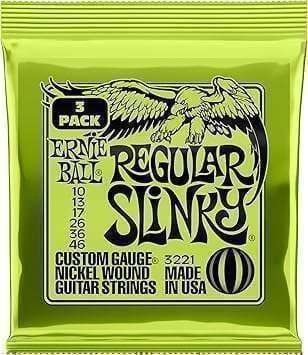
| Ernie Ball Regular Slinky P02221 | Nickel-plated steel winding over a steel core | A conventional uncoated reference set | The card below is the single-set listing |
| D’Addario EXL110 | Uncoated nickel-plated steel, roundwound | Another standard 10–46 option at the same gauges | The linked EXL110-3D listing contains three sets |
| D’Addario NYXL1046 | Uncoated, reformulated nickel-plated steel winding | Compare D’Addario’s alternative construction without changing gauge | The linked NYXL1046-3P listing contains three sets |
Ernie Ball Regular Slinky: a straightforward baseline
Ernie Ball lists Regular Slinky P02221 as 10–46, with nickel-plated steel winding and plain steel treble strings. It is a reasonable baseline when you want a conventional electric set without adding a coating or changing to a hybrid gauge arrangement.
Choose it because that specification fits your current plan, not because a Les Paul requires a particular logo. Play your usual bends and chords, and note whether the surface feel and response suit you. You do not need to prove that it sounds more “Les Paul” than another set.
For a first comparison, one set is enough. A multipack makes more sense after you know you like it, or if several guitars already use the same combination. Buying several packs of an unfamiliar gauge can turn a small experiment into an unnecessary commitment.
D’Addario EXL110: compare like with like
The EXL110 specification identifies an uncoated, nickel-plated steel roundwound set. Its six gauges match Regular Slinky. If your guitar is already set up for that sequence, it provides another clear reference without deliberately changing the overall gauge pattern.
That does not guarantee identical feel, tension or lifespan. Windings and manufacturing choices still differ, and your playing conditions matter. Keep the tuning and setup consistent enough that your notes about the new set mean something.
Check the full product code at checkout. EXL110-3D is a three-set pack, while EXL110 names the underlying set. A three-pack total should not be compared directly with another brand’s single-pack price as though they represent the same quantity.
D’Addario NYXL1046: different construction, same gauges
D’Addario describes NYXL1046 as an uncoated roundwound set with reformulated nickel-plated steel winding. It is a useful alternative if you want to explore that construction while staying with 10–46.
The manufacturer promotes tuning stability and strength. Those are manufacturer claims, not the results of our own controlled Les Paul comparison. An uncoated NYXL set is also not a substitute for choosing a coated product when surface corrosion is the specific problem you want to address.
If the extra cost matters, define what would make the trial worthwhile: fewer problematic string changes, a preferred response or simply a feel you enjoy. Keep a note over normal playing sessions rather than declaring a winner from the first bright chord on fresh strings.
Compare These 10–46 Packs
 Buy on Amazon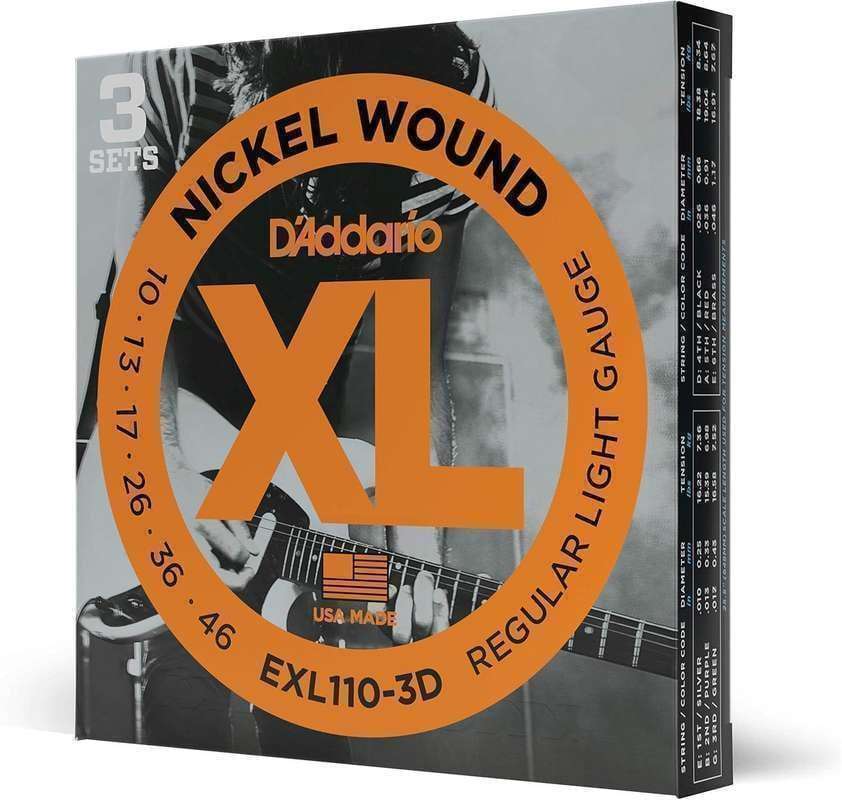

Coated Strings, Pure Nickel and Other Alternatives
Coated strings: investigate the reason you replace them
A coating is worth considering when strings become corroded or unpleasant under your fingers before you want to replace them. Keep your preferred gauges for the first trial so the coating is the main change you are judging.
For example, Elixir’s NANOWEB electric range uses nickel-plated steel and includes 12052 Light, 10–46. The manufacturer’s table lists 12102 Medium as 11–49, not 11–48. Read the actual product number rather than assuming every brand’s “medium” means the same thing.
Do not plan your purchases around a universal lifespan multiplier. Playing hours, sweat, storage, wiping down the strings and your threshold for a duller sound all affect replacement decisions. Record how long the set stays useful for you instead of promising that it will last a fixed number of months.
Pure nickel: a construction choice, not a sustain cure
Pure nickel refers to the winding material on the wound strings, not an assertion that every string in the packet is made entirely of nickel. Fender describes its 150 pure-nickel range in terms of a warmer response. Treat that description as a reason to audition the construction through your own rig.
Check the gauge suffix carefully: the cited Fender three-pack includes a 150L 9–42 option. That is a different gauge decision from the 10–46 comparison above. A listing described only as “Fender 150s” does not tell you which set you are buying.
Pure nickel is not a guaranteed solution for excessive pickup pull, poor sustain or muddy chords. Check pickup balance, tone controls and amplifier settings separately. A comparison is more informative when you can describe what changed rather than attributing every difference to one material.
Heavier sets and flatwounds need separate decisions
Heavier strings are not compulsory for heavy music. Ernie Ball’s Power Slinky is 11–48; Beefy Slinky is 11–54. D’Addario’s EXL115 is 11–49. These are different combinations, despite all beginning with an .011-inch treble string.
Flatwounds also change more than a brand name. Check the full gauges and whether the G string is plain or wound before choosing them for chord work. A wound G can require an intonation change, and its bending feel may not suit a part that depends on wide blues bends.
For standard tuning versus drop D or lower tunings, return to the gauge guide linked above. Choose the pitch and resistance you need first; then choose among products that meet that requirement. There is no single “metal set” that solves every tuning on a 24.75-inch guitar.
Read the Packet and Compare the Real Cost
Check all six strings and the pack quantity
Before ordering, compare the complete gauge sequence with your current set. Two packs both labelled 10–46 can share their endpoints while differing elsewhere; a family name can also cover multiple gauges, coatings and quantities. Verify the selected variant on the retailer page, even when you arrived through a specific product link.
Then check whether the price buys one set, three sets or a bundle with picks or other accessories. Divide the total by the number of complete six-string sets to compare cost per restring. Include shipping where relevant and ignore accessories you would not otherwise buy.
Evaluate value over actual use
A cheaper uncoated set can be good value if you replace strings frequently anyway. A coated set may be worth trying if you discard strings mainly because of corrosion. Neither conclusion follows from the packet price alone.
Keep a simple note of installation date, approximate playing time and why you eventually replaced the set. “Rough windings,” “broken string at the saddle” and “wanted a brighter sound” are different outcomes. This separates normal wear from a possible instrument problem that another purchase will not fix.
Keep one comparison routine
Use the same pickup position, familiar amplifier settings and a short passage containing a chord, a bend and a low-string riff. Check clean as well as driven sounds if you use both. Comparing a clean old set with a heavily distorted new one tells you little about the strings.
Record one practical improvement you want, then decide whether the replacement delivered it. Fresh strings often sound different from worn ones regardless of brand. Without a matched comparison, describe your preference as a preference rather than proof that one product has better sustain or tuning stability.
Check Your Les Paul After Fitting New Strings
Install for the hardware you actually have
Identify the tuners, bridge and tailpiece before starting. A conventional Tune-o-Matic and stopbar arrangement differs from a locking tuner, wraparound bridge or a vibrato-equipped modification. Follow the instructions for the installed hardware rather than a universal winding or screw-turn recipe.
If a string repeatedly breaks at the same point, note that location. A saddle or nut problem deserves inspection; do not keep increasing string gauge to hide it. Filing a saddle or widening a nut slot is repair work, and removing too much material can create another problem.
Measure before adjusting
Tune to your intended pitch and let the installation settle before judging the setup. Listen for nut binding and check relief, action and fretted notes. Replacing the same set does not automatically require turning the truss rod or moving the bridge.
A gauge or construction change can justify rechecking intonation. The intonation checker helps you record sharp, flat or unstable readings and distinguish bridge types. Use a light, consistent fretting touch and retune between checks; a harmonic alone does not establish that the fretted note is correct.
Leave a working tailpiece arrangement alone unless there is a specific clearance or playability issue. Raising a stopbar changes the geometry behind the saddles; it does not reduce the tuned tension required for the same string, vibrating length and pitch. Do not use tailpiece height as an automatic gauge substitute.
Use measurement tools you already own
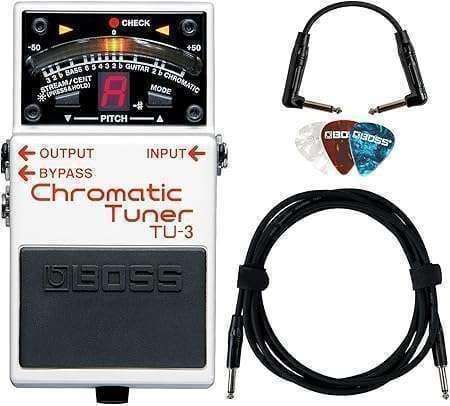
A readable tuner, a string-height ruler and a suitable relief gauge let you compare before and after. The examples below cover those separate jobs: the Boss TU-3 for tuning, the Dunlop string-height gauge for action, and the MusicNomad truss-rod gauge for relief. You do not need to buy all three if your existing tools already do the job.
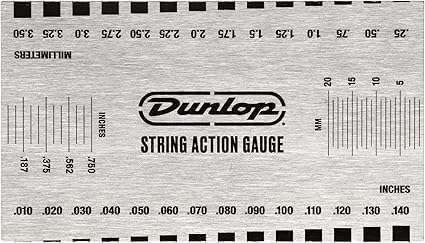
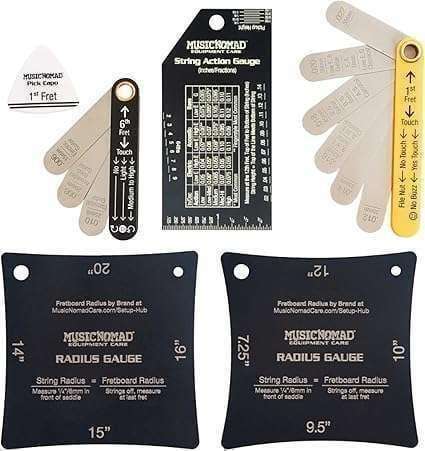
The Les Paul setup walkthrough provides the wider adjustment sequence. For the first comparison, retain a comfortable working setup where possible and record only the changes you actually make. A useful note about your own guitar is better than adopting an arbitrary setting from another player.
Les Paul String Questions
What are good starting strings for a Les Paul in standard tuning?
Regular Slinky 10–46 and D’Addario EXL110 10–46 are straightforward uncoated options. NYXL1046 is another construction at the same gauges. Start with your current comfortable gauge and compare feel, condition and cost rather than assuming one brand suits every Les Paul.
What strings come on a Gibson Les Paul?
Gibson lists .010, .013, .017, .026, .036 and .046 for the Les Paul Standard ’60s model cited here. Check your exact model specification, because factory strings vary and a used guitar may have a different set fitted.
Are coated strings worth trying on a Les Paul?
They are worth comparing if corrosion or roughness makes you replace strings sooner than you want. Keep your preferred gauges for the trial. Useful lifespan depends on the product, playing conditions and care; there is no universal replacement interval.
Are NYXL strings coated?
NYXL1046 is an uncoated roundwound set. D’Addario lists reformulated nickel-plated steel winding. Choosing it is a construction comparison, not the same decision as choosing coated strings for corrosion resistance.
Do I need a particular brand for humbuckers?
No particular string brand is required because your guitar has humbuckers. Compare suitable electric string sets by gauge and construction, then listen through your normal rig. Pickup settings, controls and technique also affect the result.
Do 10s on a Les Paul feel exactly like 9s on a Strat?
No. Shorter scale length reduces tension for the same string at the same pitch, but that does not establish an exact gauge equivalence. Construction, setup and your bending technique also influence the comparison.
Can I use Fender strings on a Les Paul?
Yes, a suitable electric string set does not need to match the guitar brand. Check the gauge, string ends and construction. Fender’s 150 family includes different gauges, so verify the selected pack rather than ordering by family name alone.
Must I adjust the setup after every string change?
Check the guitar after fitting strings, especially when changing gauge or tuning. Adjust only when measurements or playing checks show a need. Replacing an identical set does not automatically require turning the truss rod or moving the bridge.
Why do strings keep breaking at my Les Paul bridge?
Repeated breaks at the same contact point can indicate an installation or hardware issue. Note where the break occurs and have the contact point inspected if it persists. Do not file saddles casually or assume that buying heavier strings will fix it.
How should I compare a single pack with a multipack?
Check how many complete six-string sets are included, then divide the total price by that number. Compare the same gauge and construction, include relevant shipping costs and confirm the retailer’s selected variant before buying.
Make Your Next String Change Useful
Start with one clear priority and buy a pack that matches it. Regular Slinky and EXL110 offer conventional uncoated 10–46 reference points; NYXL offers an alternative uncoated construction. Coated strings and pure nickel address different preferences, while a gauge change should follow your tuning and comfort needs.
Keep the packet, note what you liked and record any setup changes. If the new set solves the problem, you have a repeatable choice. If it does not, the notes help you change one relevant variable next time instead of starting the whole search again.