Best Guitar Strings for a PRS: Gauge & Material Guide by Model
Best guitar strings for a PRS: gauge and material recommendations for every model.
Find Your Perfect Electric Strings
Approximate prices in USD. Check the retailer for current prices.
Results (12)
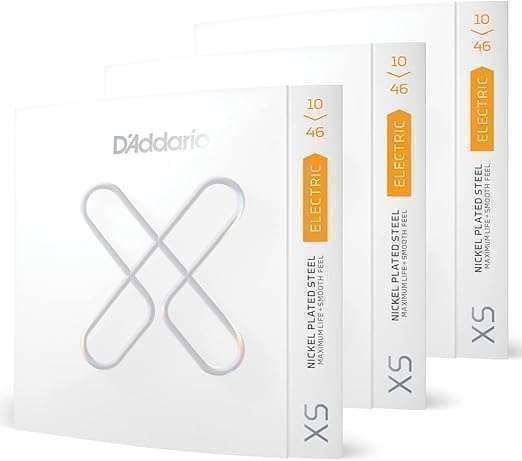
D'Addario
XS Electric
Tone: Balanced
Material: Nickel Coated
Longevity: Long (Coated)
Long-lasting coated strings with maximum life and smooth feel.
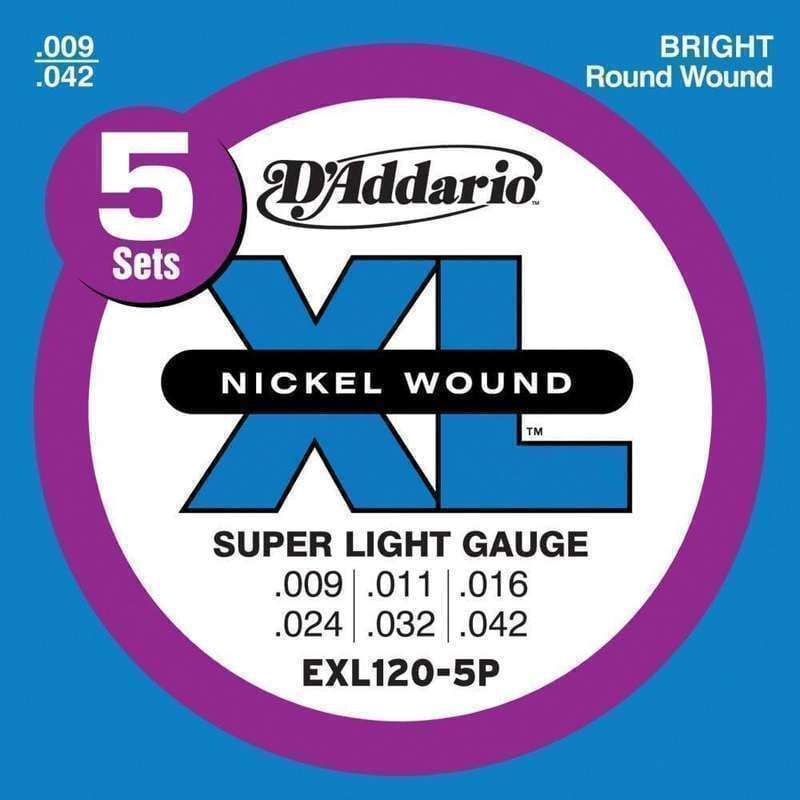
D'Addario
XL Nickel (EXL120)
Tone: Bright & Flexible
Material: Nickel Wound
Longevity: Standard
Super light gauge for maximum flexibility and biting tone.
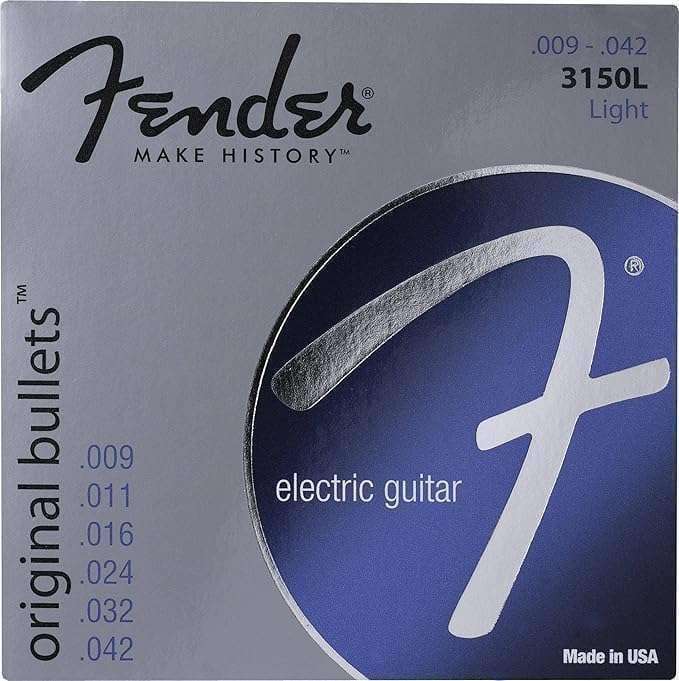
Fender
Original Bullets
Tone: Vintage Fender
Material: Pure Nickel / Nickel-Plated
Longevity: Standard
Designed specifically for Stratocasters. Bullet ends for enhanced stability.
Browse all PRS guitar resources for serial identification, setup and strings.
Quick Answer: The best strings for most PRS guitars are Ernie Ball Regular Slinky (.010–.046) or D'Addario NYXL (.010–.046). PRS ships its electrics with .010–.046 sets, and the trem geometry is tuned around that tension. The 25" scale length sits between Fender (25.5") and Gibson (24.75"), so 10s feel balanced — a touch firmer than the same set on a Fender, looser than on a Les Paul. The Silver Sky, with its vintage 7.25" radius and single coils, tends to favour pure-nickel 10s for that warm John Mayer cleans.

Not sure which PRS you own? Decode your PRS Serial Number first — the year and factory (USA Core, S2, or SE) change which string feel and gauge suit the guitar best.
Why String Choice Is Different on a PRS
Choosing the best strings for a PRS means understanding what makes the platform unique. PRS isn't a Fender and isn't a Gibson — it splits the difference, and that shows up in every string decision.
- 25" scale length — the exact middle ground. Fender runs 25.5", Gibson 24.75". On a PRS, a .010 set has slightly more tension than a Fender 10 and slightly less than a Gibson 10. Most players land on 10s as the balanced default.
- PRS ships with .010–.046 — factory strings are 10s, and the trem float, neck relief, and intonation are all set for that tension. Before you change gauge, know that a new gauge is a mini setup.
- Trem geometry — the Gen III and SE moulded trems are designed to float parallel to the body with a 1/16" gap. Heavier strings pull the plate up; lighter strings drop it. A gauge change means rebalancing the claw.
- Humbucker vs single-coil — Core, S2, and SE models use covered/85-15 humbuckers that respond well to nickel-plated steel. The Silver Sky is the outlier: 635JM single coils love pure nickel for warmth and stack height.
- Two wraparound exceptions — the McCarty 594 (24.594" scale) and SE 245 run a shorter scale and a one-piece stoptail, so 10s or even 11s feel more compliant.
Already picked your strings? Dial in the relief, action, and pickup heights to match with the PRS Setup Cheat Sheet — every factory measurement on one printable reference card.
Top 5 Best Strings for PRS Guitars
| String Set | Gauge | Material | Best For | Price |
|---|---|---|---|---|
| Ernie Ball Regular Slinky | .010-.046 | Nickel Wound | Factory-faithful all-rounder | $18.99 |
| D'Addario NYXL | .010-.046 | Nickel Plated Steel | Tuning stability through bends | $39.99 |
| D'Addario EXL110 | .010-.046 | Nickel Wound | Budget workhorse, stock replacement | $18.99 |
| Elixir Nanoweb | .010-.046 | Coated | Long life, infrequent changers | $44.99 |
| Fender Pure Nickel 150s | .010-.046 | Pure Nickel | Silver Sky / single-coil warmth | $24.99 |
Top 3 PRS String Sets

 Buy on Amazon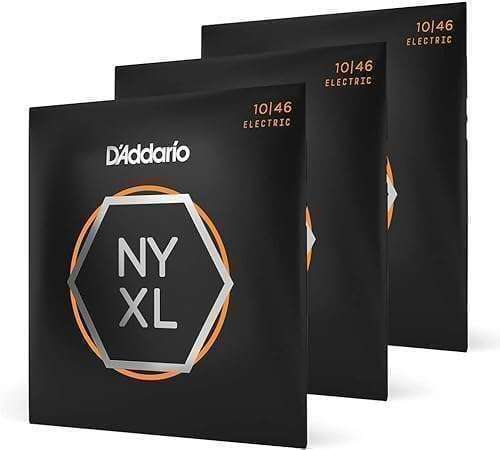
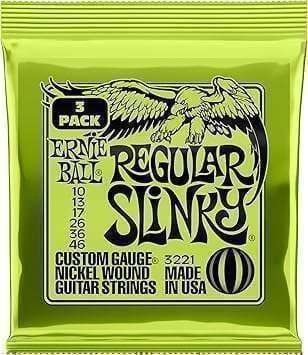
1. Ernie Ball Regular Slinky (.010-.046) — Best All-Round
Why it's right for a PRS:
- Factory tension — matches PRS's stock .010 set, so the trem float and relief stay in spec
- Balanced tone that pairs naturally with PRS humbuckers
- Great bend response on the 25" scale — easier than a Fender, firmer than a Les Paul
- Reliable value — the go-to for rock through modern jazz
Best for: Most players, studio and stage alike Gauge options: .009-.042 (Super Slinky), .010-.046 (Regular), .011-.048 (Power)
Get Ernie Ball Regular Slinky Strings — the PRS factory-faithful all-rounder
2. D'Addario NYXL (.010-.046) — Best for Tuning Stability
Why PRS players love it:
- Enhanced pitch stability — stays in tune through the trem and heavy bends
- Mid-forward punch that cuts through a band mix from both humbuckers and singles
- Break-resistant core — ideal for aggressive bending on the shorter 25" scale
Best for: Gigging musicians, trem-heavy players, recorders Gauge options: .009-.042, .010-.046, .011-.048, .012-.052
Get D'Addario NYXL Strings — premium tuning stability
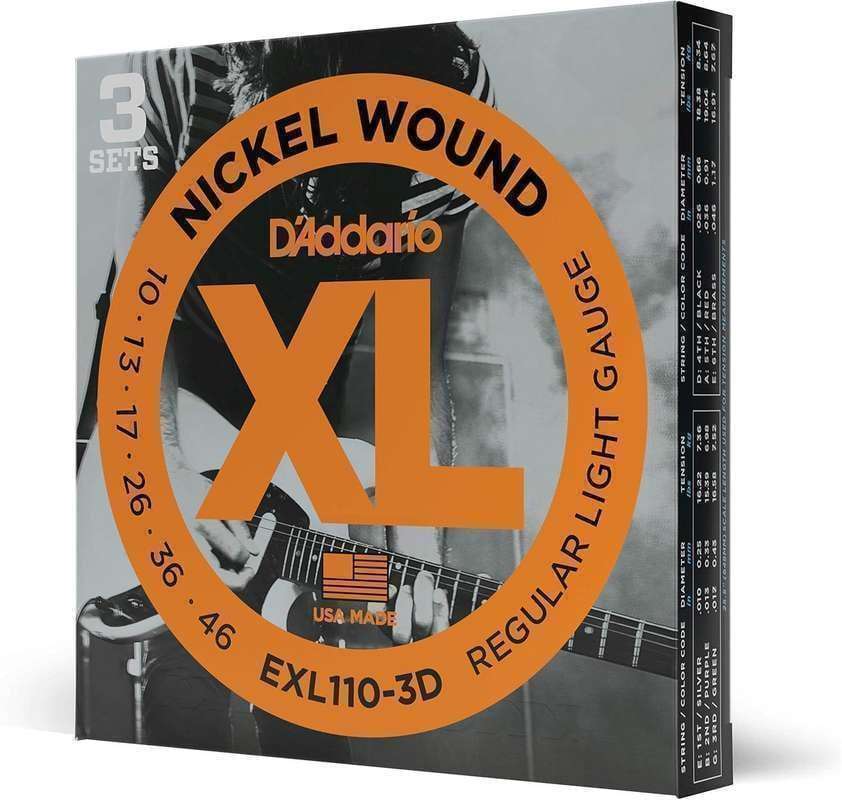
3. D'Addario EXL110 (.010-.046) — Reliable Standard
Why it's a workhorse on a PRS:
- Bright, versatile tone that balances the PRS's natural body
- Precision wound for consistent feel and intonation
- The most affordable option for matching factory spec
Best for: Players who want dependable, no-surprise performance Gauge options: .009-.042 (EXL120), .010-.046 (EXL110), .011-.048 (EXL115)
Get D'Addario EXL110 Strings — the affordable stock replacement
4. Elixir Nanoweb (.010-.046) — Best Long-Lasting
Why it's worth the premium:
- Coated construction extends life by 3-5x
- Keeps its brightness long after uncoated sets go dull
- Less finger noise — great for clean Silver Sky tones and recording
Best for: Frequent players, acidic sweat, anyone who hates changing strings Gauge options: .009-.042, .010-.046, .011-.048
Get Elixir Nanoweb Strings — 3-5x longer life
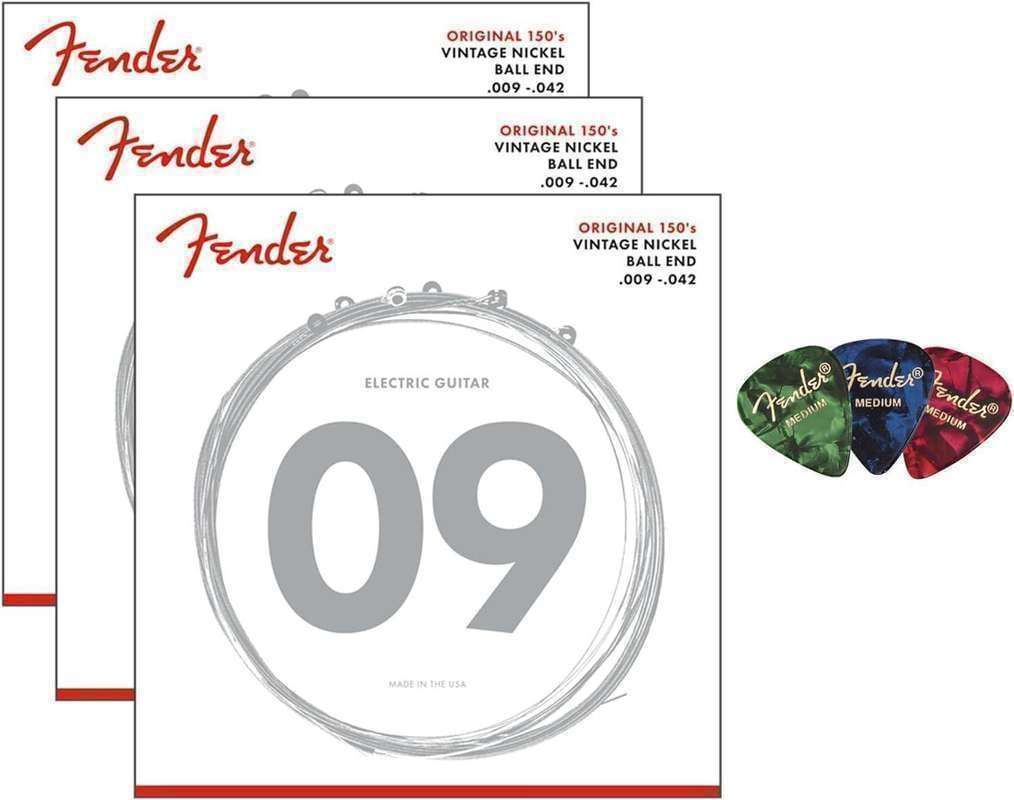
5. Fender Pure Nickel 150s (.010-.046) — Best for Silver Sky & Single Coils
Why it shines on the Silver Sky:
- Pure nickel winding rolls off harsh highs for a warm, vintage touch
- Lower magnetic pull lets the 635JM single coils breathe
- Smoother feel under the fingers for bluesy, clean phrasing
Best for: Silver Sky owners, blues, jazz, clean tones Gauge options: .009-.042, .010-.046
Get Fender Pure Nickel Strings — pure-nickel warmth for single coils
Top PRS String Sets on Amazon
PRS String Gauge Guide
Choosing the right PRS string gauge is about the 25" scale interacting with your hand. Use this as your baseline — the sweet spot is 10s.
Light Gauge (.009-.042) — for Easy Bends
Best for:
- Beginners building finger strength
- Lead players who want fast, flexible bending
- Players with hand or wrist fatigue
What changes on the guitar:
- Neck straightens slightly — less tension means less relief
- Trem pulls back — tighten the claw to hold the 1/16" parallel float
- Brighter, thinner tone — can sound lean through humbuckers
Medium Gauge (.010-.046) — the Factory Default
Best for:
- Most PRS players — this is the intended balance
- Rock, blues, general-purpose playing
- Matching the factory setup — no setup change needed
Why 10s: PRS sets up the trem, relief, and intonation for .010 sets at the factory. 10s give the full-bodied tone the platform is known for without fighting your hand.
Heavy Gauge (.011-.048 / .011-.049) — for Bigger Tone & Drop Tunings
Best for:
- Hard rock and metal players
- Drop tunings (half-step down, Drop C#)
- Slide players who want more resistance and sustain
What changes on the guitar:
- Neck bows forward — more tension, more relief needed
- Trem rises — loosen the claw to bring the plate back to parallel
- More sustain and body, but stiffer bends
Step up or down a gauge? Treat it as a mini setup. Rebalance relief, then action, then trem float, then intonation — and recheck after 48 hours once the neck settles.
String Material Comparison for a PRS
Nickel-Plated Steel (Most Common)
Best for: Most PRS players
- Balanced tone — bright enough to cut, warm enough for humbuckers
- Strong magnetic response from PRS humbuckers
- Examples: Ernie Ball Slinky, D'Addario EXL, D'Addario NYXL
Pure Nickel
Best for: Vintage tone, Silver Sky, blues
- Warmer, rounder tone that tames the top end
- Softer feel and lower output — lets the amp break up earlier
- Examples: Fender Pure Nickel 150s
Coated
Best for: Long-lasting performance
- 3-5x longer life with consistent tone
- Reduced finger noise for recording
- Examples: Elixir Nanoweb, D'Addario XS, D'Addario XT
PRS Model-Specific String Picks
Custom 24 and Custom 22 (Core, S2, SE)
Best gauge: .010-.046 The flagship 25" six-string. Factory spec, factory tension — 10s are the safe pick. Drop to 9s for faster playing, up to 11s for heavier genres.
McCarty and McCarty 594
Best gauge: .010-.046 (594 runs slightly looser at 24.594") The McCarty 594's shorter scale makes 10s feel notably lighter — nearly like 9s. Grab a tighter-feeling set than on a standard Core if you want the same resistance.
Silver Sky (Core & SE)
Best gauge: .010-.046, pure nickel preferred The vintage 7.25" radius and 635JM single coils respond best to warm, lower-output strings. Fender Pure Nickel 10s are the classic match for that soft pick attack and clean bell-tone.
SE Models (Korea & Indonesia)
Best gauge: .010-.046 Same 25" geometry as Core. The SE moulded trem balances to the same 1/16" parallel float, so 10s keep the stock feel. 9s for easier play, 11s for heavier tunings.
CE 24 (Bolt-On)
Best gauge: .010-.046 Bolt-on construction brightens the top end slightly. Nickel-plated steel sets like Ernie Ball Regular Slinky keep the tone balanced without going harsh.
Changing Strings on a PRS: Setup Considerations
Rebalancing the Trem After a Gauge Change
The PRS trem is designed to float parallel to the body at a 1/16" gap. Change gauge and that balance shifts:
- Going lighter (10s → 9s): the trem pulls back toward the body. Tighten the claw screws to bring the plate back to parallel.
- Going heavier (10s → 11s): the trem rises off the body. Loosen the claw screws to let it settle back to the 1/16" gap.
- Change gauge? Rebalance the claw, retune, and recheck — every time.
Rechecking Relief and Intonation
String tension drives neck relief. Post-gauge-change workflow:
- Relief first — retune to pitch, check 0.010" at the 8th fret (capo 1st, fret the last fret)
- Action next — 1.5 mm high E / 1.8 mm low E at the 12th fret
- Intonation last — 12th fret harmonic matches the fretted note
- Recheck after 48 hours — the neck settles as it adjusts to the new tension
Want every measurement on one printable card? The PRS Setup Cheat Sheet walks the relief, action, trem float, and pickup height steps with the exact factory numbers for Custom 24, McCarty, CE 24, Silver Sky, and the SE and S2 lines.
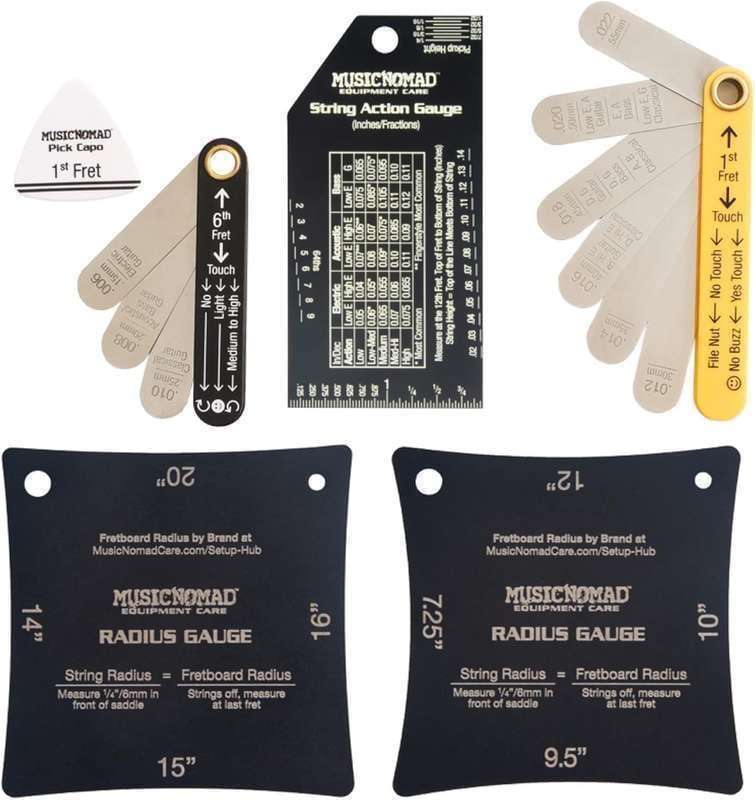
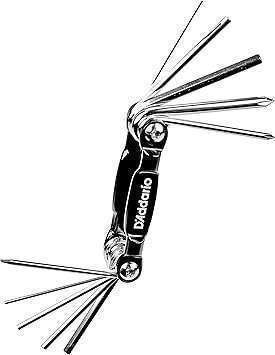
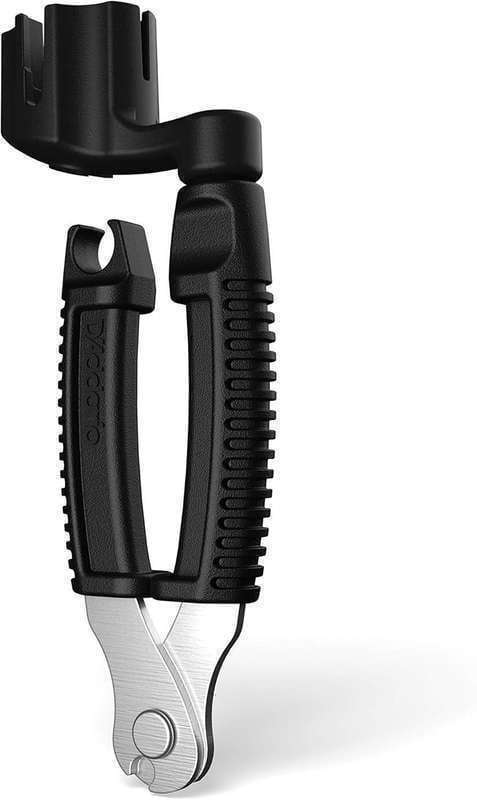
Essential PRS Setup & Care Tools
Common String Problems and Fixes
Strings Breaking at the Bridge
Causes:
- Sharp edges on the trem saddles or wraparound bridge
- Excessive break angle over the bridge
- Old, corroded strings
Fixes:
- File smooth any sharp saddle corners
- Change strings before heavy corrosion sets in
- Check the wraparound bridge seating on SE 245 and McCarty 594 models
Tuning Instability After a Gauge Change
Causes:
- New strings not fully stretched
- Trem claw out of balance for the new tension
- Nut slots binding under different tension
Fixes:
- Stretch strings thoroughly (pull, retune, repeat 3-4 times)
- Rebalance the trem claw for the new gauge
- Lubricate nut slots with graphite or a nut sauce
Fret Buzz After Restringing
Causes:
- Different gauge changed neck relief
- Action set too low for the new string tension
- Uneven fret wear
Fixes:
- Adjust the truss rod — lighter strings need less relief, heavier strings more
- Raise action at the bridge or trem posts
- Have a tech level worn frets if buzz persists
Frequently Asked Questions
What gauge strings come on a PRS from the factory?
PRS ships its electrics with .010–.046 sets. The trem geometry, neck relief, and intonation are balanced for that tension, which is why most players stay on 10s.
Is a PRS scale length longer or shorter than a Fender?
A PRS is 25" — shorter than a Fender's 25.5" and longer than a Gibson's 24.75". The 25" scale means 10s feel slightly looser than on a Fender and slightly firmer than on a Les Paul.
Can I use 9-gauge strings on a PRS?
Yes. Many lead players run .009-.042 for easier bends. Expect the neck to straighten slightly, the trem to pull back, and a brighter tone. Rebalance the relief and trem claw after the change.
Are heavier strings better for a PRS?
Heavier strings (11s) give more sustain and body but add tension that changes relief and trem float. On the 25" scale, 11s feel firmer than on a Les Paul. Only go up if you play heavier genres or drop tunings.
What's the best string material for PRS humbuckers?
Nickel-plated steel is the most common, offering balanced brightness and warmth. For a Silver Sky or vintage-style cleans, pure nickel warms the tone and reduces magnetic pull.
Do I need to adjust my PRS setup when changing string gauge?
Yes. Changing gauge shifts neck relief, action, trem float, and intonation. Rebalance the trem claw for the new tension and recheck relief and intonation after every gauge change.
How often should I change strings on my PRS?
For uncoated strings, every 2-6 weeks depending on play. Signs it's time: dull tone, tuning instability, or visible corrosion. Coated strings like Elixir Nanoweb last 2-4 months.
What strings are best for the PRS Silver Sky?
The Silver Sky's 7.25" radius and single coils respond best to pure nickel 10s — Fender Pure Nickel 150s are the classic match for its warm, clean John Mayer tone.
Are coated strings worth it on a PRS?
If you play frequently and dislike changing strings, yes. Coated sets like Elixir Nanoweb last 3-5x longer and stay bright, though the coating smooths the feel slightly — try a set before committing.
Do the Silver Sky and Core PRS want different strings?
Mostly the same gauge — .010-.046 — but different materials. Core humbuckers like nickel-plated steel; the Silver Sky's single coils shine with pure nickel for warmth and lower magnetic pull.
Conclusion
The best strings for a PRS come down to the 25" scale, your model's pickups, and how you play. For most players, .010-.046 nickel-plated steel is the sweet spot — it matches PRS's factory spec, keeps the trem balanced, and gives the full-bodied tone the platform is known for.
Start with Ernie Ball Regular Slinky for a faithful factory feel or D'Addario NYXL for extra tuning stability. Silver Sky owners should try Fender Pure Nickel for warmer, vintage-style cleans. And if you want to stretch string changes, Elixir Nanoweb coated sets last months.
Once you've found your strings, make sure the guitar is set up to match. Visit our PRS Serial Number Lookup to confirm your model and year, and grab the PRS Setup Cheat Sheet for the exact factory relief, action, trem float, and pickup height specs on a printable card — so your new strings sound their best from day one.
Bought your PRS used? Run a Guitar Price Estimate to confirm you paid market value for your exact model and year before you spend on strings and a setup.
More PRS resources: