How to Tell If a Fender Is Fake: 9 Real vs Fake Checks
How to tell if a Fender is fake: check the decal, serial, string trees, neck plate, and tuners. 9 real vs fake Fender checks plus what to do if you're unsure.
How to Tell If a Fender Is Fake
Fake Fenders are everywhere in the used market — especially on eBay, Facebook Marketplace, and Reverb. The good news: most copies are caught by the same nine checks in this guide, and you can run most of them from the listing photos alone.
A counterfeit Fender usually fails on details: the logo is slightly wrong, the serial number doesn't decode to the claimed year, the string trees are a style Fender never used, or the neck plate says "made in USA" on a guitar that smells like a $150 import. In this guide you'll learn exactly what to look at, in order, so you can tell a real Fender from a fake before money changes hands.
Not sure where to start? Run the free fake Fender quick-check — answer a two-minute red-flag checklist and get an instant risk band, no email required. Then use the deep-dive checks below to confirm. (Buying a Gibson instead? See our guide to spotting fake Gibsons, and the full used-guitar buying checklist covers every brand.)
Why Fake Fenders Exist (and Who Buys Them)
Fender is the most counterfeited electric guitar brand in the world. A genuine Stratocaster sells for $400 to $4,000; a convincing copy costs $80 to $150 to build in a Chinese or Indonesian workshop and can be sold for $300 to $600 before anyone looks closely.
The Partscaster Problem
Not every "fake Fender" is a factory counterfeit. A partscaster is a real Fender neck on a non-Fender body, or a mix of aftermarket parts wearing a Fender decal. It can play great — but it's not worth what a genuine guitar is, and sellers rarely volunteer the truth. The checks below catch partscasters too: mismatched serials, wrong decal for the era, and hardware that doesn't match the claimed year.
Where Fakes Get Sold
- Facebook Marketplace — the #1 home of fakes, with zero buyer protection
- eBay — fakes hide in "parts" listings and vague auctions
- Marketplace apps (OfferUp, Craigslist) — cash deals, no recourse
- Reverb — rare but present; Reverb's authenticity checks help but aren't bulletproof
Model-Specific Tells: Stratocaster vs Telecaster vs Bass
The universal checks above catch most copies. The model-specific tells close the rest.
Stratocaster-Specific Checks
- Pickguard screw pattern — genuine Strats use a consistent 8-screw pattern (11 on some vintage models); copies often misplace the screws
- Tremolo cavity — a genuine Strat has a six-screw (vintage) or two-post (modern) tremolo; fake "vintage" Strats with two-post trems are instantly wrong
- Neck heel truss rod — Fender adjusts at the heel, not the headstock; a headstock adjuster means it's not a genuine Fender
- 3-ply vs 1-ply pickguard — most Strats use 3-ply; a cheap 1-ply guard with a Fender logo is a common shortcut
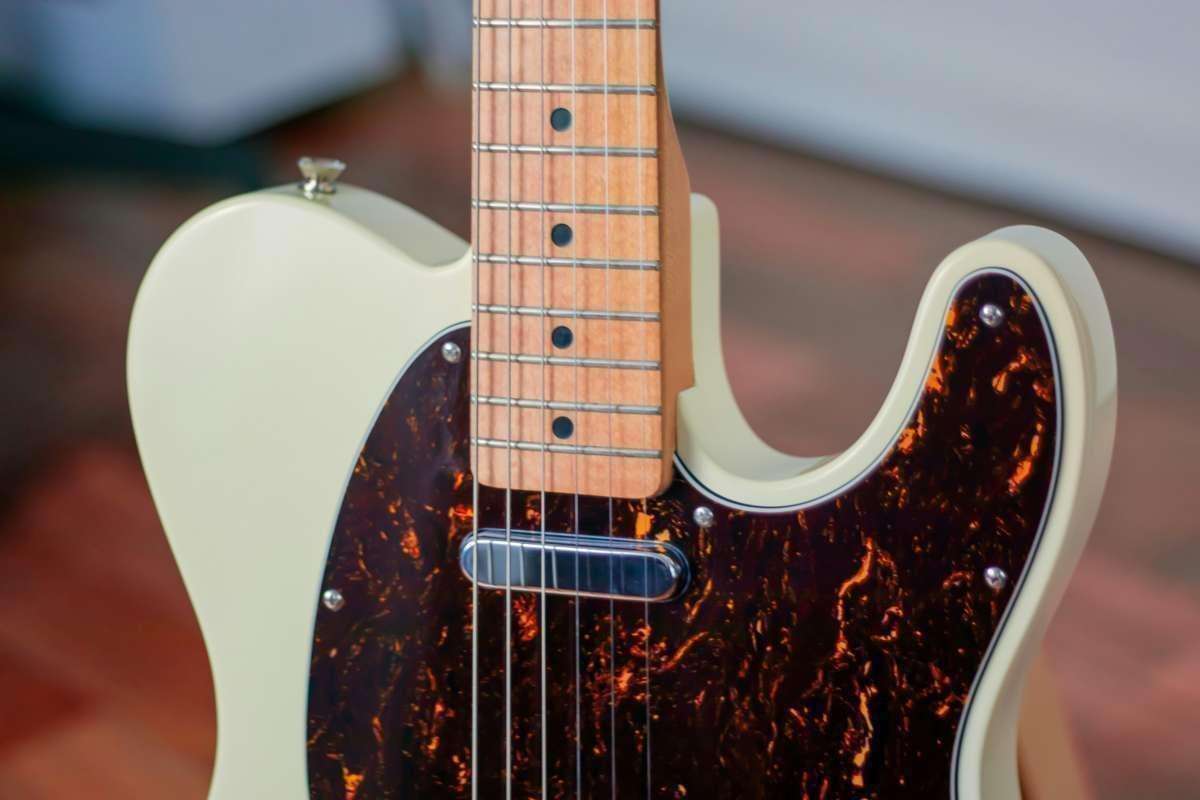
Telecaster-Specific Checks
- Control plate — the Tele's angled control plate with 3 knobs (modern) or 1 knob (early vintage) is hard to copy convincingly; check the screw positions
- Bridge — genuine Teles use a specific 3-saddle (vintage-style) or 6-saddle bridge; a generic import bridge with wrong string spacing is a tell
- Neck pickup — the chrome neck pickup cover is a classic detail copies get wrong (wrong shape, wrong mounting screws)
Bass-Specific Checks
- Headstock shape — Precision and Jazz basses have distinct headstocks; copies often get the outline subtly wrong
- Pickup spacing — a Jazz Bass's two pickups have specific spacing; fakes frequently misplace them
The "Too Many Serial Numbers" Red Flag
A surprising number of fakes and parts guitars are caught by this one question: how many serial numbers does it have?
- A genuine Fender has one serial (plus a neck heel date code you won't see without removing the neck)
- Two serials, a serial on a sticker, or a serial that looks laser-printed over an older stamp means parts or fake
- A neck plate with a serial and a headstock serial means the neck and body were never born together
Ask for a photo of the neck plate and the headstock back. If the seller can't explain both numbers, you've saved yourself a headache.
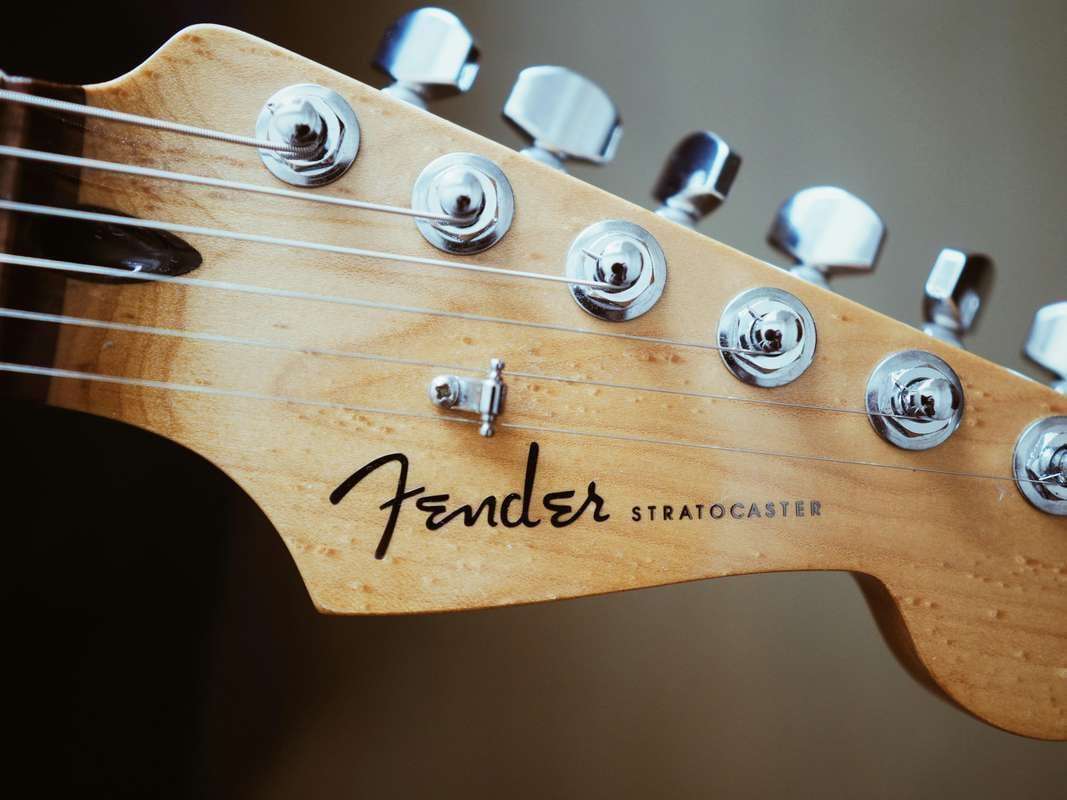
Check 1: The Headstock Decal (Fastest Tell)
The Fender logo is the single most reliable detail for spotting a fake — and the one counterfeiters get wrong most often.
Logo Styles by Era
Fender used distinct logo styles, and the style must match the guitar's claimed age:
- Spaghetti logo (1954–1964) — thin, narrow gold script
- Transition logo (1965–1967) — spaghetti script with a wider Fender tail
- CBS "block" logo (1968–1975) — bold block letters
- Modern script (1976–present) — the familiar script with "Fender" in gold or black
Red flags: a guitar claiming to be a 1962 Strat with a modern block logo; blurry or pixellated print edges; a logo that looks stuck on (raised edges); or a decal under the clearcoat that's slightly crooked. Genuine Fender decals are applied before the finish, so the logo sits under the lacquer — you should never feel a ridge around the letters.
Check 2: The Serial Number (Decode It)
A real Fender serial number decodes to a year, country, and factory — and the result must match the guitar's claimed age and features.
Quick Serial Reference
| Prefix | Country | Era |
|---|---|---|
| US10+ | USA | 2010–present |
| S, E, N, Z | USA | 1970s–2000s |
| MX, MZ, MN | Mexico | 1990s–present |
| JV, JD | Japan | 1982–present |
| CY, ICS, ISS | China / Indonesia (Squier) | 1990s–present |
Red flags: a serial that doesn't match the claimed year; a "USA" serial on a guitar with a truss-rod adjuster at the headstock (Fender puts it at the heel); shallow or machine-pressed-looking digits; or a serial on the headstock front for a guitar claiming to be from an era that used the back or neck plate.
Run any serial through the free Fender serial number lookup — if the year it returns contradicts the listing, that's a stop-and-ask moment.
Check 3: The String Trees
String trees — the little metal wings that hold the strings down near the nut — changed by era:
- 1954–1966: no string trees (or two on some models)
- 1966–1970s: round "disc" trees
- 1970s–present: butterfly/clamshell trees on most models
Red flag: a guitar claiming to be from the 1960s with modern butterfly trees, or a cheap-looking round tree on a modern Player Series (which should have butterflies). This is a cheap part on a real Fender, but fakes usually get the style wrong.
Check 4: The Neck Plate
Most Fenders bolt the neck on with a four-bolt plate — the 1970s three-bolt being the famous exception.
Red flags:
- A plain, unengraved plate on a guitar claiming to be pre-1970s (vintage plates carry the serial and era-appropriate engraving)
- "Fender" spelled wrong or with the wrong font on the plate
- A four-bolt plate on a guitar claiming to be a 1971–1977 three-bolt era guitar
Check 5: Tuners and Hardware
Fender used specific tuners per era and model line. Vintage guitars came with single-line Kluson-style tuners (1950s–60s) or F-tuners (1970s); modern American models ship with locking tuners; Player Series with standard sealed tuners.
Red flags: sealed modern tuners on a guitar claimed as vintage; tuners with no brand stamp where a genuine model would have one; cheap pot-metal knobs that wobble; a tremolo block that looks like painted zinc instead of steel (lift the tremolo cover and look — genuine blocks are solid and stamped).
Check 6: Price That's Too Good to Be True
This is the oldest trick in the book. A "US Stratocaster" listed at $250, a "custom shop" guitar at $400 — the price is the red flag.
| Claimed guitar | Typical market price | "Deal" that means fake |
|---|---|---|
| American Professional Strat | $1,200–$1,500 | Under $700 |
| Player Series Strat | $550–$700 | Under $350 |
| Vintage 1960s Strat | $8,000+ | Under $3,000 |
| American Tele | $1,100–$1,400 | Under $650 |
Cross-check any listing against the free guitar worth calculator — if the asking price is a fraction of the range, the "why" needs an answer.
Check 7: The Seller
Honest sellers welcome scrutiny. Fake sellers rush you:
- "Need gone today, cash only"
- Refuses extra photos or video
- Won't answer questions about the serial or where they bought it
- Listing history of multiple "one of a kind" guitars
Ask for: a photo of the serial, a photo of the neck plate, a photo of the back of the headstock, and a photo of the body routes (with the pickguard off if they'll allow it). A genuine seller sends these without drama.
Check 8: Weight and Feel
Fender bodies are made of alder, ash, or (in Mexico/Japan) other solid tonewoods. Copies frequently use cheaper plywood or soft pine that weighs far off spec.
- A genuine Strat weighs 7–8.5 lbs depending on wood
- A genuine Tele weighs 7–8 lbs
- Copies often come in under 6.5 lbs (plywood) or over 9.5 lbs (poorly dried hardwoods)
If you can handle the guitar: hold it, and compare the weight against the model's typical range. The neck should also have a smooth, finished feel — rough fret ends are a workshop tell, not a Fender one.
Check 9: Workmanship in the Details
Fender factories have consistent finishing standards. Look for:
- Rough fret ends — real Fenders have dressed, rounded fret ends
- Finish pooling in the neck pocket or around the pickguard edges
- Visible glue around the neck joint
- Uneven pickguard routing — genuine guards have clean, consistent edges
- Screws that don't line up — misaligned screw holes are a classic copy tell
None of these are definitive alone, but two or three together are a strong signal.
What If It Passes All the Checks?
A careful fake passes paper checks — that's the honest truth. The checks above catch the obvious copies, but a good counterfeit with a real serial number and era-correct parts needs someone to actually look at the guitar.
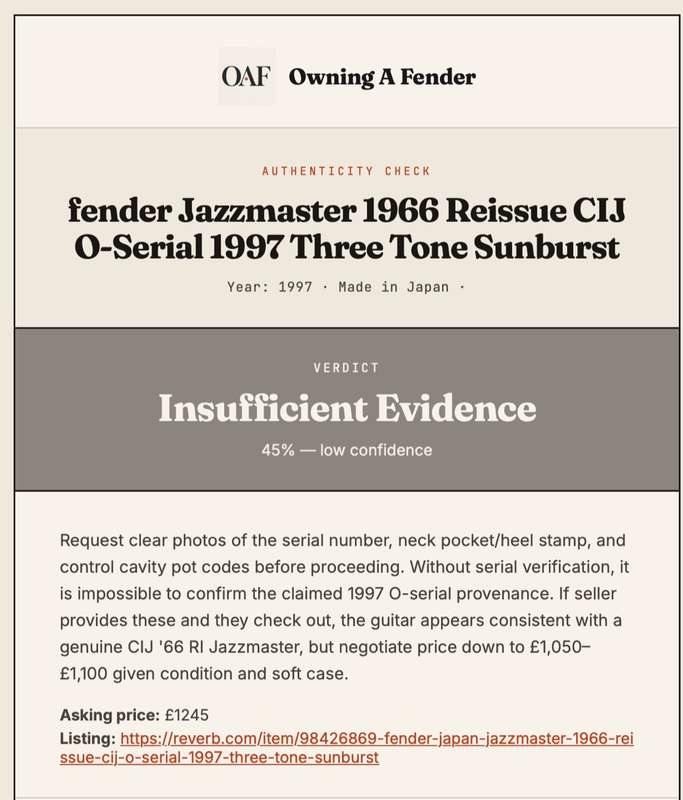
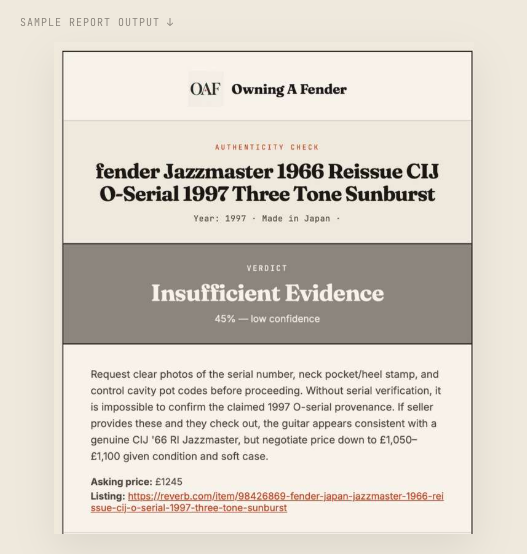
That's exactly what the $9 Authenticity Checker is for: upload the listing photos — headstock, body, hardware, serial — and get specific risk flags on the actual guitar, with human review. If you're spending $500+, it's the cheapest insurance you'll ever buy.
FAQ
How can I tell if my Fender is real?
Check the headstock decal (style must match the era and sit under the finish), decode the serial number and compare the result to the claimed year, then verify the string trees, neck plate, tuners, weight, and workmanship. Two or more mismatches mean stop and ask. For a structured first pass, run the free fake Fender quick-check.
Do fake Fenders have serial numbers?
Yes — and the serial is often the giveaway. Counterfeiters either copy a serial from a real guitar, stamp it shallowly or in the wrong font, or use a format that doesn't match the claimed era. Decode it: if the year doesn't match the listing, that's a red flag.
Where is the serial number on a Fender?
Modern Fenders (1976+) have it on the back of the headstock. Vintage Fenders (1954–1976) have it on the neck plate, and early Telecasters (1950–1954) on the bridge plate. A serial in the wrong place for the claimed era is a red flag.
What does a fake Fender neck plate look like?
Fake neck plates are usually plain, unengraved metal where a genuine vintage plate would carry the serial and era-appropriate engraving, or they have "Fender" in the wrong font or with spelling errors. The plate should also match the era — four-bolt vs the 1970s three-bolt.
How much is a fake Fender worth?
A fake Fender is worth its parts value — typically $100–$300 for a complete copy — plus the risk that the buyer has no recourse if it breaks. If you already bought one, it can often be converted into a good "parts" guitar, but it will never be worth what a genuine Fender is.
Are Squier guitars fake Fenders?
No. Squier is Fender's own budget brand, made in Indonesia, China, Korea, and Japan. "Real vs fake" is not "Fender vs Squier" — it's whether the guitar is what the seller says it is. A Squier sold as a Fender, or a fake sold as a Squier, is the problem.
Can you tell a fake Fender from photos?
Usually — for the obvious tells. Decal errors, wrong string trees, mismatched serials, and bad workmanship all show up in photos. But a careful copy can pass a photo review, which is why the $9 photo screening exists: it looks at the details humans miss.
What is a partscaster and is it a fake?
A partscaster is a guitar assembled from Fender and aftermarket parts — often a real neck on a non-Fender body. It's not a counterfeit, but it's not the guitar it claims to be either. Mismatched serials, wrong decal for the era, and hardware that doesn't match the claimed year are the tells.
Should I buy a Fender without a serial number?
Not without a serious discount and a good story. Missing serials happen (replaced necks, worn plates), but on a budget-market listing it's usually hiding something. Ask for photos of the neck heel and control cavity, and price it as a parts guitar.
Is it legal to sell fake Fenders?
Selling a counterfeit Fender as genuine is fraud and trademark infringement. Platforms will pull the listing and the seller can face legal action. Buying one isn't illegal, but you have essentially zero recourse — which is why verification before payment matters.
Conclusion
Fake Fenders get caught on details: the decal, the serial, the string trees, the neck plate, the tuners, the weight, and the workmanship. Run through these nine checks on every used listing, and you'll avoid the vast majority of copies before money changes hands.
When the checks come back clean, one honest caveat remains: a checklist can't see the guitar. For anything over a few hundred dollars, the $9 Authenticity Checker screens the actual photos and flags the details that give careful fakes away. And once you've verified the guitar is real, check what it's worth with the free guitar worth calculator so you don't overpay.