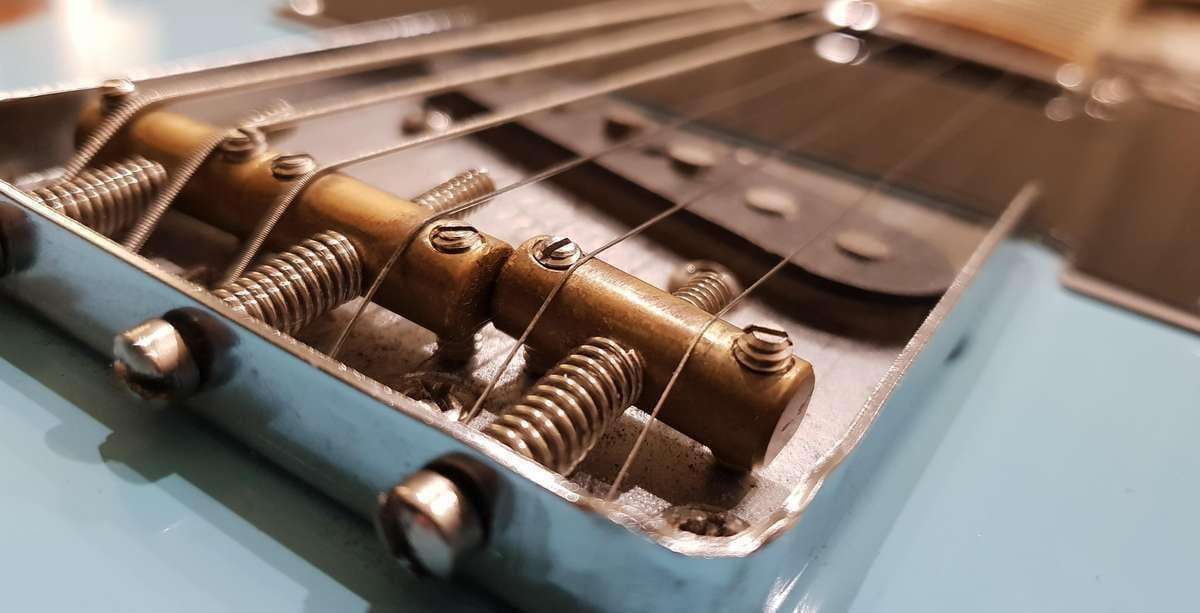
Fender Telecaster Setup Specs 1952: Factory Measurements
Exact Fender Telecaster setup specs for 1952: neck relief, action, pickup height, string gauge, fretboard radius, bridge saddles, and factory-correct measurements for blackguard-era Teles.
Fender Telecaster setup specs 1952 give you the exact factory measurements for the first full production year of the world's most iconic solid-body electric guitar. A 1952 Telecaster—part of the legendary blackguard era—carries a one-piece maple neck, a butterscotch blonde ash body, and the original three-saddle brass bridge that defined the model's snap and twang.
If you own, restore, or set up a 1952 Telecaster (or a faithful reissue), this guide covers the historically accurate measurements: neck relief, action at the 12th and 17th frets, pickup height for the neck and bridge pickups, string gauge, fretboard radius, scale length, nut slot depth, and the era-specific hardware details that matter. Need to confirm the year first? Use the Fender serial number lookup or read our full Telecaster serial numbers guide.
Quick Reference: 1952 Telecaster Factory Specs
Here is the at-a-glance spec sheet for a 1952 Fender Telecaster. These numbers are the starting point for a vintage-correct setup. Because 1950s Fender production was hand-finished, minor variation is normal, but the ranges below reflect documented originals and modern playable setups for the same geometry.
| Specification | 1952 Factory / Vintage-Correct Target |
|---|---|
| Scale length | 25.5 inches (648 mm) |
| Fretboard radius | 7.25 inches (184 mm) |
| Neck relief (8th fret) | 0.010–0.012 inches (0.25–0.30 mm) |
| Action at 12th fret | High E: 1.6 mm, Low E: 2.0 mm |
| Action at 17th fret | High E: 1.6 mm (4/64"), Low E: 2.0 mm (5/64") |
| Neck pickup height | Bass side: 2.4 mm (6/64"), Treble side: 2.0 mm (5/64") |
| Bridge pickup height | Bass side: 2.4 mm (6/64"), Treble side: 2.0 mm (5/64") |
| String gauge (period) | 12–52 or 13–56 pure nickel |
| String gauge (modern equivalent) | 10–46 or 11–48 pure nickel |
| Nut width | 1-5/8 inches (41.3 mm) |
| Nut slot depth | ~0.020–0.025 inches (0.5–0.6 mm) above 1st fret |
| Bridge saddle type | 3 brass barrel saddles |
| Bridge plate | Stamped steel, ~0.050 inches thick |
| Fret wire | Small vintage, ~0.078 inches wide |
| Tuners | Kluson Deluxe single-line |
| Truss rod | Single-action, adjustment at neck heel |
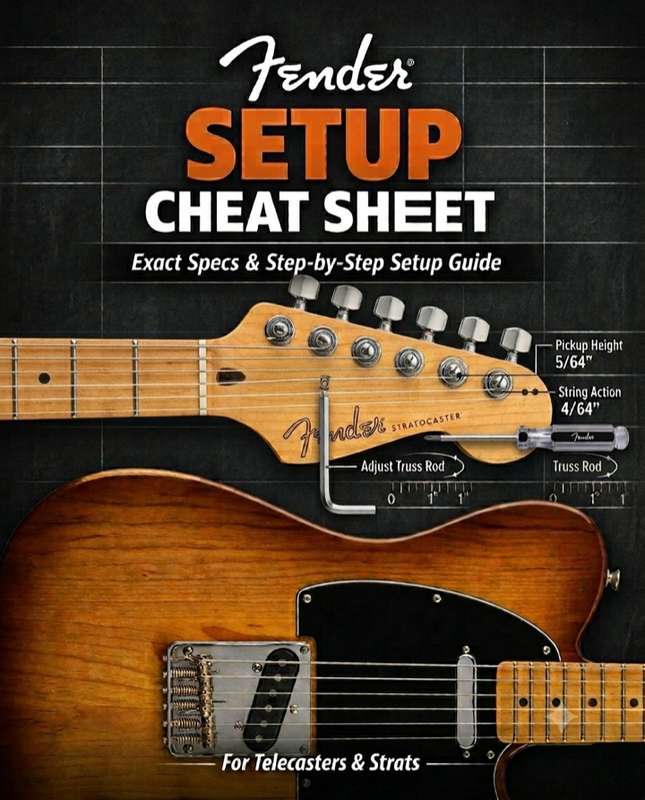
Measurements matter on a vintage Tele. The 7.25-inch radius and small frets mean action and relief need to work together. Too little relief and the round board chokes bends; too much relief and the guitar feels sluggish. If you want every spec on one printable card, the Fender Setup Cheat Sheet has them pre-filled.
Neck Relief and Truss Rod on a 1952 Telecaster
Neck relief is the slight forward bow that lets the strings vibrate without hitting the frets. On a 1952 Telecaster, the one-piece maple neck is thick and stable, but it still moves with humidity and string tension.
Factory Relief Spec
For a 7.25-inch radius board, Fender's vintage-correct relief target is 0.010–0.012 inches (0.25–0.30 mm) measured at the 8th fret. The modern Fender spec chart lists 0.012 inches for a 7.25-inch radius. On a 1952 Tele with original small frets, I prefer 0.010–0.012 inches as a working target. Heavier vintage strings (12s or 13s) pull more tension, so the neck may naturally settle toward the higher end of that range.
How to Measure Relief
- Tune the guitar to pitch.
- Capo the 1st fret.
- Press the low E string down at the last fret (where the neck meets the body).
- Slide a feeler gauge between the bottom of the low E string and the top of the 8th fret.
- The gauge should slide in with light drag. A 0.010-inch gauge is a good starting test; a 0.012-inch gauge should also fit on most blackguard Teles.
Adjusting the Truss Rod
Original 1952 Telecasters have a single-action truss rod accessed at the heel of the neck. You must loosen the neck bolts, tilt the neck back, and adjust the nut at the heel. Always support the neck and body when you do this.
- Too much relief (large gap): Turn the truss rod nut clockwise (tighten) to straighten the neck.
- Backbow or no relief: Turn the truss rod nut counter-clockwise (loosen) to add forward bow.
- Go slow: Never turn more than 1/8 of a turn at a time. Let the neck settle for a few minutes, then retune and remeasure.
Because the adjustment is at the heel, this is the one step on a vintage Tele where many owners hand the guitar to a tech. If the rod is original and has never been serviced, a drop of light penetrating oil on the threads the night before can help prevent seized hardware.
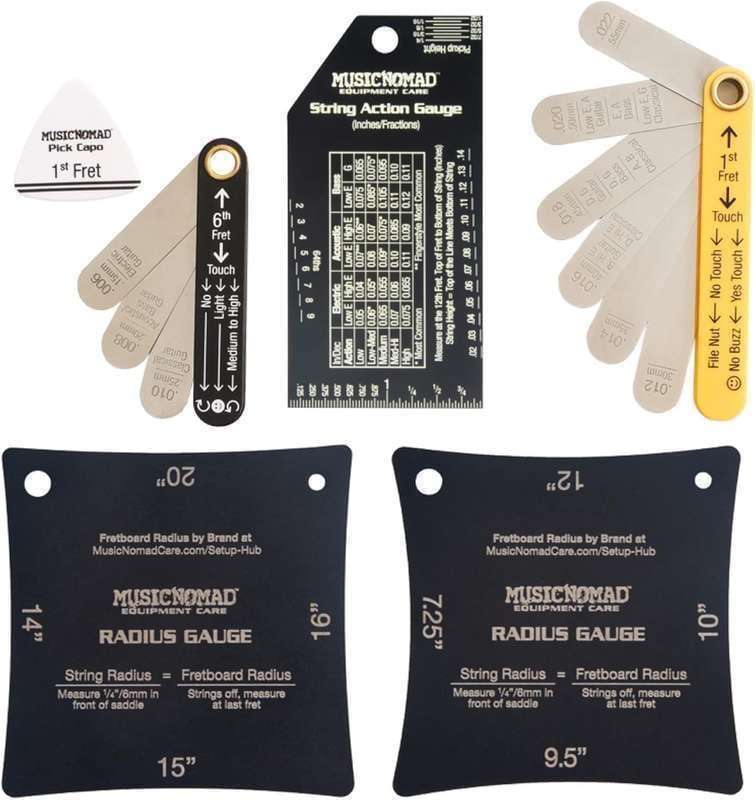
Essential 1952 Telecaster Setup Tools
 Buy on Amazon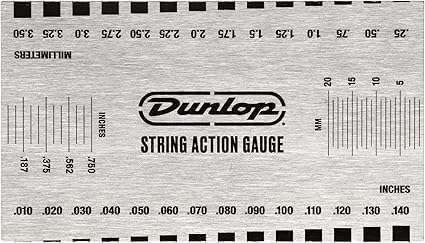
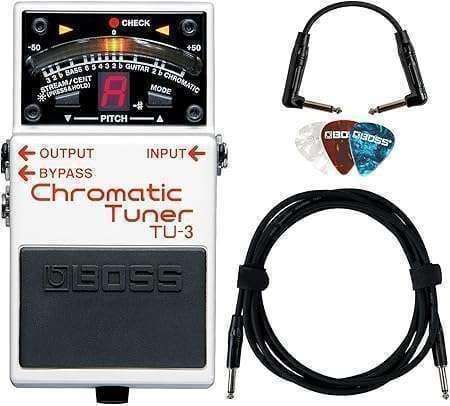
Action Height (String Height) for a 1952 Telecaster
Action is the distance between the string and the top of the fret. On a 1952 Telecaster with a 7.25-inch radius and small frets, action needs to be high enough to clear the round board during bends but low enough to feel fast.
Factory Action Spec
Fender measures action at the 17th fret on electric guitars. For a 7.25-inch radius neck, the spec is:
| String | Action at 17th Fret |
|---|---|
| High E | 1.6 mm (4/64 inches) |
| Low E | 2.0 mm (5/64 inches) |
You can also check at the 12th fret; the numbers are usually close on a vintage Tele. A well-set 1952 Tele will read roughly 1.6 mm on the high E and 2.0 mm on the low E at the 12th fret.
Adjusting Action on the 3-Saddle Bridge
The 1952 Telecaster uses three threaded brass barrel saddles, each carrying two strings. Height adjustment screws sit on either side of each saddle.
- Detune the strings slightly to remove tension from the saddle.
- Use the correct Allen wrench or screwdriver for the saddle screws. Early saddles used slotted screws; replacements may use hex screws.
- Turn clockwise to raise, counter-clockwise to lower. Small turns—1/4 to 1/2 turn—make a noticeable difference.
- Retune and measure at the 12th or 17th fret after every adjustment.
- Balance the radius. Because two strings share each barrel, you cannot set each string perfectly independently. Compromise: the outer strings sit slightly higher than the inner strings on shared saddles.
The brass saddles on a 1952 Tele are part of its tone. They are warmer and softer sounding than the steel saddles Fender began introducing around 1953–1954. If you are restoring an original, keep brass saddles unless they are cracked or heavily worn.
Pickup Height for a 1952 Telecaster
Pickup height controls output, sustain, and treble bite. The blackguard-era Tele pickups are relatively low output by modern standards, so setting them too far from the strings makes them sound thin; too close and the magnets choke sustain.
Neck and Bridge Pickup Specs
For vintage-style Telecaster pickups, Fender recommends the same starting height for both neck and bridge:
| Pickup | Bass Side | Treble Side |
|---|---|---|
| Neck pickup | 2.4 mm (6/64 inches) | 2.0 mm (5/64 inches) |
| Bridge pickup | 2.4 mm (6/64 inches) | 2.0 mm (5/64 inches) |
Measurement method: Press the string at the last fret and measure from the bottom of the string to the top of the pickup pole piece.
The neck pickup on a 1952 Tele sits under a chrome metal cover. You measure through the cover to the pole piece beneath. If the cover is removed, the exposed pole pieces sit slightly lower than the cover top, so adjust by ear after taking the initial measurement.
Tone Considerations
Blackguard bridge pickups have a bright, biting character. I often end up with the bridge pickup slightly lower than the neck pickup—sometimes 2.0 mm bass side and 1.6 mm treble side—to tame ice-pick treble while keeping clarity. The neck pickup can usually sit at the full factory height for warmth.
If you raise the pickups too close to the strings, you will hear "warbling" or poor sustain from magnetic pull. Lower them until the notes ring cleanly, then fine-tune by ear.
String Gauge, Scale Length, and Fretboard Radius
The 1952 Telecaster's geometry is simple but unforgiving. Understanding the relationship between scale length, radius, and string gauge helps you avoid common setup mistakes.
Scale Length
The 1952 Telecaster has a 25.5-inch scale length. That is the same as a modern Telecaster and Stratocaster. The longer scale means slightly more string tension than a 24.75-inch Gibson scale at the same gauge and tuning, which contributes to the Tele's snappy attack.
Fretboard Radius
The original 1952 fingerboard has a 7.25-inch radius. This is a very round, vintage-correct curve. It feels great for chords and traditional country and blues playing, but it demands slightly higher action for clean bending than a 9.5-inch or flatter modern radius.
String Gauge
Original 1952 Fender strings were heavier than modern factory sets. Documented examples and player recollections point to 12–52 or 13–56 pure-nickel sets as common. Pure nickel wraps give the warmer, rounder tone associated with blackguard Teles.
For modern players who want easier bending, 10–46 or 11–48 pure nickel is a practical compromise. If you switch from a light modern set to a period-correct heavy set, expect to add relief and possibly raise the saddles. Always recheck the setup after a gauge change.
Bridge and Saddles: Era-Specific Details
The 1952 Telecaster bridge is one of the most recognizable parts of the guitar. It is not just hardware; it is a major part of the tone.
Bridge Plate
The original plate is stamped steel, approximately 0.050 inches thick, with a chrome or nickel finish. Early plates carry the "Fender Pat. Pend." stamp on the ashtray cover and the serial number stamped into the bass side of the plate itself. Six screws pass through the plate into the body, and the bridge pickup is mounted directly to the plate with slot-head screws.
Brass Barrel Saddles
Each 1952 Tele has three brass barrel saddles, with two strings per saddle. The brass material gives the guitar a warmer, slightly compressed attack compared to the steel saddles that replaced them. Intonation on a 3-saddle bridge is always a compromise: you set the saddles so the paired strings are close to in tune, accepting that one string may be slightly sharp or flat at the 12th fret.
String-Through-Body Design
Strings pass through ferrules on the back of the body and over the saddles. This increases sustain and gives the Telecaster its characteristic piano-like attack. Make sure the ferrules are seated flush and the string holes are clean. Burrs in the ferrules can break strings during a gig.
Nut Height and Slot Depth
The nut on a 1952 Telecaster was originally a synthetic material, often replaced with bone or Tusq during restoration. Slot depth affects playability in the first position more than most players realize.
Nut Slot Depth Spec
A good target is 0.020–0.025 inches (0.5–0.6 mm) of clearance between the bottom of the string and the top of the 1st fret when the string is open. You can measure this with a feeler gauge or a specialized nut slot gauge.
If the slots are too high, open chords feel stiff and the guitar plays sharp in the lower frets. If the slots are too low, you get open-string buzz and a thin tone. On a vintage Tele, the nut is often the limiting factor in how low you can set the action.
Nut Width
Original 1952 nuts are 1-5/8 inches (41.3 mm) wide. This is slightly narrower than many modern Teles, which can be 1-11/16 inches. The narrower nut feels fast for chord work but gives less room for string spacing adjustments.
Intonation Setup on a 1952 Telecaster
Intonation ensures the guitar plays in tune up the neck. The 3-saddle bridge means you cannot perfectly intonate every string, but you can get close enough for most playing styles.
Intonation Compromise Method
- Tune the open string to pitch.
- Compare the 12th fret harmonic to the fretted 12th fret note.
- If the fretted note is sharp, move the saddle backward (away from the neck).
- If the fretted note is flat, move the saddle forward (toward the neck).
- Because two strings share each saddle, aim for the best average between the pair.
A common pairing compromise:
- Saddle 1 (E and A): Set for the A string; the low E will be very slightly off.
- Saddle 2 (D and G): Set for the G string; the D string follows closely.
- Saddle 3 (B and high E): Set for the high E; the B string will be close.
For recording or players with perfect pitch, a compensated brass saddle set can improve intonation while keeping the vintage look.
How to Set Up a 1952 Telecaster Step by Step
Follow this order. Skipping steps is the fastest way to chase your tail on a vintage Tele.
- Install fresh strings in your chosen gauge and tune to pitch.
- Check neck relief at the 8th fret. Adjust the truss rod at the heel if needed.
- Set action at the 12th or 17th fret by adjusting the three brass saddles.
- Set pickup height for neck and bridge pickups to 2.4 mm bass / 2.0 mm treble.
- Check nut slot depth and address any open-string buzz.
- Set intonation by moving the barrel saddles, accepting the compromise of paired strings.
- Stretch strings and retune. Re-check relief and action after the strings settle.
Vintage guitars need a gentle hand. If you are uncomfortable removing the neck to adjust the truss rod, take the guitar to a tech who works on vintage Fenders. Original maple necks are robust, but the finish and hardware are 70-plus years old.
FAQ
What are the factory action specs for a 1952 Telecaster?
A 1952 Telecaster with a 7.25-inch radius should have approximately 1.6 mm on the high E and 2.0 mm on the low E measured at the 12th or 17th fret. Fender publishes the 17th-fret measurement as 4/64 inches treble and 5/64 inches bass for a 7.25-inch radius neck.
What pickup height should a 1952 Telecaster have?
Start with 2.4 mm bass side and 2.0 mm treble side for both neck and bridge pickups, measured from the bottom of the string to the top of the pole piece with the string fretted at the last fret. Lower the bridge pickup slightly if it sounds too bright or has sustain issues.
What string gauge did 1952 Telecasters ship with?
Original 1952 Teles likely shipped with 12–52 or 13–56 pure-nickel strings. Modern players often use 10–46 or 11–48 pure nickel for easier bending. Any gauge change requires rechecking relief and action.
What is the fretboard radius of a 1952 Telecaster?
The original 1952 Telecaster fingerboard has a 7.25-inch radius. This is a very round vintage curve that feels great for chords but requires slightly higher action for clean bends than modern flatter radii.
How much neck relief does a 1952 Telecaster need?
Aim for 0.010–0.012 inches (0.25–0.30 mm) of relief measured at the 8th fret. Heavier strings pull more tension and may settle the neck toward the higher end of that range.
Where is the truss rod adjusted on a 1952 Telecaster?
The truss rod nut is at the heel of the neck. You must loosen the neck bolts, tilt the neck back, and adjust from there. This is normal for vintage Fenders and requires extra care on a 70-year-old instrument.
What kind of bridge saddles did a 1952 Telecaster have?
Original 1952 Telecasters used three brass barrel saddles. Brass contributes to the warm, woody attack of blackguard Teles. Steel saddles became more common around 1953–1954.
How do you intonate a 3-saddle Telecaster bridge?
Set each barrel saddle for the best average intonation of its two strings. Move the saddle backward if the fretted 12th fret is sharp, forward if it is flat. Compensated brass saddles can improve accuracy while keeping the vintage look.
What nut width did 1952 Telecasters have?
The original nut width is 1-5/8 inches (41.3 mm). This is slightly narrower than many modern Telecasters. Slot depth should leave about 0.020–0.025 inches of clearance over the 1st fret.
Should I set up a vintage 1952 Telecaster myself?
Basic action and pickup adjustments are safe to do at home with the right tools. Truss rod adjustments require removing the neck, so if you are not comfortable working on vintage hardware, consult a technician who specializes in vintage Fenders.
Conclusion
A 1952 Fender Telecaster is a piece of electric guitar history, but it is also a working instrument that rewards a careful setup. The key numbers are simple: 0.010–0.012 inches of relief, 1.6–2.0 mm action, 2.4/2.0 mm pickup heights, and pure-nickel strings that match the era. Respect the original brass saddles, 7.25-inch radius, and heel-adjust truss rod, and the guitar will deliver the blackguard tone that made the Telecaster famous.
If you are buying or selling, always verify the year with the Fender serial number lookup and check current market value with the Guitar Price Estimate. For a deeper dive into the full setup workflow, see the Telecaster setup guide.
Related Posts
- Telecaster Setup Guide — Complete step-by-step setup for every Telecaster era
- Telecaster Serial Numbers — Date your Tele by serial, prefix, and country
- Fender Serial Number Lookup — Decode any Fender serial number
- Fender Telecaster Value Guide — Current market values by year and condition
- Factory Specs Lookup — Compare factory specs across Fender models